
Journalist

Lee Hugh
=
-
 South Korea's annual labor hours drop to 1,739 by 2030: data SEOUL, May 05 (AJP) - South Korea is projected to reduce its annual labor hours to 1,739 by 2030, a shift that signals the nation's gradual departure from a culture of long-duration work toward global standards, data released by the Ministry of Employment and Labor showed Tuesday. The trajectory, identified in a report by the Korean Association of Industrial Relations, meets the objective of the lbor ministry to align with the average of the Organisation for Economic Co-operation and Development. It marks a significant move for a country that has historically maintained one of the most grueling work schedules in the developed world. Progress has already been substantial, according to recent data. Annual work hours dropped from 1,996 in 2017 to 1,859 in 2024, representing a reduction of 137 hours over a seven-year period. This decline stems primarily from legal reforms, including the implementation of the 52-hour maximum work week and the wider adoption of the five-day system. These measures successfully targeted long-duration labor by reducing the number of employees working far beyond the standard 40-hour limit. Despite the improvement, the report warns that the current pace may be difficult to maintain. South Korea still ranks sixth for the longest working hours among 37 OECD member states, trailing only nations such as Mexico, Colombia, and Costa Rica. A primary obstacle remains the structural rigidity of the South Korean labor market. Over 53 percent of the workforce is concentrated in a strict 40-hour weekly schedule, a lack of diversity that researchers say prevents further natural reductions. In contrast, only 12.5 percent of French workers and 30.9 percent of German workers follow such a uniform pattern. Within the European Union, only Luxembourg and Portugal show a similar concentration of 40-hour work weeks, at 55.4 percent and 57.3 percent, respectively. Cultural norms regarding leisure further complicate the transition. While nearly 50 percent of the workforce in major European nations takes leave during the summer, only 3 percent of South Korean workers do the same. The disparity is often attributed to office environments where employees feel pressured to avoid taking consecutive days off. To address this, the report suggests the government must expand the range of available work arrangements and foster a culture where workers can fully utilize their annual leave. Researchers also emphasized the need to protect industrial output during this shift. The report argued that a simple cap on hours is insufficient and that the government must ensure shorter hours are paired with increased efficiency to prevent a drop in national productivity. The Ministry of Employment and Labor established a dedicated task force for reducing actual working hours in September last year. It followed this with a joint declaration and a specific policy roadmap in December. 2026-05-05 15:05:17
 -
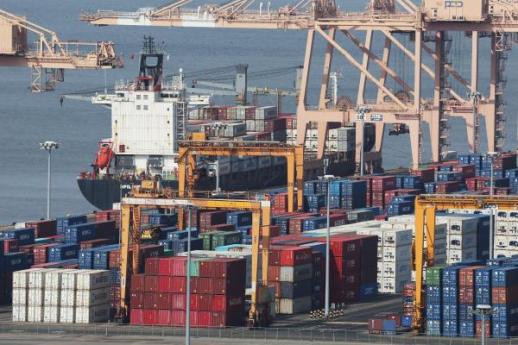 Top 5 South Korean Banks’ Corporate Loans Jump Over 5 Trillion Won for Second Month Corporate loan balances at major commercial banks rose by more than 6 trillion won in April, marking a second straight month of increases exceeding 5 trillion won. The rise suggests companies are leaning more on bank borrowing as higher government bond yields spill over into the corporate bond market. As of the end of last month, corporate loans at the country’s five largest banks — KB, Shinhan, Hana, Woori and NH NongHyup — totaled 866.0646 trillion won, up 6.2909 trillion won from a month earlier, according to the banking industry on Monday. The increase followed a 5.4449 trillion won gain in March. Market watchers attributed the jump to a sharp cooling in corporate bond issuance after the war in the Middle East. With rates rising and funding costs climbing, companies have increasingly turned to bank loans, they said. Data from the Korea Financial Investment Association showed domestic companies repaid 13.1125 trillion won in corporate bonds in April while issuing 10.6248 trillion won, resulting in net repayments of 2.4877 trillion won. With market volatility rising and interest rates climbing steeply, more firms are seeking funding through loans, analysts said. Loan demand is expected to keep growing. In the Bank of Korea’s survey on financial institutions’ lending practices released on April 21, both large companies (11→14) and small and midsize firms (22→28) were projected to increase loan demand to secure liquidity amid greater domestic and external uncertainty. Concerns are rising that the high-rate environment could persist. Bank of Korea Deputy Gov. Yoo Sang-dae said at a recent briefing that “prices are rising more than expected, so we could move into a tightening cycle,” signaling the possibility of rate hikes. Small and midsize firms and so-called marginal companies are particularly vulnerable because they rely more on bank loans and have weaker credit. If funding costs such as interest rates surge, the risk of corporate distress is likely to grow. Higher oil prices and increased costs for imported raw materials tied to the Middle East situation are already adding to the burden, the report said. The strain is also showing up in indicators. The average corporate delinquency rate at the five banks in the first quarter rose to 0.46% from 0.37% the previous quarter, up 0.09 percentage points. Delinquencies among large companies increased to 0.13% from 0.03%, while the rate for small and midsize firms rose to 0.57% from 0.49%. A financial industry official said that if rates keep rising as lending expands, companies’ funding burdens could grow and credit problems could spread. The official warned that corporate distress could weigh on the broader economy and called for preemptive steps to respond. * This article has been translated by AI. 2026-05-05 15:04:32
 -
 Merrill Lynch Adds $250 Million to Seoul Branch, Doubling Capital Base Merrill Lynch, a foreign investment bank, is expanding its business in South Korea after injecting several hundred billion won in additional funds into its Seoul branch, an unusual move among foreign securities firms that typically keep local capital relatively flat. According to the financial investment industry on May 5, Merrill Lynch’s Seoul branch recently received a $250 million remittance (about 370 billion won) from its headquarters to bolster operating funds. As a result, its equity capital is expected to rise from about 360 billion won at the end of last year to the 700 billion won range, more than doubling. The increase would place Merrill Lynch among the top tier by equity capital among the 12 foreign securities firms with branches in South Korea. As of the end of last year, the largest was Morgan Stanley’s Seoul branch at 655.5 billion won. Foreign securities firms generally remit most profits to their headquarters as dividends, limiting growth in local equity capital. JPMorgan’s Seoul branch, for example, sent 133 billion won of last year’s profit to its headquarters. Against that backdrop, Merrill Lynch’s capital expansion is seen as atypical. Over the past five years, cases in which major foreign securities branches more than doubled equity capital have been rare. Goldman Sachs’ Seoul branch increased capital from 396 billion won at the end of 2021 to 604.6 billion won at the end of 2025, up about 52%, while Morgan Stanley’s Seoul branch rose about 32% from 497.4 billion won to 655.5 billion won. Other firms posted only modest gains of around 10% or saw declines over the period. The latest funding appears tied to improving results and a strong domestic stock market. Merrill Lynch’s Seoul branch posted net profit of 76.1 billion won last year, up from 38.8 billion won in 2024. The broader outlook for foreign securities firms has also improved: combined net profit for the 12 foreign branches operating in South Korea rose from 256 billion won in 2023 to 322.9 billion won in 2024 and 427.4 billion won last year. Industry officials view the move as a signal of expanded operations, as rising corporate valuations in a buoyant market lift revenue opportunities such as mergers and acquisitions and advisory work. “With the recent market rally, demand for IB, M&A and advisory services is increasing at the same time,” a financial investment industry official said. “The larger the equity capital, the more a firm can participate in big deals or expand trading, so it appears they moved early to strengthen capital.”* This article has been translated by AI. 2026-05-05 15:03:14
 -
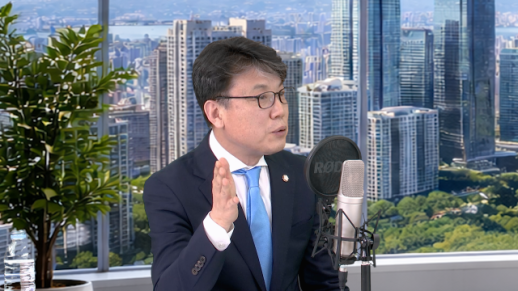 Jin Seong-jun: Housing Policy Failed From Lack of Consistency, Not Taxes Politics is ultimately about choices. But those choices are not simply for or against something. They decide who bears the burden and where resources go. Jin Seong-jun, a lawmaker from the Democratic Party and chair of the National Assembly’s Special Committee on Budget and Accounts, operates at the center of those decisions. In an interview, he did not frame fiscal policy as a matter of numbers. He repeatedly returned to “philosophy,” arguing that budgets reflect value judgments and that politics is the process of persuading the public. Across topics — housing policy, pensions, low birthrates and an AI industry strategy — his answers converged on one standard: “Does it help the public, and is it affordable?” ■ Housing is not a tax issue, but a consistency issue Asked to assess past governments’ housing policies, Jin said debate has largely centered on taxation — claims that holding taxes were excessive or regulations too strict. He said the bigger problem was the outcome: “They failed to bring down home prices.” “Policy takes time to show results,” he said. “But before those effects appeared, the direction changed, and the market stopped trusting the signal.” He argued that markets respond less to the details of a policy than to confidence it will be sustained. He called the failure a political problem. “In a structure where policy changes every time the administration changes, the market cannot stabilize,” he said. “In the end, politics has to bear that burden.” ■ Politics is not a technique for abandoning principles On the difficulty of sticking to principles, Jin said politics constantly forces choices between principle and reality, and that politicians have often leaned toward short-term considerations. “Ahead of elections, policies that feel burdensome get postponed, and policies that draw an immediate positive reaction get chosen,” he said. He warned that when politics becomes consumed by short-term reactions, long-term balance breaks down. “Politics is a process of persuasion,” he said. “Even if people feel uncomfortable in the short term, if a policy is necessary, you have to explain it to the end and ask for understanding.” ■ Fiscal policy is not about equal division, but judgment Asked what standard he applies to budgets, Jin said fiscal policy is not about distributing resources evenly across all areas, but deciding where limited resources should go first. “Some areas are more urgent, and some are less urgent,” he said. He described budgeting as a matter of fairness in decision-making, not simple equality, and said politics must make those choices and take responsibility for them. ■ Fiscal policy is about future generations Jin said the most important standard in fiscal policy is to look to the future. “Fiscal policy is for the present, but the results carry into the future,” he said. “Today’s choices become the next generation’s burden.” He cited pensions as a representative case, arguing that cutting benefits to reduce today’s burden can return as a larger burden later. ■ On low birthrates: Change the structure, don’t cut welfare Asked how to address low birthrates and an aging population, Jin said reducing welfare is not a solution. “Everyone reaches a point where they have to rely on welfare,” he said. “So an approach that says to cut welfare is not realistic.” He called for redesigning burdens — increasing contributions when society can afford it, expanding productive activity and adjusting institutions. He said the issue requires social consensus and cannot be solved by politics alone. “This is a matter that needs a social agreement,” he said. “Even if it takes time, we have to build that agreement.” ■ “Now is the time for fiscal policy to move first” On assessments that the state’s role is growing, Jin said the economic environment is changing sharply, with stronger protectionism, intensified technology competition and an energy transition unfolding at the same time. He said the role of fiscal policy should shift from mainly indirect support to direct investment. “In areas where the private sector finds it hard to invest, the state has to step in first,” he said. “Fiscal policy has to serve as seed money.” ■ On AI: “If you fall behind, the gap gets bigger” Jin said AI is not just one industry but the foundation for all industries. He argued that being a latecomer does not eliminate opportunity, and said competitiveness remains possible, especially in manufacturing and applications. He stressed speed, warning that gaps can widen over time. “That’s why the state has to invest first,” he said. “If you follow from behind, it’s hard to compete.” ■ “Politics that won’t talk about tax hikes is avoiding responsibility” Asked about expanding fiscal spending and raising taxes, Jin said the issue cannot be avoided. “If you expand fiscal policy, you ultimately need revenue,” he said. “But politics tries to avoid talking about taxes.” He criticized that stance and said politicians must persuade the public by explaining why it is needed and showing how the money will be used. ■ What is politics? Asked to define politics, Jin said it does not end with a single decision. “As Max Weber said, it is like drilling holes through a hard board,” he said. “Slowly, but pushing through to the end.” He said politics is less about speed than persistence, and that persistence ultimately depends on trust. The interview was less a tour of policy details than a statement of political standards. While the topics ranged from housing and budgets to pensions and industrial policy, Jin returned to one test: Does it help the public, and can the country afford it? : Jin Seong-jun : A Democratic Party lawmaker who serves as chair of the National Assembly’s Special Committee on Budget and Accounts and is described as a fiscal and policy expert. He has worked in the presidential office, including in the senior secretary’s office for political affairs and the office handling national affairs, and in the National Assembly he has focused on the Strategy and Finance Committee and the budget panel, building expertise in tax and fiscal policy. He has emphasized fair taxation and the role of fiscal policy, presenting “a balance between the public’s burden and the state’s responsibility” as a key standard across housing, pensions and industrial policy. He has consistently argued that fiscal policy is not just numbers but a national choice and philosophy, and that politics should prioritize long-term sustainability over short-term popularity. * This article has been translated by AI. 2026-05-05 14:57:16
 -
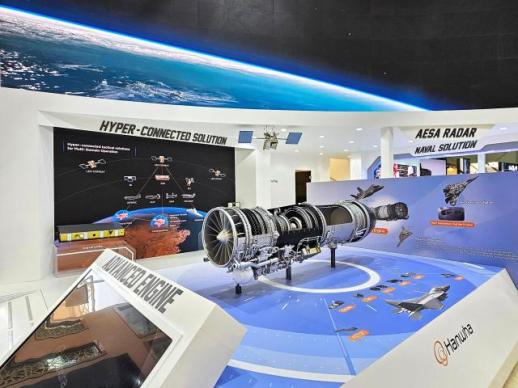 Hanwha Aerospace increases Korea Aerospace Industries stake to pursue management role SEOUL, May 05 (AJP) - South Korea's defense powerhouse Hanwha Aerospace has increased its stake in Korea Aerospace Industries to 5.09 percent and changed its investment status to management participation, signaling a drive to consolidate South Korea's defense and space sectors. The company plans to invest a total of 500 billion won to reach an 8.03 percent stake by the end of the year. This shift positions Hanwha to influence the decision-making processes of South Korea's sole indigenous aircraft manufacturer as it seeks to build a vertically integrated aerospace powerhouse. Hanwha Aerospace disclosed on the fourth of the month that it acquired an additional 100,000 shares, representing 0.1 percent of the company. The purchase brought the combined holdings of Hanwha Aerospace and its affiliates past the five percent threshold. The firm officially reclassified its holding from a simple investment to management participation in a recent regulatory filing. While specific methods of involvement are still under review, the company stated it would participate in decision-making through legal procedures to meet management objectives. Hanwha Aerospace noted it would consider the interests of shareholders and stakeholders during this process. The company currently maintains domestic competitiveness in aircraft engines, avionics, radar, and space launch vehicles. The expansion is interpreted as the final piece of Hanwha Group's defense strategy to create a South Korean version of SpaceX. By combining its engine expertise with the airframe and satellite capabilities of Korea Aerospace Industries (KAI), the group aims to secure an end-to-end aerospace value chain. Market analysts suggest the increased stake and change in investment purpose serve as a foundation for an eventual takeover of the aircraft manufacturer. KAI remains the only domestic firm capable of developing and producing complete aircraft and advanced aerial combat systems. 2026-05-05 14:52:54
 -
 USTR to Hold Section 301 Hearings on Overcapacity With South Korea, 15 Others The Donald Trump administration, seeking new tariffs to replace reciprocal tariffs that were struck down, has launched a Section 301 investigation and will hold public hearings with major trading partners including South Korea. The Office of the U.S. Trade Representative said in a statement on May 4 (local time) that it will hold hearings May 5-8 at the U.S. International Trade Commission in Washington on economic policies and trade practices related to overcapacity involving 16 countries, including South Korea and China. On May 5, Lee Seung-heon, director of the Americas Trade Division at South Korea’s Ministry of Trade, Industry and Energy, is expected to appear on a panel to explain Seoul’s position. In an official written submission to USTR on April 16 tied to the Section 301 probe, the South Korean government said it is pursuing voluntary, preemptive restructuring efforts in sectors facing global overcapacity, including petrochemicals and steel. On forced labor, it said it is working to eradicate the practice based on International Labour Organization conventions. The hearings follow USTR’s launch in March of a Section 301 investigation into overcapacity-related practices covering 16 countries, including South Korea, China and Japan. Separately, USTR has opened a Section 301 investigation into forced labor involving about 60 countries, including South Korea and Japan. Section 301 authorizes the United States to take action against foreign policies and practices deemed unfair and affecting U.S. trade. After the U.S. Supreme Court in February invalidated reciprocal tariffs imposed under the International Emergency Economic Powers Act, the Trump administration imposed a new 10% global tariff under Section 122 and has been exploring additional tariffs under Section 301. USTR is expected to complete the Section 301 investigation by July 24 and then impose tariffs based on the findings.* This article has been translated by AI. 2026-05-05 14:50:25
 -
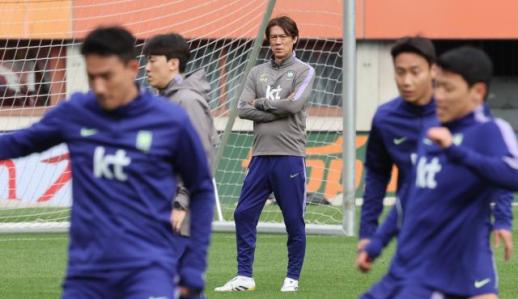 South Korea to Face El Salvador in Final World Cup Warmup at 1,356-Meter Altitude South Korea’s national soccer team, coached by Hong Myung-bo, will play El Salvador in its final tuneup ahead of the 2026 FIFA World Cup in North America. The El Salvador Football Federation said on its official social media on May 5 (Korea time) that the teams will meet June 3 at 5 p.m. local time at America First Field in Sandy, Utah. El Salvador is ranked 100th by FIFA, well behind South Korea at 25th, and failed to qualify for the World Cup finals. South Korea last played El Salvador in June 2023 in Daejeon, finishing in a 1-1 draw. The main objective of the match is altitude acclimatization. America First Field sits 1,356 meters above sea level, similar to Guadalajara, Mexico, at 1,571 meters, where South Korea plans to play its first two group-stage matches and set up its base camp. The team aims to use the Utah match to help players adjust physically to high-altitude conditions expected at the World Cup. Hong’s squad will announce its final World Cup roster on May 16 at a fan festival site in Gwanghwamun. The team is to depart May 18 for Salt Lake City to begin a pre-tournament camp. During the roughly 20-day camp, South Korea plans to sharpen tactics while conducting altitude training, then move to Guadalajara on June 5.* This article has been translated by AI. 2026-05-05 14:49:35
 -
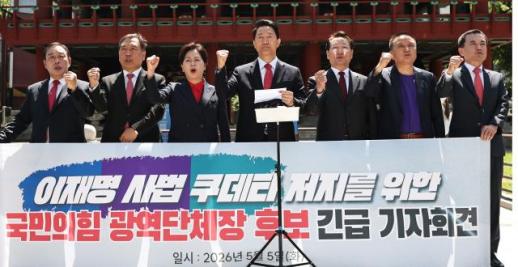 People Power Party Local Candidates Demand Withdrawal of Special Counsel Bill Candidates from the People Power Party running for metropolitan and provincial governor posts in the June 3 local elections demanded on May 5 that the Democratic Party withdraw what it calls a special counsel bill to investigate alleged “fabricated indictments.” They said the measure amounts to an unconstitutional attempt to cancel prosecutions to benefit President Lee Jae-myung and would undermine the constitutional order and the rule of law. Oh Se-hoon, the PPP’s Seoul mayoral candidate, and nine other PPP candidates held an emergency news conference in front of Bosingak in central Seoul and released a resolution titled “PPP metropolitan and provincial candidates’ statement to stop Lee Jae-myung’s judicial coup attempt.” Also attending were Incheon mayoral candidate Yoo Jeong-bok, Sejong mayoral candidate Choi Min-ho, Gyeonggi gubernatorial candidate Yang Hyang-ja, Gangwon gubernatorial candidate Kim Jin-tae, North Chungcheong gubernatorial candidate Kim Young-hwan and North Jeolla gubernatorial candidate Yang Jeong-mu. PPP candidates Lee Jeong-hyeon, running for the Jeonnam-Gwangju integrated mayor post, and Moon Seong-yu, running for Jeju governor, did not attend but joined the statement. The candidates said the bill is “a clear attempt at a judicial coup” that would shake the national justice system “for the sake of one person,” Lee, and warned it would face “harsh public judgment.” They said they would not stand by and pledged to fight “to the end” alongside political parties, civic groups and citizens who share the goal of defending the constitutional order. They urged the Democratic Party to withdraw the bill and called on Lee to pledge that he will not seek cancellation of prosecutions during his term. “The Democratic Party must immediately halt the push for a special counsel bill aimed at an unconstitutional cancellation of prosecutions for Lee Jae-myung’s self-exoneration, and it must withdraw the bill already introduced,” they said. They also called on Lee to “clearly state before the public” that there will be no cancellation of prosecutions related to his own allegations during his term and that he will stand trial according to law and principle. They also demanded that ruling-party candidates for metropolitan and provincial posts “immediately disclose to the public” whether they support or oppose the special counsel bill. Before the statement was read, Yang Jeong-mu said, “You can’t cover the sky with your hand,” adding that no one in South Korea can be above the law and that everyone is equal before it. Kim Jin-tae, who led the news conference, cited what he called an old principle of Roman law — that no one can be a judge in their own case — and said denying that principle would amount to a collapse of the rule of law and “insurrection.” The PPP candidates said they plan to rally public opinion to block the bill, including through a nationwide online petition. Oh said the party is working to flesh out ways to cooperate with opposition forces and would announce details once they are set. Oh, Yoo and Yang Hyang-ja met the previous day at the National Assembly with New Reform Party candidates Kim Jeong-cheol, running for Seoul mayor, and Cho Eung-cheon, running for Gyeonggi governor, and agreed to work together to stop the bill.* This article has been translated by AI. 2026-05-05 14:48:14
 -
 Rising Exchange Rate and Oil Prices Push Up Meat and Egg Costs in South Korea Rising exchange rates and higher global oil prices are pushing up livestock product prices across the board in South Korea, hitting both domestic and imported meat. Analysts say the usual role of imported meat as a buffer against food inflation is weakening, adding pressure on household grocery bills. According to the Korea Institute for Animal Products Quality Evaluation, as of May 4, Grade 1 hanwoo tenderloin averaged 14,663 won per 100 grams, up 19.3% from the seasonal norm of 12,294 won. Grade 1 hanwoo sirloin averaged 10,443 won per 100 grams, a 13.5% increase from normal levels. Pork belly, a staple for dining out, averaged 2,828 won per 100 grams, up 12.4% from the typical 2,516 won. On a monthly basis, the price rose from 2,601 won in March to 2,644 won in April, and averaged about 2,812 won in May. Pork shoulder averaged 2,637 won per 100 grams, up 13.1% from the norm of 2,331 won. Broiler chicken averaged 6,566 won per kilogram, up 11.0% from the typical 5,914 won. Egg prices also climbed: a 30-egg tray of extra-large eggs averaged 7,273 won, up 6.3% from the norm of 6,843 won. Imported meat, long seen as a cheaper alternative, also rose. U.S. chilled chuck eye roll averaged 4,091 won per 100 grams, up 31.4% from the typical 3,114 won. U.S. chilled rib finger meat averaged 4,804 won, up 14.8% from 4,185 won, and U.S. frozen beef short ribs averaged 4,452 won, up 10.7% from 4,020 won. Imported pork averaged 1,522 won, above the typical 1,448 won. The broad rise is being attributed to overlapping global headwinds, including higher international oil prices amid instability in the Middle East, greater exchange-rate volatility, and rising feed and logistics costs. Higher energy and raw-material prices are being reflected in production and distribution costs with a lag, adding to upward pressure on retail prices. In response, the government plans to provide 10 billion won in discount support for agricultural and livestock products in May and June. It will offer discounts of up to 40% on items including rice, eggs and chicken, and will expand the list to include onions, napa cabbage, cabbage, tomatoes, Korean melons, zucchini and bell peppers. It also plans to support discounts of up to 50% for hanwoo and pork in cooperation with industry-funded promotion groups. Major supermarket chains also plan to continue special promotions this month to ease the burden on shoppers. Earlier, leading retailers including E-Mart and Lotte Mart ran large discount events on key agricultural and livestock products through May 6. E-Mart is also reported to be planning an additional discount event around May 9-11 in cooperation with the Korean Pork Producers Association. 2026-05-05 14:45:15
 -
 Incheon Port Authority to Subsidize K-Beauty SMEs’ Costs for 2026 Beauty & Healthcare Show Incheon Port Authority is offering support to help small and midsize K-beauty companies expand overseas, including subsidies to participate in a major local beauty and health expo and opportunities to meet foreign buyers. The authority, known as IPA, said on May 5 it is recruiting companies for its support program tied to the 2026 Beauty & Healthcare Show expo. Demand for K-beauty products has been rising. The Ministry of Food and Drug Safety said Korea’s cosmetics exports totaled $3.1 billion in the first quarter of this year. IPA said it will select 20 small and midsize companies and cover 50% of their booth costs, while setting up a joint IPA exhibition hall. The program is designed to promote products from smaller firms that have struggled to enter overseas markets and to support market development through activities such as one-on-one export consultations with foreign buyers. Companies seeking to participate can apply through the Win-Win Nuri website from May 6 to 19. Final selections will be announced after a document review. Now in its 11th year, the Beauty & Healthcare Show is Incheon’s flagship beauty and health exhibition. It will be held July 23-25 at Songdo Convensia in Incheon. IPA said it has supported small and midsize K-beauty companies’ participation in the show for four years to strengthen their global competitiveness. Shin Jae-wan, head of IPA’s ESG Management Office, said the project is a signature shared-growth program aimed at boosting exports by small and midsize companies and revitalizing the local economy. He said IPA will continue to support their entry into global markets based around Incheon Port. 2026-05-05 14:36:26