
Journalist

Lee Hugh
=
-
 Korea to Launch Auto Insurance Discounts for Drivers Joining License-Plate Rationing Auto insurance products offering discounts to drivers who join the vehicle “5-day rotation” program are expected to be launched next month. Officials also said they will decide whether to implement a fourth round of an oil price cap after weighing market impact, global oil prices and the public burden. The Democratic Party, the government and the presidential office said they discussed those steps and other responses to the Middle East situation at a senior meeting held April 22 at the prime minister’s official residence in Samcheong-dong, Seoul. Kang Jun-hyeon, the Democratic Party’s senior spokesperson, said the nonlife insurance industry will roll out “a special rider” next month that discounts auto insurance premiums for drivers who participate in the 5-day rotation, providing benefits to people who voluntarily join energy-saving efforts. He said officials plan to draw up measures within this month to ease crowding on public transportation and broaden participation in energy conservation. He added they will also prepare steps to promote “green consumption,” including boosting tourism during the May holiday period. On the fourth oil price cap, the party, government and presidential office agreed to make a decision after comprehensively considering market effects, international factors and the burden on the public. During the meeting, the Democratic Party asked the government to respond more actively to minimize supply-chain disruptions affecting naphtha and crude oil. The government said it will manage the smooth import of 273 million barrels of crude oil and 2.1 million tons of naphtha that a strategic economic cooperation envoy team secured in Central Asia and the Middle East. It also said it will actively support crude imports through Yanbu Port in Saudi Arabia and proceed with a 670 billion won program, reflected in the supplementary budget, to cover the gap in naphtha import unit costs to support naphtha imports. Of the 26.2 trillion won supplementary budget, the government said it has selected 25 trillion won for management and plans to execute more than 85% of 10.5 trillion won in projects requiring rapid spending in the first half of the year. The party, government and presidential office said they will continue efforts to stabilize domestic supplies of energy and key raw materials amid rapidly shifting Middle East conditions. They also agreed to strengthen on-site inspections to ensure current measures to stabilize supply chains for naphtha, urea solution and syringes operate effectively. * This article has been translated by AI. 2026-04-22 20:21:23
 -
 Unification Ministry Explains Jeong Dong-young’s Mention of Kusong in North Korea Nuclear Remarks The Ministry of Unification said Jeong Dong-young’s recent public mention of Kusong, North Korea, as a location tied to uranium enrichment was based on a broad review of publicly available material, including remarks by the head of the International Atomic Energy Agency and reports by the Institute for Science and International Security. In a reference handout distributed to reporters on Tuesday afternoon, the ministry said Jeong’s mention of “Kusong” was made while citing a keynote speech by IAEA Director General Rafael Grossi on March 2, and was intended to underscore “the seriousness and urgency” of the North Korean nuclear issue. It added that Jeong made a similar point at a ministerial confirmation hearing in July last year, also referring to Kusong as a place where a uranium enrichment facility is believed to be located. The ministry said an ISIS report identified a site near North Korea’s Panghyon Air Base—including the Janggundaesan area and the Panghyon aircraft factory—as the location of a centrifuge development facility. It said many South Korean media outlets cited that report in reporting that a uranium enrichment facility was likely in Kusong, North Pyongan province. The ministry also said a report by the Center for Strategic and International Studies described how claims have repeatedly been raised that the Kusong area is linked to uranium-related nuclear development activity. Jeong told reporters on April 20 that Kusong was mentioned in a CSIS report, but Victor Cha, a CSIS senior official, countered that he had not written such a report. The ministry’s handout appeared aimed at clarifying the basis for Jeong’s remarks. The CSIS report focused on Kusong as a site for high-explosives testing tied to nuclear weapons development, and it did not describe Kusong as a uranium enrichment facility, as Cha said. The ministry said, however, that Kusong was discussed as part of North Korea’s nuclear program infrastructure. The ministry also cited a 2010 report by the U.S. Congressional Research Service that mentioned Kusong as a candidate location for a North Korean highly enriched uranium facility. * This article has been translated by AI. 2026-04-22 19:51:17
 -
 LG Display to Invest 1.106 Trillion Won in New OLED Infrastructure LG Display is moving ahead with a new facility investment worth about 1 trillion won to bolster its organic light-emitting diode, or OLED, technology competitiveness. The company said it disclosed after a board meeting on the 22nd that it will invest 1.106 trillion won in new OLED infrastructure. It said the move is aimed at advancing OLED technology to strengthen its technological edge and growth foundation. The investment period runs from that day through June 30, 2028. LG Display said that following the OLED production facility investment it disclosed in 2025, it will continue upgrading its business structure around OLED with the latest spending. The company said it plans to focus its capabilities on solidifying technology leadership and strengthening future growth engines. * This article has been translated by AI. 2026-04-22 19:30:14
 -
 People Power Party Faces Internal Calls for Jang Dong-hyeok to Step Down Amid U.S. Trip Controversy Two days after returning from a trip to the United States, People Power Party leader Jang Dong-hyeok is still facing controversy, with some in his party continuing to press—directly and indirectly—for his resignation. Jang has sought to shift attention to the South Korea-U.S. alliance, but the party has struggled to unify and focus its efforts ahead of the June 3 nationwide local elections and other contests. In a Facebook post on April 22, Jang wrote that the United States is asking, “Are you coming with us or not?” He added that saying “thank you” in front while saying “xie xie” behind would “wreck” both the economy and national security. The message was widely read as a warning that a misstep in foreign policy amid a rapidly changing international order could cost South Korea on both fronts. Jang also said that during his U.S. visit, American figures asked, “Why is the South Korean government discriminating against U.S. companies, its ally, and trying to align with Chinese companies?” A day earlier, Jang posted that President Lee Jae-myung was effectively preparing to “decide to break up” with the United States. He also uploaded a photo of President Donald Trump that the White House had posted on social media when the United States captured and transferred Venezuelan President Nicolas Maduro. Inside the party, some lawmakers said they do not understand Jang’s overseas push. A first-term lawmaker said it was unclear how the U.S. trip connected to the local elections or how the delegation was chosen, adding that if many in the organization cannot understand it, Jang should explain rather than vaguely saying he cannot discuss it “as a matter of precedent.” Calls for Jang to take responsibility have also surfaced publicly. Kim Jin-tae, the People Power Party’s candidate for Gangwon governor and the incumbent governor, urged Jang to “resolve what you started” when Jang visited Yangyang County on April 22—remarks that could be interpreted as a demand for Jang to step back or resign. Jang responded by deflecting, saying he did not know what Kim meant by the phrase. Compounding the pressure, the Democratic Party has again hinted it could take all National Assembly standing committee posts in the second half of the parliamentary term. Floor leader Han Byung-do said at a resignation news conference the previous day that allocating committee chairmanships is meant to ensure competition and balance, but if chairmanships are used as a tool for political conflict, the allocation itself becomes meaningless. The remarks were seen as signaling that if he wins another term as floor leader, the party would regroup after the parliamentary by-elections and restart what it calls a “working National Assembly.” Critics inside and outside the People Power Party say the “Jang Dong-hyeok leadership” is now beset by both internal strife and external pressure, with neither steady leadership nor party unity in evidence. The party has struggled to manage a string of conservative figures running as independents in Daegu and Busan, and it has not settled internal debate over calls to field no candidate in Busan Buk-gap. With the June 3 local elections and parliamentary by-elections 42 days away, concerns are growing that the party must concentrate its resources on the campaigns. A political source said those working on the ground in the elections are likely “on edge,” adding that the party appears to remain unsettled despite the looming votes.* This article has been translated by AI. 2026-04-22 18:54:23
 -
 Steel, Shipbuilding Labor Disputes Flare Over Direct Hiring and Bonus Standards Steel and shipbuilding companies are taking unusual steps to fix long-standing prime contractor-subcontractor structures, including large-scale direct hiring of partner-firm workers. But discontent on the ground is growing as disputes erupt over how compensation should be set. Industry officials said April 22 that tensions at POSCO have reached an unprecedented level after the company presented detailed guidelines for directly hiring 7,000 workers from partner firms. Under the roadmap, the new hires will be placed in a newly created “Operations Synergy (S)” job category. Pay will be set across seven grades. The plan also includes a 400% bonus and, when the company posts a profit, a management performance bonus of at least 800%. Both unions have voiced strong objections. The subcontractor union says the plan lacks clear standards for years of service, which would be used to calculate bonuses and performance pay. The prime contractor union argues that recognizing subcontractor workers’ experience could disrupt existing promotion order and undermine fairness in personnel decisions. Hyundai Steel’s union is also moving to secure the right to strike, including by applying for mediation at the National Labor Relations Commission, as it demands a special performance bonus at the same level as Hyundai Motor and Kia. Shipbuilding is facing similar friction. Subcontractor unions at shipyards are pressuring management, citing the Yellow Envelope law, to match not only wages but also performance bonuses with those of prime contractor workers. The prime contractor and subcontractor unions at HD Hyundai Heavy Industries (the union’s branch and local chapter under the metalworkers’ union) held a news conference at Ulsan City Hall on April 22, saying the company unilaterally changed the performance-bonus payment date, leaving some subcontractor workers who retired at mandatory retirement age unable to receive it. They demanded immediate payment of unpaid year-end performance bonuses to subcontractor workers. The metalworkers’ union’s Welliv chapter, which represents workers at Hanwha Ocean’s in-house food service contractor, has also requested direct talks with management over performance-bonus payments. Companies say the growing labor-labor conflict is adding to management burdens. They warn that disputes could expand beyond wages and working conditions into business decisions such as new investment, outsourcing operations and organizational restructuring. They also fear that if prime contractor and subcontractor unions demand bargaining at the same time, decision-making will slow, increasing the risk of production disruptions, delivery delays and workplace confusion. Jeong Yeon-seung, a professor of business administration at Dankook University, said protecting workers’ rights is important, but the country must also consider the competitiveness of entire industries, not just individual companies. “As global competition intensifies, strategic industries must grow enough to secure competitiveness for both companies and workers to expect sustainable growth,” he said.* This article has been translated by AI. 2026-04-22 18:50:35
 -
 Samsung Electronics Union Plans Rally, Signals Possible May General Strike Samsung Electronics’ labor union is signaling a new confrontation, announcing plans for a large rally and warning of a general strike. The move has revived concerns of a repeat of the company’s first-ever strike two years ago, which disrupted its semiconductor operations, as global competition intensifies and critics warn the dispute could benefit rivals. According to the industry on April 22, the union’s joint struggle headquarters will press ahead with a rally on April 23 at the company’s Pyeongtaek campus as a prelude to a planned general strike in May. The hard-line stance has heightened tensions by recalling conditions from two years ago, when management uncertainty and worsening chip results were at their peak. In July 2024, the union launched a 25-day strike, demanding higher wages, expanded vacation and changes to the performance-bonus system. At the time, Samsung’s Device Solutions division — including memory, foundry and System LSI — was in an unusually deep downturn. Among shareholders and investors, worries circulated that Samsung Electronics could be in serious trouble. With the technology gap narrowing and profitability weakening, the strike further damaged confidence, the article said. The latest strike threat could be more damaging than the one two years ago, industry officials said. Even as the chip market enters a supercycle, competition is so intense that any disruption could push Samsung out of the front ranks. If a strike occurs, losses could reach the trillions of won and undermine trust among global customers, the article said. Kim Dae-jong, a professor in the business administration department at Sejong University, said timely supply is critical in high-bandwidth memory and the foundry business. He warned that partnerships Samsung has built over decades with global big-tech companies could be weakened by internal labor-management conflict. Rivals, by contrast, are focused on technology and expansion under what the article described as nonunion management. Taiwan’s TSMC, the world’s top foundry, along with U.S. chipmakers Intel and Micron, are expanding production lines and accelerating research and development with strong government support in a stable labor environment, it said. The companies are closely watching Samsung’s labor moves and appear to be positioning for potential gains. Intel and Tesla have been recruiting memory engineers in South Korea with what the article called unusually generous terms. Micron has also begun stepping up communications efforts in South Korea this month to expand its presence in the market. Major foreign media have warned that a strike at Samsung could hurt the global semiconductor supply chain. Bloomberg called it a serious setback at a time when competition for leadership in artificial intelligence is reaching a peak. China’s state-run Xinhua News Agency said it could have ripple effects across industries that use semiconductors, including autos, computers and smartphones. Lee Jong-hwan, a professor in the system semiconductor engineering department at Sangmyung University, said Samsung is the only chip company in the world with capabilities in both memory and non-memory businesses. He said allowing internal conflict to hold the company back could become a self-defeating choice that undermines what it has built in semiconductors.* This article has been translated by AI. 2026-04-22 18:49:18
 -
 Hyundai Motor union seeks 30% of net profit as bonus, raises AI robot job concerns in wage talks Hyundai Motor Co. and Kia are expected to face a difficult round of annual wage and labor talks, with unions pressing demands that management is unlikely to accept, including bonuses equal to 30% of net profit, opposition to deploying the humanoid robot Atlas, a 100 million won childbirth incentive and an extension of the retirement age. According to the auto industry on the 22nd, Hyundai Motor management and the union will meet for the first time early next month at the company’s Ulsan plant to begin full-scale negotiations for this year’s wage and labor agreement. The Hyundai Motor union has finalized a proposal calling for a 149,600 won increase in monthly base pay (excluding step increases), a bonus equal to 30% of last year’s net profit, adoption of a fixed monthly salary system, an increase in bonuses to 800% from 750%, guarantees on working conditions as artificial intelligence is introduced, and an extension of the retirement age linked to the timing of National Pension eligibility. Expanded use of AI is also expected to become a key issue, as rapid automation and the shift to smart factories reduce the role of existing workers. The union has objected to placing the humanoid robot Atlas on production lines and to any reduction in domestic output tied to increased production at overseas plants. The union’s push for a “complete monthly salary system,” under which pay is fixed once certain working hours are met, is also aimed at protecting members if workloads fall as AI robots are introduced. The union says the change would raise the share of fixed pay workers receive each month. Kia’s union is also seeking a 149,600 won base-pay increase, a bonus equal to 30% of last year’s operating profit, a 100 million won childbirth incentive and a guarantee of total employment. The childbirth incentive was reportedly added with reference to a case involving Booyoung Group. Industry attention is focused on this year’s Hyundai Motor Group talks because they are seen as the first major venue for negotiating job security measures tied to new technologies. Critics say the union demands are unrealistic given heavy research and development spending and weaker profitability amid a tougher external environment. Hyundai Motor’s net profit last year was 10.36 trillion won; paying 30% as a bonus would amount to 42.59 million won per employee, according to the report. With sharp differences expected on the main issues, many in the industry say a final deal will be hard to reach. Last year, the Hyundai Motor union entered a partial strike after failing to narrow differences with management, ending a seven-year streak without work stoppages. A Hyundai Motor official said the company would “avoid unnecessary attrition” and “do its best” to reach a reasonable outcome that allows labor and management to coexist."* This article has been translated by AI. 2026-04-22 18:48:20
 -
 Seoul appeals court rejects Joo Ho-young bid to halt PPP Daegu mayor primary cutoff Rep. Joo Ho-young, who was cut from the People Power Party’s primary for Daegu mayor ahead of the June 3 local elections, failed again to win a court order suspending the party’s decision. On the 22nd, the Seoul High Court’s Civil Division 25-1 rejected Joo’s appeal of a lower-court ruling that denied his request for an injunction to halt the effect of the party’s cutoff decision. The panel, led by Presiding Judges Lee Kyun-yong, Hwang Byung-ha and Han Chang-hoon, appeared to agree with the lower court that there was no serious defect in the nomination review process warranting judicial intervention. The party’s nomination management committee had previously decided to cut Joo, a six-term senior lawmaker, and Lee Jin-sook, a former chair of the Korea Communications Commission, and to hold a preliminary primary among the remaining six candidates. Joo filed for an injunction at the Seoul Southern District Court, calling the decision unfair and in violation of party rules, but the court rejected the request on the 3rd. In that ruling, the court said the submitted materials did not make it clear that the party’s screening had “markedly lost objective rationality” or involved a serious illegality such as a procedural violation. Joo filed his appeal with the Seoul High Court on the 8th. With the high court also siding with the party, the Daegu mayoral race is expected to shift. Joo has said he would “keep all options open and watch carefully,” signaling he could run as an independent if his injunction bid was rejected. If Joo runs as an independent, he would face Democratic Party candidate Kim Boo-kyum, the People Power Party nominee still to be chosen between Choo Kyung-ho and Yoo Young-ha, Lee—who is also weighing an independent run—and Lee Soo-chan, head of the Daegu chapter of the Reform Party. * This article has been translated by AI. 2026-04-22 18:31:09
 -
 South Korea says Coupang probe follows domestic law, separate from security talks with U.S. Cheong Wa Dae said the government will continue consulting with the United States so issues involving Coupang do not negatively affect South Korea-U.S. security discussions. A Cheong Wa Dae official said on the 22nd that the two countries are communicating closely through various channels to implement security agreements outlined in a joint factsheet. The official said Seoul’s position in talks with Washington is that security discussions should move forward separately from the Coupang matter. The official also stressed that any investigation into Coupang will be handled under South Korean domestic law and due process. Park Yoon-joo, first vice foreign minister, told the National Assembly’s Legislation and Judiciary Committee that the government is explaining that fair law enforcement will be carried out in areas related to domestic legal procedures. He said the government will manage and communicate closely so the issue does not become an obstacle to matters agreed between the two governments. The Foreign Ministry also said in a media notice on the 22nd that the two countries are in close communication through various channels to implement the joint factsheet’s security agreements, and that Seoul has conveyed its view that security discussions should advance separately from the Coupang issue. Earlier, a media report said the U.S. administration had asked the South Korean government to ensure the legal safety of Kim Beom-seok, chairman of the board of Coupang Inc., and indicated that without such steps it would be difficult to hold high-level South Korea-U.S. diplomatic and security talks. * This article has been translated by AI. 2026-04-22 18:30:18
 -
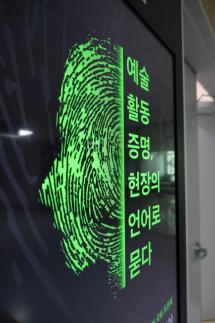 Cash-strapped artists recount struggles with red tape at forum in Seoul SEOUL, April 22 (AJP) - A forum to improve the rights of artists and entertainers alike was held at the National Assembly in Seoul on Wednesday. At the forum hosted by lawmaker Son Sol of the minor far-left Progressive Party, participants discussed various measures to improve their legal rights, address workplace mistreatment, and strengthen support measures. Many of them, hired on independent freelance-based contracts and struggling to make ends meet, are unable to access state-funded support as they are currently bound by regulations that require proof of employment, with red tape making it difficult for them to receive assistance. 2026-04-22 18:25:33