
Journalist

Lee Hugh
=
-
 Foreign Investors Chase Korea’s Rally, Pouring Money Into Surging Stocks Foreign investors are increasingly concentrating money in stocks that are already rising, rather than in undervalued names, reinforcing a trend-following approach. Despite the run-up, they have continued buying on expectations of improving earnings and relatively low valuations. Brokerages said foreign flows could be key to whether the Kospi breaks above 7,000. According to the Korea Exchange on May 5, the 10 most heavily net-bought stocks by foreign investors on the main Kospi market at the end of last month all posted gains compared with the end of March. Samsung Electronics was the top foreign buy on the Kospi, with net purchases of 1.3231 trillion won. Over the same period, its shares jumped 32% to 220,500 won from 167,200 won. SK hynix, the No. 2 net buy, rose 59%. The gains followed record first-quarter results from Samsung Electronics and SK hynix, fueling expectations that a semiconductor earnings recovery will continue. Other strong performers backed by foreign buying included Samsung SDI (up 70%), Doosan Enerbility (39%), Samsung Electro-Mechanics (104%) and Daehan Electric Wire (111%), with some stocks more than doubling as demand clustered in a few names. On the Kosdaq, foreign money flowed into growth stocks, including semiconductor equipment, AI chip and biotech names, many of which surged. Jusung Engineering climbed 107.58%, while FADU rose 70.18% and Koh Young jumped 64.62%. Jeju Semiconductor (49.29%), Hana Micron (42.81%) and HPSP (28.61%) also advanced. Many of the top net-bought Kosdaq names have shifted toward semiconductor equipment, materials and AI infrastructure, highlighting a growing focus on what investors see as core supply-chain plays within growth industries. Analysts said foreign flows have been moving around two main themes: AI and semiconductors, and power infrastructure. They cited expanding data centers and rising demand for high-bandwidth memory, or HBM, as drivers lifting related shares. They added that concentrated buying in tech growth stocks has been evident on the Kosdaq, while the Kospi has seen steadier gains led by large-cap growth names. Foreign investors net bought about 3 trillion won on May 4, the first trading day of the month. Many in the securities industry expect them to be the main force behind a potential Kospi move above 7,000. “Foreign investors continued net buying in May, following April, considering the Korean market’s earnings momentum advantage and relatively low valuation burden,” said Han Ji-young, a researcher at Kiwoom Securities. “They will be the supply-and-demand driver that brings the Kospi into the 7,000 range.” Meanwhile, the average return for the 10 stocks most heavily net bought by individual investors was 18.3%. Of the top 10 net-bought names by individuals last month, eight posted gains from the end of March, while two declined. * This article has been translated by AI. 2026-05-05 14:33:06
 -
 Korean Drugmakers Expand Into Hospital Digital Health Systems Beyond Prescriptions Pharmaceutical companies in South Korea are accelerating moves into hospital-based digital health care, expanding beyond drug sales into patient monitoring and hospital systems. According to the Korea Digital Industry Association, the domestic digital health market in 2024 grew 18.7% from a year earlier to 7.7409 trillion won, marking a second straight year of double-digit growth. The shift is being driven by faster commercialization than new drug development and pressure from lower prices for generic medicines, prompting drugmakers to seek new growth engines. Daewoong Pharmaceutical, which set up a dedicated digital health care marketing division in 2024, is widening hospital adoption of its artificial intelligence solutions. Its flagship product is the bedside monitoring system thynC, which collects and analyzes key vital signs — including electrocardiograms, oxygen saturation and respiratory rate — around the clock and sends real-time alerts to medical staff when abnormalities are detected. ThynC has sped up deployment after becoming the first in South Korea to secure reimbursement under long-term care benefits. The number of installed beds jumped from 90 in 2023 to a cumulative total of about 20,000 last year. The revenue model is usage-based. Daewoong collects payments from hospitals and then pays the developer, Seers Technology, about 3 million won per bed. Contracts are signed by ward, and once installed, the system can generate recurring revenue. Daewoong said revenue from its digital health care business totaled 50.9 billion won last year, and it aims to expand that to about 300 billion won this year. Industry officials say that once such systems become embedded in hospital operations, they are difficult to replace, potentially creating a long-term business base. Yuhan is also moving quickly into digital health care. The company recently partnered with digital health firm Huino to commercialize MemoCue, an AI-based patient monitoring system, and began supplying it to H Plus Yangji Hospital. MemoCue analyzes hospitalized patients’ ECG data in real time to detect warning signs early. It extends monitoring beyond intensive care units to general wards and is expected to be applied to about 100 beds. The system can use a hospital’s existing communications infrastructure, which the company says reduces the burden of adoption. Yuhan has previously built up hospital data through MemoPatch, a long-term ECG monitoring system. At Severance Hospital, cumulative tests have surpassed 10,000, providing real-world use cases. With strengths in major treatment areas such as cancer and cardiovascular disease, the accumulated data could also be used for new drug development and marketing strategies. “As the range of use inside hospitals expands, the pace of data accumulation also speeds up,” an industry official said. “That can widen long-term gaps in business competitiveness between companies.”* This article has been translated by AI. 2026-05-05 14:27:16
 -
 Samsung Electronics Tops Stock Gifts to Minors in April as Youth Accounts Rise Ahead of Children’s Day, Samsung Electronics ranked No. 1 last month among domestic stocks gifted to minors, measured by number of transactions. The trend comes as more accounts are being opened in minors’ names this year, expanding investing under children’s accounts. KB Securities said on May 5 that Samsung Electronics accounted for 56.3% of stocks its customers gifted to children age 18 and under through the firm’s “stock gifting” service. The service allows users to transfer shares they hold to another person through a brokerage’s home trading system (HTS) or mobile trading system (MTS) by entering the recipient’s name and mobile phone number. Samsung’s dominance is widely seen as reflecting expectations for a semiconductor upturn driven by expanding artificial intelligence demand. Seo Seung-yeon, an analyst at DB Securities, said, “At this earnings briefing, Samsung Electronics said it is pursuing or has completed multi-year memory contracts with some customers due to strong AI demand,” adding that the company “said it plans to supply samples of next-generation high-bandwidth memory (HBM4E) starting in the second quarter this year, demonstrating leadership in the HBM market.” After Samsung Electronics, the most-gifted stocks were Kia (6.5%), Kakao (6.1%), HLB (3.7%), EcoPro BM (3.6%), Deoksan Techopia (3.0%), DS Dansuk (2.5%) and POSCO Holdings (2.1%). SK hynix was about 1.5%, which was attributed to its higher share price. Account openings by minors are also rising. Daishin Securities said new accounts for children ages 0 to 9 increased 119.2% as of last month compared with January. That was the fourth-highest growth rate, following people in their 30s (352.6%), 20s (308.4%) and 40s (220.8%). New accounts among teenagers also rose 101.1%. Growth was more modest among older age groups. New accounts rose 45.6% for people in their 50s and 14.7% for those in their 60s, while the 70s and 80s increased 29.7% and 31.9%, respectively. For those 90 and older, new accounts fell 25.0%. Despite the increase in accounts, investment balances declined across most age groups: ages 0 to 9 (-6.0%), teens (-28.1%), 20s (-21.5%), 30s (-39.2%), 50s (-78.2%), 60s (-82.3%), 70s (-42.5%) and 80s (-74.1%). The figures suggest the rise in new accounts is being driven more by small investments than by large inflows of funds.* This article has been translated by AI. 2026-05-05 14:04:54
 -
 Japan’s Takaichi Makes First Australia Trip as Leaders Move Ties Toward ‘Quasi-Allies’ Japanese Prime Minister Sanae Takaichi met Australian Prime Minister Anthony Albanese in Canberra on May 4 (local time) and agreed to broaden cooperation across defense, economic security, energy and cyber issues, Japanese media reported. It was Takaichi’s first trip to Australia since taking office and came in the 50th year since the two countries signed the Japan-Australia Basic Treaty of Friendship and Cooperation. Takaichi said the two nations were building ties that could be described as “quasi-allies.” Japanese outlets highlighted defense cooperation. Australia in April selected an upgraded version of Japan’s Maritime Self-Defense Force Mogami-class destroyer escort as its next navy frigate. The Yomiuri Shimbun reported that of 11 ships to be deployed, three will be built in Japan and eight in Australia. The arrangement would expand production and maintenance hubs to Australia and strengthen the two countries’ ability to sustain operations. Quoting a Japanese Defense Ministry official, the paper said operating the same ships would allow joint crew training and enable operations on a shared foundation of unit practices. The Nikkei said the deal is tied to Japan’s shift in defense exports. In April, the Japanese government abolished “five-category” restrictions that had limited exports of lethal defense equipment. If the upgraded Mogami-class ships are produced in Australia, it could also support future supply to allies and partners. Yomiuri quoted Australian Defense Minister Richard Marles as saying, “There is no country in the world that is as strategically aligned as Japan.” After the talks, the leaders issued a “leaders’ statement on enhanced defense and security cooperation,” listing seven priority areas including intelligence collection and analysis, joint development of defense equipment, cooperation to maintain supply chains, and securing sea lanes. With Australia a member of the Five Eyes intelligence-sharing group with the United States and Britain, Japanese media said closer intelligence ties could also aid Takaichi’s push to create a “National Intelligence Agency.” The leaders also agreed to establish a “strategic cyber partnership.” On economic security, the two signed a “Japan-Australia joint declaration on economic security cooperation” and released two joint statements on critical minerals and energy security. The declaration cited “strong concern” about export restrictions, particularly on critical minerals, and said critical minerals would be elevated as a “core pillar” of the bilateral economic security relationship, in a move aimed squarely at China’s rare earth export controls. Japanese media linked the summit to shifting U.S.-China dynamics. The Asahi Shimbun reported that the Trump administration has promoted a Western Hemisphere-first “Monroe Doctrine” approach and that some U.S. forces previously deployed to the Indo-Pacific moved to the Middle East, raising concerns about a “power vacuum.” Yomiuri reported that an amphibious assault ship from the Sasebo base and Marines stationed in Okinawa were dispatched to the Middle East, quoting a Japanese government official as saying cooperation among friendly nations is important to avoid making China think “now is the chance.” Takaichi told the meeting that cooperation with the United States, a shared ally, is indispensable amid a severe international environment, while also making clear Japan would strengthen multilateral coordination such as Japan-U.S.-Australia and Japan-U.S.-Australia-India frameworks, based on ties with Australia. Australia is also grappling with uncertainty over the United States, Yomiuri said. Australia announced in April it would raise defense spending as a share of gross domestic product to 3% by 2033 from about 2.8%, but that remains below the 3.5% sought by the United States. The paper said the Trump administration at one point signaled it would review AUKUS plans for Australia to deploy nuclear-powered submarines, stirring concern in Australia. China is another pressure point. Nikkei reported that after experiencing economic coercion such as China’s restrictions on coal imports during the early 2020s COVID-19 period, Australia shifted policy toward reducing dependence on China. In 2025, a Chinese naval flotilla conducted live-fire drills in the Tasman Sea between Australia and New Zealand, raising regional tensions, the paper said. Australia’s national defense strategy released in April said China’s growing national power and military buildup are major drivers reshaping the regional security environment. Michael Green, head of the United States Studies Centre at the University of Sydney, told Asahi that Australia’s Labor government is trying to redefine the United States from a partner that “shares common values” to one that “shares interests.” He urged strengthening Japan-U.S.-Australia security cooperation to boost deterrence and diversifying supply chains to reduce risks from dependence on China.* This article has been translated by AI. 2026-05-05 14:03:20
 -
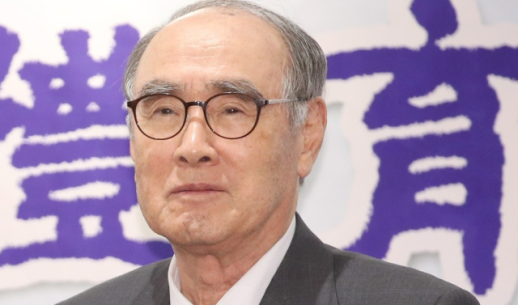 Former South Korean Prime Minister Lee Hong-koo Dies at 92 Former Prime Minister Lee Hong-koo died on May 5. He was 92. Born in 1934, Lee was a professor of political science at Seoul National University and a leading senior figure in South Korea’s political science community. After attending Kyunggi High School and studying at Seoul National University, he continued his academic work at Emory University and Yale University in the United States. He published numerous papers and columns in academic journals and major media outlets, offering theoretical and practical analysis of modern Korean politics. He also served as president of the Korean Political Science Association. Lee entered public service in 1988 under the Roh Tae-woo administration as minister of the National Unification Board. He later served as a special political adviser to the president and as ambassador to the United Kingdom, building experience in diplomacy and inter-Korean affairs. Under the Kim Young-sam administration, he served as senior vice chairman of the National Unification Advisory Council and as deputy prime minister and minister of the Unification Board. In 1994, he was appointed the 28th prime minister, overseeing state affairs. He was credited with involvement in early reform efforts of the civilian government and in coordinating domestic and foreign policy. After leaving the premiership, Lee returned to frontline politics in 1996 as chief representative of the then-ruling New Korea Party. That year, he won a proportional representation seat in the 15th National Assembly. With the launch of the Kim Dae-jung administration, he was appointed the first ambassador to the United States in early 1998 and played a role in strengthening South Korea-U.S. economic and diplomatic cooperation during efforts to overcome the foreign exchange crisis. After retiring from public office, Lee remained active as chairman of the Seoul International Forum, an adviser to the JoongAng Ilbo, chairman of the Yumin Cultural Foundation, an adviser to the Korea Volleyball Association, and a board member of the Asan Foundation, among other roles. Survivors include his wife, Park Han-ok; a son, Lee Hyun-woo, EIG Asia representative; daughters Lee So-young and Lee Min-young, a professor at Dongduk Women’s University; a daughter-in-law, Hwang Ji-young, head of the Hong Kong Korean Women’s Association; and a son-in-law, Lee Kang-ho, a professor at the Korea National University of Arts. A memorial altar has been set up in Room 20 of the funeral hall at Seoul Asan Medical Center. A funeral ceremony will be held at 8 a.m. on May 8, with the coffin to be carried out at 9 a.m. Burial will be at Cheonan Park Cemetery. 2026-05-05 13:57:50
 -
 21 Dead, 61 Hurt in Explosion at China Fireworks Factory Ahead of Trump Visit A major explosion at a fireworks manufacturer in China killed 21 people and injured 61 as U.S. President Donald Trump prepares to visit the country, according to Chinese state media. Chinese President Xi Jinping ordered a swift investigation and strict accountability for those responsible. China’s state-run Xinhua News Agency reported that the blast occurred at about 4:43 p.m. the previous day at a fireworks company in Liuyang, Changsha, in Hunan province. Authorities initially reported three deaths and 25 injuries, but the toll rose as rescue work continued. As of 8 a.m., 21 people were confirmed dead and 61 injured. The injured were taken to nearby hospitals for treatment. Xi directed officials to intensify the search for missing people and treatment for the wounded, while quickly determining the cause and holding those involved to account. Premier Li Qiang ordered officials to promptly assess casualties and conduct scientifically guided rescue operations to prevent secondary accidents. A command center was set up at the site and large numbers of personnel were deployed. A second, detailed search is underway. Public security authorities have placed the company’s responsible person under control as the investigation and follow-up measures continue. Separately, preparations appeared to be accelerating ahead of a U.S.-China summit planned for next week. China’s Pengpai and Hong Kong’s Ming Pao reported that a U.S. Air Force C-17 transport aircraft landed at Beijing Capital International Airport on May 1, followed by three more C-17s arriving on May 2 and May 3, bringing the total to at least four. Neither government has issued an official statement on the arrivals, but Chinese media have pointed to the possibility the flights carried equipment and supplies for summit preparations. U.S. presidential overseas trips typically involve advance transport of the armored limousine known as “The Beast,” along with communications and security gear. In addition, a bipartisan U.S. congressional delegation led by Sen. Steve Daines, described as a close Trump ally, recently visited China for advance coordination. Pengpai reported the group visited Beijing and Shanghai starting May 1 and focused discussions on economic and trade cooperation and technology issues. Daines previously said U.S.-China competition would be a key topic. Chinese experts said the trip appeared aimed at laying groundwork for the summit. Diao Daming, a professor at Renmin University of China’s School of International Studies, said, “Sen. Daines is seen as an important figure for communication with China within the Republican Party and takes a relatively pragmatic stance,” adding, “This visit will contribute to stabilizing bilateral relations.” He added, “At a time when a possible visit to China by senior U.S. officials is being discussed, the two sides can create a positive atmosphere for high-level interaction by exchanging positions in advance,” and said the inclusion of Democratic lawmakers showed “both U.S. parties” were willing to strengthen communication with China. The U.S. side has said Trump plans to visit China on May 14-15 for a summit with Xi, but the Chinese government has not officially confirmed it. U.S. Treasury Secretary Scott Bessent said Trump’s China trip would not change despite ongoing military tensions between the United States and Iran. In a May 3 interview with Fox News, he said, “As far as I know, President Trump is not trying to change the schedule.”* This article has been translated by AI. 2026-05-05 13:53:04
 -
 Korea Aerospace Administration chief meets U.S. space firms after satellite launch Oh Tae-seok, administrator of the Korea Aerospace Administration, met with major U.S. space companies in the United States after the successful launch of South Korea’s Next-Generation Mid-Sized Satellite No. 2, seeking cooperation to strengthen the competitiveness of the country’s private space industry. The agency said Tuesday that Oh on May 3 (local time) successfully completed his duties as head of the launch management team at Vandenberg Space Force Base. The satellite was launched at 4 p.m. Korea time aboard a Falcon 9 rocket and, about 60 minutes later, was placed into a 498-kilometer sun-synchronous orbit. At 5:15 p.m. the same day, communications with the Svalbard ground station in Norway confirmed normal operation of the spacecraft and key systems. The agency described it as the first mid-sized satellite independently developed by a private company based on 500-kilogram-class standard platform technology, calling it a symbolic result showing a shift in space development from government-led to private-led efforts. Oh continued what the agency described as on-site outreach the next day, May 4, visiting key space companies near California. He first went to Umbra Space to review the company’s development and use of synthetic aperture radar-based small satellites. With Umbra Space, which has been rapidly expanding commercial satellite data services for disaster response and security, he discussed cooperation on private-led small-satellite development and ways to use satellite data. Oh then met with SpaceX officials and formally requested coordination on the schedule for Next-Generation Mid-Sized Satellite No. 4, which is set for launch in the second half of the year. The agency said the meeting focused on schedule management after a previous delay, when a planned joint launch of satellites No. 2 and No. 4 was changed to separate launches due to SpaceX circumstances. The sides also discussed launch plans for follow-on satellites the agency is pursuing, including GEO-KOMPSAT-3, and exchanged views on the global launch market and the direction of technological development. “Building on the successful launch of the private-led Next-Generation Mid-Sized Satellite No. 2, Korea’s space industry also needs a rapid transition to a private-led approach,” Oh said. He said the agency would actively pursue expanded cooperation with major space powers and companies to strengthen the space-technology competitiveness of South Korean private firms. * This article has been translated by AI. 2026-05-05 13:52:12
 -
 Spirit Airlines Shuts Down, Sparking Consumer Backlash and a Buyout Push Spirit Airlines, the U.S. ultra-low-cost carrier known for charging extra for nearly everything, abruptly announced it was shutting down on May 2 (local time), drawing mixed reactions from consumers. Some supporters have even launched a website to raise money in a public buyout effort. According to USA Today and other outlets, Spirit said it would end operations at 3 a.m. on May 2 and close. The airline had planned to operate more than 4,000 domestic flights through May 15, but all future flights were canceled. Most tickets were refunded the day the shutdown was announced, the newspaper reported. Passengers who bought tickets using vouchers or miles, however, must wait while bankruptcy proceedings continue. Spirit’s collapse had been widely anticipated in the industry. The airline sought bankruptcy protection twice, in 2024 and last year. Reuters reported that the Donald Trump administration recently held talks to provide Spirit with $500 million (about 739 billion won) in exchange for 90% of its shares, but the effort failed. A creditor-side official told Reuters, “The Trump administration tried hard to save Spirit, but you can’t bring a dead body back to life.” Spirit was founded in 1983 as Charter One Airlines, operating charter flights, and renamed itself Spirit in 1992 after introducing jet aircraft. Beginning in 2007, it shifted to an ultra-low-cost strategy, charging separately for services such as seat selection, baggage, onboard drinks and counter service. That model worked for years. Spirit posted annual profits through 2020, even as the travel industry was hit by COVID-19, and other budget carriers — including Frontier, Sun Country, Avelo and Allegiant — adopted similar approaches. Major U.S. airlines such as Delta and American have also introduced comparable tactics, including basic economy fares and fees for seat selection. After the pandemic, Spirit’s losses mounted. The airline ultimately said it could not withstand a surge in fuel prices tied to the Iran war. Spirit had built its recovery plan on jet fuel forecasts of about $2.24 a gallon this year and $2.14 next year, but prices jumped to $4.24 a gallon after the war began. Consumers have long criticized Spirit for frequent schedule changes and cancellations with little compensation, and for charging for nearly all add-ons. Online, bags are even marketed to fit Spirit’s allowed “personal item” size. One consumer told Fox News that while the ticket itself cost $75 (about 110,000 won), adding baggage and a seat brought the total to $300 (about 440,000 won). “Spirit is good only when you’re traveling with just a backpack and no luggage,” the consumer said. Korean online travel communities have echoed the complaints, with posts saying the airline “takes even your spirit” through fees and that “everything is paid except the staff’s smile.” The shutdown has also raised concerns about mass job losses and consumer harm. The U.S. airline industry is running hiring programs for Spirit employees and offering discounted tickets to customers holding canceled Spirit bookings. In Washington, blame has become a political issue. Transportation Secretary Sean Duffy criticized the Biden administration, saying then-Secretary Pete Buttigieg blocked a Spirit-JetBlue merger and contributed to the crisis. Buttigieg responded that Spirit went bankrupt after jet fuel prices doubled during Trump’s term because of the Iran war. A grassroots effort to buy the airline has also emerged. A site called “Spirit 2.0,” set up by internet users, is raising funds with a minimum contribution of $45 (about 66,000 won). The New York Post reported that 120,000 people have visited the site so far and that $88 million (about 130 billion won) has been pledged.* This article has been translated by AI. 2026-05-05 13:51:15
 -
 Hyundai Department Store’s Mokdong Branch Revamps Living Floor in Biggest Renovation Since 2002 Hyundai Department Store’s Mokdong branch has overhauled its living floor, targeting strong local demand for premium home goods. It is the store’s largest renovation since it opened in 2002. Hyundai Department Store said Tuesday it has reopened the living floor on the B1 level after a full renovation of about 500 pyeong (1,652 square meters), redesigning it as a curated space tailored to customers’ lifestyles. The most prominent addition is a sleep-focused experience zone called the “sleep fitting room.” Customers can lie down in a cozy, private room with dimmed lighting to try high-end mattresses from brands including Simmons and Tempur. The merchandise mix was also adjusted for shoppers seeking both premium products and practicality. The store strengthened its lineup of Nordic-style living brands, a trend that has taken hold in the interior market, adding brands including Fritz Hansen, &Tradition, Stay H, BD and Radof. The branch will also run pop-up stores aimed at consumers in their 30s and 40s, a key customer group. Participants include sink specialist Baekjo Sink, custom chair brand Size of, and lifestyle furniture brand Ceres Home, the company said. A Hyundai Department Store official said the company will continue to build “distinctive content and a premium shopping experience” to position the Mokdong branch as a leading living destination in western Seoul. Department stores have been accelerating renovations at major locations as they seek to offer experiences that differ from online shopping. Shinsegae Department Store’s Hanam branch recently renovated 10 young fashion brands and 18 children’s brands on the first floor, opening new stores including young fashion labels Rave and Duelring and children’s brand Apricot Studio, the first in the Hanam area. The branch reduced the number of brands while expanding individual store size and walkways by about 1.5 times to create a more comfortable shopping environment. Lotte Department Store’s Incheon branch completed a reorganization of its first-floor luxury section, reopening it on the first of this month with hands-on content.* This article has been translated by AI. 2026-05-05 13:47:59
 -
 U.S. to Start Reciprocal Tariff Refunds as Soon as May 12, Total Seen at $166 Billion U.S. tax refund procedures tied to the Supreme Court’s ruling invalidating reciprocal tariffs are expected to begin as soon as May 12 (local time), according to reports. Reuters reported on May 4 (local time), citing a statement from U.S. Customs and Border Protection, that the refund process had been set to start May 11 but was delayed by one day to May 12. Even after the process begins, it is expected to take 60 to 90 days for refunds to be deposited to importers. The move follows a Feb. 20 U.S. Supreme Court decision, by a 6-3 vote, striking down tariffs imposed by the Trump administration under the International Emergency Economic Powers Act, including reciprocal tariffs. The refund process is set to start about three months after the ruling. CBP is estimated to have collected about $166 billion (about 245 trillion won) in tariffs from 330,000 importers under IEEPA, and refunds are expected to be comparable. CBS, citing CBP data, reported that as of April 26 more than 11 million refund claims had been filed. The refunds will go to U.S. importers that brought goods in from overseas, not directly to American consumers. However, major U.S. logistics companies including FedEx and UPS said they plan to pass refunded amounts back to consumers. 2026-05-05 13:47:26