
Journalist

Lee Hugh
=
-
 Culture Minister Choi Hwi-young seeks film industry solutions on holdback, funding “I think we can work through this quickly.” Culture, Sports and Tourism Minister Choi Hwi-young said on the 14th that the government, the film industry and the Korean Film Council should form a public-private consultative body to address pending issues, stressing the need for swift action. Speaking at a meeting with filmmakers in Seoul’s Jung District on supplementary budget planning for the film sector, Choi said there were areas that also required talks with theaters and that he hoped discussions would move forward. The meeting was held to hear industry views on issues including scrapping efforts to legislate a holdback, introducing limits on screen concentration, expanding minimum screening days and increasing policy funds. Attendees included Kim Byeong-in, head of the Korea Scenario Writers Association; Kim Seung-beom, CEO of Niners Entertainment; Baek Jae-ho, head of the Korean Independent Film Association; and director Yang Woo-seok. Earlier, a coalition of 13 major film groups held a news conference saying Korea’s film industry faced a structural crisis and calling for a more active government role, including institutional changes. The groups voiced clear opposition to legislating a “holdback” that would allow films to be released on follow-on platforms such as OTT services only six months after their theatrical run ends. Saying the holdback would amount to a near blackout, they called instead for a system to limit excessive allocation of screens to specific films. Choi noted differing views within the industry and said more discussion was needed. “On holdbacks, there are a variety of opinions even within the film industry,” he said, adding that it did not appear to be an issue to be discussed separately by each side. He said proposals under discussion in the National Assembly were not finalized. “On the big principles, the direction and perspective of the film industry and the government are not different,” Choi said. “What matters is how we turn specific issues into workable measures.” The ministry said it secured a major increase in funding for the film industry through the first supplementary budget for 2026. The package includes 26 billion won for mid-budget film production, 4.5 billion won for independent and art film production, 8 billion won for advanced production support for Korean films, and 27.1 billion won to promote moviegoing, for a total of 65.6 billion won. Choi said he pushed the plan with a sense of crisis that “if film collapses, K-culture collapses,” and with the aim of minimizing the scale of damage from the war in the Middle East. He said the government budget allocated to the film sector for 2026 was 127.9 billion won, and the supplementary budget for the sector was 65.6 billion won. He said support was included for two mid-budget films with production costs of 10 billion to 15 billion won, and that 18 additional films in the 2 billion to 10 billion won range would be designated. Considering the original plan to support 20 mid-budget films, he said, the total support would cover 40 films. 2026-04-14 15:22:03
 -
 Banks Brace for Fierce Bidding for Seoul, Incheon and Other Local Government Depository Deals Local governments’ depository contracts are emerging as a major battleground for South Korea’s banks, with competition expected to intensify as several large jurisdictions near the end of their current agreements. According to the financial industry on April 14, five governments — Seoul, Incheon, Sejong City, South Jeolla Province and North Gyeongsang Province — will see their depository agreements with banks expire at the end of December. Shinhan Bank currently handles Seoul’s first and second depositories. Incheon’s first and second depositories are managed by Shinhan Bank and NH NongHyup Bank, respectively. Sejong City uses NongHyup and Hana Bank; South Jeolla uses NongHyup Bank and Gwangju Bank; and North Gyeongsang uses NongHyup Bank and iM Bank. Seoul is widely viewed as the biggest prize, given its budget size and the prestige of being the city’s main banking partner. Seoul’s total budget this year (general account plus other special accounts) is 51.4778 trillion won, the largest among local governments nationwide. Other banks are signaling strong interest in unseating Shinhan. All five major commercial banks, including Shinhan, attended a proposal briefing held April 9, according to industry officials. Seoul plans to accept proposals through May 6 and then hold presentations by each bank. A revised scoring system could further sharpen the contest. The weighting for interest rates on demand deposits has been increased to 8 points from 6, raising expectations of more aggressive rate offers. Incheon, with a depository of about 15 trillion won, is also expected to be closely contested. The city plans to begin preparing its bid process in June and aims to sign an agreement as early as July. While Shinhan and NongHyup currently serve as depository banks, Hana Bank — which is set to relocate its headquarters to Incheon’s Cheongna International City in September — is emerging as a leading challenger. Analysts say interest rates could be decisive as Incheon pushes an ordinance change that would require rates to be disclosed within 30 days after a depository agreement takes effect. Outside the capital region, competition is also expected for Sejong, South Jeolla and North Gyeongsang. Their budgets this year total more than 28 trillion won: North Gyeongsang at 14.0363 trillion won, South Jeolla at 12.7023 trillion won and Sejong at 2.0829 trillion won. Banks pursue these contracts largely because managing public funds can secure large volumes of low-cost deposits. The average interest rate paid on local government depository funds nationwide last year was 2.53%, according to the Interior and Safety Ministry’s Local Finance Integrated Disclosure System released in January. The contracts are also seen as valuable for reputation. “A city or provincial depository carries symbolic value, but it also delivers substantial practical benefits in areas such as corporate and investment banking,” a financial industry official said. “With some evaluation criteria adjusted and disclosure of contracted rates becoming mandatory, strategic competition among banks is likely to grow even more intense.” 2026-04-14 15:21:00
 -
 Minor party leader Cho Kuk declares bid for parliamentary seat in Pyeongtaek SEOUL, April 14 (AJP) - Cho Kuk, the leader of the minor Rebuilding Korea Party said he will run for a parliamentary seat in Pyeongtaek, Gyeonggi Province in the upcoming local elections in June. At a news conference at the National Assembly on Tuesday, Cho vowed to reform the country by rooting out insurrection forces behind disgraced former President Yoon Suk Yeol's botched declaration of martial law in December 2024. Cho, who had been expected to run in one of several contentious districts such as Ansan, Hanam and Busan, said he chose Pyeongtaek because it is the "toughest of tough districts" for the ruling Democratic Party (DP), having failed to win the seat against the main opposition People Power Party (PPP) three times in a row. He then urged the DP not to field a candidate, saying that the seat has been left vacant after former DP lawmaker Yi Byeong-jin stepped down in January over election law-related violations. The ex-justice minister, who received a two-year prison sentence in December 2024 for corruption and document forgery related to his children's university admissions, was released in August last year under President Lee Jae Myung's first amnesty, marking the 80th anniversary of Liberation Day. 2026-04-14 15:12:36
 -
 Celltrion Completes Cancellation of 9.11 Million Treasury Shares, Industry’s Largest Celltrion said Tuesday that its largest-ever cancellation of treasury shares has been fully reflected in the stock market following a change listing on April 13. With the process complete, the company said its total number of outstanding shares fell by about 4%. Celltrion described the move as the largest treasury-share cancellation ever in South Korea’s pharmaceutical and biotech industry. The canceled shares accounted for about 74% of the company’s treasury stock and 3.94% of total issued shares. Based on the previous day’s closing price, the cancellation was valued at about 1.7782 trillion won, exceeding the combined size of its treasury-share cancellations in 2024 and 2025. Celltrion said the cancellation is expected to improve earnings per share. Earlier, Celltrion said it recorded a shareholder return rate of about 103% last year through a cash dividend of 750 won per share and treasury-share cancellations, surpassing its stated three-year average target of 40%. A Celltrion official said the cancellation was aimed at boosting shareholder value and expressed confidence it would be a turning point for the company to be properly valued alongside future earnings growth.* This article has been translated by AI. 2026-04-14 15:12:00
 -
 Huons Biopharma Names Lee Jeong-hee as New CEO Huons Biopharma, a Huons Group company specializing in botulinum toxin, said April 14 it has appointed Lee Jeong-hee, an executive director, as its new CEO. Lee, born in 1976, earned an MBA from Aalto University in Finland. He has more than 23 years of experience in the dermatology and medical aesthetics market, working in marketing, sales and strategic planning at Ipsen Korea, Hanwha Pharma, Hugel, Daewoong Pharmaceutical, Jetema and Chong Kun Dang Bio, among others. The company said Lee was credited with helping lay the groundwork for global expansion while leading overseas business development at Hugel and Daewoong Pharmaceutical. Huons Biopharma in January received product approval from China’s National Medical Products Administration for its botulinum toxin Hutox (sold domestically as Liztox) in a 100-unit dose, and began its first shipments last month. “Huons Biopharma is at an important turning point as it has secured approval in China for its botulinum toxin product and is moving into full-scale exports,” Lee said. “We will accelerate exports to China in the second half and expand R&D for next-generation products to sustain growth.”* This article has been translated by AI. 2026-04-14 15:09:00
 -
 Former PPP leader to run for Busan as races for local elections heat up SEOUL, April 14 (AJP) - Han Dong-hoon, the former leader of the main opposition People Power Party, said he wants to devote himself to improving the lives of residents in Busan, hinting that he will run for local elections slated for early June. Calling the southern port city his "political hometown," Han, who has yet to formally declare his candidacy, said he respects what he described as Busan's role in protecting South Korea and steering the country back on track, in an interview with CBS Radio on Tuesday. He promised he would do his best so that residents in the city's northwestern district of Buk-gu could be a little better off, indicating the seat he intends to run for. Han also said he is prepared to serve the district better than anyone. His comments came just a day after he wrote on social media that he had rented a flat in the city. It is now almost certain that Han is running as an independent candidate for the district after being expelled from the PPP in January this year over dubious allegations that included hundreds of defamatory comments about disgraced former President Yoon Suk Yeol and his wife, Kim Keon Hee posted on the party's online bulletin board, making the district likely to become one of key battlegrounds. Amid mounting calls within the ruling Democratic Party (DP) to field Ha Jung-woo, the presidential adviser for artificial intelligence and future strategies, the Busan native is widely expected to declare his bid in what looks to be a fiercely contested race between the two rival parties. This year's local elections, which will elect more than 4,000 metropolitan mayors, provincial governors and other heads of local governments nationwide, will be held on June 3. 2026-04-14 14:29:35
 -
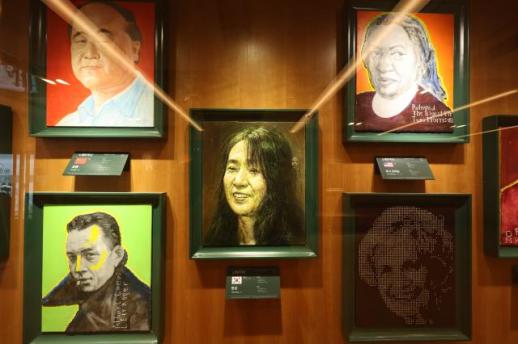 Nobel laureates greet visitors at downtown Seoul bookstore SEOUL, April 14 (AJP) - Portraits of Nobel Prize laureates line the Sejong-ro entrance corridor at Kyobo Book Centre in Gwanghwamun, offering passersby a glimpse of history's greatest minds. Among the portraits displayed are novelist Han Kang, who won the 2024 Nobel Prize in Literature, and Kim Dae-jung, South Korea's 15th president and recipient of the 2000 Nobel Peace Prize. The exhibition brings the achievements of Nobel laureates into the heart of the city, making their legacies accessible to daily visitors of one of Seoul's most prominent bookstores. 2026-04-14 13:57:36
 -
 South Korea rises as attractive offshore oil storage base for Gulf nations SEOUL, April 14 (AJP) - South Korea is moving to capitalize on the prolonged disruption in the Strait of Hormuz by leveraging its extensive oil stockpiling infrastructure to generate additional income while reinforcing its energy security. Although instinctively oil-poor, the country has quietly built one of the most sophisticated stockpiling systems among non-producing nations. Its extensive network of underground storage and refining infrastructure has turned it into an attractive “offshore reserve base” for major Gulf exporters seeking to hedge against geopolitical choke points. Multiple Middle Eastern oil producers have approached Seoul to explore storing their crude in Korea, home to the nine fuel storage bases including underground tanks and the world's single largest oil storage base with a combined capacity for 146 million barrels. “Countries, particularly in the Middle East, are showing increasing interest in using Korea’s stockpiling facilities,” Yang Ki-wook, director general for industrial resource security at the Ministry of Trade, Industry and Energy, said in a press briefing Tuesday. The interest reflects a strategic shift among exporters such as Saudi Arabia, the United Arab Emirates and Kuwait, whose economies are heavily dependent on uninterrupted oil flows through the Gulf. By pre-positioning crude outside the Strait of Hormuz, they can reduce exposure to geopolitical risks and maintain supply flexibility. The arrangement offers both commercial and strategic gains for the country. Under its international joint stockpiling program, state-run Korea National Oil Corp. (KNOC) leases idle storage capacity to foreign producers, generating rental income while securing priority rights to purchase the stored oil during supply disruptions. Korea on March 12 joined the International Energy Agency's emergency release by contributing 22.46 million barrels of strategic oil reserves to help contain international oil prices after the U.S.-Israeli attacks on Iran. The country currently holds about 100.1 million barrels of government-controlled reserves, fifth largest among IEA members. Korea also stores roughly 10 million barrels of foreign crude under joint agreements, including 4 million barrels for Kuwait Export Crude and 4 million barrels of light sour grades from Abu Dhabi National Oil Co. The government is stepping up contingency measures to stabilize supply and prices while securing alternative crude supplies as the war stretches close to two months. Seoul has secured 118 million barrels of extra crude, with 46 million barrels allocated for April and 72 million barrels for May. The volumes are sourced from 17 countries, including Saudi Arabia, the United Arab Emirates, the United States, Brazil and Australia. “Saudi Arabia accounts for the largest share of April shipments,” Yang said, adding that stockpile swap volumes stand at around 32 million barrels. Of the swap requests filed by four domestic refiners, 8.38 million barrels across six contracts have already been delivered, with an additional 8 million barrels expected to be contracted within the month. The stockpiling framework has played a supporting role in these negotiations, officials said, as Korea’s ability to offer storage options strengthened its position in securing replacement cargoes. For emergency actions at home, the government will extend a credit ceiling of up to $3 billion to the Korea National Oil Corp. (KNOC), backed jointly by the Export-Import Bank of Korea and the Korea Development Bank, to support timely crude imports. Demand-side controls are also being introduced, including adjusting construction schedules to manage asphalt demand and monitoring market disruptions in construction additives. 2026-04-14 13:56:55
 -
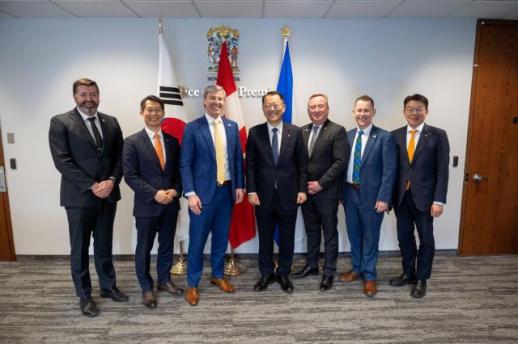 Hanwha Ocean ramps up Canada submarine bid with Halifax talks SEOUL, April 14 (AJP) - Hanwha Ocean is ramping up its bid for Canada’s $40 billion submarine program, as its chief executive met with government and shipbuilding officials in Halifax. According to Hanwha Ocean on Tuesday, CEO Kim Hee-cheol recently visited Halifax, Canada, where he met with Premier of Nova Scotia Tim Houston and other provincial officials to explore potential collaboration for the submarine program. The talks covered defense readiness, MRO capabilities, workforce development and industrial infrastructure, as Hanwha Ocean shared its long-term strategy for the Canadian Patrol Submarine Project (CPSP). Kim also met with Dirk Lesko, president of Irving Shipbuilding, Canada’s largest shipyard, to discuss cooperation aimed at enhancing the Royal Canadian Navy’s sovereign submarine capabilities. “We will continue to enhance our competitiveness by working closely with Canadian industry and government to build a sustainable, Canada-centered submarine operational ecosystem,” Kim said. Hanwha Ocean has also been expanding partnerships with local companies as part of its bid for the CPSP. The company signed a teaming agreement with PCL Construction last week, one of Canada’s largest construction firms, to jointly develop submarine-related infrastructure. The deal follows a memorandum of understanding signed between the two companies in November last year. Industry sources said the partnership is part of Hanwha Ocean’s strategy to shorten delivery timelines and strengthen localization as it competes with Germany’s ThyssenKrupp Marine Systems (TKMS) in the final stage of the bid. According to industry officials, Hanwha Ocean also recently formed partnerships with five Canadian firms — OSI Maritime Systems, EMCS Industries, Techsol Marine, Jastram Technologies and Curtiss-Wright — to strengthen its local industrial base for the CPSP. Such local partnerships are considered critical, as Canada places strong emphasis on industrial and economic contributions in the bidding process. Analysts say the competition between Hanwha Ocean and TKMS could ultimately hinge on these factors, given both companies’ advanced submarine capabilities. Canada’s CPSP involves the procurement of up to 12 diesel-electric submarines of around 3,000 tons. The contract value alone is estimated at $13.5 billion, while the total project size, including 30 years of MRO, could reach around $40 billion. A consortium of Hanwha Ocean and HD Hyundai Heavy Industries is currently competing against Germany’s ThyssenKrupp Marine Systems (TKMS), with the final selection expected around June. 2026-04-14 13:51:31
 -
 Early adopters but slow system: Korea's AI gap widens SEOUL, April 14 (AJP) - South Koreans are among the world's fastest adopters of artificial intelligence and among the most prolific in patenting the technology, yet government and corporate support remains strikingly behind, a global comparative study found. The 2026 AI Index Report, released Tuesday by Stanford University's Institute for Human-Centered Artificial Intelligence, is a 423-page annual assessment widely regarded as one of the most authoritative gauges of global AI progress. South Korea registered 14.31 AI patents per 100,000 people in 2024 — far ahead of Luxembourg at 12.25, China at 6.95 and the United States at 4.68. Adoption is accelerating just as quickly. Generative AI usage rose from 25.9 percent in the first half of 2025 to 30.7 percent in the second half, the fastest increase among 30 regions surveyed. The gain pushed South Korea up seven places to 18th globally, though still well behind leaders such as the United Arab Emirates at 64 percent and Singapore at 60.9 percent. On paper, policy momentum is strong. South Korea enacted 17 AI-related laws between 2016 and 2025 — the second-highest among G20 nations after the United States. The report highlighted the AI Basic Act, which took effect this year, as a cornerstone framework aimed at fostering innovation while building public trust. The country also remains a significant player in model development, ranking third globally with five notable AI models launched in 2025, trailing only the United States and China. But beneath these headline gains, the gaps widen. Private AI investment totaled just $1.78 billion, placing South Korea 12th globally — a fraction of the $285.9 billion poured into the sector in the United States and $12.4 billion in China. Even with 59 newly funded AI firms, the ecosystem lacks the scale to match its innovation output. Structural weaknesses extend to the workforce. About 81.4 percent of South Korea's AI talent pool is male, one of the widest gender imbalances among surveyed countries, alongside Japan and Brazil. More critically, institutional support is lagging. South Korean employees gave their organizations some of the lowest marks globally for AI readiness. Workers in Japan, South Korea and Portugal reported the weakest support for AI literacy training and governance frameworks, with fewer than half saying their employers provide meaningful backing. In India, by contrast, roughly 85 to 90 percent reported strong institutional support. The disconnect between individual adoption and organizational readiness is not unique to Korea, but it is particularly pronounced. A McKinsey survey found 88 percent of organizations use AI in at least one business function, yet 60 percent say adoption remains stuck at the pilot stage — a gap increasingly described as "shadow AI," where employees deploy tools informally outside official systems. "South Korea is known to have a particularly high rate of shadow AI usage. Even though formal adoption through corporate channels remains limited, employees are quietly using these tools on their own," said Park Hyun-kyu, professor of management of technology at Sogang University. Globally, the expansion is rapid and uneven. Generative AI reached 53 percent population adoption within three years — faster than personal computers or the internet. Corporate investment surged 130 percent to $581.7 billion in 2025, with the United States dominating the field. For South Korea, the picture is clear: a country moving faster than most at the edge of adoption and innovation, but held back by hesitant institutions and underpowered capital. Until that gap closes, its AI momentum risks remaining diffuse — energetic, but not yet fully mobilized. 2026-04-14 13:48:26