
Journalist

Lee Hugh
=
-
 South Korea’s Self-Employed Debt Shifts to Nonbank Lenders, Raising Default Risks Debt held by South Korea’s self-employed is nearing a breaking point and is emerging as a broader financial risk as more borrowers are pushed out of banks and into higher-cost nonbank lenders. As bank lending standards tighten, delinquencies and business closures are rising in tandem, reinforcing a negative cycle. According to Korea Credit Data on April 13, outstanding loans to sole proprietors totaled 729.2 trillion won at the end of last year, up 13.2 trillion won from a year earlier (716 trillion won). Bank lending stayed around 433 trillion won over the year, but nonbank loans rose 14 trillion won, to 296 trillion won from 282 trillion won, lifting the overall total. Mutual finance institutions, often cited as a blind spot in household loan oversight, also led nonbank lending to sole proprietors, accounting for 32.1% of the total. These second-tier lenders, including mutual finance, typically charge higher interest rates than banks but apply looser screening, making it easier for vulnerable borrowers to enter. That also means credit problems can spread faster. Bank delinquency rates were managed at about 0.6%, but savings banks’ delinquency rate rose to 5.4% at the end of 2025 from 5.0% at the end of 2024. Mutual finance institutions’ delinquency rate increased to 2.9% from 2.7% over the same period. By amount, delinquent loans at banks remained at 2.4 trillion won, while nonbank delinquent loans jumped 17.9% to 10.5 trillion won from 8.9 trillion won. In a period of rising interest rates, interest burdens can climb quickly, increasing default risks among borrowers with weak repayment capacity. The structural weakness is also showing up in closures. Of 3.62 million businesses that held sole proprietor loans last year, 507,000, or 14.0%, were already closed. The closure share was 8.5% among businesses with bank loans, compared with 17.3% among those borrowing from nonbank lenders. Experts said the issue has moved beyond simple debt growth and into a stage of structural risk. As bank regulations tighten, funding demand shifts to nonbanks, which can feed higher interest burdens, rising delinquencies and more closures. If distress among the self-employed concentrates in nonbank lenders, financial risks could spread across the broader market. Seon Yong-uk, an associate research fellow at the Korea Institute for Small and Medium Enterprise, said nonbank loan balances and delinquency rates among small merchants have remained high since the COVID-19 pandemic. “If a recovery in domestic demand is not supported, there is little room for small merchants’ business performance to improve, making it difficult for their loan soundness to improve structurally,” he said.* This article has been translated by AI. 2026-04-14 06:03:20
 -
 BIGBANG Brings Trot to Coachella, Kicking Off 20th Anniversary Activities Korean trot music made an unexpected appearance at Coachella, one of the United States’ best-known music festivals. BIGBANG appeared at the Coachella Valley Music and Arts Festival on April 12 (local time) in California. G-Dragon, Taeyang and Daesung performed an official set under the name BIGBANG, signaling the start of activities marking the group’s 20th anniversary. It was BIGBANG’s first official performance since its 2017 “Last Dance” tour, nine years ago. The group took the Outdoor Theater stage, a venue comparable in scale to the main stage, and performed 17 songs. The set included hits such as “Bang Bang Bang,” “Fantastic Baby” and “Haru Haru,” along with solo tracks including “Home Sweet Home” and “Ringa Linga.” Daesung drew particular attention by performing his solo song “Look at Me, Gwisun,” creating a moment in which Korean trot rang out at a major U.S. festival and quickly spread across online communities and social media. Daesung displayed large Korean subtitles reading, “Hello. I’m Daesung,” then performed his new song “Hando Chogwa” and his signature track “Look at Me, Gwisun,” drawing loud cheers from fans in attendance. G-Dragon told the crowd, “BIGBANG’s 20th anniversary has just begun,” adding, “Huge things are coming. We’ll make the 20th anniversary coming-of-age celebration fun.” To close the main set, BIGBANG performed “Bad Boy” and “We Like 2 Party,” telling fans, “This year marks BIGBANG’s 20th anniversary. We’re still together like this.” The group ended the show after an encore of “Spring Summer Fall Winter.” BIGBANG is scheduled to return to Coachella for a second performance on April 20, and is also expected to embark on a global tour. 2026-04-13 18:27:19
 -
 Moral stance, strategic risk: Lee's remarks test Korea's diplomatic balance SEOUL, April 13 (AJP) - South Korea’s entry into the widening global debate over the Middle East conflict has exposed the delicate balance between values-based diplomacy and strategic restraint, after President Lee Jae Myung’s remarks on civilian casualties triggered an unusually sharp backlash from Israel. Over 1,700 civilians, including 254 children, were reported killed in Iran before the ceasefire, while more than 600 were killed in Israeli air raids in Lebanon, according to local authorities and media reports. Lee’s decision to join international condemnation of civilian casualties — framed in universal human rights terms — appeared to have strained ties with Israel, a country with which South Korea has maintained historically close relations. The episode comes at a time of intensifying global scrutiny over Israel’s military campaign and rising instability across the Middle East, complicating the diplomatic calculus for middle powers like South Korea. Israel’s role in the evolving regional dynamics has added further complexity. While a ceasefire between the United States and Iran was reached over the weekend, Israel was not directly involved in the negotiations. Prime Minister Benjamin Netanyahu made no reference to the agreement in a public address, even as he faces growing domestic criticism over his handling of the situation. Despite the ceasefire, Israeli forces have continued military operations in southern Lebanon, according to Lebanese state media, drawing accusations from Iran that Israel is undermining de-escalation efforts. The developments have prompted diplomatic pressure from Washington, with U.S. officials urging Israel to exercise restraint. In a sign of cautious engagement, Israeli and Lebanese ambassadors to the United States are expected to hold rare direct talks in Washington. The human toll of the broader conflict has continued to mount. In Lebanon, more than 2,000 people have been killed in recent fighting between Israel and Hezbollah, while casualties have also been reported in Gulf states and Israel itself. The United States has confirmed the deaths of 13 service members in the course of the conflict. European leaders have stepped up criticism of Israel’s military actions as the conflict has widened. Spanish Prime Minister Pedro Sánchez has been among the most outspoken, describing the situation in Gaza as a “catastrophic situation of genocide” and urging the European Union to suspend its cooperation agreement with Israel. He also warned against what he called reckless escalation, saying global leaders must not be “playing Russian roulette with the destiny of millions.” Other European leaders have echoed similar concerns, warning that a major ground offensive could have devastating humanitarian consequences and urging immediate de-escalation and renewed diplomatic engagement. Discussions within the European Union have also expanded to potential reviews of arms exports and trade relations, signaling a gradual shift from previously unified political support. Tensions have further intensified following the escalation between Israel and Iran earlier this year. Coordinated U.S. and Israeli strikes on Iranian nuclear and military facilities prompted retaliatory missile and drone attacks by Iran, raising fears of a broader regional war. Although a tentative ceasefire between Washington and Tehran was reached in April, clashes involving Israel and Iran-backed groups, including Hezbollah, have continued, underscoring the fragility of the situation. Against this backdrop, Lee posted a message on X (formerly Twitter) on Friday, writing: “National sovereignty and universal human rights must be respected, and wars of aggression must be denied — this is both the spirit of our Constitution and international common sense.” “Just as my life and property are precious, so are those of others. Respect is reciprocated,” he added. While Lee did not explicitly reference a specific incident, his remarks were widely interpreted as a response to controversy surrounding a video he had shared earlier, which allegedly showed Israeli Defense Forces mishandling bodies in a war context. The video, later clarified to have been filmed in September 2024, triggered accusations of misinformation and a diplomatic backlash from Israel. What might have remained a minor misstep quickly escalated into a broader diplomatic dispute, touching on domestic political divisions, diplomatic protocol, and questions about South Korea’s role on the global stage. A diplomatic breach — or a new normal? Israel’s Foreign Ministry responded unusually sharply, publicly condemning Lee’s remarks and accusing him of trivializing the Holocaust — a move that broke with conventional diplomatic practice, where such disputes are typically handled through private channels. South Korean lawmakers from the ruling Democratic Party of Korea pushed back. Rep. Hong Ki-won, a former diplomat, said dissatisfaction with a foreign leader should be conveyed privately, adding that public condemnation by a foreign ministry was “highly inappropriate.” Rep. Kim Young-bae also defended Lee, saying his remarks were not directed at any specific country but reflected universal principles of human rights embedded in international law. He criticized Israel for escalating the issue through a formal statement. Opposition lawmakers offered a starkly different view. Members of the conservative People Power Party accused Lee of undermining national interests through “impulsive remarks” that complicate diplomacy. “Even after facts emerged, the president escalated tensions rather than resolving them,” said Foreign Affairs Committee Chair Kim Seok-ki. The risks of moral diplomacy For some observers, Lee’s comments reflect an attempt to position South Korea as a principled middle power willing to speak out on global issues. Cho Kuk, leader of the Rebuilding Korea Party, defended the president’s stance as both morally justified and strategically meaningful. “It is valid from the perspective of international human rights law and meaningful in terms of national interest within cold geopolitical realities,” he said. Yet critics argue such moral positioning carries strategic costs. Yossi Shain, an Israeli politician and former member of the Knesset, framed the issue in security terms, noting parallels between Israel’s threats from Hezbollah and Iran and South Korea’s confrontation with North Korea. “Telling Israel not to defend itself is like telling Korea not to defend itself against North Korea,” he said. Another layer of the controversy highlights the role of misinformation in shaping political discourse. Paul Franks, a professor at Yale University, criticized the president’s reliance on what he described as misleading online content. “This exemplifies the trend of public figures failing to do their homework and being taken in by internet misinformation,” he said. “If they are fooled, what chance does the ordinary person have?” Franks also took issue with Lee’s invocation of the Holocaust, stressing that it was not merely a war crime but “the industrialization of genocide.” Edieal Pinker, another Yale professor, suggested political incentives may also be at play. “There is no short-term cost to governments from criticizing Israel,” he said, noting that such positions can be politically expedient despite potential long-term diplomatic consequences. Beyond the immediate fallout, the episode reflects broader global trends of polarization and fragmentation. Elad Segev, a communication scholar at Tel Aviv University, pointed to the destabilizing effects of rapid technological, social and political change, arguing that such conditions create fertile ground for polarization and misinformation, amplified by social media. For South Korea, the controversy raises fundamental questions about its role on the global stage: whether to remain a cautious actor focused on regional stability and alliance management, or to adopt a more vocal stance on global values despite the risk of diplomatic friction. Even European powers are grappling with similar dilemmas, balancing human rights concerns with strategic and security interests. The Embassy of the Islamic Republic of Iran in Seoul said human rights violations by Israel, particularly against Palestinians, have become “systematic and ongoing,” calling for an immediate end to such practices and greater international accountability. The Israeli Embassy in Seoul said it had no specific comment regarding Lee’s remarks. 2026-04-13 18:04:31
 -
 Soaring fuel costs squeeze fishermen amid prolong Middle East crisis INCHEON, April 13 (AJP) - South Korea's average diesel price soared to 1,986 won (about US$1.34) on Monday amid the prolonged conflict in the Middle East. Diesel for fishing trawlers now costs around 280,000 won per drum (or 200 liters), up about 60 percent from a month earlier, adding to the financial burden on fishermen. 2026-04-13 17:59:56
 -
 South Korea gears up for local elections SUWON, April 13 (AJP) - With just two months left until local elections, large banners have begun appearing across the country, urging voters to cast their ballots. This year's local elections to elect about 4,000 metropolitan mayors, provincial governors and other heads of local governments nationwide are slated for June 3. 2026-04-13 17:49:54
 -
 Union Berlin Names Marie-Louise Eta as Interim Coach, First Woman to Lead a Top 5 Men’s League Club Germany’s Union Berlin, the club of South Korea international Jeong Woo-yeong, has appointed a woman to lead a men’s first team in Europe’s top five leagues for the first time. The Berlin club said on the 12th (Korean time) it named coach Marie-Louise Eta interim head coach to replace Steffen Baumgart, who was fired after poor results. Eta is the first woman to take charge of a senior men’s first team across the English Premier League, Spain’s La Liga, Germany’s Bundesliga, Italy’s Serie A and France’s Ligue 1. She will lead Union through the end of the season, with five matches left and the goal of staying in the top flight. Union is 11th at 8-8-13 (32 points), seven points clear of 16th-place St. Pauli at 6-7-16 (25 points). Eta won league and UEFA Women’s Champions League titles as a player with Turbine Potsdam. After retiring in 2018, she coached Werder Bremen’s youth teams and Germany’s age-group national teams, building her career in the men’s game. She drew attention in 2023 when Union appointed her the Bundesliga’s first female assistant coach. She later coached the club’s under-19 team. “I’m grateful the club trusted me with this challenging task,” Eta said. “Union’s strength is sticking together in a crisis. Together with the team, I will make sure we earn the points we need to stay in the Bundesliga.” Jeong, who has moved between the starting lineup and the bench, has four goals and one assist in all competitions this season.* This article has been translated by AI. 2026-04-13 17:45:00
 -
 Finance chief to attend series of key financial meetings in US this week SEOUL, April 13 (AJP) - Finance Minister Koo Yun-cheol is set to depart for the U.S. on Monday to attend a series of international meetings and other events, the Ministry of Finance and Economy said on Monday. Koo is scheduled to host an investor blitz in New York on Tuesday for major global investment banks, outlining South Korea's economic fundamentals and key policy priorities to attract investment in the country. He will also meet top executives of global asset managers to discuss global economic and financial market trends and seek support for the government's efforts to reform foreign exchange and capital markets. Koo will then travel to Washington, D.C. later in the week to attend the G20 Finance Ministers and Central Bank Governors Meeting, which coincides with the annual gatherings of the International Monetary Fund (IMF) and the World Bank. Participants are expected to discuss constraints on global economic growth and imbalances among countries, as well as ways to boost investment. During the trip, Koo is also scheduled to meet the heads of international financial institutions including the IMF, World Bank, Inter-American Development Bank, and Asian Infrastructure Investment Bank, as well as finance ministers from major countries including Australia, France and Uzbekistan. 2026-04-13 17:32:48
 -
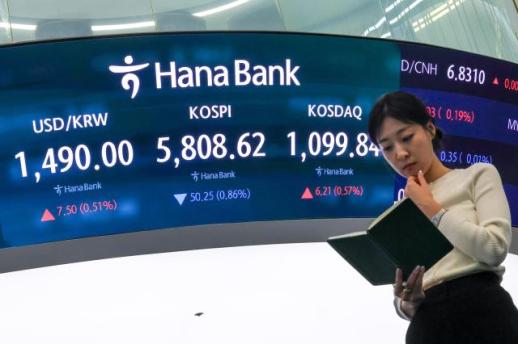 WGBI impact muted as external shocks pressure Korean bonds, won SEOUL, April 13 (AJP) - South Korean sovereigns joining the World Government Bond Index (WGBI) hardly proved to be a magic wand for both the currency and bonds in the first month. Extraordinary factors — including escalating Middle East conflicts and a shifting interest rate and inflation environment — have partly undermined the honeymoon period. Some experts say Korea’s structural challenges run too deep to rely simply on a WGBI boost. Since FTSE Russell began including Korean bonds in the WGBI on April 1, authorities have highlighted expectations of strong foreign inflows to ease pressure on the won and bond market. Finance Minister Gu Yun-cheol reiterated that stance Friday, pointing to foreign net purchases of 6.8 trillion won ($4.57 billion) in government bonds so far this month. Yet the impact on markets has been limited. Despite steady foreign buying, the won and bonds have shown little sign of relief. Entering its third week of inclusion, the Korean won closed Monday at 1,489.3 per dollar and has hovered near the 1,500 level — territory last seen in the aftermath of the 2008 global financial crisis. The bond market has shown similar strain. The three-year government bond yield rose 4.7 basis points to 3.407 percent, while the 10-year yield climbed 5.7 basis points to 3.743 percent — still 30 to 40 basis points higher than at the start of the year. Foreign participation has also underwhelmed relative to expectations. According to the Korea Financial Investment Association (KOFIA), foreign holdings of domestic bonds stood at 340.4 trillion won at the end of March, down 10.2 trillion won from a month earlier. A key driver has been the shift in the rate environment. The Hyundai Research Institute warned that if Middle East maritime disruptions persist and oil prices exceed $100 per barrel, South Korea’s consumer inflation could rise to 3.1 percent — more than one percentage point above the Bank of Korea’s 2 percent target. That outlook is pushing the central bank toward a more hawkish stance. After removing references to a rate cut in January, the Bank of Korea is now widely expected to consider rate hikes as early as July, reinforced by the policy stance of governor-nominee Shin Hyun-song. Major financial institutions, including Shinyoung Securities and Citi, say this shift is reducing the relative attractiveness of Korean bonds and diluting the impact of WGBI inclusion. Such over-optimism is not new. New Zealand, which began phased inclusion in the WGBI in November 2022, initially expected $4.5 billion in inflows. However, aggressive rate hikes by the Reserve Bank of New Zealand in response to inflation reduced actual inflows to roughly one-third of that estimate. South Africa offers a similar case. Despite high yields — with its 10-year bond yield around 8.4 percent — the rand weakened 5.9 percent as of April 7 from February levels, a steeper decline than the won’s 4.3 percent drop over the same period. Analysts attribute this to the high share of foreign ownership in South African bonds, about 40 percent compared with Korea’s 15 percent, which amplifies capital outflow risks. Broader structural factors, including social instability, have also weighed on investor sentiment. Experts stress that strengthening economic fundamentals must take priority over one-off catalysts such as index inclusion. Reflecting concerns over Korea’s heavy reliance on Middle East energy supply chains, Natixis recently cut its growth forecast for the country to 1.0 percent from 1.8 percent, well below the OECD average of 1.7 percent. “We must abandon the illusion that WGBI inclusion alone will dictate the trajectory of bonds and the exchange rate,” said Kim Chan-hee, an analyst at Shinhan Securities, pointing to the need to address structural vulnerabilities such as energy dependence. Goldman Sachs echoed that view, noting that capital flows are driven primarily by global rates and risk sentiment rather than index events, and that improving the structural appeal of the Korean market remains key to supporting both the won and government bonds. 2026-04-13 17:32:01
 -
 Na Hong-jin’s Cannes Competition Film ‘Hope’ Lands NEON for North American Release Na Hong-jin’s new film “Hope” (HOPE), invited to compete at the 79th Cannes Film Festival, has secured a North American release through a partnership with U.S. distributor NEON. Founded in 2017, NEON has handled North American distribution for high-profile international titles, including multiple Palme d’Or winners at Cannes and an Academy Award best picture winner. NEON has brought a run of Cannes Palme d’Or winners to North American audiences since 2019, including Bong Joon-ho’s “Parasite,” “Titane,” “Triangle of Sadness,” “Anatomy of a Fall,” “Anora” and “It Was Just an Accident.” With the new deal, NEON is set to present six films at the 79th Cannes Film Festival across competition and noncompetition sections, including “Hope,” “Sheep in a Box” and “Suddenly Worsening Condition.” NEON also recently handled North American distribution for Park Chan-wook’s “No Choice,” continuing its role in expanding the global reach of Korean cinema. In a statement on taking North American distribution rights for “Hope,” NEON said it was “very pleased” to partner with the “one and only” Na, along with Forged Films and Plus M Entertainment, to bring the film to audiences worldwide, adding, “Please look forward to it.” “Hope” begins at a police outpost in Hopohang, near the Demilitarized Zone, where chief Beomseok hears from local young men that a tiger has appeared, putting the village on alert as he confronts an unbelievable reality. The film is Na’s first in 10 years since “The Wailing.” It is set to premiere as a world premiere at Cannes in May and is scheduled to reach theaters this summer.* This article has been translated by AI. 2026-04-13 17:30:18
 -
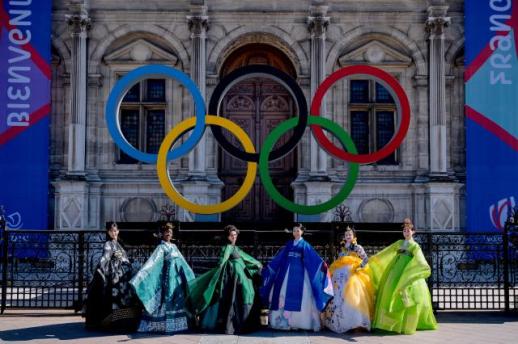 INTERVIEW: BTS wear them, but hanbok is still misunderstood SEOUL, April 13 (AJP) — Hanbok is everywhere — on global stages, red carpets and tourist hotspots. Recognition, however, remains elusive. From BTS’s Gwanghwamun comeback performance in armor-inspired hanbok to the Oscar-stage showcase of K-pop Demon Hunters, Korean traditional dress is increasingly projected onto the global screen. The imagery travels easily. It resonates visually. To many, it simply registers as something “cool.” But familiarity stops there. Samuel Chung, chairman of the Korean Culture Association who has spent nearly two decades promoting hanbok abroad, draws a clear line between exposure and understanding. “It is seriously misleading to think hanbok is as popular as K-wave,” Chung said. “Only about 5 percent of foreigners can truly identify hanbok.” “To the 95 percent, hanbok cannot be differentiated from Chinese clothing hanfu or Japanese kimono.” The disconnect is borne out in data. According to the Ministry of Culture, Sports and Tourism and the Korean Foundation for International Cultural Exchange, favorability toward Korean cultural content reached 69.7 percent in the 2026 Overseas Hallyu Survey. Yet global interest remains concentrated in food, music and television, with traditional culture largely absent from primary recognition categories. “Even when people see hanbok, many can’t tell whether it’s Korean, Japanese or Chinese,” Chung said. “They cannot tell if they are wearing the Korean traditional wardrobe from the giant ads of Korean celebrities at Times Square in New York.” “Simply put, foreigners can tell Shin Ramyun from non-Korean instant noodles, but cannot tell the difference in the traditional Asian wear.” Chung attributes the gap not to a lack of exposure, but to the absence of clear identity-building. “We take it for granted as our own culture, but overseas perception is entirely different,” he said. “The more attention, the greater Korea should pay to the original identity.” That tension is visible on the ground. At major heritage sites such as Gyeongbokgung Palace and Bukchon Hanok Village, hanbok-clad visitors have become a defining scene. The number has surged from about 150,000 in 2020 to more than 2 million in 2024, according to the Korea Heritage Service. Yet many of the outfits worn by tourists bear only a loose resemblance to traditional hanbok — often simplified, over-stylized and mass-produced abroad. “The rentals not just derail from the original form but also cannot be claimed Korean at all as they are produced in China,” Chung said. Price has driven that shift. A domestically made hanbok costs around 400,000 won, while imported versions can be sourced for as little as 10,000 to 20,000 won. The Korea Heritage Service allows modernized hanbok at palace sites but stresses adherence to core structure, advising against heavily mixed styles such as pairing a jeogori with jeans. For Chung, however, the issue runs deeper than design. He recalls being greeted with “ni hao” while wearing hanbok in front of the Eiffel Tower — a moment that, for him, encapsulates the blurred identity of Korean traditional dress abroad. The problem, he warns, could intensify in the age of artificial intelligence. “The misrepresentation can deepen in the AI era,” he said. “If information and visual references on hanbok lag behind those of kimono or hanfu, distorted perceptions can take hold more quickly.” Concerns are already emerging. Generative AI models often return Japanese-style clothing or mixed East Asian imagery when prompted with “hanbok.” A 2025 study by researchers at Chung-Ang University found that leading vision-language models frequently misidentified hanbok, describing it as Japanese attire or unrelated cultural garments — a pattern attributed to imbalances in training data. The disparity is also visible in global search trends. Interest in “kimono” has consistently outpaced “hanbok” by more than tenfold. “We shouldn’t assume hanbok is widely recognized just because K-pop stars wear it,” Chung said. Efforts to address the gap are now beginning to take shape. First lady Kim Hye-kyung recently hosted a meeting at the presidential office to support UNESCO recognition of hanbok culture, signaling a more coordinated push. “Government moves through systems and policy, while the private sector builds relationships on the ground. Both need to work together,” Chung said. For Chung, the solution begins with familiarity — not as an abstract concept, but as lived experience. “Culture isn’t about competition — it’s about familiarity,” he said. “It spreads not just by being shown, but by being worn and experienced.” His organization has pursued that approach through global events, including fashion shows, exhibitions and the Hanbok Model Contest, which emphasizes participation over spectacle. “Modeling is something anyone can take part in,” Chung said. “In a globally accessible format, it becomes a powerful way to present hanbok visually — even without language.” “The moment someone steps on stage in hanbok, it becomes cultural diplomacy.” Yet at home, hanbok faces a different challenge — one of contraction. “Hanbok has largely disappeared from everyday life and largely exists ceremonial and symbolic,” Chung said. “Hanbok should not be something people simply experience — it should be part of everyday life.” For hanbok to be recognized as distinctly Korean, he argues, it must move beyond being consumed as a “Korean-style” costume. “What is needed now is not the confidence that hanbok is already global, but a recognition that it is still not fully understood.” 2026-04-13 17:29:31