
Journalist

Lee Hugh
=
-
 Libraries Emerge as Hubs for Digital Shift, Inclusion and Local Partnerships, Panel Says Libraries are increasingly serving as key hubs for digital transformation, social inclusion and stronger ties to local communities. The Ministry of Culture, Sports and Tourism said Thursday that the presidential National Library Committee’s review of 2025 implementation results under the Fourth Comprehensive Library Development Plan (2024-2028) found 31 items rated “excellent,” up 11 from 2024. Another 17 items were assessed as proceeding as planned, and one was rated not implemented. No items were classified as insufficient or needing improvement, indicating the policies are being carried out steadily. By institution, 23 of 48 agencies received an “excellent” rating and 25 were rated as proceeding normally. The evaluation was conducted to gauge the effectiveness of library policy and how well it is applied in the field. The committee used performance reports and self-assessments submitted by each agency and followed a three-step process: written reviews by a 21-member evaluation panel, a review of objections, and a full committee meeting. At a Library Day ceremony scheduled for Thursday morning, the government plans to honor 13 initiatives from 12 top-rated institutions — four central government bodies, six metropolitan or provincial governments, and two basic local governments — with 2 million won per project in prize money. Among central government agencies, the Ministry of Science and ICT and the National Information Society Agency built and operated a “Digital Jiphyeonjeon” platform to integrate dispersed policy and academic information and to upgrade AI-based search, strengthening the foundation for using national knowledge resources. The Rural Development Administration built an agricultural science academic information database and expanded links to open-access papers to provide tailored information services and bolster research support. The National Library of Korea introduced AI and robotic process automation to streamline repetitive tasks and cut processing time as it shifts to a digital work environment. The National Library for the Disabled expanded international sharing and cooperation on alternative materials, improving access to information for people with disabilities and helping narrow information gaps. Among metropolitan and provincial governments, the Seoul Metropolitan Government built a cooperation system linking libraries, bookstores and publishers to energize the local reading ecosystem. The Busan Metropolitan Government created a “Memory of Busan” repository to strengthen the preservation and use of local records. Jeju Special Self-Governing Province used a Jeju-language storytelling program to support preservation of the regional language and cultural transmission across generations. Basic local governments were selected for awards for the first time since the Fourth Comprehensive Plan began. Nowon Central Library in Seoul’s Nowon District established an operating system based on library big-data analysis (LIBanalysis) to improve data-driven decision-making and operational efficiency. Hadong County in South Gyeongsang Province held a Korea-Japan book concert tied to the Toji Literature Festival, expanding international exchange rooted in local literature and promoting local identity. * This article has been translated by AI. 2026-04-10 08:27:17
 -
 KBS2’s ‘Music Bank’ Announces Lineup Featuring KEYVITUP, hrtz.wav, KickFlip, KISS OF LIFE and Hwasa KBS2’s music show ‘Music Bank’ has unveiled its lineup for Friday’s broadcast. The show, airing at 4:55 p.m., will feature Baby DONT Cry, cosmosy, hrtz.wav, KEYVITUP, KickFlip, KINO, KISS OF LIFE, RESCENE, Dayoung and Irene. Also set to appear are AMPERS&ONE, YOUNG POSSE, JANG HANEUM, Kep1er and Hwasa. KEYVITUP and hrtz.wav are scheduled to perform debut stages, while KickFlip, KISS OF LIFE, Dayoung and Hwasa will return with comeback performances. ‘Music Bank’ is hosted by Kim Jae-won and Bang Ji-min and airs every Friday at 4:55 p.m. * This article has been translated by AI. 2026-04-10 08:18:16
 -
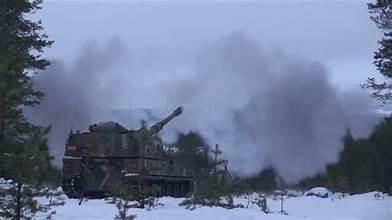 K9 howitzers expand in Europe with additional orders from Finland SEOUL, April 10 (AJP) -South Korea will export an additional 112 K9 self-propelled howitzers to Finland under a government-to-government (G2G) deal valued at 546 million euros ($634 million), marking a follow-up order from the Nordic country after its initial purchase in 2017. The agreement was signed in Helsinki between the Korea Trade-Investment Promotion Agency, representing the Korean government, and Finland’s defense ministry, according to the Defense Acquisition Program Administration. Under the contract, Hanwha Aerospace will supply 112 K9 howitzers. Finland previously acquired 96 units through a similar G2G agreement in 2017. The latest deal follows about seven months of negotiations involving KOTRA, Hanwha Aerospace, the Defense Acquisition Program Administration and the Korean embassy in Finland. Officials from both sides attended the signing ceremony, including KOTRA President Kang Kyung-sung and Oli Ruutu, director general for resource policy at Finland’s defense ministry. The K9 howitzer has been in operation in Finland for eight years, where it has been deployed in harsh conditions including extreme cold and heavy snowfall. The additional order reflects continued confidence in the system’s mobility and firepower under such environments, officials said. The G2G export framework allows the Korean government to participate directly in contracts alongside private firms, supporting negotiations, legal reviews and communication with the purchasing country. The structure is designed to reduce risks for exporters and improve transparency in the contracting process. The follow-up order comes as South Korea’s defense exports continue to expand in Europe amid shifting security dynamics, including strains within the North Atlantic Treaty Organization and heightened geopolitical tensions following Russia’s war in Ukraine. The K9 howitzer is currently operated by more than 10 countries, including six NATO members. Upon increasing demand, Hanwha Aerospace has been ramping up manufacturing base in Europe. In February, the company began construction of a production facility in Romania, dubbed “H-ACE Europe,” to manufacture K9 howitzers and K10 ammunition resupply vehicles locally. The facility will include assembly, testing and maintenance capabilities, with localization rates targeted at up to 80 percent. Romania signed a deal in 2024 to purchase 54 K9 units and 36 K10 vehicles, becoming the 10th member of the K9 user group and the sixth NATO country to operate the system. 2026-04-10 07:49:38
 -
 OPINION: A fragile truce, a stubborn strait — and a long test ahead Thirty-nine days after the United States launched its operation against Iran, dubbed “Epic Fury,” Washington and Tehran agreed to halt attacks for 14 days and begin talks on ending the war. The deal clears an immediate hurdle — but little more. The two sides have remained adversaries for nearly 50 years. Expecting a sweeping agreement within two weeks is unrealistic. The agenda alone is daunting: reopening the Strait of Hormuz, trading limits on Iran’s nuclear program for full sanctions relief, guaranteeing regime security, and ending Tehran’s support for proxy groups such as the Houthis and Hamas. If negotiations falter, Washington’s choices are limited — extend talks, escalate militarily, or declare its objectives met and step back. Even in the last scenario, the outcome would not be a clean end but a prolonged gray zone between war and peace. That ambiguity is already visible in the Strait of Hormuz — the central fault line of this conflict. Despite the ceasefire, the status of the strait remains unclear. Iran continues to restrict access, allowing passage selectively while charging transit fees. Such practices run counter to the U.N. Convention on the Law of the Sea. Article 26 prohibits charging fees for innocent passage through territorial waters. Exceptions exist only when actual services are provided — such as escorting vessels — and even then must be applied without discrimination. Yet the legal argument may matter less than commercial urgency. If Iran proceeds with fees under the pretext of escort or pilotage, and diplomacy stalls, shipping companies may simply pay to avoid delays. That opens a more serious risk: potential violations of U.N. Security Council sanctions or U.S. unilateral sanctions. What may appear hypothetical today could quickly become a real compliance dilemma. Governments and industry must assess the risk while closely tracking how major powers respond. Comparisons with Ukraine offer a cautionary note. When Russia invaded four years ago, many predicted a swift resolution. They were wrong. The Iran conflict involves more variables, but a prolonged war on that scale appears less likely — for structural reasons. First is the constraint on U.S. defensive capacity. Missile interceptors, reportedly stocked for four to six weeks before the war, are being depleted rapidly under engagement doctrines that often require firing two interceptors per incoming threat. Production is not easily scalable, as many systems are built to order. Sustaining defense of U.S. bases across Qatar, Saudi Arabia, the United Arab Emirates and Kuwait — as well as the Fifth Fleet headquarters in Bahrain — could become increasingly difficult. Israel faces similar pressures. Second is the economic burden. U.S. gasoline prices have risen above $4 a gallon, up nearly 40 percent, feeding directly into household inflation. The memory of the 1970s oil shocks still looms large. The 1973 crisis drove oil from roughly $3 to $12 a barrel, triggering recession. The 1979 shock pushed prices toward $35–$40, forcing the Federal Reserve to raise rates as high as 20 percent and leaving the global economy struggling for years. Today, analysts warn that a prolonged disruption of the strait or damage to Iranian production could push oil beyond $150, even toward $200. Such a spike would reverberate globally. Even the energy-rich United States would not be insulated. With midterm elections approaching, the political cost of sustained disruption is significant. Third is Iran’s resilience. Its conventional forces remain substantial, with roughly 350,000 troops and an additional 190,000 in the Islamic Revolutionary Guard Corps. Tehran continues to launch missiles and has reportedly downed U.S. aircraft. It is also believed to retain about 450 kilograms of enriched uranium. Its asymmetric capabilities — particularly drones — are steadily eroding adversaries’ interceptor inventories. Crucially, there are no clear signs of internal instability, such as elite fragmentation or mass protests. Years of sanctions have also strengthened domestic production capacity in essential goods. Taken together, these constraints suggest that the war is less likely to end decisively than to settle into a managed, uneasy standoff. The geopolitical backdrop further complicates matters. Since Donald Trump’s return to office, U.S. relations with traditional allies have become more transactional. During his first term, experienced officials such as Rex Tillerson, Jim Mattis and H.R. McMaster — often dubbed the “Adults in the Room ” — helped anchor alliance management. That buffer is less visible today. Canadian Prime Minister Mark Carney has openly criticized Washington’s unilateral approach. For South Korea, however, the calculus is different. Given the security realities of Northeast Asia, the importance of the U.S.-South Korea alliance remains fundamental. In this context, Seoul’s priority should be to ensure the smooth implementation of last year’s summit agreement in Gyeongju — particularly expanding South Korea’s authority in uranium enrichment and spent fuel reprocessing, as well as advancing nuclear-powered submarine capabilities. These are not abstract goals but steps toward greater strategic autonomy. Two broader lessons also stand out. First, energy security. With roughly 70 percent of South Korea’s crude imports sourced from the Middle East, diversification is no longer optional. Supply chains must be restructured to enhance resilience. Second, the nature of warfare is shifting. As seen in Ukraine and now in Iran, drones have become central to modern combat operations, not peripheral tools. South Korea must accelerate efforts to strengthen its drone capabilities and integrate them into its broader defense strategy. The ceasefire may hold for now. But it does not resolve the conflict. It merely pauses it — in a landscape where the rules are shifting, the risks are compounding, and the end remains uncertain. Choi Jong-moon, Yoon & Yang LLC and former second vice foreign minister. * The author is an adviser at Yoon & Yang LLC and former second vice foreign minister. 2026-04-10 07:30:58
 -
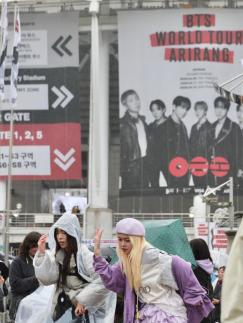 BTS draws global fans to rain-soaked Goyang as world tour kicks off GOYANG, South Korea, April 09 (AJP) — Neither unseasonable spring rain nor distance kept fans from gathering for BTS’ first full-member stadium concert in seven years, as the group kicked off its three-night home run in Goyang, just west of Seoul, on Thursday night. Thousands filled the 41,311-seat Goyang Stadium, where a 360-degree in-the-round stage allowed all seven members to face every section of the crowd. Police estimated that roughly half of those arriving from early afternoon were foreign nationals, underscoring the group’s global pull. Tickets for all three nights sold out immediately, bringing total attendance in Goyang to about 120,000. The steady rain did little to dampen the mood. Purple umbrellas — the band’s signature color — blanketed the venue in an orderly scene that drew notice from authorities on standby. Fans freely exchanged phones with strangers to take photos, bound by little more than shared trust as members of ARMY, BTS’s global fan base. Tripti, 25, from India who came from India alone just for the show, was impressed how at home she felt. "I felt as if I wasn't alone at all. Everyone offered to take picture of me. I'm grateful and proud to be an ARMY." Jessi (24), like her Indian peer, also has come to Korea just for the show, and is hardly affected by the bad weather. Cho Eun-joo (44), who introduced herself as “Ms. Hanbok,” handed out purple daenggi hair ribbons inspired by traditional Korean dress, while others reciprocated with gifts they had brought from home — a reflection of the communal, festival-like atmosphere. The concerts mark the live debut of BTS’s fifth studio album, ARIRANG, their first group release since completing mandatory military service in mid-2025. The album, released March 20, topped the Billboard 200 for two consecutive weeks — a first for a K-pop act — while lead single “SWIM” debuted at No. 1 on the Hot 100. The “BTS World Tour ‘ARIRANG’” will span 85 shows across 34 cities through 2027, setting a new benchmark for a K-pop tour. Industry estimates suggest total revenue could reach 2.7 trillion won ($1.81 billion), excluding additional spending by fans. The expanded schedule includes Latin American stops such as Lima, Santiago and Buenos Aires, marking the group’s first full-member performances in several of those markets and new milestones at major venues across the region. Demand has already translated into strong ticket sales, with multiple dates across Asia, North America and Europe sold out. Promoter Live Nation said about 2.4 million tickets have been sold for 41 shows in North America and Europe alone. Beyond touring, BTS has sustained momentum through a staggered content rollout. A Netflix documentary, BTS: THE RETURN, traces the making of ARIRANG, while a series of music and performance videos has continued to drive global engagement across platforms. The group has also sustained engagement through a staggered release strategy, spacing out new content instead of concentrating attention around a single promotional window. The music video for “SWIM,” released on March 20, has drawn more than 92.1 million views and reached No. 3 on YouTube’s trending chart. An official performance video followed on March 25, topping 22.9 million views and ranking No. 5 on the same chart. On April 2, the “BTS 2.0” video surpassed 34.1 million views and climbed to No. 2 on YouTube’s music trending chart. Most recently, the music video for “Hooligan,” released on April 8, drew more than 4.9 million views within hours. Joonha Yoo contributed to the story. 2026-04-09 21:25:22
 -
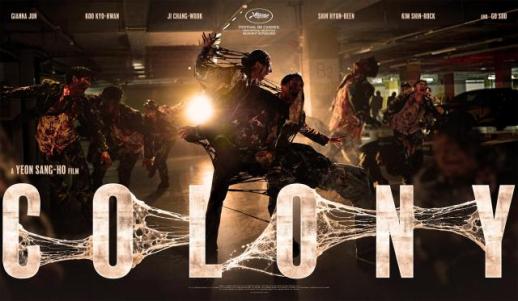 Yeon Sang-ho’s ‘Colony’ Invited to Cannes Film Festival Midnight Screenings Director Yeon Sang-ho’s film ‘Colony’ has been officially invited to the Midnight Screenings section of the 79th Cannes Film Festival, which runs May 12 to May 23 in Cannes, France. The festival’s executive committee announced the selection at an official news conference on Wednesday afternoon (Korea time). Festival director Thierry Fremaux, introducing the invitation, described ‘Colony’ as a horror zombie film set inside a sealed-off building, directed by Yeon, known worldwide for ‘Train to Busan.’ He said the premise would lead audiences to imagine “a range of narrative devices and storytelling possibilities.” The invitation marks Yeon’s fourth appearance at Cannes, following his feature-length animated debut ‘The King of Pigs’ (2012, Directors’ Fortnight), ‘Train to Busan’ (2016, Midnight Screenings) and ‘Peninsula’ (2020, Official Selection). ‘The King of Pigs’ drew attention as the first Korean feature-length animated film invited to the Directors’ Fortnight. After that, Yeon’s first live-action film, ‘Train to Busan,’ was invited to Midnight Screenings and was praised by Fremaux as “the best Midnight Screening ever, an action blockbuster that captures both entertainment and social realities.” When ‘Peninsula’ was selected, Yeon was also lauded as “a leading Korean director following Park Chan-wook and Bong Joon-ho,” the article said. The Midnight Screenings section showcases a small number of genre films — including action, thriller, noir, horror and fantasy — chosen for both artistic merit and popular appeal. With Park Chan-wook serving as jury president in the competition section and ‘Colony’ now confirmed for Midnight Screenings, the festival is expected to be especially notable for Korean film fans, the article said. Yeon said he was “very happy” to present ‘Colony’ at Cannes and added that he was excited for it to screen in Midnight Screenings, which he called a gathering place for genre-film fans worldwide. “I will proudly introduce the actors who worked with me and Korea’s genre cinema. Thank you,” he said. ‘Colony’ is set inside a building sealed off after an unidentified outbreak, where isolated survivors confront infected people who evolve in unpredictable ways. The film is scheduled for release in South Korea in May. * This article has been translated by AI. 2026-04-09 20:18:27
 -
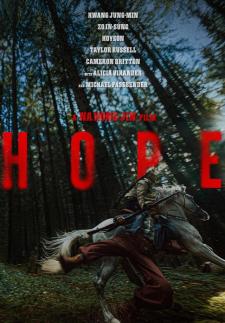 Na Hong-jin’s ‘Hope’ Invited to Compete at the 79th Cannes Film Festival Na Hong-jin’s new film “Hope” (HOPE) has been officially invited to the Competition section of the 79th Cannes Film Festival, which opens May 12. The festival’s organizing committee announced the selection on April 9 local time. Na has maintained a long relationship with Cannes: his debut feature “The Chaser” was invited to the Midnight Screenings section in 2008; “The Yellow Sea” was selected for Un Certain Regard in 2011, unusually a year after its release; and “The Wailing” screened Out of Competition in 2016. With “Hope” entering Competition, Na becomes the first Korean director to have all of his feature films invited to Cannes. Competition is the festival’s main section, typically selecting about 20 films from around the world, and this marks Na’s first time in the lineup. The invitation also puts a Korean film back in Competition for the first time in four years, since 2022’s “Decision to Leave” and “Broker.” Na, whose films have now been invited to Cannes four times in a row, said, “It’s an honor. I’ll work harder in the time remaining.” “Hope” begins at a police outpost in Hopohang, near the Demilitarized Zone, where chief Beomseok hears reports from local young men that a tiger has appeared, throwing the village into alarm as he confronts an unbelievable reality. It is Na’s first new film in 10 years since “The Wailing.” “Hope” will premiere at Cannes in May and is set for a theatrical release this summer. 2026-04-09 19:09:18
 -
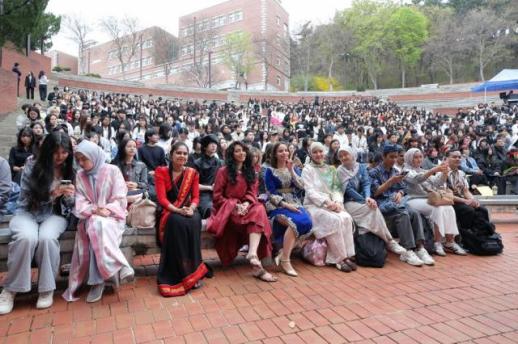 On-site inspections underway at universities with lapses in admitting foreign students SEOUL, April 9 (AJP) - The government is inspecting universities across the country to root out any irregularities in recruiting and admitting foreign students, the Ministry of Education said on Thursday. The ministry's comprehensive on-site inspections, to be carried out over two months until May in collaboration with the Ministry of Justice, will target schools suspected of improper screenings or admitting too many students without adequate checks. These inspections come after the recent cancellation of visas for more than 100 Chinese students enrolled at or who graduated from Honam University in the southwestern city of Gwangju, after immigration authorities discovered that the academic credentials they submitted were falsified. Inspectors will check whether universities properly followed admission procedures including Korean language requirements and visa regulations. Schools found committing serious violations such as falsifying documents could have their certifications revoked and be barred from issuing visas for up to three years. Nearly half of domestic universities, or 47.1 percent, are not properly accredited or certified to admit new international students, making it difficult to monitor or supervise them effectively. The ministry said it plans to introduce stricter certification procedures to help universities better recruit and evaluate international students, supporting talented overseas students and promising professionals in finding jobs in South Korea, which could pave the way for their long-term stay after completing their studies here. Separately, the ministry will select four universities for intensive inspections in the first half of this year and another four in the second half. 2026-04-09 17:53:47
 -
 Korean chipmakers push long-term deals as AI demand overrides cycle SEOUL, April 09 (AJP) - The memory chip market is behaving less like a cycle and more like a contract. South Korea’s Samsung Electronics and SK hynix are moving to lock in multi-year supply agreements as artificial intelligence demand strengthens their leverage over pricing and terms. Memory has long been one of the most volatile segments of the semiconductor industry, with Random Access Memory (RAM) prices prone to sharp swings. But the rapid expansion of AI infrastructure is altering that dynamic, shifting bargaining power toward suppliers. Upstream chip designers and major technology firms — including Nvidia and Tesla — are increasingly seeking contracts lasting up to five years, a departure from the industry’s traditional short-term agreements, to secure both high-end and legacy chips. Industry sources said Samsung Electronics and SK hynix are gaining greater control not only over pricing but also over contract structures, as supply constraints persist. Unlike foundry businesses, where long-term agreements are standard, memory chip supply deals have typically been negotiated over periods ranging from several weeks to a few months, reflecting fluid market conditions. The shift comes as the semiconductor industry enters what many describe as a prolonged “super-cycle,” with demand outpacing supply for an extended period. Unlike previous upcycles driven by consumer electronics, the current surge is anchored in the rapid buildout of AI and data center infrastructure, creating sustained demand that the industry’s rigid supply chain struggles to match. Building new semiconductor fabrication plants requires years and substantial capital investment, limiting the ability of suppliers to respond quickly and reinforcing tight market conditions. Samsung Electronics has reportedly begun applying a minimum three-year long-term agreement (LTA) framework for new contracts with major clients this year. The move follows comments by Jun Young-hyun, vice chairman of Samsung’s Device Solutions division, who said the company is pushing to shift supply contracts from annual or quarterly terms to multi-year agreements of three to five years. An industry official said customers are increasingly anxious about securing supply, adding that longer contract formats are becoming inevitable in a seller-driven market. SK hynix is taking a similar — and in some cases more aggressive — approach. The company is reportedly in discussions with Google over a long-term DRAM supply deal that could extend up to five years. Sources said initial talks centered on a three-year agreement but were extended to enhance supply stability during the AI-driven demand surge. The push toward multi-year contracts reflects a broader effort to reduce exposure to the industry’s long-standing boom-bust cycle, which has historically led to sharp earnings swings and large losses during downturns. By securing volumes and pricing over longer periods, memory makers can introduce greater earnings stability even if demand from consumer electronics weakens. At the same time, memory chips are increasingly seen as strategic infrastructure for AI workloads. Products such as High Bandwidth Memory (HBM) are elevating suppliers’ roles beyond commodity producers to essential partners for global technology firms. Investor sentiment reflects expectations that the current earnings cycle could outlast the typical two-year upturn seen in previous memory markets. Samsung Electronics on Tuesday reported an operating profit of 57.2 trillion won ($38 billion) for the first quarter, surpassing its full-year 2025 earnings and placing it among the world’s top technology companies by profit, alongside Apple, Nvidia and Microsoft. 2026-04-09 17:42:40
 -
 Seoul seeks clarity on Hormuz terms as fee risks grow SEOUL, April 09 (AJP) - Seoul is bracing for the inevitability — payments to transit the Strait of Hormuz — expected to push up fuel prices by about 0.5 percent, as it seeks clarity from Tehran while exploring alternative routes to secure Middle East energy supplies. The Ministry of Foreign Affairs said Thursday that a call between Foreign Minister Cho Hyun and Abbas Araghchi is being arranged and could take place as early as later in the day. The talks are expected to focus on the terms for navigating the Strait of Hormuz, where Iran has indicated that traffic during the two-week ceasefire will be overseen by its armed forces. According to foreign reports and data from S&P Global Market Intelligence, only four vessels were allowed to pass through the waterway on Wednesday, sharply down from more than 100 per day before the conflict. Iran is said to be requiring ships to pre-arrange transit terms and settle fees in cryptocurrency or Chinese yuan, though such conditions have not been officially confirmed. Cho is expected to seek clarification on reported requirements, including coordination with Iranian forces and unspecified “technical limitations.” Seoul is also expected to inquire whether potential measures such as transit fees or joint collection mechanisms mentioned by the United States have any concrete basis. Despite a ceasefire between Washington and Tehran, vessels remain stranded in the strategic waterway, including 26 South Korean ships. Officials say clearer conditions are needed before plans can be finalized to ensure safe passage. “We are prioritizing the safety of our vessels and crew while consulting with relevant countries,” a ministry spokesperson said, reiterating Seoul’s position that freedom of navigation must be guaranteed. The uncertainty comes amid broader questions over the U.S.-Iran ceasefire. U.S. President Donald Trump described the truce as a “total and complete victory” and suggested that most elements of a broader agreement had already been settled. However, key details remain unclear, including the handling of Iran’s enriched uranium and the exact terms for reopening the strait. Trump also indicated that China may have played a role in bringing Iran to the negotiating table, highlighting Beijing’s influence as a major buyer of Iranian oil. South Korea’s Ministry of Trade, Industry and Energy estimated that if a transit fee of around $1 per barrel is introduced, global oil prices could rise by about 1 percent. Given that roughly half of domestic fuel prices consist of taxes, this would translate into an estimated 0.5 percent increase in consumer fuel costs. Officials cautioned that multiple variables remain, including whether Iran will impose such fees and how the international community would respond. There have been no confirmed requests for payment, and reports of alternative settlement methods such as cryptocurrency remain unverified. In the meantime, Seoul is exploring alternative supply routes and sources. Presidential Chief of Staff Kang Hoon-sik has arrived in Kazakhstan as part of an energy diplomacy mission and is scheduled to visit Oman and Saudi Arabia. 2026-04-09 17:38:43