
Journalist

Lee Hugh
=
-
 Seoul unveils new measures to fend off inflation, sees stabler FX market SEOUL, April 9 (AJP) —South Korea will reimpose a cap on retail fuel prices to contain a renewed surge in gasoline costs triggered by the prolonged blockade of the Strait of Hormuz, while signaling potential upside for the battered won through parallel market-stabilization measures. Deputy Prime Minister and Finance Minister Koo Yun-cheol said Thursday the government will unveil a third round of emergency price ceilings on petroleum products at 7 p.m., with the new caps to take effect from midnight Friday. Final levels will be set after inter-agency consultations, factoring in global crude trends and the burden on households. At an emergency price meeting, Koo stressed that earlier caps had functioned as an effective “safety net,” cushioning logistics costs and easing pressure on consumers, and pledged to act decisively against renewed energy-driven inflation. On financial markets, he said volatility is showing early signs of easing, pointing to foreign inflows into Korean government bonds following the country’s inclusion in the World Government Bond Index (WGBI). Offshore investors have bought a net 6.8 trillion won ($4.6 billion) in sovereign debt, helping stabilize sentiment. Koo also highlighted structural support for the currency. More than 114,000 accounts have been opened under the Reshoring Investment Account (RIA) scheme, which offers tax incentives for repatriated funds, while the National Pension Service’s new investment framework — aimed at recalibrating currency hedging and offshore allocation — is expected to further ease pressure on the foreign exchange market. The government also flagged emerging inflation in consumer electronics, as a spike in memory chip prices — driven by the expansion of high-bandwidth memory (HBM) production — has lifted general DRAM costs. Prices of personal computers and laptops have risen by more than 10 percent over the past seven months. To cushion the impact, authorities plan to recycle used PCs from central government agencies for vulnerable groups and expand financial support for low-income students purchasing new devices, backed by 4.8 trillion won in additional local education grants from the supplementary budget. Despite elevated geopolitical risks, officials assessed that core service prices — including courier and moving costs — as well as daily necessities remain broadly stable. To guard against market distortion, the government will maintain strict bans on hoarding of petroleum products and urea solution, with contingency measures ready should price volatility intensify. 2026-04-09 10:50:07
 -
 BTS franchise in incessant motion: on screen and stage, and off stage SEOUL, April 07 (AJP) -BTS franchise is in incessant motion since its March 21 comeback. As the world tour opens in Goyang on Thursday, the group has been releasing weekly viral music videos, amplifying global fan excitement. Off-stage activations have been just as intense, turning Seoul into a citywide extension of the BTS universe. The “BTS THE CITY ARIRANG SEOUL” project has kicked off across the capital, drawing strong response to its fan-participation programs. The project celebrates the release of BTS’ fifth full-length album ARIRANG and its accompanying world tour, offering immersive, citywide experiences built around the group’s music and message. At Dongdaemun Design Plaza (DDP), the “ARMY Madang” program is being held at Exhibition Hall 1. The program runs eight sessions per day, with about 400 participants per session. While free of charge, participation is limited to those who make advance reservations via Weverse. According to organizers, all sessions, held from 1 p.m. to 9 p.m., have sold out, underscoring surging demand. On-site activities include T-shirt and light stick customization, love song writing and photo card production, alongside a HYBE experience zone and other linked programs. “ARMY Madang” runs from April 6 to April 12. Across the city, the project extends into themed installations, pop-up stores and interactive zones, effectively mapping BTS onto Seoul’s urban landscape. Key landmarks have been reimagined as fan destinations, blending music, design and digital engagement. Nighttime light shows, projection mapping and curated playlists further transform public spaces into shared fan arenas. Retail and hospitality sectors are also participating, with limited-edition merchandise, themed menus and hotel packages tailored to visiting fans. The initiative is driving a measurable uptick in foot traffic in major districts, signaling the group’s continued pull as both a cultural and economic force. Taken together, the project illustrates how BTS’ comeback is not confined to charts or stages, but unfolds as a coordinated, multi-platform experience — one that fuses fandom, commerce and city branding into a single, continuously evolving narrative. 2026-04-09 10:42:02
 -
 OPINION: Hormuz and the hidden logic of Iran's strategy The airstrikes have paused - for now. But wars rarely end when the shooting stops. They evolve. Language replaces firepower, and interpretation becomes a battlefield of its own. The two-week ceasefire between the United States and Iran appears, on the surface, to signal de-escalation. In reality, it looks more like the opening move of a more calibrated contest. Within hours of the agreement, both sides accused each other of violations, while sending conflicting signals over the reopening of the Strait of Hormuz — a reminder that the truce rests on contested assumptions, not shared understanding. Washington’s message is clear: compliance is conditional, and consequences remain on the table. The structure of the deal — simultaneous ceasefire and negotiation — leaves room for rapid re-escalation if Iran deviates. Tehran, however, operates on a different logic. It frames Israeli strikes in Lebanon as violations of the truce and signals that continued pressure could justify re-closing Hormuz. The same agreement, two incompatible interpretations. At the core lies a fundamental disagreement over scope. The United States treats the ceasefire as confined to direct confrontation with Iran, separating it from Israel’s operations against Hezbollah. Iran does not. It views the so-called “axis of resistance” as a single strategic theater. Lebanon is not peripheral — it is integral. This is not a technical gap. It is a structural divergence in how war itself is defined. To understand Iran’s posture, it is not enough to see it as a modern nation-state. Tehran’s strategic thinking is shaped by a far longer arc — one that stretches from the Achaemenid Empire to the Silk Road. The unifying principle across that history is not territorial expansion, but control of corridors. Persia historically mastered flows, not just land. The Royal Road was not infrastructure — it was power. Trade routes were not passive channels but instruments of influence, allowing Persia to shape prices, information and access between East and West. The lesson endured: those who control the flow shape the order. Today, the Strait of Hormuz is the modern expression of that logic. A narrow maritime chokepoint through which a significant share of global energy passes, it gives Iran leverage that extends far beyond conventional military power. Full closure is not required. The mere threat of disruption is enough to move oil prices, currencies and risk sentiment. It is a strategy of pressure without direct confrontation — a contemporary echo of Silk Road leverage. Yet Hormuz is only the visible layer. Beneath it lies the deeper fault line: Iran’s nuclear capability. For Washington, the ultimate concern is not maritime disruption but strategic breakout risk. Tehran insists uranium enrichment is a sovereign right; the United States sees capability as intent. This is not a technical dispute — it is a clash over the rules of the system itself. In that context, the ceasefire is best understood as a time-buying mechanism. Both sides are operating in what classical strategy would define as the pre-kinetic phase — testing intentions, probing leverage, avoiding full-scale conflict while shaping the terms of it. Iran’s approach reflects strategic patience. It avoids decisive escalation, sustains tension and waits for the opponent to absorb costs — a posture closer to attrition through pressure than confrontation through force. Hormuz can be tightened or loosened. Negotiations can be advanced or stalled. The flexibility itself is the strategy. Will the truce hold? In the short term, likely yes. Neither Washington nor Tehran has an interest in immediate full-scale war. The United States seeks to contain its Middle East exposure, while Iran must weigh economic strain and sanctions fatigue. But beyond that, the truce looks inherently unstable. Without agreement on scope, even limited clashes — particularly in Lebanon — can quickly unravel the framework. Israel’s continued operations against Hezbollah remain the most immediate trigger point. What Washington views as separate, Tehran sees as central. That gap is not easily bridged. For South Korea, this is not a distant geopolitical episode. Instability in Hormuz feeds directly into energy prices, inflation pressure and financial market volatility. It is not simply a foreign policy issue, but a structural economic risk. Ultimately, what is unfolding is not just a military standoff. It is a contest over corridors — and over the rules that govern them. Who controls the flow, who depends on it, and who can weaponize it without crossing the threshold into war. Iran understands this logic deeply, shaped by centuries of experience. But the system it operates in has changed. Supply chains are more diversified, information moves instantly, and power is more diffuse. Historical instinct remains an asset — but also a potential blind spot. The two-week pause may prove little more than a tactical breath. What follows is likely to be a longer negotiation — and a deeper confrontation — over the architecture of order itself. The real question is not whether the ceasefire holds. It is who ultimately controls the flow. *The author is a columnist for AJP. 2026-04-09 10:24:27
 -
 Samsung widow sells over 3 trillion won in Samsung shares to settle inheritance taxes SEOUL, April 9 (AJP) - Hong Ra-hee, the widow of the late Samsung chief Lee Kun-hee, has sold some of her stocks in Samsung Electronics worth more than 3 trillion Korean won (about US$2 billion) to settle inheritance taxes on the family's vast fortune. According to financial insiders, Hong sold 15 million Samsung Electronics shares, about a 0.25 percent stake, through an after-hours block trade on Thursday, which typically occurs after stock market hours close, allowing large transactions without disrupting regular trading. The shares were priced at 205,237 won each, reflecting a 2.5 percent discount to the previous day’s closing price of 210,500 won. The sell-off totaled about 3.08 trillion won, reducing her stake from 1.49 percent to 1.24 percent. Hong and her family members including current Samsung chief Lee Jae-yong, have been paying inheritance taxes of roughly 12 trillion won over five years. They took out hundreds of billions of won in bank loans and other resources to cover the taxes after their patriarch's death in 2020, with full payment expected this month. 2026-04-09 10:22:55
 -
 Lotte Cinema to Exclusively Screen LE SSERAFIM’s First VR Concert Film 롯데시네마가 르세라핌(LE SSERAFIM)의 첫 VR 콘서트 ‘르세라핌 브이알 콘서트 : 인비테이션(LE SSERAFIM VR CONCERT : INVITATION)’을 단독 개봉한다. 롯데시네마는 르세라핌의 퍼포먼스를 VR 기술로 구현한 이번 작품을 월드타워에서 단독 상영한다고 밝혔다. 관객들은 현실과 환상이 교차하는 세계관 속에서 르세라핌의 무대를 새로운 방식으로 만나볼 수 있다. 롯데시네마는 오는 4월 15일부터 월드타워 3관을 ‘르세라핌 VR 전용 상영관’으로 운영한다. 상영관뿐 아니라 월드타워 곳곳도 르세라핌 비주얼로 꾸며 관람 전부터 몰입감을 높일 예정이다. 공식 머치도 선보인다. 롯데시네마는 VR 콘서트 최초로 극장 내에서 공식 상품을 단독 출시하고, 월드타워 스위트샵에서 뷰파인더와 렌티큘러 포토카드팩 등을 판매할 계획이다. 관람객을 위한 이벤트도 진행된다. 기본 특전에 더해 매주 다른 주차별 특전이 선착순으로 제공된다. 자세한 내용은 롯데시네마 공식 홈페이지와 애플리케이션에서 확인할 수 있다. 롯데시네마 관계자는 “이번 르세라핌 VR 콘서트는 전용 상영관을 마련해 공간 전체가 하나의 콘텐츠가 되도록 기획했다”며 “공식 머치 출시와 특전 등 다양한 현장 이벤트를 통해 극장에서 더욱 특별한 경험을 하길 바란다”고 말했다.* This article has been translated by AI. 2026-04-09 10:09:19
 -
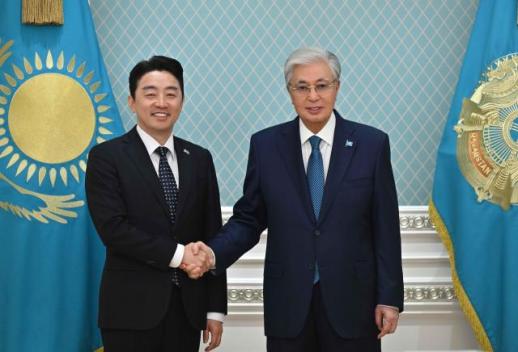 South Korea dispatches chief of staff as Astana readies for regional summit SEOUL, April 09 (AJP) - South Korea sent its presidential chief of staff to Central Asia on Wednesday to secure attendance for an inaugural regional summit, moving to lock in vital energy and logistics access. The diplomatic push bypasses traditional military and economic alliances. Instead, the strategy builds directly on an ideological framework established seven months ago during a global interfaith congress, illustrating how modern statecraft increasingly relies on spiritual backchannels to navigate gridlocked global markets. According to a readout from Akorda, the official website of the President of Kazakhstan, President Kassym-Jomart Tokayev accepted a formal invitation from Kang Hoon-shik, the special representative for South Korean President Lee Jae Myung, to attend the first Central Asia-South Korea summit in Seoul this September. Securing the inaugural summit The bilateral dialogue highlights a shift in how industrialized economies secure their supply chains. Kang conveyed congratulations regarding a recent constitutional referendum before the discussion pivoted to expanding contacts in the energy and transport sectors. "Your visit is of great importance for the further strengthening of Kazakh-Korean interaction," the Kazakh president told the envoy, adding: "I am confident that through joint efforts, cooperation between our countries will continue to develop steadily." The spiritual groundwork The foundation for Wednesday's agreements was laid last September when delegations from 60 countries gathered for the VIII Congress of Leaders of World and Traditional Religions. Facing an era defined by hybrid warfare, Astana used the summit to produce the Astana Peace Declaration 2025. The Jogye Order of Korean Buddhism operated as a crucial diplomatic vanguard for South Korea. Venerable Jeong-beom, acting on behalf of the order's president, Venerable Jin-woo, offered Seon meditation as a practical foundation for international peace. Venerable Mun-jeong participated in a specialized youth forum. The monastic delegation established the baseline bilateral trust required for subsequent negotiations over hard economic assets. Navigating global markets The September congress deliberately sidestepped theological debates to address the ethical management of artificial intelligence and the moral imperative of combating climate change. The host nation proposed establishing an Interreligious Commission on the Ethics of Artificial Intelligence. This created a shared humanistic framework that now supports ongoing technological and academic exchanges between the two governments. Embedding these shared values into the broader regional format ensures South Korea's Central Asian strategy is fortified by more than just transactional resource extraction. The synthesis of technological responsibility and cultural dialogue shields the strategic partnership from the volatility of conventional geopolitical rivalries. The IX Congress is scheduled to be held in Astana in 2028. 2026-04-09 10:08:28
 -
 Seoul SK Falls to Anyang Jung Kwan Jang, Finishes Fourth After Late Free-Throw Misses Seoul SK drew anger from fans after a listless performance in its regular-season finale raised questions about whether the team was trying to lose. On April 8, the final game of the sixth round of the 2025-26 LG Electronics Pro Basketball season was played at Anyang Jung Kwan Jang Arena. SK entered the matchup knowing a win would lock up third place in the regular-season standings, while a loss would drop it to fourth. As results came in from other arenas, the playoff picture sharpened. KCC lost to DB and Sono lost to KT, fixing the standings among those four teams. SK would face KCC in the six-team playoff with a win, or Sono with a loss. With SK trailing KCC in the head-to-head series, a string of puzzling plays followed. Late in the fourth quarter, SK’s Lee Min-seo committed a foul that led to free throws, and SK fell behind 63-62. With about 20 seconds left and the score tied 65-65, Jung Kwan Jang also made an unusual sequence: Kim Se-chang near the halfcourt line appeared to hand the ball to SK, then committed a foul by grabbing an opponent. SK went to the line with a chance to win by making one free throw, but Kim Myeong-jin missed both. SK then allowed a layup at the other end, with defense that did not appear aggressive. SK lost 67-65, finished fourth and will meet Sono in the six-team playoff. Fans criticized the game as looking like an “intentional loss.” SK, which finished first in the regular season last year, ended this season’s regular-season schedule under a cloud of controversy. According to multiple reports, an SK official said, “There was no intention to lose the game on purpose. We did show some disappointing moments at the end, but it wasn’t deliberate.” The KBL said that because five games were played simultaneously on the final day of the regular season, it would first analyze the SK-Jung Kwan Jang game before making a judgment. 2026-04-09 10:06:00
 -
 NPS holding in Korean stocks stretches $54 bn Q1 thanks to chip names SEOUL, April 09 (AJP) -South Korea’s National Pension Service, one of the world's largest with 1,540.4 trillion won worth assets under management as of January, saw its value of its holdings in domestic equities stretch by 80 trillion won ($54 billion) in the first quarter thanks to the spikes in memory stocks. According to financial data tracker FnGuide, the NPS stakes in 291 listed companies subject to disclosure with holding ratio of more than 5 percent were valued at 323.76 trillion won as of Tuesday, up 78.55 trillion won from 245.21 trillion won at end-2025 to deliver a return rate of 32.0 percent. The increase exceeded the gain of 69.69 trillion won in the prior quarter. As of Wednesday, the KOSPI was 39.4 percent higher from the end of December, and KOSDAQ 17.76 percent up. Shares of Samsung Electronics have surged around 75.6 percent, and SK hynix 59 percent during the same period. The NPS’ stake in Samsung Electronics remained unchanged at 7.75 percent, but the holding value jumped 63.8 percent to 90.12 trillion won. Its stake in SK hynix rose to 7.50 percent from 7.35 percent, with the value climbing 40.7 percent to 48.99 trillion won. Together, the two accounted for 62.7 percent of the value bump-up for NPS holdings. Other notable contributors included Hyundai Motor, Hanwha Aerospace and Mirae Asset Securities, with the NPS raising its stake in the brokerage by 1.18 percentage points. Portfolio shifts pointed to a growing tilt toward KOSDAQ-listed names. The NPS newly added 22 stocks with stakes of 5 percent or more in the first quarter, while 15 fell below the threshold. Of the additions, 14 were on the KOSDAQ. Daejoo Electronic Materials stood out with a 10.01 percent stake, alongside Vinattech (8.68 percent) and RF Materials (7.43 percent). Among KOSPI additions, Kakao Pay had the largest stake at 6.10 percent. By sector, semiconductors and related equipment led new additions, followed by electrical equipment, biotech, commercial services, and metals and minerals. The number of holdings with stakes of 5 percent or more rose to 276 from 269, while those above 10 percent increased to 37 from 34. Stakes were unchanged in 114 companies, increased in 105 and reduced in 74. HD Hyundai Infracore was among the most heavily sold, with its stake falling below 5 percent from 13.21 percent. The strong first-quarter performance extends a record year for the pension fund. NPS said its fund delivered 231.6 trillion won in investment income for 2025, posting a preliminary return of 18.82 percent — the highest since its inception — and lifting total assets under management to 1,458 trillion won. The annualized return since 1988 stood at 8.04 percent. The 2025 performance outpaced major global peers, including Japan’s GPIF (12.3 percent), Norway’s GPFG (15.1 percent), Canada’s CPPIB (7.7 percent), and the Netherlands’ ABP (–1.6 percent). Domestic equities led returns with a surge of 82.44 percent, driven by an AI-fueled semiconductor rally and policy-driven market optimism. Global equities returned 19.74 percent, while alternative investments gained 8.03 percent. Fixed income also posted positive returns despite rate volatility. As of January, domestic equity investment by the fund represented 21.4 percent of its portfolio. 2026-04-09 09:48:38
 -
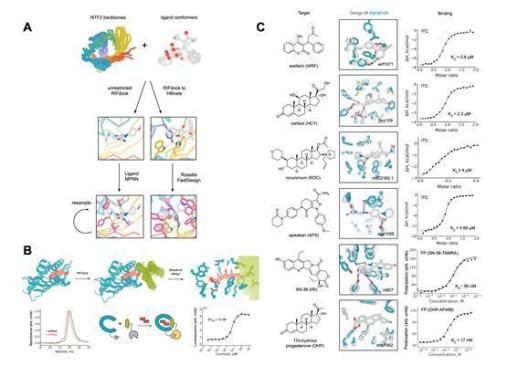 KAIST researchers and Nobel winner David Baker develop AI protein sensors for cortisol SEOUL, April 09 (AJP) - Researchers in South Korea have successfully used artificial intelligence to design proteins that can detect specific chemicals, including stress hormones, through a collaboration project between the Korea Advanced Institute of Science and Technology and 2024 Nobel laureate David Baker from the University of Washington, the prominent South Korean science institute said Thursday. The study demonstrates a way to create functional biosensors from scratch, a process known as de novo design. Unlike previous methods that relied on modifying proteins already found in nature, this artificial intelligence-driven approach allows scientists to build custom proteins for specific tasks, such as medical testing or environmental monitoring. Specifically, the Korea Advanced Institute of Science and Technology (KAIST) team created a protein that selectively identifies cortisol, a hormone closely linked to stress levels. By turning this protein into a working sensor, the researchers addressed a long-standing technical hurdle: designing proteins that can recognize small, complex molecules with atomic-level accuracy. The technology could eventually lead to new tools for early disease diagnosis by spotting biomarkers in blood samples. It also has potential applications in the real-time monitoring of air and water quality or the development of more targeted medical treatments. To design the proteins, the team developed an AI model that accounts for how amino acids interact with different chemicals. They tested the model by designing six different types of proteins for various drugs and metabolites, verifying the results through laboratory experiments and crystal structure analysis. Lead researcher Lee Kyu-ri joined the KAIST Department of Biological Sciences in February 2025 after working as a staff scientist in the Baker laboratory in the United States. She now leads her own protein design lab, focusing on creating artificial enzymes, sensors, and RNA-recognition proteins. The research was highlighted during a visit by David Baker to the KAIST campus on Thursday. "This research experimentally proves that we can use AI to design proteins that precisely recognize specific compounds," Lee said. "We plan to expand this technology to various fields such as disease diagnosis and the development of new drugs." The project was supported by the Ministry of Science and ICT (MSIT) through the InnoCORE program. This initiative is designed to help South Korean researchers collaborate with global experts on advanced AI technologies. KAIST President Lee Kwang-hyung noted that the collaboration with David Baker resulted in a significant achievement for AI-based protein design. The university currently manages several research units focused on aerospace, manufacturing, and drug discovery under the InnoCORE program. (Reference Information) Journal/Source: Nature Communications Title: Small-molecule binding and sensing with a designed protein family Link/DOI: https://bit.ly/4srcGAi 2026-04-09 09:42:50
 -
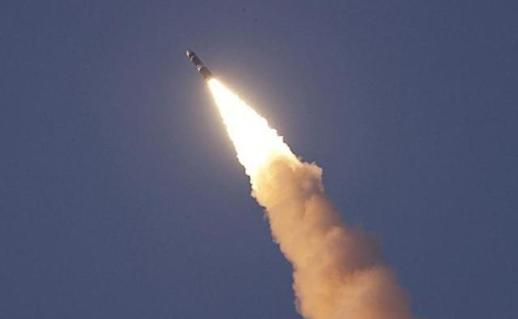 North Korea tests tactical ballistic missile with cluster bomb warhead, state media says SEOUL, April 9 (AJP) - North Korea has conducted tests of a "tactical ballistic missile" equipped with a "cluster bomb warhead," state media reported on Thursday. According to the state-run Korean Central News Agency, the tests were conducted over three days earlier this week to "verify the combat reliability of the mobile short-range anti-aircraft missile system." It added that the surface-to-surface tactical ballistic missile "tipped with a cluster bomb warhead, can reduce to ashes any target" within an area of 6.5 to 7 hectares with high-density strikes. The missile appears to be a KN-23-series, North Korea's main short-range ballistic missile, similar to Russia's Iskander-type missiles. "There was a firing for testing the maximum workload of engine using low-cost materials," KCNA said. Earlier, the Joint Chiefs of Staff here said it detected an unidentified projectile fired from an area near Pyongyang toward the East Sea on Tuesday, followed by several short-range ballistic missiles fired from Wonsan, Kangwon Province the next morning, and then one more ballistic missile into the East Sea about six hours later. The projectile fired earlier in the week disappeared shortly after launch, leading the JCS to determine that it failed. KCNA also revealed a test of an "electromagnetic weapon and carbon fiber bomb," describing them as special strategic assets to be combined with "various military means," which may have been conducted on Monday, since the JCS detected the tests on Tuesday and Wednesday only. With no mention of the country's leader Kim Jong-un, he apparently did not observe these tests. 2026-04-09 09:34:03