
Journalist

Lee Hugh
=
-
 OPINION: Governance question lingers behind Korea's market rollercoaster Market volatility has become the norm in 2026. The KOSPI index is liable to shoot up and down any moment, as global analysts watch for hints of supply chains either being freed or tied up amid the conflict in the Middle East. Just before the fighting started, Korean stocks were riding an unprecedented surge. Airstrikes on Iran began in same week that an artificial intelligence boom helped the KOSPI cross the 6,000 level for the first time ever, just 250 days after surpassing 3,000. But market swings such as these do not change long-term fundamentals. If Korea wants to fully realize its investment potential, stronger corporate governance must become a central pillar of growth. For years, global investors have spoken of the “Korea discount.” This term does not refer to short-term market swings. It reflects long-standing concerns about governance — especially the gap between control rights and cash-flow rights. In many Korean companies, controlling shareholders hold decision-making power that exceeds their share of economic ownership. Concentrated ownership is not unique to Korea, and it is not inherently negative. In fact, it has helped build some of the country’s most successful companies. The tension arises when control and economic interest are not clearly aligned. Investors factor in a practical risk that during major Korean corporate actions they may be treated unfairly. These moments include contested merger ratios, spin-offs that shift value, dilutive capital raises, related-party transactions, and succession-related restructurings. Markets also discount silence. When a “no-failure” culture delays bad news, investors price the same risk they associate with weak governance: that problems will be disclosed only after value has already been impaired. Even if such events are rare, the possibility affects confidence and valuation. Addressing these concerns is complex. Korea’s corporate structure is deeply shaped by family ownership. Breaking apart these structures would carry economic and social costs. The more constructive question is how to preserve the benefits of long-term ownership while strengthening protections for minority shareholders and reinforcing trust in the market. We propose a Structure–Discipline–Dialogue framework to help meet that challenge — focusing on how authority is organized, how capital allocation decisions are governed, and how companies engage with investors. The goal is not to copy any single foreign model, but to combine lessons from global markets in ways that fit Korea’s corporate realities. The Nordic model demonstrates that transparency and strong minority protections can coexist with concentrated ownership — and that such systems can attract global capital. The United States demonstrates the importance of enforceable fiduciary duties and active stewardship. Japan illustrates that steady, incremental reform can raise standards over time. Across these examples, one principle stands out: concentrated ownership becomes investable when checks and balances ensure that control is exercised in line with per-share value, and when investors can trust the transparency of corporate performance. Structure focuses on how control and oversight are organized. Simplifying ownership chains and clarifying decision-making authority reduces opacity. Boards elected at the annual general meeting should be mandated to represent all shareholders equally, not only controlling owners. Clear mandates, genuine independence, and relevant expertise help boards function as effective oversight bodies. This approach does not weaken ownership or voting rights. Instead, it embeds accountability within the company’s governance structure. When authority is transparent and oversight is credible, there is less need for outside intervention. Discipline addresses how control is exercised, particularly in capital allocation. This is often the most challenging pillar. Governance structures and investor relations can be improved over time. Capital allocation decisions, by contrast, are measurable and irreversible. Dividends, buybacks, mergers and acquisitions, spin-offs, and restructurings directly test whether incentives are aligned. As a practical example from recent news, consider a spin-off where the parent retains control while minority shareholders absorb dilution. Once these decisions are made, their consequences cannot be undone. That is why capital allocation discipline is central to governance credibility. Clear policies on dividends, reinvestment, and major transactions reduce discretion and make outcomes more predictable. Stronger minority protections in conflicted transactions limit the risk of control rights overriding economic fairness. In practical terms, this means accepting some limits on unilateral decision-making. That trade-off may be uncomfortable, but markets reward consistency and predictability. Enforcement credibility is equally important. Governance reform is not only about introducing new rules. It is about ensuring that rules carry consistent consequences. Investors respond to outcomes, not intentions. If protections are bypassed or applied unevenly, confidence weakens and valuation gaps persist. For that reason, one of the most impactful reforms would be to strengthen the enforceability of fiduciary duties in conflicted transactions. Mergers, spin-offs, and related-party deals are precisely the situations where control incentives can diverge most from per-share value. Clear standards and consistent enforcement in these areas would directly address investor concerns. Dialogue is the third pillar. High-quality disclosure and regular, structured engagement with investors reduce information gaps. Dialogue does not mean surrendering control to activists or focusing only on short-term performance. It means ensuring that decisions are clearly explained and open to scrutiny through established processes. Over time, consistent engagement builds trust. Investors are more willing to support long-term strategies when governance systems are transparent and predictable. Together, structure, discipline, and dialogue form a governance system that aligns control with per-share value. It allows Korea to strengthen governance without dismantling concentrated ownership. Control remains intact, but it operates within clearer structures, stronger discipline, and more open communication. In practice, governance quality increasingly determines strategic flexibility. Companies that demonstrate disciplined capital allocation and credible oversight gain greater freedom to pursue acquisitions, partnerships, and long-term investments because investors trust how decisions will be made. The objective is not to change who owns Korean companies. It is to ensure that control is exercised in a way that is transparent, accountable, and aligned with economic ownership. International experience shows that markets reward governance systems that constrain discretion, strengthen oversight, and protect minority shareholders. Korea does not need dramatic upheaval to improve. As Japan’s experience suggests, steady and cumulative reforms can gradually raise expectations and build credibility. When enforcement is consistent and capital allocation is disciplined, concentrated ownership can coexist with strong investor confidence. Given the upheaval and uncertainty in global capital markets, there is a window of opportunity now. Global investors are looking for alternatives. Sustaining interest in the Korean market will require more than favorable market conditions or momentum in specific sectors. Stronger governance can help transform the Korea discount from a persistent concern into a lesson from the past, supporting a more resilient, competitive, and globally trusted equity market. On the level of individual corporations, executives who proactively strengthen governance credibility will gain earlier access to global capital and strategic partnerships. *The author is the founding CEO of Reddal. About the author: Formerly at McKinsey & Company and Accenture, Stenius has over 20 years of experience in science, management consulting, venture capital, startups, and operative management. He has an M.A. in Economics and a Ph.D. in Electrical Engineering from the University of California, Santa Barbara, and an M.Sc. Electrical Engineering from Helsinki University of Technology. He is a Visiting Professor at Yonsei University, Graduate School of Business. 2026-04-09 13:24:41
 -
 Seoul advised to seek risk-free energy sourcing at first NEAC meeting SEOUL, April 09 (AJP) -South Korean President Lee Jae Myung admitted Thursday that the escalating Middle East conflict will deliver near-term economic damage while forcing a longer-term overhaul of the country’s industrial and energy structure. Speaking at the first plenary session of the National Economic Advisory Council at Cheong Wa Dae, Lee said the crisis is unfolding on two fronts — an immediate energy supply disruption and a broader erosion of industrial competitiveness. “In the short term, the Middle East war is exerting considerable pressure on our economy,” Lee said. “In the long run, the time has come for a fundamental transformation of South Korea’s economic system.” The remarks came as uncertainty deepens around the Strait of Hormuz, a critical artery for global oil flows, with supply conditions remaining unstable despite a temporary ceasefire announcement by Donald Trump. Reports of renewed disruptions have underscored the fragility of any near-term normalization. Lee said the nature of the current crisis differs from past oil shocks, noting that infrastructure damage across parts of the region could prolong disruptions for years rather than months. He also pointed to unresolved nuclear tensions and the risk of unilateral military action as factors sustaining volatility. “Crises are inevitable in life and society,” he said. “Even today, there are reports of attacks despite a ceasefire. It is difficult to predict when this situation will be resolved.” The meeting — Lee’s first full session as chair since taking office — brought together around 50 participants, including Vice Chair Kim Sung-sik, Deputy Prime Minister Koo Yun-cheol and other senior officials and civilian advisors. Discussions focused on immediate response measures and longer-term structural reforms to strengthen economic resilience. Lee urged a coordinated policy response across time horizons, stressing that the current “window” created by the ceasefire should be treated as a critical opportunity to secure energy supplies. “If we prepare well, we can turn this crisis into an opportunity to build a new system for renewed growth,” he said. Policy discussions outlined a broad package of measures centered on energy security, industrial adaptation and market stabilization. In the near term, officials emphasized the need to maximize crude procurement during any reopening of Hormuz, including immediate deployment of tankers, while maintaining price controls such as fuel caps to stabilize domestic markets. Authorities are also considering adjustments to nuclear power plant maintenance schedules to maximize winter electricity generation. To cushion households, proposals included targeted fiscal support for energy costs, expanded supplementary budget allocations for small businesses, and even temporary public transport subsidies modeled on overseas cases. Over the medium to long term, the focus shifts to restructuring supply chains and reducing reliance on Middle Eastern crude. Options under review include diversifying import routes via Southeast Asia and Australia, enhancing refinery flexibility, and expanding overseas resource development into higher value-added partnerships. Park Won-joo, head of the macroeconomy team at the council, called for a more aggressive push into overseas resource development to secure alternative, lower-risk energy routes that bypass Middle East chokepoints. The discussions also highlighted the need for stronger policy coordination under a centralized presidential control tower, alongside more transparent and predictable regulatory frameworks to support private investment. Lee framed the crisis as a potential inflection point, drawing parallels to how Japan’s export restrictions helped catalyze South Korea’s materials and components sector. “The crisis can become a turning point,” he said, “to reorganize our energy supply chain and move toward a more proactive economic structure.” 2026-04-09 11:55:54
 -
 Asian markets retreat after truce rally; Kospi slips by Samsung block sale SEOUL, April 09 (AJP) - Asian markets opened broadly lower on Thursday, giving back some of the previous session's sharp gains after the United States and Iran effectively agreed to a Pakistan-mediated two-week truce. As investors monitored the course of Washington-Tehran negotiations, South Korean stocks were weighed by profit-taking following Wednesday’s sharp jump and a large block sale of Samsung Electronics shares. The main index fell 0.99 percent to 5,814.40, and the tech-heavy KOSDAQ declined 0.96 percent to 1,079.36 as of 11:10 a.m. Samsung Electronics fell more than 3 percent in early trading on Thursday, following a large block sale by the late chairman Lee Kun-hee's widow Hong Ra-hee. Hong, mother of Samsung Group chief Lee Jae-yong sold 15 million shares worth about 3.08 trillion won ($2.3 billion) at a 2.5 percent discount to the previous close to complete the inheritance tax following the patriarch's death in 2020. Shares were down 3.33 percent at 203,500 won in the morning trade. Shares of SK Hynix also declined, falling 2.81 percent to 1,004,000 won, with the two heavyweights weighing on the broader KOSPI. Among other large caps, battery shares were mixed, with LG Energy Solution rising 2.59 percent to 416,500 won and Samsung SDI gaining 2.65 percent to 484,000 won. Defense and industrial names were weaker, with Hanwha Aerospace dropping 2.43 percent to 1,448,000 won and HD Hyundai Heavy Industries slipping 0.67 percent to 481,250 won. Automakers were mixed, as Hyundai Motor fell 1.38 percent to 501,000 won, while Kia edged up 0.75 percent to 160,400 won. Financial shares were mixed, with KB Financial Group rising 0.77 percent to 157,200 won and Shinhan Financial Group gaining 1.76 percent to 98,400 won, while Samsung Life Insurance slid 5.24 percent to 226,000 won. Elsewhere in Asia, Japan's Nikkei 225 fell 0.77 percent to 55,873.60 after recent gains, Hong Kong's Hang Seng Index declined 0.88 percent to 25,665.20. Chinese stocks also traded lower, with the Shanghai Composite Index falling 0.70 percent to 3,966.90. The dollar edged up to 1,481.90 won, compared with 1,470.6 won at the previous close. 2026-04-09 11:30:34
 -
 Jon Rahm Tops Golf Earnings List With $102 Million Over Past Year, Sportico Says Over the past year, Spain’s Jon Rahm led all professional golfers worldwide in earnings, according to a ranking released by U.S. sports business outlet Sportico. Sportico said Thursday that Rahm made $102 million over the period, the most in golf. Much of Rahm’s earnings were tied to his move to LIV Golf. The 2021 U.S. Open and 2023 Masters champion switched tours in December 2023. Sportico reported that he signed a $300 million contract as part of the move and was believed to have received 50% upfront. Rahm won twice on LIV Golf in 2024 and also captured the LIV Golf Hong Kong event in March. He earned $92 million in prize money and $10 million off the course. Rory McIlroy of Northern Ireland ranked second at $84 million, including $29 million in prize money and $55 million off the course. World No. 1 Scottie Scheffler of the United States was third at $81 million. Tiger Woods, long the top earner off the course, posted $54 million in off-course income in the survey, trailing McIlroy in that category. Woods ranked fifth overall. Three LIV Golf players made Sportico’s top 10: Rahm, Bryson DeChambeau at No. 4 with $65 million, and Joaquin Niemann at No. 7 with $41 million. Among Asian players, Japan’s Hideki Matsuyama was the highest-ranked at No. 8 with $31 million.* This article has been translated by AI. 2026-04-09 11:27:00
 -
 Dongwha Pharm Names Shin Yong-jae Head of Jungseon Pharma’s Ho Chi Minh Office Dongwha Pharm said April 9 it has appointed Executive Director Shin Yong-jae as head of the Ho Chi Minh City office of Jungseon Pharma, a major pharmacy chain in Vietnam. Shin will oversee operations of the Ho Chi Minh City branch and lead the company’s new business efforts in Vietnam, the company said, as it seeks to strengthen its foothold in Southeast Asia. Shin joined Samsung Group through its 2006 open recruitment and worked in Hotel Shilla’s finance and management teams. He later served as chief financial officer at Hotel Shilla’s China unit and at a joint venture between Hotel Shilla and Hongtong Sun Art Retail Group, handling global business and operations. At joint ventures involving SK On and China’s Beijing Automotive and EVE Energy, he worked as CFO and chief executive officer, overseeing investment, finance and overall business operations. Shin said he would “build a foundation for Jungseon Pharma’s expansion in the Southeast Asian market, strengthen competitiveness and maintain a stable growth trajectory.”* This article has been translated by AI. 2026-04-09 11:21:00
 -
 JW Pharmaceutical Signs Deal to Bring China’s Biweekly Obesity Drug Candidate to South Korea JW Pharmaceutical said April 9 it signed an exclusive licensing agreement with China’s Gan & Lee Pharmaceuticals to bring in bofanglutide (development code GZR18), a glucagon-like peptide-1 (GLP-1) receptor agonist drug candidate. Under the deal, JW Pharmaceutical secured exclusive rights in South Korea covering development, regulatory approval, marketing and commercialization. The total contract value is $81.10 million (about 110 billion won), with sales-based royalties to be paid separately. The agreement also includes rights for four indications: Type 2 diabetes, obesity, obstructive sleep apnea (OSA) and metabolic dysfunction-associated steatohepatitis (MASH). Bofanglutide is a synthetic peptide being developed as a subcutaneous injection given once every two weeks. The company said it works by stimulating insulin secretion and slowing gastric emptying to help maintain satiety, reducing appetite and body weight. In a Phase 2a trial, average body weight fell 17.29% after 30 weeks of dosing every two weeks. JW Pharmaceutical plans to launch Phase 3 trials in South Korea in the second half of this year for obesity and Type 2 diabetes at the same time. CEO Shin Young-seop said, “Based on our proven development capabilities, we will successfully advance the commercialization of bofanglutide in Korea and provide patients with metabolic diseases an innovative treatment option.”* This article has been translated by AI. 2026-04-09 11:15:00
 -
 Battery makers expected to post Q1 losses, but optimism remains on ESS demand SEOUL, April 9 (AJP) - South Korea's three major battery makers are expected to post weak first-quarter results amid slowing demand for electric vehicles. According to data compiled by financial information provider FnGuide, Samsung SDI, SK On, and LG Energy Solution are projected to post operating losses for the first three months of this year. Samsung SDI is estimated to have posted an operating loss of 263.5 billion won ($196 million), while SK On is expected to report a loss of around 300 billion won. LG Energy Solution, in a preliminary report earlier this week, recorded an operating loss of 207.8 billion won. These losses reflect a triple whammy for the sector, driven by slowing global EV demand, automakers' inventory adjustments, and falling raw material prices. In particular, LG Energy Solution's operating loss would widen to around 400 billion won if the Advanced Manufacturing Production Credit (AMPC), a U.S. tax incentive under the Inflation Reduction Act, is excluded. Samsung SDI is also believed to have seen a sharp decline in profitability, while SK On is expected to continue its streak of quarterly losses. The slowdown is also reflected in global market data. According to SNE Research, an energy market research firm specializing in batteries, total battery usage in electric vehicles (EVs), plug-in hybrid vehicles (PHEVs), and hybrid vehicles (HEVs) reached 134.9 gigawatt-hours (GWh) during the peiod, rising just 4.4 percent from a year earlier. The combined global market share of the three battery makers fell to 15 percent, down 2.2 percentage points year-on-year. A sharp 29.8-percent drop in U.S. EV sales led to declining battery usage across all three companies. LG Energy Solution recorded 11.8 GWh (-2.7 percent), SK On 5.2 GWh (-12.9 percent), and Samsung SDI 3.3 GWh (-21.9 percent), marking the steepest decline among major players. But the losses are widely seen as reflecting ongoing investment rather than a structural downturn, as the three battery makers expand their production capacity in the U.S. to secure a foothold in the North American market. With such aggressive investment in North America, a gradual recovery is expected in the second half of the year as more affordable EVs and energy storage systems (ESS) would gain traction. LG Energy Solution is expanding its U.S. footprint including its joint venture Ultium Cells with General Motors, one of the largest U.S. automakers, and plans to begin mass production of ESS batteries in the second quarter. Samsung SDI is also preparing ESS battery production through its joint venture with Stellantis, formed through the merger of Fiat Chrysler Automobiles and PSA Group. Earlier this year, it secured a large battery deal in the U.S. and followed it up with a 1.5 trillion won ($1.1 billion) ESS contract last month, extending its order momentum. SK On operates a plant in Georgia and is building additional facilities through its equally held venture with Ford Motor Company to produce EV batteries in the U.S. It recently suspended operations at its first Georgia plant and shifted production to the second plant to improve efficiency. The company also signed a 2 trillion won ESS supply deal with Flatiron Energy Development, an ESS developer founded in 2021. Such front-loaded investments are expected to lay the groundwork for a recovery in earnings, as higher utilization rates would allow U.S. subsidies under the Advanced Manufacturing Production Credit (AMPC) to be more fully reflected in results. These front-loaded investments are expected to lay the groundwork for a recovery in earnings, as higher utilization rates would allow U.S. subsidies the AMPC. SK On is also boosting efficiency at its operations in Hungary, supported by steady growth in the European market. Its second plant in Komárom is operating at around 80-percent utilization rates and supplies nickel-cobalt-manganese (NCM) batteries, a high-performance EV battery chemistry, to Volkswagen Group and Ford Motor Company including for models such as the ID.4 and ID.7. Automakers are set to launch more affordable EVs in the US$20,000–$30,000 range, which could revive delayed demand and boost battery shipments. The expansion of the energy storage system (ESS) market could be another positive factor. Surging power demand from artificial intelligence (AI) data centers is driving growth in large-scale energy storage, as battery makers expand beyond EV-focused portfolios and position ESS as a key growth engine. Meanwhile, shares of LG Energy Solution and Samsung SDI were up 2.34 percent from the previous session as of Thursday morning. 2026-04-09 11:12:15
 -
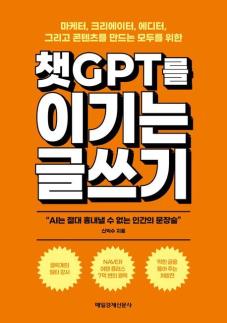 New Book Says Identity Is the One Thing ChatGPT Can’t Copy In an era when generative AI can draft text in seconds, a new book asks where human writing should go next. Maeil Business Newspaper Publishing (Saenggakjeonggeojang) will publish “Writing That Beats ChatGPT” on the 17th for content creators such as marketers, creators and editors. Rather than focusing on “good writing” alone, the book lays out a vision and practical methods for producing copy that prompts an immediate response — writing that gets clicked. ◆ ‘Dopamine writing’ that wins in 0.017 seconds The book argues that in today’s “dopamine era,” writers must design stimuli that seize attention in just 0.017 seconds. Author Shin Ik-su, a travel reporter at Maeil Business Newspaper, said, “If you can’t get clicks, you’ll be discarded — even by ChatGPT,” as he introduces a formula tailored to readers’ “dopamine brains,” which react to stimulation first. It describes a new reader behavior sequence: stimulus, click and understanding. In a mobile-first environment where instinct often beats reason, it urges creators to move past the assumption that quality alone is enough and to sharpen hooking strategies that draw the initial click. ◆ A human ‘identity’ AI can’t imitate Shin writes that while ChatGPT may appear to threaten human writing, what ultimately holds attention and opens wallets remains a distinctly human domain. AI can produce smooth, polished sentences instantly, he argues, but writing that grasps desire and psychology and moves people is finished by human hands. He compares dopamine-driven readers to “picky eaters” who consume only what suits their tastes, warning that mediocre content will be ignored without hesitation. As the one weapon to overcome that, he points to “identity” rooted in lived experience — vivid, firsthand experience that ChatGPT cannot replicate, he says. ◆ A platform-by-platform practical guide The book presents field-ready techniques, not just theory. It analyzes how writing rules differ across YouTube, blogs and Instagram, and organizes practical formulas aimed at boosting views. It includes guidance on designing titles and thumbnails, opening strategies to increase time spent, building product detail pages that drive purchases, and copywriting that leads to sales. Shin, whose earlier book “Writing That Brings 1 Million Clicks” drew attention, compiles more than a decade of on-the-job know-how in prompting reader clicks.* This article has been translated by AI. 2026-04-09 11:06:18
 -
 Seoul unveils new measures to fend off inflation, sees stabler FX market SEOUL, April 9 (AJP) —South Korea will reimpose a cap on retail fuel prices to contain a renewed surge in gasoline costs triggered by the prolonged blockade of the Strait of Hormuz, while signaling potential upside for the battered won through parallel market-stabilization measures. Deputy Prime Minister and Finance Minister Koo Yun-cheol said Thursday the government will unveil a third round of emergency price ceilings on petroleum products at 7 p.m., with the new caps to take effect from midnight Friday. Final levels will be set after inter-agency consultations, factoring in global crude trends and the burden on households. At an emergency price meeting, Koo stressed that earlier caps had functioned as an effective “safety net,” cushioning logistics costs and easing pressure on consumers, and pledged to act decisively against renewed energy-driven inflation. On financial markets, he said volatility is showing early signs of easing, pointing to foreign inflows into Korean government bonds following the country’s inclusion in the World Government Bond Index (WGBI). Offshore investors have bought a net 6.8 trillion won ($4.6 billion) in sovereign debt, helping stabilize sentiment. Koo also highlighted structural support for the currency. More than 114,000 accounts have been opened under the Reshoring Investment Account (RIA) scheme, which offers tax incentives for repatriated funds, while the National Pension Service’s new investment framework — aimed at recalibrating currency hedging and offshore allocation — is expected to further ease pressure on the foreign exchange market. The government also flagged emerging inflation in consumer electronics, as a spike in memory chip prices — driven by the expansion of high-bandwidth memory (HBM) production — has lifted general DRAM costs. Prices of personal computers and laptops have risen by more than 10 percent over the past seven months. To cushion the impact, authorities plan to recycle used PCs from central government agencies for vulnerable groups and expand financial support for low-income students purchasing new devices, backed by 4.8 trillion won in additional local education grants from the supplementary budget. Despite elevated geopolitical risks, officials assessed that core service prices — including courier and moving costs — as well as daily necessities remain broadly stable. To guard against market distortion, the government will maintain strict bans on hoarding of petroleum products and urea solution, with contingency measures ready should price volatility intensify. 2026-04-09 10:50:07
 -
 BTS franchise in incessant motion: on screen and stage, and off stage SEOUL, April 07 (AJP) -BTS franchise is in incessant motion since its March 21 comeback. As the world tour opens in Goyang on Thursday, the group has been releasing weekly viral music videos, amplifying global fan excitement. Off-stage activations have been just as intense, turning Seoul into a citywide extension of the BTS universe. The “BTS THE CITY ARIRANG SEOUL” project has kicked off across the capital, drawing strong response to its fan-participation programs. The project celebrates the release of BTS’ fifth full-length album ARIRANG and its accompanying world tour, offering immersive, citywide experiences built around the group’s music and message. At Dongdaemun Design Plaza (DDP), the “ARMY Madang” program is being held at Exhibition Hall 1. The program runs eight sessions per day, with about 400 participants per session. While free of charge, participation is limited to those who make advance reservations via Weverse. According to organizers, all sessions, held from 1 p.m. to 9 p.m., have sold out, underscoring surging demand. On-site activities include T-shirt and light stick customization, love song writing and photo card production, alongside a HYBE experience zone and other linked programs. “ARMY Madang” runs from April 6 to April 12. Across the city, the project extends into themed installations, pop-up stores and interactive zones, effectively mapping BTS onto Seoul’s urban landscape. Key landmarks have been reimagined as fan destinations, blending music, design and digital engagement. Nighttime light shows, projection mapping and curated playlists further transform public spaces into shared fan arenas. Retail and hospitality sectors are also participating, with limited-edition merchandise, themed menus and hotel packages tailored to visiting fans. The initiative is driving a measurable uptick in foot traffic in major districts, signaling the group’s continued pull as both a cultural and economic force. Taken together, the project illustrates how BTS’ comeback is not confined to charts or stages, but unfolds as a coordinated, multi-platform experience — one that fuses fandom, commerce and city branding into a single, continuously evolving narrative. 2026-04-09 10:42:02