
Journalist

Lee Hugh
=
-
 South Korea to transfer KF-21 prototype to Indonesia SEOUL, April 7 (AJP) - South Korea has agreed to transfer one of its fighter jet prototypes to Indonesia as part of the two countries' joint development project. According to a report submitted on Tuesday by the Defense Acquisition Program Administration (DAPA) to Kang Dae-sik of the main opposition People Power Party (PPP), who leads the National Assembly's defense committee, the two countries reached an agreement in their working-level talks in February to transfer one of the six KF-21 prototypes, multi-role fighter jets dubbed "Boramae." The value of the transfer is reportedly estimated at about 600 billion won (about U$400 million), almost equal to Indonesia's contribution to the development. The package includes a KF-21 prototype worth 350 billion won, 174.2 billion won for technology transfer and wages for Indonesian researchers, and 75.8 billion won for other costs. Indonesia had initially agreed to cover about 20 percent of the total development costs, roughly 1.6 trillion won, but delayed payments citing economic difficulties, forcing South Korea to reduce the Southeast Asian country's contribution to 600 billion won last year. Jakarta has so far paid 536 billion won of the total 600 billion won and plans to pay the remaining amount by June. DAPA plans to decide when to hand over the prototype once full payment is made. Separately, South Korea is also in talks with Indonesia to export 16 homegrown KF-21 aircraft. 2026-04-07 10:58:03
 -
 Lee set to meet ruling, opposition party leaders over lunch SEOUL, April 7 (AJP) - President Lee Jae Myung is set to meet with leaders of both the ruling Democratic Party (DP) and the main opposition People Power Party (PPP) at Cheong Wa Dae in central Seoul on Tuesday to discuss measures to cope with the deepening Middle East crisis. Lee is scheduled to hold a luncheon meeting with DP leader Jung Chung-rae and PPP leader Jang Dong-hyeok. The meeting comes roughly seven months after the last one held in September last year and about two months after a similar gathering fell through in February, when Jang declined to attend at the last minute. Also expected to attend are the two main parties' floor leaders Han Byung-do and Song Eon-seog, as well as Prime Minister Kim Min-seok, presidential chief of staff Kang Hoon-sik, and senior presidential secretary for political affairs Hong Ik-pyo. With no specific agenda set for the meeting, talks are likely to cover various issues, with Lee expected to seek cooperation on the passage of a supplementary budget proposal worth 26 trillion won (US$17 billion) including cash handouts, in the National Assembly. The DP says the supplementary budget is necessary to support people's livelihoods, while the PPP is criticizing it as a populist move to woo voters ahead of local elections scheduled for June 3. 2026-04-07 10:06:37
 -
 Comedian Heo Kyung-hwan Says Elementary Students Now Recognize Him Comedian Heo Kyung-hwan said elementary school students are starting to recognize him. A video titled “I’m being funny, but I’m nervous… Legendary KBS 22nd class comedians | Jjanhanhyeong Shin Dong-yup, Jung Ho-cheol” was posted Sunday on the YouTube channel “Jjanhanhyeong Shin Dong-yup.” In the video, host Shin Dong-yup said Heo’s catchphrase has been gaining popularity. Heo replied that until recently, elementary students “didn’t know me at all.” Heo described riding an elevator with parents and two children in first or second grade. “When I got on, the parents said, ‘Hello, Mr. Heo Kyung-hwan. We enjoy watching you,’” he said. He said the children asked who he was, and the parents told them, “There’s just a famous uncle.” Then, Heo said, one child looked at him and said, “Heo Kyung-hwan?” “The kids know Heo Kyung-hwan from reels, but they didn’t know me from doing comedy,” he said, adding that the moment was “the best” he has felt this year. Comedian Park Young-jin responded, “Now it’s the era of Heo Kyung-hwan.” Heo replied, “You’re a broadcaster.”* This article has been translated by AI. 2026-04-07 09:36:23
 -
 More companies voluntarily join efforts to save energy amid skyrocketing oil prices SEOUL, April 7 (AJP) - More companies are voluntarily joining energy-saving efforts including alternating vehicle use as part of measures to cope with energy shortages amid the prolonged conflict in the Middle East, the Ministry of Climate, Energy and Environment said on Tuesday. Major conglomerates such as CJ, GS, Hanwha, HD Hyundai, Hyundai Motor, Lotte, Samsung, SK, and POSCO are requiring employees to leave their cars at home once a week depending on the last digit of their license plates. The country's five major banks - Hana, KB Kookmin, NH NongHyup, Shinhan, and Woori - are also implementing similar measures. Business lobbies such as the Korea Chamber of Commerce and Industry, the Korea Employers Federation, and the Korea International Trade Association have also followed suit. According to the ministry, about 50 large and mid-sized companies including universities and other private institutions are taking part in these energy-saving efforts, just about a week after state-run agencies and public institutions took the lead late last month. Civil servants and staff at public institutions, previously mandated to leave their cars at home one day per week since March 25, are now required to commute by public transportation every other day starting from Wednesday. About 50 refiners, petrochemical companies, and others heavily reliant on petroleum have also pledged to reduce energy consumption, with plans to cut usage this year by 3.3 percent or 130,000 tons of oil equivalent from last year's 3.93 million toe. The 130,000 toe is equivalent to about 610 gigawatt-hours of energy, roughly the amount of electricity generated by a nuclear power plant operating for about a month. The ministry also plans to support companies that meet their reduction targets by subsidizing the installation of energy-saving facilities. Many workers are also participating by turning off lights during lunch breaks, using stairs instead of elevators, carpooling, or riding bicycles. "It is encouraging to see many companies and organizations voluntarily join despite difficulties caused by high oil prices," said Park Deok-yeol, a ministry official, vowing to further expand energy-saving efforts. 2026-04-07 09:14:00
 -
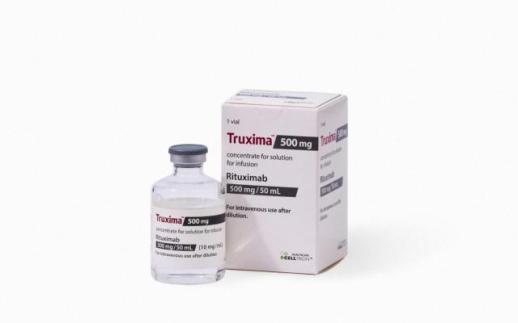 Celltrion's Truxima becomes first South Korean biosimilar to claim top U.S. prescription share SEOUL, April 07 (AJP) - Celltrion's blood cancer treatment Truxima has become the first South Korean biosimilar to capture the largest prescription share in the United States, marking a milestone for the country's biopharmaceutical industry at a time when Washington is actively championing lower-cost alternatives to branded drugs. Truxima, a biosimilar of Roche's blockbuster Rituxan, secured a 35.8 percent share of U.S. prescriptions by volume in February, according to data from market research firm IQVIA. The achievement comes about six years and three months after the drug's U.S. launch in November 2019, overtaking both the original medicine and rival products to become the most-prescribed rituximab treatment in the country. The milestone lands in a favorable policy climate. President Donald Trump signed an executive order in April 2025 calling on the FDA to recommend ways to accelerate approval of biosimilars, and his administration's Section 232 pharmaceutical tariffs announced on April 2 this year explicitly exempted biosimilar products and their ingredients, while imposing levies of up to 100 percent on patented drugs. South Korea is among the countries whose patented drug exports face a reduced 15 percent tariff under existing trade deals, but the full exemption for biosimilars gives companies like Celltrion a distinct competitive edge. The prescription gains have translated directly into revenue. Truxima generated more than 300 billion won ($198.8 million) in sales across North America last year, a year-on-year increase exceeding 40 percent. Celltrion's flagship autoimmune treatment Inflectra, the U.S. brand name for infliximab biosimilar Remsima, also held the highest biosimilar prescription share in its category at 30.5 percent, while prescriptions for subcutaneous formulation Zymfentra more than tripled in January from a year earlier. Newer high-margin products are also gaining traction. Steqeyma, a biosimilar of Stelara launched in March last year, has already captured 10.2 percent of prescriptions after securing preferred formulary status with major pharmacy benefit managers. Avtozma (tocilizumab) and Stoboclo-Osenvelt (denosumab), both launched in the second half of last year, are steadily expanding their reimbursement coverage through PBM contracts. "As both our legacy and newly launched products continue to deliver strong results across global markets, including the United States, we are confident of meeting our full-year earnings targets," said a Celltrion spokesperson. 2026-04-07 09:03:49
 -
 Trump sets Hormuz deadline, singles out South Korea over Iran war support SEOUL, April 07 (AJP)-U.S. President Donald Trump on Monday reiterated a deadline for Iran to reopen the Strait of Hormuz by 8 p.m. Tuesday, warning of military action while again singling out South Korea, saying Washington had received little help from its allies. “The entire country can be taken out in one night, and that night might be tomorrow night,” Trump said at a White House press briefing, as he pressed Tehran to accept a deal to restore oil transit. Iran, however, rejected a temporary cease-fire proposal tied to reopening the Strait of Hormuz, with state media saying Tehran would not trade access to the waterway for a short-term truce and instead demanded a permanent end to the war and broader concessions. At the same briefing, he broadened his criticism beyond Iran to U.S. allies. “It’s not just NATO… Do you know who else didn’t help us? South Korea,” he said. Trump tied the complaint directly to U.S. troop deployments on the Korean Peninsula. “We have 45,000 soldiers in South Korea… right next to Kim Jong Un, who has a lot of nuclear weapons,” he said, again overstating the American presence. U.S. Forces Korea stands at roughly 28,500 personnel. The remarks come as Seoul has yet to respond to Washington’s earlier request to dispatch naval assets to help secure the Strait of Hormuz, a key global energy chokepoint. Trump reiterated that reopening the strait is central to any agreement. “We have to have a deal that’s acceptable to me… and part of the deal’s going to be we want free traffic of oil, and everything else,” he said. He warned that failure to meet the deadline would trigger strikes on Iran’s infrastructure. “We have a plan… where every bridge in Iran will be decimated… where every power plant in Iran will be out of business,” he said. Trump extended similar criticism to Japan and Australia, while reiterating his dissatisfaction with NATO, which he described as ineffective, adding that Russian President Vladimir Putin “is not afraid of NATO, but he is afraid of the United States.” In contrast, he praised Gulf partners including Saudi Arabia, Qatar, the United Arab Emirates, Bahrain and Kuwait, calling their stance “excellent.” Trump also reiterated his personal rapport with North Korean leader Kim Jong Un, saying the two “get along very well” and that Kim “likes me.” 2026-04-07 09:02:17
 -
 Singer-Actor Im Chang-jung Says Raising Five Sons Makes Dining Out Costly Singer and actor Im Chang-jung has spoken about what it is like raising five sons. On the April 6 episode of tvN STORY's "Namgyeoseo Mwohage," Lee Young-ja, Jung Sun-hee, Im and Kim Yong-gun appeared together under the theme "People of Geumchon House." Asked by Lee how much he spends on food with five boys, Im said he had planned to stop at two children if he had a daughter. "So we had a third, but it was a son, and the fourth was a son, and the fifth was a son," he said. "So with the sixth, we just tied it off." He added that the family travels in two cars when they go out. "If we go to eat beef, it's not a meal bill — they keep asking me for rent," he said. Im said he cannot easily go to expensive restaurants, adding that acquaintances who distribute foods such as beef and eggs sometimes chip in and send supplies. "Since I have the chance to say it, please send a little more," he said, drawing laughter. * This article has been translated by AI. 2026-04-07 08:48:15
 -
 Korea to Offer Up to 290 Million Won for AI, XR-Linked Music Content Projects The Ministry of Culture, Sports and Tourism and the Korea Creative Content Agency, known as KOCCA, said Monday they will back production of content that combines popular music intellectual property with new technologies such as artificial intelligence and extended reality. KOCCA announced the “2026 Support for Development of Music Content Converging New Technologies” program and will accept applications through April 14. The program totals 2.949 billion won and will select 12 projects. Support will be offered in two areas: AI-based music performance production and music video production using new technologies. For AI-based performances, the program targets content that applies AI across the full production process, providing up to 290 million won per project for about three projects. For music video production, the program supports video content using technologies such as XR, virtual reality and augmented reality. It will provide up to 220 million won per project for about nine projects. Domestic popular music agencies and production companies planning performances, music videos or other video content using new technologies may apply. KOCCA said it expects the program to expand production of technology-based music content and strengthen the competitiveness of South Korea’s music industry. Details are available on KOCCA’s website, and applicants must apply through the online system by April 14. * This article has been translated by AI. 2026-04-07 08:39:15
 -
 Samsung Electronics Q1 income eclipses full 2025, nears full 2018 peak SEOUL, April 07 (AJP) - Samsung Electronics on Tuesday estimated its operating profit reached a whopping 57.2 trillion won ($42.3 billion) in the January–March period on a surge in memory prices from legacy to AI-supporting high-performance chips, beating not just full-year 2025 earnings but nearing the annual income of the last chip boom year in 2018. In its first-quarter earnings guidance, the South Korean tech giant — spanning chips, smartphones and home appliances — said operating profit jumped 755.0 percent from 6.6 trillion won a year earlier and nearly tripled from 20.1 trillion won in the previous quarter. The figure far exceeded the market consensus of 40.5 trillion won compiled by FnGuide, as investors had been closely watching whether the company could surpass the 50 trillion won milestone. The result also came close to its record annual profit of 58.9 trillion won in 2018. The second straight record-setting quarter was fueled by a sharp rebound in memory prices, with DRAM contract prices surging 90–95 percent on-quarter in the first quarter and NAND prices rising about 60 percent, according to TrendForce. Revenue jumped 41.73 percent on quarter and 68.06 percent on year to 133 trillion won, the first quarterly milestone above 100 trillion won. Samsung will release its detailed earnings report later this month. 2026-04-07 08:13:37
 -
 OPINION: America's wars — and the strategy it never had President Donald Trump’s decision to launch a war with Iran looks less like strategy than reflex — the latest in a long line of interventions driven by misjudgment rather than necessity. Wars, by definition, should be rare instruments of policy, deployed only when anchored in a clear global strategy. Yet recent history suggests the opposite: they are easy to start, and exceedingly hard to finish. The war in Ukraine already proved that point. Even so, Washington has opened another front. The United States has offered various justifications, but the historical record is less forgiving. Since World War II, few American wars have produced decisive success. Even the Korean War — often framed as a qualified victory — ended where it began, after three years of destruction. More often, U.S. interventions have followed a familiar arc: rapid entry, prolonged entanglement, and ambiguous or humiliating exits. Vietnam remains the defining case. What began with limited deliberation escalated into a decade-long conflict that drained national resources, fractured domestic consensus and ended without victory. The images of evacuation from Saigon still define the cost of strategic overreach. The pattern repeated after Sept. 11. Afghanistan and Iraq were entered with confidence and exited with fatigue. Despite overwhelming military superiority, the United States failed to achieve its political objectives, spending trillions of dollars over two decades only to leave both countries unstable. There was one exception: the 1991 Gulf War. It was limited in scope, backed by a broad coalition and aligned with a clear objective. It ended quickly — precisely because it was not unilateral. That distinction matters. When Washington acts alone, strategy often blurs into ideology. The deeper cost of these wars lies not only in their outcomes but in their opportunity cost. While the United States was consumed by the “war on terror,” China — now its principal rival — expanded its economic and strategic power. A more disciplined strategy might have curtailed Middle East entanglements early and redirected focus toward Beijing. That window has now closed. The Ukraine war has compounded the problem. Rather than isolating Russia, it has tightened alignment between Moscow, Beijing and Pyongyang. Russia’s ability to supply China with energy and food via land routes has reduced Beijing’s vulnerability to U.S. naval dominance — a strategic shift that arguably benefits China more than it weakens Russia. The Iran conflict risks repeating — and accelerating — that dynamic. If the war drags on, it is likely to strengthen China and Russia while weakening the United States and its allies. Tehran is already experimenting with non-dollar oil transactions, raising the prospect of a gradual shift toward a “petroyuan” system that could erode the dollar’s reserve status — one of the foundations of American power. At the same time, fractures within alliances are becoming more visible. Washington’s call for allies to secure the Strait of Hormuz has been met with hesitation, exposing the limits of U.S. leadership in a more multipolar world. This is not simply a series of tactical errors. It reflects a deeper structural failure in American strategic thinking. Realist scholars such as John Mearsheimer have described this as a “great delusion” — the belief that the United States can remake the world in its own image. That belief rests on several pillars: American exceptionalism, an enduring faith in the universality of liberal democracy, and a persistent overconfidence in the durability of U.S. primacy. That overconfidence has been costly. Even as economic competitiveness eroded, Washington continued to expand military commitments, assuming its dominance would persist indefinitely. The result has been a widening gap between ambition and capability. China was the most consequential miscalculation. The United States treated it as a partner rather than a peer competitor, enabling its rise through trade and integration while underestimating its strategic intent. By the time Washington recalibrated, the balance had already shifted. History offers a warning. Hegemonic dominance rarely lasts beyond a century. The United States has already crossed that threshold, yet continues to act as if the world remains unipolar. The result is a foreign policy that accelerates the very multipolarity it seeks to resist. The Iran war may prove to be another turning point. If it ends without a clear outcome, it will deepen perceptions of strategic drift. If it escalates, it risks overextension. Either scenario points to the same conclusion: the absence of a coherent grand strategy is no longer sustainable. For allies such as South Korea, the implications are immediate. The era of relying on a single stabilizing power is fading. What comes next is a world defined less by order than by adjustment — and by the need for greater strategic autonomy. The United States is not simply fighting another war. It is confronting the limits of its own power — and the cost of failing to recognize them. *The author is an adviser to law firm Yulchon. About the author: △Seoul National University, German literature △Ambassador to Myanmar △Special envoy for foreign affairs to the National Assembly speaker △Ambassador to Australia 2026-04-07 07:24:56