
Journalist

Lee Hugh
=
-
 Survey: 7 in 10 South Korean fintech firms operate without e-finance registration South Korea’s payment gateway (PG) industry is expanding rapidly, but about seven in 10 fintech companies are operating without registering as an electronic financial business, a new survey found. Despite tighter oversight of PG operators, many firms still take part in payment functions outside the regulatory system, raising concerns about blind spots in supervision. According to the Korea Fintech Industry Association’s “2025 Fintech Industry Survey,” released Monday, only 32% of 322 surveyed fintech companies were registered as electronic financial businesses. Another 64.3% were operating without registration, and 3.7% said they were considering registering. The association said this was the first time results of a full survey on fintech firms’ registration status had been made public. The survey covered a wide range of fintech fields — including payments, wealth management, insurtech and IT and solution providers — so the unregistered share does not necessarily equal the unregistered share among firms that are required to register. Under the Electronic Financial Transactions Act, businesses that provide services such as simple payments, prepaid top-ups and settlement must register with financial authorities. Operating without registration can be punished by up to three years in prison or a fine of up to 20 million won. Critics have said the law’s narrow definition of PG business leaves gaps, including for “dual-business” PG operators that run their main business — such as online marketplace brokerage — while also handling settlements as a side activity. Industry officials also argue that registration requirements — including capital, staffing and security systems — can be a high barrier for early-stage startups. Some companies say they only provide technology and do not directly control the flow of funds, and therefore interpret themselves as not subject to registration. Registration rates varied sharply by industry. Financial-sector firms, which have traditionally provided financial functions, showed a 59.2% registration rate. By contrast, information and communications firms and software/IT firms posted rates of 13.9% and 20.5%, respectively. The report attributed this in part to IT-based companies defining their services as “technology services” while in practice performing PG-like functions such as accepting payments or handling settlements without registering. The report warned that as platform-based payment ecosystems expand, more businesses are becoming involved in payment and settlement processes while remaining outside the scope of electronic financial business registration, increasing the risk of consumer harm. On some online platforms, consumers may feel they are paying through the platform itself, but settlements are often handled by a separate PG firm or financial institution. When payment delays or refund disputes arise, users may struggle to identify who is responsible, delaying relief, the report said. The report also found growth in “PG-like” firms that remain outside regulation, particularly among electronic financial support providers — which assist financial institutions with IT systems, data processing, security and authentication — and among “third-tier PG firms.” It defined third-tier PG firms as reseller or agency-type businesses that re-sell services based on contracts with second-tier PG firms. A fintech industry official said that when businesses in the regulatory gray zone cause incidents, the fallout can spread across the entire industry. The official called for steps to improve transparency, including tightening rules to bring gray-zone operators into the system or blocking unqualified firms from entering the market. 2026-03-24 10:03:07
 -
 North Korea calls South Korea 'most hostile' SEOUL, March 24 (AJP) - North Korea called South Korea the "most hostile” country, vowing to maintain the country's status as a nuclear weapons state, state media reported on Tuesday. During a speech outlining policy priorities at the country's Supreme People's Assembly in Pyongyang the previous day, its leader Kim Jong-un said the country's nuclear status is irreversible and warned that any attempt by what he called "hostile forces" to infringe on its sovereignty would be met "with merciless consequence," according to the state-run Korean Central News Agency. Kim accused the U.S. and its allies of acts of terrorism and aggression around the world, which appears to refer to the ouster of Venezuelan President Nicolás Maduro in January and the ongoing war in Iran, though he did not directly criticize U.S. President Donald Trump. He added that whether adversaries choose confrontation or peaceful coexistence is "their choice," and that North Korea is ready to respond to either option. Meanwhile, it remains uncertain whether the North has amended its constitution to define the South as an officially "hostile" state, as Kim Jong-un declared in late 2023, when he said he no longer considered the South a partner for reconciliation and officially abandoned the long-standing goal of reunification between the two Koreas. Lim Eul-chul, a professor at Kyungnam University, said North Korea did not disclose specific details even if it revised the constitution, adding that the move is meant to "keep its strategic ambiguity" and maintain flexibility to change its stance or approaches if necessary. Lim added, "Kim's latest comments reflect that North Korea would never give up its nuclear weapons, even if the U.S. offers 'economic support' or 'security guarantees.'" 2026-03-24 10:00:27
 -
 Korea Creative Content Agency holds K-documentary screenings in New York The Ministry of Culture, Sports and Tourism and the Korea Creative Content Agency’s New York Business Center said March 24 they have wrapped up a two-day documentary screening event in New York aimed at helping KOCCA-backed projects expand overseas. The event, titled “KOCCA Spotlight,” was held in the screening room on the basement level of the New York Korea Center. Two documentaries produced with KOCCA support — “Goddess Era” and “The Philosopher’s Cuisine” — were shown. The free screenings were offered by advance reservation and drew about 300 attendees, including local content industry professionals and members of the public. “KOCCA Spotlight” is a New York Business Center program that selects KOCCA-supported works considered to have strong potential for the North American market and introduces them in New York. On March 19, the program screened “Goddess Era,” produced by Jenny Film. The documentary was selected for KOCCA’s 2023 documentary production support and was planned and directed by Moon Seung-wook and Yoo Ye-jin. It won a Silver Award in the feature-length documentary category at the 57th WorldFest-Houston International Film Festival in 2024. The film follows a journey to trace goddess myths passed down through Korea’s nature and traditions, highlighting independent, self-directed women’s leadership and community values. On March 20, the program screened “The Philosopher’s Cuisine,” produced by ELTV. The documentary was selected for KOCCA’s 2024 documentary production support and portrays the daily life and philosophy of Buddhist temple cuisine master Jeong Kwan, who has drawn global attention. The film explores philosophical imagination about cooking and the meaning of practice, while examining the cultural value and depth of Korean temple food. In post-screening audience surveys, attendees said it was a rare chance to see Korea’s goddess culture on screen and described the program as time to appreciate Korean Buddhist culture alongside Jeong Kwan’s food. They also expressed hope that screenings of Korean video content would continue. Lee Yang-hwan, head of KOCCA’s New York Business Center, said, “We will work to ensure that Korean documentary producers and works — which continue the tradition of making strong documentaries under difficult conditions — can draw interest in the United States and find business opportunities.”* This article has been translated by AI. 2026-03-24 09:06:19
 -
 Hana Bank Launches AI Pension Investment Service in Mobile App Hana Bank is rolling out a service that uses artificial intelligence to help manage pension assets from contributions through withdrawals. The bank said Tuesday it will offer an integrated “AI Pension Investment Solution” service through its mobile app, New Hana 1Q. The service uses AI to assess a customer’s investment profile and existing assets and recommend an optimal portfolio. It was developed through joint research with Hana Financial Group’s dedicated AI organization, the Hana Financial Convergence Technology Institute. For defined-contribution (DC) and individual retirement pension (IRP) customers in the accumulation phase, the tool proposes a portfolio centered on five asset classes — including stocks, bonds and alternative assets — based on the customer’s retirement timing and target assets. For IRP customers age 55 and older in the withdrawal phase, it analyzes the pension payout cycle and amount and supports an operating strategy built around six asset classes, including funds, exchange-traded funds (ETFs) and deposits. The withdrawal tool can generate more than 1,000 portfolio combinations and provides a daily list of candidate investment products reflecting changes in market conditions. “Pension assets have been expanded into an investment solution that reflects life stages and management goals,” said Cho Young-sun, deputy head of Hana Bank’s retirement pension group. “We will continue to introduce innovative services by proactively identifying customers’ pension management needs.”* This article has been translated by AI. 2026-03-24 08:58:27
 -
 BTS’ Netflix Live “Arirang” Tops Charts in 77 Countries, FlixPatrol Says BTS’ comeback concert broadcast live on Netflix has surged to the top of the platform’s rankings worldwide, according to FlixPatrol. FlixPatrol, a site that tracks streaming rankings, said on March 23 that “BTS THE COMEBACK LIVE | ARIRANG” ranked No. 1 globally in Netflix’s movie category based on the previous day’s results. The performance ranked No. 1 in 77 countries, including South Korea, the United States, Japan and the United Kingdom. It placed No. 2 in 14 countries including the Bahamas, the Czech Republic and Ireland, and No. 3 in New Zealand, landing in the top three in every country tracked. FlixPatrol calculates rankings by converting Netflix’s country-by-country “Top 10” lists into scores. BTS held “BTS THE COMEBACK LIVE | ARIRANG” on March 21 at Gwanghwamun Square in Seoul. The group debuted new songs onstage, including “Swim,” the title track from its fifth full-length album, “ARIRANG.” The concert also drew attention as Netflix’s first live event presented in South Korea. The livestream was carried in real time to more than 190 countries. BTS is expected to continue promotions for its fifth full-length album.* This article has been translated by AI. 2026-03-24 08:57:14
 -
 Shinhwa’s Jun Jin Marks Group’s 28th Anniversary, Thanks Fans and Members Shinhwa marked the 28th anniversary of its debut. Member Jun Jin wrote on social media on the 24th, "It’s already been 28 years since that day filled with orange light," adding that both Park Choong-jae in his rookie days and Jun Jin onstage "could exist only because you were by our side." He also thanked his bandmates, saying, "To our members, thank you for quietly holding your places for 28 years — sometimes like brothers, sometimes like friends." He added, "The road we’ve walked together became someone’s dream, and for us it became life itself. Let’s keep going, healthy and as ourselves." Addressing the group’s fan club, Shinhwa Changjo, he wrote, "My vitamins, Shinhwa Changjo! Thank you and I love you for staying right there without change for nearly the time it takes mountains and rivers to change three times." He said fans’ cheers are "the biggest driving force that makes my heart beat," and added, "Let’s welcome our 28th anniversary happily together." He closed with, "As always, we are Shinhwa." Shinhwa debuted on March 24, 1998, and was widely loved for songs including "Eusha Eusha," "Perfect Man" and "Hey, Come On." * This article has been translated by AI. 2026-03-24 08:51:14
 -
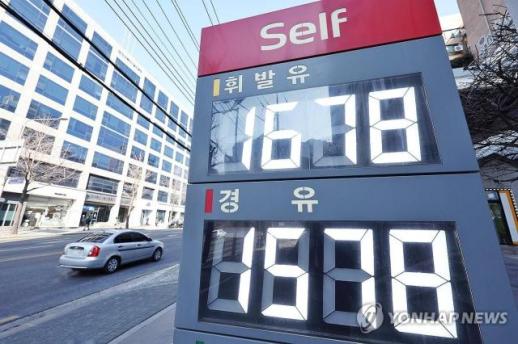 Korea's PPI extends gains for sixth month in Feb; war-driven pressure yet to hit SEOUL, March 24 (AJP) — South Korea’s producer prices rose for a sixth straight month in February, as higher energy and commodity costs lifted input prices across the board, pointing to building import-driven inflation pressure even before the full impact of war-related shocks. The producer price index (PPI) stood at 121.36 (2020=100) in February, up 0.6 percent from a month earlier, according to preliminary data released by the Bank of Korea (BOK) on Tuesday. On a year-on-year basis, the index rose 2.4 percent, the fastest pace since a 2.6 percent gain in July 2024. The increase was led by industrial goods, which rose 0.6 percent on-month. Coal and petroleum products surged 4.0 percent, exerting strong upward pressure on the overall index. Prices climbed sharply for diesel (7.4 percent), naphtha (8.7 percent) and gasoline (5.3 percent), reflecting higher global oil benchmarks. Dubai crude, for instance, rose 3.6 percent in February amid heightened Middle East tensions. Utility costs also picked up. Gas prices for industrial use rose 1.8 percent from a month earlier, pushing up the broader category of electricity, gas and water. A persistently weak won added to cost pressures, lifting import prices even before disruptions to the Strait of Hormuz following attacks on Iran. The domestic supply price index, which tracks inflation in the production pipeline, rose 0.5 percent on-month. Raw material prices increased 0.7 percent, reversing a 0.9 percent drop in January, while intermediate input costs rose 0.6 percent, contributing 0.2 percentage points to final goods prices. Yet the February data likely understate the scale of inflationary pressure ahead. The won-dollar exchange rate closed February at 1,438.4. By Monday, it had surged 5.5 percent to 1,517.6 won, while global oil prices have jumped roughly 50 percent from late February levels, suggesting the bulk of war-driven cost pressure has yet to feed through into producer prices. 2026-03-24 08:49:17
 -
 SEVENTEEN’s THE 8 to headline China’s Midou Music Festival in Nanjing SEVENTEEN member THE 8 will close out a major music festival in China with a solo set, his agency said. PLEDIS Entertainment, a HYBE Music Group label, said on Monday that THE 8 will appear as a headliner at the MIDOU MUSIC FESTIVAL, scheduled for May 1-2 in Nanjing, Jiangsu province. Now in its 15th edition, the festival has grown into a large-scale event since launching in 2014, drawing crowds that also boost local tourism. Organizers held two editions last year, in June and October, attracting more than 80,000 and more than 60,000 attendees, respectively, according to the agency. THE 8 has previously headlined in China. At the YJ music festival in Beijing in September last year, he performed vocals and choreography and added a DJ set, drawing strong audience response, the agency said. Fans lined up from the night before, and he trended on Weibo immediately after the show. His recent releases have also performed strongly, the agency said. His 2025 single “Star Crossing Night” topped major Chinese music charts, and his Chinese EP “STARDUST,” on which he participated in writing and composing every track, was also well received. Beyond music, THE 8 has expanded into broader art projects. In December, he released an art film featuring a remix version of “Skyfall” as part of “THE 8 Contemporary ART,” a project reflecting his emotions and perspective. The agency said attention is focused on what he will bring to the Midou festival stage.* This article has been translated by AI. 2026-03-24 08:27:16
 -
 OPINION: BTS concert proves live stage power in AI age Last weekend’s BTS live show swept South Korea into a rare, collective high. Staged in central Seoul’s Gwanghwamun and livestreamed globally on Netflix, the concert reached 300 million viewers across the world — a simultaneous celebration of BTS and a showcase of Seoul itself. Beyond the spectacle, the group’s first full reunion performance in nearly four years underscored a deeper shift: live events are emerging as K-pop’s most powerful growth engine. Even as artificial intelligence and digital technologies disrupt industries and displace jobs, live performance has proved strikingly resilient. The reason is straightforward. Virtual experiences, however sophisticated, still cannot replicate the immediacy, immersion and shared energy of being there. The global music industry offers a clear benchmark. Taylor Swift’s Eras Tour, spanning 51 cities, generated roughly $2.5 billion in ticket and merchandise sales — a reminder that touring remains the industry’s most dependable revenue driver. K-pop is following the same trajectory, but at a faster pace. Since the pandemic, live music has become the sector’s fastest-growing revenue stream. As streaming expands and physical album sales soften, income from concerts, tours and merchandise has surged. Billboard data show that major agencies — HYBE, SM Entertainment and JYP Entertainment — sold 1.6 million tickets across 78 shows in the first half of last year alone, generating $228 million in tour revenue, up 79 percent on-year. Those figures capture only part of the market. HYBE by itself staged 213 concerts last year, drawing 3.3 million fans. Tour revenue reached $537 million, accounting for roughly 30 percent of total sales, up from 12 percent just two years earlier. It now rivals the company’s music revenue — albums and streaming combined — and is poised to surpass it. Momentum is building. Following the Seoul comeback, BTS is preparing its first world tour since completing military service. The “BTS World Tour Arirang,” scheduled for 79 shows across 34 cities, is expected to generate at least $1 billion from tickets, merchandise, VIP packages and livestream sales. Some industry observers say it could even challenge Swift’s touring record. Other top-tier acts — Blackpink, Twice, Stray Kids and Seventeen — are also sustaining year-round global tours. Their impact extends well beyond ticket revenue. Promoters monetize fan events and merchandise, while host cities benefit from hotel bookings, flights and wider tourism spending. The Seoul concert offered a vivid example. Hotels in the capital filled quickly, nearby businesses saw a surge in sales, and even regional cities reported an uptick in foreign visitors drawn by BTS. Industry forecasts reflect this trajectory. Global K-pop concert revenue is projected to rise from $14 billion in 2024 to $22 billion by 2030. Yet the business is not without risks. Live events remain vulnerable to geopolitical shocks and environmental disruptions. The pandemic froze the sector for years, while China’s ban on K-pop performances following South Korea’s THAAD deployment in the mid-2010s remains in place. Looking further ahead, artificial intelligence may present a new kind of competition. Concerts featuring AI-generated music and virtual performers — such as Hatsune Miku — have already built sizable fan bases, filling large venues with hologram-driven shows. Still, technology has limits. AI can simulate sound and spectacle, but it struggles to reproduce the emotional immediacy and collective energy of a live crowd. That distinction is becoming more valuable, not less. This is the logic of the “experience economy,” a concept advanced by U.S. consultants Joseph Pine and James Gilmore. As economies evolve from goods to services to experiences, and as digital technology makes content infinitely replicable, authentic human experiences grow scarcer — and more valuable. In music, buying a CD belongs to the product economy, streaming to the service economy, and attending a concert to the experience economy. For BTS fans, the shift is tangible. They sustained the group through military service by streaming songs and buying albums. Now, gathered again in physical space, they reaffirm not only BTS’s status but also the power of shared experience itself. Judging by the faces on screen in the heart of Seoul, the surge of joy and emotion was unmistakable — and, for now at least, beyond the reach of any algorithm. *The author is a visiting professor at Ewha Womans University’s Graduate School of International Studies. About the author ▷Former CNN Seoul bureau chief ▷Former ambassador for cultural cooperation at the Foreign Ministry ▷President of the Korea International Broadcasting Exchange Foundation (Arirang TV) ▷Former overseas publicity secretary at the presidential office ▷Former president of the Seoul Foreign Correspondents’ Club ▷Former New York Times reporter ▷Visiting professor at Ewha Womans University’s Graduate School of International Studies 2026-03-24 07:22:24
 -
 Jamsil Baseball Stadium to Be Demolished After 2026 Season; Farewell Legends Game Planned Jamsil Baseball Stadium will be demolished after the 2026 season. The Ilgu Association said Monday it is planning a farewell “Legends Game” to honor the stadium’s historical significance ahead of its scheduled demolition at the end of the 2026 season. Organizers plan to hold the game in October or November, shortly after the Korean Series ends. The roster and detailed schedule will be announced later after discussions by the Legends Game organizing committee. “Jamsil Baseball Stadium is a symbol of Korean professional baseball and a sacred place that has produced countless classic games and legends,” the association said, adding that the event is meant to mark the stadium’s final chapter and thank fans for their unwavering support. Kim Kwang-su, head of the Ilgu Association, said the game will be “a final moment for players and fans who have shared Jamsil Baseball Stadium for a long time to come together as one,” adding that he hopes to create meaningful time with everyone who loves baseball.* This article has been translated by AI. 2026-03-23 20:33:00