
Journalist

Lee Hugh
=
-
 Gold Prices Slide About 20%, Dragging Down Gold ETFs as Safe-Haven Appeal Wavers Gold, long seen as a key safe-haven asset, has fallen sharply in the wake of the war in the Middle East, drawing attention to shifting and potentially volatile money flows into gold-related exchange-traded funds. As gold weakens despite heightened geopolitical risk, analysts say investor sentiment appears to be changing. According to the Korea Exchange on May 3, as of April 30 the domestic gold price on the KRX Gold Market was 217,240 won per gram, the lowest level so far this month. That is about 20% below the record high set on Jan. 29, when the closing price reached 269,810 won. The decline has weighed on gold ETF prices. Based on April 30 closing prices, ACE KRX Physical Gold ended at 30,340 won, TIGER KRX Physical Gold at 14,430 won, and KODEX Gold Futures (H) at 25,935 won, with all showing a broadly weaker trend. The drop is clearer compared with about two weeks earlier. On April 13, ACE KRX Physical Gold closed at 31,605 won, TIGER KRX Physical Gold at 15,115 won, and KODEX Gold Futures (H) at 26,870 won, indicating that ETF prices fell alongside the recent pullback in gold. Even compared with the post-war low on March 23, the rebound has been limited. As of April 30, ACE KRX Physical Gold rose about 3.67% from 29,265 won to 30,340 won, while TIGER KRX Physical Gold gained 8.20% from 13,970 won to 14,430 won. Over the same period, KODEX Gold Futures (H) climbed 7.17% from 24,200 won to 25,935 won. Market participants have pointed to a stronger dollar and shifts in global liquidity as key factors behind the sharp fall in gold. They also say that even as tensions in the Middle East have intensified, demand for safe-haven assets has spread to other areas, weakening gold’s relative appeal. Experts are watching for wider short-term swings in gold and related ETFs. They say the next direction for gold will depend heavily on U.S. interest-rate policy and the dollar’s path, and that investors in gold ETFs should be mindful of near-term volatility while taking a longer-term view. Still, some see a strong chance that prices could resume an upward trend over the medium to long term, supported by safe-haven demand and expectations around monetary policy.* This article has been translated by AI. 2026-05-03 15:45:18
 -
 Trump Threatens Higher Auto Tariffs, Deeper U.S. Troop Cuts in Germany, Raising Alliance Concerns President Donald Trump is escalating pressure on the European Union, pairing a threat to raise auto tariffs with a push to cut U.S. forces stationed in Germany. The moves come after Europe was seen as uncooperative with U.S. military operations against Iran, sharpening strains within the trans-Atlantic alliance. CNN reported that Trump told reporters in Florida on Friday, before boarding Air Force One, that the United States would “reduce troops significantly,” adding that the cut would be “far more” than 5,000. His remarks came less than a day after the Pentagon said it would withdraw about 5,000 troops from Germany over the next six to 12 months. Trump had also signaled possible reductions earlier in the week, after German Chancellor Friedrich Merz said the United States was being “humiliated” in ceasefire talks with Iran. A senior U.S. Defense Department official, speaking on condition of anonymity, told Reuters that Merz’s comment was “inappropriate and unhelpful,” and said Trump was responding “legitimately” to remarks that backfired. German officials have reacted calmly. Defense Minister Boris Pistorius told dpa that a U.S. troop drawdown in Europe, including Germany, was foreseeable and that Europeans must take more responsibility for their own security. The Wall Street Journal reported that while the German government has played down the withdrawal as largely symbolic, experts warned a wider rupture could threaten both Europe’s economy and its security. Thorsten Benner, director of the Berlin-based Global Public Policy Institute, said the issues at stake were “far more important” than a symbolic 5,000-troop cut. He also pointed to concerns that U.S. weapons stocks are being depleted quickly after heavy use of military assets in the Iran war. More than 36,000 U.S. troops are stationed in Germany. Ramstein Air Base hosts the headquarters of U.S. Air Forces in Europe and supports airlift, airdrop and aeromedical evacuation units. Germany also hosts NATO-related facilities. Concerns have also surfaced in the United States. U.S. Army Lt. Gen. Gordon Davis, a former senior NATO official, said congressional reaction suggests the announcement was made without sufficient coordination and could affect NATO deterrence. He said it could also weaken the U.S. ability to respond quickly to conflicts in Europe or nearby regions. Whether the reductions will be carried out remains unclear. Congress has previously moved to constrain troop cuts in Europe. In 2020, during Trump’s first administration, he sought to reduce forces in Germany by about 12,000, but the plan was effectively blocked after Congress imposed conditions through the National Defense Authorization Act. Trump is also wielding tariffs. On May 1, he said the EU had failed to implement the “Turnberry agreement,” a trade deal reached at a golf resort in Turnberry, Scotland, and said he would raise tariffs on cars and trucks imported from the EU to 25% next week. That would restore tariffs to levels that existed before a trade agreement reached on July 27 last year. Under that deal, the EU agreed to buy $750 billion in U.S. energy and military equipment and to make an additional $600 billion in investment. In return, the United States lowered its reciprocal tariff rate to 15% and set product-specific tariffs, including on autos, at 15%. Moritz Schularick, president of the Kiel Institute for the World Economy, told Reuters that raising the auto tariff to 25% could cost Germany about 15 billion euros, and could rise to 30 billion euros over the longer term. The institute did not disclose its calculation method. Volkswagen Group, which accounts for about 40% of German auto production, has said that even at a 15% tariff it faces about 4 billion euros a year in added costs. Mercedes-Benz and BMW, with higher shares of U.S.-based production, are expected to be less affected.* This article has been translated by AI. 2026-05-03 15:44:06
 -
 South Korea Revives Service Industry Framework Bill as Services Deficit Persists The government is again pushing to enact the long-stalled Framework Act on Service Industry Development, a bill that has failed to clear the National Assembly for 15 years. First introduced in 2011 to foster the service sector in a systematic way, the legislation has been delayed by conflicts of interest, including disputes over whether to include health care. With South Korea running a services account deficit for 26 straight years, calls are growing for a comprehensive strategy and a stronger policy-coordination system for the sector. According to the Ministry of Finance and Economy and the Public Procurement Service on Saturday, the ministry on April 22 issued a tender for a research project to assess preparations for enacting the bill and began selecting a contractor. The study is intended to secure baseline data and set policy direction for a more structured rollout of service-sector policy after the law is enacted, aiming to minimize early policy gaps and improve execution. In its request for proposals, the ministry said the service sector is a core growth engine but its share of value added remains low compared with major advanced economies, requiring continued industrial upgrading and productivity gains. Bank of Korea data from its Economic Statistics System (ECOS) show the services account posted a $34.5 billion deficit last year. It has not turned to surplus even once since 2000, and the cumulative deficit over 26 years has exceeded $360 billion. The underlying problem, the article said, is weak productivity. Services account for 71.6% of total employment, but only 61.9% of value added, reflecting low efficiency relative to the sector’s role in the economy. By OECD rankings, South Korea’s manufacturing labor productivity stood sixth in 2023, while services ranked 26th. The ratio of service-sector productivity to manufacturing also fell to 47.5% in 2024 from 51.5% in 2020, widening the gap. With productivity low and service exports less competitive, overseas consumption of services has risen while exports remain limited, reinforcing the structural deficit, the article said. Investment patterns are also weak. The service sector invests less in research and development than manufacturing, and productivity gains from export growth are limited. Polarization has also become entrenched, with a wide productivity gap between large firms and small and midsize companies. The National Assembly Budget Office estimated that a 1% rise in exports lifts labor productivity by 0.07% in manufacturing, compared with 0.02% in services. The stagnation in service-sector competitiveness could weigh on national growth, the article said, as the long-term contribution of labor productivity declines and adds downward pressure on potential growth. The government plans to address these structural limits through the bill. If passed, it would provide a basis for a mid- to long-term plan for the service sector, along with tax and financial support, workforce training, expanded R&D and the design of a policy implementation body. A National Assembly Budget Office official said the government has pursued policies to raise service-sector labor productivity, but has fallen short of structural innovation and the results have not met expectations. “To boost service-sector labor productivity, it is time to build a legal and institutional foundation for expanded service R&D investment tailored to industry characteristics, digital transformation and adoption of AI technologies, and revitalizing service exports,” the official said. 2026-05-03 15:40:16
 -
 Won-Dollar Exchange Rate Capped in the 1,480s as Fed, Inflation and Oil Prices Drive Volatility The won-dollar exchange rate, which swung in the 1,500-won range in early April, has recently struggled to break above the 1,480s. Analysts said expectations of easing Middle East tensions have increased downward pressure, but U.S. monetary policy and high oil prices remain upside risks. In Seoul’s foreign exchange market, the won closed at 1,483.3 per dollar in daytime trading on April 30, according to market data released Saturday. The rate stayed capped in the 1,480s even as international oil prices jumped on renewed Middle East tensions and expectations for U.S. rate cuts weakened. After moving above and below 1,500 in early April, the exchange rate traded in the 1,470-1,480 range last week. The upper end has been held down as markets priced in hopes that U.S.-Iran tensions could shift toward negotiations rather than escalation. Market participants also expect a gradual decline in the exchange rate after South Korea’s first-quarter gross domestic product growth far exceeded forecasts. They said easing geopolitical risks and improving domestic conditions have tilted factors toward a stronger won. Still, analysts cautioned that volatility could pick up because upside risks remain. The Federal Reserve kept its benchmark rate unchanged at 3.50%-3.75% at the Federal Open Market Committee meeting on April 29 local time and maintained a hawkish stance by emphasizing inflation risks. If the dollar strengthens again, the won could face renewed downward pressure. With Fed Chair Jerome Powell’s term set to end on the 15th, markets are also watching whether the policy stance shifts at the June FOMC meeting, which would be chaired for the first time by incoming Chair Kevin Warsh. Park Sang-hyun, an analyst at iM Securities, said stalled U.S.-Iran talks helped drive oil prices sharply higher, with WTI at $106.88 and Brent at $118.03, the highest in four years. If high oil prices persist, he said, the June meeting could reinforce a more hawkish tone. South Korea’s April consumer price index and U.S. employment data due this week are also expected to influence the exchange rate. In March, South Korea’s CPI rose 2.2% from a year earlier. Petroleum product prices climbed 9.9%, adding 0.39 percentage points to overall inflation. Markets expect April inflation to approach 3%, and a continued rise in oil prices could widen inflation and weigh on the won. If U.S. nonfarm payrolls for April, due May 8, remain strong, concerns about tighter U.S. policy could resurface and add to dollar strength, analysts said. Persistently high oil prices could also pressure global financial markets. Analysts warned that the stock rally fueled by an artificial intelligence investment boom could be affected, and market volatility could increase if the U.S. 10-year Treasury yield rises above 4.5%. Park said the AI investment boom has partly offset the oil shock, but that support could fade if oil prices keep rising. “The market’s focus is on AI expectations now, but it can shift at any time to oil and interest-rate factors,” he said. * This article has been translated by AI. 2026-05-03 15:39:22
 -
 Gyeonggi Governor’s Race Pits Choo Mi-ae Against Yang Hyang-ja in High-Stakes Contest With the People Power Party selecting Supreme Council member Yang Hyang-ja as its candidate for Gyeonggi governor, the race has come into sharper focus. Yang will face Democratic Party candidate Choo Mi-ae in a matchup that, on its surface, draws attention as a contest between two women. The symbolism is heightened because Gyeonggi Province is widely seen as the country’s biggest political battleground. But reducing the race to a simple narrative of “women’s political gains” risks missing the larger shift. The significance is not that women are running, but that gender is increasingly no longer treated as something requiring special explanation — a sign that what once stood out as an event is becoming an assumption. Gyeonggi is not just another local government. With a population of about 14 million, it is a massive living and economic area and a key measure of public sentiment in the Seoul metropolitan region. It is also a stage for policy experiments, and winning there can elevate a politician’s national standing. For years, the governorship has been viewed as a major gateway to a presidential run. The article notes that President Lee Jae-myung rose to the presidency after holding the post. That both major parties are fielding women is a notable change, but it is not simply a natural outcome. Nominations for Gyeonggi governor are the product of strategy, shaped by calculations about appealing to centrist voters, refreshing party images and countering opponents. Yang can seek broader support by emphasizing her background as an industrial worker and an image tied to technology competitiveness. Choo, with an established political presence and a reputation for strong leadership, can aim to consolidate her base. The matchup reflects social change and political strategy at the same time. Yang and Choo also present a clear contrast. Yang is described as Samsung Electronics’ first female executive without a college degree, a figure associated with “on-the-ground” leadership shaped in industry. Choo, a former judge who has served as party leader and a minister, is portrayed as a conventional establishment politician with strong drive and a clear message, already well known nationwide. One speaks the language of industry and technology; the other, the language of politics and power. In that sense, the choice before voters is not gender but the type of leadership they want — which experience and judgment are better suited to running a vast administrative unit like Gyeonggi. The article argues the race is best understood as a competition between leadership models. The contest, however, is unlikely to remain that straightforward. The entry of New Reform Party candidate Cho Eung-cheon, described as a former lawmaker, adds another variable, because the outcome could shift depending on whether candidates unify. The article says that dynamic underscores how elections are shaped not only by leadership and policy, but also by alliances and splits among political forces. Overall, the Gyeonggi governor’s race is presented as a layered contest: a symbolic faceoff between women candidates, but also a test of strategy, leadership and political realignment. The article says voters’ focus is also changing. Where gender, origin and background once drew the most attention, expectations about policy, execution and results are playing a larger role — even if the shift is not complete. From that perspective, labeling the race a “victory for women in politics” captures only part of the story. The more consequential point, the article argues, is that being a woman is increasingly no longer treated as an exceptional explanation — a sign that politics may be moving toward judging leaders more by outcomes than by narratives. The article concludes that the election is more than a local contest: It is a test of leadership in a province that can shape national politics, and a window into the country’s political direction. The central question, it says, is simple: What kind of leader do voters want — beyond gender and background — when what ultimately remains is judgment and results?* This article has been translated by AI. 2026-05-03 15:37:55
 -
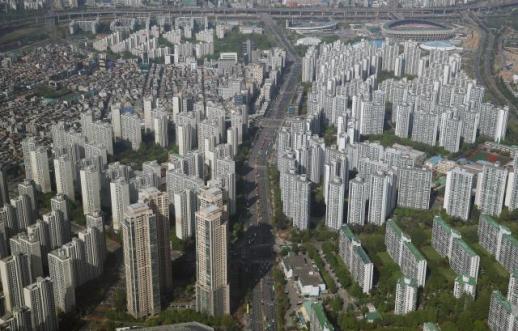 South Korea’s Higher Capital Gains Tax on Multi-Home Sellers Returns May 10; Long-Hold Deduction in Focus A one-year temporary suspension of heavier capital gains taxes on home sales by multiple-home owners will end on May 9. Starting May 10, owners who sell homes in regulated areas are expected to face a sharply higher tax burden on gains. An exception remains. In some areas, sellers can keep the tax break through November if they complete an application for land transaction approval by May 9. According to the Ministry of Finance and Economy and other officials on May 3, once the suspension ends, multiple-home owners selling in regulated areas could face an effective tax rate of up to 82.5%. Under current rules, the basic capital gains tax rate ranges from 6% to 45%. From May 10, an additional surcharge applies in regulated areas: 20 percentage points for owners of two homes and up to 30 percentage points for those with three or more. Adding local income tax of 10% brings the effective top rate to about 82.5%. With concerns rising over a sudden jump in tax bills, the government set out an exception: If a seller files the land transaction approval application by May 9, the basic rate applies even if the approval and final payment are delayed as late as November. For Seoul’s Gangnam 3 districts (Seocho, Gangnam and Songpa) and Yongsan-gu, which were regulated areas before the 10·15 measures, the sale process must be completed by Sept. 9 to avoid the surcharge. For other Seoul districts and 12 areas in Gyeonggi Province designated later, the deadline is Nov. 9. As the end of the suspension nears, attention is also turning to possible changes in real estate taxation, including the long-term holding special deduction for capital gains. The deduction was introduced to ease the tax burden on nominal gains driven by inflation and to encourage long-term ownership. Under the current Income Tax Act, owners of general real estate held for at least three years can deduct 2% per year, up to 30% for 15 years. For one-home households, the deduction can reach 80% by combining holding and residency periods. For example, if a person has owned and lived in a single home for at least 10 years, a 40% holding-period deduction and a 40% residency deduction can apply, excluding up to 80% of the gain from taxation. Critics say a deduction as high as 80% can amount to an excessive tax benefit for owners of expensive homes. President Lee Jae-myung previously raised concerns about the structure of the deduction on X. Moves toward tax changes are also gaining traction in politics. Independent lawmaker Choi Hyuk-jin introduced an amendment to the Income Tax Act that would, among other items, remove deductions for nonresidents and apply a 16% to 80% deduction rate to one-home households that have held a home for at least three years and lived in it for at least two. Another bill, introduced by Jinbo Party lawmaker Yoon Jong-oh, calls for abolishing the long-term holding special deduction. However, the bills have not been coordinated with the government, leaving their prospects unclear. Some observers expect real estate-related measures could be included in a tax package scheduled for July. A government official said, “Nothing has been decided yet,” adding that authorities are “reviewing the timing and methods comprehensively.” 2026-05-03 15:35:01
 -
 South Korea Revives Long-Stalled Services Industry Bill, Health Care Dispute Persists South Korea’s long-delayed Framework Act on the Development of the Service Industry has again been pushed for passage, but lawmakers remain deadlocked over whether to include the health and medical sector. On May 3, the Ministry of Economy and Finance and other agencies said the government has resumed efforts to pass the bill, known as the “service industry development act,” including by commissioning research projects. The bill has been stuck in the National Assembly for 15 years largely because no agreement has been reached on the scope of health and medical services. Since it was first introduced in 2011, the government, the medical community and civic groups have failed to narrow sharp differences. Opponents say including health and medical services could open the door to privatization. The government argues inclusion is needed to reduce gaps between industries and foster high value-added sectors. Medical groups and civic organizations have warned that bringing health care under a broad service-industry promotion law could lead to commercialization and conflict with the Medical Service Act, which is grounded in public interest principles and bans profit-seeking as a basic ideal. They also argue that greater inflows of private capital and changes to hospitals’ revenue structures could weaken the public health care system. Concerns have also been raised about expanded telemedicine, allowing nonprofessionals to establish medical institutions, and broader health management services, which critics say could undermine public health care and patient safety. The government and industry, however, view health and medical services as central to making the bill effective. They say South Korea needs a systematic approach to developing high value-added service industries such as tourism and health care to better balance manufacturing and services. The government has consistently said the bill is intended to promote the service sector overall and that health and medical services, as a major pillar of that sector, should be included. It has also stressed the need for a legal basis to support exports of medical technology and development of digital therapeutics. In recent discussions, a third option has been floated, such as separating health and medical services or limiting the law’s scope, but it has not unified the two sides. Four key health-related laws now being discussed as possible exclusions from the bill’s application are the Medical Service Act, the Pharmaceutical Affairs Act, the National Health Insurance Act and the Framework Act on Health and Medical Services. Under that approach, the bill would be enacted while carving out core statutes seen as posing risks to health care’s public nature. Supporters of exclusions say explicit carve-outs could block privatization disputes in the text of the law, reduce prolonged political battles, and speed regulatory reforms in areas such as tourism and content that have been delayed by health care-related conflict. They also acknowledge that limits would likely remain in some areas, including digital health care and medical technology exports. Some, however, argue the government should move cautiously rather than rush the bill, warning that legislation could hinder, rather than promote, industry growth. Seo Yong-gu, a professor of economics at Sookmyung Women’s University, said, “AI-based service industries and the software industry are areas that grow by market logic,” adding, “It is true that productivity in Korea’s service industry is low, but it is preferable to leave it to the market’s autonomy rather than enact a law.”* This article has been translated by AI. 2026-05-03 15:32:21
 -
 South Korea Weighs Service Industry Framework Law as U.S., Japan Move Faster As South Korea’s Framework Act on the Development of the Service Industry has remained stalled in the National Assembly for years, major economies overseas have accelerated efforts to foster service industries and quickly strengthen competitiveness. Analysts say passage of the bill could give South Korea a chance to shift its service-sector policy. In the United States, cloud computing, artificial intelligence and platform-based services have expanded rapidly on the back of private-sector-led research and development. Among the “Magnificent Seven” companies driving U.S. stock markets, Microsoft, Alphabet, Amazon and Meta are software-based knowledge service firms. Nvidia and Apple also have strong service-sector characteristics because their business models center on design and platforms, the report said, underscoring a broader shift in which services, not manufacturing, are leading global technology innovation. Japan, meanwhile, adopted “service industry productivity innovation” as a national strategy in 2013 and has steadily pursued policies to modernize services and raise productivity. As part of that effort, it overhauled regulations to bring home-sharing businesses such as Airbnb into the formal system. Singapore institutionalized new industries to expand markets, including integrating the ride-hailing service Grab into the existing taxi framework. Service industries account for a large share of output in advanced economies. The World Bank said services make up 77.6% of U.S. gross domestic product. Japan stands at 69.8% and Germany at 64.0%, while the average across the Organization for Economic Cooperation and Development is above 70%. South Korea’s service-sector share is 57.5%, lower than in major advanced economies, reflecting a growth strategy long centered on manufacturing such as autos and shipbuilding. South Korea ranks 26th out of 38 OECD countries in service-industry labor productivity, the report said, citing lagging labor productivity and a lower share of R&D investment that has reinforced a low value-added structure. If enacted, the framework law is expected to enable a policy system that includes long-term planning for the service sector, along with fiscal and tax support and regulatory improvements. The report said policymakers also expect gains from linking services with emerging industries, including an “AI transformation” (AX), expanded data use and more advanced digital services, potentially improving productivity and boosting exports of high value-added services. The Korea Enterprises Federation said rising labor costs and heavier fixed-cost burdens have weakened service companies’ capacity to invest. “If a framework for policy support is established through enactment of the basic law, it is expected to increase companies’ investment capacity and lead to a virtuous cycle of expanded employment and service innovation,” it said. The group added that with many competitive areas such as digital and content, a policy coordination system could support both qualitative and quantitative export growth. The report also cited expected benefits in strengthening competitiveness across key service fields including health care, education, content and logistics. If industry convergence and data-driven service expansion accelerate, it said, South Korea could move away from a manufacturing-centered growth structure toward a service-led model. Still, it said results will depend less on passage itself than on implementation, warning that the impact could be limited without effective long-term plans, sufficient fiscal support and faster regulatory reform. Kim Jeong-sik, an emeritus professor of economics at Yonsei University, said the service industry spans very different areas such as information and communications and tourism, making one-size-fits-all policies less effective. “A more detailed support strategy that reflects the characteristics of each industry is needed,” he said.* This article has been translated by AI. 2026-05-03 15:31:33
 -
 High-Profile By-Elections Ahead of June 3 Local Vote Seen as ‘Mini General Election’ With parties entering the final stretch of nominations ahead of the June 3 local elections, attention is intensifying on the by-elections and re-elections, which some observers say have grown into a “mini general election” as heavyweight figures enter the race. Political circles said May 3 that 14 constituencies have been confirmed for the contests. Re-elections will be held in two districts: Gyeonggi Province’s Pyeongtaek-eul and North Jeolla Province’s Gunsan-Gimje-Buan-gap. By-elections will be held in 12 districts: Busan Buk-gap, Daegu Dalseong, Incheon Yeonsu-gap, Incheon Gyeyang-eul, Gwangju Gwangsan-eul, Ulsan Nam-gap, Gyeonggi Ansan-gap, Gyeonggi Hanam-gap, South Chungcheong Gongju-Buyeo-Cheongyang, South Chungcheong Asan-eul, North Jeolla Gunsan-Gimje-Buan-eul, and Jeju Seogwipo. Several prominent politicians are seeking seats, adding to the stakes. They include Han Dong-hoon, former leader of the People Power Party, in Busan Buk-gap; Song Young-gil, former leader of the Democratic Party, in Incheon Yeonsu-gap; Lee Kwang-jae, former Gangwon governor, in Gyeonggi Hanam-gap; Cho Kuk, leader of the Rebuilding Korea Party, in Gyeonggi Pyeongtaek-eul; and Lee Jin-sook, former chair of the Korea Communications Commission, in Daegu Dalseong. If Song wins, he would become a six-term lawmaker. Pyeongtaek-eul, where Cho is running, has emerged as the most closely watched battleground. The field is expected to be a five-way race including Kim Yong-nam of the Democratic Party, Yoo Eui-dong of the People Power Party, Kim Jae-yeon of the Progressive Party and Hwang Kyo-ahn of the Liberty and Solidarity Party. Cho wrote on social media that he would “trust only the public sentiment” and “fight with everything” to win “by three votes.” Some observers also warned that if Cho fails to return to the National Assembly, the party would face an unavoidable blow. Busan Buk-gap, where Han is running, is also drawing heavy attention. Han is campaigning as an independent, while the Democratic Party has countered with a strategic nomination of Ha Jung-woo, former senior presidential secretary for AI and future planning. Ha chose Gupo Market for his first campaign stop, saying it was right to meet residents of his hometown first and greet them as “the son of Buk-gu has returned.” The People Power Party is set to hold a primary between former Patriots and Veterans Affairs Minister Park Min-sik and former KBS reporter Lee Young-pung. With multi-candidate races taking shape in key districts, whether camps move toward candidate unification is expected to influence outcomes. In Busan Buk-gap, the race could shift to a three-way or a two-way contest depending on whether Han and the People Power Party nominee unify. In Pyeongtaek-eul, if one side consolidates behind a single candidate, the other side risks a split vote. Overall, the outlook remains unclear. Cho Won-bin, president of the Korean Association of Party Studies, told Ajunews by phone that it is “too early to pin down the direction of the race,” adding that depending on how competitive Cho and Han prove to be, discussions on unification could accelerate based on opinion polls. In other districts, analysts said party alignment may matter more than individual candidates. Cho said the opposition is struggling in some areas to field sufficiently competitive contenders, and that under the single-member district system, races are likely to converge around the two major parties. 2026-05-03 15:30:19
 -
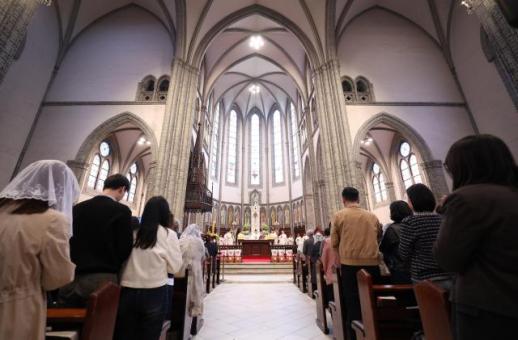 Three in four young Koreans say they are nonreligious SEOUL, May 03 (AJP) - Three out of four South Koreans in their 20s now identify as having no religion, highlighting a deepening generational shift that is accelerating the aging of the country’s faith communities and clergy. According to a recent report by Gallup Korea titled Religion of Koreans 1983–2025, only 24 percent of adults in their 20s said they currently practice a religion last year, meaning more than 75 percent described themselves as nonreligious. The figure compares with 29 percent among people in their 30s, 37 percent in their 40s, 45 percent in their 50s and 52 percent among those aged 60 and older. Overall, 40 percent of South Korean adults said they had a religion in 2025, including 18 percent Protestant, 16 percent Buddhist and 6 percent Catholic. The share of religious adults had climbed from 44 percent in 1983 to a peak of 54 percent in 2004 before entering a long decline. It fell to 37 percent in 2022 during the final stages of the COVID-19 pandemic before rebounding slightly last year. The generational divide, however, remains stark. Among respondents in their 20s who said they had no religion, 58 percent cited simple lack of interest as the main reason. Another 20 percent said they lacked the mental or time capacity for religious life, while 9 percent pointed to distrust or disappointment with religion and another 9 percent said they preferred to rely on themselves. Gallup Korea said the decline in religious affiliation over the past two decades has been driven primarily by younger generations. “The main cause behind the decline in religious populations over the past 20 years was among young people,” the report said. “Not only has the inflow of new young believers decreased, but existing followers have also left organized religion, weakening overall religious communities and accelerating population aging.” The trend is reshaping the demographic structure of South Korea’s major religions. Among adults identifying as Buddhists, 56 percent were aged 60 or older, according to the Gallup survey. The proportion stood at 34 percent among Protestants and 32 percent among Catholics, indicating broad aging across faith groups. Data released last month by the Catholic Bishops' Conference of Korea showed the number of Catholic believers aged 29 or younger fell 34 percent over the past decade, while believers aged 65 and older surged 80.4 percent between 2015 and 2025. Senior citizens accounted for 28.9 percent of all Catholics in South Korea last year, exceeding the country’s overall elderly population ratio of 21.2 percent. The report said the Korean Catholic Church had effectively entered a “super-aged society” as early as 2019. The aging trend is also spreading among clergy. The proportion of diocesan priests aged 65 or older rose steadily from 11 percent in 2015 to 19.7 percent this year, according to Catholic Church statistics. Over the same period, the number of seminarians fell 41.9 percent while newly ordained diocesan priests declined 42.1 percent, suggesting further strain on future clergy recruitment. Korea’s largest Buddhist sect, the Jogye Order, is facing similar pressures. The number of new monastic entrants has reportedly fallen to about one-third of levels seen two decades ago, while more than 30 percent of monks are now elderly. 2026-05-03 15:28:20