
Journalist

RYU SO HYUN
2s0@ajunews.com
-
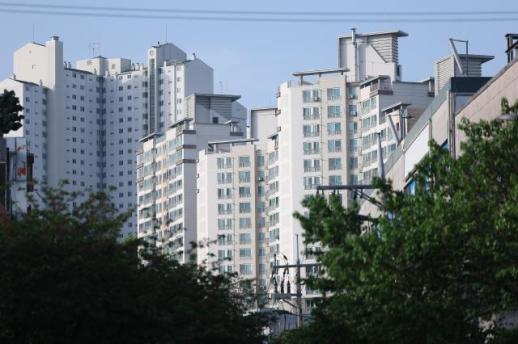 Big 5 Banks’ Mortgage Loans Post Biggest Gain in 8 Months as Household Debt Rises Mortgage loan balances at South Korea’s major commercial banks rose by the most in eight months, driven largely by policy-backed lending such as jeonse deposit loans and Didimdol loans, the financial sector said Monday. As of the end of April, outstanding mortgage loans at the five largest banks — KB Kookmin, Shinhan, Hana, Woori and NH NongHyup — totaled 612.2443 trillion won, up 1.9104 trillion won from the end of March, according to financial industry data released Monday. It was the biggest monthly increase since August last year, when the balance rose 3.7012 trillion won. Overall household lending also increased. The five banks’ household loan balance stood at 767.2960 trillion won at the end of April, up 1.5670 trillion won from a month earlier — the largest rise since October last year, when it increased 2.5270 trillion won. Industry officials said the mortgage loan increase appears to reflect growth in policy-backed loans rather than a broad recovery in housing transactions. “This month, the increase was led by jeonse-related loans and policy-backed products such as Didimdol loans,” a financial industry official said. “It’s hard to say real estate transactions are high overall, but deals have continued, mainly for apartments on the outskirts of Seoul, and that has pushed up policy-backed lending.” Mortgage loan balances have fluctuated this year, falling 1.4836 trillion won in January, rising 596.7 billion won in February, then slipping 387.2 billion won in March before the increase widened in April. Group loans to individuals rose 220.1 billion won, turning higher for the first time since September 2024. Unsecured personal credit loans, however, swung to a 318.2 billion won decline in April after rising 347.5 billion won in March. Loans to individual business owners increased 362.2 billion won, extending gains for a third straight month. Deposit balances were mixed by product. Time deposits totaled 937.1834 trillion won at the end of April, down 273.1 billion won from a month earlier. Installment savings deposits rose 409.5 billion won to 46.5673 trillion won. Demand deposits, often treated as standby funds, fell 3.3557 trillion won to 696.5524 trillion won, turning lower for the first time in three months.* This article has been translated by AI. 2026-05-04 16:18:23
 -
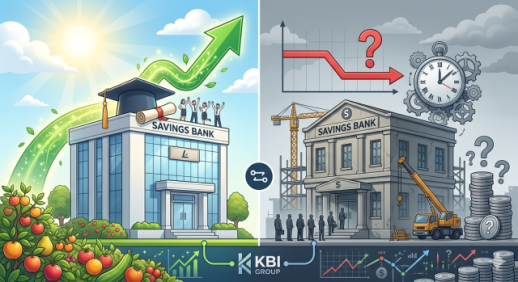 Raon Savings Bank Exits Regulatory Corrective Action; KBI’s SangSangIn Deal Delayed Some savings banks in South Korea are emerging from prompt corrective action, easing broader concerns about the sector’s financial health, but restructuring is moving at different speeds by institution. Raon Savings Bank, acquired by KBI Group, has exited a management improvement order after key indicators improved. KBI’s planned acquisition of SangSangIn Savings Bank, however, remains unfinished despite agreement on the sale price, with the share-transfer date pushed back again as post-deal capital plans are reviewed. The Financial Services Commission said it notified Raon Savings Bank and Anguk Savings Bank on April 30 that their management improvement recommendations had been lifted. The two banks had been under the measures since December 2024, exiting about 16 months later. Raon Savings Bank is a regional lender acquired in July last year by KBI Kukin Industry, an affiliate of KBI Group. At the time, financial authorities described the deal as the first case showing market-led restructuring working for a regional savings bank. Since then, Raon’s key soundness indicators have improved: its delinquency ratio fell to 10.42% at the end of last year from 19.03% in 2024, and its liquidity ratio rose to 150% from 109%. By contrast, KBI Group’s additional push to acquire SangSangIn Savings Bank has yet to be completed. SangSangIn agreed to sell about 1.35 million shares of the bank for 110.7 billion won, but the closing date—initially set for the end of March—was postponed to the end of April and has now been extended again to Aug. 31. The transaction has not entered the formal stage of regulators’ review of KBI Group’s eligibility as a major shareholder. The group is believed to be continuing pre-consultations with financial authorities on the deal structure and capital-raising plans before applying for approval of the ownership change. While the sale price is said to have been agreed, the need for additional funding after the acquisition—aimed at improving soundness indicators and boosting capital—has been cited as a key variable. Acquiring a troubled savings bank does not end with buying shares, as buyers typically must follow with cleanup of bad assets, improvements in key indicators and stronger capital buffers. SangSangIn Savings Bank’s burden remains heavy: as of the end of last year, its delinquency ratio stood at 16.9%, among the highest for savings banks with more than 1 trillion won in total assets. Its ratio of substandard-or-worse loans was 22.53%, the highest in the industry. A financial industry official said KBI Group may not feel strong pressure to rush the SangSangIn deal after already acquiring Raon. The official added that because SangSangIn’s delinquency and substandard-loan ratios are high, the burden of normalizing the bank after an acquisition would likely be heavier than it was for Raon.* This article has been translated by AI. 2026-05-04 15:28:15
 -
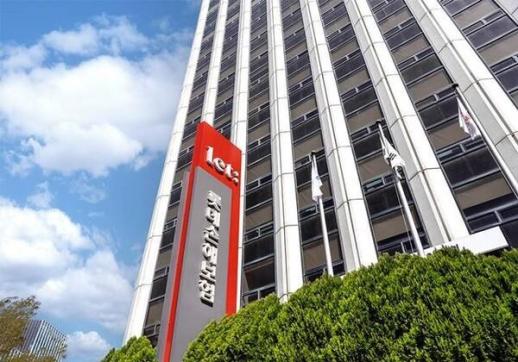 Lotte Insurance Resubmits Turnaround Plan With Capital-Raising Options Lotte Insurance said its newly resubmitted management improvement plan includes steps to bolster capital adequacy, including a capital increase, a potential third-party acquisition and possible transfer of all or part of its business. The company’s earlier plan was not approved, and it subsequently received a formal management improvement order from regulators. With that backdrop, the specificity and feasibility of the new capital-raising measures are expected to be central to the Financial Services Commission’s review. Lotte Insurance said May 4 that it submitted the plan to financial authorities on April 30. The plan includes cutting expenses, disposing of troubled assets, improving staffing and organizational operations, and increasing capital. It also calls for drawing up plans related to a merger, becoming a subsidiary of a financial holding company under the Financial Holding Companies Act, a third-party acquisition, and transferring all or part of its business. Lotte Insurance submitted its first management improvement plan to the commission in January, but it was not approved. The commission then issued a management improvement order, a step above a management improvement recommendation under Korea’s prompt corrective action framework. Industry watchers said the key issue in the review will be whether the capital-strengthening measures are workable. They noted that after the first plan failed to win approval, regulators are likely to focus on whether proposals such as a capital increase or acquisition-related steps are concrete enough to execute. The commission is expected to decide whether to approve the plan within one month of its submission. If approved, Lotte Insurance would proceed with the measures recognized by authorities, including cost cuts, troubled-asset cleanup, operational changes and capital strengthening. If not approved, additional revisions or follow-up steps remain possible. * This article has been translated by AI. 2026-05-04 14:00:17
 -
 South Korea Financial Regulators Face Key May Decisions on Hong Kong ELS, Lotte Card and Bank Governance South Korea’s financial industry is on edge ahead of a series of regulatory decisions expected this month, including sanctions tied to mis-selling of Hong Kong H-index equity-linked securities, a customer data leak at Lotte Card, and a broader push to tighten bank governance. While the cases differ, they share a focus on weak internal controls and management accountability, bringing consumer protection and governance responsibilities back into the spotlight. As of Saturday, the Financial Services Commission is expected to place sanctions against banks over the Hong Kong H-index ELS mis-selling on the agenda for its regular meeting on May 13, according to the financial sector. Some had expected the penalty level to be settled around March, but deliberations have dragged on amid concerns about market fallout and possible legal disputes. Key issues include the size of administrative fines and the severity of penalties for executives and employees. At the prior notice stage, the fines were set at 4 trillion won, but they have already been reduced to about 1.4 trillion won. A further large cut could draw criticism for being too lenient, while tougher sanctions could prompt legal challenges from banks. Because the case is one of the largest mis-selling incidents since the Financial Consumer Protection Act took effect, regulators face pressure as the decision could become a benchmark for similar cases. Attention in the card industry is focused on the Lotte Card case. Late last month, the Financial Supervisory Service’s sanctions review committee proposed a heavy penalty of a 4.5-month business suspension over a customer information leak. The final level will be decided after review at an FSC regular meeting. With fewer disputed issues than the Hong Kong ELS case, the process is expected to move quickly once it reaches the FSC agenda. Lotte Card previously received a three-month business suspension in 2014 after a large-scale personal data leak. The latest incident stems from a different cause, but the fact that information security problems have recurred weighed on the proposed penalty. Lotte Card argued for mitigation, citing an external hack and no secondary harm, but the sanctions panel cited inadequate basic security measures, including security patches, as grounds for a heavy penalty. A bank governance overhaul is also a top issue for regulators. A task force has discussed strengthening the responsibilities of outside directors, improving procedures for selecting chief executives, and limiting long-term reappointments. While sanctions address accountability for past incidents, the governance package would reshape decision-making structures across financial firms and could have broader impact. Working-level review at the FSS is largely complete, with only some provisions left for final coordination with the FSC and other bodies. Still, some observers say announcements on high-impact sanctions or reforms could be pushed back until after next month’s local elections. A financial industry official said, “The longer the announcement is delayed, the more uncertainty grows, so we expect the financial authorities to reach conclusions this month,” adding, “Only when the sanction levels and the direction of institutional reforms are clear can financial companies spell out plans to strengthen internal controls and management.”* This article has been translated by AI. 2026-05-03 15:05:19
 -
 Korea’s Discount Policies Shift Costs to Insurers and Card Issuers As policy-driven benefits expand — including a vehicle five-day rotation discount rider and broader gasoline discounts — insurers and credit card companies are facing rising costs. While the discounts are billed as support for household finances, critics say the structure repeatedly leaves financial firms to absorb the expense. According to financial authorities on the 27th, the five-day rotation rider offers private auto insurance customers a 2% annual premium discount. Drivers limit use of their cars on designated weekdays based on license plate numbers, then receive a refund at policy expiration for the period they complied. For an annual premium of 700,000 won, the refund is about 14,000 won. Insurers, not the government, pay for the discount. Because the program is policy-driven, participation is effectively unavoidable for insurers, and the burden grows as more customers enroll. The industry warns the effect of premium hikes implemented earlier this year could be offset, or turn into added costs. Signs of weakening profitability are also emerging. The first-quarter auto insurance loss ratio at major nonlife insurers — Samsung Fire & Marine Insurance, Hyundai Marine & Fire Insurance, DB Insurance and KB Insurance — rose to 85.9%, up 3.4 percentage points from a year earlier. Auto insurance is estimated to have posted a deficit of about 130 billion won over the same period. Additional costs tied to operating the rider are another variable. Insurers say they must build and manage systems to verify whether customers drove on restricted days and assign staff to run them, while disputes and complaints over driving records are also possible. Some in the industry have raised the possibility that insurers may need to pay automakers separately to obtain driving data. Limits of similar policies have surfaced before. A “weekday driving discount rider” introduced around 2008 offered a higher discount rate, but was widely seen as a failure due to low enrollment. Credit card companies face a similar squeeze. In line with the government’s inflation response, issuers have expanded gasoline discounts, but card companies are bearing much of the cost. Unlike general co-branded cards, they have less ability to split expenses with merchants, pushing up marketing costs. Profit pressure is intensifying as issuers add fee waivers, cashback and points on top of fuel discounts. Some gasoline discount cards could end up in a “reverse margin” structure, where losses grow as more cards are issued. With higher bond yields raising funding costs, broader discounts add to the strain. The burden goes beyond the discount itself. Card companies also shoulder added expenses for system overhauls, staffing and building infrastructure to link benefits to prices. Market response has also fallen short. One card company said new issuance of its gasoline discount card rose by less than 10% from the previous month even after benefits were expanded, suggesting the bigger discounts are not generating enough demand amid weak consumption. An industry official said, “We agree with the goal of stabilizing people’s livelihoods, but the cost burden is accumulating,” adding, “With funding rates rising as well, management pressure is growing.”* This article has been translated by AI. 2026-04-27 16:07:23
 -
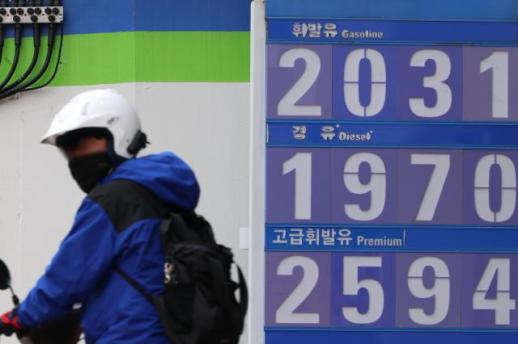 As Up to 6 Trillion Won in Fuel-Price Relief Nears, Financial Firms Keep Marketing Quiet High fuel-price relief payments are set to be distributed soon, but marketing across South Korea’s financial sector is quieter than in past years. Banks and card issuers are posting application instructions, yet few are offering customer promotions, citing concerns that marketing costs would deepen losses under a low-fee structure. Financial firms are using their websites and mobile apps to explain how to apply and outline the schedule ahead of the first round of applications, the industry said April 26. The first round begins with vulnerable groups, and eligibility expands from May 18 to the bottom 70% of income earners. Payments will range from 100,000 won to 600,000 won per person. Recipients can choose to receive the money through local gift certificates, credit or debit cards, or prepaid cards. Applications can be submitted through card company websites and apps, as well as automated phone systems. Spending will be limited to merchants with annual sales of 3 billion won or less, and use at big-box retailers, department stores and online shopping malls will be restricted. The financial industry expects many recipients to choose the card option again. With about 70% of last year’s consumer coupons delivered via credit and debit cards, the volume of card payments this time is estimated to reach as much as 6 trillion won. Even so, beyond basic guidance, customer acquisition events remain scarce. Only a few card issuers, including KB Kookmin Card and Shinhan Card, have launched promotions, while most have limited their efforts to application notices. The same is true for the four major banks—KB Kookmin, Shinhan, Hana and Woori—as well as online banks such as Toss, Kakao and K Bank. That contrasts with last year, when card companies ran a joint campaign and spent about 2.5 billion won on marketing, including distributing consumer coupons to a total of 310,000 people. This time, similar industrywide efforts have largely not materialized. Industry officials point to thin margins. Because spending is concentrated at small merchants, card fees are expected to remain in the 0.4% to 1.45% range. With added server operations and system-building costs, turning a profit is difficult. During the 2020 emergency relief program, card companies posted losses of about 8 billion won, the report said. A card industry official said some sectors, including gas stations, already face low fee rates, and that costs can rise further once card benefits such as discounts and reward points are included. “Relief payments are structurally a business where it is hard to expect profitability,” the official said. * This article has been translated by AI. 2026-04-26 15:34:33
 -
 South Korea to Check Crypto, Financial Assets in Debt Relief Reviews to Curb Abuse The South Korean government has secured a legal basis to let debt workout agencies review a debtor’s virtual assets, along with other financial holdings, during screening for debt relief programs. Officials said the goal is to curb moral hazard and focus support on people who genuinely need help. The Financial Services Commission said Thursday that a revision to the Credit Information Use and Protection Act passed the National Assembly’s plenary session the same day. The key change allows debt restructuring bodies to verify a debtor’s holdings of deposits, savings products and securities, as well as virtual assets, when assessing repayment capacity. Reviews previously relied mainly on real estate and tax information, which critics said left room for hiding assets. Under the revision, the agencies may obtain necessary financial and property information without a debtor’s prior consent, within a limited scope. Debtors must be notified individually that their information was provided and will be able to check the inquiry. The measure applies to government debt restructuring programs such as the Sae Do-yak Fund and the Sae Chulbal Fund. These entities buy the claims of long-term delinquent borrowers and provide support such as debt write-offs or reductions in principal and interest. The FSC said the change will make repayment-capacity reviews more precise, basing decisions on actual ability to repay rather than debt size alone, and easing fairness concerns for borrowers who repay in good faith. It also said the revision will allow full-scale debt adjustment procedures for cases among the Sae Do-yak Fund’s holdings that require repayment-capacity screening, which is expected to speed support for long-term delinquent borrowers seeking to get back on their feet. The revision is set to take effect three months after promulgation. The FSC said it will also update related subordinate regulations, including enforcement decrees.* This article has been translated by AI. 2026-04-23 17:51:20
 -
 Korea Activates Emergency Import Financing to Secure Naphtha Supplies Middle East instability has heightened uncertainty over naphtha supplies, prompting South Korea’s financial sector to activate an emergency financing support system for the petrochemical industry. The goal is to quickly raise import letter of credit (L/C) limits to prevent disruptions in raw material imports. The Financial Services Commission said on the 23rd it has set up a joint financial-sector support framework for naphtha imports linked to the Middle East situation. The move follows a recent surge in naphtha prices and growing supply uncertainty as the situation in the Middle East drags on. Naphtha is a key feedstock for South Korea’s petrochemical industry, and any import disruption could affect production across the sector. At the center of the plan is expanding L/C limits. Korea Development Bank, the Export-Import Bank of Korea and commercial banks plan to increase L/C issuance limits for companies that have signed naphtha import contracts, helping them secure funding. When a company applies for L/C support through its main creditor bank, the bank will review the request and, after consultations with the creditor group, move quickly to provide support. Costs will be shared based on each institution’s credit exposure, and the Korea Trade Insurance Corp. plans additional support through import insurance. To speed up assistance, financial authorities will streamline procedures. The time typically required to expand L/C limits — usually more than six weeks — will be cut to within three weeks through simplified due diligence. If needed, the main creditor bank will issue a letter of intent, or LOI, to help companies finalize import contracts. The Financial Services Commission and the Financial Supervisory Service also said they will apply liability protection for staff involved in the process when there is no intent or gross negligence, to encourage active support by financial institutions. At a meeting held the same day, financial-sector officials agreed to maintain close coordination in responding to the Middle East-driven risks and to be ready to execute naphtha import financing support immediately.* This article has been translated by AI. 2026-04-23 16:08:20
 -
 South Korea’s Youth Future Savings Plan to Offer Tax-Free Interest Up to 75 Million Won in Salary The South Korean government has finalized key details of its planned “Youth Future Savings Plan,” expanding the income threshold for benefits to 75 million won in annual salary and adopting a three-tier support structure that differs from the existing Youth Leap Account. On April 23, the Financial Services Commission said it shared the product structure and eligibility standards at a pre-launch review meeting held the previous day. The plan is a three-year, flexible installment savings product for people ages 19 to 34. Participants can deposit up to 500,000 won a month, with the government providing matching contributions depending on income and eligibility. Compared with the Youth Leap Account, the new plan simplifies support from five tiers to three. Enrollment will also shift from year-round sign-ups to recruitment twice a year, in June and December, making timing more important for applicants. Benefits will vary by total annual salary. The government raised the upper income limit from 60 million won under the Youth Leap Account to 75 million won. For those earning more than 60 million won and up to 75 million won, there will be no government contribution, but interest earned will be tax-free. For those earning 60 million won or less, the standard plan adds a government contribution equal to 6% of monthly deposits. If a participant deposits the 500,000 won monthly maximum, that equals 30,000 won a month, or 1.08 million won over three years, with interest also accruing on the contribution. A preferred plan applies to participants who meet additional requirements, such as employment at small and medium-sized enterprises. If conditions are met, including total annual salary of 36 million won or less, the contribution can rise to as much as 12% of monthly deposits. At the 500,000 won monthly maximum, that would be 60,000 won a month, or 2.16 million won over three years. Assuming a 6% interest rate, the commission said depositing 500,000 won a month for three years would build assets of about 20.8 million won under the standard plan and about 21.9 million won under the preferred plan, including government contributions and interest, on principal of 18 million won. The interest rate has not been set; the commission said it expects details to emerge around late May after selecting participating financial institutions. The maturity period is three years, shortened from five years under the Youth Leap Account. The product will be run as a flexible installment savings plan with a monthly cap of 500,000 won. Work-related conditions are included. Preferred-plan participants employed at small and medium-sized firms must remain on the job for a specified period before maturity to keep benefits, and job changes will be allowed no more than twice during the subscription period. The age rule will be partially eased. While the basic eligibility is ages 19 to 34, people who turned 35 in the gap between the end of the Youth Leap Account and the launch of the new product will be allowed to enroll as an exception. Military service time will be excluded when calculating age eligibility. Current Youth Leap Account holders will be allowed to switch to the Youth Future Savings Plan only during the first recruitment period in June. In that case, even if the existing account is closed early under a special termination process, government contributions and tax benefits will be maintained. Enrollment will be handled online through bank apps. Eligibility will be reviewed through electronic links with the National Tax Service and other systems, without requiring applicants to submit separate documents. 2026-04-23 15:25:05
 -
 Korea’s Insurance Industry Cuts Power Use, Limits Driving Amid Energy Supply Concerns The insurance industry has moved into a companywide conservation mode as energy supplies have become less stable due to the prolonged situation in the Middle East. Measures described as emergency steps are spreading across the sector, from limits on vehicle use to tighter controls on office electricity consumption. The Korea Life Insurance Association and the General Insurance Association of Korea said on the 23rd that insurers are actively joining energy-saving efforts in response to the energy crisis tied to the extended Middle East situation. The associations and insurers are pursuing voluntary reduction plans tailored to each workplace, in line with the government’s emergency energy response stance. With a “caution” alert issued over a resource security risk stemming from unstable crude oil supplies, insurers are implementing a five-day vehicle rotation system alongside public institutions. Some insurers have expanded the policy to an even-odd driving system depending on conditions. They are also encouraging public transit and using staggered work hours and remote work to spread out commuting demand. Insurers are also cutting energy use inside offices. They are turning off lights in shared areas after hours and emphasizing routine steps such as shutting down PCs when leaving work. To improve heating and cooling efficiency, they are maintaining recommended indoor temperatures and reducing unnecessary equipment operation to minimize waste across day-to-day operations. Additional steps are being expanded, including adjusting elevator operating hours and outdoor sign lighting times and improving lighting efficiency. Some insurers are running internal power-saving campaigns to encourage employee participation. 2026-04-23 14:33:18