
Journalist

Ryu Yuna
Julia37@ajupress.com
-
 Korea's consumer confidence strongest in 3 mo Feb on buoyant stocks and exports SEOUL, Feb. 24 (AJP) — South Korea’s consumer confidence rose to its strongest level in three months in February, buoyed by a robust stock market and resilient exports, central bank data showed Tuesday. According to the Bank of Korea, the composite consumer sentiment index (CCSI) stood at 112.1 in February, up from 110.8 in January and 109.8 in December. A reading above 100 indicates that optimism outweighs pessimism compared with the long-term average. The index measuring perceptions of current economic conditions rose 5 points to 95, while the six-month outlook climbed 4 points to 102, indicating that more consumers expect overall conditions to improve. Employment sentiment also strengthened, with the subindex for job prospects edging up 2 points to 93. Sentiment on prices and housing inflation stabilized. One-year inflation expectations remained unchanged at 2.6 percent, while expectations for interest rates ticked up 1 point to 105. The current living standards index held steady at 96, while the outlook index rose 1 point to 101. The prospective household income index remained at 103, and the expected household spending index was unchanged at 111. Overall, improved assessments of macroeconomic conditions offset stable household income expectations, keeping consumer sentiment firmly in optimistic territory above its long-term average. The prospective interest rates index has risen steadily since November, climbing from 98 to 105 over four months, as higher bond yields and persistent global rate uncertainty led consumers to expect borrowing costs to remain elevated for longer. Perceptions of household savings and debt showed mixed signals. The current household savings CSI rose 1 point to 100, and the savings outlook CSI increased 1 point to 102. In contrast, the current household debt CSI remained unchanged at 99, while the debt outlook CSI edged down 1 point to 96. Expectations for prices and asset values shifted modestly. The overall price level outlook CSI slipped 1 point to 147. The housing price outlook CSI fell sharply by 16 points to 108. The wage outlook CSI was unchanged at 123. Inflation expectations remained broadly stable. Perceived inflation over the past year stood at 2.9 percent, unchanged from January. Expected inflation for the next year held at 2.6 percent, while three-year and five-year ahead expectations were both unchanged at 2.5 percent. Despite a moderation in headline inflation, higher prices for processed foods and seafood helped keep inflation expectations steady. In terms of distribution, the 2–3 percent range accounted for the largest share of responses for one-year ahead inflation expectations at 29.7 percent. The same range was also most cited for three-year ahead expectations at 29.8 percent and five-year ahead expectations at 28.2 percent. Overall, inflation expectations remained anchored, housing price expectations cooled significantly, and household savings sentiment improved slightly, while debt outlook perceptions softened. However, households continued to cite agricultural products and utilities as the main drivers of expected price increases over the next year. 2026-02-24 11:25:46
 -
 Faith in the feed: virtual pastors and monks court young Koreans SEOUL, February 23 (AJP) — “I have to go prepare for Sunday service now, so we’ll wrap up today’s stream here. Thank you for watching.” With that, a 2D avatar known as “Pastor Kim” waves goodbye. The chat window erupts in emojis, hearts and rapid-fire comments. Viewers type “Amen,” “LOL” and “See you next time” in the same breath. Welcome to South Korea’s newest religious frontier: virtual YouTube. Far from pulpits and pews, young clergy members are turning to avatars, livestreams and gaming culture to reach a generation that has largely drifted away from organized religion. The message is clear: faith, rebranded for the algorithm age. Over the past year, virtual religious creators have quietly built online followings. One of the earliest was “Illegal Monk,” who began streaming in July last year on Naver’s CHZZK and YouTube. Presenting himself as a monk born in 1994 from the fictional “Uimon Temple of Chizik Mountain,” he mixes Buddhist teachings with internet humor. His debut broadcast drew attention when he performed Cheondojae — a traditional Buddhist ritual for the dead — for the fictional “Saja Boys,” characters inspired by Korea’s grim reapers in the Netflix animated film K-Pop Demon Hunters. His channel now has about 65,000 subscribers. In November 2025 came “Pastor Kim,” followed in January this year by “Father Leon,” a Catholic VTuber. They represent different faiths, but share a common mission: speaking to young people in the language of K-pop, webtoons, games and livestream culture. “I keep saying I should go to church but never do — so it’s a miracle that Father shows up in my algorithm,” one follower wrote. Their digital outreach reflects a deeper problem. According to Hankook Research, 51 percent of respondents in its January–November 2025 survey said they had no religion. Only 20 percent identified as Protestant, 16 percent as Buddhist and 11 percent as Catholic. Among those aged 18 to 29, nearly 69 percent said they had no religion. Long-term data from Gallup Korea shows the shift clearly. In 2004, about 45 percent of Koreans in their 20s said they were religious. Today, that figure has fallen to the low 20 percent range. Religion, once a major social anchor, is losing ground among younger generations. “Korea is becoming polarized in belief,” said Jung Jong-hyun, a sociology professor at Sungkyunkwan University. “Those who are religious tend to be very active, while those without religion are largely indifferent. This divide is growing.” At stake, he added, is institutional survival. Behind the animated characters are real religious figures. Illegal Monk is an ordained monk of the Jogye Order of Korean Buddhism. Father Leon belongs to the Catholic virtual creator group “Holy Live.” Pastor Kim is an ordained minister of the Korea Nazarene Church. All keep their personal identities private, but operate within their respective institutions. They also share a surprising degree of collaboration. When Father Leon introduced his new character design, he joked, “Some of you might recognize the illustration style. The same artist worked on Illegal Monk. I guess that makes us brothers. VTubers are bringing religious unity.” Indeed, Illegal Monk and Father Leon share an illustrator and have appeared together in joint livestreams. Different traditions, same digital universe. Their content follows familiar online formulas. They read chat messages in real time. They joke with viewers. They reference memes and games. They react to trending videos. In between, they insert short sermons, prayers or reflections. Religion is no longer delivered in long lectures. It comes in clips, comments and casual conversation. Illegal Monk says he wants to make Buddhism feel less intimidating. Father Leon aims to lower psychological barriers to church. Pastor Kim believes the Gospel must go where young people already gather — including online subcultures. Instead of asking youth to return to institutions, they are meeting them on their phones. 2026-02-23 17:41:27
 -
 KOSPI unfazed in record-setting solo rally despite U.S. tariff flip-flop SEOUL, February 23 (AJP) — Korean stocks extended their record-setting rally on Monday, showing little sign of disruption from renewed U.S. tariff uncertainty as the benchmark index moved closer to the 5,900 mark while several major Asian markets remained closed. The main KOSPI briefly tested 5,900, extending its roughly 40 percent advance in the first two months of the year. As of 10:54 a.m., the index was up 1.17 percent at 5,875.12. The tech-heavy KOSDAQ rose 1.16 percent to 1,167.41. The Korean won strengthened amid a broad retreat of the U.S. dollar, reflecting growing uncertainty over Washington’s trade policy. The dollar was down 4.40 won at 1,143.60. Investor sentiment remained resilient despite renewed tariff pressure from Washington. President Donald Trump said he would raise a blanket U.S. import tariff to 15 percent after the Supreme Court of the United States struck down much of his second-term tariff regime last week. The administration has since relied on Section 122 of the Trade Act of 1974, which allows temporary tariffs of up to 15 percent for balance-of-payments purposes. For Korea, which runs persistent trade surpluses with the United States, the move suggests that Washington’s tariff policy is entering a new legal phase rather than winding down, keeping external uncertainty elevated. Investor flows were mixed. Individual investors bought a net 423.9 billion won ($320 million), while foreign and institutional investors sold a net 382.1 billion won and 69.9 billion won, respectively. Among heavyweight stocks, Samsung Electronics and SK hynix rose 2.68 percent and 2.42 percent to 195,200 won and 972,000 won, respectively. LG Energy Solution fell 0.87 percent to 398,000 won. Samsung Electronics gained after reports that it reclaimed the No. 1 position in the global DRAM market in the fourth quarter. Optimism over artificial intelligence investment also supported chipmakers. Chey Tae-won, chairman of SK Group, recently warned that while AI demand could push SK hynix’s operating profit beyond $100 billion, the sector also faces unprecedented volatility. Speaking at the Trans-Pacific Dialogue 2026 in Washington last week, Chey said AI is reshaping global industrial structures, creating extraordinary opportunities alongside rising uncertainty. Elsewhere, nuclear and defense shares were mixed. Doosan Enerbility climbed 0.68 percent, while Hanwha Aerospace fell 0.97 percent. Financial stocks led gains after a third amendment to the Commercial Act passed the National Assembly’s Legislation and Judiciary Committee. Samsung Life Insurance rose 4.34 percent, while DB Insurance, Heungkuk Fire & Marine Insurance and Lotte Insurance posted strong gains. In biotech, Samsung Biologics advanced 0.46 percent. Automakers also outperformed. Hyundai Motor rose about 3.93 percent to around 529,000 won on reports of a multi-trillion-won investment plan in Saemangeum, with Kia gaining 1.28 percent. Shipbuilders showed mixed performance, with HD Hyundai Heavy Industries edging up and Hanwha Ocean declining. Construction shares drew attention as Hyundai Engineering & Construction jumped 6.08 percent on expectations of U.S. nuclear reactor investment decisions between 2026 and 2029. In the region, Japanese equity markets were closed for the Emperor’s Birthday holiday. Hong Kong’s Hang Seng Index rose 1.46 percent, while China’s Shanghai market is set to resume trading on Tuesday. 2026-02-23 11:24:50
 -
 BTS Comeback-29: How K-pop is woven into the Korean heritage SEOUL, February 20 (AJP) - On a chilly afternoon during the Lunar New Year holiday, the long line outside the National Museum of Korea curled past the plaza and into the nearby park. Families carrying gift boxes, grandparents holding grandchildren’s hands, and young couples in padded coats waited patiently for their turn to enter. For many, this was not a detour between holiday meals. It was the destination. Over two days of the Seollal break — Feb. 16 and 18 — more than 86,000 people passed through the museum gates. An average of 43,232 visitors a day, nearly three times the facility’s recommended capacity, filled its galleries. It was 2.7 times higher than the turnout during the 2024 holiday. In January alone, more than 730,000 people visited. By mid-February, another 428,000 had followed. If the pace continues, annual attendance is expected to approach six million, close to last year’s record of 6.5 million — the highest since the museum’s founding in 1945. Foreign visitors accounted for just 1.7 percent. This was, overwhelmingly, a domestic pilgrimage. A museum official described the institution as becoming a “holiday cultural sanctuary.” The phrase is telling. What was once a quiet, weekday destination for students and scholars has become, on major holidays, a shared civic space — where leisure, memory and identity converge. In this crowd lies a deeper shift. For decades, Korea’s popular culture has traveled outward — through music, drama and fashion. Heritage, by contrast, remained largely inward-looking, confined to textbooks and special exhibitions. Today, the two currents are beginning to meet. From Stage to Heritage: K-pop Enters Cultural Stewardship That convergence is increasingly visible in the actions of artists such as RM, leader of BTS. K-pop is no longer content to borrow tradition as visual ornament. It is beginning to participate in the preservation of cultural substance itself. In 2021 and 2022, RM donated a total of 200 million won to the Overseas Korean Cultural Heritage Foundation, supporting the restoration of a Joseon-era bridal robe, or hwarot, housed at the Los Angeles County Museum of Art. Made of red silk and densely embroidered with phoenixes, peonies and longevity symbols, the robe represents one of the most fragile and rare categories of Korean artifacts. The funds were used to stabilize deteriorating fabric and preserve its intricate embroidery. After conservation work by Korean specialists, the restored garment was exhibited in Korea in 2023 before returning to the United States. It was a modest project in scale. Its implications were not. Beyond Symbolism The restoration demonstrated how the global influence of a pop artist can be channeled into institutional heritage work. The donation was administered within Korea’s formal conservation framework, linking private cultural capital with public preservation systems. In the comment section of a K-Heritage Channel video documenting the project, one overseas fan wrote: “Thanks to BTS & Namjoon I have studied Korean history… The beauty of Korean culture & heritage is preserved & spread.” It was not a promotional slogan. It was a record of transmission — from entertainment to historical curiosity, from fandom to scholarship. This is where the shift lies. K-pop’s relationship with tradition has long been visual: hanbok-inspired costumes, palace backdrops, classical motifs. What is emerging now is structural. Artists are participating in the long, technical and often invisible work of conservation. Heritage in Institutional Context The hwarot project also illustrates a broader model. Cultural assets held overseas can be managed through cooperation between domestic specialists and international museums. Restoration is no longer an isolated act of recovery, but part of a transnational governance system for heritage. RM’s role was catalytic, not performative. His resources enabled professionals to do their work. His name drew attention. The institutions carried the process. That balance matters. It suggests that popular culture, when embedded in formal frameworks, can reinforce — rather than dilute — the authority of heritage institutions. The Present Momentum This cultural expansion is unfolding alongside RM’s growing presence in the art world. The San Francisco Museum of Modern Art has announced “RM x SFMOMA,” scheduled for October 2026 to February 2027, featuring works from his personal collection alongside the museum’s holdings. His collection spans Korean modern masters such as Yun Hyong-keun and Kim Whanki, and Western figures including Mark Rothko and Georgia O’Keeffe. The impulse is consistent: not to isolate traditions, but to place them in dialogue. On stage, he is a global idol. Inside museum walls, he operates as a cultural intermediary. Two spheres, once separate, are converging. Cultural Stewardship Back at the National Museum, as families drifted from the Silla gold crowns to the Joseon calligraphy halls, few were consciously tracing this connection. They were there for rest, curiosity, and a shared holiday experience. Yet their presence is part of the same story. K-pop once helped popularize hanbok as fashion. Today, it is helping sustain it as heritage. The restoration of a single Joseon bridal robe may seem minor in a world of billion-view videos and stadium tours. But it signals a direction. Tradition is no longer a decorative remnant. It is being repositioned as a strategic asset and a shared public trust. From packed museum halls to overseas conservation labs, Korea’s cultural ecosystem is widening. Popular culture is no longer merely consuming history. It is learning, quietly, to take responsibility for it. 2026-02-20 17:33:43
 -
 KOSPI unfazed by geopolitical risks in its record-setting winning streak SEOUL, February 20 (AJP)- South Korean shares extended their relentless rally in early Friday trading, brushing off global market weakness and rising geopolitical tensions between the United States and Iran. The benchmark KOSPI surged past the 5,700 mark to set another record high. As of 10:50 a.m., the index was up 1.26 percent at 5,748.65. The tech-heavy KOSDAQ slipped 0.25 percent to 1,157.77. In regional markets, Hong Kong’s Hang Seng Index opened lower after a holiday break, falling 0.27 percent to 26,633.60 as of 9:31 a.m. local time. Wall Street retreated overnight as concerns grew over a potential U.S. strike on Iran. With nuclear negotiations between Washington and Tehran showing little progress, reports that the U.S. military had reinforced its assets in the Middle East weighed on investor sentiment. The Dow Jones Industrial Average fell 0.54 percent, the S&P 500 lost 0.28 percent, and the Nasdaq Composite slipped 0.31 percent. Despite the global pullback, brokerage stocks in Seoul rallied across the board. SK Securities and Sangsangin Investment & Securities hit fresh 52-week highs, jumping 24.89 percent and 20.94 percent, respectively, as of 10:05 a.m. Other major brokerages also posted strong gains, including NH Investment & Securities (11.29 percent), Daishin Securities (7.16 percent), Mirae Asset Securities (4.11 percent), Samsung Securities (5.65 percent) and Kyobo Securities (8.53 percent). The rally was driven by rising trading volumes and growing expectations that a revision to the Commercial Act requiring the cancellation of treasury shares will be approved. The Korean won strengthened slightly, trading at 1,449.40 per dollar, up 1.60 won from the previous session. Investor flows were mixed. Individual and foreign investors sold a net 79.1 billion won and 430.4 billion won worth of shares, respectively, while institutions bought a net 587.6 billion won. Among heavyweight stocks, Samsung Electronics and SK hynix slipped 0.16 percent and 0.67 percent to 189,300 won and 888,000 won, respectively. Battery maker LG Energy Solution rose 0.37 percent to 405,000 won. Meanwhile, nuclear power equipment maker Doosan Enerbility and defense contractor Hanwha Aerospace climbed 6.50 percent and 6.70 percent to 104,800 won and 1,226,000 won, respectively. Financial and biotech stocks also advanced. Samsung Life Insurance jumped 7.18 percent to 224,000 won, while Samsung Biologics added 0.87 percent to 1,735,000 won. Automakers showed mixed performance. Hyundai Motor fell 0.78 percent to 509,000 won, while affiliate Kia gained 0.29 percent to 170,500 won. Shipbuilders were among the gainers. HD Hyundai Heavy Industries jumped 2.61 percent to 589,000 won, and Hanwha Ocean climbed 2.70 percent to 144,400 won. In Tokyo, Japan’s Nikkei 225 fell 1.17 percent to 56,796.91. China’s Shanghai market is set to resume trading next Tuesday following the holiday break. 2026-02-20 11:13:36
 -
 KOSPI's star winners show why Seoul market shines in the AI transition SEOUL, February 19 (AJP) — South Korea’s benchmark KOSPI has emerged as the world’s best-performing major equity index so far in 2026, extending a record-breaking rally and decisively shaking off the long-standing “Korea discount.” The index has more than doubled since the end of 2024, rising nearly 34 percent this year alone after a 75.6 percent surge in 2025. No other major global benchmark has matched its year-to-date performance, reflecting a structural re-rating of Korean equities rather than a temporary rebound. Market analysts say the rally is being driven by Korea’s growing role at the core of the global artificial intelligence supply chain — from memory chips powering hyperscale data centers to power and grid equipment needed to support soaring electricity demand. With the index advancing steadily toward the symbolic 6,000 level, most major winners are concentrated in sectors benefiting from the AI investment cycle. Power equipment leads the rally Among the standout performers is HD Hyundai Electric, whose shares have surged about 5,300 percent over the past five years. The rally has been fueled by a global supercycle in power infrastructure, driven by massive investment in transmission networks and substations to support data centers and electrification. Last year, the company posted revenue of 4.08 trillion won, up 22.8 percent from a year earlier, while operating profit jumped 48.8 percent to 995.3 billion won. Yoo Jae-sun, an analyst at Hana Securities, said the company’s product mix is strengthening earnings. “High-margin power distribution products centered on ultra-high-voltage equipment are being added to the portfolio, which should make a meaningful contribution to profits,” Yoo said. Overseas markets have been the main growth engine. North American revenue rose 29.7 percent last year to account for 47 percent of total sales, while European revenue climbed 38.3 percent to exceed 10 percent. Shares have gained more than 13 percent over the past month and were trading up 2 percent at 968,000 won on Thursday afternoon. Semiconductors ride the AI supercycle Chipmakers are also benefiting from sustained global demand for AI hardware. The Philadelphia Semiconductor Index remains near record territory, reinforcing confidence in the sector. Son Ik-jun of Heungkuk Securities expects the upcycle to persist. “The supply shortage of DRAM and NAND is likely to continue through 2027,” Son said. “Combined operating profit at major memory makers could reach 36.2 trillion won in 2026 and 46.9 trillion won in 2027.” Against this backdrop, Samsung Electronics has climbed sharply over the past year, rising from around 50,000 won to above 170,000 won as AI-driven chip demand accelerates. The rebound has been supported by rising DRAM and NAND prices since late 2024, improving margins and a turnaround in quarterly earnings. The stock was up 4.25 percent at 188,900 won on Thursday. Nomura Securities recently raised its target price for Samsung to 290,000 won, citing signs that the company is regaining leadership in the memory market. SK hynix has also advanced, supported by strong demand for high-bandwidth memory used in Nvidia’s AI accelerators. Shares rose 1.99 percent to 897,500 won. Over five years, SK hynix has gained 561.6 percent, while Samsung is up 115.2 percent, reflecting the memory supercycle and the rapid expansion of AI-related workloads. Long-term winners broaden Five-year performance data point to a broader multi-year upcycle across Korean industries. As of Feb. 13, 2026, Isu Petasys led long-term gainers with a 3,379 percent rise, followed by Hyosung Heavy Industries (2,645 percent) and Hanwha Aerospace (2,464 percent). HD Hyundai Marine Engine and Doosan Enerbility also delivered strong gains of 2,308 percent and 696 percent, respectively. Isu Petasys has benefited from rising demand for high-layer printed circuit boards used in AI servers, high-performance computing systems and advanced networking equipment. Brokerages including Meritz and SK Securities have raised target prices, citing its growing role in advanced packaging and TPU-related supply chains. Strong performance has not been limited to technology. Industrial and defense-related names have also outperformed amid shifting geopolitical and security conditions. Hanwha Ocean has risen 379 percent over five years, supported by rising global defense spending and stronger shipbuilding demand. Shipbuilding, aerospace and heavy machinery firms have benefited from expanding export orders and government-backed investment programs linked to security and energy infrastructure. Analysts say the KOSPI’s strong showing reflects more than cyclical recovery. After years of underperformance due to governance concerns, geopolitical risk and weak valuations, Korea’s equity market is undergoing a structural re-rating as global investors reassess its position in the AI-driven economy. Korean companies now occupy critical positions in memory chips, advanced components, power equipment and industrial systems — industries that form the backbone of the AI ecosystem. As global investment in artificial intelligence infrastructure continues to accelerate, Korea’s equity market is adjusting in parallel. Market participants say the rally increasingly reflects long-term competitiveness rather than short-term speculation, positioning the KOSPI as a leading global benchmark in the AI era. 2026-02-19 17:16:26
 -
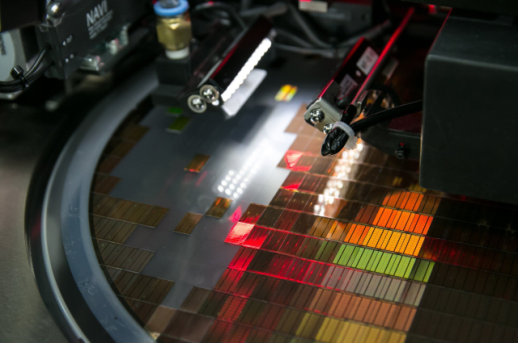 Hiring plans reflect chip boom vs weak consumption in Korea SEOUL, February 19 (AJP) -Electronics and semiconductor manufacturers enjoying an exceptional, record-setting second year from the artificial intelligence boom are set to lead hiring among South Korean employers in 2026, according to a new survey by HR technology company Incruit released Thursday. Incruit’s survey of 873 companies — including 102 large corporations, 122 mid-sized firms and 649 small and medium-sized enterprises — found that 84.4 percent of electronics and semiconductor companies plan to hire new university graduates this year, the highest among all industries. The survey was conducted between Jan. 5 and 27 through email questionnaires and telephone interviews with HR managers. The figure marks a 23.8 percentage-point increase from a year earlier, reflecting strong business conditions driven by surging demand for high-value chips used in artificial intelligence servers and data centers and competition over chipmaking engineers. Not just memory makers like Micron, U.S. big-tech names including Nvidia, Google and Tesla are aggressively chasing Korean engineers due to Korea's edge in chipmaking. Nvidia, the world’s leading supplier of AI accelerators and the largest buyer of HBM chips, is currently advertising senior memory system engineer positions at its Santa Clara headquarters, with base salaries of up to $356,500. The roles require more than a decade of experience in DRAM design and deep knowledge of HBM, a profile that closely matches engineers at Korea’s two dominant memory producers. HBM-dominant SK hynix’s revenue and operating income rose 47 percent and 101 percent to $68 billion and $33 billion, respectively. Its annual operating profit reached a record 47.2 trillion won, surpassing Samsung Electronics’ 43.6 trillion won. Google and Broadcom, which jointly develop tensor processing units for Google’s AI infrastructure, are also hiring HBM engineers in Silicon Valley. Google has posted openings for silicon validation engineers focused on characterizing HBM performance, while Broadcom is seeking specialists in design-for-test verification across HBM, DDR and high-speed interface technologies. Tesla has taken a more direct approach in Korea. Tesla Korea posted a job listing on Feb. 15 for AI chip design engineers as part of a project to develop proprietary AI processors for mass production. The recruitment drive was amplified by Chief Executive Elon Musk, who reposted the opening on his X account earlier this week. Industry analysts say the global competition for Korean chip engineers reflects the strategic importance of memory technology in the AI race. Reviving construction sector Following semiconductors, the construction, civil engineering, real estate and leasing sector ranked second in Incruit’s survey, with 83.3 percent of firms planning to hire, up sharply from 57.9 percent a year earlier. The IT, telecommunications and gaming sector followed at 80.5 percent. Media, advertising, education and publishing, and healthcare and pharmaceuticals also recorded relatively high hiring intentions, each approaching or exceeding 75 percent. Underscoring the prolonged slump in consumption, travel, accommodation and aviation sector posted the lowest hiring rate at 56.7 percent. Apparel, footwear and other manufacturing firms followed at 63.3 percent, while distribution and logistics companies stood at 64.0 percent. “These sectors are closely tied to household consumption and the broader real economy, which remains under pressure,” Incruit said. In terms of year-on-year changes, construction-related industries and electronics and semiconductors showed the largest gains in hiring plans, rising by 25.4 and 23.8 percentage points, respectively.Transportation recorded the steepest decline, with hiring intentions falling 4.5 percentage points to 64.3 percent. Automobile and auto parts manufacturers also saw a drop of 4.1 points to 66.7 percent. 2026-02-19 13:49:51
 -
 Seoul indices turbocharged after three-day break, hit another milestone SEOUL, Feb. 19 (AJP) – Seoul bourses returned from a three-day Lunar New Year break on Thursday with strong gains, fueled by robust demand for technology and chip shares amid signs of easing U.S. inflation. U.S. January consumer prices rose 2.4 percent year on year, the slowest pace in eight months. Core inflation, which excludes food and energy, increased 2.5 percent, marking its lowest rise since March 2021. Nvidia climbed 1.63 percent overnight after reports that Meta Platforms agreed to purchase millions of its latest-generation graphics processing units. The Philadelphia Semiconductor Index rose 0.96 percent. Softer inflation data and sustained artificial intelligence-related demand lifted risk appetite across Asian markets at the open. The benchmark KOSPI jumped more than 2 percent in early trading, breaking the 5,600 mark just a week after surpassing its previous three-digit milestone. As of 10:27 a.m., the index stood at 5,643.80, up 2.49 percent, while the tech-heavy KOSDAQ advanced 3.24 percent to 1,141.73. The Korean won strengthened slightly, trading at 1,451.60 per dollar, up 1.80 won from the previous session. Investor flows were mixed. Individual and foreign investors sold a net 92.7 billion won ($64 million) and 321.7 billion won, respectively, while institutions bought a net 362.2 billion won. Heavyweight semiconductor stocks led the rally. As of 9:58 a.m., Samsung Electronics surged 5.08 percent to 190,400 won, while SK hynix gained 1.93 percent to 897,000 won. Battery maker LG Energy Solution rose 0.51 percent to 397,000 won. Financial and biotech shares also advanced. Samsung Life Insurance climbed 3.16 percent to 212,000 won, and Samsung Biologics added 0.99 percent to 1,727,000 won. Automakers extended gains, with Hyundai Motor up 0.50 percent and affiliate Kia rising 2.50 percent to 168,200 won. Defense-related stocks strengthened, led by Hanwha Aerospace, which rose 3.17 percent to 1,140,000 won. Shipbuilders outperformed the broader market. HD Hyundai Heavy Industries jumped 7.37 percent to 583,000 won, while Hanwha Ocean surged 9.55 percent to 142,200 won. Elsewhere in the region, Japan’s Nikkei 225 gained 0.78 percent to 57,587.67. Hong Kong markets are set to reopen on Friday, while Shanghai will resume trading on Feb. 24. 2026-02-19 11:02:23
 -
 BTS Comeback D-36: War with scalping begins, but victory may not be easy SEOUL, February 13 (AJP) - South Korea’s ticket scalping market has expanded more than fortyfold over the past five years, drawing heightened scrutiny ahead of BTS’s highly anticipated comeback concert and domestic tour. “BTS The Comeback Live: ARIRANG,” scheduled for March 21 at Gwanghwamun Square in Seoul, will offer around 15,000 to 17,000 seats. General reservations open at 8 p.m. on February 23 through NOL Ticket. Of the total, 2,000 standing spots will be raffled to ARMY members who pre-ordered the group’s new album. The concert is free. But free events often attract even more aggressive scalping. At BTS’s 2022 Busan Expo concert, VIP tickets were resold for up to 4 million won. Illegal transactions spread through social media and private chat rooms, with scalpers using automated programs and account transfers to bypass ticketing controls. Regular tour shows are scheduled in Goyang on April 9, 11 and 12, and in Busan on June 12 and 13. Scalping Cases Surge According to the Ministry of Culture, Sports and Tourism and the Korea Creative Content Agency, suspected online scalping cases surged from 6,237 in 2020 to 184,933 in 2024, reaching 259,334 as of August 2025. About 75 percent of cases in 2024 were linked to music concerts. In response, the country’s largest ticket resale platform will cap resale prices at 1 million won starting January 1, 2026, automatically blocking listings above that level. The amendments to the Public Performance Act and the National Sports Promotion Act, passed late last month, ban all illegal ticket resales, allow authorities to confiscate profits, and impose fines of up to 50 times the resale amount. But they go into full effect late July. Previously, scalping was illegal only when macro software was used, leaving most individual resales on social media, online forums and private marketplaces largely unregulated. The revised law aims to close that loophole. Tax authorities have joined the crackdown. Last November, they launched their first large-scale investigation into high-volume scalpers targeting K-pop concerts and major sports events. The 17 individuals identified included teachers, public-sector employees and business owners. The total volume of tickets distributed through illegal channels was estimated at more than 20 billion won. Regardless of the law, the government plans to be strict against exploitative ticket sales of BTS concerts. Culture Minister Chae Hwi-young warned Thursday of a strong government crackdown, saying illegal resales must not be allowed to spoil BTS’s return. The economic impact of BTS concerts extends well beyond ticket sales. Accommodation prices have surged during major tour periods, raising broader inflation concerns. According to a joint investigation by the Korea Fair Trade Commission and the Korea Consumer Agency, 135 accommodations in Busan were surveyed during the June concert period. The average nightly rate for the concert weekend of June 13–14 reached 433,999 won — 2.4 times higher than surrounding weeks. Motel rates averaged 325,801 won, up 3.3 times, while hotel rates averaged 631,546 won, a 2.9-fold increase. Pension rates rose more modestly to 296,437 won, about 1.2 times the usual level. At some properties, price hikes were far steeper. One hotel room normally priced at 100,000 won was listed for 750,000 won. Thirteen properties raised rates by more than five times, with some rooms jumping from the 300,000-won range to as high as 1.8 million won. Despite regulatory efforts, containing price inflation linked to major events remains difficult when demand reaches fever pitch. For many fans, however, cost is secondary. “Will I pay many times more to see BTS? You bet,” said one Seoul-based fan. 2026-02-13 15:52:18
 -
 BTS Comeback D-36: From $15 dorms to mid-range stays, Itaewon has all for fans SEOUL, February 12 (AJP) — Five-star hotels offering bird’s-eye views of Gwanghwamun are already fully booked for the March 21–22 weekend, when BTS is set to stage its long-awaited comeback concerts. No-vacancy signs now stretch to mid-tier and budget hotels in Myeongdong and Jongno, while prices continue to climb. On major booking platforms, some three-star properties within walking distance of Gwanghwamun are charging nearly triple their usual rates. For fans traveling from outside the capital — and from abroad — AJP advises looking a few subway stops beyond central Seoul, toward Itaewon, where a wider range of affordable and mid-priced accommodations remains available. “Booking inquiries have increased significantly in recent weeks, but we are not planning to raise our room rates,” said the owner of A One Hotel Itaewon, located about a three-minute walk from Itaewon Station. Owner Heo Seong-jin said the hotel recently completed renovations but chose to keep prices stable. About 70 percent of his guests are international travelers, reflecting the area’s long-standing global profile. “Even if guests don’t speak Korean, we can communicate comfortably in English,” Heo said. “The stay may last only a few days, but the trust we build is meant to last much longer.” With thousands of BTS fans expected, the hotel has reinforced hygiene and service standards ahead of the peak period. Pricing approaches differ even within the same neighborhood. Near Exit 1 of Itaewon Station, Hamilton Hotel Seoul remains one of the district’s best-known landmarks. Opened in the 1970s, it has long benefited from direct access to Subway Line 6. A staff member said international guests account for the majority of visitors and that room rates were adjusted modestly for the concert period. “Usually we have around 60 rooms available, but only about 15 remain for those dates,” he said. “Looking at the booking pace, we can really feel the BTS effect.” While larger properties have moved prices in line with demand, many small and mid-sized operators have opted for stability over short-term gains, preserving long-term customer relationships. The result is a patchwork market in which pricing reflects each operator’s strategy as much as supply and demand. From $15 Beds to Mid-Range Comfort One of Itaewon’s main advantages is its unusually wide price spectrum. At Seoul Cube Itaewon, a six-bed mixed dormitory for March 21–23 is currently listed at about $15 per night (around $16 including taxes and fees), with free Wi-Fi and cancellation. Mid-range dormitory options are also available. G Guesthouse Itaewon, near Exit 4 of Itaewon Station, is offering a women-only four-bed dormitory for about 89,000 won ($67) per night, including breakfast. Availability, however, is tightening rapidly. At Sounds Inn Itaewon, near Noksapyeong Station, only one room remained for March 19 as of this week. “Foreign guests began booking from mid-March,” a manager said. “We’re offering rooms at around 60,000 won per night.” The operator is also preparing to open a new branch near Gwanghwamun in early March to accommodate rising demand. For fans traveling in pairs or small groups, many two- to four-person rooms in Itaewon offer further cost savings through shared stays. Location Still Matters Beyond price, accessibility remains a decisive factor. Connected by Subway Line 6, Itaewon provides relatively direct access to central Seoul. Gwanghwamun can be reached in about 20 minutes, including transfers — a manageable commute even late at night. For international visitors unfamiliar with Seoul’s transport system, this balance between distance and convenience helps reduce post-concert fatigue and logistical stress. Extending the Stay Itaewon also allows fans to extend their experience beyond the concert itself. Its proximity to Namsan, home to N Seoul Tower, offers panoramic views of the city. Nearby Han River parks provide popular settings for late-night walks and informal gatherings. Meanwhile, Gyeongnidan-gil and surrounding streets, where many cafes and restaurants stay open late, allow visitors to continue exploring after the show. From Itaewon Station, riverside districts such as Banpo and Ichon can be reached in about 10 to 15 minutes by public transit or taxi. AJP Tip: With availability tightening and prices still rising, fans planning to attend the March concerts are advised to: • Book early, especially for budget and mid-range options • Consider shared rooms to reduce per-person costs • Prioritize access to Subway Line 6 for smoother travel • Check cancellation policies as demand fluctuates 2026-02-13 13:18:36