

Journalist

최송희
alfie312@ajunews.com
-
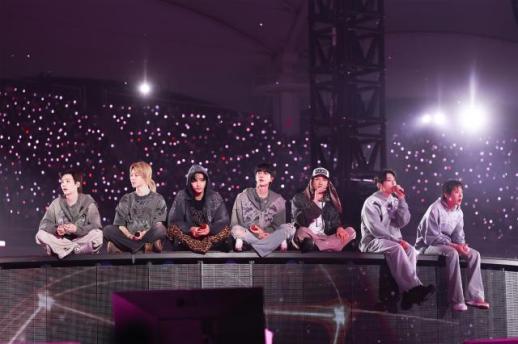 BTS Expands World Tour with Additional Concert in Australia Amid Billboard Success BTS continues to break records on the Billboard charts while expanding their world tour with an additional concert in Australia. Their North American tour, major award wins, and global chart success have contributed to the sustained popularity of their fifth studio album, 'Arirang.'On June 2, BTS announced through the global fan platform Weverse that they will add a performance in Melbourne on February 10, 2027, as part of their 'BTS World Tour: Arirang.' Initially scheduled for two shows at Marvel Stadium on February 12 and 13, the additional concert was added in response to local fan support. This brings the total number of performances in the tour to 86 across 34 cities.This will mark BTS's return to Australia nearly 10 years after their last visit in May 2017 for the '2017 BTS Live Trilogy: Episode III. The Wings Tour.' The upcoming tour will include stops in Melbourne and Sydney, with the Sydney concerts set for February 20-21, 2027, at Accor Stadium. This venue is known for hosting major artists like Adele and Oasis, and BTS will be the first Korean act to perform there.As the global tour expands, BTS's chart performance remains strong. According to the latest Billboard chart released on June 2, the title track 'SWIM' from 'Arirang' has maintained its position at number one on the 'Global (Excluding U.S.)' chart for four consecutive weeks. This marks the eighth time the song has reached the top, extending its record for the most number one hits on this chart in 2026.'SWIM' has tied with BTS's previous hit 'Dynamite' for the longest duration at number one. Billboard reports that BTS has a total of eight number one songs on this chart, double the number achieved by artists like Bad Bunny and Taylor Swift, who have four each. The album features 13 tracks that have remained on the chart for 10 weeks.The song has also seen success on other charts, climbing six spots to number four on the 'Global 200' and rising 11 spots to number 44 on the 'Hot 100.' It also ranks at 17 on 'Adult Contemporary,' 13 on 'Pop Airplay,' 18 on 'Adult Pop Airplay,' and 25 on 'Radio Songs.'The album 'Arirang' continues to perform well on the charts, securing the ninth position on the main album chart 'Billboard 200' for 10 consecutive weeks in the top 10. It also ranks fourth on 'Top Album Sales,' 18th on 'Top Streaming Albums,' and sixth on 'Vinyl Albums,' rebounding seven spots from the previous week. The track 'MIC Drop' has re-entered the 'World Digital Song Sales' chart, marking a total of 164 weeks on the chart.BTS recently concluded the first leg of their North American tour on May 28 at Allegiant Stadium in Las Vegas. This tour included 15 performances across five cities, all of which sold out, drawing approximately 840,000 fans.The North American tour received significant media attention. Consequence, a U.S. music publication, described the Las Vegas concert as a “triumphant return,” highlighting BTS's ability to connect with audiences in large venues. A standout moment was the performance of 'Body to Body,' during which the audience sang along to the Korean folk song 'Arirang.'The Hollywood Reporter referred to BTS as a “global powerhouse,” noting their energetic performances captivated local audiences. Forbes covered key moments from the concert alongside the city-wide campaign 'BTS The City Arirang - Las Vegas,' emphasizing BTS's influence extending beyond the concert venue.BTS's award recognition also continues. On May 25, they won the prestigious 'Artist of the Year' award at the American Music Awards, marking their second win in this category after their first in 2021.Looking ahead, BTS is set to perform at the '2026 iHeartRadio Music Festival' on September 18 at T-Mobile Arena in Las Vegas, joining a lineup that includes Cardi B and Snoop Dogg. The festival will be broadcast live across more than 150 iHeartMedia radio stations and on Disney+ and Hulu.Additionally, BTS will hold 'BTS World Tour: Arirang in Busan' at the Asiad Main Stadium in Busan on February 12-13, celebrating their 13th anniversary with domestic fans.* This article has been translated by AI. 2026-06-03 09:54:00
 -
 June Movie Releases Target Nostalgia with 'Wild Thing,' 'Toy Story 5,' and 'Supergirl' June brings a wave of familiar titles to theaters, appealing to audiences with a mix of nostalgia. From a comedy rooted in 2000s pop culture to beloved animated franchises and a new hero from the DC Universe, these films aim to attract viewers of all ages.The first film to hit theaters is "Wild Thing," set to premiere on June 3. This comedy follows the fictional three-member dance group "Triangle," which once dominated the music scene but disbanded due to unforeseen circumstances. Now, 20 years later, they embark on a reckless challenge to seize a second chance at fame.Actors Kang Dong-won, Um Tae-goo, and Park Ji-hyun portray the members of "Triangle." Kang plays Hyun-woo, the leader and dance machine; Um takes on the role of Sang-goo, an overly passionate rapper; and Park plays the center, Domi. Oh Jung-se adds comedic flair as Seong-gon, a ballad singer who has been stuck at number two for 39 weeks."Wild Thing" goes beyond merely recreating the past music scene. It tells the story of individuals who enjoyed their prime two decades ago and now confront their realities as they return to the stage, blending humor with themes of redemption. The film is produced by About Film, known for hits like "Extreme Job," and directed by Son Jae-gon, who has helmed projects such as "Sweet, Savage Family" and "The Villainess."Music and performance are key highlights of the film. It features songs like "Love Is," the debut track of "Triangle," and the title track from their second album, "Shout It Out," along with Seong-gon's ballad, "I Like You," creating an authentic representation of the music industry. The film's production team includes K-pop composers like Shim Eun-ji, who has worked with groups such as TWICE and SHINee, and choreographer Yang Wook, known for his work on "Ssak3."The cast underwent rigorous training, resembling that of actual idol trainees. Kang mastered hip-hop, breakdancing, and headspins, while Um trained in rap at JYP Entertainment's headquarters. Park, as the center of "Triangle," learned choreography and stage gestures, and Oh prepared for Seong-gon's performances. Elements like Y2K styling and a 4:3 aspect ratio in the music video evoke the nostalgia of the 2000s music scene.Another major animated franchise returns with "Toy Story 5." This installment sees Woody, Buzz, Jessie, and other toys unite for a new adventure when Bonnie's new smart tablet, LilyPad, creates a crisis. Directed by Andrew Stanton, who won Academy Awards for "Finding Nemo" and "WALL-E," and co-directed by McKenna Harris of "Elemental," the film explores the relationship between toys and technology.Stanton describes the film as a reflection on the reality that children no longer play with toys, rather than a simple conflict. The voice cast includes Tom Hanks as Woody, Tim Allen as Buzz, and Joan Cusack as Jessie, with Greta Lee from "Past Lives" voicing the new character, LilyPad.The DC Universe also introduces a new character with the film "Supergirl," which is set to be released in June 2026. The first poster and trailer have been unveiled. Directed by Craig Gillespie, known for "Cruella," this film continues the narrative of the DC Universe following "Superman."The lead role of Supergirl is played by Milly Alcock, who gained attention from the HBO series "House of the Dragon." Jason Momoa, known for his role in "Aquaman," also stars, generating excitement among DC fans. The film promises a fresh take on the superhero genre, incorporating traditional elements like the suit and cape with modern visuals such as sunglasses, headsets, and trench coats.From "Wild Thing" to "Toy Story 5" and "Supergirl," these films aim to engage both existing fanbases and new audiences, setting the stage for an exciting summer at the box office.* This article has been translated by AI. 2026-06-02 06:03:00
 -
 BTS Transforms Las Vegas with 'The City' Campaign BTS has once again transformed Las Vegas, the largest entertainment city in the U.S., with its global urban campaign, 'BTS The City Arirang - Las Vegas' (referred to as 'The City Las Vegas'). This initiative goes beyond a simple performance, turning the entire city into an immersive experience and showcasing BTS's influence in the global entertainment market.The 'The City' project reimagines urban spaces by projecting the artists' stories, creating a musical experience throughout the city. BTS first introduced this project in Las Vegas in 2022. Returning after nearly four years, 'The City Las Vegas' has significantly expanded in scale and participation, aptly named 'Global The City 2.0.'According to the Las Vegas Convention and Visitors Authority, BTS is the first artist to prompt a city-wide activation, moving the entire city for a single artist's campaign, excluding major sporting events like the Super Bowl and Formula One. This marks a significant moment as Las Vegas organized a city-wide campaign centered around a single artist's performance and message.This year's campaign saw a substantial increase in partners and venues compared to 2022. Key commercial areas, including the Strip and downtown, participated, with a total of 38 local hotels and resorts joining as partners. The number of participating venues has doubled from 26 to 60 since four years ago.Large digital billboards and lights across the city were illuminated in BTS's colors. Fifty digital marquees and ten landmark lightings combined to showcase images from BTS's new album 'Arirang' throughout Las Vegas.The Fremont Street Experience, a downtown landmark, also joined the campaign. The ceiling screen, known as the largest digital screen on Earth at approximately 420 meters long, displayed the message 'LAS VEGAS WELCOMES BTS,' transforming the night sky into a welcoming message for the group.The campaign duration was extended this year. While the 'The City' takeover occurred just one day before the concert in 2022, this year it spanned four days during the concert period. Every night at 11 PM, major landmarks were illuminated in red, the key color of BTS's new album 'Arirang,' showcasing a spectacular light display across Las Vegas.The food and beverage partnerships also expanded. In addition to the existing 'After-party,' two new 'Welcome Parties' were introduced to enhance the atmosphere before the concert. The culinary program, previously centered around Mandalay Bay, has now expanded throughout Las Vegas. Visitors experienced K-food and BTS-themed meals at ten locations, featuring Korean cuisine, bakery items, and desserts.This year's 'The City Las Vegas' campaign combined performances with urban, tourism, food and beverage, digital billboards, and lighting infrastructure, creating a festival atmosphere in Las Vegas through an unprecedented scale of urban engagement for a single artist.Additionally, BTS announced the upcoming '2026 BTS FESTA' to celebrate their debut anniversary. This year's theme, '13(B)TS,' signifies a new beginning as BTS and their fans, ARMY, reflect on their 12-year journey together. Starting on the 4th, a family photo will be released, followed by a performance video for 'Hooligan,' the 'Run BTS 2.0' series, and the new song 'Come Over.'On the 12th and 13th, BTS will hold the 'BTS WORLD TOUR ARIRANG IN BUSAN' at the Busan Asiad Main Stadium. This marks the group's first concert in Busan since the 'Yet To Come in BUSAN' concert in October 2022, which was held to promote the city's bid for the 2030 World Expo. The upcoming performances sold out quickly.Meanwhile, BTS concluded their first North American tour on May 28 at Allegiant Stadium in Las Vegas. The tour included 15 performances across five cities, including Tampa and Mexico City, drawing approximately 840,000 attendees with all shows sold out.* This article has been translated by AI. 2026-06-01 14:00:00
 -
 Boyfriend Celebrates 15th Anniversary with Fans at Concert The group Boyfriend reunited with fans to celebrate their 15th anniversary. Members and their fandom, known as Best Friends, commemorated this milestone with performances, memories, and new songs.Boyfriend held their '2026 Boyfriend Fan Concert: Our 15th Season' on May 30 at the Gabin Art Hall in Seoul, with shows at 2 PM and 6 PM.The 'Our 15th Season' concert marked the time shared between Boyfriend and their fans, celebrating their debut with hits like 'Boyfriend,' 'Don't Touch My Girl,' 'Janus,' and 'I Yah.'Reuniting as a full group for the first time in a while, Boyfriend showcased their teamwork and energy developed over the past 15 years. They engaged with fans through segments like 'Balance Game' and 'Bof Guilty Human,' while the 'Relics Exhibition' featured signed CDs, fan merchandise, and items that even the members had forgotten about, adding humor and emotion to the event.They also premiered their new song, 'Our Voices Adorning the Night Sky,' from their 15th-anniversary album 'Boyager 6.' The concert continued with a variety of performances, including fan songs 'Footsteps,' 'Fox Rain,' 'Super Hero,' 'On & On,' and 'Good Night.'At the end of the concert, Boyfriend expressed, "It was scary and worrisome to be on stage again after a long time, but hearing your cheers gave us confidence. We felt alive." They added, "We are grateful to the fans who have been with us in the same place for 15 years."They also stated, "We will continue to leave footsteps every year, and we hope you will walk alongside us. We look forward to sharing the 16th season together."Earlier, Boyfriend released their sixth mini-album 'Boyager 6' on May 26, marking the start of their 15th-anniversary activities. The album title combines 'Boy' and 'Voyager,' symbolizing the new journey of the six members who have come together again after their individual paths.The album includes six tracks, featuring the title song 'Our Voices Adorning the Night Sky,' along with 'Deja Vu,' 'Footsteps,' 'Today Too,' 'Time Limit,' and an instrumental version. Member Jeongmin participated in producing the album and wrote lyrics for four songs, while the members contributed their ideas from the planning stage through to recording direction and choreography.Previously, Boyfriend shared their thoughts on their 15th anniversary in a Q&A session following the album release. Donghyun expressed gratitude for being able to celebrate this milestone with the members who have been part of his life for so long. Minwoo also shared his excitement about reuniting with the members, stating that he still finds it hard to believe and promised to show fans a great performance.Jeongmin described the album as a collection of lyrics and melodies created with thoughts of the fans who have waited and remembered them for a long time, hoping their voices, united again after their individual journeys, would reach many people.* This article has been translated by AI. 2026-06-01 13:39:00
 -
 SBS Unveils New Dramas 'Kim Manager' and 'There is a Chance' for 2026-2027 SBS has announced its upcoming dramas, 'Kim Manager' and 'There is a Chance,' building on its success as the top network for viewers aged 2049 for six consecutive years. The spotlight is on So Ji-sub's return to SBS after 13 years and the acting transformation of Lee Je-hoon, raising questions about whether these dramas can continue the network's winning streak. On June 1, a media day event titled 'SBS Drama: Next Episode' was held at Hotel Naru in Mapo-gu, Seoul. Attendees included So Ji-sub and director Lee Seung-young from the new Friday-Saturday drama 'Kim Manager,' as well as Lee Je-hoon, Ha-young, and director Kwon Da-som from the upcoming 2027 series 'There is a Chance.' 'Kim Manager,' set to premiere on June 26, is adapted from a popular Naver webtoon. The drama follows an ordinary father who becomes the most dangerous man in the world to reclaim his only daughter, blending elements of revenge and action. The script is penned by Nam Dae-jung, known for works like 'Great Wish' and '30 Days,' while Lee Seung-young, along with rookie director Lee So-eun, directs the series. In the drama, So Ji-sub plays Kim, an ordinary employee at a small savings bank, who is actually a former agent with a history of special operations. He expressed his excitement about returning to SBS, stating, "SBS feels like home. It's been 13 years since I last acted in a drama, and although it's been a while, I'm happy and warmly engaged in filming." So Ji-sub chose 'Kim Manager' for its combination of action and emotional depth. He noted, "After filming 'The Square,' I felt a desire to explore noir action again. When I received the script for 'Kim Manager,' I was drawn to the action elements." He also related to the character's journey of raising a daughter alone, as he plays a father with a high school daughter, saying, "I was curious about how I would portray this role, and I believe viewers will see a new side of me despite my years of experience." He elaborated on the action scenes, stating, "While there are necessary action sequences, the core of the action is rooted in the emotions of Kim and his friends. There will be hand-to-hand combat, knife fights, gunplay, car chases, and explosions. I believe these various actions will provide a satisfying experience for viewers." Director Lee Seung-young emphasized that 'Kim Manager' is not just a heavy revenge tale. He remarked, "While a father losing his daughter is inherently serious, the presence of actors like Choi Dae-hoon and Yoon Kyung-ho brings a lighter tone. Although it could feel heavy, 'Kim Manager' is fast-paced, lively, and intense." Regarding the adaptation from the original webtoon, the director explained, "Typically, adaptations aim for novelty, but we have a clear concept. We are preserving the strengths of the original while deepening the narrative during the live-action process. The exhilarating action is a significant strength, and we have worked hard to give it a realistic feel." The possibility of a sequel was also discussed. So Ji-sub cautiously noted, "Since we are at the beginning of the drama, it's a delicate topic, but I believe the characters and narrative have the potential for expansion. A sequel seems feasible, but first, we need to gain the audience's love." Director Lee also touched on the use of artificial intelligence (AI) in production. He stated, "We experimented with AI to replace certain sequences in 'Kim Manager.' The results have shown both possibilities and limitations. Over the past five months, I've noticed the rapid advancement of AI technology. In the near future, it may help directors tackle challenges in filming complex scenes. However, there are still limitations in achieving the authentic feel of a live set, and we must be cautious in selecting where to use it." The 2027 drama 'There is a Chance' was also previewed at the event. This series features Kwon Baek, a former lawyer and current office manager, leading a ragtag legal team to turn seemingly hopeless cases into victories through unconventional methods. Directed by Kwon Da-som, who co-directed 'Connection' and 'My Demon,' the script is written by Jeong Jin-young and Kim Ui-chan, known for 'Soonpoong Obstetrics and Gynecology' and 'You Can't Stop Them.' Lee Je-hoon plays Kwon Baek, a former star lawyer who lost his license due to a bribery scandal and has since gone into hiding. He returns to lead a disorganized law office. Ha-young portrays Yeo Shim-hee, a rookie lawyer with no connections but a strong work ethic. Lee Je-hoon aims to showcase a different side from his character Kim Do-gi in 'Taxi Driver.' He shared, "Kim Do-gi received a lot of love, so I pondered how to present myself in my next project. The two characters have opposing methods of delivering justice." He explained, "While Kim Do-gi fought quietly outside the law as a dark hero, Kwon Baek navigates the legal space with flair. Kwon Baek is seasoned and witty, wielding a sword against those who cross the line." Lee Je-hoon also expressed optimism about the potential for a sequel to 'There is a Chance.' He said, "I feel that the chemistry on set and the potential for episode expansion are limitless. I would love to continue with this team for the next season. I believe 'There is a Chance' could become SBS's new franchise series." Ha-young conveyed her trust in director Kwon Da-som, stating, "I've heard a lot about Kwon Da-som's capabilities. The strong bond among the SBS production team is evident. I had high expectations before the project, and I am currently witnessing their exceptional skills, which feel beyond a debut work due to the preparation and effort involved." Lee Je-hoon acknowledged the pressure and expectations of launching a new project amid SBS's continuous success. He remarked, "There is so much content available now, and ultimately, we need to be chosen by viewers. It feels like both the cast and crew, as well as external factors, are strategically moving to ensure we select and produce quality content for broadcast." He added, "When I read the script for 'There is a Chance,' I thought viewers might be exhausted and stressed, but I believe this enjoyable and uplifting drama will bring excitement and joy to their week. I hope it becomes a beloved series." So Ji-sub commented, "They say the summer heat will be intense, so I hope viewers can cool off by watching our drama." Director Lee Seung-young expressed, "While filming 'Kim Manager,' I felt that my life character might change. I am working hard to create a memorable character for the audience." As 'Kim Manager' and 'There is a Chance' are positioned as key upcoming projects for SBS in 2026 and 2027, attention is on whether the network's successful formula for genre dramas and its strategy for sequels will continue through these new offerings.* This article has been translated by AI. 2026-06-01 12:57:00
 -
 SBS Announces Next Chapter in Drama Strategy After Six Consecutive Years of 2049 Ratings Success SBS has unveiled its next chapter in drama strategy, building on six consecutive years of leading ratings among viewers aged 20 to 49. The network aims to enhance its competitive edge in season-based intellectual property while expanding weekday dramas, collaborating with global OTT platforms, and integrating artificial intelligence (AI) production technologies to adapt to the evolving media landscape.On June 1, a media day event titled 'SBS Drama Media Day: Next Episode' was held at Hotel Naru Seoul MGallery in Mapo-gu, Seoul. The event featured Hong Seong-chang, CEO of Studio S, and Kim Gi-suk, SBS Programming Director.During the event, SBS presented its achievements over the past six years since the launch of Studio S and revealed its drama lineup for the second half of 2026 through the first half of 2027. Since its inception, Studio S has established itself as a key production base for SBS dramas, delivering numerous hits such as 'Stove League,' 'Penthouse,' 'Romantic Doctor, Teacher Kim,' 'Taxi Driver,' and 'Hot Blooded Priest.'Hong highlighted the success of SBS's Friday-Saturday dramas, stating, "SBS's Friday-Saturday dramas are as solid as an impregnable fortress in the industry. The starting point was 'Hot Blooded Priest,' which was the first Friday-Saturday drama and received immense love. Since then, we have worked hard to dominate the Friday-Saturday drama slot and aimed to create a DNA of refreshing and enjoyable dramas."SBS emphasized its core strategy of 'Series Power.' The network has leveraged the success of season-based hits like 'Romantic Doctor, Teacher Kim,' 'Taxi Driver,' and 'Hot Blooded Priest' to expand characters and world-building, positioning this as a competitive advantage. Additionally, new seasons of proven hits like 'Good Partner,' 'Chaebol X Detective,' and 'Judge from Hell' are in the works.Kim noted, "The key term in programming is Series Power. The reason this is possible and strong at SBS can be attributed to three factors: a solid world-building, unique characters, and the realization of common sense and justice." He added, "Characters and worlds that viewers can follow and root for, like the revenge agency Rainbow Transport in 'Taxi Driver' and Doldam Hospital in 'Romantic Doctor, Teacher Kim,' are essential. Providing refreshing catharsis in a frustrating reality is the core of SBS's Series Power."Regarding the success of season-based dramas, Hong mentioned the trust between the creative team and actors. He stated, "It must be something the viewers want, and the world-building must be expandable. The reason we can produce many season-based dramas is due to the strong trust between the production team and the actors. There are many cases where actors, directors, and writers are tightly knit on set."SBS plans to maintain its strengths in Friday-Saturday dramas while expanding its weekday drama lineup. Kim remarked, "Starting with the success of 'Kiss for No Reason,' we have resumed weekday dramas. We need to increase the variety and challenge of dramas with the resumption of weekday programming in November." He continued, "We will implement a two-track strategy that maintains the representative identity of Friday-Saturday dramas while continuing to explore new genres like romantic comedies and sports themes."The lineup for the second half of 2026 kicks off with 'Kim Manager,' set to premiere on June 26. Based on a Naver webtoon of the same name, 'Kim Manager' tells the story of an ordinary father who becomes the most dangerous man in the world to reclaim his only daughter. So Ji-sub stars as Kim Manager, a former agent who awakens his true self for his daughter.'Chaebol X Detective' will also return for its second season, featuring the collaboration between the third-generation chaebol detective Jin Yi-soo, who returns to the violent crimes unit after completing formal training at the police academy, and the newly appointed team leader Joo Hye-ra. Ahn Bo-hyun and Jung Eun-chae star, with director Kim Jae-hong and writer Kim Ba-da reuniting from season one.In October, 'Doctor X: The Era of the White Mafia,' based on the Japanese TV Asahi series, is set to air. This medical noir follows genius surgeon Gye Soo-jung as she navigates through a corrupt medical power structure. Kim Ji-won, Lee Jung-eun, Son Hyun-joo, and Kim Woo-seok are among the cast.The highly-rated 'Good Partner' from last year is also returning for a second season. 'Good Partner 2' features the first divorce law firm representative attorney Cha Eun-kyung taking on new challenges with a new partner. Jang Na-ra reprises her role, joined by Kim Hye-yoon as the new partner.Upcoming drama 'Nine to Six' is an office romance that centers on the head of the legal team, Kang Ji-suk, who proves himself through work, and intern Han Sun-woo, who uses kindness as his weapon, alongside department head Park Hyun-tae. Park Min-young, Yook Sung-jae, and Ko Soo are confirmed to star.The 2027 lineup includes occult, legal detective, fantasy justice, and sports dramas. 'Awakening' tells the story of children who awaken strange abilities amid the hell of entrance exams and a priest who sets out to save them. Lee Joon-hyuk takes on his first leading role in the occult genre.'There is a Chance' is a cheerful legal detective drama led by former lawyer and current office manager Kwon Baek, who turns losing battles into winning ones. Lee Je-hoon plays the quirky office manager Kwon Baek, while Ha Young plays rookie attorney Yeo Shim-hee.'Nightmare' depicts a vigilante group that traps evildoers in nightmares instead of prison. Kim Nam-gil and Lee Yoo-mi star in this drama. 'Full Count' portrays the survival struggles in the sports battlefield over the position of a professional baseball coach, featuring Kim Rae-won and Park Hoon.Collaboration with global OTT platforms was also highlighted as a key strategy. Hong stated, "Global OTT can be a competitor, but it is an indispensable platform for the globalization of dramas. We are continuing our strategy to showcase not only SBS dramas but also those produced by Studio S to audiences worldwide." He added, "We have produced four dramas for global OTT and launched works on other platforms. Studio S aims to create quality dramas not only for SBS but also for global audiences."Kim also noted, "While there can be side effects from OTT collaboration, there are many positive aspects. For instance, 'Wonderful New World' was number one in ratings and also topped Netflix. It has the effect of being loved globally, which could have been limited to domestic audiences."The use of AI technology was also a topic of discussion. Hong remarked, "AI is a hot topic in the industry. Initially, directors were resistant, but after training, the paradigm shifted. AI can be utilized in a way that supports creators rather than taking away their rights."He explained, "In 'Taxi Driver,' we used AI for certain cuts, and we plan to showcase fully AI-generated footage briefly. This was created with the agreement of all production staff and creators. We intend to inform viewers about the use of AI through subtitles before the drama airs." He added, "The significance lies in being able to create scenes that were previously impossible to implement."He also mentioned the cost-saving effects of AI. Hong stated, "We created a long segment of AI footage for 'Kim Manager,' achieving over 60% savings compared to production costs without AI. As these cases accumulate, they will enhance our competitiveness."Hong identified the internal creative workforce as a key strength of Studio S. He stated, "The secret to maintaining SBS drama's competitiveness lies in the manpower of Studio S. New writers who have emerged through director and script competitions are collaborating closely in their creations. Studio S is referred to as a drama academy in the industry." Kim added, "The balance between external and internal talent is excellent."SBS is pursuing a strategy that includes strengthening season-based IP, expanding genres, increasing weekday dramas, collaborating with OTT platforms, and integrating AI production technology, all based on its six consecutive years of leading ratings among viewers aged 20 to 49. The network aims to maintain the brand competitiveness established through its Friday-Saturday dramas while broadening its platforms and formats to adapt to the changing viewing environment. Attention is focused on whether the upcoming lineup from the second half of 2026 to 2027 will validate SBS's next strategy in drama production.* This article has been translated by AI. 2026-06-01 12:06:00
 -
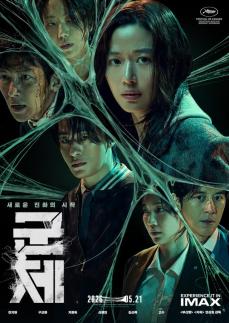 Jeon Ji-hyun and Koo Kyo-hwan's 'Gunchae' Tops Weekend Box Office, Surpasses 3 Million Viewers 'Gunchae' has maintained its position at the top of the weekend box office for two consecutive weeks. According to the Korean Film Council's integrated ticketing system, 'Gunchae' attracted 971,020 viewers from May 29 to 31, securing the top spot at the weekend box office. This marks the film's 11th consecutive day at number one since its release. The film surpassed 3 million cumulative viewers just 10 days after its release on May 30, exceeding its break-even point. It has achieved the fastest milestones for 1 million, 2 million, and 3 million viewers among films released this year, continuing to draw audiences in its second week. 'Gunchae' tells the story of survivors trapped in a building due to an unidentified infection outbreak, facing off against infected individuals who evolve in unpredictable ways. Directed by Yeon Sang-ho, the film stars Jeon Ji-hyun, Koo Kyo-hwan, Ji Chang-wook, Shin Hyun-bin, Kim Shin-rok, and Go Soo. In second place was 'Backroom,' which attracted 303,264 viewers during the same period, bringing its cumulative total to 391,129. Released on May 27, the film follows Clark and Mary as they encounter inexplicable events in a bizarre space characterized by yellow walls and endless fluorescent lights. 'Backroom' expands an internet-based horror universe into a feature film. Its unique premise, along with involvement from A24 and James Wan's Atomic Monster, as well as visual direction by director Kane Parsons, has garnered early interest from audiences. The film 'Michael' followed closely, drawing 136,682 viewers during the same period, with a cumulative total of 1,394,934. 'Michael' chronicles the journey of Michael Jackson, who captivated the world with his innate musical talent and became the 'King of Pop.' As the last weekend of May concluded, 'Gunchae' held its lead after surpassing its break-even point, while the new release 'Backroom' quickly attracted audiences, establishing itself as a successful foreign film. 'Michael' also maintained a strong position with nearly 1.4 million cumulative viewers.* This article has been translated by AI. 2026-06-01 08:42:00
 -
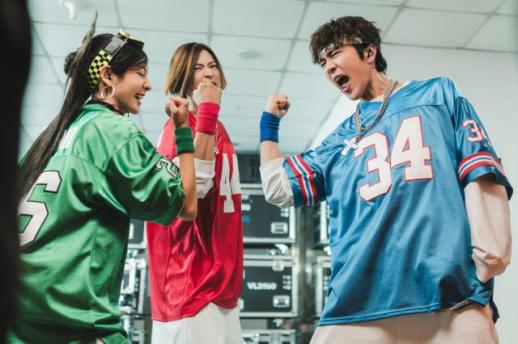 Review: 'Wild Thing' Revives the Stage with Today's Support "It's romantic. The lighting, temperature, humidity..." This was a remark made by a participant on a variety show. It signifies that elements like location, weather, and physical condition come together to create an 'atmosphere.' The same applies to film. The mood of the day and personal experiences can serve as 'evaluation criteria' for a movie. In this way, 'Choi's Review' introduces films to audiences by blending the author's experiences and perspectives. The aim is to present it in a more relaxed and everyday manner. <Editor’s Note>Everyone has likely experienced a time when they were a 'fan' of someone. Perhaps they had a photo pinned to their desk, and a single lyric from that person made their heart flutter. They believed that the stage where that person stood would never crumble. However, time eventually brings even the most dazzling names back to everyday life. The performer who once danced under bright lights becomes a struggling broadcaster worried about living expenses, while the rapper who once spit fire finds himself in an ill-fitting suit as an insurance agent. The film 'Wild Thing' is a story that calls these individuals back to the stage after they have moved on to different lives.The three-member mixed dance group 'Triangle,' which once dominated the music scene, unexpectedly disbanded overnight due to unforeseen events. Twenty years later, a performance proposal arrives for leader Hyun-woo (played by Kang Dong-won), who has become a struggling broadcaster. He seeks out Do-mi (Park Ji-hyun), who is now the daughter-in-law of a chaebol family, and Sang-goo (Eom Tae-goo), who is buried in debt after a failed solo album. The three, having lived different lives, struggle to reunite for one last performance, but their past rival, ballad prince Seong-gon (Oh Jung-se), and the former head of their agency, CEO Park (Shin Ha-kyun), complicate matters further.Director Son Jae-gon, known for creating his own comedic world with films like 'Sweet, Savage Love,' 'The Villainess,' and 'I Won't Hurt You,' showcases his unique comedic sense once again. The theme of 'former stars' could easily veer into caricature or pity, but 'Wild Thing' does not rely solely on those emotions. Instead, it holds onto the present of characters who endure their current lives after once shining brightly. The film goes beyond merely evoking laughter from past glories; it also follows the earnestness of those trying to return to the stage. Audiences find themselves laughing at their 'bittersweet' situations while secretly hoping for their successful return to the stage.The nostalgic music and visuals of the idols from that era are one of the film's enjoyable points. From Triangle's debut song 'Love Is' to the title track of their second album 'Shout It Out,' and Choi Seong-gon's solo song 'I Like You,' the songs in the film faithfully capture the essence of the music scene from that time, drawing audiences into nostalgia and immersion. Composers Shim Eun-ji and Lee Jin-hee, who are currently making waves in the K-pop scene, do not merely mimic the styles of the first and second generations of K-pop. Their work revives familiar melodies and moods in a sophisticated manner that resonates even today. By seriously capturing and implementing the identity of the music and stage from that time, the film's songs achieve a musical authenticity that transcends simple parody or imitation. The intuitive melodies and sound that intricately capture the emotions of that era add momentum to the film, naturally drawing audiences into its rhythm. The magic of humming the tunes long after leaving the theater is a clear achievement of the film's music.Nevertheless, 'Wild Thing' does not linger solely on past glories. The film focuses on the present struggles of 'Triangle' as they attempt to return to the stage, rather than their bygone peak. The Y2K sentiment and the unique atmosphere transitioning from the 1990s to the 2000s, along with the details of the music and styling, are nostalgic, but the film does not settle into the comfort of nostalgia. Instead, the process of awakening their stiff bodies to stand as their true selves again becomes the driving force of 'Wild Thing.' It is also interesting that this journey is depicted as a road movie. Their path is rough and rugged but filled with unyielding vitality. The distinct personalities of the characters racing toward the common goal of the 'stage' imbue the film with a lively rhythm, inviting the audience along for the ride.Their earnestness creates humor even in tangled situations, ultimately leading to support. As past rival ballad prince Seong-gon (Oh Jung-se) and the former agency head CEO Park (Shin Ha-kyun) complicate matters, the road becomes increasingly treacherous, but the film transforms that chaos into momentum for their journey. The race in 'Wild Thing' is both lively and exhilarating. The simple yet fervent wish for them to stand on stage drives the latter part of the film.The actors' comedic performances and chemistry are also impressive. Kang Dong-won, Eom Tae-goo, and Park Ji-hyun convincingly portray the rhythm of a group that once swept the stage as 'Triangle.' Their dedication to singing, rapping, and dancing is evident. The chemistry of the three moving as a team again encourages the audience to support their performance. Oh Jung-se serves as the 'kick' of 'Wild Thing.' His unique comedic sense brings Choi Seong-gon to life, pinpointing moments of humor in every scene. Thanks to the ensemble of the actors, the film maintains a delightful rhythm until the end.Ultimately, 'Wild Thing' is a film that rekindles the passion of once being a devoted fan. Life continues even after the stage lights go out. Watching those who rise again to stand under the lights is more touching than one might expect. This film transforms the nostalgia of once being a fan into a present-day support system.'Wild Thing' will be released in theaters on June 3. The running time is 107 minutes, and it is rated for ages 12 and up. Audiences are encouraged to stay for the ending credits and post-credits scene, featuring Triangle's 'Love Is' and 'Shout It Out' to keep the excitement alive.* This article has been translated by AI. 2026-06-01 06:03:00
 -
 Kang Dong-won Discusses His Role in 'Wild Thing' and the Challenges of Dance Kang Dong-won returns in an unexpected role. The film 'Wild Thing' is a comedy about a mixed-gender dance group called 'Triangle,' which once dominated the music scene but disbanded due to unforeseen circumstances. Now, 20 years later, they attempt a comeback. Kang plays Hyun-woo, a former breakdancer turned struggling broadcaster, navigating the gap between past glory and current reality. His earnest portrayal of Hyun-woo brings both poignant and humorous moments to the film."After the trailer and music video were released, a close friend reached out to me, joking, 'What’s up? Are you short on cash these days?' Ha ha. I thought that comment carried a lot of meaning. I expected reactions like that. I thought, 'Oh, this is going to be fun.' There were a few projects I chose thinking people would be surprised, but I think this one will surprise them the most. It feels like a pleasant betrayal," Kang said.To convincingly portray Hyun-woo, Kang learned to dance. Although he is accustomed to action roles, dancing required a completely different skill set. He practiced late into the night even after filming wrapped."I was really satisfied with how I looked dancing. By the time we filmed the final stage, I thought, 'Wow, I’m actually good at this.' I worked really hard. Even after filming, I kept practicing and would go to the studio at night. As I continued to film the dance scenes, I gained stage experience. At first, I was overwhelmed with singing, dancing, looking at the camera, and engaging the audience, but later, as the choreography became second nature, I focused more on enhancing my lines. My dance lines improved over time," he said.While action and dance both involve physical movement, Kang found the training for each to be entirely different. He had a background in martial arts from a young age, but hip-hop dance required rhythms and attitudes he had rarely encountered."Learning something is similar, but this felt like a completely new sport with no foundation. I had a bit of a base from practicing taekwondo as a child, but hip-hop was different from dance. Matching the beat felt very unfamiliar. At first, I was learning the moves and thought, 'This isn’t working. I need to start with my steps,' so I spent about 30 minutes just walking. I played music and walked with a friend who was teaching me," he explained.He immersed himself in hip-hop culture to better understand Hyun-woo. Although Kang typically does not favor method acting, he felt it was necessary to change his wardrobe for this role. It was not just about mimicking a culture that felt foreign to him but understanding the gestures and movements that came from it."I had to use a lot of swagger in my gestures, but for those who don’t listen to hip-hop, it can seem confusing. It took me a while to adapt. Eventually, I bought clothes that fit the style. I’m not a fan of method acting, but I felt I needed to wear those clothes to understand the culture. I didn’t get why they walked or moved that way, but later I realized it was all about the beat," he said.Kang also took the time to study hip-hop history. He admitted he was almost completely ignorant about the genre. By watching documentaries and following the trends of music and culture, he began to understand the environment in which Hyun-woo grew up."I didn’t listen to hip-hop much. The only thing I knew was Limp Bizkit. I didn’t even know Tupac was a person’s name. Ha ha. I was so uninformed that I had to start studying hip-hop history from scratch. I watched documentaries, and that’s when I started to understand the character of Hyun-woo. I thought, 'He must have been exposed to this kind of music and lived like this during that time,'" he said.Kang was particularly focused on the performances of Triangle during their first album. He did not want to trivialize the stage in a comedy film. Instead, he aimed to perform well enough that even actual dancers from that era would not feel embarrassed watching it."For the first album stage, my goal was to perform well enough to be funny. I wanted to ensure that those who transitioned from being dancers to singers wouldn’t feel embarrassed watching it. I wanted them to think, 'Yeah, I used to do that,' rather than 'I never did that.' I hoped the audience would feel, 'Why is this so good? Why is it funny because it’s good?'"'Wild Thing' does not aim for precise historical accuracy but rather blends the cultural sensibilities of the late 1990s and early 2000s into a cinematic experience. Kang expressed a desire to revive the authentic 'coolness' of that era without mocking it."I wanted to recreate what I saw on TV when I was in high school. It was genuinely cool back then. I never thought about becoming a dance singer, but I wanted to capture that feeling I had as a child. I wanted to incorporate the essence of first-generation idols. I didn’t want to approach it in a purely humorous way. The hairstyles and styles that might seem excessive now were cool back then. I wore my hair and clothes like that too," he said.Hyun-woo once enjoyed a glamorous peak but now lives as a lesser-known broadcaster. Although Kang has maintained his status as a top star, he understands the feeling of being forgotten. He has carried the thought of potentially being forgotten since his debut."I’ve always been on an upward trajectory, but I’ve fluctuated within that. However, I don’t think I’ve ever fallen below the 2012 average. I might have fluctuated around the 50-day average. Ha ha. I’ve always thought about being forgotten since my debut. I felt that way since 'The Temptation of Wolves' did well. I’ve always thought I would eventually be forgotten. I’ve lasted longer than I expected, but someday I will be forgotten. There will come a time when my work decreases, and as a person, I will eventually be forgotten too. People will think, 'Was there someone like that?'">Kang is now considering projects beyond South Korea. However, he is no longer waiting for someone to recognize him and cast him. He has shifted towards creating and taking initiative in his work."In the past, I hoped someone would want to work with me, recognize me, and cast me. But now I think, 'Forget it. I’ll just create it myself.' It doesn’t have to be limited to Korea. To put it simply, I want to work with truly talented people from around the world."* This article has been translated by AI. 2026-05-31 16:24:00
 -
 'Backroom' Thrives in South Korea and North America, Surpassing 300,000 Viewers in Five Days "Backroom" is experiencing significant success in both South Korea and North America. In South Korea, the film surpassed 300,000 viewers within just five days of its release, while in North America, it debuted at the top of the box office on its opening day, emerging as a dark horse for this summer's theater lineup.According to the integrated ticket sales network, as of May 31, "Backroom" has accumulated over 300,000 viewers in its first five days. This achievement is faster than recent hits in the same genre, such as "Noise," which reached 300,000 in eight days, "Spring Garden" in eleven days, and "Exit 8" in twelve days. Despite having fewer screens, it has shown a steep growth curve among films released during the same period, establishing a strong presence in the South Korean market.The film's early performance was notable. On its opening day, May 27, "Backroom" attracted 54,100 viewers, bringing its total to 54,629, making it the top foreign film at the box office. This figure surpassed the opening day numbers of "Exit 8" with 31,965 viewers and "Noise" with 28,162 viewers. On its second day, it maintained its lead with a cumulative total of 87,859 viewers."Backroom" is also achieving rapid success among A24's releases in South Korea. "Minari" surpassed 100,000 viewers within three days of its March 2021 release, while "Everything Everywhere All at Once" exceeded 110,000 viewers in twelve days. With over 50,000 viewers on its opening day alone, "Backroom" is quickly breaking records for A24 films in the country.In North America, the film continued to perform well. On its preview night, it earned $10.4 million, setting a new record for A24's highest preview earnings. This figure significantly surpassed the previous record of $2.9 million set by "Civil War." With a production budget of approximately $10 million, the film's preview earnings nearly matched its production costs, marking a strong start in the North American market.Director Kane Parsons, at just 20 years old, is gaining attention for placing his debut feature at the top of the North American box office. The film features performances by Chuitel Edgiofo, Renate Reinsve, Mark Duplass, Finn Bennett, Aivan Georgia, and Lukita Maxwell, enhancing its immersive experience.The film's unique premise, based on the "Backroom" universe, has also contributed to its success. It tells the story of Clark and Mary, who encounter inexplicable events in a bizarre space characterized by yellow walls and endless fluorescent lights. The expansion of this internet-based horror universe into a feature film, combined with the collaboration between A24 and producer James Wan, generated significant interest prior to its release.With simultaneous success in both South Korean and North American markets, "Backroom" has emerged as a new variable in this summer's theater scene. Having surpassed 300,000 viewers domestically in just five days and set a record for A24's preview earnings in North America, there is growing anticipation regarding its potential for long-term success.* This article has been translated by AI. 2026-05-31 14:33:00