
Journalist

Ahn Seo-hee
ash990@economidaily.com
-
 Celltrion posts record profit as new biosimilars drive sales growth SEOUL, February 05 (AJP) - South Korean biopharmaceutical company Celltrion reported record annual earnings on Thursday as strong sales of newer, higher-margin biosimilars lifted both revenue and profitability. In a regulatory filing, the firm said consolidated revenue for 2025 rose 17 percent from a year earlier to 4.16 trillion won, while operating profit jumped 137.5 percent to 1.17trillion won. It marked the first time Celltrion surpassed both 4 trillion won in annual revenue and 1 trillion won in operating profit in the same year. Operating margin rose to 28.1 percent, up 14.3 percentage points from a year earlier. Fourth-quarter revenue climbed 25.1 percent year on year to 1.33 trillion won, while operating profit surged 142 percent to 475.2 billion won, exceeding company guidance. Celltrion attributed the growth largely to rapid expansion of higher-margin new biosimilars. Alongside steady sales of established products such as Remsima, Truxima and Herzuma, newer drugs including Remsima SC, Yuflyma, Vegzelma and Zymfentra gained traction, lifting global biopharmaceutical sales 24 percent to 3.9 trillion won. New products accounted for 54 percent of total biopharmaceutical sales, the company said. Celltrion set a 2026 revenue target of 5.3 trillion won and plans to increase the share of new products in sales to 70 percent through bidding strategies centered on newer drugs and by strengthening its direct sales network. The company also plans to expand its contract manufacturing and development businesses through its Branchburg, New Jersey, facility, while broadening its biosimilar and innovative drug pipeline to support longer-term growth. * This article, published by Aju Business Daily, was translated by AI and edited by AJP. 2026-02-05 10:37:53
 -
 Celltrion seeks nod from Europe and Korea for Herceptin biosimilar SC formulation SEOUL, February 03 (AJP) -South Korea's biosimilar giant Celltrion said it has successfully completed the pivotal regulatory clinical trial for Herzuma SC (CT-P6 SC), a subcutaneous formulation of its breast cancer biosimilar trastuzumab, and plans to submit marketing authorization applications in Europe and South Korea within the next three months. In a press release on Monday, the company said the trial met its primary endpoint, demonstrating pharmacokinetic equivalence to the reference product’s SC formulation, with comparable safety and immunogenicity. Herzuma SC is expected to reduce administration time to about five minutes, compared with roughly 90 minutes for the intravenous version, including post-infusion monitoring. Following prior consultations with regulators, Celltrion plans to proceed with filings without additional clinical trials. Europe and Korea are currently the company’s largest markets for SC formulation products. Herzuma SC was developed using Celltrion’s in-house hyaluronidase-based SC formulation platform, which temporarily breaks down hyaluronic acid in subcutaneous tissue to allow high-concentration, high-dose drugs to be administered safely and at scale. The company said the technology will be applied to future pipeline candidates and novel drug programs. With Herzuma SC, Celltrion said it has established a fully integrated SC value chain spanning development, regulatory approval, manufacturing and commercialization — a structure it says offers a competitive edge over technology out-licensing models by retaining control across the entire lifecycle. The company also plans to expand into formulation-change contract manufacturing services, offering its SC expertise to external clients. The launch would complement Celltrion’s existing portfolio, which includes Remsima SC (sold in the United States as Zymfentra), the world’s first commercialized infliximab SC. According to IQVIA, the global trastuzumab market was valued at about $3.56 billion in 2024. The regulatory milestone comes as Celltrion posts its strongest financial performance on record. The company in late December projected a consolidated fourth-quarter revenue of 1.28 trillion won ($960 million) and operating profit of 472.2 billion won, up 20.7 percent and 140.4 percent year on year, respectively. The implied operating margin was 36.8 percent. On a full-year basis, Celltrion forecasts 2025 revenue of 4.12 trillion won ($3.1 billion), a 15.7 percent increase from a year earlier, while operating profit is projected to surge 136.9 percent to 1.17 trillion won ($880 million) — the first time the company has surpassed 3 trillion won in annual revenue and 800 billion won in operating profit. The company attributed the gains to steady growth in established products and rapid global expansion of newly launched, higher-margin biosimilars. “Following the world’s first commercialization of infliximab SC, we have now secured hyaluronidase-based SC formulation technology and completed global-level SC capabilities,” a Celltrion official said. “We will accelerate global market share expansion and new growth engines, including CDMO services, by internalizing the full SC development cycle from productization to manufacturing and supply.” 2026-02-03 07:32:10
 -
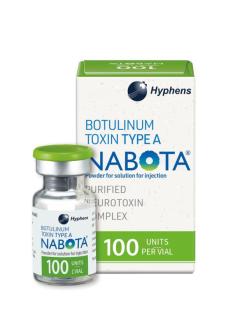 Daewoong Pharma inks $20.5 million Nabota supply contract for Mexico SEOUL, January 30 (AJP) - South Korea's Daewoong Pharmaceutical has signed a 29.5 billion won ($20.5 million) export contract to supply its botulinum toxin product Nabota to Mexico. With the agreement, Nabota has entered Mexico as well as Brazil, Argentina, Colombia and Chile — the five largest aesthetic and plastic-surgery markets in Latin America, according to the International Society of Aesthetic Plastic Surgery. Daewoong said it has expanded Nabota’s presence in the region in stages since first entering Panama in 2015, followed by launches in Brazil, Argentina, Colombia, Peru and Chile. The company has signed export contracts in 17 of the region’s 20 countries, with commercial launches completed in 13 markets. M8, which was selected as Daewoong’s distribution partner for Mexico, has worked with the company since 2018 and previously led Nabota’s launch in Brazil. Daewoong said M8 adopted a differentiated distribution strategy by targeting aesthetic and dental clinics, while also competing in the dermatology and plastic-surgery segment. The company said the contract size has increased roughly 10-fold in five years since Nabota’s Brazil launch, adding that the two partners recently strengthened their cooperation with a Nabota supply agreement valued at about 180 billion won. “Mexico is the second-largest aesthetic and plastic-surgery market in Latin America after Brazil, making it a key strategic country in terms of market size,” said Yoon Jun-soo, head of Daewoong’s Nabota business division. “While the frequency of aesthetic procedures per capita remains lower than in South Korea, this points to significant growth potential, particularly in the premium toxin segment.” * This article, published by Aju Business Daily, was translated by AI and edited by AJP. 2026-01-30 10:45:31
 -
 JW Pharma's hemophilia A treatment added to WHO's Essential Medicines List SEOUL, October 20 (AJP) - South Korea's JW Pharmaceutical said Monday that Hemlibra, its treatment for hemophilia A, has been added to the World Health Organization’s 2025 Essential Medicines List (EML) and the Essential Medicines List for Children (EMLc). Hemlibra is the only preventive therapy available for both patients with and without inhibitors, offering sustained protection against bleeding through a single subcutaneous injection every four weeks — a major improvement in convenience compared with traditional intravenous infusions. The WHO’s decision followed an extensive review of Hemlibra’s efficacy, safety, and cost-effectiveness, based on global clinical data evaluated at the request of the World Federation of Hemophilia, the company said. Clinical trials have shown that the drug helps maintain low annual bleeding rates and significantly reduces joint bleeding, with most side effects limited to mild reactions such as pain at the injection site. “The WHO listing recognizes Hemlibra’s global clinical value and safety,” JW Pharmaceutical said in a press release. “We will continue working to provide stable and consistent prophylactic treatment for patients in Korea.” * This article, published by Economic Daily, was translated by AI and edited by AJP. 2025-10-20 15:24:26
 -
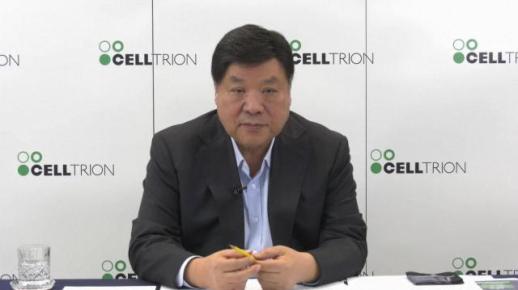 Celltrion acquires New Jersey plant for $330 million to mitigate tariff risks SEOUL, September 23 (AJP) - South Korea's Celltrion said Tuesday it had acquired an Eli Lilly manufacturing facility in New Jersey for about $330 million, a move aimed at expanding its U.S. presence and shielding the company from steep tariffs that could be imposed under the Trump administration. The 45,000-square-meter plant, which includes two production lines, will be operated by Celltrion USA. Chairman Seo Jung-jin said the purchase was part of a broader “Made in USA” strategy designed to secure a stable supply chain at a time when Washington is considering tariffs of up to 200 percent on certain imported pharmaceuticals. “This marks a turning point for Celltrion,” Seo told reporters. “We are strengthening our global position while ensuring a secure and trusted supply chain for the future.” Production is expected to begin by 2027, pending regulatory approval from the U.S. government. Half of the plant’s operations will continue serving Eli Lilly through contract manufacturing, while the other half will be dedicated to Celltrion’s own products. The deal highlights the growing pressure on Asian drugmakers to localize production in the United States, where political leaders have increasingly tied health care supply chains to national security. Few of Celltrion’s competitors maintain large-scale manufacturing facilities in the U.S., giving the company a potential edge as it seeks to expand its biopharmaceutical exports. Seo said Celltrion also plans to introduce artificial intelligence and robotics-based automation at the plant to increase efficiency, while exploring further investments in Europe. * This article, published by Economic Daily, was translated by AI and edited by AJP. 2025-09-23 16:42:13