

Journalist

Jun sungmin
ball@ajunews.com
-
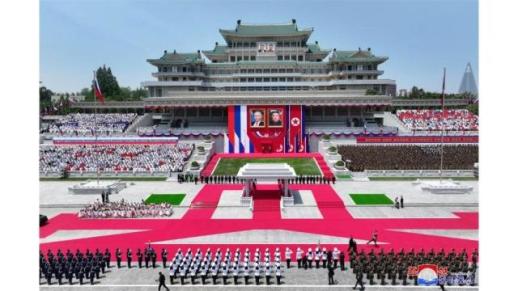 Large Structure Erected in Kim Il Sung Square Ahead of Xi Jinping's Visit to North Korea Reports suggest that preparations are underway for Chinese President Xi Jinping's visit to North Korea, with a large structure believed to be a review stand being erected in Kim Il Sung Square in Pyongyang, according to NK News, a U.S. outlet specializing in North Korean affairs. On June 1, NK News confirmed the location of the structure through satellite images from the private U.S. company Planet Labs, noting that it is situated in the same area where a temporary stone review stand was installed during Russian President Vladimir Putin's visit in 2024. The structure was not visible in satellite images taken on May 24, indicating that construction likely began after that date. NK News reported that the installation of the review stand for President Putin's visit commenced eight days prior to his arrival, while a similar setup for Belarusian President Alexander Lukashenko's visit began three days before his arrival in March. The outlet anticipates that Xi's visit will be comparable in scale to that of President Putin, suggesting that Xi could arrive in Pyongyang in early June. Additionally, satellite images around Pyongyang International Airport show preparations for accommodating several large aircraft. Specifically, between May 28 and 29, eight aircraft belonging to Air Koryo were moved from the northern parking area of the airport terminal to another section across the runway. NK News noted that similar measures were taken at the airport nine to ten days before President Putin's arrival in 2024 to accommodate Russian aircraft.* This article has been translated by AI. 2026-06-01 11:24:00
 -
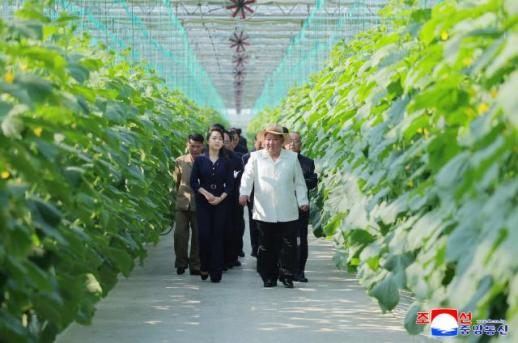 Kim Jong Un Visits Greenhouse Farm in Sinuiju, Emphasizes Year-Round Vegetable Cultivation Kim Jong Un, Chairman of North Korea's State Affairs Commission, visited a large-scale greenhouse farm in Sinuiju, North Pyongan Province, to assess its operations and expressed satisfaction with its progress, according to state media reports. The Korean Central News Agency reported that during his visit to the Sinuiju Greenhouse Complex on May 31, Kim reviewed the farm's production and scientific research on vegetables, as well as its management practices. His wife, Ri Sol-ju, and daughter, Ju-ae, accompanied him. Kim toured various types of hydroponic and soil greenhouses, experimental cultivation facilities, and canola fields. He reportedly expressed satisfaction with reports indicating that the farm produces hundreds of tons of vegetables daily. He emphasized the need to minimize energy consumption in vegetable production while ensuring optimal growing conditions for different crop varieties to reduce costs and enable year-round cultivation. He called for diversification of crop varieties, scientific management practices, and competition among farms. Kim also inspected the construction progress of new health facilities, a comprehensive service center, and a vegetable processing plant in the greenhouse area, noting that construction is approximately 50% complete. He remarked, "Seeing the modern hospital, multifunctional service center, and specialized vegetable processing plant being built to enhance the health and cultural life of local residents is truly heartwarming. Once completed, the Wihwa area will serve as a model and standard for a new era of local development." Kim has shown deep interest in the site, visiting it five times last year, including for the groundbreaking ceremony. He also made three visits this year, including attending the completion ceremony in February. North Korea has promoted the construction of this large greenhouse farm, which is 1.5 times the size of Yeouido (2.9 square kilometers), as a representative example of its 'people-centered' and local development policies following significant flooding in the Sinuiju Wihwa area in the summer of 2024. Yang Moo-jin, a professor at the University of North Korean Studies, stated, "The development of Wihwa is intended to standardize local transformation in line with the new era, and Wihwa can be seen as a foothold for North Korea-China cooperation due to its border location with China."* This article has been translated by AI. 2026-06-01 08:51:00
 -
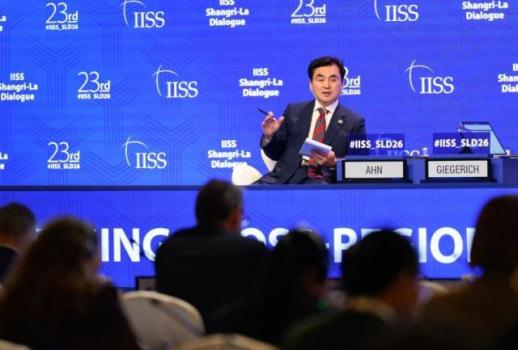 Defense Minister Ahn Kyubak Discusses Japan-Korea Military Agreement at Shangri-La Dialogue Defense Minister Ahn Kyubak announced on May 31 that discussions regarding the Korea-Japan Mutual Logistics Support Agreement (ACSA) took place during the recent defense ministerial meeting between South Korea and Japan. He emphasized the need for public understanding and persuasion, indicating a cautious stance on the matter. During a press briefing at the Shangri-La Hotel in Singapore, where the 23rd Shangri-La Dialogue is being held, Ahn responded to questions about whether ACSA was discussed in the previous day's meeting with his Japanese counterpart. "Since it was a meeting between the defense ministers of both countries, I am limited in what I can disclose," Ahn said. "The ACSA is a mutual logistics agreement, which requires understanding and persuasion from both peoples, and I believe we must proceed with caution." Although the ACSA was not an official agenda item for the Korea-Japan defense talks, it was reportedly raised by the Japanese side during the discussions. The ACSA would allow the two countries to exchange military supplies such as ammunition, food, and fuel in times of crisis. This agreement is seen as a measure to institutionalize military cooperation between South Korea and Japan, a sensitive issue for South Korea due to historical grievances. Plans to establish the ACSA were initially considered during the Lee Myung-bak administration, following the signing of the General Security of Military Information Agreement (GSOMIA) between the two countries. However, the GSOMIA was abandoned just before its signing due to public opposition, leading to the suspension of the ACSA as well. Japan has since strongly advocated for the ACSA, while South Korea has maintained a cautious approach. In addition, Ahn highlighted his discussions with a U.S. congressional delegation during the Shangri-La Dialogue, emphasizing South Korea's commitment to an early transfer of wartime operational control. "I conveyed to the U.S. lawmakers that there would be no difficulties even if the transfer of operational control were to occur tomorrow," Ahn stated. "The U.S. lawmakers appeared to understand and be satisfied with our preparations for the transfer." Ahn also noted that South Korea and the U.S. agreed in 2020 that 94% of the conditions for the transfer of operational control had already been met, providing a comprehensive explanation of South Korea's capabilities.* This article has been translated by AI. 2026-05-31 17:09:00
 -
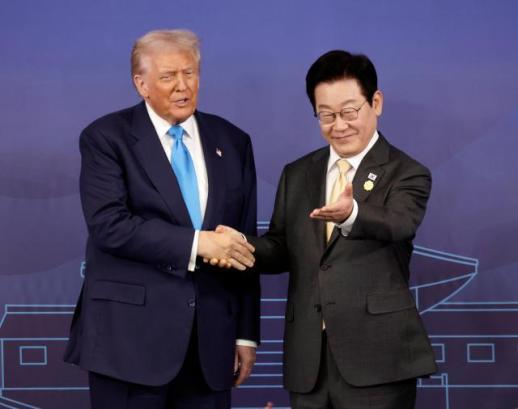 South Korea's Lee Administration Marks One Year of Diplomatic Achievements The Lee Jae-myung administration has focused on pragmatic diplomacy centered on national interests over the past year, seeking a diversified diplomatic strategy. The government has made progress in discussions regarding nuclear-powered submarines and nuclear energy cooperation with the United States, while also improving relations with China and Japan. Amid North Korea's declaration of the South and the U.S. as 'hostile nations,' finding a path to restore inter-Korean relations remains a challenge. During his first year in office, President Lee undertook nine overseas trips, visiting 14 countries and signing 126 memoranda of understanding (MOUs) as part of his diplomatic efforts. One of the administration's notable achievements was the mutual visits between the leaders of South Korea and the U.S. within just 147 days of Lee's inauguration, the shortest period on record. Following a summit with President Donald Trump in Washington, D.C., last August, a second summit was held in Gyeongju during the Asia-Pacific Economic Cooperation (APEC) summit in late October. In the security sector, the administration secured U.S. support for the introduction of nuclear-powered submarines and expanded authority for uranium enrichment and spent nuclear fuel reprocessing for nuclear power plants. These outcomes were outlined in the joint fact sheet from the Korea-U.S. summit held on October 29 in Gyeongju. Relations with China were revitalized following President Xi Jinping's visit to South Korea in November and President Lee's state visit to China in January. The relocation of Chinese facilities from the Korea-China provisional measures zone in the Yellow Sea was also seen as a significant achievement. Despite changes in Japan's leadership, with the resignation of Prime Minister Shigeru Ishiba and the inauguration of Prime Minister Sanae Takaichi, the focus remained on cooperation rather than conflict, continuing security and economic collaboration. Seven summits and meetings between South Korean and Japanese leaders helped restore 'shuttle diplomacy' and strengthen a forward-looking bilateral relationship. In multilateral diplomacy, the administration resumed extensive diplomatic engagement, starting with participation in the G7 summit, and marked a historic first by having a South Korean president preside over a United Nations Security Council meeting, showcasing its leadership as a responsible global power. The Middle East crisis, stemming from the war between the U.S. and Iran, posed a significant test for the government. Amid the blockade of the Strait of Hormuz, South Korean vessels were stranded, and on May 4, the South Korean ship HMM Namoo was attacked while docked in the strait. The government supported the evacuation of citizens by deploying military transport and charter flights from the onset of the war and engaged in continuous consultations with relevant countries, including Iran and the U.S., to ensure the safety of vessels and the resumption of navigation. An investigation into the Namoo incident concluded that the weapon used in the attack was likely a Noor-class anti-ship missile developed in Iran. The South Korean government summoned Iranian Ambassador to South Korea, Saeed Koozechi, to express its protest and demand measures to prevent a recurrence. Additionally, the Israeli government released South Korean nationals who had been detained after being captured by Israeli forces while aboard a humanitarian vessel bound for Gaza. The administration's North Korea policy aims to shift the relationship from 'hostility and confrontation' to 'peaceful coexistence and joint growth' through its 'Korean Peninsula Peace Coexistence Policy.' Following the government's launch in June of last year, measures to restore trust with North Korea were implemented. The military authorities abruptly halted loudspeaker broadcasts to North Korea after a year of resuming them. The issue of leaflet distribution by civilian organizations, which had drawn North Korea's sensitive reactions, was resolved through persuasion from the Ministry of Unification and the passage of related legislation. North Korea has institutionalized its 'hostile two nations' stance, as articulated by Kim Jong-un in December 2023. In his Liberation Day speech on August 15, President Lee declared three principles for North Korea policy: respect for North Korea's regime, no pursuit of absorption unification, and no hostile actions. He also indicated plans for the proactive and phased restoration of the military agreement that the Yoon Suk-yeol administration had suspended. Additionally, the administration has made diplomatic efforts to facilitate dialogue between North Korea and the U.S. President Lee proposed the roles of 'peacemaker' and 'pacemaker' in achieving peace on the Korean Peninsula during his meeting with President Trump. On September 3 of last year, Xi Jinping of China, Vladimir Putin of Russia, and Kim Jong-un of North Korea stood together at Tiananmen Square in Beijing during the 80th anniversary of China's victory in World War II. This marked the first time since the end of the Cold War that the leaders of North Korea, China, and Russia gathered in one place. With a clear alignment of an 'anti-Western and anti-American coalition' centered around China, the administration's pragmatic diplomacy focused on national interests faces another test. 2026-05-31 16:18:00
 -
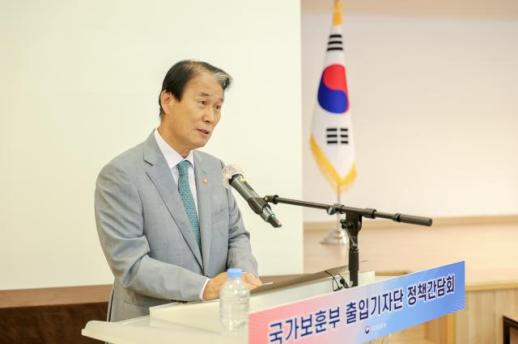 Minister Kwon Oh-eul Calls Starbucks' 'Tank Day' Marketing Corporate Misstep Minister of Veterans Affairs Kwon Oh-eul criticized Starbucks Korea's marketing campaign related to the May 18 Democratic Uprising, stating, "This is not an individual misstep but a corporate marketing strategy. It deserves condemnation and should be penalized." During a press conference on May 29 at the Defense Convention in Yongsan, Kwon remarked that the campaign exploited a painful national event as part of corporate marketing. In light of the 'Tank Day' controversy, the Ministry of Veterans Affairs has decided to refrain from using Starbucks gift cards at official events after reviewing instances where they were previously used. The ministry has an ongoing partnership with Starbucks Korea, which includes an annual scholarship fund of 100 million won to support descendants of independence activists. Kwon noted that the ministry will consider public sentiment when deciding on the continuation of this initiative, admitting he was unaware of the MOU and promising to review it. Kwon also addressed the 'Democratization Heroes Act,' which passed through the National Assembly's Legislation and Judiciary Committee and is currently pending in the full assembly. He emphasized, "These individuals were catalysts for the democratization of South Korea and the June 10 uprising. We aim to prioritize this legislation in the upcoming session of the National Assembly." He acknowledged that there seems to be emotional opposition from the opposition parties, stating, "I believe it will be put to a vote, but before that, I plan to meet with the People Power Party after the June 3 local elections to request that they do not oppose it solely based on emotional grounds." The Democratization Heroes Act aims to provide recognition and support for those who died, went missing, or were injured during the democratization movement, including medical, nursing, and commemorative projects. The act targets 635 individuals recognized under the Democratization Compensation Act, with opposition citing concerns over including those involved in incidents like the Busan Dong-eui University case and the South Korean National Liberation Front. The additional budget required for the act is estimated at around 2 billion won annually for nursing, elderly care, and some medical support. Regarding the exhumation of the remains of Ahn Jung-geun, who died in a Chinese prison in 1910, Kwon mentioned that efforts are underway to trace the death records of three Japanese individuals executed on the same day. He stated, "Japan reportedly burned all records during their retreat, so we are trying to locate where these individuals are buried, as there are claims they were buried in the same row as Ahn Jung-geun. If we can find their death records, we could conduct ground-penetrating radar (GPR) surveys."* This article has been translated by AI. 2026-05-29 19:18:00
 -
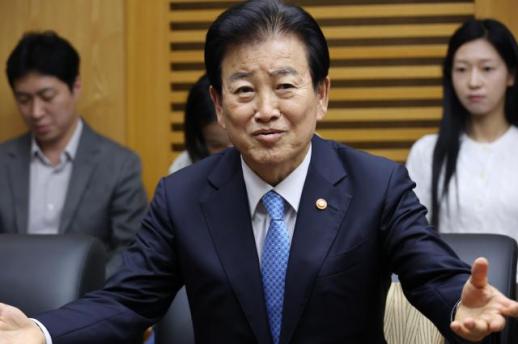 Unification Minister Jeong Dong-young Denies Reports of Prosecutorial Investigation Unification Minister Jeong Dong-young has clarified that he has not received any notifications from relevant agencies regarding reports that he is under investigation by prosecutors for allegedly leaking information related to North Korean nuclear facilities. On May 28, the Unification Ministry's spokesperson issued a statement addressing media reports concerning the minister. The spokesperson stated, "The allocation of the case by the prosecution is merely a procedural measure following a complaint, so it is difficult to view it as the start of an investigation," adding, "We have not received any related notifications from relevant agencies." The spokesperson expressed regret that some articles appeared to prejudge the allegations, stating, "We have lodged a complaint with the media outlet in question." Earlier that day, the Seoul Southern District Prosecutors' Office announced that it had received a case against Minister Jeong for allegedly leaking official secrets and had assigned it to its Criminal Division 1, led by Chief Prosecutor Kang Ho-jun, after transferring it from the Seoul Central District Prosecutors' Office on May 21. The controversy arose after Minister Jeong mentioned 'Pyeonganbuk-do Guseong' in the National Assembly on March 6, in addition to the previously known locations of North Korea's uranium enrichment facilities in Yongbyon and Gangseon in Nampo City. At that time, the Unification Ministry explained that Minister Jeong's remarks were based on comprehensive information regarding North Korea's nuclear facilities, including statements from the Director General of the International Atomic Energy Agency (IAEA) and reports from research institutions such as the Institute for Science and International Security (ISIS). * This article has been translated by AI. 2026-05-28 18:08:00
 -
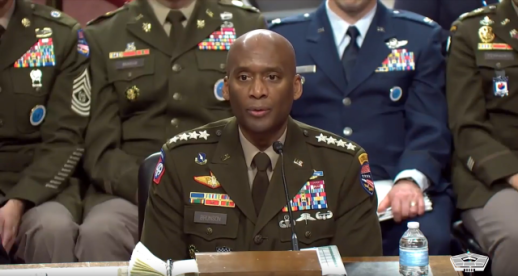 Chinese Embassy in Seoul Criticizes U.S. Forces Commander for 'Dagger' Comment On May 28, China expressed strong opposition to comments made by U.S. Forces Korea Commander Jay B. Brunson, who likened South Korea to a "dagger" aimed at China. The Chinese Embassy in Seoul issued a statement in response to Brunson's remarks, warning that "your comments have clearly crossed a line." Earlier, Brunson had described South Korea's geographical position and the significance of U.S. forces stationed there, referring to the country as both a "dagger" and a "fixed aircraft carrier" in the context of countering China. A spokesperson for the Chinese Embassy questioned whether Brunson's characterization of U.S. forces as an aircraft carrier or dagger was an act of aggression or an attempt to hold other nations hostage. The spokesperson also referenced a recent meeting between the leaders of the U.S. and China, where they agreed to establish a "constructive and strategic stable relationship," and asked if Brunson's hostile remarks had Washington's approval or were intended to undermine the agreements reached during that summit. The spokesperson noted that some South Korean media outlets had criticized Brunson's comments, urging the U.S. Forces Korea Commander to show greater respect for regional countries and to work towards enhancing peace and stability in the region.* This article has been translated by AI. 2026-05-28 16:46:00
 -
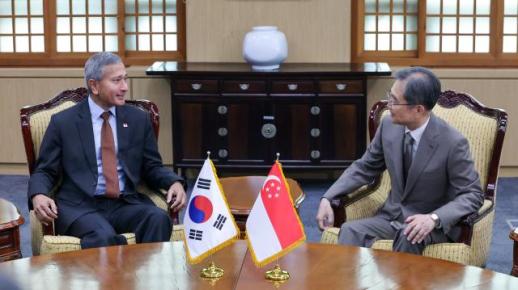 South Korean Foreign Minister Meets with Singapore's Vivian Balakrishnan South Korean Foreign Minister Cho Hyun held talks with Singapore's Foreign Minister Vivian Balakrishnan on May 28 in Seoul, discussing key issues between the two countries as well as regional and international developments.According to the Ministry of Foreign Affairs, Cho explained the South Korean government's policies and efforts for peaceful coexistence on the Korean Peninsula. He also listened to Balakrishnan's impressions from his recent visit to North Korea and urged ASEAN, including Singapore, to show interest and support in creating conditions for dialogue with North Korea.Balakrishnan expressed agreement and emphasized the importance of close communication between both sides for peace and stability on the Korean Peninsula.Balakrishnan is visiting China, North Korea, and South Korea from May 24 to 28, and he met with North Korean Foreign Minister Choe Son-hui in Pyongyang on May 26.He highlighted that South Korea and Singapore are allied nations sharing core values such as free trade and multilateralism, expressing hope for further deepening and expanding mutual cooperation in various fields, including trade, investment, and emerging industries.The two ministers also shared assessments of the recent situation in the Middle East, agreeing that peace in the region and the safe passage of international shipping routes, such as the Strait of Hormuz, are crucial for the security and economy of both nations.Following the meeting, Unification Minister Jeong Dong-young also met with Balakrishnan. The details of their discussion were not disclosed, as per mutual agreement.Jeong expressed his gratitude for Singapore's constructive role regarding issues on the Korean Peninsula. 2026-05-28 16:08:00
 -
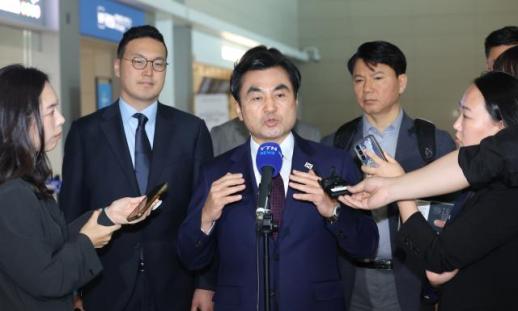 An Kyoo-baek to Attend Shangri-La Dialogue, Hold Bilateral Talks with Japan and Australia Defense Minister An Kyoo-baek will participate in the 23rd Shangri-La Dialogue, scheduled to take place in Singapore from May 29 to 31. According to the Ministry of National Defense on May 28, Minister An will deliver a speech on May 30 addressing "Regional Security Challenges and South Korea's Strategic Response," outlining South Korea's defense policies in response to the rapidly changing security environment. During the event, Minister An is expected to hold discussions with delegations from the United States Congress, as well as defense ministers from Japan, Australia, Norway, the Philippines, and Thailand, focusing on expanding defense and military cooperation. This will mark the first face-to-face meeting between Minister An and Japan's Defense Minister Shinjiro Koizumi since their bilateral talks in Yokosuka, Kanagawa Prefecture, during An's visit to Japan in January. U.S. Secretary of Defense Pete Hegseth will also attend this year's Shangri-La Dialogue. However, a bilateral meeting between the U.S. and South Korean defense ministers has already taken place on May 11 during Minister An's visit to the U.S., making another meeting during the Shangri-La Dialogue unlikely. Attention will be on whether the defense ministers of South Korea, the U.S., and Japan will have the opportunity to meet together. The Shangri-La Dialogue is an annual multilateral security conference organized by the International Institute for Strategic Studies (IISS) since 2002, bringing together defense ministers, senior military officials, and security experts from major countries in the Asia-Pacific and Europe, including South Korea, the United States, Japan, ASEAN, and the EU. The event has been held annually at the Shangri-La Hotel in Singapore since its inception, hence the name "Shangri-La Dialogue."* This article has been translated by AI. 2026-05-28 11:24:00
 -
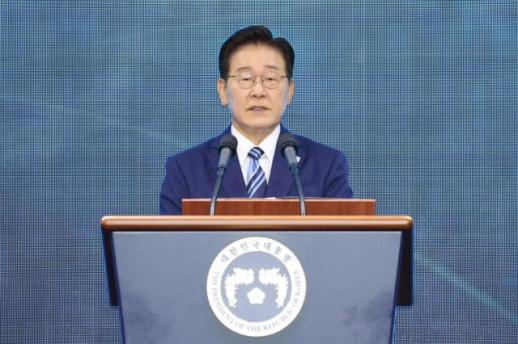 Lee to mark first anniversary in office with news conference early next month SEOUL, May 27 (AJP) - President Lee Jae Myung will hold a news conference early next month to mark his first anniversary in office and set out his vision and goals going forward. In a press briefing at Cheong Wa Dae on Wednesday, Lee Kyu-yeon, senior presidential secretary for public relations, told reporters that the press conference will be held on June 8, where Lee will "reflect on his first year in office" and lay out his vision and key tasks for his second year. It will be the president's fourth news conference since taking office in June last year, following one on July 3 last year to mark his first month, Sept. 10 to celebrate 100 days, and a New Year's news conference on Jan. 21. According to the presidential secretary, his first-anniversary address would stress "democratic values," charting a path for all walks of life to move forward together. About 160 reporters from domestic and international media outlets are expected to attend the press conference, whose roughly 100-minute session will be divided into three key areas - policy, the economy, and society and culture. In particular, two university students working as campus reporters will also be invited and given a chance to question Lee about the concerns and challenges facing younger generations. 2026-05-27 15:13:25