
Journalist

Kim Seong-seo
biblekim@ajunews.com
-
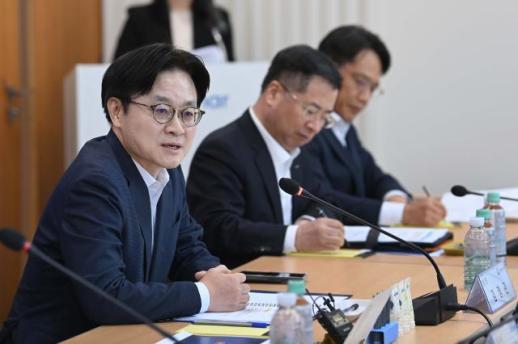 Industry Minister Kim Jung-kwan to Visit U.S., Canada for Investment Talks and Submarine Bid Kim Jung-kwan, South Korea’s minister of trade, industry and energy, will visit the United States and Canada to step up economic and industrial cooperation, with talks expected to cover a first U.S. investment project and Canada’s submarine procurement competition. The ministry said Kim will travel to Ottawa and Washington from Tuesday through May 8 (local time) for meetings aimed at strengthening partnership on economic and industrial cooperation. The trip comes about two months after he visited the United States in early March to discuss trade issues. In Washington, Kim is set to hold preliminary consultations on strategic investment with senior U.S. officials, including Commerce Secretary Howard Lutnick, on Wednesday. He also plans outreach to Congress and others on U.S.-bound investment and trade issues. The visit has fueled expectations that a decision on the first U.S. investment project could be nearing. Kim told reporters on April 27, however, that the project was still under discussion and that it was difficult to predict a specific timeline. Before heading to the United States, Kim will be in Ottawa on Tuesday and Wednesday to meet with Canadian officials, including Melanie Joly, described by the ministry as industry minister, and Tim, described as the minister of energy and natural resources. The ministry said Kim is expected to seek support for South Korea’s bid in Canada’s submarine program and to discuss ways to expand cooperation in industry and resources. Kim said follow-up steps after the passage in March of a special law on U.S. investment — including drafting enforcement rules and preparing to launch a related corporation — were being carried out without disruption. He said he plans to move forward with more detailed preliminary consultations on strategic investment projects based on ongoing communication. He added that the government would proceed in a way that serves the national interest, including expanding market access for South Korean companies and ensuring benefits flow back to domestic industry. On the Canada trip, Kim said the submarine project could be an important opportunity to build a broad, long-term partnership spanning security, the economy and industry, and pledged full government support through the end to help win the contract.* This article has been translated by AI. 2026-05-05 09:03:15
 -
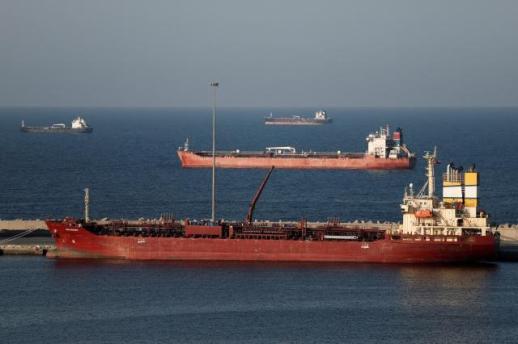 Trump Floats ‘Project Freedom’ to Move Ships Stuck in Strait of Hormuz, Easing Korea Oil Supply Fears 도널드 트럼프 미국 대통령이 호르무즈 해협에 발이 묶여 있는 제3국 선박을 안전하게 이동시키는 '해방 프로젝트(Project Freedom)' 추진을 시사했다. 계획이 예정대로 시행되면 한국의 원유 수급에도 도움이 될 수 있다. 다만 이란의 반발이 즉각 나오면서 불확실성은 여전하다는 지적도 나온다. 4일 관계 부처에 따르면 트럼프 대통령은 3일(현지시간) 트루스소셜에 "전 세계 여러 나라에서 호르무즈 해협에 갇힌 자국 선박들을 풀어줄 수 있는지 문의해 왔다"며 "이들은 이 분쟁과 아무 관련이 없는 중립적이고 무고한 방관자일 뿐"이라고 적었다. 그는 "우리는 선박들이 안전하게 해협을 빠져나갈 수 있도록 지원해 자유롭고 원활하게 사업을 진행할 수 있도록 하겠다고 약속했다"며 "자유 프로젝트는 중동 시간으로 월요일 아침에 시작될 예정"이라고 밝혔다. 또 "이란과 매우 긍정적인 논의를 진행하고 있으며 이러한 논의가 모두에게 매우 긍정적인 결과를 가져올 수 있을 것"이라며 "어떤 식으로든 이 인도주의적 절차가 방해를 받는다면 유감스럽게도 강력한 조치를 취할 수밖에 없다"고 강조했다. 이 구상이 물류 불확실성을 낮출 수 있을지 주목된다. 현재 페르시아 만에 고립된 선박은 약 2,000척으로 추정된다. 산업통상부에 따르면 이 가운데 한국 정유사와 관련된 유조선은 7척이며, 이 중 4척은 국적 선사가 운항한다. 해당 선박에 실린 원유는 약 1,400만 배럴 수준이다. 정부는 5월 원유 수급에는 큰 문제가 없을 것으로 보고 있다. 다만 해방 프로젝트가 계획대로 추진되면 추가 물량 확보에 도움이 될 것으로 기대하고 있다. 산업통상부에 따르면 5월 대체 원유 확보 물량은 평시 도입 물량의 87% 수준인 7,462만 배럴이다. 호르무즈 해협에 계류 중인 원유가 한국에 도착하려면 약 3주가 걸리는 만큼, 단순 계산으로는 5~6월에 현재 계류 중인 유조선이 입항할 수 있다는 관측이 나온다. 정유업계의 중동산 원유 의존도가 높은 만큼 단기간 숨통이 트일 수 있다는 것이다. 다만 계획이 현실화될지는 미지수다. 이란에서는 해당 구상이 휴전협정 위반이라는 반발이 나왔다. AFP 통신에 따르면 에브라힘 아지지 이란 의회 국가안보·외교정책 위원장은 트럼프 대통령의 계획 공개 직후 X(옛 트위터)에 "호르무즈 해협의 새로운 해상 질서에 대한 미국의 어떠한 개입도 휴전 위반으로 간주될 것"이라고 경고했다. 지난달 초 중동전쟁 휴전 합의 이후 호르무즈 해협을 빠져나간 선박이 극소수에 그치고 있다는 점도 불확실성을 키운다. 군사적 충돌 가능성이 여전히 높아 선주 등이 신중한 태도를 보이고 있기 때문이다. 트럼프 대통령이 강경 발언과 협상 가능성을 동시에 내비치는 행보를 반복하는 점도 변수로 꼽힌다. 정부는 신중한 입장이다. 산업부 관계자는 "5월 원유 수급에는 문제가 없는 상황"이라며 "해방 프로젝트로 7척의 초대형 원유 운반선(VLCC)이 빠져나오면 수급에 도움이 되겠지만 실제로 프로젝트가 이행될지 지켜봐야 할 것"이라고 말했다.* This article has been translated by AI. 2026-05-04 12:09:17
 -
 South Korea to Halve Review Period for Employment Crisis Areas, Special Support Industries The review period used to determine whether to designate employment crisis areas and special employment support industries will be cut in half, and the count of unemployment benefit applicants — a key indicator of labor market conditions — will be expanded to include day workers. The Ministry of Employment and Labor said May 4 it will improve the criteria for designating employment crisis areas and special employment support industries. The designation system is intended to support job stability by identifying regions and industries where employment conditions have sharply worsened. In the past, however, concerns have been raised that strict requirements made it difficult to detect crises in time. Labor Minister Kim Young-hoon said at an emergency employment and labor situation review meeting on April 13 that institutional requirements or procedures should not become obstacles that prevent needed support from reaching workers and companies facing real hardship. Kim also said that if current requirements do not reflect reality, the government should boldly overhaul the system, taking into account what he described as an “economic wartime situation.” He ordered officials to detect crises immediately and provide support in real time. Reflecting feedback from the field, the ministry said it will revise quantitative criteria. To speed responses to employment shocks, it will shorten the calculation period for quantitative requirements to six months from 12. It will also include day workers who left jobs due to company circumstances in the number of unemployment benefit applicants, to better reflect actual conditions. The ministry said that if sharp employment changes occur in regions and industries where a slowdown is feared, it will quickly designate them under the revised standards and provide necessary support. It also pledged to keep refining the system to closely monitor changes on the ground and respond preemptively.* This article has been translated by AI. 2026-05-04 09:04:40
 -
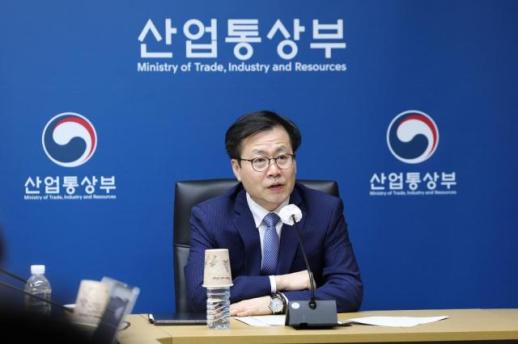 South Korea, Pakistan Move to Speed Up CEPA Talks, Trade Minister Says South Korea will step up negotiations with Pakistan on a Comprehensive Economic Partnership Agreement, or CEPA. Yeo Han-koo, South Korea’s minister for trade at the Ministry of Trade, Industry and Energy, held a video meeting on the 30th with Pakistan’s Commerce Minister Jam Kamal Khan to discuss ways to advance the Korea-Pakistan CEPA talks and expand bilateral trade and investment cooperation. Pakistan, with a population of 240 million, is the world’s fifth-most populous country and a key potential market in Southwest Asia with abundant natural resources. It is also a strategic hub linking the Middle East and Southwest Asia. Still, bilateral trade remained limited, totaling $1.574 billion last year. The two countries have laid the groundwork for negotiations since declaring the launch of CEPA talks and agreeing to terms of reference in January last year. They plan to accelerate negotiations starting with the first official round, which is scheduled to be held in the future, to expand trade and investment. Yeo said, “For our companies to operate their businesses stably and expand investment, it is important to ensure predictable administration of institutions and create a friendly investment environment,” and asked for the Pakistani government’s attention and support. He added that, following India and Bangladesh, CEPA talks with Pakistan would further strengthen South Korea’s trade network in Southwest Asia, and said the two sides would build a mutually beneficial foundation for cooperation through a CEPA with Pakistan, a hub connecting the Middle East, Central Asia and Southwest Asia.* This article has been translated by AI. 2026-04-30 18:24:27
 -
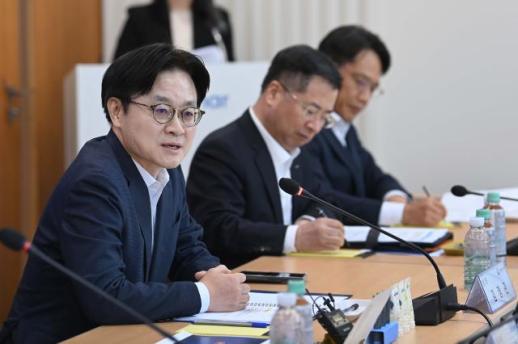 Industry Minister Kim Jeong-gwan calls for wider eco-friendly consumer culture at Beautiful Store Kim Jeong-gwan, South Korea’s minister of trade, industry and energy, visited the Beautiful Store in Seoul’s Anguk-dong on Wednesday and said expanding an eco-friendly consumer culture is “a very important task for the future of our economy and industry.” He added that the government would provide policy support, citing its potential as a future growth sector. Kim met with major distribution industry groups — including the Korea Chain Store Association, the Korea Department Store Association, the Korea Convenience Store Industry Association and the Korea Online Shopping Association — to discuss ways to broaden eco-friendly consumption. The Beautiful Store operates about 100 locations nationwide, selling donated goods from individuals and companies. It uses the proceeds for public-interest programs, including support for low-income people and assistance for young adults preparing for independent living. Kim and industry representatives agreed that recent instability in petrochemical feedstocks linked to the war in the Middle East should be used as an opportunity to shift toward eco-friendly consumption, including greener packaging and expanded recycling. The Beautiful Store and the distribution groups also signed an agreement to promote eco-friendly consumption and distribution practices, pledging closer cooperation on corporate social responsibility. The ministry said it expects the pact to create a formal cooperation framework beyond one-off company efforts and to encourage more social contribution activities. Kim said he hopes the agreement will serve as a model platform for cooperation between the distribution industry and social enterprises, adding that he expects eco-friendly consumption and sharing to continue to grow.* This article has been translated by AI. 2026-04-30 16:24:26
 -
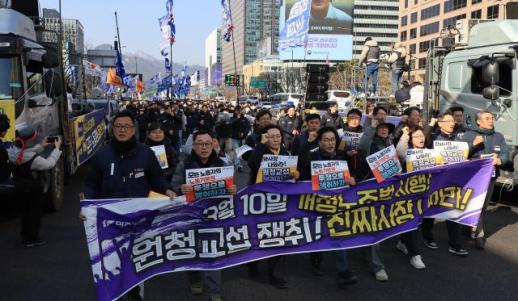 Labor Ministry: 177 Public-Sector Employers Got Bargaining Demands After Yellow Envelope Law After the so-called Yellow Envelope law — revisions to the Trade Union and Labor Relations Adjustment Act — took effect, 177 public-sector workplaces received bargaining demands, with local governments accounting for the largest share at 112, according to the Labor Ministry. The Ministry of Employment and Labor reported the findings Thursday at an emergency economic headquarters meeting held jointly with a meeting of economy and external economy ministers, as part of its “response direction for major labor issues.” As of April 27, 400 prime contractors had received bargaining demands: 223 in the private sector (56%) and 177 in the public sector (44%). Within the public sector, 11 central government bodies, 112 local governments, 46 public institutions and eight local public enterprises, including local government-owned firms, received demands. In the public sector, 13 organizations posted public notices acknowledging the bargaining demands, including Busan Transportation Corp., Korea Asset Management Corp. and Hwaseong City; 11 of those issued final notices. In the care sector, a government-labor consultative body is operating to discuss substantive improvements in working conditions for care workers. Six public institutions participating in a “win-win bargaining” consulting program are working on selecting agenda items and reviewing key disputes. Officials also discussed recently announced talks on improving treatment for subcontracted and nonregular workers in the public sector. The core measures include ensuring appropriate wages, narrowing pay gaps and strengthening job security. The plan also includes strengthening the prior review system and ensuring the sustainability of treatment improvements. The ministry asked relevant agencies to swiftly take necessary follow-up steps. The first-term Economic, Social and Labor Council under the Lee Jae-myung government, launched April 19, will sequentially establish its individual panels. Eleven panels are to be formed, including those focused on responding to overlapping crises during the transition period such as artificial intelligence, and on structural improvements to the labor market. The ministry also released its “foreign workforce integrated support roadmap 추진방향.” It calls for an integrated approach covering appropriate supply-and-demand management for all working foreign nationals, protection of labor conditions, industrial safety, and support for stay and return. The ministry said it will announce the roadmap by June after consultations with relevant agencies and will also pursue revisions to the Foreign Employment Act.* This article has been translated by AI. 2026-04-30 14:58:25
 -
 Korea’s Regular-Nonregular Pay Gap Widens as Short-Hour, Older Workers Rise Nonregular workers’ total wage growth lagged that of regular workers last year, widening the pay gap between the two groups, government data showed. The ministry attributed the trend largely to an increase in nonregular workers in lower-paid, shorter-hour jobs. According to the Ministry of Employment and Labor’s “June 2025 Survey on Working Conditions by Employment Type,” the total hourly wage for wage workers stood at 25,839 won as of June last year, up 2.7% from a year earlier. Regular workers averaged 28,599 won, up 3.2%, while nonregular workers averaged 18,635 won, up 1.3%. Nonregular workers’ total hourly wage was 65.2% of regular workers’ level, down 1.2 percentage points from 66.4% a year earlier. The ministry said the overall wage increase for nonregular workers slowed as their numbers rose in groups that typically work fewer hours and earn less, including short-hour workers, those 60 and older, women and workers in health and social welfare services. The share of low-wage workers earning less than two-thirds of the median wage was 15.8%, down 0.3 percentage points from 16.1% a year earlier. The wage quintile ratio improved to 4.39 from 4.42. The ministry said key distribution indicators improved as average wages for the bottom 20% rose 3.4%, outpacing the 2.4% increase for the top 20%. At workplaces with at least one employee, average actual working hours per worker totaled 146.3 hours, down 0.5 hour from 146.8 a year earlier. Regular workers averaged 162.1 hours, down 0.1 hour, and nonregular workers averaged 104.8 hours, down 1.0 hour. More than 91% of all workers were enrolled in social insurance programs, the ministry said, adding that enrollment in industrial accident insurance showed little difference between regular and nonregular workers. Union membership at workplaces with at least one employee rose to 10.2% from 9.7% a year earlier. Membership was 13.7% for regular workers and 1.2% for nonregular workers, up 0.6 and 0.2 percentage points, respectively.* This article has been translated by AI. 2026-04-30 12:03:18
 -
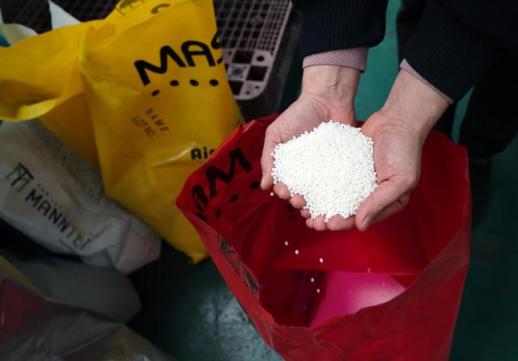 South Korea says U.S. is now top naphtha supplier; weighing extending oil swap into July Since the outbreak of the Middle East war, South Korea has been diversifying alternative sources of naphtha imports, with the United States emerging as the largest supplier. The government is extending its strategic oil swap program through June and is reviewing whether to extend it into July as well. Yang Gi-uk, director general for industrial resources security at the Ministry of Trade, Industry and Energy, said at a daily briefing of the Middle East war response task force on Wednesday that “the results of introducing support for the gap in import unit prices for basic feedstocks such as naphtha are becoming visible.” He said import sources have diversified from the Middle East to the United States, India, Algeria and Greece, and that “since the Middle East war, the United States has become the largest naphtha import country.” The government, through a supplementary budget, has been covering 50% of the import unit price for contracts for basic feedstocks signed starting April 1, the ministry said. The program covers naphtha, LPG, condensate and base oils, among others. For naphtha, the ministry said, contract volumes that took all of March to secure were finalized in just two weeks in April. The ministry expects supply conditions to improve next month. In May, it expects to secure naphtha at about 85% to 90% of prewar levels. Yang said naphtha imports had previously come from the United Arab Emirates, Algeria, Qatar, Kuwait and India, but diversification has pushed the United States to the top. He said the United States, which ranked seventh among naphtha suppliers last year, has become the largest supplier, adding that the longer lead time suggests shipments have been arriving since April. He cautioned it was too early to call the shift structural, saying the naphtha market has become segmented and traders are adjusting volumes. Yang said diversification is expected to lift petrochemical plant operating rates, which had fallen to 55%, to about 90% to 95%, and that in absolute terms it is expected to reach above 70%. On base oils, he said imports continue because many purchases come from China, adding that, taking those factors into account, supply conditions should improve in May. The government is also considering further extending its strategic oil swap program. Yang said the program, originally set to run through May, will be extended through June, and that an extension into July is under review. “It will likely continue as long as there is corporate demand,” he said. On any plan to release strategic reserves, Yang said companies are actively using the swap program and the government needs to confirm demand. He said officials will need to see how much companies want releases under the existing method, what inventory levels look like, and how alternative import volumes develop.* This article has been translated by AI. 2026-04-30 11:45:58
 -
 South Korea to Recruit Trainees for Digital Twin-Based Semiconductor Process Design Academy The Ministry of Trade, Industry and Energy said Wednesday it will recruit trainees for the Korea Semiconductor Academy to provide semiconductor process design training using digital twin technology. The program, supported by the ministry and run by the Korea Semiconductor Industry Association, targets company employees and people seeking jobs in the semiconductor sector. It plans to train about 100 process design specialists through four sessions a year, each lasting two weeks. The ministry said the initiative reflects growing complexity in manufacturing processes for 3D-stacked AI semiconductors such as HBM and 3D NAND. It said demand is rising for specialists who understand entire process flows — not just individual steps — and can solve technical problems that occur during production. It noted that manufacturing sequences and equipment layouts vary by chip type, while changing and rearranging expensive equipment to match each process is not feasible due to cost and space constraints. The academy said it worked with global semiconductor equipment companies to develop a curriculum that uses specialized software already used at major Korean companies and universities, allowing trainees to learn without dedicated equipment. In a virtual environment that replicates a semiconductor fab, trainees will study overall manufacturing processes and how to design optimized process flows. Industry experts will also serve as instructors to share on-the-job know-how. Applications open May 4 on the academy’s website, with trainees to be selected through screening based on selection criteria. Training is set to begin in late May. Choi Woo-hyuk, the ministry’s director general for advanced industry policy, called it “a new paradigm of training that lets people learn semiconductor processes at a glance without expensive equipment.” He said it is expected to produce talent tailored to industry needs in the short term and significantly reduce the costs required to build hands-on training equipment over the long term.* This article has been translated by AI. 2026-04-30 11:04:19
 -
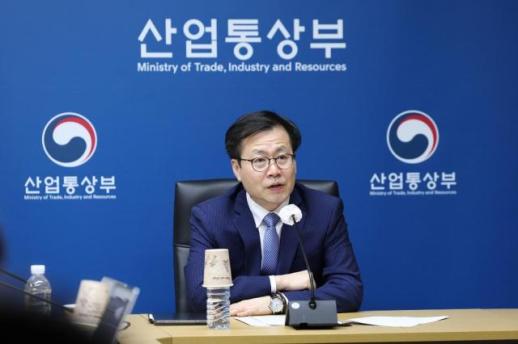 South Korea, Mexico to Hold High-Level Talks on Restarting FTA Negotiations The South Korean government will begin high-level consultations aimed at resuming free trade agreement talks with Mexico. The Ministry of Trade, Industry and Energy said trade minister Yeo Han-koo met Thursday with Carlos Penafiel Soto, Mexico’s ambassador to South Korea, to discuss ways to expand bilateral economic and trade cooperation. The meeting came as uncertainty in the global trade environment deepens amid the spread of protectionism, and was arranged to explore broader cooperation with Mexico, South Korea’s largest trading partner in Latin America. The two sides agreed a Korea-Mexico FTA could serve as a catalyst to boost trade and investment. They decided to continue high-level talks so negotiations, suspended since 2022, can restart as soon as possible. Yeo also raised concerns from South Korean industry over key trade issues, including Mexico’s tariff increases that took effect in January and the planned July review of the U.S.-Mexico-Canada Agreement. He asked for special attention so South Korean companies operating in Mexico can continue business under stable conditions. “Mexico is a key bridgehead for entering the Latin American market and integrating into USMCA supply chains,” Yeo said. “We will work closely to produce results that provide real help in expanding our companies’ exports and stabilizing their local operations.”* This article has been translated by AI. 2026-04-30 11:03:55