

Journalist

Candice Kim, Lim Jaeho
candicekim1121@ajupress.com, ajupresswogh@ajupress.com
-
 AJP Watch: Samsung's 'fixed stock bonus' deal sends shockwaves across chip sector and supply chain SEOUL, May 25 (AJP) - Samsung Electronics’ tentative wage agreement is nearing ratification with near-record union turnout, crystallizing a new dilemma in the AI era: how far semiconductor giants can go in sharing windfall profits before it begins to strain investment capacity, deepen social divisions and unsettle global competitors. The deal can avert an immediate strike that threatened to disrupt the memory supercycle underpinning South Korea’s exports and stock rally. But the agreement’s centerpiece — a fixed stock-based profit-sharing structure tied directly to operating profit — is now reverberating far beyond Samsung’s Suwon campuses, unsettling shareholders, stirring resentment across Samsung affiliates and increasingly drawing attention from rival chipmakers abroad, particularly TSMC in Taiwan. As of Sunday afternoon, turnout for the union ratification vote had exceeded 84.6 percent, according to industry sources, with approval widely expected when voting concludes Wednesday. The unusually strong participation reflects how profoundly the agreement could reshape compensation expectations across Asia’s semiconductor sector. At the heart of the controversy is Samsung’s newly introduced “special management performance bonus,” which guarantees employees stock compensation equivalent to 10.5 percent of a business division’s operating profit. While performance-linked bonuses are common globally, industry analysts say institutionalizing a fixed percentage inside a labor agreement marks a sharp departure from prevailing international practices, where boards typically retain discretion to balance compensation against strategic investment needs. Foreign brokerages have already begun flagging concerns. Citi analyst Peter Lee warned of “downside risks to earnings due to bonus-related provisions amid escalating labor strikes,” lowering operating profit projections for Samsung Electronics. The timing is especially sensitive. AI-driven demand has triggered one of the most capital-intensive cycles in semiconductor history. TSMC plans as much as $56 billion in capital expenditure this year, while Micron Technology has pledged more than $25 billion for fiscal 2026 in addition to a $100 billion long-term megafab investment in New York. Samsung itself has earmarked more than 110 trillion won ($81 billion) for research, development and facility expansion this year alone. Analysts caution that locking in fixed double-digit profit-sharing formulas could eventually constrain Samsung’s flexibility in funding next-generation high-bandwidth memory (HBM), advanced packaging and foundry expansion at a time when competition against TSMC, Micron and SK hynix is intensifying. Unlike traditional industrial cycles, the AI infrastructure race increasingly rewards companies capable of reinvesting enormous sums with speed and consistency. The ripple effects are no longer confined to South Korea. The turbulence inside Samsung’s semiconductor complex in Suwon is now reverberating through Hsinchu, Taiwan’s chipmaking hub. Employees at TSMC — the world’s most critical contract chip manufacturer supplying firms from Nvidia and Apple to Tesla — have grown increasingly vocal over their own compensation structure after reports emerged that performance bonuses could be reduced to offset the mounting costs of building 12 overseas fabrication plants. Despite TSMC posting a 58 percent year-on-year jump in first-quarter net profit, frustration has reportedly spread across anonymous employee forums. According to Taiwan’s Liberty Times, workers explicitly referenced Samsung’s labor negotiations while criticizing TSMC management. Some posts complained that “the company changes everything on a whim,” while others openly discussed the possibility of collective action, writing: “It’s time we strike too,” and “May 27 will be the real turning point.” For decades, Asian semiconductor champions largely maintained an implicit social contract: workers accepted grueling hours and hierarchical cultures in exchange for stability, prestige and gradual prosperity. Samsung’s new fixed-profit-sharing model threatens to reset those expectations. Workers across the sector are increasingly asking why extraordinary AI profits should remain concentrated at the corporate level while employees shoulder intense workloads and geopolitical uncertainty. At the same time, investors and executives fear the opposite risk — that institutionalized profit-sharing could gradually erode the massive capital discipline required to sustain semiconductor leadership. The agreement is also exposing widening internal fissures inside Samsung Group itself. Under the proposed structure, employees in Samsung Electronics’ memory business could receive roughly 600 million won ($438,000) in annual bonuses if operating profit reaches 300 trillion won, including both the new stock-based incentive and existing excess profit-sharing payments. Even loss-making non-memory semiconductor divisions such as System LSI and foundry operations would reportedly receive more than 200 million won in combined bonuses through shared Device Solutions division funding pools. That has triggered growing frustration across Samsung affiliates including Samsung Display, Samsung SDI and Samsung Electro-Mechanics, where employees complain of widening disparities despite their own operational contributions. Internal discontent has become severe enough that employees increasingly use the self-deprecating nickname “Samsung huja” — implying second-tier Samsung workers — to describe themselves. The contrast is stark even within the conglomerate. Samsung Display recorded a 6.2 percent wage increase this year, Samsung Electro-Mechanics 5.9 percent and Samsung SDI 4 percent, while their bonus formulas remain tied to the older Economic Value Added (EVA) framework instead of operating profit. The spillover is beginning to reshape labor expectations across the broader Samsung empire. Samsung Display’s union plans to negotiate an alternative compensation structure later this year, while Samsung Electro-Mechanics is reviewing whether to shift its OPI formula toward either EVA-based 20 percent calculations or operating profit-linked 10 percent formulas similar to Samsung Electronics. Industry observers warn the agreement could embolden labor activism across major Korean corporations. Samsung Biologics unions are already engaged in strike action, while Samsung C&T reportedly raised planned wage increases to avoid similar disruptions. The social implications extend far beyond Samsung. According to Leaders Index, employees at South Korea’s top 211 companies earned an average annual compensation package of 102.8 million won last year including bonuses. Across all Korean businesses, the average worker earned about 50.61 million won annually, according to the Korea Enterprises Federation. Under Samsung’s new structure, some semiconductor employees could effectively receive compensation equivalent to the annual salaries of more than a dozen ordinary workers in a single year. The widening divide reflects how the AI boom is concentrating extraordinary wealth into a narrow segment of strategic industries. What was once primarily a technological race is increasingly becoming a political and social challenge as governments, unions and corporations struggle to redefine compensation norms during the transition into the AI economy. For Samsung, the immediate crisis may have been contained. Production lines continue operating, investors have avoided the shock of an 18-day strike and the AI memory cycle remains intact for now. But the agreement may ultimately prove to be more than a labor settlement. It could become an early test case for how democracies, corporations and workers negotiate the distribution of AI-era wealth — and whether the race for technological supremacy can coexist with mounting demands for economic equity without weakening the enormous reinvestment needed to sustain the boom itself. 2026-05-25 15:02:25
 -
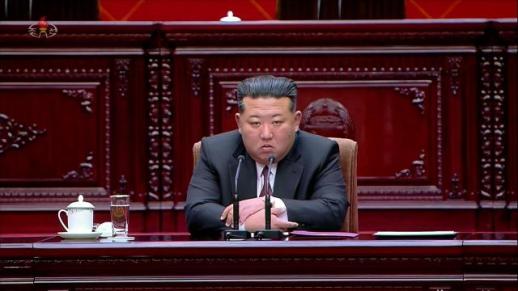 North Korea to convene party plenum and may harden 'two-state' line SEOUL, May 25 (AJP) - North Korea will convene a key Workers’ Party meeting in late June to review first-half policy implementation and discuss its agenda for the rest of the year, state media reported Monday, in what could offer clues to Pyongyang’s next steps after formally erasing unification from its constitution. The ruling party’s Political Bureau adopted a decision on Sunday to call the second plenary meeting of the ninth Central Committee in late June, the Korean Central News Agency said. The meeting will “review the implementation of party and state policies for 2026” and discuss second-half tasks and “a series of important issues,” according to KCNA. The plenum comes after North Korea’s ninth party congress in February and a March session of the Supreme People’s Assembly, where Pyongyang revised its constitution to reflect leader Kim Jong Un’s “two hostile states” doctrine. The amended constitution defines North Korea’s territory as only the northern part of the Korean Peninsula and removes references to eventual unification with the South. Attention is also focused on whether the meeting will produce follow-up guidelines on South Korea or the United States, particularly as speculation grows that Chinese President Xi Jinping may visit Pyongyang for talks with Kim after his recent meeting with U.S. President Donald Trump. Pyongyang’s hardened stance toward Seoul was on display last week when North Korea’s Naegohyang women’s football club visited South Korea for the AFC Women’s Champions League finals in Suwon, the first visit by a North Korean sports delegation in more than seven years. The team won the title but avoided contact with South Korean officials, civic groups and reporters throughout its stay. The players used passports rather than inter-Korean travel certificates, underscoring Pyongyang’s insistence on treating the relationship as one between separate states. After the final, coach Ri Yu-il abruptly left a press conference after objecting to a South Korean reporter’s reference to “the North,” asking that the country’s official name be used. 2026-05-25 13:37:58
 -
 China accelerates semiconductor ecosystem push, courting South Korean SMEs SEOUL, May 25 (AJP) - Chinese local governments are intensifying efforts to build comprehensive semiconductor supply chains, aggressively targeting South Korean materials, parts, and equipment suppliers with extensive incentive packages. During a recent South Korea-China economic cooperation forum in Zhangjiagang, Jiangsu Province, Chinese municipalities showcased a strategic shift from simply attracting individual factories to developing entire high-tech industrial parks. Local governments are offering South Korean small and medium-sized enterprises (SMEs) a suite of benefits, including tax exemptions, factory sites, research and development (R&D) funding, and human resource support. China's supply chain strategy involves distinct regional specializations. The Shanghai area is focusing on artificial intelligence (AI) chips and fabless design, while Jiangsu and Zhejiang provinces are expanding advanced manufacturing and packaging. Guangdong Province is building automotive and AI device ecosystems around local tech giants like Huawei and BYD, and the Sichuan-Chongqing region is investing heavily in backend processing and testing. The aggressive Chinese outreach highlights structural vulnerabilities within South Korea’s domestic industry. While South Korea remains a global memory chip powerhouse led by Samsung Electronics and SK Hynix, its domestic SMEs are increasingly grappling with labor shortages, regulatory burdens, and a heavy concentration of resources in the Seoul metropolitan area. The situation mirrors a broader global race in which the United States and Japan are deploying massive state subsidies—such as the U.S. CHIPS Act and Japan's support for Rapidus and TSMC's Kumamoto plant—to secure their national semiconductor ecosystems. In response, industry observers in South Korea are urging the government to adopt a long-term national strategy. Experts suggest utilizing surplus tax revenues generated by the recent semiconductor boom to fortify the domestic ecosystem. Key recommendations include establishing regional semiconductor clusters beyond the capital region, upgrading the status of materials and parts suppliers, and creating university-industry pipelines to secure future technical talent. 2026-05-25 12:50:39
 -
 LG OLED TV secures top ratings in 14 global consumer media evaluations SEOUL, May 25 (AJP) - LG Electronics’ OLED TV secured the highest scores in performance evaluations conducted by consumer media outlets across 14 countries globally. The product achieved top rankings in major markets across North America, Europe, and Australia. Consumer media assessments, which were conducted independently on commercially available products, noted the TV's performance in key features such as accurate color reproduction, High Dynamic Range (HDR) performance, and wide viewing angle. In North America, the LG OLED TV received the highest scores in all tested size categories (70-inch and above, 65-inch, 55-60-inch, and 46-52-inch) in the latest assessment by U.S. consumer media Consumer Reports. Specifically, the 65-inch LG OLED evo AI model was reviewed, with the publication noting “very impressive HDR performance,” “excellent viewing angle with virtually no degradation from any seat,” and “satisfactory top-level sound” for general viewing of movies, music, and TV. In Europe, the U.K.'s Which? gave the 65-inch LG OLED evo AI the highest score. The publication called it "one of the best OLED TVs currently available," citing its "overwhelming 4K picture quality" and "rich yet accurate color reproduction". Portugal’s DECO PROteste awarded the 55-inch model the highest score, describing it as a "highly complete product" with "the best performance among equivalent products with virtually no flaws" and excellent power consumption. The product also received the highest marks from Australia's CHOICE for the 65-inch LG OLED evo AI model, which was praised for its excellent user interface, detailed and well-balanced picture quality, and delicate sound quality. The 14 countries where LG OLED TV received top scores include the U.S., U.K., Portugal, Australia, Italy, France, Belgium, Canada, Spain, Netherlands, Sweden, Germany, Denmark, and Finland. LG OLED TV has maintained its global No. 1 market share in the OLED TV category for 13 consecutive years since its launch in 2013. The 2026 LG OLED evo AI model features the '3rd generation Alpha 11 AI Processor 4K Gen3' and 'Reflection Free Premium,' which combine to enhance brightness and color with reduced light reflection. The TV also offers five enhanced AI features, including AI Concierge and AI Search, designed to provide a personalized viewing experience. "The rigorous evaluations by consumer media in each country prove that the LG OLED TV is the best TV," said Vice President Lee Choong-hwan, Head of LG Electronics Display Business Division. "We will continue to lead the premium TV market with our advanced technology." 2026-05-25 12:07:56
 -
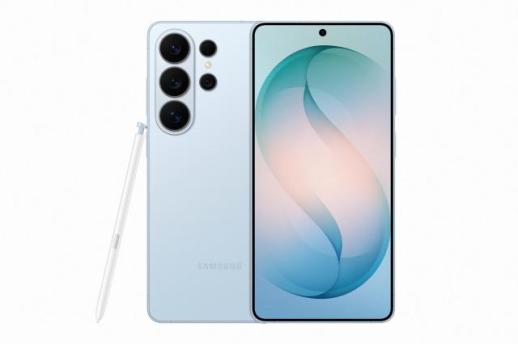 Samsung leads Q1 smartphone markets in LatAm, Middle East, SE Asia SEOUL, May 25 (AJP) - Samsung Electronics retained its top position in smartphone market share across Latin America, the Middle East, and Southeast Asia in the first quarter of 2026, despite a broader global market slowdown and rising memory costs. In Latin America, Samsung shipped 12.9 million units, reflecting a 9 percent year-on-year increase and securing a 37 percent market share. This marks the company's highest quarterly share in the region since the first quarter of 2023. The overall Latin American market grew 3 percent to 34.8 million units during the period. The company also maintained its lead in the Middle East and Southeast Asia, even as both regional markets contracted. The Middle East smartphone market shrank 6 percent year-on-year to 11 million units amid geopolitical uncertainties, slowing consumer sentiment, and rising memory costs. Nevertheless, Samsung held a 34 percent share in the region. In Southeast Asia, total shipments fell 9 percent to 21.6 million units. Samsung shipped 4.6 million units in the region to take a 21 percent share, even as the average selling price (ASP) in the market surged 19 percent year-on-year to $349. Market research firm Omdia noted that Samsung managed to increase its share in this environment through continued brand investment and channel expansion. Omdia attributed Samsung's performance across these regions to the solid initial sales of its flagship Galaxy S26 series and the diverse mid-tier A-series lineup. Industry analysts suggest that in the face of macroeconomic uncertainty and rising memory prices, consumers are gravitating toward proven brands that offer premium experiences and reliable after-sales service. Globally, Samsung captured a 22 percent share of the smartphone market in the first quarter. During its recent earnings call, the company indicated plans to pursue year-on-year revenue growth in the second quarter, driven by the rollout of new A-series models 2026-05-25 11:26:19
 -
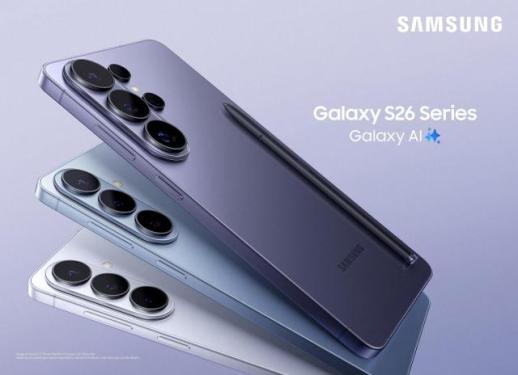 Samsung tops US customer satisfaction index for mobile phones SEOUL, May 22 (AJP) - Samsung Electronics secured the top position in a major U.S. consumer satisfaction survey for mobile phones, slightly ahead of rival Apple Inc.. The South Korean tech firm scored 81 out of 100 in the overall mobile phone category of the 2026 American Customer Satisfaction Index (ACSI) study, which was released on Tuesday. Apple, which shared the top position last year, slipped one point to 80, while Google and Motorola tied for third with 77 points each. The survey polled approximately 30,000 U.S. consumers between April 2025 and March 2026. Among specific device features, basic communication functions such as calling and text messaging received the highest satisfaction score of 86. A newly added "mobile AI" category tied for second at 85, indicating that consumers weigh artificial intelligence performance as heavily as standard communication capabilities. In the flagship device segment, Samsung scored 84, leading Apple at 82. The two companies tied for first place in the smartwatch category, both earning 80 points. Separately, U.S. consumer advocacy publication Consumer Reports ranked Samsung's Galaxy S26 Ultra as its top smartphone with an overall score of 88 in April. 2026-05-22 15:51:02
 -
 AJP Focus: Divided Samsung faces critical capex test in the AI era SEOUL, May 22 (AJP) - Samsung Electronics by March has reclaimed the top position in the global memory oligopoly after falling behind local rival SK hynix in the early race for artificial intelligence infrastructure chips, particularly high bandwidth memory (HBM). But whether the Korean tech giant can maintain that lead during the rest of AI supercycle is becoming increasingly uncertain as the company sinks deeper into internal wage conflict and spiraling compensation costs. At a moment when the global semiconductor war demands unprecedented unity and investment discipline, Samsung instead finds itself pulled apart by a widening internal divide between winners and losers of the AI boom. The contrast with its global rivals is becoming difficult to ignore. Taiwan Semiconductor Manufacturing Company and Micron Technology are aggressively channeling resources into massive capital expenditure plans aimed at dominating the next generation of AI chips, advanced packaging and memory production. Samsung, by comparison, is increasingly consumed by operational expenditure disputes, labor unrest and a rare collapse of solidarity inside one of Asia’s most tightly managed corporate empires. At the center of the tension lies an extraordinary compensation gap emerging inside the company itself. Industry estimates suggest employees in Samsung’s semiconductor Device Solutions (DS) division — now the company’s profit engine amid the AI boom — could receive as much as 600 million won ($438,000) this year in combined bonuses and incentives. Meanwhile, workers in the Device eXperience (DX) division, which oversees smartphones and home appliances, are expected to receive roughly 6 million won. A 100-fold disparity inside the same corporation has triggered deep resentment across the company. The fallout is already reshaping Samsung’s labor landscape. More than 4,000 employees from the DX division reportedly left the National Samsung Electronics Union over the past month, with many joining the rival Donghaeng union, whose membership has surged from around 2,600 to over 12,000 as non-memory workers seek more aggressive representation. “I don’t understand why there is such an extreme divide and discrimination within the same company,” a DX division official familiar with the matter told AJP on condition of anonymity. “We have to do whatever we can on our end to protect our interests.” What once functioned as a unified corporate system is beginning to fracture under the pressures of the AI economy. For decades, Samsung operated under a model where stronger divisions effectively subsidized weaker ones, allowing the conglomerate to incubate new businesses, preserve employment stability and maintain cohesion across sprawling operations. That model worked during the industrial manufacturing era when long investment cycles and centralized management rewarded internal discipline. But artificial intelligence is changing the economics of the semiconductor business. The AI boom disproportionately rewards a narrow set of high-margin technologies — especially HBM memory, advanced foundry processes and AI packaging — while leaving slower-growing consumer electronics divisions struggling to justify equal compensation structures. Silicon Valley-style winner-takes-all capitalism is colliding head-on with Samsung’s traditional top-down manufacturing culture. And the financial consequences could become severe. Foreign investors and analysts increasingly warn that Samsung’s internal fragmentation is becoming a strategic vulnerability rather than simply a labor-management dispute. According to a recent J.P. Morgan analysis, fully accommodating union demands could add as much as 39 trillion won in labor costs. Analysts estimate that such surging operational expenditures could reduce Samsung’s operating profit by up to 12 percent, potentially cannibalizing the capital expenditures needed to maintain technological leadership in extreme ultraviolet lithography, HBM production and advanced packaging. That tradeoff — between rewarding labor and funding future technology — may become one of the defining corporate dilemmas of the AI era. Unlike previous semiconductor cycles, the current AI arms race requires relentless investment speed. Delays in securing advanced equipment, expanding clean-room capacity or building next-generation packaging infrastructure can quickly translate into lost market share. Samsung’s rivals are moving aggressively precisely because they recognize the narrowness of the window. TSMC recently sold an 8.1 percent stake in Vanguard International Semiconductor to secure approximately 1.2 trillion won ($870 million) in additional funding for advanced AI packaging facilities. Micron Technology, meanwhile, is pushing ahead with a $20 billion capital expenditure plan this year largely free from labor friction or internal political constraints. The contrast is stark: although Samsung outpaced its rivals with massive first-quarter capital expenditures to reclaim its memory lead, the company increasingly finds itself debating wealth allocation while competitors remain focused on capital allocation. That distinction matters because investors ultimately reward technological dominance, not internal compromise. The danger for Samsung is not merely higher wage costs themselves. It is the possibility that internal distrust begins eroding the organizational cohesion required to compete in a capital-intensive industry where speed, secrecy and long-term strategic coordination are critical. Semiconductor leadership has historically depended not only on engineering excellence, but also on corporate unity during periods of enormous financial stress. Taiwan’s semiconductor ecosystem operates with near-national strategic alignment. U.S. chipmakers benefit from deep capital markets and shareholder tolerance for aggressive reinvestment. Samsung now risks becoming trapped between both systems — pressured simultaneously by shareholders demanding profitability and employees demanding redistribution of AI windfalls. Experts say the company may ultimately be forced to rethink its entire structure. “There appears to be significant internal dissatisfaction, but resolving it is difficult since the company cannot distribute bonuses to everyone,” said Kim Duk-ki, a professor at Sejong University. “This is a structural characteristic of Samsung. In the past, cross-subsidizing loss-making divisions helped the company continuously incubate new businesses, but looking ahead, they might have to consider spinning off divisions.” Such discussions would once have been almost unthinkable inside Samsung. But the AI era is beginning to challenge assumptions that defined the conglomerate for decades: centralized hierarchy, lifetime-style loyalty and broad internal redistribution. The more profits become concentrated in a handful of AI-related businesses, the harder it becomes to preserve cohesion across divisions moving at vastly different speeds. In many ways, Samsung’s internal conflict mirrors a broader transformation now unfolding across the global economy. Artificial intelligence is generating extraordinary wealth — but unevenly. Companies, sectors and workers directly tied to AI infrastructure are capturing disproportionate rewards, while others struggle to keep pace. That imbalance is beginning to reshape labor expectations, compensation systems and even corporate identity itself. For Samsung, the stakes are particularly high because the company sits at the center of South Korea’s economic model. Its ability to sustain investment leadership in semiconductors affects not only shareholders and employees, but also the country’s exports, currency stability and technological competitiveness. The question is no longer whether Samsung can generate profits from AI. It is whether the company can remain institutionally unified long enough to deploy those profits effectively in the global chip war. 2026-05-22 15:48:45
 -
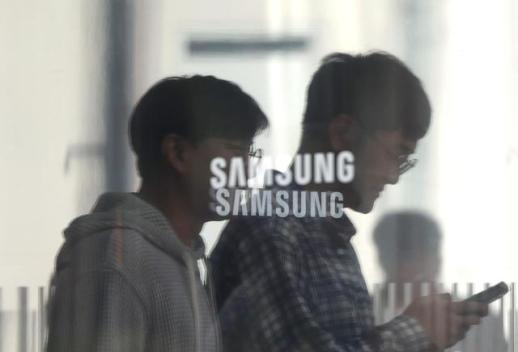 Samsung Electronics union start vote on strike-risk wage proposal SEOUL, May 22 (AJP) - Unionized members of Samsung Electronics on Friday begin vote on whether to accept a tentative wage settlement agreed last week that would create a profit-linked special bonus system and remove the risk of a disruptive strike. The six-day electronic voting window opened at 2 p.m. Friday and will run through 10 a.m. Wednesday. The electorate consists of the 70,850 union members registered as of 2 p.m. on Thursday — a figure that has decreased significantly from a peak of around 77,000 amid recent internal discord. The landmark agreement will be finalized and become legally binding if a majority of eligible members participate and more than half vote in favor. Otherwise, both sides must return to the negotiating table. The tentative 2026 wage agreement, reached Wednesday after marathon government-mediated negotiations, introduces a “Special Management Bonus” funded by 10.5 percent of the semiconductor division’s business performance. It also includes a new housing loan program offering up to 500 million won ($365,000) and an average wage increase of 6.2 percent, consisting of a 4.1 percent base-pay hike and a 2.1 percent performance-based increase. Local securities firms project Samsung Electronics to post operating profit of around 300 trillion won this year amid the AI-driven semiconductor boom. Based on those forecasts, approximately 31.5 trillion won would be allocated for the special management bonus pool. Employees in the memory division — the company’s main earnings engine — are estimated to receive up to 600 million won in combined bonuses this year, including the existing Overall Performance Incentive (OPI). Under the agreement, the special management bonus will be paid entirely in treasury shares after taxes, effectively turning the payout into a large-scale stock compensation scheme. Employees in non-memory businesses such as System LSI and Foundry, which are expected to remain loss-making this year, are also projected to receive at least 160 million won in special bonuses under a rule allocating 40 percent of the semiconductor division’s common performance pool across all DS units. “This tentative agreement is the result of the utmost efforts by the Enterprise Union and the joint struggle committee,” said Choi Seung-ho, head of the Samsung Electronics branch of the Enterprise Union, in a message to members Thursday. “We will consider the outcome of this vote as the report card our members give to the union.” 2026-05-22 10:09:17
 -
 AJP Focus: Samsung strike on hold, but shareholders see a new battle beginning SEOUL, May 21 (AJP) - The chip lines at Samsung Electronics ran uninterrupted Thursday morning. What had been dreaded as the opening day of an unprecedented 18-day walkout instead turned into relief rally on the market after labor and management reached a last-minute settlement shortly before midnight. Samsung shares surged as much as 7 percent during trading and closed at a fresh record high as markets priced out the immediate risk of production disruption at the world’s largest memory-chip maker. But not all existing shareholders were pleased. Two separate shareholder advocacy groups staged demonstrations in Seoul on Thursday, arguing that the tentative wage agreement could severely undermine future shareholder returns and destabilize Samsung’s long-term financial structure if institutionalized. At the center of the controversy is the newly agreed compensation framework for semiconductor employees. Under the tentative deal, the union secured a structure that effectively allocates bonuses equivalent to 12 percent of operating profit — consisting of a 1.5 percent Overall Performance Incentive (OPI) and a 10.5 percent special management bonus for chipmaking divisions. According to consensus estimates compiled by FnGuide, Samsung Electronics is projected to post operating profit of around 348 trillion won ($252 billion) in 2026 amid the continuing global AI semiconductor boom. If the company executes the agreed formula in full, more than 41 trillion won could be recognized as labor compensation in a single year. For shareholders, the issue is not simply the size of the payout but its collision with Samsung’s existing capital return framework. Samsung previously pledged to return 50 percent of free cash flow generated between 2024 and 2026 to shareholders through dividends and share buybacks. But if tens of trillions of won are absorbed into operating expenses before profits flow into free cash generation, shareholder distributions could shrink sharply. Activist groups estimate the reduction in shareholder return capacity could exceed 15 trillion won. Industry experts note that while such a payout structuralizes financial risks, management faced an unavoidable dilemma regarding human capital. "From a financial perspective, 41 trillion won is an astronomical sum, equivalent to the capital required to build a massive, state-of-the-art semiconductor fabrication line," said Lee Jong-hwan, a professor of system semiconductor engineering at Sangmyung University. "However, Samsung's biggest fear right now is a 'domino-effect' drain of its core talent to SK Hynix or foreign competitors. From management's perspective, securing talent retention was likely deemed a safer, more urgent path for long-term survival than immediate infrastructure expansion." A small delegation from the “Korea Shareholder Movement Headquarters” gathered near the residence of Lee Jae-yong on Thursday, condemning what they described as an excessive inward transfer of corporate profits. Min Kyung-kwon, head of the organization, argued that the structure may violate Article 462 of South Korea’s Commercial Act governing dividend calculations. The group contends that distributing large-scale bonuses directly tied to pre-tax operating profit without shareholder approval amounts to what it called a “disguised illegal dividend.” The activists also questioned the sustainability of the formula during the semiconductor industry’s notoriously volatile downcycles. “Semiconductors are not a permanently booming industry,” one protester said during the rally. “If operating profit collapses during the next downturn, how can the company survive while structurally locked into massive payouts?” The group further criticized what it described as a widening disconnect between management, labor and shareholders, arguing that top executives themselves could indirectly benefit from profit-linked compensation structures while ordinary shareholders absorb the dilution in corporate value. Using ACT, an online minority shareholder platform reportedly containing around 13,000 verified Samsung shareholders, the activists are now preparing a potential nationwide class-action campaign. If Samsung’s board formally approves the tentative agreement, they say they plan to pursue breach-of-trust complaints against consenting directors and seek legal action to invalidate the board resolution. Elsewhere in Seoul, another shareholder organization calling itself the “Samsung Electronics Shareholder Action Practice Headquarters” held a parallel rally near Hangangjin Station in Yongsan District. That group framed the dispute less as a legal issue than a broader social and economic imbalance. Its members argued that highly paid workers in the semiconductor sector were demanding disproportionate rewards while many ordinary workers across South Korea continue to earn annual salaries below 30 million to 40 million won. The organization also renewed calls for the government to invoke emergency adjustment powers — a rarely used legal mechanism allowing authorities to suspend strikes temporarily in industries deemed vital to the national economy. The group argued that semiconductors should effectively be treated as strategic national infrastructure similar to police, electricity or transportation systems because of their central role in exports, employment and supply chains. Some members called for permanent legal restrictions on strikes within the semiconductor industry altogether, warning that prolonged labor instability could damage South Korea’s global competitiveness during a critical phase of the AI race. Furthermore, observers warn that the settlement could set a precedent that fundamentally alters the labor landscape across South Korean industries. "This deal could open the floodgates," Professor Lee warned. "Not only will non-memory units and other Samsung affiliates demand identical transparent, profit-linked bonus structures, but major automotive giants and their supply chain networks will face immense pressure from unions to replicate this formula. It triggers a nationwide structural shift in corporate profit distribution." For now, the immediate crisis has passed. Production remains stable. Markets have calmed. The feared supply-chain disruption that had alarmed investors, policymakers and global technology customers alike has been avoided. Yet the settlement appears to have exposed a deeper structural fault line inside corporate South Korea. The conflict is no longer confined to labor versus management. It is increasingly evolving into a three-way confrontation between labor, capital and shareholders over who ultimately owns the gains generated by the AI-era semiconductor boom. 2026-05-21 17:33:10
 -
 Samsung Live: Samsung Union halts historic strike after eleventh-hour wage deal SEOUL, May 20 (AJP) - Samsung Electronics' largest labor union on Wednesday night suspended its planned full-scale strike, narrowly averting a historic walkout just an hour before it was scheduled to begin. The dramatic breakthrough came after management and union leadership reached a tentative agreement on the 2026 wage negotiations. "The general strike scheduled from May 21 to June 7 will be suspended until further notice," the union’s joint strike committee announced in an urgent directive to its members. The union instructed all members to participate in a mandatory vote to ratify the tentative agreement, which will run from May 22 to May 27. The late-night resolution caps off a chaotic day of negotiation, following the initial collapse of official government-mediated talks in Sejong earlier in the morning. 2026-05-20 22:48:16