
Journalist

Kim Dong-young, Lim Jaeho
davekim0807@ajupress.com
-
 South Korea launches expert council to chart AI-driven future SEOUL, May 13 (AJP) - South Korea convened the inaugural meeting of a new expert advisory body tasked with shaping the government's policy response to artificial intelligence and the sweeping societal shifts it is expected to bring. The Ministry of Science and ICT said Wednesday its special council for technology and artificial intelligence met for the first time at the Presidential Advisory Council on Science & Technology in Gwanghwamun, Seoul, drawing 17 specialists from fields spanning the economy, industry, education, healthcare, culture and law. The ministry said the cross-disciplinary lineup was designed to dissect how cutting-edge technologies intersect with each sector and to forecast the future through a wider analytical lens than a purely scientific panel would allow. The council will convene quarterly, with its membership set to expand to capture a wider range of voices, while agendas identified at the sessions will be developed into in-depth studies released as a "Future Agenda Series" in cooperation with affiliated research institutes, the ministry said. Cross-ministerial issues will be escalated to the Science and Technology Ministers' Meeting to secure follow-through on policy. "Advances in cutting-edge technologies such as AI are accelerating, and technological innovation is fundamentally reshaping not only industries but also national systems and daily life," said Bae Kyung-hoon, Deputy Prime Minister and Minister of Science and ICT, pledging to "tear down the wall between the public and private sectors" and pool expertise to design a hopeful blueprint for future generations. 2026-05-13 15:12:10
 -
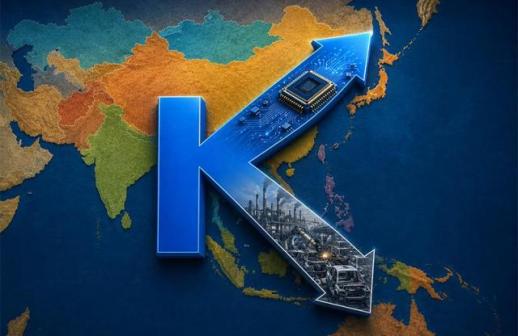 K-shaped economy deepens across Asia on AI momentum SEOUL, May 13 (AJP) - A widening economic divide is emerging across Asia, as semiconductor-driven economies such as South Korea and Taiwan ride record-breaking stock rallies while manufacturing-heavy nations including India, Thailand and the Philippines struggle under the weight of a historic oil shock. The bifurcation, sharpened by the near-total closure of the Strait of Hormuz, has produced what economists describe as a "K-shaped" recovery, in which the gains from the artificial intelligence boom and the pain of fuel scarcity move in opposite directions across the region. Taiwan’s first-quarter GDP expanded 13.69 percent, the fastest pace in 39 years, as its stock market surpassed Canada’s to become the world’s sixth largest. South Korea’s KOSPI has also overtaken the stock markets of London and Toronto, propelled by chipmakers Samsung Electronics and SK Hynix, whose first-quarter profits reached fresh records. Samsung’s market capitalization has climbed above $1 trillion, while Taiwan Semiconductor Manufacturing Company now accounts for more than 40 percent of the Taiwan Stock Exchange. A report by the United Nations Trade and Development projects the global AI market will expand to $4.8 trillion by 2033, roughly 25 times its 2023 size. A contrasting picture emerges in the south and west. In the Philippines, where more than 36 percent of the consumer price basket is linked to oil, fuel prices have surged past 100 pesos ($5.81) per liter. The central bank is weighing whether to raise interest rates to contain inflation or hold them steady to protect growth. Manila has also introduced a four-day workweek to curb fuel demand. Thailand has reported nationwide fuel shortages, while Pakistan has urged cricket fans to watch matches from home to conserve gasoline. The United Nations Development Programme estimates the war has placed about 8.8 million people in the Asia-Pacific at risk of falling into poverty and could shave 0.3 to 0.8 percentage point off regional GDP. At the heart of the divide is intensifying competition for medium and heavy crude oil, the grades that generate the highest refining margins and underpin Middle Eastern exports. Although the United States is the world’s largest oil producer, its output is heavily weighted toward light, sweet shale crude, leaving Asian refiners competing fiercely for sour crude from non-Hormuz suppliers. "Unless the war ends on reasonable and viable terms good enough to convince shipowners and insurance companies, it may be extremely difficult for oil prices to return to post-war levels even in the long run," said Chung Tae-hun, an associate research fellow at the Korea Energy Economics Institute. "We still face competition for heavy crude oil outside the Middle East if the war becomes prolonged, with China and Japan also bidding for supplies," he said. Brent crude hovered around $106 a barrel on Wednesday, while daily transits through the Strait of Hormuz fell to roughly 18 vessels from a prewar average of 135. The World Bank reported that by the end of March, Brent prices had risen about 65 percent, marking the largest monthly oil-price increase on record. The wealth generated by the AI boom has also failed to spread evenly within the region’s winning economies. In South Korea, more than 30,000 unionized workers at Samsung Electronics’ semiconductor division have scheduled a strike from May 21 to June 7 after wage negotiations collapsed Tuesday. The union is demanding a 15 percent operating-profit bonus and a 7 percent increase in base pay. JPMorgan Chase estimates the 18-day stoppage could reduce Samsung’s quarterly profits by as much as 12 percent. In Taiwan, the semiconductor industry employs only about 4 percent of the workforce, yet entry-level chip-sector salaries can be five times higher than wages in other industries, fueling concerns over growing inequality and economic concentration. Officials and analysts warn that the widening divergence could have consequences far beyond Asia. Deepening inequality threatens to weaken consumer spending, complicate monetary policy and disrupt global trade flows. Analysts also warn that the fuel shortage could soon become critical. "We are going to start to see some import-dependent countries potentially face critical shortages as we get into the June-July timeframe," said Andy O’Brien, chief financial officer of ConocoPhillips, during the company’s first-quarter earnings call. Valero Energy also warned of worsening supply pressures. Chief executive Lane Riggs said that for every day the strait remains closed, "it takes a minimum of three days to rebuild stocks," meaning it could take six to 12 months to fully replenish inventories. 2026-05-13 14:46:57
 -
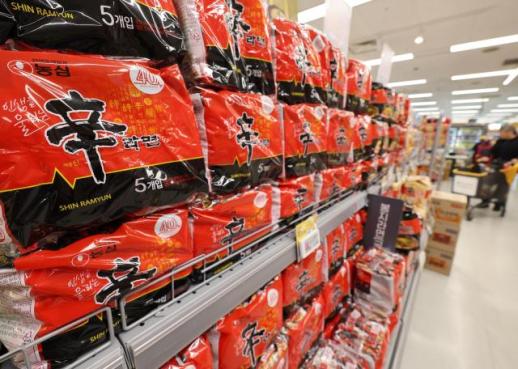 K-ramyeon makers race overseas as Nongshim eyes 60% global sales SEOUL, May 13 (AJP) - South Korea's instant noodle makers are accelerating a pivot abroad as a saturated home market and surging foreign appetite for K-food reshape the industry, with Nongshim unveiling its most aggressive overseas push yet. Nongshim CEO Jo Yong-chul said Tuesday that the company aims to lift overseas sales to more than 60 percent of total revenue and reach 7.3 trillion won ($4.88 billion) in sales by 2030, alongside a 10 percent operating margin. Overseas business currently accounts for about 40 percent of Nongshim's revenue. "We will sufficiently achieve this sales target if we secure logistics hubs to support our overseas business," Jo told reporters at a briefing in Seoul marking the 40th anniversary of flagship brand Shin Ramyun, adding that an export-only plant in Busan's Noksan district will start operations in the fourth quarter and that the company will widen distribution in the United States, Japan and China. Nongshim, which holds more than 60 percent of Korea's domestic ramyeon market, plans to launch a sales unit in Moscow next month to tap the European and Commonwealth of Independent States markets, on top of existing factories in Los Angeles and three Chinese cities. Shin Ramyun's overseas sales reached 1.02 trillion won last year, or 66% of the brand's 1.54 trillion won total. The drive reflects a broader industry scramble. Korea's ramyeon exports hit a record $1.52 billion in 2025, up 21.9 percent from a year earlier and extending an 11-year streak of growth, according to the Korea Customs Service, with China and the U.S. together absorbing more than 40 percent of shipments. Rival Samyang Foods, maker of the viral Buldak spicy noodles, has moved faster. Its 2025 sales surged 36 percent to 2.35 trillion won, with oversea sales accounting for over 70 percent of revenue, and the company broke ground in July on its first non-domestic plant in China. Ottogi, maker of Jin Ramen, has set a target of 1.1 trillion won in overseas sales by 2030, while smaller player Paldo continues to lean on Russia and Central Asia, where its Doshirak cup noodle is a household name. 2026-05-13 14:01:33
 -
 Crimson Desert hit propels Pearl Abyss Q1 profit 26-fold SEOUL, May 12 (AJP) - South Korean game developer Pearl Abyss reported that its first-quarter operating profit surged nearly 26-fold from a year earlier, propelled by the runaway success of action-adventure title Crimson Desert, which has reshaped the studio's financial trajectory since its March 20 launch. According to regulatory filings released Tuesday, operating profit on a consolidated basis came in at 212.1 billion won ($142.4 million), a whopping 2,597.4 percent jump from the same period last year. Revenue climbed 419.6 percent to 328.5 billion won, while net profit ballooned more than 315-fold to 158 billion won. The figures were restated on a continuing-operations basis after Pearl Abyss divested its entire stake in Iceland-based affiliate Fenris Creation, formerly known as CCP Games. Overseas markets accounted for 94 percent of quarterly sales, with North America and Europe alone making up 81 percent, Asia 13 percent and the domestic market just 6 percent. By franchise, Crimson Desert generated 266.5 billion won and the long-running Black Desert series added 61.6 billion won, with console and PC each delivering half of Crimson Desert's revenue. Skipping its customary earnings conference call, Pearl Abyss issued forward guidance for the first time, projecting second-quarter revenue of 271.3 billion to 324.7 billion won and operating profit of 129.6 billion to 176.7 billion won. For the full year, the company expects revenue of 879 billion to 975.4 billion won and operating profit of 487.6 billion to 572.6 billion won. "Crimson Desert is expected to soften from the previous quarter given the front-loaded nature of package game sales, but steady demand is anticipated through continued patches and updates," the company Pearl Abyss said, citing planned tweaks to difficulty, controls, boss rematches and pet content. The studio is now channeling Crimson Desert's core development team into "DokeV," its next title — a brightly styled collection-based open-world adventure dubbed "K-Pokemon" by Korean media and allegedly targeting 2028 release — after Crimson Desert sold 2 million copies on its first day and crossed 5 million by April 15. Shares of Pearl Abyss ended at 52,800 won per stock on KOSDAQ, 1.12 percent lower than the previous session, as the results came out after market closure. 2026-05-12 17:01:45
 -
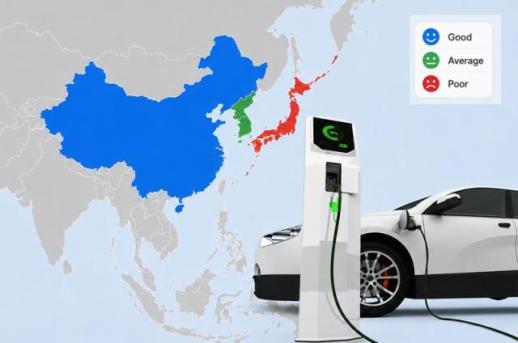 EV chasm redraws East Asia's auto map SEOUL, May 12 (AJP) - A widening electric-vehicle demand divide across Asia is reshaping the region's automotive hierarchy, pushing Japanese automakers into retreat while opening once-impenetrable markets to Chinese exporters. Caught between the two forces, South Korea's battery makers are pivoting aggressively toward energy storage systems and lower-cost chemistries to weather the global EV slowdown. The clearest sign of Japan's retreat came on April 23, when Honda Motor announced it would end vehicle sales in South Korea by the end of 2026, closing out a 23-year presence in one of Asia's fiercest automotive battlegrounds. Honda sold just 1,951 vehicles in Korea last year, down 85 percent from its 2008 peak of 12,356 units. "It is regrettable to end business in Korea, but we will faithfully respond to consumers so they do not feel uneasy," said Lee Ji-hong. Nissan Motor exited the Korean market in 2020, leaving only Toyota Motor and its luxury brand Lexus still selling passenger cars in the country. The pressure extends well beyond Korea. Nissan has halted plans for a $500 million EV production project at its Canton, Mississippi plant, originally announced in 2022, while Honda has indefinitely frozen a 15 billion Canadian-dollar ($10.9 billion) EV and battery complex in Ontario that had been scheduled to begin production in 2028. The fallout is reverberating through Korea's battery industry. SK on had agreed in March 2025 to supply 99 gigawatt-hours of high-nickel batteries for four next-generation Nissan EV models in a deal industry sources estimate at around 15 trillion won ($10.8 billion). The volume is now expected to be redirected to revised Nissan lineups, though final contract terms remain uncertain. Honda's Ontario freeze has also forced Posco Future M to revisit a planned cathode joint venture in Canada, while the LG Energy Solution-Honda battery joint venture in Ohio is shifting output plans from pure EV batteries toward hybrid and energy-storage applications. For Japan's automakers themselves, the outlook has darkened sharply. Honda forecast a fiscal 2025 net loss of between 420 billion yen and 690 billion yen, potentially marking its first annual loss since listing publicly in 1957. Nissan projects a 550 billion yen annual loss, while Toyota — still the world's largest automaker with 11.3 million vehicle sales in 2025 — faces an estimated $9.1 billion in U.S. tariff-related costs for the fiscal year ending March 2026. As Japanese firms retrench, Chinese manufacturers are moving into the vacuum at unprecedented speed. Chinese-built EVs, including Tesla vehicles exported from Shanghai, accounted for 33.9 percent of newly registered EVs in South Korea during the first quarter of 2026, up from just 4.7 percent in 2022, according to the Korea Automobile & Mobility Industry Association. Domestic Korean brands' share fell to 57.2 percent from 75 percent over the same period. BYD has led the Chinese advance. After launching passenger vehicle deliveries in Korea in April 2025, the Shenzhen-based automaker surpassed 10,000 cumulative sales within 11 months — the fastest pace ever achieved by an imported brand in Korea. BYD sold 5,991 vehicles in the first four months of 2026, ranking fourth among imported brands behind Tesla, BMW and Mercedes-Benz. China's domestic EV market, however, is beginning to show signs of fatigue. New-energy vehicle wholesale sales rose 28.2 percent in 2025 to 16.49 million units, accounting for nearly half of all vehicle sales in China. But BYD's monthly sales fell year-on-year for an eighth consecutive month in April as Beijing scaled back trade-in subsidies and prepared to reinstate purchase taxes. The company compensated by accelerating exports, shipping a record 134,000 vehicles overseas in April alone, up 70.9 percent from a year earlier. Beyond the China-Japan-Korea triangle, EV demand is broadening rapidly across emerging Asia. India's electric passenger vehicle sales surged 87.4 percent in fiscal 2026 to 233,246 units, while total EV sales across two-, three-, four-wheelers and commercial vehicles reached 2.45 million units, according to Jato Dynamics. Tata Motors continues to dominate India's electric passenger vehicle market with more than 36 percent share as of April. Southeast Asia is moving even faster on EV penetration. Battery-electric vehicles accounted for roughly 26 percent of new car sales in Vietnam through August 2025, driven overwhelmingly by local automaker VinFast and its VF 3 mini-SUV. Thailand reported EV penetration of around 20 percent in the first 10 months of 2025, dominated by Chinese brands including BYD and Great Wall Motor. In Singapore, EVs already account for more than 40 percent of new car sales. For Korea's battery trio — LG Energy Solution, Samsung SDI and SK on — the strategic response has been a rapid shift away from pure EV dependence. All three are accelerating lithium iron phosphate battery production for grid-scale energy storage projects in North America, where changes to federal tax-credit policies have prompted automakers to slow EV investment and delay orders. LG Energy Solution targets more than 60 gigawatt-hours of global ESS capacity this year, including over 50 gigawatt-hours in North America. SK On has already secured a 7.2 gigawatt-hour ESS supply agreement with Flatiron Energy Development. "Demand for ESS is growing more sharply than ever before, and this is the crucial opportunity for the success of portfolio rebalancing," said Kim Dong-myung in his New Year address. The pivot may offer Korean battery makers a bridge through the EV slowdown, but competition remains intense. Chinese suppliers led by CATL and BYD continue to dominate global LFP battery and cathode material supply chains, leaving Korean firms racing to secure production scale and defend their North American foothold before the next phase of the EV transition takes shape. As Asia's automotive landscape fractures between retreating Japanese incumbents, surging Chinese exports and rapidly expanding emerging-market demand, Korea's battery industry — long viewed as the region's strongest electrification advantage — is entering its most consequential test yet. 2026-05-12 16:42:23
 -
 Nexon reopens revamped Jeju game museum SEOUL, May 12 (AJP) - Nexon reopened its museum on Jeju Island after a four-month renovation, recasting Asia's first computer museum as a destination devoted to the South Korean publisher's three-decade catalogue of online games and the players who built its communities. The Jeju City venue, originally launched in July 2013 as the Nexon Computer Museum, has been rebranded simply as Nexon Museum, its grand opening on Tuesday. The overhaul shifts the institution away from a hardware-focused chronicle of computing history toward a player-centered experience drawing on Nexon titles such as MapleStory, Mabinogi, and Dungeon & Fighter. Visitors who log in with their Nexon account upon entry have their personal play records pulled into a customized tour, with characters and intellectual property tied to their most-played games appearing throughout the exhibition. Guests without an account are assigned a random title to introduce them to the company's portfolio. Two permanent exhibitions span the three-story building. "Players: Don't Die! Keep Up!" occupies the first and second floors, while "Hello, My OOO!" — billed by the museum as the renovation's centerpiece — fills the third floor with immersive media art that summons each visitor's digital memories into physical space. The second floor also houses an archive of Korean PC package games from the 1980s to the 2000s, including roughly 2,500 digitized gaming magazines and a documentary marking Nexon's 30th anniversary. "Nexon Museum aims to become a new hub for game culture that players can cherish," said Park Doo-san, director of the Nexon Museum. "We will continue to present diverse content that allows players to encounter their experiences and memories in the real world." Nexon, listed on the Tokyo Stock Exchange, became the first Korean game publisher to surpass 4 trillion won ($2.69 billion) in annual revenue in 2024, drawing 48 percent of first-quarter 2025 sales from South Korea and 33 percent from China, its second-largest market. 2026-05-12 13:43:59
 -
 Krafton's 'Subnautica 2' opens Steam preloads as wishlists pass 5 million SEOUL, May 12 (AJP) - Krafton's creative studio Unknown Worlds opened Steam pre-orders and pre-downloads for "Subnautica 2" at midnight Tuesday, three days before the underwater survival sequel enters early access on Friday. The title has held the top spot on Steam's global wishlist for nine straight months and recently crossed 5 million cumulative wishlists, the company said. It also climbed to No. 1 on Steam's global top-grossing chart shortly after pre-orders opened. Krafton and Unknown Worlds staged the "First Dive Showcase" on May 10 to mark the milestone, streaming simultaneously on Twitch, YouTube and Steam to a peak concurrent audience of about 80,000 viewers. Developers walked through the design direction and demonstrated new vehicles and an expanded base-building system. The accompanying gameplay trailer showcased a richly rendered marine ecosystem powered by Unreal Engine 5, alongside a body-adaptation mechanic, fresh underwater vehicles and tense encounters with deep-sea titans. "We were overwhelmed by the warm response to the early access launch," said Ted Gill, CEO of Unknown Worlds. "We look forward to building this game together with our players, listening to their voices along the way." Founded by Charlie Cleveland and Max McGuire, Unknown Worlds developed "Subnautica 2" as the official sequel to the genre-defining "Subnautica" series. Set on a different alien planet, the game introduces a four-player cooperative mode for the first time in the franchise, broadening the survival experience beyond solo play. The launch arrives despite a bruising legal battle between Krafton and Unknown Worlds' founding leadership over the title's release timing and a $250 million performance-based earnout. Gill, Cleveland and McGuire were ousted in July 2025 and later sued Krafton in Delaware's Court of Chancery, which on March 16 ruled that Krafton had breached its acquisition agreement and ordered Gill reinstated as chief executive. The court also extended the earnout window to September, though litigation over damages remains pending. 2026-05-12 11:16:35
 -
 CJ CheilJedang Q1 profit falls 26% on bio slump SEOUL, May 12 (AJP) - CJ CheilJedang, South Korea's largest food maker, reported a 26.0 percent drop in first-quarter operating profit, as a sharp downturn in its bio business overshadowed steady gains overseas from its frozen dumpling franchise. According to regulatory filings released Tuesday, operating profit fell to 148.5 billion won ($100 million) for the three months ended March, while revenue edged up 4.3 percent to 4.03 trillion won, the company said. The figures exclude its logistics affiliate CJ Logistics. On a consolidated basis, revenue rose 6.0 percent to 7.11 trillion won, with operating profit down 17.2 percent at 238.1 billion won. The firm said that the food division carried the quarter, posting a 3.9 percent rise in revenue to 3.04 trillion won and an 11.2 percent jump in operating profit to 143.0 billion won. Overseas food sales climbed 4.5 percent to 1.56 trillion won, driven by its lineup of global strategic products led by the Bibigo dumpling brand. In the Americas, dumpling sales grew 15 percent and shelf-stable rice 7 percent, while frozen pizza continued to gain market share. In Japan, dumpling revenue surged 17 percent on the back of the company's new Chiba plant, pushing its market share into double digits at 11.0 percent for the first time. European and Asia-Pacific sales each expanded 17 percent, with Vietnam up 32 percent and Oceania up 31 percent. The bio division, however, dragged on group earnings. Revenue rose 5.7 percent to 988.7 billion won, but operating profit collapsed 92.4 percent to 5.5 billion won as competition intensified in tryptophan and lysine prices weakened on base effects. Specialty amino acids such as arginine notched record sales volumes, partly cushioning the blow. CJ CheilJedang said it plans to accelerate the rollout of its Bibigo brand in mainstream European retail channels and expand digital marketing in the United States, while pushing higher-margin specialty products in bio. "We will press ahead with the global expansion of K-food through strategic products such as dumplings, while stepping up efforts to improve profitability through bio sales growth and management efficiency," said a company spokesperson. Shares of CJ CheilJedang traded at 212,500 won per stock at 10:37 a.m., 5.76 percent lower than the day before. 2026-05-12 10:43:32
 -
 Kurly posts record Q1 as Coupang stumbles SEOUL, May 11 (AJP) - South Korean online grocer Kurly logged its strongest-ever quarterly earnings in the first three months of 2026, riding a wave of consumer migration away from market leader Coupang as the country's e-commerce hierarchy shows fresh signs of strain. According to regulatory filings released Monday, operating profit jumped to 24.2 billion won ($16.4 million) in the first quarter, a 1,277 percent skyrocketing surge from a year earlier and 1.9 times the company's full-year 2025 operating income. Revenue climbed 28.4 percent on-year to 745.7 billion won, while net income swung to a 20.3 billion won profit. Kurly credited gains in its core fresh-food and beauty categories, alongside its midnight Saetbyeol delivery service launched in February and refined operations at its Gimpo, Pyeongtaek and Changwon logistics centers. The fresh-food segment grew 27.8 percent on-year by transaction value, while beauty expanded 20.2 percent. Kurly N Mart, a grocery storefront the company operates within Naver Plus Store, saw March transactions multiply roughly ninefold from September last year. "Steady efforts in merchandising, logistics and technology have differentiated the customer experience, and our diversification push for new growth engines is bearing fruit from the first quarter," said Kim Jong-hoon, chief financial officer at Kurly. " Having demonstrated both growth and profitability, we plan to firm up and accelerate our IPO roadmap." Kurly's breakout quarter coincides with a sharp reversal for archrival Coupang. The Nasdaq-listed market leader posted a $266 million net loss in the first quarter, swinging from a $107 million profit a year earlier, with adjusted EBITDA collapsing to $29 million from $382 million. Coupang attributed the slump to vouchers issued and network inefficiencies tied to a late-2025 customer-data breach that triggered elevated churn. That fallout has reshuffled the competitive map. Naver Plus Store, the search giant's shopping platform, drew 8.39 million monthly active users in April, overtaking AliExpress to become the country's third-largest general shopping app, according to WiseApp Retail. Naver delivered record first-quarter operating profit of 541.8 billion won as commission revenue absorbed so-called "Coupang defectors," while other players such as Gmarket and 11Street continued to shed users. 2026-05-11 15:46:08
 -
 S-Oil swings to $837 million Q1 operating profit on crude price surge SEOUL, May 11 (AJP) - S-Oil returned to profit in the first quarter as a jump in crude prices triggered by the Middle East conflict delivered hefty inventory gains, more than offsetting headwinds from scheduled maintenance and a domestic petroleum price cap. According to regulatory filings released Monday, the Aramco-controlled refiner posted a consolidated operating profit of 1.23 trillion won ($835.7 million) for the January to March period, swinging from an operating loss of 21.5 billion won a year earlier. Net profit came in at 721 billion won, also reversing a year-ago loss. Revenue edged down 0.5 percent from a year earlier to 8.94 trillion won, as the hit from lower utilization during turnaround maintenance was largely cushioned by surging oil prices. More than half of the quarterly operating profit stemmed from inventory-related gains tied to the crude rally, the company said, with the so-called lagging effect — the timing gap between crude purchases and product sales — widening refining margins despite the drag from maintenance and Seoul's petroleum price ceiling. The refining division led the gains with an operating profit of 1.04 trillion won on revenue of 7.10 trillion won, as the blockade of the Strait of Hormuz disrupted global crude flows, trimmed regional refinery runs and lifted Asian crack spreads for gasoline and diesel. Petrochemicals eked out a 25.5 billion-won operating profit on revenue of 1.10 trillion won, while the lubricants unit booked 166.6 billion won in operating profit on revenue of 737 billion won, down sequentially as feedstock costs outran product prices. Despite the tighter regional supply backdrop, S-Oil said it has preserved stable crude procurement through long-term contracts with parent Saudi Aramco and shipping affiliate Bahri. "Although supply-demand conditions remain tight due to the Middle East war, we are maintaining stable crude supply through long-term purchase agreements with our parent company Aramco," said a company spokesperson. Looking ahead, S-Oil expects firm refining margins in the second quarter as supply disruptions outweigh demand concerns from high prices, while flagging widening uncertainty over petrochemical feedstocks and a recovery in lubricant spreads. The Shaheen Project, the company's flagship petrochemical complex, stood at 96.9 percent EPC progress as of end-April and remains on track for mechanical completion by the end of June, with commercial operations to be readied after trial runs through the end of the year. Shares of S-Oil traded at 111,600 won per stock at 11:43 a.m., 4.45 percent lower than the previous session. 2026-05-11 11:47:51