
Journalist

Kim Dong-young
davekim0807@ajupress.com
-
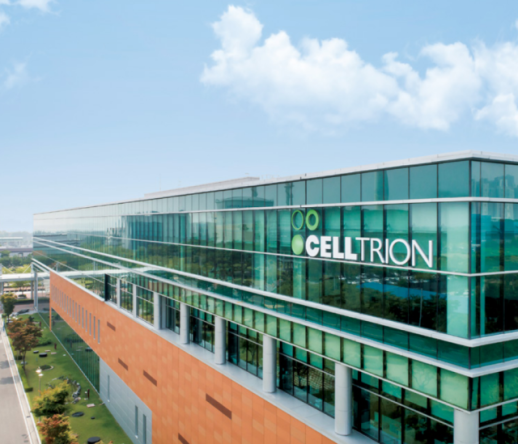 Celltrion posts record Q1 as new biosimilars drive earnings surge SEOUL, May 06 (AJP) - South Korean biopharmaceutical firm Celltrion reported its strongest first-quarter results on record, as a wave of newly launched biosimilars accelerated overseas sales and pushed operating profit more than twofold higher. According to regulatory filings released Wednesday, the company logged consolidated revenue of 1.14 trillion won ($779.43 million) and operating profit of 321.9 billion won for the three months ended March 31, up 36 percent and 115.5 percent, respectively, from a year earlier. The operating margin widened to about 28.1 percent. Sales of five high-margin biosimilars launched last year jumped 67 percent on year to 581.2 billion won, accounting for 60 percent of total product revenue for the first time. Omlyclo, rolled out across Europe in September, has captured market shares of 98 percent in Denmark, 80 percent in Spain and 70 percent in the Netherlands within roughly four months of launch. Momentum has carried into the United States, where Zymfentra, the world's only subcutaneous infliximab, is logging its highest-ever monthly prescription volumes, more than triple year-earlier levels. SteQeyma held an IQVIA-tracked share above 10 percent as of March, supported by reimbursement coverage secured through major pharmacy benefit managers. "Achieving sharp growth in the seasonally weak first quarter reflects the full-fledged market entry of our high-margin product lineup," said a Celltrion spokesperson, adding that the results mark a successful start toward exceeding annual targets of 5.3 trillion won in revenue and 1.8 trillion won in operating profit. Celltrion's board on Wednesday also approved cancelling about 100 billion won of recently bought treasury shares, following last month's retirement of 9.11 million shares worth roughly 1.8 trillion won. The company plans to expand its biosimilar portfolio to 18 products by 2030 and 41 by 2038, while broadening its novel drug pipeline to 20 candidates by 2027. Shares of Celltrion traded at 197,000 won per stock on 9:30 a.m., 0.4 percent lower than the previous session. 2026-05-06 09:35:41
 -
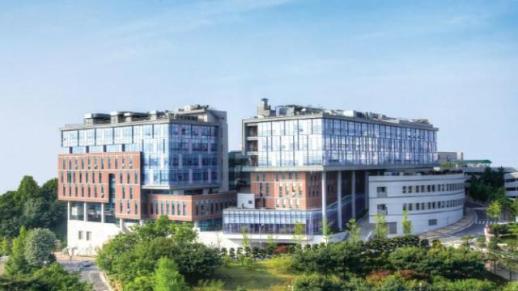 Korea University, UNIST team up to build Korean version of Harvard-MIT HST SEOUL, May 04 (AJP) - Korea University College of Medicine and the Ulsan National Institute of Science and Technology (UNIST) have been picked for the government's flagship program to nurture physician-scientists, marking a fresh push to close the gap between Korean medical research and global leaders such as Harvard-MIT and Stanford. The two institutions were selected as a new consortium under the 2026 K-MediST (Korea Medical Science & Technology) program, supervised by the Ministry of Health and Welfare and administered by the Korea Health Industry Development Institute. The five-year project runs from April 2026 through December 2030. Kim Tae-hoon, professor at Korea University College of Medicine and head of research at Korea University Anam Hospital, will serve as principal investigator, while Baek Seung-jae, dean of UNIST's Graduate School of Health Sciences and Technology, takes on the role of co-principal investigator. At the heart of the partnership lies what the schools call the "KUNIST" platform, a joint framework offering a joint MD-PhD degree, a shared research institute, and direct support for technology commercialization. A roughly 502-square-meter research hub will be set up at Korea University's Chung Mong-koo Hall in northern Seoul, linked to UNIST's high-performance computing and analytical infrastructure in Ulsan. The curriculum revolves around four pillars — medical AI, precision medicine, smart hospitals and extreme medicine — and will be built on the ADDIE instructional design model to tailor coursework to each student's research focus. A so-called 'Data Living Lab' is to feed real-time clinical data into research, allowing trainees to move between bedside and bench without friction. The program was modelled on Harvard-MIT's Health Sciences and Technology and Stanford University's BioX, both regarded as global benchmarks for physician-scientist training. The Korean partners say they intend to pursue joint research and exchange ties with those institutions. "Physician-scientists are the core talent in the bio-health field who can solve problems encountered in clinical settings through laboratory research," said Jung Eun-young, director-general for health industry policy at the Ministry of Health and Welfare, in a separate briefing on the broader program. 2026-05-04 14:09:56
 -
 Krafton's Unknown Worlds sets May 14 early access launch for Subnautica 2 SEOUL, May 01 (AJP) - Unknown Worlds Entertainment, the creative studio under South Korean gaming giant Krafton, confirmed that its underwater survival sequel Subnautica 2 will enter early access on May 14 for PC and Xbox Series X|S, priced at $30. The title has held the top spot on Steam's global wishlist ranking for about nine consecutive months since September 2025, amassing an estimated 3.8 million wishlists and cementing its status as one of the most anticipated games of 2026. A new cinematic trailer released alongside the announcement showcased the game's alien ocean ecosystem and its survival mechanics. Built on Unreal Engine 5, Subnautica 2 transports players to an uncharted alien planet and introduces four-player cooperative gameplay for the first time in the franchise's history. The series' predecessor, released in 2018, has sold more than 18.5 million copies worldwide and is widely regarded as a benchmark in the survival genre. "We will actively engage with players throughout the early access period and refine the game together," said Ted Gill, chief executive of Unknown Worlds. The launch comes after a turbulent chapter in the game's development. Krafton ousted Gill and studio co-founders in July 2025 and delayed the release from its original 2025 window, triggering lawsuits and a court order that reinstated Gill as CEO earlier this year. The former developers alleged the shakeup was aimed at avoiding a $250 million earnout payment tied to the game's delivery. Industry observers say the early access performance of Subnautica 2 will serve as a critical test of Krafton's push to diversify beyond its flagship PUBG franchise, particularly in Western markets where the Subnautica brand commands a loyal following. 2026-05-01 17:16:38
 -
 South Korea's exports top $80 billion for second straight month SEOUL, May 01 (AJP) - South Korea's exports surged 48 percent year-on-year in April to $85.89 billion, breaching the $80 billion threshold for a second consecutive month as a semiconductor supercycle powered by global artificial intelligence investment continued to underpin the trade-dependent economy. The Ministry of Trade, Industry and Energy reported Friday that the April figure trailed only the all-time high of $86.6 billion set in March, making it the second-largest monthly tally on record. Imports rose 16.7 percent to $62.11 billion, yielding a trade surplus of $23.77 billion and extending the country's streak of monthly surpluses to 15. Chip shipments drove the bulk of the gains. Semiconductor exports soared 173.5 percent to $31.9 billion, eclipsing the $30 billion mark for a second month in a row on surging demand for high-bandwidth memory, DDR5 and NAND flash used in AI server infrastructure. Computer exports also rocketed 515.8 percent to $4.08 billion, propelled by brisk enterprise demand for solid-state drives. Rising crude oil prices stemming from the prolonged Middle East conflict lifted petroleum product exports by 39.9 percent to $5.11 billion, though analysts noted the increase was driven largely by unit-price gains rather than higher volumes. Automobile shipments, by contrast, slipped 5.5 percent amid logistics disruptions in the Middle East and the overhang of U.S. tariff measures. By destination, exports to China jumped 62.5 percent on robust appetite for semiconductors and IT products, while shipments to the United States climbed 54 percent on the strength of chips and computers. Exports to the Middle East, however, tumbled 25.1 percent as the war disrupted trade routes. "South Korea saw its monthly exports surpass the $80 billion mark, along with a trade surplus of over $20 billion, for the second straight month for the first time in history in April even amid the persisting conflict in the Middle East," said Kim Jung-kwan, Minister of Trade, Industry and Resources. Analysts cautioned that the export boom remains heavily tethered to semiconductors and elevated oil prices, leaving it vulnerable to additional U.S. tariffs, a protracted Middle East war and a broader global slowdown in the second half of the year. 2026-05-01 12:59:59
 -
 Lee calls for end to 'pro-labor vs. pro-business' divide SEOUL, May 01 (AJP) - South Korean President Lee Jae Myung called for an end to the long-standing dichotomy that pits workers against employers, vowing to deliver "real growth" through cooperation between labor and management. Speaking at a Labor Day ceremony at the Blue House on Friday — the first such event ever held at the former presidential compound — Lee said the country could only move forward by abandoning the "outdated binary" of pro-labor versus pro-business politics. About 120 figures from labor, business, government and civil society attended the gathering. "A society that respects labor and a country that is good for doing business are not mutually exclusive. There are no workers without companies, and no companies without workers," Lee said. The event marked the first time the country's two rival umbrella unions, the Federation of Korean Trade Unions and the more militant Korean Confederation of Trade Unions, jointly attended a government Labor Day ceremony, an unprecedented show of unity that the Blue House described as a response to the administration's labor-respecting agenda. Lee, a former teenage factory worker, pledged to expand basic labor rights to non-regular employees, subcontractors, platform workers and freelancers, and said workplace safety would not be compromised. He framed safety as "a fundamental duty of the state and corporations, not a cost or a choice," cautioning against forcing workers to bear one-sided sacrifices in the name of productivity gains driven by artificial intelligence. The remarks come amid heightened labor tensions in South Korea, including a planned large-scale walkout by the Samsung Electronics union as well as Samsung Biologics, and follow legislation that restored the holiday's original Korean name, Nodongjeol, and elevated it to a statutory public holiday for the first time in 63 years. Lee, who said he was proud to have once been a "boy laborer" himself, vowed to answer workers' voices with "a heavy sense of duty" as the country navigates the twin pressures of the AI transition and the climate crisis. 2026-05-01 10:45:15
 -
 Apple's incoming CEO signals new products as quarterly revenue hits record SEOUL, May 01 (AJP) - Apple's incoming chief executive John Ternus voiced strong confidence in the company's product pipeline, hinting at new categories on the horizon as the iPhone maker posted record fiscal second-quarter revenue. Speaking on a conference call on Thursday (local time) after Apple reported results for the January-March quarter, Ternus, who takes the helm in September from Tim Cook, said the company had "an incredible roadmap" ahead and was preparing fresh offerings, though he declined to disclose details. "Suffice it to say, this is the most exciting time in my 25-year career at Apple to be building products and services.," Ternus said, suggesting work was under way on new product forms. He pledged to carry on the financial discipline that defined Cook's 15-year tenure. Apple posted revenue of $111.18 billion for the quarter, up 17 percent from a year earlier and surpassing the LSEG consensus estimate of $109.66 billion for an all-time high in the period. Earnings per share came in at $2.01, beating Wall Street's $1.95 forecast. iPhone sales jumped 21.7 percent to a record $56.99 billion but fell just shy of the $57.21 billion analysts had projected, while the iPad, Mac, wearables and services divisions all topped expectations. Services revenue reached $30.98 billion, and research and development spending climbed 33.6 percent to $11.42 billion as the company widened its artificial intelligence push. Cook flagged supply constraints during the quarter, particularly for the iPhone, tied to limited capacity at advanced chip nodes operated by Taiwan's TSMC, and warned that the squeeze would tighten in the April-June quarter. 2026-05-01 10:02:18
 -
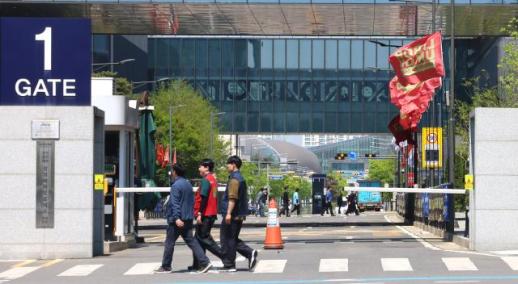 UPDATE: Samsung Biologics union demands immediate talks as first-ever strike begins SEOUL, May 1 (AJP) - Samsung Biologics, the world's largest contract drug manufacturer by volume, was rocked on Friday by the first full-scale walkout in its 15-year history, with the union demanding management return to the bargaining table at once and the company warning of losses of up to 640 billion won ($434 million). The Samsung Biologics chapter of the Samsung Group labor union launched the strike on Friday, Labor Day, after 13 rounds of wage talks since December collapsed without a deal. The union has vowed to walk off the job through May 5. In a sharply worded statement issued as the strike began, the union accused executives of resorting to legal pressure and intimidation rather than substantive dialogue, blaming boardroom missteps — chronic understaffing, aggressive cost-cutting, and decisions made without input from the production floor — for the company's recent order shortfalls. "If the company is truly worried about losses and damage to client trust, it should stop shifting responsibility to employees and immediately enter genuine negotiations," the union said. Workers are demanding a 14 percent average pay raise, a one-off bonus of 30 million won per employee, and 20 percent of operating profit to be distributed as performance pay. Management has countered with a 6.2 percent wage hike, leaving the two sides far apart. The projected hit of 640 billion won amounts to about half of the company's first-quarter revenue of 1.26 trillion won. Samsung Biologics warns that biopharmaceutical manufacturing relies on a continuous, nine-stage process in which a single interruption can spoil entire batches of living cells, forcing them to be discarded as waste. A partial strike from April 28 to 30, joined by some 60 workers in the materials handling division, has already disrupted output of 23 products including cancer treatments, HIV medicines, and atopic dermatitis therapies, with damage estimated at 150 billion won. Chief Executive John Rim convened a town hall on Thursday and apologized to staff before issuing an afternoon message urging workers to reconsider joining the walkout, saying prolonged disruption could inflict irreversible damage on both the firm and its employees. Ahead of the walkout, the company filed for an injunction to block the strike. A South Korean court last month barred industrial action only on the final three stages — concentration and buffer exchange, drug-substance filling, and buffer manufacturing — while allowing the union to halt the other six. Samsung Biologics appealed the same day, arguing the entire production line must be tightly controlled. Industry observers warn that supply-chain disruption could erode Samsung Biologics' standing with global clients, who may shift orders to overseas rivals if delivery deadlines slip. The U.S. Food and Drug Administration and other regulators place heavy emphasis on process integrity, meaning even minor disruptions typically trigger full batch disposal regardless of actual quality outcomes. The walkout underscores deepening labor unrest across the Samsung empire. Affiliate Samsung Electronics, the world's largest memory chipmaker, faces an 18-day general strike from May 21 through June 7, with tens of thousands of workers demanding bonuses tied to 15 percent of operating profit — a sum that could reach 45 trillion won. The South Korean government has cautioned that a stoppage at the chip giant could ripple through the broader economy. 2026-05-01 09:25:08
 -
 Krafton posts record Q1 on surging PUBG franchise revenue SEOUL, April 30 (AJP) - Krafton, the South Korean gaming giant behind the PUBG franchise, posted record first-quarter results as its flagship battle royale series and a newly consolidated advertising subsidiary propelled revenue to all-time highs. The company reported through regulatory filings Thursday consolidated revenue of 1.37 trillion won ($924 million) and operating profit of 561.6 billion won for the three months ended March, up 56.9 percent and 22.8 percent from a year earlier, respectively. First-quarter operating profit alone accounted for 53 percent of Krafton's full-year 2025 earnings, underscoring the pace of the company's momentum. The PUBG intellectual property franchise was the principal engine of growth, with quarterly revenue surpassing the 1 trillion won threshold for the first time, a 24 percent jump from the year-ago period. On PC, the ninth-anniversary Aston Martin collaboration drove strong sales, while PUBG Mobile benefited from a premium tie-up with German hypercar maker Apollo Automobil. Battlegrounds Mobile India saw a 17 percent year-on-year rise in paying users following server expansion investments. Krafton said it would continue scaling up inZOI, its life simulation title launched in early access last year, through content upgrades, console porting and AI-powered modding tools aimed at transforming it into a platform-driven franchise. The company also flagged the upcoming early access launch of open-world survival game Subnautica 2. "We are accelerating our 'AI for Game' strategy," the company said, adding that it plans to deploy its Raon multimodal AI models across titles and introduce PUBG Ally, a co-playable AI character, in a beta service for Battlegrounds Arcade later this year. Shares of Krafton were trading at 263,500 won per stock, 5.05 percent lower than the day before. 2026-04-30 15:27:32
 -
 At War 60 Days: Korea learns to wean off Gulf crude and naphtha SEOUL, April 30 (AJP) - A return to unfettered access through the Strait of Hormuz — and to the cartel-defined Gulf order that once governed energy flows — is increasingly unlikely, even if Middle East tensions ease. For South Korea and other import-dependent economies, the emerging reality is one where security premiums outweigh the old calculus of cost and efficiency. Seoul is already adapting. South Korea has secured 74.62 million barrels of crude for May, roughly 87 percent of last year's monthly average. Naphtha — largely derived from Middle Eastern crude — is stocked at 85 to 90 percent of pre-war levels, according to presidential chief of staff Kang Hoon-sik. "We are increasing imports from the United States, Brazil and other non-Gulf suppliers to stabilize domestic supply," Kang said. In a development that could reshape supply dynamics, the United Arab Emirates announced it will withdraw from OPEC and the broader OPEC+ alliance effective Friday, removing the cartel's fourth-largest producer at a time when the U.S.-Iran standoff has thrust Gulf supply routes into the center of global energy security concerns. For Seoul, the timing is critical. During a March visit to the Middle East, Kang secured an additional 18 million barrels of UAE crude, bringing Korea's emergency intake from the Emirates to 24 million barrels. With OPEC quotas no longer binding from May, the UAE's production capacity of 4.8 million barrels per day — well above its previous 3.2 million barrel quota — creates room for supply expansion, particularly for buyers seeking alternatives to Hormuz-dependent shipments. That diversification is underpinned by infrastructure. The UAE's Habshan-Fujairah pipeline, which bypasses the Strait of Hormuz and terminates on the Gulf of Oman, has emerged as one of only two viable alternatives, alongside Saudi Arabia's East-West pipeline. Domestically, Korea has moved quickly to stabilize operations. Utilization rates at naphtha crackers, which slumped in late March, are recovering. Yeochun NCC has raised its rate to 65 percent from 55 percent, Korea Petrochemical Industries to 72 percent from 62 percent, and Lotte Chemical to 83 percent from 73 percent at its Daesan complex. "Support measures for naphtha import cost differentials are taking effect, and contracted volumes are rising. If the current trend continues, supply will largely return to pre-war levels in May, easing concerns over petrochemical shortages," Trade Minister Kim Jung-kwan said at a Cabinet meeting. Beyond Korea, however, the picture remains far less stable. Brent crude surged past $113 per barrel as daily transits through the Strait of Hormuz plunged to around eight vessels, down from a pre-war average of 135 — underscoring how fragile supply remains despite diversification efforts. Last year, about 63 percent of Korea's crude imports and 54 percent of its naphtha shipments passed through Hormuz. The first non-Hormuz Saudi cargo, loaded from Yanbu on the Red Sea, only arrived in Korea on April 17. The costs of these workarounds are already filtering through the economy. Gasoline prices have climbed above 2,000 won per liter, prompting a 6.1 trillion won relief package that began disbursing on April 27 to around 32.56 million citizens. Industrial users are also under pressure. Prices for delivery films, tapes and cushioning materials have surged 20 to 30 percent, with some products nearly doubling, accelerating a shift toward alternatives such as pulp-mold packaging. Seoul's policy response has broadened accordingly. The Financial Services Commission has expanded emergency financing support to 26.8 trillion won, targeting petrochemicals, refining and five other strategic sectors. At the same time, the government is using the crisis to accelerate structural change. The Ministry of Climate, Energy and Environment has unveiled a roadmap to cut virgin naphtha-based material use by 30 percent by 2030. Yet analysts caution that the recovery remains conditional. The UAE's departure from OPEC+, combined with a potential slowdown in U.S. shale output, could narrow the long-standing cost disadvantage faced by Asian refiners, positioning Korean producers as swing suppliers in global markets. "The UAE's exit strengthens Asian producers' bargaining power and supports longer-term price moderation, but it is not an immediate catalyst for lower prices," said Yoon Jae-sung, an analyst at Hana Securities. "If Hormuz normalizes, it becomes a tailwind — but for now, it remains neutral." That uncertainty deepens if the conflict persists. Competition for heavy crude outside the Middle East is intensifying, while the risk of retaliatory production cuts by Saudi Arabia in response to the UAE's exit adds another layer of volatility. "Unless the conflict ends on terms that restore confidence among shipowners and insurers, it will be extremely difficult for oil prices to return to pre-war levels, even over the longer term," said Chung Tae-hun of the Korea Energy Economics Institute. "We are already seeing intensified competition from China and Japan for alternative crude. And if Saudi Arabia responds with production cuts, downward pressure on prices may remain limited, even in the near term." 2026-04-30 14:32:19
 -
 LG Chem swings to Q1 operating loss amid EV slowdown, chemical headwinds SEOUL, April 30 (AJP) - LG Chem, South Korea's largest chemical maker, reported a first-quarter operating loss of 49.7 billion won ($33.4 million), swinging from a profit a year earlier, as weakening demand across its core businesses and raw material cost volatility eroded margins. The company posted consolidated revenue of 12.25 trillion won for the January-March period, down 2.6 percent from a year ago, but up 6.2 percent from the preceding quarter, according to a regulatory filing on Thursday. "Despite uncertainties stemming from raw material supply instability, profitability improved quarter-on-quarter thanks to positive inventory lagging effects from rising feedstock prices and one-off revenue recognition in the petrochemical segment," CFO Cha Dong-seok said. Cha added that LG Chem would accelerate its pivot toward high-value, high-margin businesses to build a more resilient structure against volatile economic cycles. The petrochemical division, long the company's cash cow, recorded revenue of 4.47 trillion won and operating profit of 164.8 billion won, with the European tariff refund and naphtha lagging effects bolstering an otherwise tepid quarter. The advanced materials segment posted revenue of 843.1 billion won and an operating loss of 43.3 billion won, though the deficit narrowed as cathode material shipments grew and new semiconductor materials began contributing to sales. The life sciences division brought in revenue of 312.6 billion won and operating profit of 33.7 billion won, with lower research and marketing expenses offsetting a dip in export shipment timing. Its subsidiary LG Energy Solution, the nation's largest battery maker, logged revenue of 6.56 trillion won but posted an operating loss of 207.8 billion won, dragged down by ramp-up costs at new ESS production facilities and a weaker product mix from declining North American EV pouch cell volumes. Shares of LG Chem traded at 397,000 won per stock at 1:49 p.m., 2.58 percent lower than the day before. 2026-04-30 14:08:43