
Journalist

Jeong Bo-un
dkwndl@economidaily.com
-
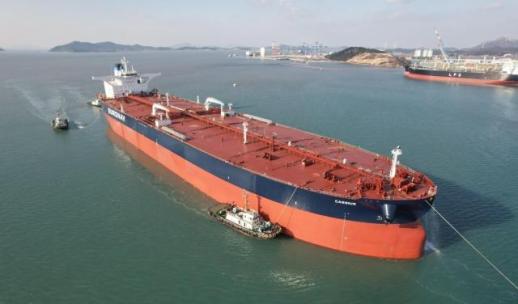 HD Korea Shipbuilding secures $350 million in new vessel orders SEOUL, January 20 (AJP) - HD Korea Shipbuilding & Offshore, the shipbuilding arm of HD Hyundai, said on Tuesday it has secured orders for crude oil tankers and petrochemical product carriers, extending a strong start to the year. The company said it signed contracts to build two crude oil tankers and two petrochemical product carriers, or PC carriers, with a combined value of 481.6 billion won ($350 million). The vessels will be constructed at HD Hyundai Heavy Industries and delivered in stages by the first half of 2029. With the latest contracts, HD Korea Shipbuilding & Offshore’s year-to-date orders have risen to nine vessels. In value terms, the company has provisionally secured $1.49 billion, equivalent to 6.4 percent of its annual order target of $23.31 billion. The company has so far booked orders for four liquefied natural gas carriers, one liquefied petroleum gas and ammonia carrier, two crude oil tankers and two PC carriers. * This article, published by Aju Business Daily, was translated by AI and edited by AJP. 2026-01-20 14:25:08
 -
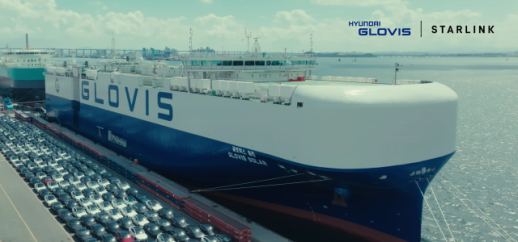 Hyundai Glovis installs SpaceX's Starlink to enhance vessel safety, connectivity SEOUL, January 19 (AJP) - Hyundai Glovis said Monday it has begun installing low-Earth-orbit satellite communications service Starlink across its fleet, aiming to accelerate digital transformation in shipping while enhancing vessel safety management. The logistics and shipping arm of Hyundai Motor Group is rolling out Starlink on 45 company-owned vessels, including car carriers and bulk carriers. Installation will be carried out sequentially, starting with ships calling at local ports this year. Starlink is a low-Earth-orbit satellite communications service operated by U.S. space company SpaceX. By using small satellites orbiting about 550 kilometers above Earth, it can offer faster and more stable data connections than conventional geostationary satellites, which operate at roughly 36,000 kilometers, Hyundai Glovis said. Following the adoption of Starlink, the time required to download 1.4 gigabytes of video content during ocean crossings fell from about 15 minutes to around two minutes, the company said. Hyundai Glovis plans to build a high-capacity data environment at sea and improve communications quality to levels closer to those onshore. Improved connectivity is also expected to strengthen emergency response capabilities by enabling real-time communication with shore-based teams in situations such as equipment malfunctions, crew illness or injury, and deteriorating weather conditions during long-distance voyages. “Introducing low-Earth-orbit satellite communications is core infrastructure to improve both safety and efficiency in ship operations,” the company said in a press release. * This article, published by Aju Business Daily, was translated by AI and edited by AJP. 2026-01-19 10:18:31
 -
 Hyundai Rotem pivots toward robots, hydrogen in organizational overhaul SEOUL, January 14 (AJP) - Hyundai Rotem, a South Korean manufacturer with operations spanning defense, rail and plant engineering, has reorganized its business to position robots and hydrogen as its primary growth engines. The company said Wednesday that it has carried out a broad restructuring aimed at strengthening competitiveness in robot and hydrogen technologies. Central to the overhaul is the creation of a dedicated unit that consolidates both businesses into a single strategic pillar. Under the reorganization, Hyundai Rotem established a Robot & Hydrogen Business Office, bringing together a robot sales team and a robot research team. The company also created an AI Robot Team, signaling a broader push to elevate unmanned systems and AI as core, companywide capabilities. In addition, an Aerospace System Team was created under the Aerospace Development Center. Hyundai Rotem said the changes are intended to prepare the company for the “physical AI era,” with plans to apply unmanned technologies, artificial intelligence and hydrogen energy across its core businesses to upgrade its operating structure. A Hyundai Rotem official said the reorganization is aimed at strengthening technological competitiveness over the mid- to long term while building a faster and more flexible operating system. "We plan to pursue upgrades to our core businesses through execution-focused changes," the official said. 2026-01-14 14:04:40
 -
 POSCO raises $700 million in US dollar bond sale SEOUL, January 13 (AJP) - POSCO, South Korea’s largest steelmaker, has completed its first U.S. dollar–denominated public bond sale of the year, becoming the first South Korean company to tap the global dollar bond market in 2026. The company said Tuesday that it raised $700 million through a two-part offering comprising $400 million of five-year notes and $300 million of 10-year notes. POSCO initially marketed the bonds at spreads of about 1.15 percentage points over U.S. Treasurys for the five-year tranche and 1.30 points for the 10-year notes. Strong demand during bookbuilding drew more than $6.6 billion in orders from over 180 institutional investors — more than nine times the deal size — allowing the company to tighten pricing. The final spreads narrowed by 0.4 percentage points to 0.75 points for the five-year notes and 0.90 points for the 10-year tranche. The offering came amid heightened geopolitical risks and volatility in global financial markets. POSCO conducted investor meetings in New York, Boston and London in November, followed by briefings for major investors in Taiwan, Hong Kong and Singapore in January, as it sought to build demand ahead of the transaction. Moody’s Investors Service and S&P Global Ratings rate POSCO at Baa1 and A-, respectively, reflecting the company’s solid market position, POSCO said. POSCO said it plans to use the proceeds primarily to refinance existing debt. “Based on a stable financial structure, we will continue to maintain trust in the global financial markets,” a company official said. 2026-01-13 17:06:40
 -
 Hyundai Steel Industry wins $450 million offshore wind contract in South Korea SEOUL, January 07 (AJP) - Hyundai Steel Industry, a unit of Hyundai Engineering & Construction, said on Wednesday it has won a $450-million contract to manufacture and install substructures for an offshore wind farm in South Jeolla Province. The company signed a deal with Hanwha Ocean covering fabrication and installation of substructures for the project. The contract is valued at 611.5 billion won ($450 million), with work scheduled to run from this month through January 2029. Hyundai Steel Industry said it will apply the “pre-piling” method for the first time in South Korea, a technique that involves installing piles before placing the substructure. The approach is expected to shorten construction schedules and improve installation accuracy. The Shinan Ui offshore wind farm is a large-scale project that will build 390 megawatts of generating capacity in waters southeast of Uido in Shinan County, South Jeolla Province. Hyundai Steel Industry has accumulated offshore wind construction experience at home and abroad since taking part in the Tamra offshore wind project in 2012, South Korea’s first commercial offshore wind farm. Its portfolio includes projects in Taiwan, Hallim on Jeju Island and Jaeun in South Jeolla Province. “This Shinan Ui project will be an opportunity to elevate South Korea’s offshore wind construction technology to the next level,” Park Yong-seop, executive director and head of Hyundai Steel Industry’s offshore wind business division, said in a statement. 2026-01-07 13:39:04
 -
 Hanwha chairman pledges AI defense push, deeper Korea-US shipbuilding ties SEOUL, January 02 (AJP) - South Korea's Hanwha Group is eager to strengthen its long-term competitiveness by securing core technologies in key businesses, including artificial intelligence-driven defense systems, while playing a leading role in South Korea-U.S. shipbuilding cooperation, Chairman Kim Seung-youn said in a New Year's message on Friday. Kim said Hanwha had spearheaded bilateral industrial cooperation symbolized by the MASGA initiative and grown into a national champion in defense and shipbuilding over the past year. He said the group is now “recognized as an essential engine for industry and society,” adding that this status carries greater responsibility. Kim emphasized a shift toward a technology-led growth strategy. “To secure competitiveness over the next 50 or 100 years, we must possess the foundational technologies that will shape the future in key business areas such as AI defense,” he said. He called on Hanwha to focus on future-leading technologies across its portfolio, including defense, aerospace, maritime, energy, materials, finance, machinery and services. By business unit, Kim urged the energy and materials divisions to respond proactively to global policy changes and ongoing restructuring in the petrochemical sector. In finance, he proposed expanding global operations by combining digital assets and artificial intelligence, while the services unit should develop new growth models through closer integration with machinery businesses, including AI-based solutions. Kim also highlighted MASGA as a central pillar of Korea-U.S. shipbuilding cooperation, saying Hanwha must position itself as a trusted strategic partner in global markets. He said the initiative should be planned and executed with a sense of full responsibility, centered on the company’s U.S.-based Philly Shipyard, and that cooperation in warship and nuclear-powered submarine construction should further deepen bilateral ties. Pointing to Hanwha Ocean’s decision to pay performance bonuses to workers at partner companies at the same rate as those for directly employed staff, he stressed that partner-company employees and local communities are integral to the group’s operations. On safety, Kim delivered a firm message, calling it a core value for sustainable management. “Results cannot replace a life,” he said. Kim also said Hanwha has turned a long-envisioned future into reality by entering the era of private space and establishing itself as a key player in the global defense industry. He credited employees for their continued dedication and urged them to work together to further strengthen the group. 2026-01-02 13:46:01
 -
 LIG Nex1 to develop core technologies for Korea's combat unmanned surface vessel SEOUL, December 23 (AJP) - South Korean defense company LIG Nex1 has begun developing core technologies for a combat unmanned surface vessel (USV), in a move aimed at advancing the Navy’s manned-unmanned combined maritime combat capability. LIG Nex1 said on Tuesday it signed an agreement on Dec. 19 with the Korea Institute for Advancement of Technology (KIAT) to develop an integrated control system and an autonomous mission system for a combat USV under a packaged weapon-system technology program. The program was planned by the Defense Acquisition Program Administration (DAPA) in cooperation with KIAT to secure key technologies ahead of the Batch-II system development phase of the combat USV, the company said. LIG Nex1 will act as the lead research and development contractor, overseeing the overall project. About 49 billion won in government funding will be invested over 60 months through December 2030 to develop an integrated control system, a weapon operation and launch-control system, and an autonomous mission system for the combat USV. The technologies are described as essential to the Navy’s Sea GHOST manned-unmanned maritime combat concept. The plan calls, for the first time in South Korea, for mounting a 20-millimeter-class remote-controlled weapon station (RCWS) on a USV and applying launch and operation technologies for the Bigung guided rocket and loitering munitions. The aim is to significantly enhance long-range precision-strike capabilities for unmanned maritime platforms. LIG Nex1 said the integrated control system will link sensors, weapons and onboard systems to improve operational efficiency and survivability. The company plans to combine its control technologies with artificial-intelligence-based systems to enable real-time data processing and decision-making and command functions. An LIG Nex1 official said the project represents an important opportunity to help the South Korean Navy secure future combat capabilities and to strengthen the company’s competitiveness in the global USV market. LIG Nex1 aims to develop derivative models tailored to country-specific requirements to boost the international appeal of South Korean unmanned naval systems. 2025-12-23 14:12:56
 -
 Samsung Heavy secures key certification for 'floating nuclear reactor' design SEOUL, December 15 (AJP) - Samsung Heavy Industries said on Monday it has received preliminary certification for its floating nuclear power platform equipped with small modular reactors, marking a key step in its push into the emerging maritime nuclear energy market. The American Bureau of Shipping (ABS) granted Approval in Principle (AIP) for Samsung Heavy’s Floating Small Modular Reactor (FSMR) design, which incorporates two SMART 100 reactors developed by the Korea Atomic Energy Research Institute (KAERI), the company said. The SMART 100 is a 100-megawatt integrated small modular reactor that received standard design approval from South Korea’s Nuclear Safety and Security Commission in September 2024. Under the project, Samsung Heavy integrated the SMR technology with a floating structure. It carried out the overall design of the nuclear power facility and developed a multi-barrier reactor containment system, while KAERI modified the reactor design for maritime use. Ahn Young-kyu, head of Samsung Heavy’s technology development division, described the certification as a “significant milestone” in the company’s efforts to pioneer the maritime nuclear power sector. “We will continue to secure safe and economical maritime nuclear technologies by leveraging our expertise in floating structures,” Ahn said in a press release. Samsung Heavy said the FSMR is a flexible floating nuclear facility concept capable of accommodating different SMR types. Its compartment-based design allows the reactor section to be adapted without altering the overall platform structure, improving scalability and construction efficiency. Safety and efficiency are further enhanced by housing the reactor and key safety systems within a single containment module, enabling land-based testing before offshore installation, the company said. Cho Jin-young, director of KAERI’s Advanced Reactor Research Division, said the approval validated the competitiveness of South Korea’s SMR technology. “This AIP certification using SMART 100 demonstrates the innovation of our nuclear technology,” Cho said. “We will accelerate development to establish South Korea as a leader in the marine nuclear industry.” * This article, published by Economic Daily, was translated by AI and edited by AJP. 2025-12-15 15:47:59
 -
 South Korea's SeAH secures long-term aluminum supply deal with Boeing SEOUL, December 15 (AJP) - SeAH Aerospace & Defense Materials, a unit of SeAH Besteel Holdings, said on Monday it has signed a long-term supply agreement with Boeing to provide high-strength aluminum alloy materials for commercial aircraft. Under the deal, SeAH Aerospace will begin supplying aluminum alloys used in aircraft fuselages and wings to the world’s largest aircraft manufacturer from 2026, the company said. Financial terms were not disclosed. The agreement follows a direct contract signed with Boeing last year, under which SeAH Aerospace demonstrated its quality competitiveness and ability to deliver consistently to the aerospace industry’s stringent standards. High-strength aluminum alloys used in aircraft structural components require strict process control and quality stability across the entire production chain, from raw material intake and extrusion to heat treatment, machining and inspection. SeAH Aerospace said its global-standard quality management system and material traceability capabilities met Boeing’s rigorous certification requirements. The long-term contract also secures initial production volumes for a new 2,300-ton aluminum plant currently under construction in Changnyeong County, which is scheduled to begin full-scale operations in 2027. The facility is expected to support stable operations and improve cost competitiveness. SeAH continues to expand its high value-added materials portfolio focused on the aerospace and defense sectors. The company already supplies materials to major global aircraft manufacturers, including Airbus Defense and Space, China’s COMAC, Brazil’s Embraer and Canada’s Bombardier. * This article, published by Economic Daily, was translated by AI and edited by AJP. 2025-12-15 14:50:59
 -
 South Korea's Hanwha Aerospace showcases locally built K9 artillery in Egypt SEOUL, December 11 (AJP) - Hanwha Aerospace showcased its K9 self-propelled howitzers at the Egypt International Defense and Security Exhibition (EDEX 2025) in Cairo, drawing strong interest from regional visitors, the company said Thursday. The firm operated a joint exhibition space with Egypt’s Ministry of Defense, displaying the K9 howitzer alongside ground and guided weapon systems. The biennial exhibition, the largest of its kind in the Middle East and Africa, drew more than 450 companies and over 40,000 visitors. In 2022, Hanwha Aerospace secured a package export agreement with Egypt worth about 2 trillion won (approximately $1.5 billion), covering K9 self-propelled howitzers, K10 ammunition resupply vehicles and K11 command armored vehicles. At this year’s exhibition, six K9 units and associated K10 and K11 vehicles were displayed outdoors. The systems, scheduled for delivery to the Egyptian military in the first quarter of next year, are adapted for desert operations with specialized coatings and enhanced dust-protection features. Hanwha is manufacturing the K9 in Egypt with performance specifications matching systems produced in South Korea. Following delays linked to German engine supply, the company localized engine production to reduce supply-chain risk. South Korean engineers are supporting local facilities with assembly, welding and machining to stabilize production. The company plans to gradually expand local manufacturing of core components to deepen long-term industrial cooperation. Building on the K9 program, Hanwha aims to accelerate its expansion across the Middle East and North Africa defense markets. Other systems on display included the Chunmoo multiple rocket launcher, coastal defense missiles, a 40mm unmanned air defense system, L-SAM long-range surface-to-air interceptors and naval platforms, including submarines. “The Egyptian people take great pride in producing the K9 locally through technological cooperation with South Korea,” said Sung Il, head of Hanwha Aerospace’s Middle East and Africa division. “We aim to expand into broader regional markets through this partnership.” * This article, published by Economic Daily, was translated by AI and edited by AJP. 2025-12-11 09:24:56