
Journalist

Kim Yeon-jae
duswogmlwo77@ajunews.com
-
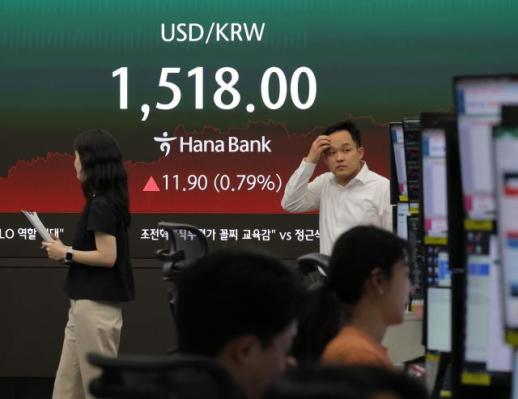 AJP Focus: 1,500 won per USD holds as capital outflows outweigh C/A surplus SEOUL, May 26 (AJP) - The South Korean won continues to hover near the 1,500-per-dollar mark despite solid economic indicators that would traditionally lift the currency, underscoring what analysts describe as a structural shift in the country's foreign exchange dynamics. The won closed at 1,504 against the dollar on Tuesday, holding sharply weaker than at the start of the year despite bullish readings on the current account, exports, and equities that have more than offset the inflationary pressure from the prolonged Gulf crisis. While the KOSPI has outperformed global equity peers and even commodities such as oil and gold, the won ranks among Asia's weakest currencies. According to data from the Bank of Korea (BOK) and Investing.com, the won has slid 5.2 percent against the U.S. dollar since the start of the year, exceeding declines of 4.5 percent for the Philippine peso, 3.5 percent for the Thai baht, and 1.4 percent for the Japanese yen. Over the same period, the Singapore dollar, Malaysian ringgit, and offshore Chinese yuan gained 0.6 percent, 2.3 percent, and 2.5 percent, respectively. On the surface, South Korea's external fundamentals appear solid. The country maintained a current account surplus through the first quarter, while exports kept up double-digit growth thanks to chip boom. Manufacturing output and factory utilization rates have also shown signs of revival, and the nation's credit default swap (CDS) premium — a key gauge of external financial stability — has held steady in the low-20 basis-point range. The problem, analysts say, is not a shortage of dollar inflows but the fact that dollars earned through exports and current account surpluses are no longer staying within the domestic foreign exchange market. "The recent weakness of the won is closer to a structural problem in which dollars earned in South Korea do not remain inside the country, rather than a currency crisis–style absolute shortage of greenbacks," said Kim Ji-hyun, manager of the International Finance Research Team at the Bank of Korea's International Department. "As it has become difficult to expect exchange rate stability through a current account surplus alone, we must evaluate capital flows and outbound investment demand in tandem." Demand for dollars has steadily expanded as domestic investors channel funds into overseas assets, companies finance foreign operations, and foreign investors repatriate proceeds from stock sales. A surge in outbound investment by South Korean investors has emerged as a major source of downward pressure on the won. As appetite for U.S. technology stocks and global exchange-traded funds (ETFs) grows, both retail and institutional investors are increasingly shifting capital into dollar-denominated assets. According to BOK balance-of-payments data, overseas securities investments by South Korean residents rose by $26.1 billion between January and March, while foreign investors trimmed their holdings of domestic securities by $41.29 billion. Together, the two flows generated net capital outflow pressure of roughly $67.4 billion in the securities investment sector alone. Last year, residents' net purchases of overseas securities reached a record $140.28 billion, with overseas equities accounting for about 82 percent, or $114.3 billion, of the total. The corporate sector is reinforcing the trend. Exporters are increasingly deploying dollars earned abroad for local investments and reinvestment in overseas subsidiaries rather than repatriating the funds. As production bases for key industries such as semiconductors, batteries, and automobiles expand overseas, the traditional link between strong exports and a stronger won has weakened. Even the equity rally has failed to support the currency. The benchmark KOSPI has surged more than 87 percent since the start of the year, buoyed by expectations of a semiconductor upcycle and foreign capital inflows, surpassing the 8,100 mark during intraday trading on Tuesday. Yet the won has remained subdued. Analysts say the pattern reflects a broader structural transformation in the South Korean economy, in which capital outflows increasingly outweigh traditional won-supporting factors such as export growth and stock market gains. A prolonged period of elevated exchange rates could eventually weigh on the broader economy. While exporters benefit from higher won-converted earnings, a weaker currency also drives up import prices and production costs. With Dubai crude oil prices averaging above $100 per barrel, a weak won is further inflating the cost of imported energy and raw materials. Analysts point to the combination of elevated oil prices and currency weakness as a key driver behind producer price inflation reaching 6 percent. Market observers say the future direction of the won will hinge less on the size of the current account surplus and more on whether capital outflow pressures ease. Even if semiconductor exports continue recovering, the won-dollar exchange rate could remain elevated so long as outbound investment, foreign profit-taking, and overseas corporate reinvestment persist at current levels. 2026-05-26 17:35:05
 -
 Regulators warn of risks over South Korea's first single-stock leveraged ETF SEOUL, May 26 (AJP) - Financial authorities issued an investor warning as South Korea prepares to permit the listing of "single-stock leveraged ETFs and ETNs" for the first time in the domestic market. As these instruments track two times the daily performance of specific individual stocks—Samsung Electronics and SK hynix — the Financial Services Commission (FSC) and the Financial Supervisory Service (FSS) warned that they can conversely accelerate catastrophic losses. According to the FSC and the FSS, single-stock leveraged products will debut on the domestic stock market starting Wednesday. For ETFs, eight asset management firms will roll out a total of 16 products, while Mirae Asset Securities will introduce two ETN products. The underlying assets are strictly limited to Samsung Electronics and SK hynix. These products are structured to track two times the daily return of a specific stock. If Samsung Electronics shares advance 5 percent in a single day, the corresponding ETF would surge approximately 10 percent; conversely, if the stock sheds 5 percent, the ETF would plunge roughly 10 percent. Given the daily price fluctuation limit of plus or minus 30 percent, an investor could theoretically face a maximum loss of up to 60 percent in a single day, making them unsuitable for investors with a low capacity to absorb losses. These new instruments also lack the benefit of diversification. Rather than spreading risks across multiple shares like traditional KOSPI 200 ETFs, these products invest exclusively in a single stock. Consequently, negative catalysts such as a downturn in the semiconductor cycle or an earnings shock could cause the prices of these leveraged products to fluctuate violently. In global markets, single-stock leveraged products have frequently exhibited extreme price swings, often utilized as short-term speculative tools. In a stark historical precedent, the Leverage Shares 3x Long IONQ ETP on the London Stock Exchange saw its net asset value effectively wiped out after its underlying asset plummeted 39 percent in a single day. Similarly, from last year through early this year, while Tesla shares advanced approximately 18 percent, a corresponding two times leveraged ETF suffered a 20 percent loss due to repeated volatility eroding returns over time. This discrepancy stems from the compounding error, often referred to as "volatility drag." If an underlying stock's price repeatedly fluctuates over a prolonged period, the cumulative return can diverge significantly from the two times return expected by investors. For instance, if a two times leveraged product surges 60 percent on the first day and plunges 60 percent on the second, the cumulative loss will widen to 36 percent. Another risk factor is premium/discount volatility, where the market trading price of an ETF deviates excessively from its actual net asset value (NAV) if investment demands heavily concentrate on one side. The FSS urged investors to verify tracking error rates via the Korea Exchange (KRX) platform prior to trading. To mitigate speculative frenzies, authorities have raised entry barriers. New investors must complete an additional two-hour online preparatory training course and maintain a minimum base deposit of 10 million won (US$6,667). According to financial authorities, approximately 93,000 investors completed the advanced training between April 28 and May 21. The regulatory emphasis on caution is deeply intertwined with the recent boom in leveraged trading, driven by retail demand for high-risk foreign tech ETFs. While authorities permitted these local products to resolve regulatory asymmetries with overseas markets, they remain vigilant against excessive speculation. The FSS stated that it plans to intensively monitor trading trends and tracking errors moving forward, while cracking down on deceptive marketing that could mislead retail investors. Market observers also note that retail investors' appetite for high-risk instruments could expand further, driven by the recent investment frenzy surrounding semiconductors and artificial intelligence. The so-called "National Growth Fund" — a goverment-supported fund investing in strategic, high-tech sectors such as semiconductors, AI, and robotics — began its sales last Friday with a total volume of 600 billion won ($400 million). 2026-05-26 17:09:15
 -
 BOK to hold rate for yearlong this week and hike growth target SEOUL, May 26 (AJP) - The Bank of Korea is widely expected to hold the benchmark rate at 2.50 percent, unchanged for a year, while sharply raising its 2027 growth outlook to around 2.5 percent from 2 percent to lay the groundwork for eventual tightening against mounting inflationary pressures from elevated energy prices, rising wages and overheated asset markets as the AI boom cushions the economy from the prolonged Gulf crisis. An AJP poll on economists found unanimous expectations for a rate freeze at Thursday’s meeting under newly appointed Governor Shin Hyun-song and newly seated board member Kim Jin-ill. But consensus increasingly shifted toward a rate hike in July as growth and inflation forecasts move higher. “From the growth and inflation trajectory, the current situation warrants a review of a rate hike,” said Cho Yong-gu, a fixed-income analyst at Shinyoung Securities. “Rather than an actual rate hike, the upcoming meeting is highly likely to deliver messages hinting at the possibility of future increases.” Cho pointed to lingering oil-price risks stemming from the Middle East conflict, upward revisions to domestic growth and inflation forecasts, financial stability concerns tied to a weak won and overheating real estate prices in the Seoul metropolitan area as key reasons for maintaining rates while turning more hawkish. Dissenting voices within the Monetary Policy Board are also expected to grow. About 75 percent of economists surveyed projected that as many as two members could dissent in favor of tighter policy. Yoon Yeo-sam, chief analyst at Meritz Securities, likewise forecast a freeze this week but said the central bank could begin openly signaling future tightening. “The committee may address whether oil prices stabilize after the conclusion of the Middle East war and evaluate the impact of the improving semiconductor cycle on growth,” Yoon said. “A clause implying that the BOK will review the timing of a rate hike to ensure price stability could be inserted.” Analysts said South Korea’s unexpectedly strong first-quarter GDP growth of 1.7 percent — nearly double the BOK’s earlier forecast — alongside government relief spending tied to high energy prices has strengthened the case for hawkish dissents within the board. “Recently, domestic inflationary pressures have been expanding not only due to external factors like exchange rates and rising crude prices but also because consumption and domestic demand are reviving alongside economic recovery,” said Woo Hye-young, analyst at LS Securities. “Some board members may deem an additional rate hike necessary based on these factors.” Attention has also centered on Kim Jin-ill, who recently described himself as “half a click above” the BOK’s current policy outlook. Most economists, however, remained skeptical that he would immediately cast a dissenting vote during his first meeting. “Even former board member Shin Sung-hwan, who was widely considered dovish, followed the consensus during his first monetary policy meeting,” one monetary policy expert said on condition of anonymity. “If Kim voices dissent for a hike, it will likely come in the second half of the year.” Regarding the second-half rate path, economists increasingly pointed to July as the first likely window for tightening. Cho projected a 25-basis-point hike in July followed by additional increases in the fourth quarter and early next year. Yoon similarly forecast two hikes — in July and October — lifting the benchmark rate from the current 2.50 percent to 3.00 percent by year-end. The central bank’s challenge reflects an economy increasingly split between booming AI-linked sectors and mounting inflation risks. South Korea’s semiconductor-driven AI boom has powered exports, equities and growth expectations sharply higher. The KOSPI has surged 86.2 percent from end-2025 levels to 7,847.7, while the tech-heavy KOSDAQ climbed 25.5 percent, according to weekly financial market data. At the same time, financial stability concerns have intensified. The won weakened to 1,517.2 per dollar from 1,439 at the end of last year as higher oil prices and imported inflation pressures weighed on sentiment. Inflation indicators also accelerated. Producer prices jumped 6.9 percent in April from a year earlier, while consumer inflation climbed to 2.6 percent. Bond markets, however, rallied Tuesday as traders leaned toward a prolonged rate freeze despite the central bank’s increasingly hawkish tone. By midday, the benchmark 10-year government bond yield had fallen 7.1 basis points to 4.057 percent, while the three-year yield dropped 5.3 basis points to 3.683 percent on expectations that the benchmark rate would remain unchanged until at least the next policy meeting in mid-July. For now, economists expect the BOK to use Thursday’s meeting primarily to recalibrate market expectations — upgrading growth projections sharply while cautiously preparing investors and households for a gradual return to tightening as the AI boom reshapes South Korea’s economic cycle. 2026-05-26 15:38:52
 -
 'More time on paperwork than artwork': Bureaucratic hurdles haunt Korean artists SEOUL, May 20 (AJP) - In South Korea, artists must prove they are artists before qualifying for public grants, and many complain the opaque and exhausting certification process has become a bureaucratic ordeal that leaves them spending more time on paperwork than artwork. Artist Certification falls under the Korea Artists Welfare Foundation (KAWF), an agency under the Ministry of Culture, Sports and Tourism. It is effectively required to apply for government aid, public grants and welfare programs. The system was born out of two tragedies. On Nov. 6, 2010, Lee Jin-won of the one-man indie band “Rock Will Never Die (Moonlight Fairy Grand Slam)” was found dead at his home in Yeongdeungpo-gu, Seoul. On Jan. 29, 2011, screenwriter Choi Go-eun was found dead in Anyang. Both were respected figures in the indie music and film industries but suffered severe financial hardship due to unfair contract structures and irregular income. Their deaths led to the enforcement of the Artist Welfare Act on Nov. 18, 2012, followed by the establishment of the Korea Artists Welfare Foundation the next day as a minimum social safety net for struggling artists. But many artists say the benefits have fallen far short of that mission. Controversy erupted in late March when the famous indie band “Broccoli, You Too?” failed the Artist Career Verification screening. The band took to X to express frustration, revealing that it had submitted records of royalty payments from album releases only to receive a “disqualified” notice. At the time, the foundation explained that it evaluates the “continuity of activities” rather than an artist’s fame alone. However, the band had released a full-length album and performed dozens of concerts throughout 2025, while its appearance on KBS’s “Open Concert” had been confirmed just days before the rejection notice. Following the controversy, complaints from artists across multiple disciplines poured out. Many argued that guidance on the system remains insufficient and inconsistent. Painter and contemporary artist Jung So-hee was one of them. It took Jung more than two years to pass the Artist Certification screening. Despite a career spanning over 20 exhibitions, her applications were repeatedly rejected or returned for supplementary documentation until she finally received approval this year. “I had to spend more energy writing reports to prove I am an artist than on my actual creative work,” Jung said. Jung said she still has little confidence she would pass again if she reapplied for the same project because she has never been clearly informed why she ultimately succeeded. Installation artist Shin Yun-jung applied four times, only to be rejected each time. “It was difficult to prepare because the criteria for qualitative screening were unclear,” Shin said. “Even when I tried to infer from other artists’ experiences, the standards kept changing.” The lengthy review process has also become a major source of frustration. Artists including Jung and Shin said they waited between three and six months for re-evaluation results. A stage director, who requested anonymity, recalled receiving a “disqualified” notice while traveling from a logistics center job to a theater rehearsal. “It felt hollow after waiting for four months,” he said. Outdated screening criteria have also come under criticism. Painter A pointed out that participating in “art fairs” — auction-style exhibitions — is not recognized as professional artistic activity. “The fastest way to build a relationship with a gallery and hold a solo exhibition is to pay to participate in an art fair,” a painter, who also requested anonymity, explained. Despite submitting years of consecutive participation in a major local art fair, she was told the experience could not be counted. “It makes no sense that even mega-fairs like KIAF or Frieze, which the First Lady has visited, cannot be counted because they aren’t ‘solo exhibitions,’” she added. As dissatisfaction grew, a “Task Force Seminar on Artist Career Verification” was held on April 22 at the National Assembly Members’ Hall, hosted by Rep. Son Sol of the Culture, Sports and Tourism Committee. Attendees criticized what they described as a lack of communication and transparency in the deliberation process. “We aren’t asking to lower the threshold blindly; we are asking for clear reasons and standards for rejection,” said installation artist Lee Seung-hyun. Calls for transparency in the review process also continued throughout the seminar. Oh Se-gon, a stage actor who participated in the original task force that helped design the Artist Career Verification system, argued that “it must be clearly revealed who the committee members are and whether there were offline discussions and debate processes.” Critics also pointed to overseas examples. In the case of Arts Council England, active artists evaluate the eligibility of fellow artists for welfare services, and the identities of reviewers as well as approval and rejection outcomes are disclosed transparently. This stands in contrast to the KAWF system, where even the professions and age groups of review committee members are not easily disclosed. The government and the foundation offered their own explanations. Kim Ga-jin, head of the planning and coordination team at the Korea Artists Welfare Foundation, said during the seminar that the foundation must verify three things: whether art is the applicant’s primary occupation, whether the output can be objectively verified through documentation and whether the work has been consumed or distributed publicly. Regarding delays, the foundation cited a shortage of personnel. As of March 2026, just five full-time and five contract employees were responsible for processing applications from more than 43,000 people. The foundation further argued that the review process has become more time-consuming because of concerns that public funds could flow to cases unrelated to genuine creative activity, especially as generative AI and hobby-based creations continue to blur the boundaries of artistic work. Officials said a “request-based” system requiring a certain level of career history and supporting evidence remains necessary as a minimum verification mechanism. Some European countries such as Germany and France have also faced criticism over the scale of artist welfare spending because such programs are closely tied to broader social security systems. While recognizing artistic activity itself as labor has expanded the social safety net for artists, concerns have also steadily grown that the boundaries of eligibility could become too broad. Yet many artists say the foundation’s explanations remain contradictory. One frequently cited example is the “Artist Activity Savings Account” project launched last year. Despite the claimed shortage of reviewers, applications for the program closed in less than half a day on Feb. 4, 2026, under a first-come, first-served system. The use of individual rather than household income standards also sparked criticism. “People receiving financial support from a spouse or parents without earning a penny can be selected without filtering, while artists who must work for a living are put at a disadvantage,” said an indie film director, who requested anonymity after being rejected under the criteria. The Ministry of Culture, Sports and Tourism’s total budget for this year stands at approximately 7.85 trillion won ($5.33 billion), up 11.2 percent from last year. The Korea Artists Welfare Foundation directly administers 117.6 billion won, while an estimated 200 billion won is tied to artist verification-related support programs. Yet many artists argue that where and how the money is ultimately spent remains opaque. Artists interviewed for this story agreed that public funding can only function properly if officials at both the foundation and the ministry develop a deeper understanding of artists and the broader creative ecosystem. “There needs to be a broader effort to research and understand the actual creative activities of artists,” Jung emphasized. “I am eager to ask whether the current standards are truly for artists who dedicate themselves solely to creation.” “The current application method is more preoccupied with ‘where and with whom you exhibit’ rather than ‘what kind of work you do,’” Shin said. “This structure is absolutely advantageous for those who can afford rental fees — in other words, those who do not need the welfare system.” 2026-05-20 16:45:33
 -
 Korean banks' Q1 net profit edges down on bond valuation losses SEOUL, May 20 (AJP) - Although South Korean commercial banks saw their interest income expand in the first quarter of this year, driven by loan growth and improved net interest margins (NIM), their overall net profit declined due to widening valuation losses on bond holdings triggered by a sharp spike in market interest rates. Analysts say that while household debt continues to grow, the banking sector's profitability structure is becoming increasingly sensitive to interest rate volatility. The combined net profit of domestic banks stood at 6.7 trillion won ($4.56 billion), down 300 billion won, or 3.9 percent, from the same period last year, Financial Supervisory Service (FSS) said Wednesday. Net profit for nationwide commercial banks stood at 4.3 trillion won, ticking up 100 billion won, or 1.6 percent, year-on-year, but a detailed breakdown showed that the growth of internet-only banks — such as KakaoBank, K-Bank, and Toss Bank — buffered the overall performance. Net profit for internet-only banks jumped 45.3 percent - from around 200 billion won in the first quarter of last year to 300 billion won in the first quarter of this year. Net profit at core nationwide commercial banks, in contrast, slid 0.6 percent from 3.8 trillion won to 3.7 trillion won, while regional banks' net profit growth flattened with a mere 10 billion won increase. Interest income continued its upward march. Domestic banks' interest income for the first quarter reached 15.8 trillion won, up 1 trillion won, or 6.4 percent, from a year earlier. This expansion was fueled by a 4.8 percent year-on-year increase in interest-bearing assets, such as loan receivables, alongside a rise in the net interest margin (NIM) from 1.53 percent to 1.56 percent. The expansion of banks' interest income is analyzed to be aligned with the recent upward trend in household debt. Household lending by commercial banks in the first quarter swung to a 200 billion won decline in the first quarter from the previous quarter, whereas lending by non-bank depository institutions surged by 8.2 trillion won, according to the Bank of Korea's Tuesday release. The quarterly increase in housing-related loans within the non-bank sector widened from 6.5 trillion won in the fourth quarter of last year to 10.6 trillion won in the first quarter of this year. However, skyrocketing market interest rates weighed heavily on bank profitability. Domestic banks' non-interest income plummeted 35.6 percent year-on-year to 1.3 trillion won. The FSS attributed the decline to widening valuation losses on marketable securities following the spike in market interest rates. Gains related to marketable securities swung from a 2.4 trillion won surplus to a 1.2 trillion won deficit, while valuation profits on securities plummeted from a 1.4 trillion won surplus to a 1.8 trillion won loss. The financial watchdog evaluated that skyrocketing bond yields were the primary catalyst for the widening deficits. The three-year benchmark government bond yield, which had dipped 1.9 basis points at the first quarter of 2025, surged 60.6 basis points from the end of last year to hit 3.557 percent as of late March, maintaining its weakening trend. With the 30-year U.S. Treasury yield hovering at 5.2 percent — its highest level in approximately 19 years since 2007, just ahead of the global financial crisis — South Korea's three-year government bond yield rose by more than 4 basis points during Wednesday's morning session to hit 3.8 percent. The 10-year yield climbed roughly 6 basis points to the 4.27 percent mark, extending the market's downward momentum. The return on assets (ROA) dipped 0.07 percentage points year-on-year to 0.64 percent, while the return on equity (ROE) also slid 0.89 percentage points to 8.68 percent. The deteriorating indicators underscore a widespread contraction in the banks' earnings capacity. Credit losses and provisions, meanwhile, fell 16.2 percent year-on-year to 1.4 trillion won. Banks appear to have averted a worst-case scenario for now, as bond valuation losses stemming from rate volatility have exerted a more pronounced impact on bank earnings than widening defaults or non-performing loans. Given rising internal and external uncertainties, the FSS stated that it will guide banks to bolster their loss-absorption capacities to ensure financial soundness even in the face of unexpected shocks. 2026-05-20 11:16:54
 -
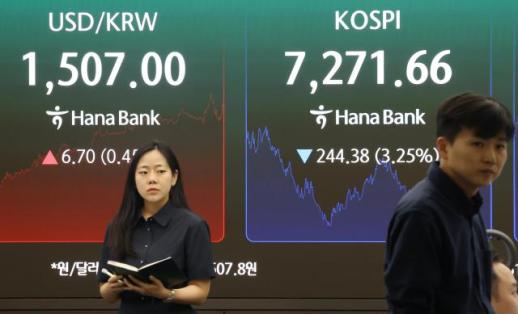 Korea's bond and currency retreat deepens rate hike bias SEOUL, May 19 (AJP) - South Korean bonds and currency took a renewed beating amid broad strengthening in the greenback and a global debt retreat amid jitters over government borrowing to finance war costs and inflation risks with little sign of the Gulf crisis abating. Long-dated sovereign bonds across major economies — including the United States, Japan, and the United Kingdom — have hit levels unseen in two to three decades. And Korean bonds rank among the worst performers, despite the country's inclusion in the FTSE World Government Bond Index (WGBI). Korea's 10-year benchmark yield closed Tuesday at 4.210 percent, easing 2.9 basis points from Monday's annual high of 4.239 percent, narrowing the spread with the equivalent U.S. Treasury to just 36 basis points. The 10-year U.S. Treasury was trading at 4.608 percent as of 0545 GMT. Unlike equities, Korean bonds have been battered by prolonged Middle East conflicts. The 10-year yield has surged more than 31 basis points since end-April and 85 basis points since December — outpacing a 22-basis-point rise late April and a 42.64-basis-point climb from December in equivalent U.S. Treasuries, and a 21-basis-point and 67-basis-point jump in Japanese government bonds over the same periods. Concerns are mounting domestically that bond supply-and-demand conditions are deteriorating rapidly. Kang Seung-won, a fixed-income analyst at NH Investment & Securities, attributed the recent yield spike not to a simple sell-off but to a "buyer strike." Investors, he said, are reluctant to aggressively buy bonds at a time when the government is expanding issuance, the economy is holding up better than expected, and the central bank has kept the door open to further tightening. The government set its Treasury bond issuance volume for May at approximately 19 trillion won, up from the prior month. Market observers noted that despite improving prospects for tax revenue on the back of a semiconductor sector recovery, signals that the government intends to channel those resources into economic stimulus rather than fiscal consolidation have added further pressure to the bond market. "Since the government has shown a stance averse to tightening, a sentiment appears to be spreading that additional Treasury issuances could be on the horizon," a bond market source said on condition of anonymity. The global bond rout is compounding the pressure. The U.S. 30-year Treasury yield hovered at 5.18 percent on Monday, its highest in roughly 19 years, while Japan's 10-year yield touched 2.789 percent Tuesday, a near 29-year high. Markets have pointed to soaring energy prices stemming from the Middle East conflict and anxiety over expanded fiscal spending by major economies as key drivers of upward pressure on long-term rates. Global financial markets are also reassessing the return of so-called bond vigilantes — investors who protest runaway inflation and heavy government borrowing by selling bonds and driving yields higher. Analysts noted that anxiety intensified after U.S. Treasury Secretary Scott Bessent refrained from offering market-stabilizing assurances during the recent Treasury sell-off. The won has mirrored the bond market's woes. The currency closed at 1,505.7 per dollar in Seoul on Tuesday, strengthening 7.4 won from the previous session, though it remains under sustained pressure. The won had briefly recovered to 1,470.5 on May 6 — buoyed by broad dollar weakness and a concentrated wave of exporter dollar-selling — but the rebound proved short-lived. As Middle East risks re-escalated and pushed international crude prices back above $100 per barrel, safe-haven demand for the dollar reasserted itself. South Korea's heavy dependence on crude oil imports is seen as a key amplifier of won weakness: rising oil prices tend to push up import costs and widen the trade deficit, fueling further dollar demand among market participants. Combined with the bond market's deterioration, fears of foreign capital outflows are growing. If the dual weakness in bonds and the currency — marked by simultaneous rises in long-term yields and the exchange rate — persists, broader domestic financial market volatility could escalate. 2026-05-19 17:13:01
 -
 Seoul ups financial scrutiny on leverage ETFs amid frenzy SEOUL, May 19 (AJP) -South Korea's Financial Supervisory Service (FSS) has unveiled a sweeping set of preemptive consumer protection measures targeting leverage exchange-traded funds, social media investment influencers, and corporate insurance agencies, as domestic stock market volatility continues to climb. FSS Governor Lee Chan-jin chaired the second Consumer Risk Response Committee meeting at the agency's Seoul headquarters on Tuesday, where attendees reviewed emerging risk factors across financial markets amid what regulators described as overheated competition among financial firms. The financial regulator flagged growing concern over debt financed investing, noting that turnover ratios for major leverage and inverse ETF products remain significantly higher than those for general equities. The country's first single-stock leverage ETF will debut on May 27. The FSS plans to conduct intensive inspections of management status, disparity ratios, and trading trends across leverage and inverse ETFs, while issuing investor caution notices and reviewing asset managers' marketing practices. To prevent consumers from mistaking high-risk instruments for conventional ETFs, the watchdog called for clearer disclosure of core risk descriptors — such as "single-stock" and "leverage/inverse" — in product names and advertisements. Current rules require a minimum deposit of 10 million won (approximately $6,665) and mandatory prior training before investing in such products. The FSS took direct aim at so-called finfluencers — a portmanteau of "financial" and "influencer" — who have exploited recent market swings to generate personal gains. The FSS cited cases of influencers recommending stocks they had already purchased without disclosing conflicts of interest, as well as others operating paid stock-tip subscription services without registering as discretionary investment advisory businesses. The agency said it will deploy an AI-based monitoring system for round-the-clock surveillance of finfluencer activity, while stepping up enforcement on illegal financial advertisements in coordination with the Korea Communications Standards Commission. In insurance, the FSS singled out deceptive solicitation practices by general agencies (GAs) — corporate insurance intermediaries whose affiliated planners numbered 316,000 at end-2024, representing roughly 59.2 percent of all insurance planners nationwide. The watchdog said some agencies have been steering clients toward unnecessary policies under the guise of tax or labor consulting, and engaging in illegal private financing. Proposed regulatory reforms include restricting GAs from concurrently operating consulting businesses and imposing stricter penalties for sanction evasion. The committee also reviewed risks related to AI-powered cyberattacks, low early-termination interest rates at mutual financial cooperatives, and consumer access issues involving basic living expense accounts. "We must respond with a high level of vigilance against actions that fuel excessive debt investments and leverage trading by financial companies, as well as capital market disruptions by some finfluencers amid persistent stock market volatility," Lee said. 2026-05-19 16:21:39
 -
 Korea's household debt tips over $1.3 trillion Q1 SEOUL, May 19 (AJP) - South Korea’s household debt climbed to the brink of the symbolic 2,000 trillion won ($1.33 trillion) threshold as of March as tighter bank regulations failed to stop a fresh wave of housing-related borrowing that increasingly migrated to non-bank lenders. Outstanding household credit reached 1,993.1 trillion won at the end of March, up 14 trillion won, or 0.7 percent, from the previous quarter, according to preliminary data released by the Bank of Korea (BOK) on Tuesday. The annual growth rate accelerated to 3.5 percent from 2.9 percent in the fourth quarter. Household loans accounted for 1,865.8 trillion won of the total, rising 12.9 trillion won on quarter, while credit card and installment debt increased 1.1 trillion won to 127.3 trillion won. The increase was driven overwhelmingly by housing demand rather than consumer spending, underscoring how Korea’s property market continues to fuel leverage despite prolonged efforts by regulators to cool borrowing. Housing-related loans — a newly renamed category previously classified as mortgage loans — expanded by 8.1 trillion won in the January-March period, up from a 7.2 trillion won increase in the previous quarter. Other loans, including personal credit lending, also rose at a faster pace, increasing 4.8 trillion won after a 4.1 trillion won gain three months earlier. The more striking shift came from where the borrowing occurred. Commercial bank household lending, which had increased by 6 trillion won in the fourth quarter, swung to a 200 billion won decline in the first quarter as tighter lending controls curbed bank-based mortgages. But the slowdown merely pushed borrowers toward secondary lenders. Loans extended by non-bank depository institutions nearly doubled in growth pace to 8.2 trillion won from 4.1 trillion won in the previous quarter, according to the BOK. Housing-related lending at those institutions surged 10.6 trillion won, sharply accelerating from a 6.5 trillion won increase three months earlier. Mutual finance cooperatives accounted for 5.1 trillion won of the increase, while Saemaul Geumgo, or MG Community Credit Cooperatives, added another 2.4 trillion won. “The recent rise in housing transactions means we need to closely monitor related lending trends,” Lee Hye-young, head of the Financial Statistics Team at the BOK, said during a briefing. The data suggest regulators may be containing risk within the banking sector only to see leverage resurface elsewhere in the financial system — a recurring concern in Korea’s long-running household debt cycle. By contrast, signs of consumer weakness remained limited. Growth in merchandise credit slowed to 1.1 trillion won from 3 trillion won in the previous quarter, but the central bank said seasonal factors likely accounted for much of the moderation, noting that card spending typically peaks in year-end quarters. In a notable methodological change, the BOK also began separately disclosing jeonse loans — financing tied to Korea’s lump-sum rental deposit system — from commercial banks. The central bank said the split was necessary because such loans have expanded rapidly over the past decade and have become increasingly important in assessing housing-related debt risks. Outstanding jeonse loans at commercial banks reached 165.7 trillion won at the end of March, accounting for 16.6 percent of total commercial bank household lending. The figure has surged more than sixfold since 2015, when related balances stood at just 25.3 trillion won. 2026-05-19 13:50:29
 -
 Financial authorities to tighten liquidity rules for securities firms SEOUL, May 18 (AJP) - Financial regulators are going to tighten the rules for their assessment for how securities firms can raise cash quickly during a financial crisis, the Financial Services Commission (FSC) and the Financial Supervisory Service (FSS) said on Monday. The stricter rules, which used to apply only to big brokerages, will now cover all firms. They will also value assets such as stocks and funds at less than their full market value, since these can be difficult to sell quickly during a financial crisis. Under the proposed amendments, the measures are intended to address vulnerabilities exposed during the 2022 crisis involving amusement park Legoland, when brokerages faced severe liquidity shortages and required emergency government support despite reporting liquidity ratios above 100 percent. The most significant shift is the expansion of the regulatory scope. Only comprehensive financial investment business entities - large investment banks - and brokerages issuing derivative products were required to maintain liquidity ratios above a certain level. But this requirement will become mandatory for all 49 securities firms. The aim is to bring small and medium-sized brokerages, which possess relatively weaker capital-raising capabilities into the risk management perimeter. About a dozen branches of foreign firms will be excluded from the new measures as they primarily engage in brokerage and advisory services that have a minimal impact on liquidity risk, according to the FSS. Previously, brokerages could count their stock and bond holdings at full value when calculating liquidity. But those assets will be discounted to account for the losses that can occur when firms are forced to sell quickly in a stressed market. For example, government and municipal bonds will continue to be counted at full value (100 percent). However, assets that are more vulnerable to panic selling during a crisis - such as listed equities, foreign securities, and open-ended funds — will be discounted by 15 percent, meaning only 85 percent of their value will be recognized as usable liquidity. Conversely, when calculating liabilities, "potential debt" (contingent liabilities) such as loan commitments and debt guarantees must be strictly included in current liabilities. Money that a brokerage must pay or repay on behalf of clients during a crisis will be preemptively categorized as debt to evaluate practical risk exposures. Non-liquid assets such as closed-ended real estate funds will have their liquidity timelines tied strictly to their remaining maturity rather than arbitrary liquidation estimates. Regulators will also differentiate regulatory burdens for repurchase agreement (RP) sales and securities lending transactions, which are frequently used for short-term cash generation, based on the creditworthiness of the underlying collateral. Financial authorities are simultaneously moving to strengthen the risk weights for real estate Net Capital Ratios (NCR) and establish aggregate investment caps to manage exposures in real estate financing. For major comprehensive financial investment entities, a separate, differentiated capital regulation framework will be prepared within this year. The proposed amendments will be subject to a regulatory change notice later this week to gather industry feedback before taking effect on Jan. 1 next year. 2026-05-18 17:56:34
 -
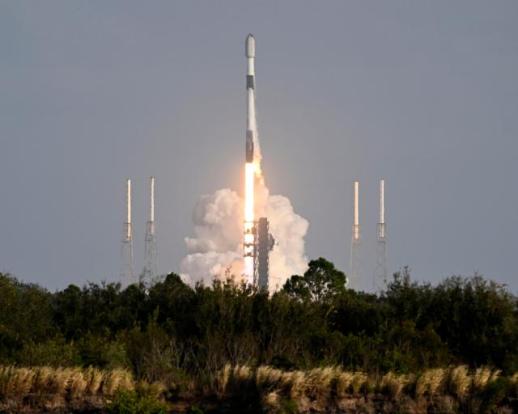 Nasdaq IPO blitz threatens South Korean stock market SEOUL, May 18 (AJP) - Amid unresolved bottlenecks around the Strait of Hormuz, high-profile United States companies including SpaceX, OpenAI, and Anthropic are preparing for consecutive initial public offerings (IPOs) later this year. With foreign capital expected to flock to these massive listings and South Korean investors steadily expanding their overseas portfolios, forecasts are emerging that the domestic stock market could face a correction. The benchmark KOSPI closed 0.31 percent higher at 7,516.04 on Monday. While it recouped some losses on growing expectations that the general strike at Samsung Electronics would come to an end, the index had plunged below the 7,100 mark early in the session, following a decline of more than 6 percent last week. East Asian stock markets had previously pushed higher despite the escalating blockade of the Strait of Hormuz. The KOSPI hit a record high of 7,981.41 at Thursday’s close last week, while Japan’s Nikkei 225 similarly touched an all-time high of 63,442.50 on May 10. Analysts point to various factors behind the sudden stagnation or decline of Asian markets that had seemed bound for endless gains, with the upcoming series of megacap listings in the United States being cited most frequently. The most anticipated listing is SpaceX, which operates small-satellite launch vehicles and manned spacecraft operations. SpaceX is a dominant leader in capturing and deploying multiple satellites into low Earth orbit (LEO). Up to 70 percent of active satellites currently in orbit were launched via the company’s rockets, and 97 percent of global satellite internet speed tests are conducted through its Starlink service. Its broad portfolio, spanning civil and military applications, is considered a core strength. Most notably, its reusable launch vehicles, led by the Falcon 9, allow the company to perform launches at costs up to three times lower than competitors in China and Russia, attracting clients worldwide. Consequently, markets expect SpaceX’s public offering to be the largest in history. Prominent asset management firms, including Morgan Stanley and Goldman Sachs estimate the size of the offering could reach up to $75 billion. This would more than double the previous record of $29.4 billion set by Saudi Aramco, the world's largest oil company, in 2019. The complicating factor is the rising volume of overseas investment by South Korean nationals. In 2025, South Koreans poured an estimated $114.4 billion into overseas equities, more than doubling the roughly $42 billion that flowed out in 2024. The combined value of foreign direct investment into South Korea during the same period stood at only $36 billion. The Bank of Korea (BOK) had sought to incentivize domestic investment by launching Reshoring Investment Account (RIA) products to curb the local currency's sharp depreciation, which fell 6.5 percent over the past year from 1,390 won per dollar in May 2025 to 1,480 won per dollar this May. However, with the SpaceX IPO becoming tangible, those plans are in jeopardy. With leading artificial intelligence companies like Anthropic and OpenAI scheduled for large-scale listings later this year - or the first quarter of 2027 at the latest - capital flight from the South Korean securities market is projected to accelerate. Some forecasts suggest these two firms could even surpass SpaceX’s record-breaking offering size. Domestic brokerage firms are racing to launch SpaceX-related exchange-traded funds (ETFs). Firms, including Korea Investment Management and Mirae Asset Global Investments, are rolling out aerospace-focused ETFs in an effort to retain domestic capital. Yet, blocking the correction appears challenging given the lowered barriers to foreign market entry. While forecasting that the KOSPI could reach 9,000 by the end of the year, NH Investment & Securities projected that "large-scale IPOs such as SpaceX and OpenAI could temporarily dampen the South Korean securities market." "The scale of domestic capital shifting overseas could be substantial," Mirae Asset, which has aggressively invested in SpaceX, also warned of a short-term shock. 2026-05-18 16:34:32