
Journalist

Seo Hye Seung
ellenshs@ajunews.com
-
 AJP Focus: Uncertain weekend for Iran deal that leaves much to be desired SEOUL, May 25 (AJP) - President Donald Trump’s warning on Sunday that U.S. negotiators should “not rush into a deal” with Iran underscored growing doubts over an emerging framework agreement that could reopen the Strait of Hormuz while leaving many of the Middle East conflict’s most dangerous questions unresolved. The remarks came soon after Washington officials said a deal with Tehran had been “largely negotiated” aimed at ending the war that erupted in late February following U.S. and Israeli strikes on Iran. “I have informed my representatives not to rush into a deal,” Trump wrote on Truth Social, adding that the U.S. blockade on Iranian shipping would remain “in full force and effect until an agreement is reached, certified, and signed.” The evolving stance reflected mounting concern inside Washington that the framework under discussion remains politically risky, strategically incomplete and economically uncertain despite hopes that the Strait of Hormuz could soon reopen. Under the proposed arrangement, Iran would restore commercial shipping access through Hormuz while the United States would eventually ease its naval blockade on Iranian ports. Tehran has also reportedly accepted the principle of disposing of its highly enriched uranium stockpile, although critical details remain unsettled. Iranian officials insist that no binding nuclear commitments have yet been finalized and say substantive negotiations over uranium enrichment, sanctions relief and inspections would continue over the next 30 to 60 days. Washington appears increasingly wary of locking in sanctions relief or military de-escalation before securing enforceable guarantees over Iran’s nuclear program. Major unanswered questions include whether Tehran would permanently dismantle uranium enrichment capability or merely suspend it temporarily, how long restrictions would last, and whether Iran’s ballistic missile program and regional proxy networks would be included in future negotiations. Trump reportedly wants restrictions lasting up to 20 years, while Tehran is pushing for a significantly shorter timeline. The deal has also triggered concern in Israel and Gulf Arab states, which fear the agreement could restore Iran’s economic breathing room while leaving its regional military leverage largely intact. Israeli officials remain especially uneasy that Hezbollah and Iran’s missile infrastructure have not been directly addressed in the framework. At the same time, the White House is facing mounting pressure from energy markets and inflation concerns ahead of the U.S. midterm election cycle. The Strait of Hormuz handles roughly one-fifth of global oil trade and a major portion of LNG shipments bound for Asia. Iran’s effective closure of the waterway following the outbreak of war triggered sharp increases in oil prices, tanker insurance premiums and fuel costs worldwide. White House National Economic Council Director Kevin Hassett acknowledged during an interview with CBS News' Face the Nation Sunday that even after Hormuz reopens, energy markets will require weeks or months to normalize. “Once the straits are open, then the tankers are going to go back and they're going to refill the refineries almost right away,” Hassett said. “A tanker goes about 300 nautical miles a day … between a month and two months, we expect everybody to have all the oil they need at every refinery on earth.” Hassett noted that nearby importers such as India and Pakistan would recover faster than more distant economies. “Places like India and Pakistan, which are close to the straits, are going to get their oil and then turn it into refined product right away … if you're down in New Zealand, it'll take a little bit longer.” For Asia, the comments reinforced expectations that oil and gas prices are unlikely to normalize any time soon even if the strait fully reopens. Physical energy deliveries to Northeast Asia still require roughly 15 to 20 days after loading resumes, while refiners continue processing expensive emergency inventories accumulated during the nearly three-month disruption. Shipping bottlenecks, elevated insurance costs and uncertainty over whether the ceasefire will hold are also expected to keep volatility high. Markets are particularly concerned that Hormuz may no longer function as a stable commercial waterway but as a recurring geopolitical bargaining chip. Iranian officials have suggested the strait would reopen under Iranian management terms, while Gulf states worry Tehran could emerge from the conflict with greater strategic leverage after demonstrating its ability to disrupt one of the world’s most vital energy corridors. South Korea and other Asian economies remain especially vulnerable. Although Seoul has diversified portions of its energy imports in recent years through increased purchases from the United States and other suppliers, Gulf crude and LNG remain structurally critical for Korean refiners and petrochemical manufacturers. That means even a successful diplomatic breakthrough may offer only partial relief. Iran is meanwhile demanding broader sanctions relief and access to frozen overseas assets estimated at tens of billions of dollars. U.S. officials have so far resisted confirming any immediate economic concessions, insisting sanctions easing would depend on verified Iranian compliance. The disagreement may become the defining obstacle in the next phase of negotiations. For now, Trump’s insistence on slowing the process signals that Washington itself recognizes the emerging accord remains far from a final peace settlement. Instead, the deal increasingly resembles a fragile economic truce designed to reopen Hormuz and calm energy markets temporarily while deeper disputes over nuclear capability, sanctions leverage and regional security remain unresolved. 2026-05-25 10:03:24
 -
 Police locate missing foreign national hiker in Korea after safe return home SEOUL, May 24 (AJP) -A woman believed to be a foreign national who was feared missing on Mount Cheolma after reporting that she had lost her way while hiking had safely returned home, authorities said Sunday, ending a two-day intensive search operation. According to the Gyeonggi Northern Fire and Disaster Headquarters, police located the woman at her residence in Seoul’s Gangbuk district at 10:51 a.m. Sunday. Officials said she was found in stable condition with no apparent injuries. The woman first contacted emergency services around 9 p.m. Friday, telling them in English that she had become lost while hiking. During the call, she repeatedly mentioned “Iron horse,” which authorities interpreted as a reference to Cheolmasan — the Sino-Korean term for “iron horse” and the name of the mountain in Namyangju. Rescue efforts were complicated because the call came through what authorities described as an “abnormal international network number,” preventing emergency services from accurately tracing her location. Police and firefighters nevertheless determined that the woman was likely referring to Mount Cheolma in Jinjeop-eup, Namyangju, and launched a search operation in the area. The woman contacted authorities again around 5:50 a.m. Saturday, saying she was still wandering the mountain and that her phone battery had fallen to 7 percent. Communication was lost after the call, and her phone was later switched off, intensifying concerns for her safety. Police and fire authorities deployed helicopters, drones, rescue dogs and dozens of personnel to comb trails leading toward Jinjeop, Onam and Sudong. Search teams continued operations throughout Saturday but found no trace of the woman before police eventually located her at her Seoul home Sunday morning. 2026-05-24 19:32:22
 -
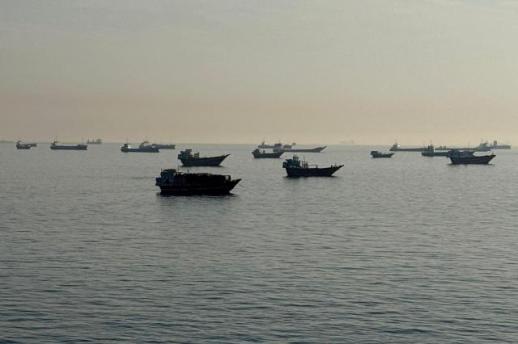 Hormuz reopening nears, but energy aftershocks to hit hard on Asia for months SEOUL, May 24 (AJP) -A draft framework between the United States and Iran to reopen the Strait of Hormuz is nearing finalization, Washington claims, offering hopes for relief from one of the worst energy supply disruptions in recent years. But for energy-dependent Asian economies including South Korea, the shock is far from over as crude shipments from the Gulf still require weeks to reach refineries even after maritime traffic resumes. U.S. President Donald Trump said Saturday that an agreement with Iran was “largely negotiated” and would include reopening the Strait of Hormuz, the strategic waterway through which roughly one-fifth of the world’s oil supply flows. The emerging framework would halt fighting, reopen shipping lanes and begin broader negotiations over Iran’s nuclear program and sanctions relief, according to U.S. and regional officials. Yet even if the strait reopens within days, the economic aftershocks from the nearly three-month disruption are expected to cut deep across Asia’s manufacturing economies well into the second half. Very Large Crude Carriers departing Persian Gulf terminals typically require about 15 to 25 days to reach East Asia, meaning Korean, Japanese and Chinese refiners will continue to face delayed arrivals, elevated freight costs and inventory pressure even after maritime passage normalizes. South Korea’s latest trade data already show the scale of the disruption. According to Korea International Trade Association data, Korea’s crude oil imports fell 22.8 percent on year in April to about 8.46 million tons. Imports from the Middle East plunged 37.3 percent to about 4.49 million tons amid the Strait of Hormuz crisis. The Middle East still accounted for the largest share of South Korea’s crude imports, but its portion dropped sharply to 53.1 percent from 65.2 percent a year earlier. Imports from Saudi Arabia, Korea’s largest supplier, fell 37.6 percent to roughly 2.15 million tons. Iraqi shipments dropped 42.4 percent while imports from Kuwait nearly collapsed, plunging 98.2 percent. Qatari crude imports were completely halted. The data underscore how rapidly Asian buyers were forced to redraw energy supply chains as the Hormuz disruption intensified. The United States, already South Korea’s second-largest crude supplier, nearly overtook Saudi Arabia last month. Imports of U.S. crude rose 13.4 percent to around 2.145 million tons, narrowing the gap with Saudi shipments to barely 1,000 tons. Just a month earlier, the difference exceeded 1.45 million tons. Seoul also accelerated diversification toward North America, Oceania and Africa. Crude imports from Australia surged 89 percent while Canadian shipments more than tripled. Imports from African producers including the Democratic Republic of Congo, Nigeria and Mozambique jumped more than fivefold. North America’s share of South Korea’s crude imports climbed to 28.3 percent, up 10.3 percentage points from a year earlier. Africa and Oceania also expanded their presence in Korea’s energy mix. Industry officials said the shift highlighted both the flexibility and structural vulnerability of Asia’s refining system. Korean refiners are heavily optimized for Middle Eastern medium and heavy crude grades, making a sudden switch operationally difficult and more expensive. Industry Minister Kim Jung-kwan previously said U.S. light crude had become the “most convenient” alternative for blending with Middle Eastern heavy crude during the crisis. Still, the replacement barrels came at a cost. Longer shipping distances from the Atlantic basin, elevated war-risk insurance premiums and vessel shortages sharply increased freight expenses during the crisis. Even after a reopening agreement, shipping markets are expected to remain volatile as insurers and operators assess security risks in the Gulf. Physical reopening of the strait also does not immediately restore normal trade flows. Hundreds of vessels were delayed, rerouted or stranded during the blockade period, creating a logistical backlog likely to persist for weeks. Iran has also signaled that it may retain significant control over navigation procedures and permits in the waterway even under a diplomatic settlement, adding uncertainty over how freely shipping can resume. The government has maintained that supply diversification and strategic stockpiles would stabilize energy procurement through July. The industry and resources ministry said Korea secured about 78.5 million barrels from 19 countries this month, up sharply from imports sourced from 14 countries in April. 2026-05-24 18:03:10
 -
 Trump immigration overhaul to rattle Korean Americans and wider Asian diaspora SEOUL, May 23 (AJP)-The Trump administration’s latest immigration crackdown is sending shockwaves through Korean American and broader Asian immigrant communities after the government announced that most foreigners seeking U.S. permanent residency will now have to leave the United States and apply for green cards from their home countries. The policy, unveiled Friday by the U.S. Citizenship and Immigration Services (USCIS), effectively dismantles a decades-old practice known as “adjustment of status,” under which temporary visa holders already living in the United States could apply for permanent residency without leaving the country. USCIS said green cards granted from within the U.S. would now be limited to “extraordinary circumstances,” though it did not clearly define what qualifies. The move marks one of the most aggressive restrictions on legal immigration since President Donald Trump returned to office, broadening the administration’s hardline agenda beyond undocumented immigration and into employment-, student- and marriage-based migration channels that have long underpinned Asian immigration to the United States. For Korean Americans, the impact could be especially significant. According to South Korea’s Overseas Koreans Agency, about 2.56 million ethnic Koreans and Korean nationals live in the United States, making it the world’s largest Korean diaspora community and accounting for roughly 36 percent of all overseas Koreans globally. While most are already U.S. citizens, a substantial share remain on temporary visas, green cards or in transition toward permanent residency — precisely the groups affected by the new rule. The policy threatens to disrupt a well-established immigration pipeline heavily used by Koreans: student visa to Optional Practical Training (OPT), then H-1B work visa, followed by permanent residency. South Korea sent more than 42,000 students to U.S. universities during the 2024–25 academic year, ranking third globally after India and China. Many later pursue jobs in technology, engineering, medicine and finance sectors that depend on employment-based green card sponsorship. Under the new system, however, such applicants may now have to leave the United States mid-career and wait abroad — potentially for months or even years — while U.S. consulates process their cases. Immigration lawyers warn the disruption could be severe not only for immigrants but also for American employers already facing shortages in high-skilled industries. “Consular processing” abroad is already burdened by long backlogs, and shifting hundreds of thousands of applications overseas could create bottlenecks that separate families and interrupt employment. More than 820,000 green cards were granted to people already inside the U.S. through adjustment of status in 2024 alone, according to Department of Homeland Security data. Marriage-based immigration may face some of the harshest consequences. More than 70 percent of marriage green cards issued last year were processed through adjustment of status inside the United States. Korean nationals married to U.S. citizens — a growing demographic among professionals and students — may now be forced to return to South Korea while applications are reviewed, raising the prospect of lengthy family separations. Asian communities overall are expected to bear a disproportionate share of the impact. Asian immigrants dominate many of the pathways targeted by the rule, particularly student and employment-based migration. Asians account for roughly 72 percent of international students in U.S. higher education, with South Koreans representing about 4 percent of the total. Advocacy groups such as AAPI Data have warned that South Koreans, Chinese, Taiwanese, Japanese and Indian immigrants are especially vulnerable because they are heavily concentrated in professional and education-linked visa categories. The policy also arrives amid a broader climate of intensified immigration enforcement. Research cited by advocacy organizations found that Immigration and Customs Enforcement arrests involving Asians more than tripled during the early months of the Trump administration compared with the previous year. Many Asian Americans reported feeling less secure and less willing to participate publicly in civic or political life as anti-immigration rhetoric escalated. The administration defended the move as a return to the original intent of U.S. immigration law. “This policy allows our immigration system to function as the law intended instead of incentivizing loopholes,” USCIS spokesman Zach Kahler said, arguing that requiring applicants to process from abroad would reduce the number of people remaining illegally in the U.S. after visa denials. Critics, however, say the measure amounts to a structural rollback of legal immigration itself rather than a procedural adjustment. Immigration attorneys and former Department of Homeland Security officials expect multiple court challenges in the coming months, especially because USCIS has yet to clarify which immigrants may qualify for exemptions under “extraordinary circumstances.” For Korean Americans and many Asian immigrant families, the uncertainty has already begun reshaping calculations about education, work and life in the United States. What had long been viewed as a predictable pathway toward permanent residency — study, work, settle, naturalize — is suddenly far less certain. 2026-05-23 16:56:30
 -
 U.S. flags chip tariffs in push on Korean memory makers to speed up US chip investments SEOUL, May 23 (AJP) -U.S. Trade Representative Jamieson Greer said Friday that Washington is not planning immediate semiconductor tariffs but stressed that duties remain an important tool to rebuild domestic chip manufacturing, signaling continued pressure on Asian chipmakers including Samsung Electronics and SK hynix to expand production in the United States. Speaking at a memory chip expansion project by Micron Technology in Virginia, Greer said the Trump administration’s Section 232 national security investigation into semiconductors aims to strengthen U.S. production capacity after decades of offshoring. “Having tariffs on semiconductors is really important,” Greer said, adding that any duties must be introduced with the “right timing and in the right amount.” He also said there was “not an immediate tariff coming.” The remarks come as President Donald Trump has repeatedly criticized Taiwan’s semiconductor industry and called for aggressive tariffs to revive U.S. chip manufacturing. In a recent interview with Fox News after his state visit to China, Trump reiterated that Taiwan “stole our chip industry” and argued that previous U.S. administrations should have imposed tariffs of up to 200 percent on imported semiconductors to prevent production from moving overseas. Trump has also promoted large-scale semiconductor investments into the United States as part of his administration’s push to strengthen domestic manufacturing and artificial intelligence infrastructure. Taiwan Semiconductor Manufacturing Company last year announced plans to increase its total U.S. investment to $165 billion, including five new fabrication facilities in Arizona. Samsung Electronics and SK hynix have also been accelerating their own U.S. expansion plans amid rising AI chip demand and growing geopolitical pressure surrounding semiconductor supply chains. Samsung is expanding its foundry operations in Taylor, Texas, where the company is building a semiconductor manufacturing complex expected to begin initial production by late 2026. The company is said to be reviewing additional foundry investments after securing a $16.5 billion supply agreement with Tesla. Samsung had previously reduced its planned Texas investment from $44 billion to $37 billion due to weaker-than-expected customer demand, but total spending could eventually exceed $50 billion as it estimated supply would remain below customer demand through 2027. SK hynix is also expanding its U.S. footprint with a planned $3.87 billion advanced chip packaging facility in Indiana. The project is expected to begin mass production in late 2028 and has qualified for proposed support under the U.S. CHIPS Act. The facility will focus on advanced packaging for AI memory products, an area where SK hynix currently leads the global market through its supply relationship with NVIDIA. Trump administration’s trade stance is reinforcing a broader shift in the semiconductor industry, where companies are increasingly being pushed to localize manufacturing in major markets to reduce geopolitical and supply-chain risks. The United States currently produces only about 10 percent of the semiconductors it consumes. 2026-05-23 08:55:17
 -
 AJP Market Watch: AI boom runs into debt and FX markets in Korea, Japan SEOUL, May 22 (AJP) -Artificial intelligence is starting to look like a mixed blessing — at least for the currency and debt markets of Northeast Asia. Equity markets in both countries are on fire. The KOSPI is up more than 85 percent this year, the Nikkei 225 more than 22 percent. Both economies have outperformed expectations, with Japan's GDP expanding 2.1 percent on an annualized basis in the first quarter and Korea's 1.7 percent, as tech-heavy manufacturers ride the AI boom. But the robust headline numbers mask a colder reality the AI froth is hiding — dangerously high leverage, asset inflation, depopulation, energy shocks tied to heavy dependence on Gulf fuel sources, and stubbornly weak currencies. Overlooked by euphoric equity investors, debt yields are rising sharply across major economies as inflation fears, oil shocks and mounting public debt collide with overheated asset prices. Nowhere is that tension clearer than in South Korea and Japan — two export powers riding the AI wave while simultaneously confronting the return of inflation, currency weakness and bond-market stress. The warning signs are already visible. Korea's producer price index surged 2.5 percent month-on-month and 6.9 percent year-on-year in April, the sharpest pace since the aftermath of the 1998 Asian financial crisis. Petroleum and coal prices jumped 31.9 percent, while financial and insurance services rose 26.2 percent — the largest increase on record — as stock trading exploded during the AI frenzy. Brokerage commissions alone surged 119 percent as retail investors rushed into the market on fear of missing out. The KOSPI soared more than 85 percent between the end of 2025 and May 21, while consumer sentiment returned to optimistic territory despite accelerating inflation pressures. Japan is experiencing a parallel dynamic. The Nikkei 225 has climbed more than 22 percent this year alone, powered by AI-linked manufacturing, semiconductors and global capital flows seeking alternatives to slowing Western growth. At the same time, Japanese government bond yields have surged to levels unseen in decades as investors price in a more sustained exit from ultra-loose monetary policy. Japan's 10-year government bond yield climbed above 2.8 percent this week — its highest since 1996 — after stronger-than-expected economic growth reinforced expectations that the Bank of Japan may continue tightening. Thirty-year Japanese yields touched record highs dating back to 1999. Korea's 10-year yield simultaneously climbed above 4.1 percent, while five-year yields approached 4 percent. What links the two countries is not merely the AI rally itself, but the structural vulnerability hidden beneath it. Both Korea and Japan remain deeply dependent on imported energy, external demand and globally mobile capital. Both have allowed years of ultra-cheap liquidity to inflate financial assets. And both are now discovering that AI-driven wealth can quickly spill into inflation psychology, speculative behavior and currency instability. The shift is already feeding through markets. Foreign investors dumped a net 44.6 trillion won worth of KOSPI shares in May through May 21, after modest buying in April, according to Financial Supervisory Service data. Daily foreign selling reached nearly 2.94 trillion won on May 20 alone. The exodus has intensified pressure on the Korean won. The dollar-won exchange rate climbed from 1,483.3 won at the end of April to above 1,506 this week, before surging further intraday Friday toward 1,518 amid broad foreign selling and dollar strength. One-month forward rates also jumped, signaling expectations for further depreciation. That matters because neither Korea nor Japan imports inflation gently. Both economies rely heavily on imported oil, gas and raw materials. Brent crude remains more than 72 percent above end-2025 levels, while Dubai crude is still up more than 56 percent despite recent pullbacks. A weaker won and weaker yen therefore magnify energy costs directly into domestic producer prices, transportation costs and household inflation. And the AI boom itself is beginning to amplify those pressures. In Korea, semiconductor profits and stock gains are reshaping wage expectations across industries. Samsung Electronics and SK hynix bonuses are becoming reference points far beyond the chip sector, fueling broader compensation demands during an already inflationary period. Retail participation in equities has surged as households increasingly treat asset inflation as a substitute for income growth. Japan faces a different historical context but an increasingly similar outcome. After decades of wage stagnation, rising corporate profits and labor shortages are finally pushing salaries higher. But stronger wages combined with rising import costs are also complicating the Bank of Japan's long-awaited normalization process. The central banks now face a dilemma with no painless solution. If they keep policy loose, currencies may weaken further, feeding imported inflation and asset bubbles. If they tighten aggressively, they risk puncturing equity rallies and destabilizing heavily indebted governments and households accustomed to abundant liquidity. This is why the recent bond-market moves matter far beyond technical finance. Global investors are beginning to question whether the AI era can coexist indefinitely with the monetary assumptions of the post-2008 world — ultra-low rates, permanently suppressed bond yields and endless liquidity support. That skepticism is appearing simultaneously across markets. U.S. Treasury yields have climbed sharply amid inflation and debt concerns. German bund yields are approaching levels last seen during the eurozone sovereign debt crisis. British gilt yields are hovering near financial-crisis highs. Japan's long-dormant bond market is finally awakening. Korea's curve is steepening rapidly. Bond vigilantes — long absent during the era of quantitative easing — are returning globally. For Korea and Japan, the danger is particularly acute because both economies sit at the intersection of technology euphoria and external vulnerability. Their markets have grown increasingly dependent on foreign inflows, semiconductor optimism and weak currencies that support exports. But those same weak currencies now threaten to import inflation at precisely the moment asset markets appear most overheated. History shows these phases can persist longer than expected. Asset rallies often intensify even as financial conditions deteriorate underneath. The Asian financial crisis began not with recession, but with confidence and capital inflows. So did many liquidity booms before it. That does not mean a crisis is imminent. But it does mean the era of consequence-free liquidity is ending. The AI revolution may indeed reshape the global economy. But it will not abolish the basic laws of finance. Rising wages, weaker currencies, higher oil prices and surging asset values eventually collide with the bond market's demand for discipline. And that collision is beginning to unfold across Northeast Asia now. 2026-05-22 16:05:40
 -
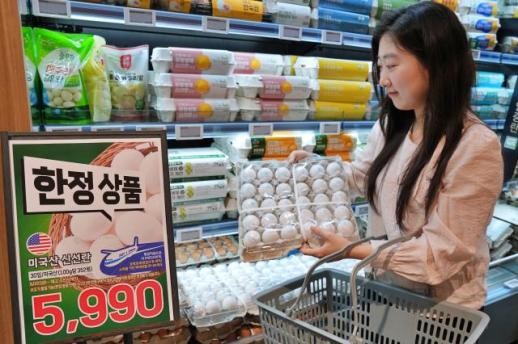 Korea's May consumer sentiment sharply rebounds on strong exports and equities SEOUL, May 22 (AJP) -South Korea’s consumer sentiment rebounded sharply in May, returning to optimistic territory after briefly slipping below the long-term average a month earlier, as robust exports and a record-setting stock rally outweighed concerns over prolonged Middle East tensions and rising energy prices, central bank data showed Friday. Sentiment about current economic conditions and future prospects improved even as inflation expectations hovered near 3 percent, reinforcing the case for maintaining a monetary tightening bias to contain inflationary pressures from imports and wage increases. The Bank of Korea said the Composite Consumer Sentiment Index (CCSI) rose to 106.1 in May from 99.2 in April, marking the strongest monthly increase since the post-pandemic rebound period and pushing sentiment back above the long-term average benchmark of 100. The recovery was broad-based across nearly all major categories. Consumers’ assessment of current economic conditions jumped 15 points — the strongest gain since October 2020 — to 83, while expectations for future conditions also surged 14 points to 93. Expectations for living standards climbed five points to 97, while household income expectations rose two points to 100. Consumer spending outlook also improved two points to 110, supported by strong stock-market returns and generous bonus payouts from high-performing technology companies. Housing sentiment strengthened notably as expectations for home prices surged eight points to 112, reversing part of the weakness seen earlier this year. Wage outlook sentiment also edged up two points to 122. Expectations for interest rates eased slightly, with the interest-rate outlook index slipping one point to 114, though it remained historically elevated. Consumers also appeared somewhat more optimistic about employment conditions. The employment outlook index rose six points to 88 after falling sharply in April, reflecting hopes that the export-driven recovery would generate broader spillover effects across the economy despite ongoing conflicts in the Middle East. Inflation concerns, however, remained elevated. Consumers’ perceived inflation rate over the past year rose to 3.0 percent in May from 2.9 percent in April, while one-year-ahead inflation expectations eased only slightly to 2.8 percent after hitting 2.9 percent the previous month. Longer-term inflation expectations for three and five years ahead remained anchored at 2.6 percent. The survey showed petroleum products remained the dominant driver of inflation concerns, with 85.2 percent of respondents citing oil-related products as a key factor behind expected price increases over the next year. Public utility charges and industrial goods followed. The inflation outlook follows Thursday’s producer price data, which pointed to mounting upstream cost pressures across the economy. The Bank of Korea said the producer price index rose 2.5 percent in April from the previous month and 6.9 percent from a year earlier, led by a surge in petroleum and chemical products. Prices of coal and petroleum products jumped 31.9 percent on-month, while overall energy prices rose 7.9 percent. The broader domestic supply price index, which measures prices of goods and services supplied to the domestic market, climbed 5.2 percent on month in April, while the total output price index surged 3.9 percent. The debt market has increasingly priced in a higher-for-longer rate environment as inflationary pressure persists alongside a stubbornly weak currency. The five-year government bond yield has neared 4 percent and the 20-year paper topped 4.2 percent, while even the one-year note traded at 3.165 percent, sharply above the benchmark policy rate of 2.5 percent. The Bank of Korea is scheduled to hold its rate-setting meeting next Thursday. 2026-05-22 08:46:16
 -
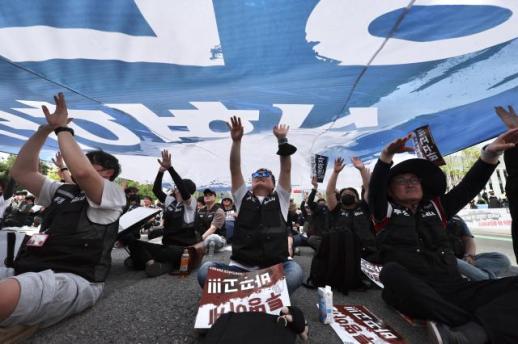 AJP Watch: Samsung still unpatched as CEO and union plea exposes internal strife SEOUL, May 21 (AJP) -Samsung Electronics may have pulled back from the brink of an unprecedented general strike with a dramatic last-minute wage agreement, but the company is not yet out of trouble as internal divisions continue to simmer over a bonus structure that many employees say has shattered the sense of balance inside South Korea’s biggest company. The tentative 2026 wage agreement, reached late Wednesday after marathon negotiations involving the labor ministry, still requires approval through a union vote scheduled to conclude next Wednesday. Its fate remains uncertain as resentment spreads among non-chip employees and even within parts of the union itself. The deal prevented what would have been an 18-day strike involving tens of thousands of workers, largely from Samsung’s semiconductor operations, at a time when the company is riding a historic AI-driven boom in memory chips. But the structure of the agreement — particularly the scale of payouts for semiconductor employees — has exposed widening tensions between Samsung’s highly profitable chip division and its other businesses. In an unusually direct message to employees on Thursday, Samsung Electronics Device Solutions chief Jun Young Hyun issued a formal apology and appealed for unity, acknowledging the strain created during months of labor conflict. “Although there were differences during the negotiations, we confirmed that our shared commitment to the company remained the same,” Jun said in a companywide message. “What matters now is moving beyond the time of conflict and joining forces as one.” He also described the agreement as “a new beginning” and urged employees to support the ratification process for “the future of both the company and its members.” Union leadership separately moved Thursday to appease internal complaint and muster support ahead of next week’s ratification vote. Choi Seung-ho, head of Samsung Electronics’ chapter of the Samsung Group Super Enterprise Labor Union who led the negotiations, described the tentative agreement as “the result that the union and the joint struggle headquarters achieved with their best efforts,” adding that the vote outcome would serve as “a report card” from members on the union leadership. Choi stressed that the dispute went beyond wages, calling it “a fight where the company’s principles and the union’s principles collided head-on", assuring that the union “continued to demand the values it pursued until the very end.” The back-to-back appeal reflected growing concern inside Samsung that the deal, while avoiding a disruptive strike, may have deepened internal fractures. Under the tentative agreement, Samsung will maintain the existing Overall Performance Incentive system capped at 50 percent of annual salary across both the semiconductor-focused Device Solutions (DS) division and the Device Experience (DX) division, which includes smartphones, TVs and home appliances. But the agreement also introduces a separate special management bonus exclusively for DS employees, funded with 10.5 percent of semiconductor operating profit without an upper ceiling. With Samsung’s semiconductor business generating record profits from the AI memory boom, the numbers quickly became explosive inside the company. Samsung reported first-quarter operating profit of 57.2 trillion won ($38 billion), an all-time high, with the DS division alone contributing 53.7 trillion won. Industry estimates cited during negotiations projected that if the semiconductor division were to generate around 300 trillion won in annual operating profit, the special bonus pool could reach roughly 31.5 trillion won. Distributed among approximately 78,000 DS employees, some memory division workers could receive payouts approaching 600 million won based on a 100 million won salary. Meanwhile, employees in the DX division — contributing roughly 3 trillion won in first-quarter operating profit — would remain limited to the existing capped incentive system, with maximum payouts around 50 million won. The widening gap has triggered backlash among non-chip employees who argue the compensation structure now treats Samsung as two separate companies under one name. According to industry officials, dissatisfaction inside the DX division has intensified since last month, with some employees leaving the union in protest. Membership in Samsung Electronics’ largest union reportedly fell from around 77,000 members to closer to 70,000 recently. Some DX union members have also filed for an injunction challenging the legitimacy and procedural fairness of the negotiations, arguing the bargaining process disproportionately reflected the interests of semiconductor workers. Even Samsung’s attempt to soften the divide by offering DX employees company stock worth about 6 million won has done little to ease frustration, with some workers viewing the measure as symbolic compensation compared with the potentially massive DS payouts. The internal discord highlights how the AI boom is reshaping traditional corporate compensation structures across Korea’s technology sector. While semiconductor profits have surged amid explosive demand for high-bandwidth memory and AI infrastructure, other divisions inside Samsung continue to face slower growth, higher costs and tariff pressures. The imbalance has increasingly complicated how one of the world’s largest conglomerates distributes rewards among businesses operating under vastly different market realities. Samsung has avoided the immediate economic and reputation damage from a prolonged strike that had alarmed investors, policymakers and global supply-chain partners alike. Shares hit all-time high on Thursday by gaining more than 8 percent and lifting the main index by the same scale. Inside the company, the harder test of uniting employees across Samsung’s sprawling businesses amid uneven fruits of AI bonanza persists. 2026-05-21 19:51:42
 -
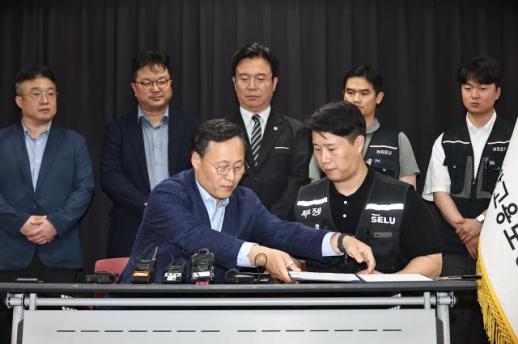 AJP Focus: Samsung's bonus war and the price of AI prosperity "Money often costs too much." Ralph Waldo Emerson wrote that line in the 19th century, but it reads today almost like a warning for the age of artificial intelligence. The real cost of the AI boom is no longer measured only in capital expenditures, GPU prices or trillion-dollar market valuations. It is increasingly measured in resentment, polarization, labor conflict and the quiet erosion of social cohesion — socially, politically, psychologically. South Korea's recent labor showdown at Samsung Electronics exposed that reality more sharply than perhaps any other event in Asia so far. What appeared on the surface to be a dispute over bonuses inside the world's largest memory-chip maker was in fact something far larger: a collision between industrial-era labor systems and the new economics of AI wealth. Under a provisional agreement reached after marathon negotiations, Samsung semiconductor employees stand to receive stock-based bonuses approaching 600 million won this year if profit targets are met. The framework allocates 10.5 percent of agreed business performance to a new special semiconductor incentive pool with effectively no upper ceiling — mirroring, and in some respects exceeding, the uncapped compensation model introduced by rival SK hynix. The numbers themselves explain why the dispute became a national issue. The AI boom is producing concentrations of profit unprecedented in modern industrial history. Nvidia on Wednesday posted quarterly net income of $58.3 billion as AI demand exploded globally, with CEO Jensen Huang describing demand as "parabolic." The problem is that modern democratic societies were never designed to absorb wealth concentration occurring at this speed. And that is where the costs begin. The first cost is individual and psychological. At the center of the Samsung conflict was not merely money, but the perception of fairness. The union argued that semiconductor workers who helped restore Samsung's competitiveness in the AI memory race deserved transparent participation in the profits they generated. Workers increasingly rejected opaque bonus formulas whose standards appeared to shift year by year, subject to management discretion. In the AI era, employees no longer want merely stable salaries. They want ownership of upside. From the workers' perspective, that demand is rational. Semiconductor profits can now surge by tens of trillions of won within a single cycle. When AI transforms a company into a strategic global bottleneck, employees inevitably begin asking why their compensation systems still resemble those of the manufacturing era. First-quarter profit from chip operations at Samsung Electronics and SK hynix combined reached $63 billion, with operating margins topping 70 percent. The same phenomenon creates a second cost: social fragmentation. According to National Tax Service data for 2024, the average annual salary of Korean workers stood at around 45 million won. But the median — the point at which half of workers earn less — was only 34.17 million won, or roughly 2.85 million won a month before tax. In practical terms, nearly half of Korean workers take home less than 3 million won a month before tax. That reality inevitably deepens feelings of relative deprivation when semiconductor employees are potentially pocketing bonus payouts worth double-digit multiples of an ordinary annual salary in a single cycle. Estimates that Samsung memory-chip employees could theoretically receive more than 2.6 billion won in cumulative bonuses over three years under the union's preferred formula triggers immediate public sensitivity. Even if such projections rely on optimistic assumptions about sustained AI demand, the psychological effect is already real. To many ordinary Koreans struggling with inflation, housing costs and stagnant wages, the dispute increasingly resembled not a labor negotiation but a symbol of how unevenly the gains of the AI revolution are being distributed. That perception matters politically. Because the third cost is institutional and democratic. The administration of President Lee Jae-myung understood that a strike involving tens of thousands of semiconductor workers at a company responsible for roughly one-fifth of Korea's exports could rapidly evolve into a national crisis. A prolonged disruption at Samsung would not merely have delayed memory-chip shipments. It could have affected AI server production, hyperscaler expansion plans, semiconductor pricing and broader investor confidence across Asia. That is why the government treated the dispute not as a routine wage conflict but as a matter of national strategic stability — and notably, it chose to manage that crisis democratically rather than coercively. The National Labor Relations Commission exhausted the formal mediation procedures required under Korean labor law. When talks stalled, Labor Minister Kim Young-hoon personally stepped in for nonbinding negotiations, seeking voluntary compromise rather than imposing state authority. In many countries, governments confronting strategic industrial unrest instinctively choose either suppression or populist escalation. Korea attempted something more difficult: preserving labor rights while preventing economic self-destruction. The labor ministry repeatedly emphasized dialogue "until the very end," in hopes of establishing a democratic precedent for managing AI-era labor conflict through institutional legitimacy rather than raw confrontation. The symbolism mattered — because the fourth cost is economic and structural. Once SK hynix removed bonus caps, compensation expectations spread rapidly across corporate Korea. Unions at Hyundai Motor Company demanded bonuses tied to 30 percent of net profit. Workers at LG Uplus pushed for operating-profit-linked pay. Unions across Kakao affiliates approved simultaneous strike votes in what could become the company's first group-wide walkout. Large conglomerates possess pricing power, strategic leverage and global market dominance. Smaller firms do not. Samsung alone operates through hundreds of suppliers and tens of thousands of subcontracted workers who are entirely outside the semiconductor bonus framework. Smaller manufacturers, suppliers and nonunion workers watch from the outside as AI profits accumulate within a narrow circle of strategic firms and organized labor. That widens Korea's already severe labor-market dualism. Samsung and SK hynix may stand at the summit, but the mountain beneath them was collectively built — through decades of state-backed tax incentives, national talent cultivation, university research, supplier ecosystems and the cooperation of equipment, materials and logistics firms across the broader economy. Which brings us to the final cost: the erosion of the old social contract itself. Korean conglomerates historically functioned not merely as employers but as quasi-familial institutions, promising stability in exchange for loyalty. Compensation systems emphasized organizational harmony and relative equality over radical differentiation. The AI economy destabilizes that model at its foundation. In Silicon Valley, superstar engineers increasingly resemble elite athletes, their compensation reflecting strategic scarcity. American firms aggressively deploy stock options, equity incentives and individualized rewards to compete for AI talent. Korea's labor culture still largely belongs to the industrial era. That mismatch is becoming unsustainable. Industrial-era labor laws were designed around fixed factories, predictable productivity and long employment cycles. AI economies behave differently. Profits surge unevenly. Strategic talent shifts rapidly. Compensation increasingly depends on intangible contribution rather than standardized hierarchy. The labor market itself is growing more fluid, asymmetric and psychologically transactional. Rigid compensation systems cannot survive indefinitely under such conditions. But neither can purely winner-take-all systems imported wholesale from Silicon Valley. The United States offers extraordinary upside — and extraordinary instability: layoffs, collapsing valuations, brutal volatility. Korea's collective model emerged partly to guard against precisely that insecurity. The challenge now is not choosing between American-style capitalism and old industrial paternalism. It is finding a new equilibrium capable of preserving legitimacy. Korea must build compensation systems transparent enough to feel fair, flexible enough to reward strategic talent and broad enough to prevent AI prosperity from deepening social fracture. The Samsung negotiations, for all their tension, offered at least one encouraging sign: the system bent without breaking. The government resisted both anti-labor crackdowns and populist escalation. Institutional mediation processes were exhausted before they were abandoned. Management eventually acknowledged that AI-era competition is now fought not only through technology but through compensation structures. And unions ultimately chose negotiated compromise over industrial paralysis. That democratic process may ultimately matter more than the size of the bonuses themselves. Because the defining question of the AI era is no longer whether extraordinary wealth will be created. The real question is how much social, political and human cost societies are willing to pay for it. 2026-05-21 11:35:42
 -
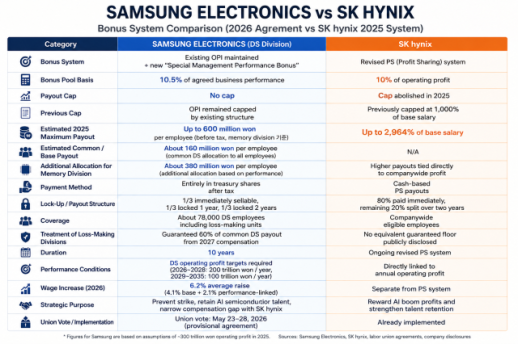 AJP Watch: Samsung closes pay gap with SK hynix in landmark semiconductor labor accord SEOUL, May 21 (AJP) -Samsung Electronics employees in its memory-chip division could receive performance bonuses of up to 600 million won ($440,000) this year under a landmark labor agreement that mirrors — and in some cases surpasses — rival SK hynix’s uncapped AI-era reward system that has transformed compensation expectations across Korea’s semiconductor industry. The provisional wage deal reached late Wednesday ties Samsung’s new special semiconductor bonus pool to 10.5 percent of agreed business performance, slightly above SK hynix’s 10 percent profit-sharing formula, as the world’s largest memory-chip maker moved to close a widening compensation gap exposed by the AI boom. The agreement, reached after marathon government-mediated negotiations, will be put to a union vote from May 22 to 27. If approved, it would settle this year’s wage dispute and cancel a planned general strike that had threatened to disrupt global AI chip supply chains. At the center of the breakthrough is a newly created “special management performance bonus” for Samsung’s Device Solutions (DS) semiconductor division. The union withdrew its steadfast demand on scrapping the existing OPI (Overall Performance Incentive) system, with management offering to introduce an additional long-term payout structure with no upper limit on bonuses. The framework bears strong resemblance to SK hynix’s revised PS (Profit Sharing) system, which scrapped the previous payout cap of 1,000 percent of base salary and allocates 10 percent of operating profit for employee rewards. Under that scheme, SK hynix employees are expected to receive bonuses equivalent to as much as 2,964 percent of monthly base salary based on 2025 performance. Samsung’s plan could generate even larger payouts if projected earnings materialize. According to the provisional agreement, the special bonus fund will be based on 10.5 percent of mutually agreed business performance metrics. If operating profit is used as the benchmark and Samsung Electronics posts around 300 trillion won in annual operating profit this year as forecast, roughly 31.5 trillion won could be set aside for DS performance compensation. Forty percent of that pool would be distributed equally across the DS division’s roughly 78,000 employees regardless of business unit performance, while the remaining 60 percent would be allocated based on divisional results. Under the formula, all DS employees — including workers in loss-making non-memory businesses — could receive around 160 million won per person from the common allocation alone. Memory division employees would receive an additional estimated 380 million won on average, while workers in common organizational units would receive about 270 million won more under the agreed distribution ratio. Combined with traditional OPI payouts, memory-chip employees earning annual salaries of around 100 million won could receive total bonuses approaching 600 million won before tax this year. Unlike traditional cash bonuses, the new special incentive will be paid entirely in Samsung treasury shares after taxes. One-third of the shares can be sold immediately, while the remaining two-thirds will be locked up for one year and two years respectively. The stock-based structure appears aimed at both strengthening long-term employee retention and aligning compensation with shareholder value as Samsung races to regain technological leadership in AI memory chips such as HBM4. The agreement also introduces a support mechanism for underperforming units. Loss-making divisions that fail to qualify for conventional OPI payments would still receive payouts equivalent to 60 percent of the common DS rate beginning with 2027 compensation. The special semiconductor incentive system will remain in place for 10 years, though payouts are contingent on ambitious profit conditions. Samsung’s DS division must achieve annual operating profit of 200 trillion won from 2026 through 2028, followed by 100 trillion won annually from 2029 through 2035. The deal also includes an average wage increase of 6.2 percent this year, composed of a 4.1 percent base pay increase and a 2.1 percent performance-linked raise. Additional agreements include expanded childbirth support payments, improved employee housing loan programs and about 6 million won worth of Samsung shares for employees in the DX division and CSS business team. The breakthrough came after days of tense negotiations involving the labor ministry and the National Labor Relations Commission, as the government sought to prevent a strike involving tens of thousands of semiconductor workers at a company whose exports account for roughly one fifth of South Korea’s outbound shipments. The dispute had increasingly reflected broader shifts underway in Korea’s semiconductor industry, where booming AI demand and soaring profits at SK hynix intensified pressure on Samsung workers demanding compensation structures closer to Silicon Valley-style performance sharing. For Samsung, the agreement represents not only an effort to avert labor disruption but also a strategic acknowledgment that the competition for semiconductor talent in the AI era is increasingly being fought through pay structures as much as through technology. 2026-05-21 06:07:14