
Journalist

Cho Jae Hyung
grind@ajunews.com
-
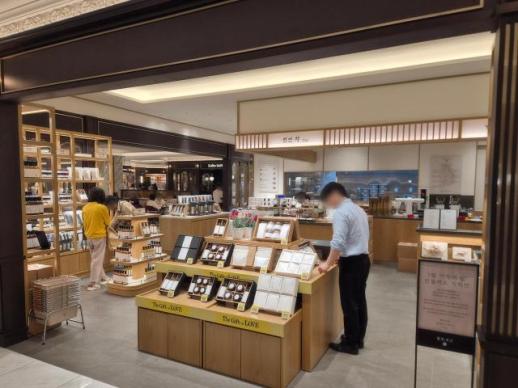 Shinsegae Launches Premium Rice Subscription Service Despite a yearly decline in per capita rice consumption, interest in the quality of rice has been rising. In response to this demand, Shinsegae Department Store has launched a premium rice subscription service. On May 14, Shinsegae announced that it began its "Fermentation: Store" brand's "Online Rice Subscription Service" at the end of last month. The service delivers top-quality rice, curated by rice sommeliers and Korean chefs, directly to customers' doorsteps. Based on the philosophy that freshness is key to taste, the service ensures that freshly milled rice is delivered every two weeks. The subscription model was developed in response to changing consumer preferences for premium products. According to research by the Korea Rural Economic Institute, the percentage of consumers checking rice varieties when purchasing rose from 12.3% in 2021 to 16.4% in 2024. The service was inspired by positive customer feedback. Rice from the "Fermentation: Store" was supplied to Shinsegae's Korean dining venue, "Jaju Hansang," where diners praised the quality, leading to the development of the subscription service. The flagship product is "Okro," a blend of domestic rice varieties Samgwang, Baekjinju, and Yeori-hyang. It has been noted for its chewy texture and harmonious aroma. This blend is the result of years of collaboration between rice sommeliers and chefs from the Korean Food Research Institute. Since its launch in 2024, Okro has seen steady growth, with sales increasing by 15% from January to April this year compared to the same period last year. The service also offers various packaging sizes to accommodate different household needs, ranging from 450 grams to 1 kilogram for smaller packages, and larger options of 4 kilograms and 10 kilograms. The 10-kilogram option is available exclusively through the subscription service. Online, customers can choose from four sample rice blends and four mixed subscription options, with one-month and three-month subscription plans available. A promotional discount of up to 23% is offered throughout May, and subscriptions can be made through Beyond Shinsegae and SSG.com. This rice subscription service is part of Shinsegae's ongoing expansion of subscription services in the food category. In 2020, Shinsegae pioneered the "Bread Subscription Service," becoming the first department store to offer such a service, allowing customers to pick up one bread item daily for a monthly fee of 50,000 won. Additionally, Shinsegae offers a seasonal fruit subscription service for VIP customers (Emerald grade and above), with options for deliveries twice a month (120,000 won) or four times a month (240,000 won), allowing customers to choose their preferred delivery days from Tuesday to Friday, excluding Mondays. Han Hee-jung, head of the Korean Food Research Institute at Shinsegae, stated, "We will continue to discover and present high-quality food products from Korean artisans, adhering to the philosophy of Fermentation: Store, which seeks to preserve traditional methods while pursuing refined Korean cuisine."* This article has been translated by AI. 2026-05-14 12:38:54
 -
 Shinsegae's E-Mart Reports Highest First-Quarter Operating Profit in 14 Years Shinsegae Group Chairman Jeong Yong-jin's declaration of a "year of renewed growth" at the start of the year has been validated by impressive first-quarter results. E-Mart reported an operating profit of 178.3 billion won, marking its highest first-quarter performance in 14 years. Traders also achieved record quarterly sales, and the impact of the Starfield Market renovation is evident in the numbers. E-Mart announced on May 13 that its consolidated operating profit rose 11.9% year-on-year to 178.3 billion won. Although net sales decreased by 1.3% to 7.1234 trillion won, profitability showed significant improvement. This consolidated operating profit is the highest for the first quarter since 2012. The standalone operating profit also increased by 9.7% to 146.3 billion won, the highest for the first quarter in eight years since 2018. Standalone total sales rose by 1.9% to 4.7152 trillion won. In his New Year’s address, Chairman Jeong stated, "The innovative decisions made by Shinsegae Group over the past two to three years have been meticulous preparations for renewed growth, and in 2026, we will soar high." He emphasized the need to restore the "top nature" befitting a leading company and to establish a new market paradigm shift. In the first quarter alone, Jeong visited key locations, including Starfield Market in Jukjeon and Traders in Guwol, four times to assess operational effectiveness. The paradigm shift Jeong announced in his New Year’s address has been demonstrated in the first quarter, serving as a catalyst for E-Mart's transformation. The primary driver behind this performance improvement is the "customer-oriented space innovation." Stores that have been renovated into experience-focused Starfield Markets have achieved remarkable results. For instance, the first-quarter sales at the renovated Ilsan store increased by 75.1% compared to the same period last year, and the number of visitors surged by 104.3%. The Dongtan and Gyeongsan stores also recorded double-digit sales growth of 12.1% and 18.5%, respectively. Notably, the proportion of customers staying for over three hours increased by an average of 87.1% across the three renovated stores. The company explained that the focus on experiential content and the design of stay-oriented spaces have extended customer dwell time and shifted consumption patterns toward experience-driven shopping, enhancing offline competitiveness. Price innovations that pass on cost improvements to customers also contributed to the success. E-Mart's flagship discount event, the "Whale It Festa," saw sales and customer numbers grow by 3.5% and 6.0%, respectively, compared to the previous year. The growth of the warehouse-style discount store Traders also bolstered overall performance. Traders reported total sales of 1.0601 trillion won in the first quarter, a 9.7% increase year-on-year, setting a new quarterly record. Operating profit rose by 12.4% to 47.8 billion won. Sales of the private brand "T-Standard" increased by 40% year-on-year, while the dining corner "T-Cafe" grew by 24%. The company plans to continue product innovation by replacing over 50% of its operating products this year. Key subsidiaries also contributed to the growth. Chosun Hotel & Resort achieved a 116.7% increase in operating profit to 3.9 billion won, driven by improved average spending per guest. SCK Company, which operates Starbucks, maintained stable growth with a 7.3% increase in net sales to 817.9 billion won compared to the previous year. Gmarket rebounded in gross merchandise volume (GMV) growth after four years since launching its joint venture with AliExpress, despite continuing operating losses. The company explained that this planned investment prioritizes market share and customer base expansion. In March, GMV and average spending per customer increased by 12% and 10%, respectively, with similar trends continuing into April. E-Mart stated, "The innovative paradigm shift emphasized by Chairman Jeong in his New Year’s address is already showing visible results in the first quarter, and we will accelerate future new business initiatives, including the construction of an artificial intelligence (AI) data center, based on the growth of our existing operations."* This article has been translated by AI. 2026-05-13 22:04:56
 -
 Lotte Department Store Expands VIP Experience with Culinary Tours and Luxury Content Lotte Department Store is evolving its VIP membership program from a focus on point accumulation to a "lifestyle curation" model. The revamped AvenueL program aims to enhance the experiences of its top-tier customers by expanding exclusive travel, fine dining, and unique cultural events. On May 13, Lotte Department Store announced the transition from the existing "AvenueL Points" system to "AvenueL Curation," which will strengthen content-focused VIP services. AvenueL Curation allows customers to utilize tiered points to experience luxury lifestyle content at over 100 partner locations across six categories: luxury hotels, fine dining, golf and leisure, stay, cuisine, wellness, store, and charity. A highlight of the program is an exclusive tour of Ulleungdo scheduled for next month, featuring a private dining experience with Chef Jeong Ho-young and wine pairings by Lotte Department Store's sommelier Han Hee-soo, set against the backdrop of the luxury resort "Cosmos Villasome." The tour will also include a scenic drive along the Ulleungdo coastline in a BMW 7 Series and visits to local attractions, combining nature, gastronomy, and mobility into a single experience. Customer response to AvenueL's exclusive content has already been positive. Last month, Lotte Department Store hosted a gala dinner with Michelin three-star chef Yannick Alléno, which sold out quickly due to limited seating. Previously, a private wedding showcase held at the high-end Hanok resort "The Hanok Heritage" in Yeongwol, Gangwon Province, was also a success. Directed by renowned wedding planner Moon Jeong-kyung, the event included accommodations, a dress and hanbok runway, and an after-party, and despite a high package price of 1 million won for two, it received rave reviews and sold out early. Park Sang-woo, head of marketing at Lotte Department Store, stated, "We plan to continuously expand differentiated content for our AvenueL customers, offering experiences that are more finely tailored to their tastes and lifestyles."* This article has been translated by AI. 2026-05-13 19:09:32
 -
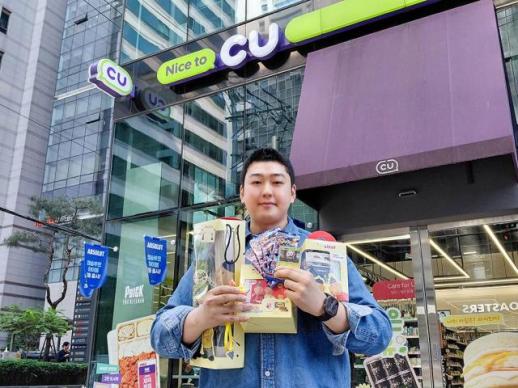 Adult Consumers Drive 75% Surge in CU Toy Sales for Children's Day Convenience store CU has reported a significant boost in sales due to character collaboration products aimed at Children’s Day, appealing to adult consumers, or "grown-up kids." Character merchandise has evolved from simple toys to essential items for collectors and fandoms. CU announced that from May 1 to May 11, toy sales surged by 75.1% compared to the same period last year. The character collaboration products launched for the family month have sparked interest not only among children but also among the 2030 age group, becoming a key sales category. The adult consumer segment has been the driving force behind the success of character products. An analysis of customer demographics from May 1 to May 11 revealed that buyers in their 20s accounted for 33.1% of purchases, followed by those in their 30s at 28.3%, teenagers at 23.5%, those in their 40s at 12.4%, and individuals over 50 at 2.7%. This indicates that the 2030 age group represents over 60% of total buyers. As a result, CU's sales from character intellectual property (IP) collaboration products have shown a steep upward trend. The sales growth rate was 320.0% in 2023, 82.2% in 2024, and 105.7% this year, maintaining a strong growth trajectory. The number of related product items has also expanded significantly, from about 280 in 2023 to over 370 last year, establishing itself as a major differentiating product line for the convenience store. This year’s limited edition products for Children’s Day have been flying off the shelves. The "Pokemon Card Pack 4 Types," containing five random Pokemon cards, sold 250,000 units within just three days of its launch on May 2. With a limited stock of approximately 265,000 packs, 96% of the available inventory has already been sold. Additionally, a planned product from the animation "Pat and Mat" saw sales of 10,000 sets, with the "Keycap Keyring" becoming a popular item, selling over 5,000 units. The character craze is also evident in CU's own commerce application, "Pocket CU," where nearly half of the top 10 search terms are related to characters, including Pokemon bread, Pokemon cards, Pat and Mat, and Pinglu Greek blueberry. Notably, the "Yozum Pinglu Greek Blueberry Yogurt," released in mid-March, has recorded sales of 200,000 units, driven by its cute character design and random figures appealing to younger collectors. The character trend is spreading across the convenience store industry. Seven-Eleven reported a 180% increase in sales of Sanrio collaboration products during this Children’s Day season, while GS25 saw a 171.1% rise in sales of travel-themed character products compared to the previous month. Analysts suggest that convenience stores are emerging as a key channel for purchasing Children’s Day gifts, surpassing toy and stationery stores. Lim Hyung-geun, head of the product division at BGF Retail, stated, "Recently, character IP has become a core content that attracts customers to stores, moving beyond simple marketing elements. In the future, CU will continue to offer products that provide customers with differentiated experiences and collectible value at convenience stores."* This article has been translated by AI. 2026-05-13 17:48:36
 -
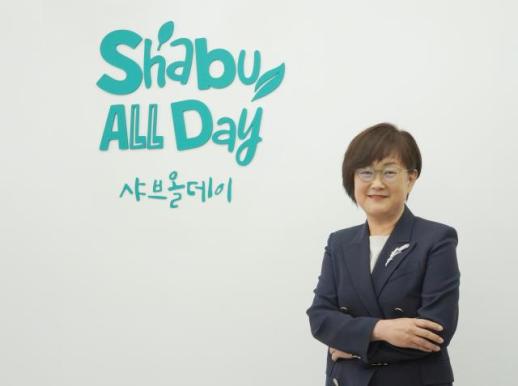 Jollibee Appoints Former Samsung Executive Myung-Joo Song as CEO of Shabu All Day A former Samsung Electronics executive has been appointed as the new CEO of Shabu All Day, a shabu-shabu brand. This marks the first executive appointment since the global restaurant company Jollibee Foods Group acquired All Day Fresh. All Day Fresh announced on May 13 that it has appointed Myung-Joo Song, a former vice president at Samsung Electronics, as its new CEO. Song joined Samsung Electronics as part of its first female graduate recruitment program and worked there for over 30 years, overseeing the brand strategies and global operations for premium appliance brands such as 'Bespoke' and 'Grande.' He has held various positions, including head of the Sales Innovation Group and Global PM Group, and has expertise in brand and marketing. The decision to appoint someone with no prior experience in the restaurant industry reflects Jollibee Foods' strategic calculations. The company aims to develop Shabu All Day into a leading global brand representing K-food, prioritizing the new CEO's brand planning skills and global business experience. Earlier, Jollibee Foods acquired 100% of All Day Fresh's shares for approximately 130 billion won through its Korean subsidiary, Jollibee-K, and a consortium with private equity firm Elevation Equity Partners Korea. With the completion of this acquisition, All Day Fresh has fully separated from its former parent company, Myung-Ryun-Dang, and is now officially a subsidiary of Jollibee Foods Group. Song stated, "I will integrate the food and beverage operational know-how accumulated by the parent company into Shabu All Day to provide greater value to consumers while creating a sustainable growth model that benefits franchise owners. I plan to strengthen management focused on the field, keeping in mind that customer trust is the essence of this business." Shabu All Day has grown by offering unlimited shabu-shabu made with premium beef and fresh vegetables at affordable prices. Since opening its first location in July 2023, it has expanded to 172 stores nationwide in just three years.* This article has been translated by AI. 2026-05-13 17:00:14
 -
 Culley Reports Record Quarterly Earnings with 1,277% Surge in Operating Profit Retail tech company Culley reported its highest quarterly performance since its founding in the first quarter of this year. Culley announced on May 11 that its consolidated operating profit for the first quarter reached 24.2 billion won, a staggering 1,277% increase compared to the same period last year. During the same period, revenue grew by 28.4% to 745.7 billion won. The company also reported a net profit of 20.3 billion won, marking a return to profitability. The total gross merchandise volume (GMV) for the first quarter hit a record high of 1.08 trillion won, reflecting a 29% increase year-over-year. Considering that the domestic online shopping transaction growth rate for the first quarter, as reported by the National Data Agency, was 9.7%, Culley’s growth rate significantly outpaces the industry average. Culley attributed its success to the growth in its core fresh and beauty sectors, as well as diversification efforts including seller delivery (3P), fulfillment services (FBK), and Culley N-Mart. The transaction volume in the food category for the first quarter increased by 27.8% compared to the same period last year. The beauty segment also saw a 20.2% growth, driven by strong sales of luxury beauty products and the rise of indie brands. Seller delivery, which includes fulfillment services, surged by 52.6%, contributing to the overall improvement in performance. Strategies to differentiate fashion and living products, along with enhanced logistics service competitiveness, also played a role in this growth. Culley N-Mart, which launched in September last year, quickly gained traction, with transaction volume in March increasing nearly ninefold compared to its initial launch. Logistics innovation has been crucial for improving profitability. In February, Culley introduced a new delivery service called 'Midnight Star Delivery,' which guarantees delivery by midnight for orders placed before 3 p.m. This addition, alongside existing early morning delivery options, has enhanced logistics operational efficiency. Furthermore, long-term enhancements at logistics centers in Gimpo, Pyeongtaek, and Changwon have begun to yield cost savings this quarter. The gross profit margin for the first quarter improved by 0.8 percentage points to 33.1%, while the selling and administrative expense ratio decreased by 2.2 percentage points, strengthening the company’s profit capacity. In conjunction with the earnings announcement, Culley’s strategic alliance with Naver has garnered attention. On May 6, Culley conducted a third-party allocation capital increase worth 33 billion won for Naver. Following this investment, Naver's stake in Culley increased to 6.2%, valuing the company at 2.8 trillion won. Culley plans to utilize the 33 billion won raised from this capital increase as a solid foundation for long-term growth. Specifically, the funds will be used to further enhance logistics infrastructure, which is critical for delivery competitiveness, and to finance new business initiatives aimed at discovering future revenue streams. Kim Jong-hoon, Culley’s Chief Financial Officer, stated, "Through consistent efforts in product, logistics, and technology, we have differentiated the customer experience, and our attempts at business diversification to secure new growth drivers are now showing results from the first quarter." He added, "Having demonstrated both growth and profitability through the establishment of a clear business model that a differentiated technology platform company should have, we plan to solidify and accelerate our IPO roadmap."* This article has been translated by AI. 2026-05-12 03:32:53
 -
 Lotte Shopping Reports 70% Surge in Q1 Operating Profit Driven by Foreign Tourists Lotte Shopping reported a significant increase in its first-quarter performance, driven by growth in its department store segment. The surge in spending by foreign tourists, particularly in Myeongdong, along with high-margin fashion sales, contributed to a more than 70% rise in operating profit. The company also noted improvements in its profitability efforts and strong performance in overseas markets, including Vietnam. On May 11, Lotte Shopping announced that its consolidated operating profit for the first quarter reached 252.9 billion won, marking a 70.6% increase compared to the same period last year. Revenue rose by 3.6% to 3.5816 trillion won, while net profit skyrocketed by 694.1% to 143.9 billion won, exceeding market expectations. The department store division was the standout performer, with first-quarter sales of 872.3 billion won and operating profit of 191.2 billion won, representing growth of 8.2% and 47.1%, respectively, from the previous year. Domestic sales from major stores, including the flagship store, Jamsil, and Busan, increased by 19%, while sales to foreign tourists surged by 92%, contributing to a 13% increase in same-store sales. Notably, sales from the flagship store to foreign customers more than doubled, increasing by 103% year-on-year, and accounted for 23% of total sales, driving overall performance improvements. Additionally, strong sales of high-margin fashion products led to a 43.5% increase in operating profit compared to the same period last year. The overseas department store segment also showed positive trends, with total sales rising across all locations, including a 28% increase in Vietnam and a 7% increase in Indonesia. The Lotte Mall Westlake Hanoi achieved a record operating profit of 4.9 billion won in the first quarter. Consequently, overseas sales reached 35.5 billion won, up 14.7% from the previous year, with operating profit soaring by 268.7% to 7.6 billion won. Looking ahead to the second quarter, the department store division plans to continue attracting foreign customers by specializing in K-content-based product planning and marketing, particularly at the flagship and Jamsil locations. The supermarket division, which operates Lotte Mart, reported first-quarter sales of 1.5256 trillion won, a 2.6% increase from the previous year, with operating profit rising by 20.2% to 33.8 billion won, reflecting a focus on profitability. Domestic supermarkets benefited from efficient promotions and a reduction in operating expenses, achieving a 30.9% increase in operating profit to 8.8 billion won compared to the same period last year. The overseas business also performed well, particularly in Vietnam, with total sales reaching 485 billion won and operating profit of 25 billion won, representing increases of 3.4% and 16.8%, respectively, from the previous year. The Vietnamese market showed an impressive growth rate of 18%, driving overall improvements in overseas performance. The supermarket division aims to enhance brand competitiveness and customer attraction through innovations in fresh food quality, strengthening private brand offerings, and regular promotions like 'Big Day.' In the online sector, the launch of the 'Zeta Smart Center Busan' utilizing Ocado's Smart Platform (OSP) aims to bolster competitiveness in the grocery market. The company also plans to continue expanding in the Vietnamese market with new store openings and renovations of existing locations. Among its subsidiaries, Lotte Home Shopping reported a 2.1% increase in sales to 232.4 billion won, with operating profit rising by 118.6% to 26.4 billion won, driven by a portfolio focused on high-margin products like health and beauty items, and an expansion of content commerce through social media. Culture Works, responsible for the film business, saw a 49.2% increase in cinema attendance due to the success of the film 'The King and the Clown,' which became the second-highest-grossing film in South Korea's history. This resulted in an operating profit of 7.9 billion won and a 44.4% increase in revenue to 124.6 billion won. In contrast, the electronics retail division, Lotte Hi-Mart, faced challenges due to a downturn in the electronics market and a sluggish real estate sector, reporting an operating loss of 14.7 billion won in the first quarter, widening its losses compared to the previous year. The e-commerce division also reduced its losses by 2.7 billion won compared to the previous year, but still recorded an operating loss of 5.8 billion won in the first quarter. Im Jae-cheol, head of Lotte Shopping's finance division, stated, "In the first quarter of this year, we achieved remarkable results based on the solid performance of our department stores and the profitability improvements of our subsidiaries. We will continue to strengthen the fundamental competitiveness of our domestic business and solidify sustainable growth through overseas expansion."* This article has been translated by AI. 2026-05-11 10:39:40
 -
 Mongolia Emerges as a New Battleground for K-Distribution Mongolia is emerging as a battleground for South Korea's retail industry. With a young demographic and the popularity of K-content, businesses are expanding beyond convenience stores and large supermarkets to include private brand (PB) specialty stores and restaurant franchises. According to data from the Korea Customs Service on May 10, South Korea's exports to Mongolia rose from $271.16 million in 2020 to $660.46 million last year. This marks a more than twofold increase over five years, reflecting a consistent upward trend in exports during this period. Analysts attribute this export growth to the influence of K-content. In Mongolia, where over 60% of the population of approximately 3.5 million is under the age of 34, the popularity of K-content has led to a surge in exports of South Korean consumer goods, including cosmetics and food products. Cosmetic exports skyrocketed from $31 million in 2023 to $45 million last year, while exports of K-food items such as ramen, snacks, and seasoned seaweed grew by 8%, 40%, and 38%, respectively. Recognizing Mongolia's growth potential, South Korean retailers are intensifying their efforts to penetrate the market. E-Mart plans to open three No Brand specialty stores in Mongolia this year. The company entered the Mongolian market in 2016 as a master franchise and currently operates six stores. E-Mart aims to expand its business by establishing No Brand as a separate specialty store. To facilitate this, it signed a business agreement with SKY Hypermarket LLC, the operator of E-Mart in Mongolia, at the end of last month. The goal is to increase the number of No Brand specialty stores to 15 by 2028 and to establish a dedicated logistics cluster, with plans to expand to 50 stores within ten years. The K-distribution wave in Mongolia is prominently represented by convenience stores. BGF Retail's CU has been operating 556 stores since entering Mongolia in 2018, while GS25, which entered in 2021, has expanded to 292 stores, increasing its market share. These stores have positioned themselves as key cultural spaces for Mongolia's 2030 generation by offering differentiated products such as Korean-style instant foods like tteokbokki and gimbap. Restaurant franchises and beverage brands are also accelerating their entry into the Mongolian market. CJ Foodville's Tous Les Jours, which entered Mongolia in 2016, operates 24 stores and has sold over 1.7 million cakes in ten years. MegaMGC Coffee, known for its affordable coffee, opened its first store in May 2024 and has expanded to eight locations in just over two years. Lotte Chilsung Beverage's beer brand, Crush, which entered the market in 2024, is now available in over 2,000 locations, including convenience stores and large supermarkets. This has contributed to a nearly 90% increase in Lotte Chilsung's beer exports to Mongolia last year compared to the previous year. The strong performance in exports to Mongolia has also led to a 40% increase in global beer exports last year. An industry insider noted, "Mongolia is a new emerging market that the South Korean retail industry is focusing on to reduce its dependence on China. With convenience stores and large supermarkets already established, competition for market share among franchises, PBs, and beverage brands is expected to intensify in the future."* This article has been translated by AI. 2026-05-11 03:41:06
 -
 KT Alpha Reports 10.5% Increase in Q1 Operating Profit KT Alpha has opted for profitability over expansion, achieving a double-digit growth rate in operating profit for the first quarter of this year. The company has reduced its reliance on low-margin direct purchases, which carry significant inventory burdens, and has focused on developing its business-to-business (B2B) mobile gift certificate operations. This strategy has been deemed successful. According to the Financial Supervisory Service's electronic disclosure system on May 8, KT Alpha reported a consolidated operating profit of 13.5 billion won for the first quarter, a 10.5% increase compared to the same period last year. Net profit for the period was 11.4 billion won, while total sales decreased by 0.4% to 96.2 billion won. A representative from KT Alpha stated, "Sales slightly decreased due to adjustments in our product portfolio focused on consignment operations, but overall stability has improved." In its core T-commerce sector, the effects of the profitability-focused restructuring are becoming evident. First-quarter sales fell by 4.0% year-on-year to 63.8 billion won due to reduced direct purchase operations, yet operating profit increased by 4.8%. The introduction of exclusive products tailored to active seniors and lifestyle trends, along with enhanced programming, has contributed to this improvement in profitability. The T-commerce market, which sells products via television, has faced challenges recently as viewership declines and mobile shopping surges. In response, KT Alpha plans to strengthen its mobile channels and enhance broadcast quality through artificial intelligence (AI) technology to boost competitiveness. The mobile gift certificate business has shown even more pronounced growth. First-quarter sales of mobile gift certificates rose by 7.5% year-on-year to 32.4 billion won, with operating profit increasing by 8.4%. Notably, a targeted sales approach aimed at B2B clients and proactive partnerships with major platforms led to a 43.3% surge in overall transaction volume. KT Alpha's mobile gift certificate brand, 'Giftishow,' maintains the top market share in the domestic B2B mobile gift certificate sector, surpassing 180,000 corporate clients by the end of last year. KT Alpha is also enhancing its shareholder return policy. The company achieved a record annual operating profit of 44.2 billion won last year and initiated its first cash dividend of 280 won per common share, marking the beginning of its shareholder return strategy. A KT Alpha representative remarked, "This year, we will focus on AI-driven efficiency and customer experience innovation under the theme of 'innovation amid stability.' Additionally, we plan to achieve sustainable growth and enhance shareholder value through expanded partnerships and group synergies."* This article has been translated by AI. 2026-05-08 18:18:29
 -
 CJ Freshway Reports 1st Quarter Operating Profit of 11 Billion Won CJ Freshway has continued its growth in the first quarter by evenly expanding its distribution and food service sectors. On May 8, CJ Freshway announced that it achieved sales of 833.9 billion won and an operating profit of 11 billion won in the first quarter of this year, marking increases of 4.4% and 3.8%, respectively, compared to the same period last year. The core food distribution business, which includes restaurant ingredients and food materials, recorded sales of 399.9 billion won. Online sales in this segment surged by 17% year-on-year, driving overall growth. The domestic B2B food distribution market is valued at 50 trillion won annually, but most transactions still occur offline through regional wholesalers. This is why major distribution companies are fiercely competing to digitize this market. To lead this market transformation, CJ Freshway increased its stake in the IT company Marketboro, which operates the B2B food distribution open market platform 'Sikbom,' to 55%, becoming its largest shareholder in March. Leveraging this position, the company is aggressively expanding its franchise customer base and enhancing its logistics network with differentiated products such as dairy and seafood to accelerate its dominance in the online distribution ecosystem. The food service business, benefiting from the kitchenless strategy, recorded sales of 427.4 billion won. The kitchenless model, which provides meal services without location constraints, saw related service revenues, including 'Fresh Meal On,' increase by 41% year-on-year, contributing to improved profitability. In January, CJ Freshway opened the country's largest food court, 'Gourmet Bridge,' at Incheon Airport's Terminal 2, resulting in a 43% increase in sales from large concession channels compared to the previous year. The expansion of food service ingredient sales, particularly in the kids' and school meal segments, also supported the company's overall performance. Im Sung-cheol, Chief Financial Officer of CJ Freshway, stated, "Despite seasonal off-peak periods and an uncertain external environment, we have confirmed balanced growth in both the distribution and food service sectors, as well as the success of our new growth model centered on online and kitchenless strategies. We will accelerate our execution to establish a sustainable growth structure focused on profitability, as the foundation we have built in new businesses is beginning to yield significant results."* This article has been translated by AI. 2026-05-08 17:58:48