
Journalist

Cho Jae-hyung
grind@ajunews.com
-
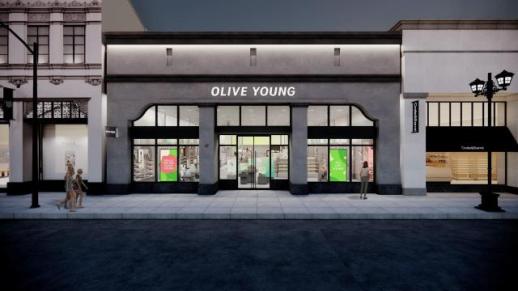 CJ Olive Young to open first US store in Pasadena next week SEOUL, May 21 (AJP) - CJ Olive Young is set to open its first U.S. store next week, tapping into the world's largest beauty market. Located on Colorado Boulevard in Pasadena's main shopping district in California, the store is scheduled to open on May 29, along with the launch of its U.S.-only online mall. The South Korean version of America's multi-brand beauty retailer Sephora will carry more than 5,000 beauty products from about 400 health and cosmetics brands. More than 80 percent of them will be South Korean brands. Facing stiff competition from local rivals and global brands including Apple, Lululemon, and Tiffany & Co., it will refresh its product lineup and store layouts as often as every two weeks to keep pace with fast-changing trends. The sprawling single-story store, covering 803 square meters, will also have an in-store space where customers can test devices, receive free skin consultations, and get personalized tips. Separately, its U.S. online store will be run through a new logistics center in Bloomington, California, which was built in March and is expected to cut delivery times from five to seven days to three to five days, while also reducing shipping costs compared with international delivery. "We will introduce South Korean beauty products to local customers including those unfamiliar with them, in a market long dominated by a handful of large foreign brands," said Olive Young CEO Lee Sun-jung. 2026-05-21 17:53:26
 -
CJ Olive Young Launches First U.S. Store in Pasadena, California CJ Olive Young is set to make a significant entry into the U.S. beauty market by opening its first standalone store and launching a dedicated online shop simultaneously. Positioned in the heart of Pasadena, California, an area dominated by major beauty retailers like Sephora and Ulta Beauty, the store aims to serve as a showcase for K-beauty and a launchpad for domestic indie brands entering the U.S. market. The Pasadena location, named "Olive Young Pasadena," will open on May 29 (local time) on Colorado Boulevard, a prime shopping district in California. This area is known for its concentration of global premium brands, including Apple, Lululemon, and Tiffany & Co. The store will span approximately 803 square meters (about 243 pyeong), comparable in size to Olive Young's major outlets in South Korea. The Pasadena store will focus exclusively on K-beauty, featuring over 400 brands and more than 5,000 products, with more than 80% of the offerings being K-beauty and K-wellness items. The store will adapt quickly to trends, updating its product curation every two weeks. Inside the store, "The Beauty Lab" will offer free skincare lessons that include self-diagnosis using skin scan devices, followed by personalized consultations. Olive Young's unique "half-service" model, which allows customers to explore freely while still having access to professional beauty advice, will be implemented in the U.S. market. Alongside the Pasadena store, Olive Young will launch a dedicated online shopping platform for U.S. customers. The company recently established a 3,600-square-meter (about 1,100 pyeong) automated logistics center in Bloomington, California, which has reduced delivery times from 5-7 days to 3-5 days. Additionally, the minimum purchase for free shipping has been lowered from $60 to $35 for the local online store, making it more accessible for customers. Olive Young will also introduce the "OY Members" program, an integrated online and offline membership system that offers differentiated benefits based on membership levels. The company plans to support local marketing for smaller brands through its own promotions, such as "Brand of the Week." Lee Sun-jung, CEO of Olive Young, stated, "Just as we have helped numerous small and medium brands grow in a market once dominated by a few large international brands, we aim to contribute to the deeper establishment of K-beauty and K-lifestyle in overseas markets." Kwon Ga-eun, head of Olive Young's U.S. operations, added, "The Pasadena store will serve as a forward base for introducing various domestic brands to the global market, leveraging Olive Young's insights and brand incubating capabilities developed in Korea." * This article has been translated by AI. 2026-05-21 16:31:45
-
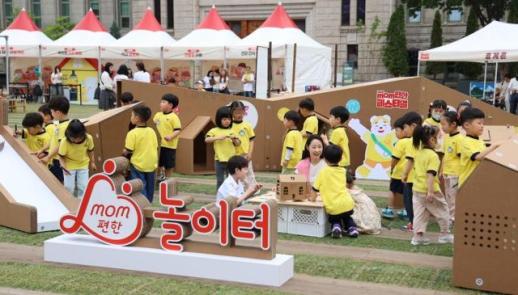 Lotte Celebrates 10th Anniversary of 'Mom-Friendly' Festival, Donates 500 Million Won to Combat Low Birth Rates Lotte Group is taking steps to address the low birth rate issue and improve child care environments.The company announced that it is hosting the 'Lotte Mom-Friendly Festival' from May 19 to 21 at Seoul City Hall's lawn in collaboration with the Green Umbrella Children's Foundation and the Community Chest of Korea.This event marks the 10th anniversary of Lotte Group's flagship social contribution initiative, 'Mom-Friendly.' It is designed as a festival where citizens can actively participate and experience the value of child care.The opening ceremony featured Lotte Holdings Communication Director Im Seong-bok, Community Chest of Korea President Yoon Yeo-jun, Green Umbrella Children's Foundation President Hwang Young-ki, Permanent Committee Member of the Low Birth Rate and Aging Society Committee Park Jin-kyung, and Seoul Deputy Mayor Park Chan-goo.During the event, Lotte announced a donation of 500 million won to the Green Umbrella Children's Foundation and the Community Chest of Korea to help combat the low birth rate crisis and improve conditions in child care facilities.The festival is organized into four thematic zones: school routes, learning, play, and rest. Each area features a variety of programs, including child rights education, safety training, and creative experiences.Since 2017, Lotte has focused on expanding child care infrastructure through initiatives like 'Mom-Friendly Dream Space' (100 locations) to improve after-school child protection facilities and 'Mom-Friendly Playgrounds' (32 locations) to create public indoor and outdoor play areas.Starting this year, Lotte is broadening its efforts beyond facility support to include raising social awareness. On May 26, the company will hold the first 'Lotte Mom-Friendly Family Awards' ceremony, recognizing individuals and organizations that contribute to promoting healthy family culture, with a total prize of 120 million won.Lotte also supports childbirth and parenting. The company has implemented a 'Mandatory Paternity Leave System,' requiring male employees to take at least one month of parental leave within two years of their spouse's childbirth. Last year, the usage rates were 96% at Lotte Hi-Mart, 71% at Lotte Holdings, and 70% at Lotte Shopping.A Lotte official stated, "We will continue to lead efforts to raise social awareness to overcome the low birth rate crisis and strive to create an environment where children can grow up healthy."* This article has been translated by AI. 2026-05-19 17:46:20
 -
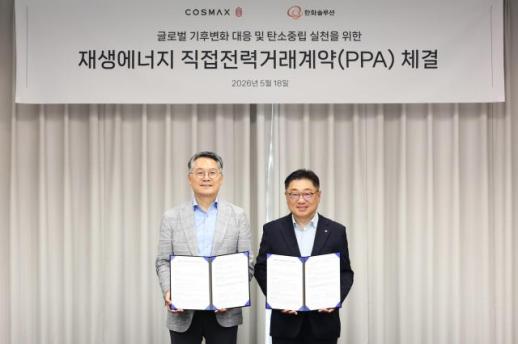 Cosmax to Source 40% of Domestic Factory Power from Renewable Energy Cosmax, a leading cosmetics manufacturer, has partnered with Hanwha Solutions Q CELLS to secure eco-friendly power in pursuit of its goal of achieving carbon neutrality by 2050. On May 19, Cosmax announced that it signed a Power Purchase Agreement (PPA) with Hanwha Q CELLS on May 18. The direct PPA allows power users to trade electricity directly with renewable energy producers, providing companies with a stable foundation for achieving carbon neutrality and RE100 (100% renewable energy usage) through long-term contracts. Under this agreement, Cosmax will receive approximately 10.4 GWh of renewable energy annually for its four key production sites in Hwaseong and Pyeongtaek starting in July, pending final approval from its Environmental, Social, and Governance (ESG) committee. This initiative will enable Cosmax to meet about 40% of its total electricity consumption at domestic factories with renewable energy, significantly contributing to the production of K-beauty products powered by eco-friendly energy. Cosmax aims to enhance its manufacturing competitiveness through this PPA, transitioning to a more sustainable framework while actively responding to the stringent carbon management and ESG standards of global clients. In addition to external power procurement, the company is also expanding its own generation facilities. Currently, it operates solar power generation systems at 12 sites worldwide, including six in South Korea and six abroad. Recently, with the expansion of its Pyeongtaek Plant No. 1, Cosmax is adding a solar power generation facility with a capacity of 499.2 kW, utilizing rooftop space. This facility is expected to be operational by the fourth quarter of 2026 and will produce approximately 638 MWh of renewable energy annually. Furthermore, Cosmax is accelerating the establishment of a Life Cycle Assessment (LCA) system, which quantifies resource and energy use and emissions throughout the entire product life cycle, from raw material procurement to production, distribution, use, and disposal. This system is a key management foundation supporting compliance with global regulations and the achievement of carbon neutrality goals. Last year, Cosmax completed its Product Carbon Footprint (PCF) calculation process and plans to finalize the LCA system covering the entire product life cycle this year. Through these efforts, Cosmax aims to strengthen its capabilities in renewable energy transition and product-level environmental impact management, enhancing its climate change response system to meet global market demands. Cosmax received an integrated A rating in the ESG evaluation from the Korea ESG Standards Institute last year. The company has established a roadmap for carbon neutrality by 2050, focusing on expanding solar power facilities and enhancing its PCF management system. A Cosmax representative stated, "We will continue to expand renewable energy, innovate energy efficiency, enhance our product environmental impact management system, and strengthen supply chain responsiveness to establish ourselves as a trusted partner in the global market."* This article has been translated by AI. 2026-05-19 17:30:00
 -
 Shinsegae Vice President Denied Apology by May 18 Groups Over 'Tank Day' Shinsegae Group's Vice President Kim Su-wan visited the May 18 Memorial Culture Center in Gwangju on May 19 to apologize for the controversial 'Tank Day' marketing campaign conducted by its subsidiary, Starbucks Korea, on the anniversary of the May 18 Gwangju Democratic Movement. However, he was unable to meet with representatives from the May 18 groups, who rejected his attempt to apologize. The May 18 groups expressed their discontent, stating that Kim's visit was unannounced and that they would not accept an apology. Speaking to reporters, Kim said, "The group is taking this situation very seriously. I sincerely apologize to the spirits of May and will do my utmost to ensure that inappropriate marketing does not happen again." He added, "The event in question was not conducted with any intent or malice, and once all circumstances are understood, I will visit the May 18 groups again to apologize." Starbucks Korea had been running a tumbler promotion from May 15 to May 26, during which it used phrases like 'Tank Day' and 'Bang on the Desk.' The term 'Tank' refers to the military tanks that entered Gwangju in 1980, while 'Bang on the Desk' evokes a statement made during the 1987 torture and death of activist Park Jong-chul, which authorities attempted to downplay and cover up. This sparked rapid criticism online. In response to the backlash, Shinsegae Group Chairman Jeong Yong-jin immediately informed Starbucks Korea CEO Son Jeong-hyun of his dismissal. Son issued a statement saying, "I deeply apologize to the spirits of May 18, the May 18 groups, the citizens of Gwangju, and the families of Park Jong-chul, as well as all those who fought for democracy in South Korea, for the inappropriate marketing that contained a wrong expression regarding the May 18 Democratic Movement." As the controversy continued, Chairman Jeong released a public apology, stating, "On the day before the 46th anniversary of the May 18 Democratic Movement, Starbucks Korea conducted an inappropriate marketing campaign that should not have happened and is unacceptable. This has caused deep wounds to the spirits of May 18, their families, and the public. I bow my head and apologize on behalf of the group." He added, "I fully acknowledge that I bear all responsibility for this matter and understand that no explanation will be easily accepted." * This article has been translated by AI. 2026-05-19 14:54:29
 -
 Shinsegae Chairman Jeong Yong-jin Apologizes for Starbucks 'Tank Day' Controversy Jeong Yong-jin, Chairman of Shinsegae Group, publicly apologized for the controversial 'Tank Day' marketing campaign conducted by Starbucks Korea on the anniversary of the May 18 Gwangju Democratization Movement. In a statement released on May 19, Jeong said, "On the day before the 46th anniversary of the May 18 Democratization Movement, Starbucks Korea, a subsidiary of our group, engaged in inappropriate marketing that should not have occurred and is unacceptable. This has caused deep wounds to the spirits of the May 18 victims, their families, and the public. On behalf of the group, I bow my head in apology." He described the incident as an unforgivable mistake that trivializes the pain and sacrifices of those who have dedicated themselves to the country's democracy. Jeong acknowledged, "I fully accept all responsibility for this matter and understand that no explanation will be easily accepted." He emphasized, "Above all, I take seriously the fact that our group lacked historical awareness and sensitivity regarding the historical pain of the South Korean community. I will comprehensively reassess our group's decision-making system to prevent such incidents from happening again." Jeong promised to take all necessary measures related to this incident. He stated, "We will conduct a thorough investigation into the circumstances and approval processes that led to this incident and transparently disclose the results. We will also review the content approval process for marketing materials across all subsidiaries and clarify the standards for review and content." Additionally, he mentioned, "To establish strict historical awareness and ethical standards, we will conduct training for all employees, including myself." In conclusion, Jeong reiterated, "Once again, I sincerely apologize to the spirits of the May 18 victims, their families, the citizens of Gwangju, the family of martyr Park Jong-cheol, and all those who sacrificed for democracy in this country." Starbucks Korea had been running a tumbler promotion event from May 15 to May 26, during which it used phrases like 'Tank Day' and 'Bang on the Desk.' 'Tank' refers to the military tanks that entered Gwangju in 1980, while 'Bang on the Desk' evokes a statement made during the 1987 torture and death of martyr Park Jong-cheol, where authorities attempted to downplay and conceal the cause of death (the phrase suggests that he died suddenly after banging on a desk). This sparked rapid criticism online. In response, Jeong immediately notified Son Jeong-hyun, CEO of Starbucks Korea, of his dismissal. Son expressed, "I deeply apologize to the spirits of the May 18 victims, the May 18 groups, the citizens of Gwangju, and the families of martyr Park Jong-cheol for the hurt caused by our marketing that contained inappropriate expressions regarding the May 18 Democratization Movement," as he stepped down. On the same day, President Lee Jae-myung expressed his outrage on X (formerly Twitter), stating, "An event like 'Tank Day' that mocks the sacrifices and struggles of the victims and citizens on the historic May 18 Democratization Movement is unacceptable. I am furious at the inhumane and disgraceful behavior of those who deny the fundamental values of the South Korean community and human rights." He added, "How many lives were unjustly lost that day, and how severe is the damage to justice and history? What kind of resentment led to such actions? There must be corresponding moral, administrative, legal, and political accountability." * This article has been translated by AI. 2026-05-19 10:03:20
 -
 Hite Jinro CEO and Executives Buy 30,000 Shares to Promote Responsible Management Twenty executives at Hite Jinro, including CEO Jang In-seob, have initiated a stock buyback. This marks a new beginning for the company following a leadership change after 14 years, with Jang emphasizing responsible management to restore market confidence. Hite Jinro announced on May 18 that Jang purchased 5,000 shares, while eight other executives acquired a total of 10,831 shares. Additionally, 11 more executives plan to buy over 1,000 shares each by June, bringing the total to approximately 30,000 shares purchased by the management team. The decision to buy back shares reflects a serious acknowledgment of the current challenges. According to the Financial Supervisory Service's electronic disclosure system, Hite Jinro reported a consolidated operating profit of 55.9 billion won in the first quarter of this year, a 10.8% decrease from the same period last year. Revenue also fell by 3.6% to 590.8 billion won. Last year, Hite Jinro's consolidated revenue was 2.4986 trillion won, down 3.9% from the previous year, with operating profit dropping 17.2% to 172.3 billion won. The overall contraction in the alcoholic beverage market has impacted Hite Jinro as well. In this context, the executives' personal investments signal their confidence in the company's future. A Hite Jinro representative stated, "Despite the shrinking domestic liquor market and external cost pressures, we are expressing confidence in long-term growth through global market expansion. We expect to improve our performance by enhancing management efficiency and building our strength." Hite Jinro is also significantly increasing investments aimed at penetrating global markets. The company is set to complete its production facility in Vietnam in the second half of this year and is strengthening its lineup of export-oriented products, including fruit liqueurs that mix distilled spirits with fruit juice and sweeteners. Hite Jinro emphasized, "While solidifying our foundation through responsible management domestically, we will achieve growth through aggressive expansion internationally."* This article has been translated by AI. 2026-05-18 21:21:00
 -
 VIP Marketing Evolves into High-End Experiences The landscape of VIP benefits in the retail industry is changing. Services that once focused on convenience, such as parking privileges and exclusive lounge access, are evolving into tailored private experiences that encompass travel, fine dining, and cultural arts. This shift aims to enhance brand loyalty by offering top-tier customers unique experiences that cannot be purchased with money. According to industry sources, Shinsegae Department Store's VIP-exclusive curation platform, 'The Showcase,' has attracted over 50,000 VIP customers since its launch in November 2024. The average transaction value is approximately 20 million won, which is seven times higher than the average of 3 million won in the luxury category. Notably, 63% of users are in their 30s and 40s, indicating success in engaging younger high-spending consumers in the online space. Through 'The Showcase,' Shinsegae is offering limited-edition Lamborghini supercars. A portion of the vehicle purchase price counts toward VIP spending, and customers can also access luxury yacht viewing tickets for the Yeouido Fireworks Festival. Additionally, the store is showcasing the highest-end line of the Swedish royal bed brand, Hästens, known to be priced around 1 billion won. Lotte Department Store has revamped its existing 'Avenue L Points' system into 'Avenue L Curation,' enhancing its content-focused VIP services. Avenue L Curation allows customers to experience luxury lifestyle content at over 100 partner locations across six categories, including luxury hotels, fine dining, and golf and leisure activities. A highlight of this program is an exclusive tour of Ulleungdo for Avenue L customers scheduled for next month. This event will feature private course dining by Chef Jeong Ho-young, breakfast, and wine pairing by Lotte's sommelier Han Hee-soo, all set against the backdrop of the luxury resort 'Cosmos Villasome.' The program also includes a scenic drive along Ulleungdo's coastal roads in a BMW 7 Series and local sightseeing tours. The focus on VIP experience marketing comes as recent sales performances have increasingly depended on VIP customers and foreign spending. In the first quarter of this year, Shinsegae Department Store reported an operating profit of 141 billion won, a 30.7% increase from the previous year. Lotte Department Store saw a 47.1% rise to 191 billion won, while Hyundai Department Store's operating profit grew by 39.7% to 135.8 billion won, largely driven by luxury consumption and VIP sales. Last year, VIP customers accounted for 50% of total sales at major department stores. Shinsegae led with 47%, while Lotte and Hyundai both recorded 46%. At Shinsegae's flagship store in Gangnam, VIP sales exceeded 50% of total revenue. In this context, duty-free shops and the beauty industry are also expanding VIP experiences into cultural and artistic realms. On May 13, Shinsegae Duty-Free invited its top SVIP customers to the Youngin Literary Museum in Pyeongchang-dong, Seoul, where they viewed the late Lee Eo-ryeong's study and participated in a literary salon led by Director Kang In-sook. Amorepacific also hosted its 'All About Amore' event on May 7 at its headquarters in Yongsan, inviting over 500 VIP customers from Amore Mall along with 240 product planners from Naver, Kakao, and Coupang for a brand experience event. An industry insider noted, "While past VIP benefits focused on discounts and convenience, they are now evolving toward designing customer preferences and experiences. The competition for lifestyle platforms that encompass rarity, experience, and community will become even more intense in the future."* This article has been translated by AI. 2026-05-18 19:32:10
 -
 Amorepacific CEO: K-Beauty is a New Standard, Not Just a Trend Kim Seung-hwan, CEO of Amorepacific, stated that "K-Beauty is no longer a temporary trend but has established itself as a new standard in the global skincare market." According to Amorepacific, Kim made this remark while presenting strategies for the competitiveness and sustainable growth of the Korean beauty industry at the '2026 WWD Beauty CEO Summit' held in Palm Beach, Florida, from May 11 to 13. WWD, a fashion and beauty media outlet founded in 1910, hosts this prestigious CEO forum for the 28th time this year. Approximately 500 executives from global retail and beauty companies, including L'Oréal, Estée Lauder, Unilever, Amazon, Sephora, and Ulta Beauty, attended the event. In his presentation, Kim outlined three key factors contributing to the success of K-Beauty: discerning Korean consumers, continuous product innovation, and an open manufacturing infrastructure that allows anyone to easily create a brand. Previously, at the IGDS World Department Store Summit held in Seoul last June, Kim emphasized that "thanks to strong ODM support, there are over 30,000 beauty brands in Korea," adding that "anyone with an idea can collaborate with over 4,000 manufacturers to launch a brand." Kim explained that for K-Beauty to continue its rapid growth sustainably, a strategic shift to a new phase is necessary, presenting four core tasks: differentiating brand identity, expanding categories beyond skincare, enhancing R&D-based scientific innovation, and broadening personalized customer experiences through digital technology and AI. Amorepacific noted that this presentation is significant as it positions K-Beauty not merely as a trend but as a unique industrial model rooted in Korean consumers and the industry ecosystem. An Amorepacific representative stated, "For over 80 years, we have led the growth and innovation of the K-Beauty industry based on our accumulated R&D capabilities and consumer trust as Korea's representative beauty company. We will accelerate our growth as a global leader in beauty and wellness under our long-term vision of 'Create New Beauty.'"* This article has been translated by AI. 2026-05-18 14:51:52
 -
 Kolmar Group Reaffirms Commitment to Compliance Management on 36th Anniversary Starting with just four employees, Kolmar Group has reached the status of a large business group after 36 years, reaffirming its commitment to compliance management on its anniversary. The event served as a reminder for all employees of the increased social responsibilities that come with the company's growth. According to Kolmar Group, Kolmar Holdings and Korea Kolmar held their '4th Compliance Day' events on May 14 at the Korea Kolmar Comprehensive Technology Center in Seocho-gu, Seoul, and at the Sejong plant in Jeonui-myeon, Sejong City, respectively. They designated May 15, their founding anniversary, as 'Compliance Day' and have held annual commemorative events since 2023. This year's event aimed to establish a culture of compliance programs (CP) within the group and enhance employees' awareness of legal compliance. Prior to the event, both companies conducted an ethics management pledge campaign involving all employees across their business sites. Notably, this year featured various experiential programs. Kolmar Holdings organized a 'CP Contest' for employees, inviting them to create slogans centered on compliance culture. This contest was held for the first time this year, with Vice Chairman Yoon Sang-hyun personally presenting awards to the winners. Korea Kolmar designated May 11 to 14 as 'Compliance Week,' offering both online and offline programs. Events such as 'Compliance MBTI' and 'Compliance Case Judgment Challenge' encouraged employee participation, and five employees recognized for their exemplary compliance practices received awards. On April 29, Kolmar Group became the first cosmetics original design manufacturer (ODM) to be designated as a large business group by the Fair Trade Commission, marking a significant milestone since its founding by Chairman Yoon Dong-han with four employees in 1990. As of the end of last year, Kolmar Group's total assets amounted to 5.2428 trillion won, meeting the asset criteria for large business groups. By subsidiary, Korea Kolmar reported 1.529 trillion won, HK Inno.N 2.0969 trillion won, Kolmar Holdings 546.1 billion won, and Kolmar B&H 520.6 billion won. Kolmar Group has diversified its business from cosmetics into pharmaceuticals, biotechnology, and health supplements, achieving growth through global expansion. Last year, Korea Kolmar recorded consolidated sales of 2.7224 trillion won and an operating profit of 239.6 billion won, marking double-digit growth and the highest performance in its history. Vice Chairman Yoon stated, "The compliance program is a core competitiveness that influences corporate value and trust. We will continue to enhance our compliance system at the group level to meet the heightened social responsibilities and expectations following our designation as a large business group." * This article has been translated by AI. 2026-05-18 14:44:13