

Journalist

Kwon Ga-rim
hidden@ajunews.com
-
 KakaoBank Surpasses 50,000 Accounts for National Living Expense Account in 10 Days KakaoBank announced on June 1 that the number of accounts opened for its 'National Living Expense Account' has surpassed 50,000 just ten days after its launch.According to KakaoBank, six out of ten customers using the living expense account have linked it to the Friends Check Card. Customers who use the KakaoBank Friends Check Card can enjoy cashback benefits and free ATM withdrawal fees.The National Living Expense Account is available to anyone aged 14 and older and can only be opened at one financial institution. It is designed to allow deposits up to 2.5 million won per month, providing a secure way to protect essential living expenses. A base interest rate of 2% will be offered until the end of the year.The account also includes differentiated features for customer convenience. Each month on the first day, a new deposit limit is assigned, and customers are notified when the total limit of 2.5 million won is reached. Users can easily access transaction statements and balance certificates through the 'Certificate Issuance' menu in the app. 2026-06-01 17:21:00
 -
 Woori Bank Launches Dedicated Loan Consultation Channel for Medical Professionals Woori Bank announced on June 1 that it has established a one-on-one customized corporate loan consultation channel in collaboration with the Medistaff app, a community platform used by approximately 63,000 medical professionals, including doctors and medical students.Members of Medistaff, including practicing and prospective physicians, can apply for loan consultations through a dedicated page on the Medistaff app. Their requests are instantly transmitted to Woori Bank's corporate finance dedicated center via the bank's open API. A dedicated relationship manager (RM) is then assigned to provide tailored consultations and assessments, streamlining the process for loan approval at the bank's branches.This initiative is a result of an excellent proposal identified during a 'Banking as a Service (BaaS) Idea Contest' involving Woori Bank employees. The two organizations have been preparing to launch this service since signing a memorandum of understanding (MOU) in November 2025, aimed at expanding financial support for practicing and prospective physicians.Kim Hyung-kyun, head of Woori Bank's Platform Business Division, stated, "The establishment of this channel in collaboration with Medistaff reflects the voices from the field, aiming to provide a convenient financial environment for physician clients who find it difficult to visit the bank in person. We will continue to actively gather feedback from customers and employees to expand innovative financial services linked to platforms."Additionally, Woori Bank is securing high-quality clients through specialized loans not only for physicians but also for legal professionals, tax accountants, airline pilots, pharmacists, and other various professions.* This article has been translated by AI. 2026-06-01 16:45:00
 -
 KakaoBank Partners with Seoul to Enhance Youth Financial Literacy KakaoBank announced on June 1 that it will collaborate with the Seoul Metropolitan Government to provide financial education aimed at enhancing the financial capabilities of youth.Under this agreement, KakaoBank and Seoul will implement tailored financial education and support programs for young people. Starting in May and running through September, the city will operate an 'Economics and Finance Academy' for approximately 360 youths across 21 municipal youth centers.The Economics and Finance Academy is designed to teach essential financial skills such as saving, investing, and spending. The theoretical classes will utilize custom-made materials that include case studies of KakaoBank's financial services. Additionally, hands-on practical sessions will be conducted using Nexon Korea's coding platform 'Hello Maple' for an engaging learning experience.Furthermore, beginning in July, the city will provide financial fraud prevention education, focusing on issues like voice phishing and illegal loans, to vulnerable youth at 19 youth shelters and independent living support centers. The program will also include 1:1 financial mentoring to assist youths in improving their financial habits and achieving economic independence.KakaoBank will offer access to the youth information platform 'Youth All-in-One' through its app, which provides information on youth experience programs and career and academic guidance. In addition to educational initiatives, KakaoBank plans to introduce youth-specific financial services called 'Mini' to attract potential customers.KakaoBank stated, "We have developed this initiative in partnership with Seoul to ensure that young people acquire essential financial knowledge and cultivate proactive financial habits. We will continue to support the healthy development of future generations in various ways."* This article has been translated by AI. 2026-06-01 15:24:00
 -
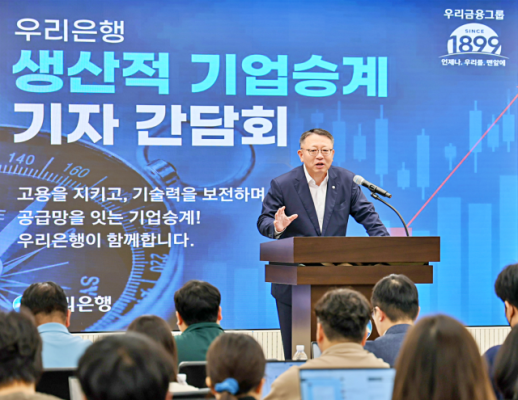 Support for Small Businesses Essential for Large Corporations, Woori Bank Launches 'Productive Business Succession' Woori Bank is launching a 'productive business succession' initiative that goes beyond simple succession support to preserve employment, technological capabilities, and supply chains. With the increasing importance of financing for small and medium-sized enterprises (SMEs) under the government's productive finance policy, the bank aims to accelerate consulting and merger and acquisition (M&A) financing for these businesses.Jung Jin-wan, CEO of Woori Bank, stated at a press conference on productive business succession on June 1 that, "In South Korea, where manufacturing plays a significant role, if the succession issues of SMEs are not resolved smoothly, large corporations will inevitably be affected. We plan to view business succession as a long-term project, managing it for at least the next 10 years, which aligns with the expansion of productive finance."Jung predicted that stable business succession would contribute to preserving technological capabilities, maintaining employment, and stabilizing industrial supply chains. Woori Bank plans to invest a total of 3 trillion won in support of productive business succession over the next five years.The focus on business succession comes as many SMEs approaching the retirement of their founders face challenges in this area. Among the 740 companies that Woori Bank's Business Succession Support Center has signed memorandums of understanding (MOUs) with, over 80% have annual revenues of less than 50 billion won. More than half of these companies are considering second-generation succession but lack information on related systems, such as the business inheritance tax exemption. As a result, it is estimated that 17% of companies with over 10 years of operation fail to succeed and end up closing down.Woori Bank plans to expand its support beyond simple business succession consulting to include M&A, employee buyouts (EBO), and management buyouts (MBO). With an increasing number of cases where founders' children do not wish to take over, demand for EBOs and MBOs is expected to rise.To achieve this, the bank's Business Succession Support Center will collaborate with Kim & Chang law firm, Samil PwC, and the Korea Technology Finance Corporation to provide tailored succession consulting to over 2,500 companies in the next five years, aiming for 500 consultations annually.According to the Woori Financial Management Research Institute, if Woori Bank successfully supports 100 companies each year for the next five years, it could lead to significant economic impacts, including maintaining 10,000 jobs, preserving 10.7 trillion won in sales, generating 469.9 billion won in production effects, and creating 193.4 billion won in value-added effects.Woori Bank also expects to secure new sources of commission revenue through participation in acquisition financing. The domestic M&A market currently sees about 40 trillion won in transactions annually, with around 400 deals, of which SMEs account for 80% of the number of transactions and approximately 12 trillion won in value.Hong Seung-hwan, a partner at Samil PwC, noted, "There are over 5,000 companies that can act as strategic investors, indicating a sufficient market for acquirers. With 60% of SMEs lacking succession plans, the business succession market is expected to continue growing." 2026-06-01 14:21:00
 -
 Banks Tighten Loan Standards Amid Domestic and Export Challenges As high exchange rates and oil prices increase financial burdens on companies, banks are implementing comprehensive loan management strategies. With the possibility of further interest rate hikes by the Bank of Korea, banks are tightening loan assessments, particularly for industries facing economic challenges, as a proactive risk management measure. According to the financial sector on May 31, Bank A has identified new key management industries for the first half of the year, including the cast iron pipe manufacturing sector, textile fabric and retail textile products, and duty-free shops. The textile industry, in particular, is experiencing structural decline due to intensified price competition with low-cost production countries like China and Southeast Asia. Duty-free shops are also struggling to recover profitability to pre-COVID-19 levels, impacted by a slowdown in the Chinese economy and a decrease in daigong (personal shoppers). Bank B has added the metal manufacturing sector to its list of key management industries. This sector is commonly classified as a vulnerable industry due to oversupply. The ongoing influx of low-priced Chinese products has eroded profitability, compounded by a decline in demand due to the global economic slowdown. The proactive management of vulnerable sectors by banks is driven by a noticeable increase in corporate insolvencies. According to the Financial Supervisory Service, the amount of non-performing loans at domestic banks rose by 1.1 trillion won in the first quarter of this year compared to the previous quarter. Among these, corporate loans accounted for a 1 trillion won increase, leading the upward trend. The burden of delinquencies is also growing. The delinquency rate for corporate loans at the four major banks (KB Kookmin, Shinhan, Hana, and Woori) doubled from 0.23% at the end of 2022 to 0.46% in April of this year. The delinquency rate for small and medium-sized enterprises saw an even larger increase, rising from 0.26% to 0.59% during the same period. A financial sector official stated, "We are strengthening monitoring based on industry ratings and outlooks. Given the recent significant increase in corporate loans through productive finance, we will enhance post-management and prepare for potential credit risks." Looking ahead, banks are expected to tighten their corporate loan assessments further. With the Bank of Korea signaling the possibility of interest rate hikes within the year, companies may face additional burdens from high exchange rates, high oil prices, and now high interest rates. In fact, the Bank of Korea's '2026 Q1 Financial Institution Loan Behavior Survey' indicated that the credit risk index for large corporations in the second quarter rose by six points compared to the previous quarter. Professor Kim Dae-jong of Sejong University remarked, "If key industries are neglected, the ripple effects on local economies and employment can be significant. Therefore, sound management by banks and government policies that support traditional industries are necessary."* This article has been translated by AI. 2026-05-31 17:03:00
 -
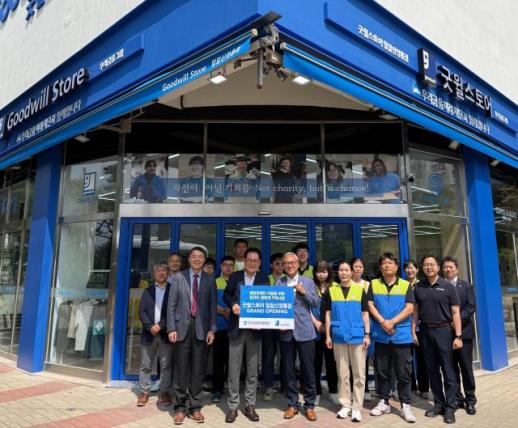 Woori Financial Opens 14th Goodwill Store for Individuals with Developmental Disabilities Woori Financial Group announced on May 31 that its Woori Future Foundation has opened a new Goodwill Store in Hwaseong City, dedicated to supporting the independence of individuals with developmental disabilities. The Goodwill Store operates as a workplace for individuals with disabilities, funded by the sale of donated items from businesses and individuals. The newly opened Goodwill Store in Hwaseong is the 14th location established in collaboration with the Milal Welfare Foundation. It aims to provide stable employment opportunities for individuals with developmental disabilities in the Gyeonggi region and to expand the community's support base. To enhance employment opportunities for individuals with developmental disabilities in local areas, Woori Financial opened Goodwill Stores in Ulsan, Daegu, and Cheongju last year. Additionally, the company introduced a social contribution branch called Goodwill Branch, which combines Woori Bank services with Goodwill Store operations, in Yeoju. This year, the expansion will continue from Hwaseong to other locations, including Hanam and Jeonju. Woori Financial has set a goal to invest a total of 30 billion won by 2034 to establish 100 Goodwill Stores nationwide, providing stable jobs for 1,500 individuals with developmental disabilities. Furthermore, the Woori Future Foundation signed a memorandum of understanding with the Milal Welfare Foundation in 2023 to build an ecosystem for employment for individuals with developmental disabilities, committing to invest 30 billion won over ten years to support the establishment of 100 stores. The foundation aims to open at least six new stores each year and provide first-year salary support to help establish a foundation for independence for individuals with developmental disabilities.* This article has been translated by AI. 2026-05-31 16:09:00
 -
 NH Nonghyup Financial Group Strengthens Retirement Pension Focus with 107% Cumulative Return NH Nonghyup Financial Group is transitioning to a retirement pension financial group focused on returns. According to Nonghyup Financial on May 31, Nonghyup Bank's principal and interest non-guaranteed products have achieved the highest comprehensive weighted average return among the five major commercial banks for four consecutive quarters. Another product, the NH All Wonderful Happy Together savings account, which is tailored for pension recipients, is seeing increased demand due to enhanced benefits and transaction convenience for pension customers. NH Investment & Securities has introduced digital and AI-based pension asset management services, earning recognition in the retirement pension sector with various awards. Notably, the NH-DNA retirement pension EcoNex, managed by a robo-advisor, has recorded a cumulative return of 106.5%, marking it as one of the industry's top performers. Nonghyup Financial plans to expand its customized products and services for pension customers, centered around its senior brand, NH All Wonderful, launched in November last year. A representative from Nonghyup Financial stated, "As we respond to the expansion of the retirement pension market and the entry into a super-aged society, it is essential to strengthen our group’s competitiveness in retirement pensions. We will enhance our unique synergy by providing differentiated services that combine health, lifestyle, and finance based on our senior-focused brand, NH All Wonderful."* This article has been translated by AI. 2026-05-31 11:15:00
 -
 Hana Bank Launches 'Korea Forever Savings' for Veterans with 2% Interest Rate Hana Bank announced on May 28 that it will launch the 'Korea Forever Savings' account on June 1, in honor of the month dedicated to patriotic service and veterans.The Korea Forever Savings account offers a preferential interest rate of 2.0% per year to veterans, police officers, firefighters, and other uniformed personnel without any conditions.General customers can also benefit from a maximum interest rate of 2.0% by meeting certain criteria: a 1.0% rate for making six or more salary or pension deposits within the first year, a 0.5% rate for the first transaction, and an additional 0.5% for completing a pledge to display the national flag and demonstrate love for the country.From June 15 to August 15, customers who sign up will have a chance to win prizes through a lottery, including five An Jung-geun medals and twenty Taegeukgi card medals. Additionally, 100 participants will receive an opportunity to join a tour of the Seoul Veterans Affairs Office's historical sites along with a commemorative gift.Active police officers and firefighters who open an account will receive a 3,000 won mobile voucher for Paris Baguette.The savings account will be available for a limited time, with a cap of 60,000 accounts sold from June 1 to August 15. Each year, Hana Bank collaborates with various organizations, including the Daejeon Veterans Affairs Office, to launch products in recognition of the month dedicated to patriotic service.* This article has been translated by AI. 2026-05-28 16:32:00
 -
 Hana Financial Group Launches $2.3 Billion Support Plan for Inclusive Finance Hana Financial Group announced on May 28 that it will implement a roadmap for inclusive finance, which includes a financial support plan worth 3 trillion won ($2.3 billion) this year.The group outlined three key initiatives for 2026: addressing financial polarization, supporting financial independence, and expanding inclusive infrastructure.Hana Bank will launch a specialized product called the 'Hana OneQ Medium-Rate Loan' next month, targeting low- to mid-credit borrowers with a total of 2 trillion won ($1.5 billion). The loan will be available to individuals in the bottom 50% of credit scores, with a maximum limit of 10 million won ($7,500) and a fixed interest rate of 5.5% until the end of the year.To assist small business owners facing management crises, the bank will introduce the 'Hana Deul SoHo Success Ladder Loan,' providing 1 trillion won ($750 million) in support. This initiative will offer unsecured loans to small business owners with a maximum limit of 10 million won ($7,500) at a minimum interest rate of 4.5%.Additionally, to help those in debt, Hana Financial Group plans to implement a 200 billion won ($150 million) initiative next month to halt the expiration of delinquent debts and forgive loans.A task force involving the Financial Research Institute and Hana Financial Convergence Technology Institute will also be established to enhance an alternative data-based credit evaluation system. 2026-05-28 15:02:00
 -
 Woori Bank Expands Global Reach with 100 Years of Expertise Woori Financial Group is leveraging its 100 years of expertise to expand its global footprint. The company is establishing a financial network to support South Korean firms in overseas semiconductor and defense sectors, creating new growth opportunities and productive finance.According to the financial sector on May 21, Woori Financial has established a new base in Austin, Texas, to enhance its corporate banking operations.As Texas emerges as a new "land of opportunity" that rivals Silicon Valley, global companies are flocking to the area. Samsung Electronics, a key client of Woori Bank, is expanding its semiconductor operations by constructing additional foundry facilities. Woori Bank has been a partner of Samsung since the 1960s, and as Samsung grows its local business, Woori is actively securing a new network of branches. This aligns with the group's management goal of "co-prosperity," extending its reach internationally. Woori Bank aims to manage employee accounts while also catering to demands for facility investment and trade finance. Domestic suppliers accompanying Samsung's expansion are also potential clients for Woori Bank. Nearby, major corporations like Tesla, Apple, and Oracle are establishing their presence, further enhancing revenue opportunities.In Europe, Woori Bank is seeing increased corporate finance activity in Poland, with expectations for significant results starting this year. As defense, electric vehicle, and secondary battery companies enter the Polish market, Woori Bank has become the first domestic bank to establish a local sales network. Securing business licenses from local financial authorities is notoriously challenging, but Woori's century-long expertise has earned the trust of these regulators.Woori Bank is also increasing its presence in retail finance in overseas markets, particularly in Vietnam. Despite some domestic companies withdrawing from Vietnam, Woori Bank has gained traction among expatriates and locals, leading to growth in retail finance. The demand for services like non-face-to-face loans is rising, and Woori's digital and IT systems have successfully localized to meet this demand. Consequently, the total comprehensive income of the Vietnam branch quadrupled in the first quarter compared to the previous quarter.Experts attribute Woori Financial's global capabilities to its century-long history. A financial industry insider noted, "By establishing the first overseas branch of a commercial bank in Tokyo, Woori has quickly identified local demand. The strategy of establishing branches whenever domestic companies expand abroad has recently yielded positive results."Woori Financial plans to utilize its 458 networks across 24 countries to support domestic companies in their international ventures through productive finance. The company is also set to provide 3 trillion won in productive finance support for export and import businesses, aligning with this strategy.A financial industry source remarked, "As domestic lending regulations tighten, overseas operations have shifted from being a supplement to becoming a core source of revenue. Financial institutions are likely to accelerate their expansion into adjacent regions based on existing footholds."* This article has been translated by AI. 2026-05-21 21:46:01