
Journalist

Jo Hyun-mi
hmcho@ajunews.com
-
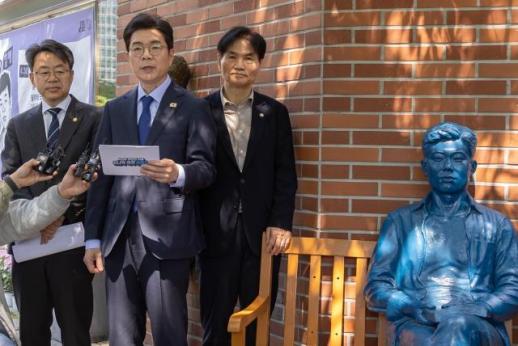 Seoul mayoral candidate Jeong Won-oh pledges paid sick leave for freelancers, expanded flexible work Democratic Party Seoul mayoral candidate Jeong Won-oh said April 30 he would expand Seoul-style flexible work arrangements and introduce a Seoul paid sick leave program for freelancers and other vulnerable workers. Jeong announced the labor platform outside the Jeon Tae-il Memorial Hall along Cheonggyecheon in Jongno District, saying that if Seoul runs on labor, the city government should also share responsibility for the time of working residents. Under the banner of “a worker-respecting Seoul rebuilt with the voices of working residents,” the plan focuses on work-life balance and strengthening the right to rest when sick. To advance his signature goal of a “30-minute commute city,” Jeong said he would broaden flexible work options including telework, remote work and staggered hours. He also pledged to build a dense network of “public and shared offices near home” by using idle spaces such as subway stations. Companies that adopt flexible work would receive incentives, and would get extra points when participating in Seoul city bids and projects. Jeong also pledged to introduce paid sick leave for freelancers, the self-employed, platform workers and day laborers, expanding a pilot program previously launched in Jongno District across the city. “Resting when you’re sick is not a privilege, it’s common sense,” he said, adding that Seoul would serve as a safety net for residents in blind spots for workers’ compensation insurance and paid leave. He said he would create new “Seoul-style worker protection standards” to prevent job losses as artificial intelligence, robots and automation spread, and set up a framework for discussions on a “just transition” to protect workers expected to be harmed by the climate crisis. Before the announcement, Jeong visited the Sinjeong rail depot and the Yangcheon public bus garage early April 30 to meet workers, and later laid flowers at the Jeon Tae-il statue at Cheonggyecheon’s Jeon Tae-il Bridge. Referring to those visits, Jeong said May 1 would be the first day in 63 years to be observed again under the name “Labor Day,” and pledged to carry the voices he heard at worksites and Jeon’s vision into Seoul city policy.* This article has been translated by AI. 2026-04-30 12:00:20
 -
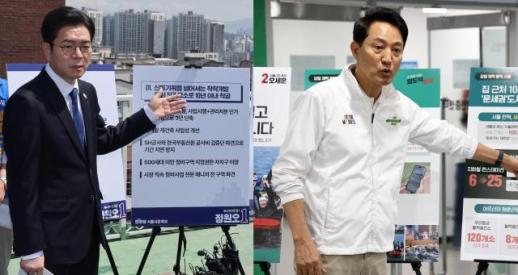 Seoul mayoral rivals trade barbs over redevelopment speed and housing pledges With the Seoul mayoral election set for June 3, Democratic Party candidate Jeong Won-oh and People Power Party candidate Oh Se-hoon have escalated a daily war of words over real estate. After Jeong on April 29 unveiled a housing platform centered on shortening redevelopment timelines, Oh’s camp countered that Jeong was repackaging policies already underway. Jeong announced what he called the “Chakchak Development” real estate plan from the rooftop of Sinjangwi Apartment in Seongbuk-gu, Seoul, outlining steps to improve the profitability of redevelopment and reconstruction projects. The announcement came as Oh’s side pressed Jeong to state his position on President Lee Jae-myung’s remarks about abolishing the long-term holding special deduction; Jeong responded by emphasizing housing supply. Jeong’s plan includes expanding areas eligible for floor-area-ratio incentives to semi-industrial zones and raising the standard used to calculate the price of rental housing purchased by redevelopment associations — from standard construction costs to about 80% of the “basic-type” construction cost. He also pledged to revitalize public-led redevelopment projects and to supply large volumes of “practical housing” priced at levels residents can afford. “Chakchak Development is centered on revising laws and operating our own system so each redevelopment stage can move quickly and safely,” Jeong said. Jeong also sharply criticized Oh’s redevelopment initiative known as “Shintong Planning.” Jeong said that during Oh’s tenure as mayor and under the Yoon Suk Yeol government, the supply of apartments and villas in Seoul fell sharply, with the number of permits and approvals in 2022–2024 amounting to only 62% of the previous 10-year level. He pledged to supply large amounts of public housing with affordable sale prices and rents so that middle-class and working-class residents without homes can buy in Seoul. Oh, who on the same day announced “Steel Fitness, Energetic Seoul” as his first campaign pledge, avoided direct comment on Jeong’s housing plan. His aides, however, issued pointed criticism. Kim Byung-min, spokesperson for Oh’s election committee, said Jeong was “disguising” existing programs as new pledges. Kim said the Yoon government’s August 2024 “8·8 measures” already set a plan to raise the purchase price for rental housing to 80% of the basic-type construction cost, and that related bills introduced by both ruling and opposition parties passed the National Assembly this month. He also said expanding floor-area-ratio incentive zones to semi-industrial areas is already being implemented by the Seoul city government. “In short, Jeong is pledging to start a train that’s already running,” Kim said. “Can Seoul’s real estate problems be solved with this kind of amateur administration?” Oh’s camp also criticized Jeong for staying silent on the Lee government’s real estate policies. Park Yong-chan, another spokesperson for Oh’s campaign, said in a statement that “wrong real estate policies” by the Lee administration — including last year’s “10·15 measures” and a plan to abolish the long-term holding special deduction — had triggered a rental crunch. Park said forecasts suggest that if the policy direction continues, Seoul’s rental shortage and surging lease prices could become entrenched. He urged Jeong to press the president to change course “quickly and strongly” before the rental crisis “falls into ‘rental hell.’"* This article has been translated by AI. 2026-04-29 18:27:59
 -
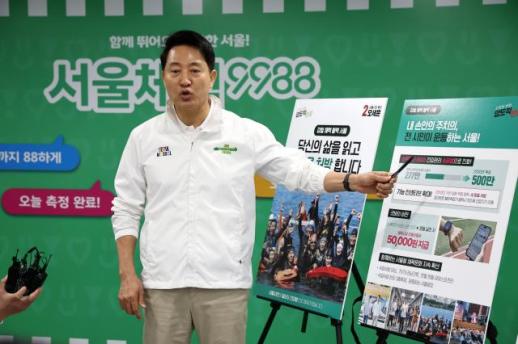 Seoul Mayor Candidate Oh Se-hoon Unveils First Pledge to Cut Health Gaps Oh Se-hoon, the People Power Party’s candidate for Seoul mayor, on Tuesday unveiled his first campaign pledge: “Iron stamina, vibrant Seoul.” He said he would build an environment where residents can manage their health anytime and anywhere, aiming to narrow health gaps tied to income and where people live. Speaking at the Dobong District Public Health Center in Ssangmun-dong, Seoul, Oh said, “A warmer city and a healthier quality of life in Seoul will be the most important policy in the next term.” As part of the plan, he said the city will upgrade its health management platform, Sonmok Doctor 9988, into an artificial intelligence-based health app. The core idea is to use exercise data tracked through the platform and health screening results held by the National Health Insurance Service to predict risks of chronic and serious diseases. Oh also pledged a major expansion of community sports infrastructure. “I will create a ‘10-minute fitness zone city’ where people have a place to exercise within 10 minutes of home,” he said. He said the number of “Seoul Fitness Centers,” where residents can take fitness tests in their neighborhoods, would increase to 100 from 27. He also said the city would expand “Fun Stations” — running and fitness-focused facilities now operating at subway stations including Yeouinaru, Ttukseom and Gwanghwamun — to 25 from six. He also promised to expand exercise spaces for older adults. Oh said the city will create 120 new “Neighborhood Vitality Recharge Stations” by 2030, using public facilities such as welfare centers and libraries for senior-focused leisure and health programs. He also said each district would have at least one “Senior Playground,” which he said can help prevent dementia. Oh said he chose to announce the pledge in northern Seoul to underscore his message on inequality. “If health gaps arise because of income and assets, it can create a gap in overall happiness,” he said, adding, “The gap between rich and poor, or income gaps, must not lead to health gaps.” He said health is the top concern for residents and vowed to “take the Seoul healthy city project — built through policy investment over the past five years — to the next level and decisively complete the changes so far.” 2026-04-29 13:00:13
 -
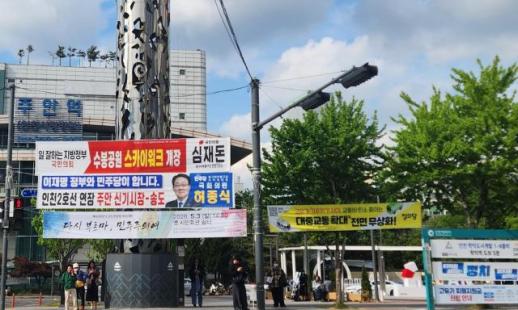 Incheon mayoral race: Voters weigh ties to ruling party vs policy continuity "Wouldn’t candidate Park Chan-dae, who is close to the president, be more helpful in resolving pending issues?" (office worker Kim, surname only) "For policy continuity, Mayor Yoo Jeong-bok should win another term." (homemaker Cho Mi-ryeong) With the Incheon mayoral election approaching, voters in the city often called a microcosm of South Korea showed little sign of rallying behind a single party or candidate. The contest pits Park Chan-dae of the Democratic Party against Yoo Jeong-bok of the People Power Party, drawing attention as a matchup between a key figure in the Lee Jae-myung administration and an incumbent seeking a third term. It is also the only race for a metropolitan mayor in the Seoul area framed as a contest between two local natives. At Incheon Bus Terminal in Gwangyo-dong, Michuhol-gu, taxi driver Byun Jang-su, 68, said he supports Yoo, adding he would vote for him "to keep the ruling party in check." A 53-year-old self-employed resident, who also described himself as Incheon-born, said the city tends to choose based on candidates and pledges rather than party or the administration in power. He said he plans to vote for Yoo, citing his experience and a high rate of delivering on promises. Old downtown areas including Michuhol-gu, Jung-gu and Dong-gu have larger elderly populations and have traditionally leaned conservative; Yoo won there in the 2022 local elections. Still, some voters signaled a shift. A 25-year-old job seeker in Jung-gu said he expects Park, a former floor leader of the ruling party, to communicate smoothly with the president and the National Assembly. A 58-year-old woman working near Sinpo International Market in Jung-gu said Yoo has done a good job but she will vote for Park, saying Park’s ties to President Lee would help address local issues. In newer districts such as Yeonsu-gu and Seo-gu, seen as decisive battlegrounds, opinions also split. Na Hyun-ju, a 48-year-old office worker in Songdo, Yeonsu-gu, said Yoo’s performance has not been rated poorly, but some residents worry that if the mayor is from a different party than the administration, projects in Songdo such as the Incheon Tower and a tram could face difficulties. She said the mayoral race there has tilted toward the Democratic Party. In contrast, Cho Mi-ryeong, a 43-year-old homemaker in Lu1 City in Seo-gu, said new towns still have many unresolved issues, including daily infrastructure. She said the city needs a candidate who can steadily continue current policies rather than offer new pledges, and she plans to vote for Yoo. Centrists and unaffiliated voters appeared even more cautious. Cho Yoon-sun, a 70-year-old woman in Namdong-gu, sometimes called Incheon’s political hub, said she votes every time but has not decided yet. She said she will back the candidate whose pledges would help residents more. A man in his 70s met near Incheon City Hall also said he plans to vote but does not have a preferred candidate. Some younger voters said they may sit out the election, saying no candidate or pledge clearly addresses problems facing their generation, including difficulty finding jobs. Noh, a 29-year-old woman in Guwol-dong, Namdong-gu, said people her age and other young voters around her have long had little interest in elections and that she does not plan to vote in the local elections. Yoo, the incumbent mayor, is set to step down from the post on April 29 and formally announce his bid for a third term in front of City Hall. Park, a three-term lawmaker representing Incheon’s Yeonsu-gu Gap district who declared his candidacy on April 22, will also resign his parliamentary seat that day and begin campaigning in earnest. 2026-04-28 14:01:16
 -
 Seoul Mayor Oh Se-hoon Launches Local Election Bid, Vows to Check Lee Jae-myung Government People Power Party Seoul mayoral candidate Oh Se-hoon stepped down from the mayor’s post on April 27 and began full-scale campaigning, seeking to close the polling gap with Democratic Party candidate Jung Won-oh. Oh carried out mayoral duties in the morning, then around lunchtime completed his preliminary candidate registration with the election commission. He then walked from Seoul City Hall to Bosingak in Gwancheol-dong, Jongno District, greeting residents along the way, and held a news conference in front of the bell pavilion to announce his candidacy. “I will protect Seoul and help get the country back on its feet,” Oh said. Referring to what he called moves by the government and ruling party to cancel the prosecution in the Daejang-dong case, he added that he would “set right this runaway behavior by the Lee Jae-myung government.” Oh also criticized the period under former Mayor Park Won-soon, saying housing supply stalled while support for government-aligned civic groups surged. He called Park’s tenure “10 years of darkness” and “a period of Seoul’s decline,” and said that during his past five years in office he laid the groundwork to supply 310,000 homes in Seoul by 2031. He also criticized what he described as “no-questions-asked” support totaling 1.0222 trillion won for such groups at the time, and said he would prevent Seoul from again becoming “prey” for organizations that present themselves as civic groups. Oh also addressed his decision to register about two weeks earlier than expected. The National Election Commission’s official candidate registration period is May 14-15. Oh said he decided to work harder because polls showed him “slightly behind” Jung, and said the early move reflected his determination to “protect Seoul” and stop what he called the Lee administration’s “runaway” actions. Asked about his strategy as he seeks a third consecutive term and a fifth term overall, Oh said elections are “not about strategy but about sincerity.” He said he would reach out to residents, communicate more and turn candid advice into policy. Oh said he would make the Lee government, which he said had begun to “run wild,” feel uneasy as it watches Seoul voters’ choice. He also appealed for support, saying Seoul residents had “raised” him into a “public asset of the Republic of Korea” through four elections. Oh opened his campaign office, called the “Jumping Up Camp,” in the Daewang Building near Bosingak. He said the name reflects his goal of helping Seoul “jump” into a “special city for quality of life.” In a Facebook post, Oh said “Jumping Up” carries a promise that if the past five years were about restoring the foundation, the next step is to “jump higher” with residents and unlock Seoul’s potential.* This article has been translated by AI. 2026-04-27 15:16:54
 -
 Cha&Mom Phytocerin Outdoor Play Sun Stick Offers Gentle, Hygienic UV Protection Sunscreen is a staple in my bag. As the weather warms and outdoor reporting increases ahead of the June 3 local elections, choosing a product has felt more important — and I have become more careful about what I carry. The one I have been using is Cha&Mom’s ‘Phytocerin Outdoor Play Sun Stick,’ from Cha Bio F&C’s family skin-health brand. As the name suggests, it is a stick, so it goes on quickly without getting on your hands. That makes it easier to use hygienically outdoors, where washing up is not always an option. It glides on smoothly and, even with repeated applications, feels neither sticky nor heavy. It dries down to a soft, powdery finish. It also has a banana scent, which helps children use it without resistance. In summer, it does not take much movement to start sweating. The company says it applies an “Activeproof Solution” so UV protection lasts longer even with sweat or heavy activity. In my use, the dry finish held up relatively well while I moved quickly to follow election candidates, and after a child ran around for a long time. That can mean fewer touch-ups. The ingredients are also positioned as gentle. The product description says it uses zinc oxide, a non-nano mineral UV filter, to reduce skin burden, and that clinical testing found it nonirritating. The “Phytocerin” in the name is a proprietary ingredient developed by Cha Bio dermatological science specialists; the company says it helps soothe skin, strengthen the skin barrier and form a moisturizing layer. The white cast often associated with sunscreen was not especially noticeable, making it easy to swipe on without a mirror — including for children. With its simple, hygienic application and a formula intended for both kids and adults, Cha&Mom’s ‘Phytocerin Outdoor Play Sun Stick’ is likely to stay in my bag this summer. _Cha&Mom ‘Phytocerin Outdoor Play Sun Stick,’ 25 grams* This article has been translated by AI. 2026-04-25 14:03:18
 -
 Jung Won-oh Appears With Chung Cheong-rae and Yoo Si-min at Seongsu Store Opening Democratic Party Seoul mayoral candidate Jung Won-oh on April 24 appeared alongside prominent figures associated with the Roh Moo-hyun and Moon Jae-in camps, underscoring his push for victory. Jung attended the opening event for the Seongsu branch of handmade shoe company Azio at Under Stand Avenue in Seongsu-dong, Seongdong District, with Democratic Party leader Chung Cheong-rae and writer Yoo Si-min. Tak Hyun-min, described as a protocol secretary under the Moon Jae-in administration, was also present. Azio, a social cooperative, is a handmade shoe brand run by people with visual impairments and produced by people with hearing impairments. It gained attention as “the president’s shoes” after Moon wore them to the May 18 Democratic Uprising commemoration ceremony in 2016. President Lee Jae-myung also supported the company when he was mayor of Seongnam in Gyeonggi Province. The event marked the first time Chung and Yoo appeared together since reconciling after two decades of political conflict. Yoo, an Azio cooperative member and promotional model, and Chung, who joined after finishing a party schedule in Incheon, exchanged deep bows in greeting. Chung also struck an upbeat tone with Jung, saying, “So many people had a hard time under Seoul Mayor Oh Se-hoon, and many people say we have to win.” Yoo joked about Jung’s campaign operation, telling him the “Jung Won-oh campaign is mammoth,” adding that “if you’re not a current or former lawmaker, you can’t even hand out a business card,” and quipping, “Is it OK for local government to be like this?” Jung, Chung, Yoo and Azio Chairman Yoo Seok-young then stood in front of shoes on display and chanted, “Azio, fighting.” Yoo drew laughter by raising his voice to say, “Not ‘Jung Won-oh, fighting’ — ‘Azio, fighting.’” After the Azio event, Jung moved to Geumnam Market in Geumho-dong to again ask Seongdong residents for support. Jung, who is from Yeosu in South Jeolla Province, served three terms as Seongdong district mayor.* This article has been translated by AI. 2026-04-24 17:33:00
 -
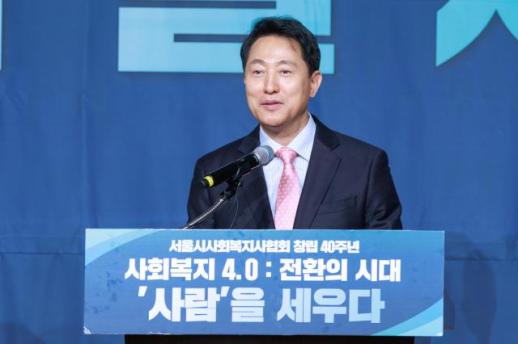 Seoul Mayor Oh Se-hoon Warns of ‘Soft Dictatorship,’ Urges Voters to ‘Protect Seoul’ People Power Party Seoul mayoral candidate Oh Se-hoon, the incumbent mayor, on Thursday urged voters to back him, saying it was important to “protect Seoul” to prevent what he called the possibility of “soft dictatorship” under the Lee Jae-myung government. In a TV Chosun YouTube interview that morning, Oh said that if the ruling party won a landslide in the local elections, it would become “like a runaway locomotive with no brakes.” Oh also warned that if the Democratic Party’s Seoul mayoral nominee, Jeong Won-oh, wins, Seoul’s economy and residents’ quality of life would decline. “I’m seeking a fifth term, and if I don’t win this time, Seoul’s upward international rankings and evaluations will be completely reversed,” Oh said, adding that he was running with a determination to hold the city. Oh cited an increase in Seoul’s debt during the tenure of former Mayor Park Won-soon, saying it rose from 3 trillion won to 10 trillion won, and argued the city’s finances would weaken again. He claimed that civic group figures who entered City Hall under Park funneled money to organizations they had belonged to, contributing to rising debt. Oh said many of those people are now positioned in Jeong’s campaign, and warned that a Jeong victory would recreate the pattern as “Park Won-soon Season 2.” Responding to Jeong’s criticism on a TV program the previous day that labeled Oh an “enlightenment leader” and “Yoon Suk Yeol Season 2,” Oh said, “I think he’s been a bit rattled, in today’s terms, because I defined him as Park Won-soon Season 2.” On the controversy over abolishing the long-term holding special deduction, Oh pressed Jeong to state a clear position after Jeong said it was undesirable to “stoke conflict and increase public anxiety.” “If Seoul apartments lose the long-term holding special deduction, people can lose hundreds of millions of won in taxes alone,” Oh said. “A mayoral candidate should clearly say whether they support or oppose such a serious issue.” Oh added that some view Jeong as likely to become “Lee Jae-myung’s yes-man,” and said Jeong’s response showed he could not escape that assessment. Oh also called on People Power Party leader Jang Dong-hyuk to show restraint and make a decision. “Candidates working in the field believe it helps if Chairman Jang is less visible,” Oh said. “With the lowest approval ratings since the party’s founding, I think the time has come for restraint or a decision as leader.”* This article has been translated by AI. 2026-04-24 13:51:09
 -
 Choo Mi-ae Pledges ‘One-Team’ Support to Boost Gyeonggi Semiconductor Cluster Choo Mi-ae, the Democratic Party candidate for governor of Gyeonggi Province, said April 24 she would work as a “one team” with the government and the ruling party to strengthen the global competitiveness of the region’s semiconductor cluster. Choo visited Samsung Electronics’ Pyeongtaek campus, a Korea Land & Housing Corp. (LH) site for a national industrial complex in Yongin, and SK hynix’s Yongin industrial complex. Calling the Gyeonggi semiconductor cluster “a core task that will determine the future of the South Korean economy,” she said she would “complete the world’s best semiconductor cluster” with speed and drive. She added that if she wins the June local elections, “the president, governor, mayors and lawmakers will be a solid one team,” and said she would “take responsibility to the end and prove it with results.” Accompanying her were Democratic Party lawmakers Hong Ki-won and Kim Hyun-jung from Pyeongtaek, and Lee Sang-sik, Son Myung-soo, Boo Seung-chan and Lee Eon-ju from Yongin, along with Pyeongtaek mayoral candidate Choi Won-yong and Yongin mayoral candidate Hyun Geun-taek, among other party candidates. At Samsung’s Pyeongtaek campus, Choo described the so-called “Su-Yong-Seong-Pyeong-O-I” semiconductor belt — linking Suwon, Yongin, Hwaseong, Seongnam, Anseong, Pyeongtaek, Osan and Icheon — as a key pillar of the nation’s industry, and said she would further strengthen it into a world-leading semiconductor cluster. She cited the Dutch chip-equipment maker ASML, which has manufacturing facilities in Dongtan, Hwaseong, and U.S. chip company Applied Materials, which plans to build a research and development center in Osan, underscoring her push to advance semiconductor technology centered on Pyeongtaek. At the SK hynix site in Yongin, Choo said South Korea needs a “mega-scale semiconductor ecosystem” combining private investment and public infrastructure, and said the Gyeonggi semiconductor cluster should be completed as a single, ultra-wide industrial belt. 2026-04-24 10:57:09
 -
 Seoul Mayor Oh Se-hoon to Register as Preliminary Candidate April 27, Opens Jongno Campaign Office Seoul Mayor Oh Se-hoon, the People Power Party’s candidate in the Seoul mayoral race, will register as a preliminary candidate on April 27 and move into full campaign mode for the June 3 nationwide local elections, his camp said. Oh’s side said the earlier-than-expected registration reflects his determination to “get into the community and run the ground campaign.” His campaign office will be set up in the Daewang Building in Gwancheol-dong, Jongno-gu, central Seoul. Oh’s camp said Jongno “symbolizes the urgency of old downtown redevelopment,” adding that the location is meant to show his commitment to “first principles,” balanced urban development and revitalizing older districts, including Jongno. Oh, seeking a third consecutive term and a fifth term overall, plans to stress Seoul residents’ health and quality of life in the campaign, while drawing contrasts with Jung Won-oh, the Democratic Party’s Seoul mayoral candidate. He also plans to put added focus on youth policies, with young people participating in and leading the campaign. Oh’s camp said the eighth popularly elected city administration has focused on “walking with the vulnerable” and strengthening the city’s competitiveness, and that the campaign will emphasize a “special city of better health and a warmer quality of life.” It added that the campaign team will be run with a focus on youth policy. 2026-04-23 18:57:16