
Journalist

Hong Seung Woo
hongscoop@ajunews.com
-
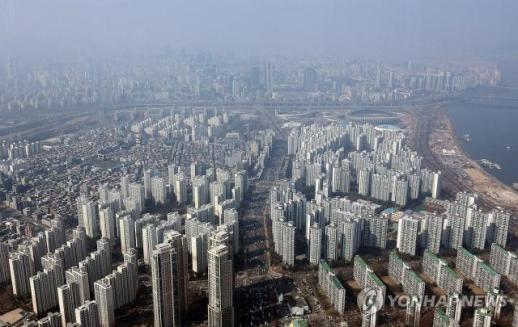 Gangnam Prices Cool, but Seoul’s Midpriced Apartments Keep Rising The recent cooling in apartment prices in Seoul’s most expensive districts is being cited by some as a sign the housing market is stabilizing. The data show weakness in high-end areas, but prices and rents in neighborhoods where most buyers can realistically compete are still rising. According to weekly figures from the Korea Real Estate Board, Seoul apartment prices rose 0.10% in the second week of April, while the so-called Gangnam three districts extended their downturn to an eighth week. Gangnam-gu and Seocho-gu each fell 0.06%, and Songpa-gu slipped 0.01%. Yongsan-gu also turned weaker again. Outside the premium core, however, midpriced apartments in non-Gangnam areas strengthened. Over the same period, Gangbuk-gu rose 0.27%, Gangseo-gu 0.24%, Dongdaemun-gu and Seongbuk-gu 0.20% each, and Guro-gu 0.17%. Transaction data point in the same direction. Seoul apartment sales in March totaled 4,742, down 17.7% from the previous month, but the share of deals for apartments priced at 1.5 billion won or less climbed to 85.3%. An analysis also found many of the most-traded complexes were in outlying districts, with 43 of the top 50 located in those areas. Official transaction prices underscore the pressure on typical buyers. An analysis by the Seoul Metropolitan Government and the Korea Real Estate Board showed Seoul’s apartment sale prices in February rose 1.9% from the previous month and were up 15.7% from a year earlier. The strongest gains were in smaller units: apartments larger than 40 square meters and up to 60 square meters rose 2.95%. Jeonse deposits also increased. Seoul apartment jeonse transaction prices in February rose 0.22% from the previous month, and the city’s northeastern area climbed 0.85%. The pattern reflects demand shifting rather than disappearing. As regulations tighten around high-priced homes and investment demand, buyers who cannot access Gangnam look to districts such as Nowon, Guro, Gangseo and Seongbuk. The interest-rate backdrop has reinforced that shift. The Bank of Korea’s Monetary Policy Board on the 10th kept the benchmark rate at 2.50% a year. With borrowing costs still elevated and lending limits binding, demand tends to concentrate on homes that fit within loan ceilings. The broader question, the article argues, is which numbers policymakers treat as proof of stability. A pullback in a few symbolic high-end neighborhoods can look like progress, but housing stability for ordinary households depends on whether prices and rents in attainable areas are easing. Experts have repeatedly said the priority should be expanding private-sector-led supply, not simply focusing on whether Gangnam prices have dipped. The more relevant measure, they say, is who is facing greater strain as midpriced homes and jeonse costs continue to rise.* This article has been translated by AI. 2026-04-23 06:04:38
 -
 Construction Industry’s AI Adoption Stalls Amid Data Gaps and Unclear Rules South Korea’s construction industry is not adopting artificial intelligence as quickly as expected, largely because jobsite data are scattered in nonstandard formats and rules remain unclear, industry officials said. Analysts also point to a lack of supporting infrastructure as another obstacle to AI-driven change. Industry sources said on the 22nd that many domestic construction sites still lack the data foundation AI systems need to learn and make decisions. Design documents, photos, inspection logs and process data are often stored in different formats, making them difficult for systems to read and use at once. Companies sometimes describe such unstructured material as data “piled up like a stack of drawings.” To improve training data quality, they say, the first step is standardizing dispersed, unstructured records — a task that has fueled calls for government-level guidelines. The Korea Research Institute for Construction Policy said AI bottlenecks include difficulties in standardization and data accumulation, along with fragmented data management. It recommended pursuing a public-private data linkage platform, improving data consistency, establishing security systems and advancing institutional reforms. While construction and engineering firms are trying to expand AI use, efforts often remain at the individual level rather than becoming organizationwide change. According to the Korea Technology and Information Promotion Agency for SMEs, 80% of construction companies with annual revenue of 500 million won or more do not even collect data, underscoring the sector’s low data maturity. Regulation has also struggled to keep pace with changes on the ground. South Korea’s “Framework Act on the Development of Artificial Intelligence and the Establishment of a Foundation of Trust” is in effect, but an AI implementation framework tailored to construction remains unclear. Issues repeatedly raised at construction sites — including data responsibility, liability when AI makes an incorrect judgment, and standards for pilot applications — still require more detailed follow-up rules. Jeon Young-jun, a research center director at the institute, said much of the data held by construction companies is stored as scanned PDFs of drawings or documents, which is not suitable for AI training. “It looks like text on the surface, but it is actually an image, so AI has difficulty recognizing and learning it properly,” he said. He said data must be structured and standardized first, and called for government standards for building a common data environment, or CDE. He added that companies should develop technology under those shared standards. Overseas, results are already emerging in administration and site management. Qatar officially announced last year that it introduced an AI-based intelligent building permit system, cutting average permit processing time from 30 days to about 120 minutes. The system automatically reads design documents and checks compliance, reducing review backlogs. The case has drawn attention because lower permitting uncertainty can make start dates easier to forecast and speed up financing such as project finance, or PF. Singapore is also accelerating jobsite digitalization. The Building and Construction Authority, or BCA, has identified data-driven collaboration and digital transformation as core tasks in its industry transformation strategy. Its Site Management Platform, or SMP, serves as a central digital hub that gathers and manages information generated at sites. BCA is linking SMP with its Site Management Data Standard, or SMDS, to standardize safety, productivity, quality, schedule and cost data — an effort aimed at aggregating site-generated databases into a common data environment and laying the groundwork for AI use. At home, industry participants cited expanding regulatory sandboxes and preparing in advance for predictable risks as key steps to improving AI infrastructure in construction. An industry official said the demonstration process should be simplified so technology can take hold at sites first. The official said adoption will continue to lag unless standards are set in advance for AI misjudgments and safety issues, protection of personal information and trade secrets, and responsibility in procurement and permitting processes. 2026-04-22 15:52:39
 -
 Automakers to recall over 500,000 vehicles due to defective parts SEOUL, April 22 (AJP) - About half a million vehicles will be recalled due to defective parts, the Ministry of Land, Infrastructure and Transport said on Wednesday. The country's largest automaker Hyundai Motor will recall about 239,683 units across four models including the Santa Fe sport utility vehicle (SUV), the Ioniq 6 electric sedan, as well as its luxury brand Genesis' G90. The recall, set to begin on June 4, follows a similar recall in the U.S. earlier this month affecting about 294,000 vehicles over the same issue, a defect that could cause seat belt anchors to detach, increasing the risk of injuries in a crash. Its affiliate Kia will also recall 220,059 units of its square-shaped Ray compact starting next week after a flaw was found in a software program that could cause the engine to shut off while driving. KG Mobility, formerly Ssangyong, has already begun recalling 51,535 units across six models including the Torres SUV earlier this week, while Japanese automaker Toyota is set to recall 2,132 vehicles including the Prius front-wheel-drive version due to faulty rear doors, starting Thursday. 2026-04-22 14:09:19
 -
 Samsung C&T Proposes Han River View Design for 533 Units in Shinbanpo 19-25 Rebuild Samsung C&T said it has proposed a design for the combined reconstruction of Shinbanpo 19 and 25 that would give every union member a view of the Han River. The union has 446 members, but the company said it designed 533 units with river views. Of the project’s 616 total units, about 87% would have Han River views, it said. Samsung C&T said the proposal focuses on maximizing the site’s river-view advantage by using a method it calls Vista Matrix Analysis, or VMA, rather than a simple AI review. The company said the approach adapts sunlight analysis used in education-environment impact assessments, simulating views from each unit’s windows while factoring in obstructions from nearby buildings. It said repeated simulations were used to adjust building placement, angles, heights and floor plans to reduce blind spots and improve view quality. The company also revised the layout, cutting the number of residential buildings from seven in the union’s original plan to six to reduce interference between buildings. It applied 10-meter-high pilotis to all residential buildings to lift sightlines, and planned a 3.3-meter floor-to-ceiling height to increase openness. Samsung C&T said the changes would increase the number of Han River view units from 464 under the existing maintenance plan to 533. In addition to securing views for 100% of union members, it said the same benefit could be extended to 87 units for general sale. Inside the units, the company said it incorporated large view windows and an LDK-oriented layout, aiming to connect the river view naturally from key living spaces such as the living room and kitchen while reducing visual obstruction and improving openness. Samsung C&T also said it would address a long-standing challenge for riverside apartments in Gangnam: balancing north-facing Han River views with south-facing sunlight access. It said it applied a “swivel” layout that allows residents to switch the placement of the living room and kitchen based on preference, designed to consider both views and daylight. Im Cheol-jin, head of housing sales at Samsung C&T, said Shinbanpo 19 and 25 “will be a key project site that, along with Raemian One Bailey, forms the central axis of a Raemian town.” He said the proposal reflects design know-how that “maximizes the value of Han River views while also considering sunlight rights and overall balance across the complex.”* This article has been translated by AI. 2026-04-22 10:36:19
 -
 South Korea Orders Recalls of 532,144 Vehicles Including Hyundai Santa Fe, Kia Ray South Korea’s Ministry of Land, Infrastructure and Transport said Tuesday it will carry out voluntary corrective actions covering 532,144 vehicles across 17 models made or imported and sold by Hyundai Motor, Kia, KG Mobility and Toyota Motor Korea after manufacturing defects were confirmed. Hyundai will begin repairs June 4 for 239,683 vehicles across four models, including the Santa Fe Hybrid, Ioniq 6 and Genesis G90. The ministry said the front-seat seat belt anchorage design may be insufficient, raising the possibility it may not properly protect occupants in a crash. The issue matches a global recall in the United States covering 294,000 vehicles of the same four models. The ministry said Hyundai plans to start the recall after quickly producing reinforcement parts. Separately, 202 Hyundai Elec City double-decker buses are being repaired starting April 20 after a body design issue raised the possibility of cracks forming in the upper structure above the center door, which could affect safety. Kia will begin repairs April 28 for 220,059 Ray vehicles after shortcomings were found in the engine control unit software design, which could cause the engine to stall while driving. KG Mobility began corrective actions April 20 for 51,535 vehicles across six models, including the Torres, after a memory overload was found that could cause the instrument cluster display to freeze or shut off. Another 18,533 vehicles across two models, including the Torres EVX, also began repairs the same day after an investigation found the rear-collision warning light’s flashing cycle did not meet standards due to software design shortcomings. Toyota Motor Korea will begin repairs April 23 for 2,132 vehicles across three models, including the Prius two-wheel-drive version, after the rear-door outside handle circuit design was found to be insufficient, creating a risk the rear door could open while driving. Drivers can check whether their vehicles are affected and review specific defect details by entering a vehicle registration number or vehicle identification number on the Auto Recall Center website.* This article has been translated by AI. 2026-04-22 09:47:24
 -
 Daebang Construction Tightens Companywide Quality Controls to Prevent Defects Daebang Construction is stepping up efforts to strengthen construction quality management. The company said April 21 it is operating a companywide quality-control system built around three priorities: strict oversight of construction quality, reducing defects and responding actively after problems arise. A key feature is joint inspections by headquarters and job sites. In addition to on-site staff, the headquarters architecture team visits all sites in person to check common areas and identify potential defect risks in advance. The company said it also continually revises construction guidelines using data gathered at sites and applies updates immediately across projects. When defects occur, it aims to respond quickly before issues escalate into disputes, focusing on reducing inconvenience for residents. Daebang Construction said it was not ranked in the Transport Ministry’s list of the “top 20 apartment builders by defect rulings for the first half of 2026,” neither for the past six months nor on a cumulative five-year basis. The company noted the indicator is widely viewed as one measure consumers use to gauge builders’ quality and reliability. “Residential products ultimately come down to quality and trust,” a company official said. “We will continue revising guidelines based on site data and reflecting them across all sites.”* This article has been translated by AI. 2026-04-21 16:27:55
 -
 Hanwha Construction Partners With Mastern Investment Management on Real Estate Development Hanwha Construction said Tuesday it has partnered with Mastern Investment Management to expand its real estate development business. The companies signed a memorandum of understanding Monday at Hanwha Building in Janggyo-dong, Jung-gu, Seoul, to jointly pursue development projects. Attendees included Yoon Seong-ho, head of Hanwha Construction’s Development Business Division, and Park Kyung-bae, head of Mastern Investment Management’s Domestic Division 1. Hanwha said the agreement is aimed at moving beyond a construction-centered contracting model by combining financing and development. The partners plan to broaden cooperation in stages, from identifying new projects to establishing joint entities. The collaboration will cover the full development cycle, from early planning through post-completion operations. Hanwha said it will apply preconstruction services to review costs and schedules in advance and assess feasibility early, then take charge of design and construction to strengthen execution. Mastern will handle fundraising and investment-structure design, including securing project funding through investor recruitment and managing financial risks based on market conditions. After completion, it will also pursue value-up strategies to enhance asset value. Hanwha said it plans to build an integrated decision-making system spanning finance and construction, manage risks from the structuring stage and improve profitability. Over the longer term, it aims to secure a stable development pipeline and broaden cooperation with financial institutions to strengthen its base for sourcing new projects. “Based on the combination of finance and construction, we will strengthen our competitiveness in development and build a stable business structure,” Yoon said. Park said he expects “meaningful synergy” from combining real estate finance expertise with design and construction capabilities. Hanwha said it will sequentially expand cooperation with major financial institutions, including securities firms and asset managers, starting with this agreement. 2026-04-21 14:39:43
 -
 Korean investors keep record holdings of US stocks despite domestic market rally SEOUL, February 03 (AJP) - Demand for U.S. equities among South Korean investors remains strong despite a sharp rally in domestic markets, with holdings of American shares staying at record levels, according to data released Tuesday by the Korea Securities Depository. The benchmark KOSPI has climbed above 5,000 this year and the tech-heavy KOSDAQ has risen past 1,000. Yet South Korean investors’ holdings of U.S. stocks continued to grow. The data showed domestic investors held $168 billion worth of U.S. stocks at the end of last month, up about $4.4 billion from the end of last year. Tesla remained the most widely held stock among Korean retail investors, with holdings totaling $27.1 billion. The electric-vehicle maker, which has also drawn attention for its autonomous-driving and artificial intelligence ambitions, retained the top spot by a wide margin. Nvidia followed with $18 billion in holdings, supported by expectations of continued demand for AI chips. Alphabet ranked next at $7.7 billion, followed by data analytics firm Palantir at $5.4 billion and Apple at $4.3 billion. Analysts say the trend reflects investors’ belief in the structural strengths of U.S. markets, where many global leaders — particularly in artificial intelligence, semiconductors and cloud computing — are listed. A brokerage official said some profit-taking has flowed into local shares as the domestic market rebounded, but the U.S. market still enjoys an advantage in growth sectors and global competitiveness. "Direct overseas stock investment continues to expand, particularly among investors in their 20s and 30s," the official said. * This article, published by Aju Business Daily, was translated by AI and edited by AJP. 2026-02-03 16:59:00
 -
 Heungkuk Securities Raises Hyundai Mobis Target on Electronics, Robotics Shift Heungkuk Securities said Wednesday that Hyundai Mobis’ fourth-quarter results met market expectations and that recovering tariff-related costs has reduced uncertainty, while its business shift toward automotive electronics and robotics continues. The brokerage raised its target price to 540,000 won from 500,000 won and kept its “buy” rating. Hyundai Mobis posted fourth-quarter revenue of 15.4 trillion won and operating profit of 930.5 billion won. Revenue rose 4.7% from a year earlier, while operating profit fell 5.6%. Heungkuk Securities said output from automaker customers slipped 1.4%, but a favorable exchange-rate environment, a higher share of high value-added automotive electronics parts in manufacturing, and price increases in the after-sales service business lifted sales. On profitability, the firm recovered about 2 trillion won of roughly 2.5 trillion won in parts-tariff costs incurred last year, sharply reducing the tariff impact. However, the after-sales service unit reflected about 870 billion won in tariff costs and about 600 billion won in one-time quality costs, pushing its operating margin down to 22.7% from the prior quarter. Heungkuk Securities said tariff-related pressure should ease gradually starting this year as after-sales prices rise and tariff recoveries accelerate. Ma Geon Woo, an analyst at Heungkuk Securities, said Hyundai Mobis’ actuator business for Boston Dynamics is being developed using the company’s existing core technologies, limiting the burden of research and development and capital spending. He said the company could expand supply beyond actuators to additional parts for humanoid robots, creating business opportunities as physical AI develops.* This article has been translated by AI. 2026-01-29 08:48:00
 -
 Prosecutors seek arrest warrant for MBK Partners' chairman over Homeplus fraud SEOUL, January 8 (AJP) - Prosecutors have sought an arrest warrant for Kim Byung-ju, the chairman of private equity firm MBK Partners, along with three other executives over supermarket chain Homeplus' abrupt filing for court receivership. The Seoul Central District Prosecutors requested the warrants for them late Wednesday night on charges of fraud and other alleged violations of relevant laws. MBK Partners, which acquired a 100 percent stake in Homeplus from British grocery chain Tesco Plc in 2015, later became financially strapped, leading it to request court-led rehabilitation in March last year. Prosecutors believe that MBK executives knew in advance that Homeplus' credit rating would be downgraded in February last year. Despite being aware of this, they issued large-scale asset-backed short-term bonds worth 82 billion Korean won (US$56.6 million) without disclosing the impending downgrade and filed for court-led corporate rehabilitation just a few days later. 2026-01-08 09:11:19