
Journalist

Lee Hyo-jung
hyo@ajunews.com
-
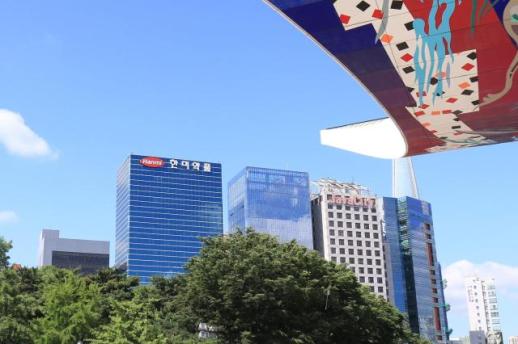 Hana Pharm CEO Hwang Sang-yeon Announces Organizational Restructuring "This is to establish a 'One Team' system that can respond immediately and flexibly to any crisis or change," said Hwang Sang-yeon, the first external CEO of Hana Pharm since its founding in 1973, as he initiated a major restructuring. This decision aims to effectively achieve business goals in response to the rapidly changing global pharmaceutical and biotech market by integrating existing divisions based on work relevance into a new 'departmental system.'According to Hana Pharm, the company was reorganized on May 1 into four core integrated areas: innovation growth, sustainable growth, future growth, and growth support.A key aspect of this restructuring is the establishment of the 'Innovation Growth Division.' To ensure the successful domestic and international launch of its obesity treatment, Hana Pharm plans to maximize synergy by consolidating its new product development center, marketing center, Pyeongtaek manufacturing center, pharmaceutical innovation center, and overseas sales team.The existing R&D center has been restructured into the 'Future Growth Division,' which will house three centers: the Obesity Metabolism Center, the Oncology Center, and the Convergence Center, ensuring research and development independence while continuously discovering innovative early-stage pipelines.Additionally, the domestic sales headquarters has been elevated to the 'Sustainable Growth Division' to enhance its external standing, while the 'Growth Support Division' will include the Paltan manufacturing center and business management center to support the efficient operation of each growth area.The 'Portfolio Committee' has been restructured to include the clinical center, serving as a control tower to make final decisions on the company's overall portfolio, including new projects and product adjustments.On May 6, Hwang held a town hall meeting at Hana Pharm's headquarters in Songpa-gu, Seoul, to explain the purpose and details of the restructuring to employees.He emphasized that this restructuring is not merely a "game of musical chairs" with department names, but rather a move to create a 'One Team' system that can respond immediately and flexibly to any crisis or change, akin to a snake shedding its skin.Hwang further stated, "We focused on breaking down barriers between departments and concentrating the company's capabilities solely on achieving business objectives. We aim to establish an integrated system where each division is organically connected, transforming into a global pharmaceutical and biotech company that simultaneously realizes innovative drug development and sustainable growth."* This article has been translated by AI. 2026-05-08 18:16:20
 -
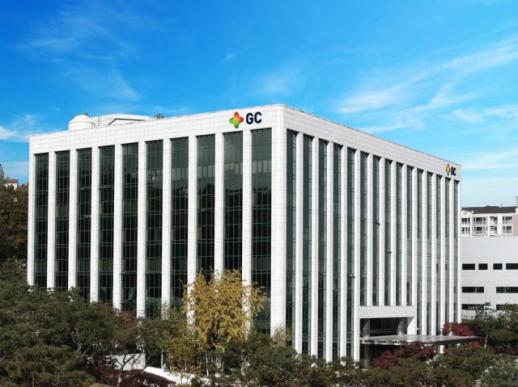 GC Green Cross Reports 1st Quarter Operating Profit of 11.7 Billion Won Driven by Aliglo Sales Thanks to the explosive growth of its blood product Aliglo, GC Green Cross reported a nearly 50% increase in operating profit for the first quarter of this year. The company anticipates that the quarterly sales growth of Aliglo will continue throughout the year, especially after the U.S. customs policy announced in April exempted plasma-derived products from tariffs, significantly alleviating uncertainties in the local market.On May 8, GC Green Cross announced that its consolidated financial statements for the first quarter showed sales of 435.5 billion won and an operating profit of 11.7 billion won. Sales increased by 13.5% compared to the same period last year, while operating profit rose by 46.3%. The net profit was reported at 20.1 billion won.Notably, Aliglo's sales for the first quarter reached 34.9 billion won, nearly quadrupling compared to the same period last year.Sales by business segment included 114.9 billion won from plasma-derived products, 81.6 billion won from prescription drugs, 56.8 billion won from vaccines, and 32.4 billion won from over-the-counter medicines and consumer healthcare.In the U.S., the company's subsidiary ABO Plasma recently received FDA approval for its plasma center in Laredo, Texas, and is planning to open a new center in Eagle Pass within the year. The recent U.S. customs policy, which includes plasma-derived products in the tariff exemption, has also resolved uncertainties related to this business.By subsidiary, GC Cell reported 37.4 billion won in sales, while GC Green Cross MS generated 23.6 billion won. GC Green Cross Wellbeing achieved sales of 49.1 billion won, although it will be excluded from consolidated results starting in the second quarter due to a stake sale on March 31.Market analysts believe that GC Green Cross, which recorded a significant loss of over 100 billion won in the fourth quarter of last year, will continue to improve its performance in the first quarter, driven by stable growth in key products like Aliglo.A representative from GC Green Cross stated, "We will continue to expand our market dominance through the stabilization of plasma center operations and the opening of additional centers."* This article has been translated by AI. 2026-05-08 17:19:58
 -
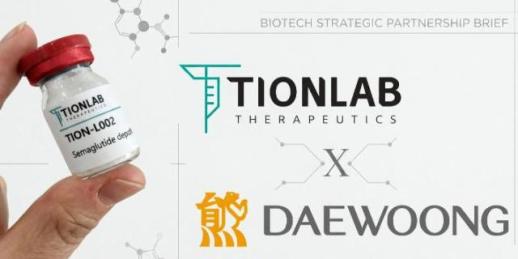 Daewoong Pharmaceutical Partners with Tion Lab Therapeutics to Develop Monthly Obesity Treatment Daewoong Pharmaceutical and Tion Lab Therapeutics are officially launching the development of a monthly injectable treatment for obesity, utilizing their proprietary platform technologies. The two companies aim to begin patient dosing in domestic clinical trials within the year.The global obesity treatment market is projected to grow at an annual rate of over 30%, potentially reaching $200 billion by 2030. This growth is expected to intensify competition around 'shortened dosing intervals and convenience of administration' in the obesity market.On May 8, Daewoong Pharmaceutical announced that it has signed a strategic partnership agreement with Tion Lab Therapeutics for the global development and commercialization of a monthly obesity injection. The collaboration combines Tion Lab's Qject Sphere platform with Daewoong's Cure platform to develop a long-acting injectable based on semaglutide.Qject Sphere is noted for its ability to suppress initial drug release through specialized formulation and microparticle coating. Cure enhances particle homogeneity by manufacturing microspheres of uniform size, achieving consistent and low-variance release rates.Daewoong Pharmaceutical stated, "The Qject Sphere technology controls the initial release rate, while the Cure technology maintains a stable and consistent release rate over the desired duration. This synergy allows for rapid release suppression and long-term release patterns, while minimizing variability in product quality during mass production."Currently, Daewoong is also developing an obesity treatment option that utilizes a 'microneedle patch' technology to maintain the efficacy of injections while reducing pain and administration burden. This agreement enables Daewoong to complete a comprehensive treatment strategy in the obesity sector, encompassing oral medications, microneedle patches, and long-acting injectables.Daewoong Pharmaceutical CEO Park Seong-soo remarked, "This partnership has allowed us to establish a portfolio that ranks among the best in the industry for obesity treatment."Industry experts predict that if an injectable product can maintain effectiveness while reducing dosing frequency, it could significantly change patient adherence and prescribing patterns.* This article has been translated by AI. 2026-05-08 14:31:34
 -
 Celltrion's U.S. Strategy Boosts Sales of Jimpenetra, Achieving Record Prescriptions Celltrion's tailored sales strategy in the U.S. has paid off, with its subcutaneous infliximab treatment, Jimpenetra (known as Remsima SC in South Korea), achieving its highest quarterly prescription volume ever in the first quarter of this year, surpassing the total prescriptions from the first half of last year.The company is optimistic about the second half of the year, anticipating continued growth for Jimpenetra as prescription trends show a consistent upward trajectory.According to Celltrion, Jimpenetra's prescriptions increased by 185% year-over-year in the first quarter, marking a record high.This success is attributed to the company's '3P' marketing strategy, which focuses on key stakeholders in the local healthcare market, including doctors, insurers, and patients, following Jimpenetra's launch in 2024.To expand prescriptions for Jimpenetra, Celltrion has concentrated on engaging healthcare professionals, increasing its local sales force to 100 to enhance marketing capabilities. Securing insurance coverage has also been crucial, as reimbursement directly impacts prescriptions in the U.S. The company has utilized various advertising channels, including TV, YouTube, and social media, to increase patient awareness and preference for the product.Celltrion expects Jimpenetra's growth to continue in the second half of the year, supported by a solid prescription infrastructure with over 90% reimbursement coverage, increased awareness among healthcare professionals and patients, and consistent record-breaking prescription volumes since its launch.Additionally, a new high-revenue product line launched alongside Jimpenetra is also performing well in the U.S. The product, Stekima (ustekinumab), launched in March last year, has captured a 10.2% market share within its first year.A Celltrion representative stated, "Considering the upward prescription trend as we move into the second half, we expect Jimpenetra's growth to accelerate further."Previously, Celltrion reported its highest-ever first-quarter performance despite seasonal slowdowns, with consolidated revenues of 1.145 trillion won and an operating profit of 321.9 billion won. This represents a 36% increase in revenue and a 115.5% increase in operating profit compared to the same period last year, marking the highest first-quarter revenue and operating profit on record.Celltrion noted that this record performance positions them well to exceed their annual targets of 5.3 trillion won in revenue and 1.8 trillion won in operating profit. 2026-05-08 11:49:00
 -
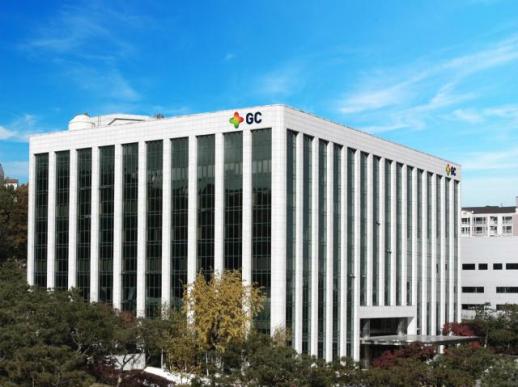 GC녹십자 Wins Peru Approval for Hunter Syndrome Drug Hunterase ICV GC Green Cross, which is nearing the 2 trillion won revenue mark, has secured marketing approval in Peru for its intraventricular Hunter syndrome treatment, Hunterase ICV, following approvals in Japan and Russia, the company said. The move supports its push to expand overseas sales and diversify exports as it focuses on high value-added products in advanced markets such as the United States and Japan while accelerating entry into emerging markets. The company said Tuesday that Peru’s drug regulator, DIGEMID, recently granted approval for Hunterase ICV. Hunterase ICV is administered directly into the brain’s ventricles and is given once a month. In clinical trials conducted in Japan, the treatment significantly reduced heparan sulfate, a key substance linked to central nervous system damage. It also showed effects in improving or stabilizing developmental age, a measure used to assess patients’ intellectual and physical development. Lee Jae-woo, head of development at GC Green Cross, said, “Based on long-term clinical data, we will work to address unmet medical needs in severe Hunter syndrome.” Hunter syndrome is a congenital rare disease in which a deficiency of the IDS enzyme causes glycosaminoglycans (GAG) to accumulate in the body. Symptoms include skeletal abnormalities, joint deformities, respiratory and cardiac dysfunction, and cognitive decline. It is known to occur in about one out of every 100,000 to 150,000 boys. About two-thirds of patients are believed to have a severe form accompanied by central nervous system damage. As the disease progresses, cognitive decline and behavioral abnormalities can appear, significantly affecting quality of life and prognosis. GC Green Cross posted record annual revenue of 1.9913 trillion won last year. Market observers say the company has a strong chance of surpassing 2 trillion won this year as its core businesses, including blood products and vaccines, are expected to grow.* This article has been translated by AI. 2026-05-07 13:48:05
 -
 SK Biopharm Posts Record Q1 Profit on Xcopri, Accelerates TPD Drug Development SK Biopharm said it posted its best-ever first-quarter results, driven by strong sales of its epilepsy drug cenobamate, sold in the U.S. as Xcopri. The company said it plans to use the momentum and cash flow to speed research and development centered on targeted protein degradation, or TPD, along with next-generation pipeline and proprietary platform technologies. In a regulatory filing on 7일, SK Biopharm said its consolidated operating profit for the first quarter was 89.8 billion won, up 249.7% from a year earlier on a preliminary basis. Revenue rose 57.8% to 227.9 billion won. U.S. sales of cenobamate, the company’s main profit driver, increased 48.4% to 197.7 billion won. To expand cenobamate’s indications, the company said it submitted a U.S. Food and Drug Administration new drug application in March for an oral suspension formulation. It is also pursuing filings within the year to expand indications to primary generalized tonic-clonic seizures, or PGTC, and pediatric patients. In China, it began commercialization in March through partner Ignis Therapeutics. Approval procedures are also underway in Japan within the year, it said. SK Biopharm said it is stepping up R&D investment based on cash flow from cenobamate. Building on its central nervous system focus, it is expanding pipelines in radiopharmaceutical therapeutics, or RPT, and TPD. The company has previously identified RPT, TPD and cell and gene therapy, or CGT, as three new growth platforms. On a post-earnings conference call, SK Biopharm detailed development of SKT-18416, a p300 selective degrader candidate. The TPD candidate is designed to selectively degrade the p300 protein, which is involved in cancer cell growth and survival. Choi Jong-gil, head of strategy at SK Biopharm, said SKT-18416 is a first-in-class candidate that selectively degrades p300. He said the company has confirmed in preclinical work that a p300 selective degrader can reduce the risk of hematologic toxicity and is advancing development based on those findings. The company said it confirmed tumor growth inhibition in preclinical models of prostate cancer and CBP-mutant cancers. It is preparing a preclinical package for an investigational new drug application, targeting submission in the first half of next year. Indications under review include cancers with high p300 dependency, with prostate cancer and multiple myeloma prioritized, it said. The conference call also introduced the company’s proprietary platform, MOPED, a technology for discovering compounds that selectively degrade specific proteins by inducing protein-protein interactions. SK Biopharm said molecular glues discovered through MOPED show improved drug-like properties and blood-brain barrier penetration compared with conventional heterobifunctional TPD approaches, and have demonstrated scalability, supporting differentiated technological competitiveness.* This article has been translated by AI. 2026-05-07 13:39:15
 -
 SK Biopharm Q1 Operating Profit Jumps to 89.8 Billion Won on Cenobamate U.S. Growth SK Biopharm posted its strongest results on record, driven by accelerating U.S. growth of its epilepsy drug cenobamate, sold in the United States as Xcopri. The company said in a regulatory filing on 7 that its first-quarter operating profit on a consolidated basis totaled 89.8 billion won, up 249.7% from a year earlier. Revenue rose 57.8% to 227.9 billion won. A company official said the quarter was notable because operating profit came in close to 90 billion won even as research and development and marketing costs increased from a year earlier, marking an all-time high. The official added that a structure in which sustainable profit and cash flow generated by cenobamate are reinvested into R&D is taking hold, putting the company on what it described as a virtuous cycle. Net profit was 102.7 billion won, up 423.5%. U.S. cenobamate sales rose 48.4% to 197.7 billion won, supporting the overall gain. Prescription metrics also improved, the company said. In March, total monthly prescriptions (TRx) approached about 47,000, and new patient prescriptions (NBRx) topped 2,000 for the first time. For further growth, SK Biopharm said it submitted a New Drug Application to the U.S. Food and Drug Administration in March for an oral suspension formulation. It is also seeking to file within the year to expand indications to primary generalized tonic-clonic seizures (PGTC) and pediatric patients. The company is also pushing overseas expansion. In China, it began commercialization in March through partner company Ignis Therapeutics. In Japan, it said approval procedures are under way within the year.* This article has been translated by AI. 2026-05-07 10:36:18
 -
 Korea’s Big Drugmakers Post Strong Q1 Gains, but Face Price-Cut Pressure in H2 South Korea’s leading traditional drugmakers are extending solid growth in the first quarter, with operating profit rising by double digits from a year earlier. Industry officials said Tuesday that Yuhan Corp., GC Biopharma and Chong Kun Dang Pharmaceutical Corp. each posted double-digit operating-profit growth in the January-March period from a year earlier. Yuhan reported consolidated first-quarter revenue of 526.8 billion won and operating profit of 8.8 billion won, up 7.2% and 37.3%, respectively. The company missed market expectations because milestone revenue tied to its lung cancer drug, Lazertinib, was not booked in the quarter. Chong Kun Dang, on a separate basis, posted revenue of 447.7 billion won and operating profit of 17.6 billion won, up 12.2% and 36.9%. The company benefited from steady sales of established prescription drugs such as Godex and Dilatrend, along with a co-marketing boost from the obesity drug Wegovy. Prescriptions for Wegovy have been expanding in the domestic obesity-treatment market, contributing more meaningfully to sales, the report said. Among the traditional drugmakers, GC Biopharma is drawing the highest expectations. Securities-industry consensus forecasts put its first-quarter revenue at 439.2 billion won, up about 14% from a year earlier, with operating profit expected to jump about 40% to around 12.2 billion won. A key driver is Aliglo, a blood product that has gained traction in North America. Aliglo is estimated to have generated about $21 million (about 31 billion won) in first-quarter sales, helped by expanding prescriptions in the United States. The company also benefited from strong sales of the obesity drug Mounjaro, distributed through its affiliate GC Wellbeing. Daewoong Pharmaceutical Co., which has yet to report results, is also expected to post growth. Analysts forecast first-quarter revenue of 388.3 billion won and operating profit of 44.2 billion won, up about 8.9% and 14.2%. They cited rising global sales of the botulinum toxin product Nabota and steady domestic prescriptions for the gastroesophageal reflux disease drug Fexuclu. The bigger concern is the second half. Companies face continued cost pressure from global supply-chain instability, including the Middle East war, and a government push to cut drug prices. The Ministry of Health and Welfare plans to issue an administrative notice this month on a revision to its standards for setting and adjusting drug prices. The revision is expected to include changes to generic pricing formulas, tighter criteria for stepwise price cuts, and measures related to policy add-ons and support for so-called exit-prevention drugs. The government is aiming for implementation in August. “Companies got through the first quarter with new-drug sales and efficient cost control, but government pricing policy and rising global logistics costs are external variables management cannot control,” an industry official said. “In the second half, performance gaps will become clearer between companies with strong new-drug portfolios and those without.” The official added that with profitability likely to shrink as prices fall, failure to expand R&D and overseas sales could lead to a downturn in results. * This article has been translated by AI. 2026-05-06 18:33:18
 -
 Samsung Biologics union to shift from strike to open-ended work-to-rule campaign The Samsung Biologics labor union is ending a five-day, full-scale strike that began May 1 and will return to worksites on May 6, shifting to an open-ended work-to-rule campaign. The union is also said to be weighing an extension of the strike, raising the possibility of a prolonged dispute if an agreement is not reached soon. Industry officials said May 5 that labor and management plan to resume talks with a one-on-one meeting on May 6 between a human resources executive and the union chair, followed by a tripartite meeting on May 8 with the Labor Ministry participating. With the sides far apart, however, many in the industry say a deal remains uncertain, fueling concerns that production disruptions and losses totaling several hundred billion won could become reality. The two sides held their first tripartite meeting at 10:15 a.m. the previous day for about two hours but only confirmed their differences. They later met separately with the Labor Ministry, but did not produce additional agenda items or a concrete path forward. In a statement, the union said management asked both sides to halt all forms of labor action and to mutually withdraw legal disputes, including allegations of unfair labor practices. The union said it refused, arguing it would only lower the level of action without gaining anything in return. The union launched the company’s first full-scale strike since Samsung Biologics was founded in 2011, starting on Labor Day, May 1. Estimated losses so far are about 150 billion won to 300 billion won. If the stoppage continues, projected losses from production disruptions could reach about 640 billion won, according to estimates cited in the industry. Ahead of the planned May 1 strike, the union also abruptly halted work in some processes starting April 28. That stoppage reportedly froze a key aliquoting process, triggering knock-on disruptions across production lines and disrupting process flow. The company has reportedly selected which products to keep producing and discarded some products that were deemed likely to deteriorate. As a result, production has already been disrupted for products including cancer drugs, medicines related to human immunodeficiency virus, or HIV, and treatments for atopic dermatitis, according to the report. An industry official said biologic drugs can require an entire batch to be discarded if even one step is delayed, amplifying losses. A major sticking point is the union’s demand that the collective bargaining agreement require prior union consent for key management matters such as hiring, performance evaluations and mergers and acquisitions. The company has maintained that such provisions are difficult to accept because they directly affect management and personnel authority, viewing them as an infringement on management rights. A business community official warned that requiring prior union consent for M&A or major staffing decisions could undermine management’s ability to make decisions for future growth and could ultimately leave the company less competitive. The union plans to return to work starting the afternoon of May 6 but begin an open-ended work-to-rule campaign by refusing overtime and holiday work. It has also signaled it could launch a second strike if no agreement is reached. An industry official said the risks extend beyond direct losses from halted production, citing potential penalties for contract nonperformance, heightened scrutiny from regulators and customers switching to alternatives. The official added that in the global contract development and manufacturing organization, or CDMO, market, fast-following competitors are closing in, and delayed decision-making could cost orders. The official also said the strike risk, emerging amid an international environment of strengthening U.S. protectionism, could increase the chance of competitors benefiting at Samsung Biologics’ expense. 2026-05-05 15:49:14
 -
 Profit-Linked Bonus Demands Spread Across South Korea’s Top Industries Labor disputes are flaring simultaneously at some of South Korea’s flagship companies, spanning semiconductors, autos, biotech and telecommunications, as unions push for bigger, profit-linked bonuses. The Samsung Electronics union has warned of a general strike while demanding the removal of a bonus cap and distribution of 15% of operating profit. The Samsung Biologics union began its first full-scale strike since the company’s founding on May 1. The Hyundai Motor union is seeking bonuses equal to 30% of net profit, and the LG Uplus union is also demanding 30% of operating profit, widening what has become a contest over “profit-linked bonuses” across industry. Unions argue that stronger results justify a larger share. But the demands are increasingly seen as going beyond routine pay bargaining, as signals emerge that could affect companies’ capacity to invest, production stability, supply-chain confidence, gaps between prime contractors and suppliers, and ultimately national industrial competitiveness. Some in the industry trace the current dynamic to SK hynix, where bonuses around 10% of operating profit have come to be treated as a benchmark. Once a higher ratio is set at one company, other unions find it harder to accept less, and negotiations can shift from productivity to symbolic one-upmanship — a dynamic often described as a “bonus chicken game.” The issue is not confined to individual companies. Since the implementation of the so-called Yellow Envelope Act, bargaining demands by subcontractor unions toward prime contractors have surged, with requests filed at multiple worksites — including Hanwha Ocean, POSCO and Hyundai Motor — from the first day of enforcement. As large-company unions raise profit-linked compensation standards, prime contractors’ cost burdens grow, increasing the likelihood that pressure is passed on through tighter supplier pricing or reduced investment. That, in turn, highlights a long-standing bottleneck in Korean industry: bargaining power rises for regular workers at big firms, while smaller suppliers, nonregular workers and subcontracted labor can face greater instability. As bonus payouts grow, companies may have less room to raise payments to partner firms, potentially widening wage gaps between large companies and small and midsize businesses. Critics warn that what appears to expand labor’s share could deepen the labor market’s dual structure. The industrial reality is unforgiving. Semiconductors, biotech and autos face global competition, heavy capital spending and pressure to shift technologies. If bonuses harden into an automatic fixed share of profits rather than rewards tied to productivity gains, management can become locked into short-term cash distribution while investment is pushed back. When unions seek to maximize payouts based on short-term performance, spending on research and development, facility expansion and new businesses — often the first sources of future growth — is more likely to be squeezed. The need now, the article argues, is not escalation but a reset of rules. Bonus systems should reflect more than a simple share of operating or net profit, incorporating investment execution, cash flow, industry cycles and future cost provisions. Before strikes and all-out confrontation, labor and management should institutionalize bonus formulas, upper and lower limits, and adjustment principles for downturns. It also calls for broader discussion of how compensation systems at major prime contractors ripple through suppliers and the wider industrial ecosystem. South Korea’s economy rests on exports, manufacturing and the competitiveness of advanced industries. The current bonus conflicts are both a dispute over labor’s fair share and a warning light that could erode the power of the country’s growth engine. Just as unions should weigh not only today’s profits but also tomorrow’s survival, companies should treat labor not simply as a cost but as a pillar of sustainable competitiveness. The article concludes that this is not a problem that ends with one side’s victory. It says negotiations should focus on sustainability — not a test of strength — so that sharing industrial gains does not damage the industry’s future. * This article has been translated by AI. 2026-05-03 18:03:46