
Journalist

Ju Hye-rin
joojoosky@ajunews.com
-
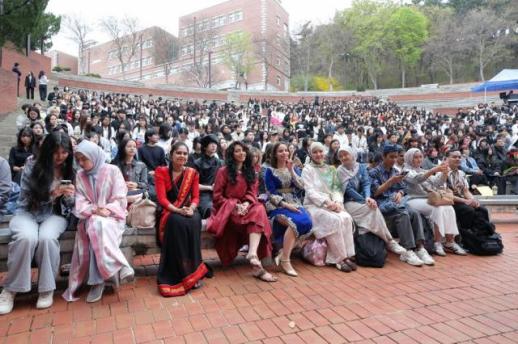 On-site inspections underway at universities with lapses in admitting foreign students SEOUL, April 9 (AJP) - The government is inspecting universities across the country to root out any irregularities in recruiting and admitting foreign students, the Ministry of Education said on Thursday. The ministry's comprehensive on-site inspections, to be carried out over two months until May in collaboration with the Ministry of Justice, will target schools suspected of improper screenings or admitting too many students without adequate checks. These inspections come after the recent cancellation of visas for more than 100 Chinese students enrolled at or who graduated from Honam University in the southwestern city of Gwangju, after immigration authorities discovered that the academic credentials they submitted were falsified. Inspectors will check whether universities properly followed admission procedures including Korean language requirements and visa regulations. Schools found committing serious violations such as falsifying documents could have their certifications revoked and be barred from issuing visas for up to three years. Nearly half of domestic universities, or 47.1 percent, are not properly accredited or certified to admit new international students, making it difficult to monitor or supervise them effectively. The ministry said it plans to introduce stricter certification procedures to help universities better recruit and evaluate international students, supporting talented overseas students and promising professionals in finding jobs in South Korea, which could pave the way for their long-term stay after completing their studies here. Separately, the ministry will select four universities for intensive inspections in the first half of this year and another four in the second half. 2026-04-09 17:53:47
 -
 More South Koreans flock to national parks, with Mt. Bukhansan most visited SEOUL, February 24 (AJP) - Some 43.31 million people visited national parks last year, with Mt. Bukhansan seeing the most visitors, according to data released by the Korea National Park Service on Monday. It was a 6.5 percent increase from the previous year and a full recovery from the sharp drop seen during the coronavirus pandemic, when the number of annual visitors fell into the 30 million range from a pre-pandemic high of around 43 to 44 million. The number climbed back above 40 million in 2024 and has remained there since. Mt. Bukhansan was visited by 7.53 million people, up about 540,000 from the previous year, accounting for 17.4 percent of all national park visits. Its steady draw reflects its easy access from the Seoul metropolitan area, along with a diverse range of trails and walking paths. People also headed in large numbers to other major parks. Gyeongju National Park in the southeastern city ranked second with 4.21 million visitors, up 9 percent from a year earlier, largely due to the city's hosting of the Asia-Pacific Economic Cooperation summit last fall. It was followed by Hallyeohaesang National Park with 3.79 million visitors and Jirisan National Park with 3.23 million. The service's chairman, Joo Dae-young, said it will strive to "provide a safe and comfortable environment so that national parks remain a leading natural retreat for the public." 2026-02-24 14:10:03
 -
 Korea's national pension fund eyes 20% annual gain, assets seen at 1,473 trillion won SEOUL, December 29 (AJP) - South Korea’s national pension is expected to post a record annual return of about 20 percent this year, lifting its assets to an estimated 1,473 trillion won, the government said on Monday. The Ministry of Health and Welfare said preliminary December figures show the fund’s annual return is projected at around 20 percent, surpassing last year’s 15 percent gain and marking the highest level since the national pension system was introduced in 1988. The ministry attributed the strong performance to robust domestic and global equity markets, with stock investments driving overall returns. By asset class, preliminary returns were led by domestic equities at about 78 percent, followed by overseas equities at about 25 percent. Alternative investments returned roughly 8 percent, overseas bonds about 7 percent and domestic bonds around 1 percent, the ministry said. On the back of the gains, the fund’s assets rose to an estimated 1,473 trillion won as of December, up 21.4 percent, or about 260 trillion won, from 1,213 trillion won at the end of last year. The increase is equivalent to about 5.9 times last year’s pension benefit payouts of 44 trillion won. The final annual return, which will reflect fair-value pricing of alternative assets such as private equity, real estate and infrastructure, is scheduled to be announced in February. The government said higher premium revenue, depending on future contribution-rate adjustments, could further expand the fund and enable more active investment. The ministry added it plans to raise the fund’s long-term annual return target to 5.5 percent from 4.5 percent by refining its asset-allocation framework and expanding infrastructure, including professional investment staff. Under revisions to the National Pension Act passed in April, the contribution rate will rise to 9.5 percent next year from 9 percent. Based on the average monthly income of all subscribers, 3.09 million won, monthly contributions will increase by about 7,700 won for workplace subscribers and by about 15,400 won for regional subscribers. The income replacement rate will also rise to 43 percent from 41.5 percent. For a subscriber with a lifetime average monthly income of 3.09 million won who pays contributions for 40 years starting next year, the monthly pension benefit would increase by about 92,000 won, to 1,329,000 won from 1,237,000 won. 2025-12-29 14:40:14
 -
 Fewer top scorers as last month's university exam proves tougher SEOUL, December 4 (AJP) - This year's university entrance exam was tougher than last year's, with only five students achieving perfect scores, down from 11 the previous year. According to test results released by the Korea Institute for Curriculum and Evaluation (KICE) on Thursday, five students including one retaker who took the test last month, scored perfectly across all sections. With English being the most challenging section, the number of perfect scorers in math dropped from 1,522 to 780, down 48.8 percent from a year ago. Kim Seung-geol, a researcher at KICE, said that while math, social studies, and science met anticipated difficulty levels, Korean language and English proved more challenging than expected. Lee Man-gi, an education expert, predicted that English scores would be a decisive factor in college admissions. Over 550,000 students took the annual exam at about 1,300 venues across the country on Nov. 13. * This article, published by Aju Business Daily, was translated by AI and edited by AJP. 2025-12-04 15:49:58
 -
 Teaching remains top career choice among schoolchildren SEOUL, November 27 (AJP) - Becoming an athlete was the most frequently cited future dream among elementary school students when asked what they want to be, while middle and high school students most often said they want to become teachers, a survey released on Thursday reveals. The annual survey of about 12,000 students conducted in May and June by the Ministry of Education by the Ministry of Education and the Korea Research Institute for Vocational Education and Training, showed similar results to the previous year, as many schoolchildren dreamed of securing stable jobs like teaching. Among elementary students, becoming an athlete topped the list at 14.1 percent, maintaining its lead for eight consecutive years since 2018. It was followed by doctor (6.6 percent), YouTuber (4.8 percent), teacher (4.5 percent), and chef (3.9 percent), with rankings unchanged from last year. But the most sought-after job among middle school students was teacher at 7.5 percent, followed by athlete (5.4 percent), doctor (3.6 percent), police officer (3.2 percent), and nurse (2.9 percent). Teaching was also the most favored career among high school students at 7.6 percent. Becoming a teacher has been the top choice for middle and high school students since 2015. Some 64.9 percent of high schoolers want to attend college, slightly down from 66.5 percent last year, while those seeking employment rose 2.3 percentage points to 15.6 percent. About 11.2 percent remain undecided. * This article, published by Aju Business Daily, was translated by AI and edited by AJP. 2025-11-27 15:05:10
 -
 South Korea's NPS wins tax exemption in Sweden, recovers $8.6 million in dividend taxes SEOUL, November 20 (AJP) - South Korea’s National Pension Service (NPS) is set to recover roughly $8.6 million in dividend taxes from Sweden after Swedish authorities formally acknowledged the fund’s tax-exempt status for investments in listed stocks. The decision, announced Thursday, covers taxes paid between 2016 and 2020 and is expected to save the NPS an additional $6.4 million annually going forward. The pension fund is also seeking refunds for about $8.8 million in taxes paid from 2021 through 2024. Although Sweden’s Social Insurance Fund is exempt from such taxes, the NPS was initially denied the same treatment as a foreign institution. The Korean fund applied for exemption in 2021 under the European Union’s non-discrimination rules, but its request remained unresolved for nearly five years due to ambiguous regulations. Momentum shifted earlier this year when Finland’s public pension fund won a similar case, prompting the NPS to push Swedish authorities for action in May. The NPS ultimately secured its exemption and refund without resorting to litigation, becoming only the second foreign pension fund — after Finland’s — to receive recognition of tax-exempt status in Sweden. The latest win follows similar successes in Europe. The NPS previously reclaimed $5.9 million in taxes from Finland under the EU’s non-discrimination clause and is now pursuing comparable refunds in Germany, Italy, Austria and Poland. * This article, published by Aju Business Daily, was translated by AI and edited by AJP. 2025-11-20 16:42:33
 -
 South Korea sets ambitious target for greenhouse gas emissions over next decade SEOUL, November 11 (AJP) - South Korea has set an ambitious goal to reduce its greenhouse gas emissions by 53 to 61 percent over the next 10 years, compared to levels in 2018. The decision on the nationally determined contribution (NDC) target, slightly higher than the government's initial proposal, was made during a cabinet meeting presided by President Lee Jae Myung at the presidential office in Yongsan, Seoul, on Tuesday. The NDC under the 2015 Paris Agreement sets a 10-year target that must be submitted to the UN every five years. Despite recent controversy over the NDC, turning into a carbon-neutral society is an unavoidable path for achieving sustainable growth and leaping forward as a global economy, even if it comes with challenges," Lee said during the meeting. Under the new target, the country aims to cut emissions by 325 million to 361.9 million tons over the next decade. Key strategies include expanding renewable energy, decarbonizing industrial materials, promoting zero-energy buildings, and increasing electric and hydrogen vehicles. It will be presented at the UN climate conference (COP30), which is currently underway in Belém, Brazil. * This article, published by Aju Business Daily, was translated by AI and edited by AJP. 2025-11-11 16:42:30
 -
 Many women still endure severe stress despite expanded infertility support, study reveals SEOUL, October 22 (AJP) - Despite increased support for infertility treatments many women undergo severe physical and mental stress from repeated procedures, a new study reveals. The study, conducted by the Korea Institute for Health and Social Affairs and released on Wednesday, found that many women often suffer from serious complications such as ovarian hyperstimulation syndrome, ectopic pregnancies, and multiple pregnancies involving two or more fetuses. Multiple pregnancies, in particular, increase the risk of pre-eclampsia, diabetes, preterm birth, and other complications that can affect newborns' health. Long-term hormone therapy may also raise the risk of borderline ovarian tumors. Psychological distress was pronounced, as most respondents reported that depression and anxiety more than doubled following the procedures. Their mental health worsened with longer or more frequent treatments. Many said they felt frustrated, guilty, and socially isolated, with some even having contemplated suicidal thoughts. Despite these difficulties, only 8.3 percent had sought psychological counseling, indicating a lack of adequate support. Infertility cases in South Korea rose sharply from around 228,000 in 2020 to over 300,000 in 2023, with male infertility surpassing 100,000 last year. As of 2022, the annual number of related procedures reached 200,000 in 2022, with over 780,000 embryos created through in vitro fertilization (IVF). The government expanded support by increasing the coverage from 25 times per couple to 25 times per childbirth and also reducing out-of-pocket expenditures from 50 percent to 30 percent for women over 45. * This article, published by Aju Business Daily, was translated by AI and edited by AJP. 2025-10-22 17:05:06
 -
 South Korea ranks second in antibiotic use among OECD nations SEOUL, October 13 (AJP) - South Korea ranks second among developed nations in antibiotic consumption, raising alarm among health authorities over growing risks of drug resistance. According to data from the Korea Disease Control and Prevention Agency (KDCA) and the Organization for Economic Cooperation and Development, South Koreans used 31.8 defined daily doses (DID) of antibiotics per 1,000 people per day in 2023 — the second highest level among OECD members. The figure marks a sharp rise from 25.7 DID in 2022, when South Korea already exceeded the OECD average of 18.9 DID and ranked fourth. The World Health Organization has warned that antibiotic resistance is one of the world’s top 10 public health threats. Misuse or overuse of the drugs allows bacteria to evolve and survive treatments, leading to longer hospital stays, higher medical costs, and more fatalities — particularly among children and older adults. In response, the KDCA last November began a pilot program to encourage hospitals to prescribe antibiotics only when medically necessary and to use the most effective type, dose, and duration. The early results have been encouraging: all hospitals in the program implemented restricted antibiotic use, compared with just 56.6 percent of non-participating hospitals. Still, manpower shortages are slowing progress. More than half of hospitals with at least 300 beds — about 53.6 percent — were unable to join the pilot program because they lacked trained personnel. The KDCA said it will expand the initiative in its second year to include more institutions, aiming to make the program a standard nationwide practice. “Proper antibiotic use is crucial for protecting the lives of vulnerable populations like the elderly and children,” said KDCA Commissioner Lim Seung-kwan. “We intend to broaden this program to smaller and long-term care hospitals so that responsible prescribing becomes the norm.” * This article, published by Aju Business Daily, was translated by AI and edited by AJP. 2025-10-13 09:58:44