


Latest by
-
 SK Telecom CEO Jeong Jae-hun Highlights Insight and Empathy as Key Competencies in AI Era Jeong Jae-hun, CEO of SK Telecom, emphasized that in the age of artificial intelligence (AI), "insight and empathy, which allow individuals to set their own direction, are key competitive advantages."According to SK Telecom, Jeong made these remarks during a lecture titled "Choices and Opportunities in the AI Era" held on September 1 at Seoul National University's Engineering Building, where he addressed approximately 300 graduate students.This lecture marked the first class in a joint AI program that SK Telecom and Seoul National University have been running for a decade. Jeong returned to his alma mater nearly 40 years after enrolling in the university's Department of Public Law in 1987.Jeong explained that AI has changed the density of time. He stated, "With the emergence of AI, a person's day can feel like 240 hours or even 2,400 hours. The principles we once knew are being disrupted by the density of time that AI has created."He added, "Just as oil and semiconductors once did, AI is now extending competition beyond companies to nations. Relying on others' technology means you cannot set your own prices or conditions, which is why 'sovereign AI' is crucial."Sovereign AI refers to a strategy where nations or companies build independent AI capabilities using their own infrastructure and data. Jeong stressed the importance of developing unique AI capabilities.Having led SK Telecom's AI transformation over the past year, Jeong introduced the concept of the 'AX's J-Curve.' Originally an economic theory explaining the relationship between exchange rates and trade balances, the J-Curve suggests that while an increase in exchange rates may initially worsen trade balances due to adjustment lags, it eventually improves.Jeong applied this concept to AI, noting that while one might expect immediate efficiency gains from AI adoption, there is often a lag due to the need for retraining, redesigning workflows, and reorganizing data and teams. Organizations that endure this initial stagnation will see a steep rise in productivity.He remarked, "If you turn back in front of the valley of discomfort, you will remain on the left side of the curve forever. However, organizations that endure will eventually see a J-shaped rise." He advised that "looking at things differently, confronting extremes, and embracing discomfort" are ways to cross this valley.In the AI era, Jeong stressed the importance of developing one's own domain expertise and maximizing productivity through AI, adding that connecting technology, industries, and people across domain boundaries can create new opportunities.* This article has been translated by AI. 2026-09-02 12:40:00
 -
KT Expands Network Capacity Ahead of Fireworks Festival KT has implemented special communication measures in preparation for the expected crowds at the fireworks festival scheduled for September 5. On September 2, KT announced that it has taken proactive steps to address the surge in high-volume data transmission that typically occurs during the event. The company has assessed communication quality around Yeouido Hangang Park and nearby subway stations, increasing the capacity of surrounding base stations. Additionally, mobile base stations have been deployed to enhance network capacity. On the day of the festival, KT will operate a 24-hour response system centered in a comprehensive control room, increasing support staff to address any unusual occurrences. KT plans to utilize '5G network slicing technology' to ensure that the event organizers can receive real-time closed-circuit television (CCTV) feeds without congestion. This technology divides a single 5G network into multiple segments to provide stable communication quality for specific services. Jung Seon-il, head of KT's Network Operations Innovation Division, stated, "The fireworks festival is a representative event where large-scale traffic concentrates in a short period. We will ensure that attendees can smoothly share their experiences with family and friends."* This article has been translated by AI. 2026-09-02 12:40:00
-
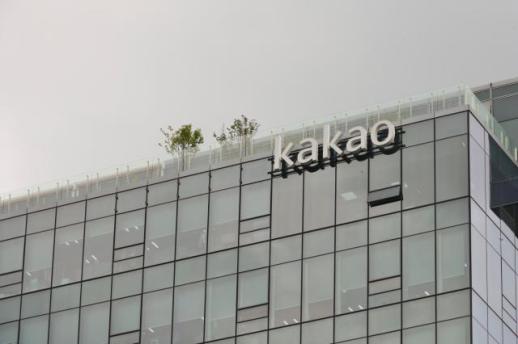 Kakao restructuring delays Kakao Mobility's US listing SEOUL, September 02 (AJP) - South Korea's Kakao has set in motion a sweeping corporate overhaul that is likely to push back Kakao Mobility's planned US share listing, leaving private equity backer TPG waiting longer to cash out of an investment it made nearly a decade ago. According to industry reports on Wednesday, Kakao Mobility's American depositary receipt (ADR) offering counts as a duplicate listing, which requires shareholder-protection procedures by parent Kakao and cannot be finalized until the corporate split settles the ownership structure. TPG recently met with officials at the Financial Services Commission and the Financial Supervisory Service to walk them through the state of the ADR plan. The firm told regulators it needs cooperation from Kakao, the majority owner with a 57.18 percent stake, but that talks have stalled, making the listing hard to advance. TPG's consortium first put about 500 billion won ($364 million) into Kakao Mobility in 2017 and added 130.7 billion won in 2021, yet has been unable to recoup either sum more than nine years on. Under a duplicate-listing guideline introduced in July, Kakao must assess how a Kakao Mobility offering would affect existing shareholders and draw up safeguards before the deal can proceed. Kakao must also top off an F-1 filing with the U.S. Securities and Exchange Commission and a separate securities filing at home. The company plans to divide into Kakao AI and Kakao X on Jan. 1 after an extraordinary shareholder meeting on Dec. 17, with the two entities relisting on Jan. 27, a sequence that all but rules out an ADR debut this year. The two sides broadly agree TPG should be able to exit, but they remain at odds over timing and shareholder terms. Ryu Geung-seon, Kakao Mobility's chief executive, has resisted pinning down a listing schedule even after backing the SEC registration itself, and the industry expects the tug-of-war to run on. AJP Takeaways • Kakao split into Kakao AI and Kakao X, to complete on Jan. 1, 2027, is expected to delay Kakao Mobility's planned US ADR listing, frustrating private equity backer TPG. • Kakao holds a 57.18 percent stake in Kakao Mobility, and a July 2026 duplicate-listing guideline requires the parent to complete shareholder-protection procedures before any overseas offering can proceed. • TPG invested about 500 billion won in Kakao Mobility in 2017 and a further 130.7 billion won in 2021 but has yet to recoup either after more than nine years, deepening its pressure to exit. 2026-09-02 12:34:50
 -
Government to Support Small Business Environmental Liability Insurance Premiums by Up to 50% The government and private sector will support small businesses' environmental liability insurance premiums by up to 50%. This initiative aims to temporarily alleviate the insurance cost burden this year, with plans to expand support next year through risk assessments and facility inspections and improvements.On September 3, the Ministry of Climate Energy and Environment will sign a memorandum of understanding at the Small Business Association in Yeongdeungpo, Seoul, with the Small Business Association and DB Insurance for the "Environmental Liability Insurance Premium Support Program for Small Businesses," the ministry announced on September 2.Environmental liability insurance is mandatory for businesses operating certain facilities to ensure that victims can receive prompt compensation in the event of environmental pollution incidents. Through this agreement, the government aims to reduce the insurance payment burden on small businesses and enhance their ability to respond to environmental accidents.Under the agreement, DB Insurance, the representative insurer for environmental liability insurance, will contribute 500 million won. The Small Business Association will recruit and select beneficiaries, focusing on small businesses.Selected small businesses will receive support for up to 50% of their environmental liability insurance premiums. This measure is intended to reduce the economic burden on small businesses that are required to purchase mandatory insurance.The Ministry of Climate Energy and Environment and the Small Business Association plan to continue collaborating with the representative insurer to improve the environmental and safety standards of small businesses.The premium support will be provided temporarily this year. Starting next year, the support system will shift to enhancing the capacity for preventing environmental accidents at business sites. This will involve assessing site risks and inspecting facilities to identify areas needing improvement."This agreement represents a collaboration between the government and the private sector to prepare small businesses for environmental accidents," said Jo Hyun-soo, Director of the Environmental Health Bureau at the Ministry of Climate Energy and Environment. "Starting next year, we plan to establish a more sustainable support system through risk assessments and facility inspections and improvements."* This article has been translated by AI. 2026-09-02 12:04:20
-
Mandatory Proof Required for AI and New Technology Advertisements Businesses advertising that they have enhanced product performance or safety using artificial intelligence (AI) or other new technologies must secure objective evidence to support their claims in advance. If they fail to submit the required documentation upon request from regulatory authorities, their advertisements may be suspended.The Fair Trade Commission announced on September 2 that a new operational guideline regarding the proof of advertising content will take effect on September 3.The proof system for advertising requires businesses to have reasonable grounds for the claims they make in their advertisements. The commission can demand relevant documentation from businesses if there are suspicions of misleading advertising.The revised guideline clarifies that advertisements claiming to utilize new technologies, such as AI, must also undergo prior proof. For instance, claims like 'safer products through AI technology' must be backed by test results or other supporting evidence.Expressions identified in previous rulings as needing proof have also been added to the list of major claims requiring verification. These include phrases like 'improves concentration and memory' and 'harmless ingredients.' Advertisements emphasizing rankings or exclusive advantages, such as 'number one in satisfaction' or 'number one in performance improvement,' are also included in the proof requirements.The procedure for submitting proof has been strengthened. Businesses requested to provide documentation by the commission must do so within 15 days. Acceptable reasons for extending this deadline include natural disasters, mergers or acquisitions, ongoing bankruptcy proceedings, seizure or retention of documents by authorized agencies, or significant business disruptions due to fires or disasters.The extension period has been reduced from '30 days from the date the reason for extension ceases' to 'within 15 days.' If businesses continue advertising without submitting proof by the extended deadline, the commission can order a suspension of the advertisement until the documentation is provided. Failing to submit proof or comply with an advertisement suspension order may result in fines of up to 100 million won.A checklist has also been established for businesses to verify their proof obligations before and after advertising. They must ensure they have objective materials such as test results, survey findings, expert opinions, and academic literature, and that these materials are directly related to the actual content of the advertisement.Regulations on advertisements claiming AI performance are also tightening internationally. The U.S. Federal Trade Commission (FTC) penalized a company last year for advertising that its AI content detection accuracy was 98%, while independent tests showed it was only 53%. This underscores the need for verifiable evidence when advertising specific figures related to accuracy and efficacy, not just the use of AI.A Fair Trade Commission official stated, 'We will encourage businesses to secure objective and reasonable materials corresponding to their advertising content in advance and swiftly suspend unproven advertisements to prevent consumer harm.'* This article has been translated by AI. 2026-09-02 12:04:10
-
Overseas Asset Declarations Reach 111 Trillion Won, Record 61.3 Trillion in Stocks Approximately 111 trillion won in overseas assets have been reported by residents and domestic corporations to the National Tax Service. The amount of overseas stocks reported surged to a record 61.3 trillion won, driven by the listing of overseas subsidiaries and rising stock valuations. On September 2, the National Tax Service announced the results of overseas financial account and trust declarations submitted in June of this year. The reported amount for overseas financial accounts was 107.1 trillion won, while the newly reported overseas trusts totaled 3.7671 trillion won. The reported amount for overseas financial accounts increased by 12.6 trillion won (13.3%) from last year's 94.5 trillion won. Following a 45.6% increase from 64.9 trillion won in 2024, this marks the second consecutive year of double-digit growth. The number of reporters, including individuals and corporations, rose by 9.1% to 7,484. This overseas financial account reporting targeted residents and domestic corporations whose total account balances exceeded 500 million won on any day at the end of the month last year. Stocks were the primary driver of the overall increase in reported amounts. The reported amount for overseas stocks reached 61.3 trillion won, up 13.2 trillion won (27.4%) from last year's 48.1 trillion won. This accounted for 57.2% of the total overseas financial account reporting. The reported amount for corporate overseas stocks increased from 41.3 trillion won last year to 53.1 trillion won this year. The National Tax Service attributed this growth to the listings and rising stock valuations of overseas subsidiaries in countries such as India, the United States, and Taiwan. A total of 2,356 individuals reported overseas stocks worth 8.2 trillion won, an increase in both the number of reporters and the reported amount compared to last year's 1,896 individuals and 6.9 trillion won. Notably, 7 trillion won, or 85.3% of the individual overseas stock reporting, was held in U.S. accounts. Excluding virtual asset accounts, the reported amount for overseas financial accounts by country showed the United States leading with 29.7 trillion won. India followed with a reported amount of 28.9 trillion won, an increase of 7.2 trillion won from the previous year. Although only 113 individuals held Indian accounts, they accounted for 27% of the total reported amount. The reported amount for virtual assets decreased. The number of reporters rose by 1.8% to 2,362, but the reported amount fell from 11.1 trillion won to 10.5 trillion won, a decline of 5.4%. The National Tax Service analyzed that the overall drop in virtual asset prices contributed to this decrease. Among the new reporters who had no previous reporting history, 2,380 individuals accounted for 31.8% of the total. They reported overseas financial accounts totaling 6.4 trillion won, with stocks amounting to 2.8 trillion won and the United States being the leading country with 2.3 trillion won. In the newly implemented overseas trust reporting, 1,255 individuals and 31 corporations submitted a total of 1,591 cases, amounting to 3.7671 trillion won. While individuals made up 97.6% of the reporters, corporations held 81% of the reported amount, totaling 3.0497 trillion won. This was influenced by asset management firms and shipping companies managing large funds in trust forms, including bonds and funds. The reported amount for individuals' overseas trusts was 717.4 billion won, with stocks being the largest asset at 194.6 billion won, followed by real estate at 191.6 billion won and cash at 107.9 billion won. Hong Kong had the highest number of reported cases at 758, while the United States accounted for about 3 trillion won, or 80% of the total amount. The National Tax Service plans to verify any omissions in overseas asset reporting using international information exchange data and foreign exchange transaction data. It intends to respond strictly to any unreported or underreported cases by imposing relevant taxes and penalties. Starting next year, automatic exchange of virtual asset transaction information between countries will be implemented to utilize the information received from treaty countries for verification. The tax law amendment for this year includes a proposal to raise the penalty limit for unreported overseas trusts from 100 million won to 1 billion won and to establish a reporting reward system.* This article has been translated by AI. 2026-09-02 12:04:10
-
Q2 Domestic Card Spending Abroad Drops 4.2%, Foreigners Spend Record Amounts in Korea Recent increases in overseas direct purchases through online shopping have not offset a decline in overseas travel demand, leading to a decrease in domestic residents' card spending abroad in the second quarter.According to the Bank of Korea's report on 'Q2 Overseas Card Spending by Residents,' the amount spent by domestic residents using cards (credit and debit) abroad was $5.85 billion, a 4.2% decrease from the previous quarter's $6.1 billion.A Bank of Korea official explained, "Despite the increase in online shopping for overseas direct purchases, the decline in the number of domestic travelers has led to reduced travel-related expenditures."In the second quarter, the amount spent on overseas direct purchases through online shopping reached $1.41 billion, a 4.3% increase from the first quarter's $1.35 billion. However, the number of domestic travelers decreased to 6.63 million, down 20.4% from the previous quarter's 8.33 million.By card type, credit card spending was $4.075 billion, a 0.6% decrease, while debit card spending was $1.773 billion, an 11.5% decline.In contrast, non-residents' card spending in Korea reached a record $4.86 billion in the second quarter, marking a 36.1% increase from the previous quarter's $3.573 billion. The previous record was set in the second quarter of last year at $3.79 billion.The number of inbound tourists in the second quarter of this year was 5,966,797, a 20.4% increase compared to the same period last year.* This article has been translated by AI. 2026-09-02 12:04:10
-
Korean Full-Stack AI Consortium Completes PoC with Aramco Digital The Korean Artificial Intelligence Industry Association (KOSA) announced that the 'Korean Full-Stack AI Consortium' has completed a proof of concept (PoC) applying domestic AI technology at Aramco Digital's industrial site in Saudi Arabia.KOSA stated on September 2 that the consortium has finalized the technology validation based on use cases for industrial AI developed in collaboration with Aramco Digital.This validation was initiated following a memorandum of understanding (MOU) signed in February between KOSA and the Korean Full-Stack AI Consortium, which aimed to establish a Korean model for full-stack AI capable of processing complex industrial engineering data.The Korean Full-Stack AI Consortium includes domestic companies across the AI ecosystem, focusing on AI semiconductors, cloud infrastructure, large language models (LLMs), AI application services, and integrated operations management.A total of seven companies participated in this validation. Megazone Cloud handled the construction and operation of AI and multi-cloud infrastructure, while FuriosaAI and Rebellion focused on AI semiconductors. Upstage and LG AI Research worked on industry-specific LLMs, NC AI managed 3D modeling, and Euracle oversaw LLM, NPU operations, and AI resource management technologies.The PoC was conducted to verify the applicability of Korean full-stack AI technology in industrial settings by linking the hardware, AI models, services, and operational management capabilities of domestic companies based on the industrial use cases developed with Aramco Digital. The validation was carried out in two phases.In the first phase of the PoC, the team examined whether AI could interpret 2D engineering drawings and documents and convert them into 3D models, along with reviewing the integrated management capabilities of related technologies.The second phase expanded the scope to include engineering data-based use cases that could be validated in a short period, building on the results from the first phase. This involved AI interpreting and structuring unstructured drawings and documents, generating 3D models, and validating the entire process from inference based on domestic AI semiconductors to multi-cloud environment configuration and security responses, as well as the integrated operation of AI services and infrastructure.Joo Jun-hee, chairman of KOSA, remarked, “This validation is significant as it demonstrates that domestic AI companies have collaboratively examined the actual demands of overseas industrial sites by combining their specialized technologies. It is crucial to secure our own AI infrastructure, models, and operational management capabilities from a sovereign AI perspective, as excessive reliance on specific external services can lead to operational risks due to policy changes, sanctions, or service restrictions.”* This article has been translated by AI. 2026-09-02 12:04:00
-
Government Accelerates Support for EU Carbon Border Adjustment Mechanism Compliance The European Union's Carbon Border Adjustment Mechanism (CBAM) officially took effect this year, prompting the South Korean government to enhance support for domestic exporters. Various government agencies will provide guidance on carbon emissions calculation and verification methods, while also assisting small and medium-sized enterprises (SMEs) with the costs of related measurement equipment and verification.On September 2, the government announced that it will hold the '2026 13th Joint Government Briefing on EU CBAM Response' at the Cheonma Art Center of Yeungnam University in Gyeongsan, in collaboration with the Ministry of SMEs and Startups, the Ministry of Trade, Industry and Energy, the Ministry of Climate, Energy and Environment, and the Korea Customs Service.The CBAM, which began implementation this year, was introduced by the EU to prevent carbon leakage in its domestic industries. It requires the calculation and reporting of carbon emissions generated during the production of certain imported goods, along with the payment of carbon costs. Currently, it applies to six products: steel, aluminum, cement, fertilizers, electricity, and hydrogen.The transition period, which started in October 2023, ended last year, marking the beginning of the definitive period in January. As a result, domestic exporters must now understand and apply the relevant regulations regarding carbon emissions calculation and verification.The briefing will consist of two sessions: 'Understanding the CBAM System' and 'Sharing Practical Cases.' The first session will cover key aspects of the definitive period, response strategies, methods for calculating carbon emissions, and verification responses. The second session will share examples of how SMEs exporting to the EU have established their CBAM response systems and improved their export performance.In addition to the briefing, the government is actively supporting companies in their CBAM compliance efforts. Last month, it conducted five sessions of theoretical training, allowing SME employees to practice calculating carbon emissions directly.Support is also available for SMEs exporting CBAM-targeted products to establish carbon emissions measurement equipment and cover verification costs. Companies interested in participating in the 'SME CBAM Response Infrastructure Development Project' can apply until the 15th.Furthermore, the government is providing consulting services by visiting production sites to assess emissions from CBAM-targeted products and has established dedicated consultation channels for businesses.The government plans to monitor developments in the EU's regulatory framework, including potential expansions of the CBAM's scope, and will continue discussions with EU officials to alleviate the burden on domestic companies.* This article has been translated by AI. 2026-09-02 12:04:00
-
Korean Business Group Calls for Major Revisions to National Pension System To enhance the acceptance of the National Pension System among contributors, there is a call to strengthen the equity between lifetime contributions and benefits. Critics argue that the current benefit structure, which does not consider the fairness of premium payments and is overly focused on income redistribution, undermines the trust in the National Pension System, necessitating innovative improvements.On September 2, the Korea Employers Federation (KEF) released a report titled 'Innovative Measures for Enhancing Public Trust in the National Pension System,' outlining structural improvement tasks across the system, including finance, contribution systems, benefits, and fund management.With the revised National Pension Act, which includes a gradual increase in premium rates and a higher income replacement rate, now in effect, the business community argues that to increase contributors' acceptance of the system, it is essential to secure financial stability while enhancing the equity between lifetime contributions and actual benefits.A KEF official pointed out, "Although the National Pension Act was amended last April to clarify the government's payment guarantees, a public perception survey conducted in November of the same year revealed that 55.7% of respondents did not trust the National Pension System."The KEF identified several key reasons for the lack of public trust in the National Pension, including: a financial foundation that does not reflect demographic changes, a dual premium assessment and collection system based on membership type, a pension reduction system that does not align with social and economic changes, a benefit structure overly focused on income redistribution, and a lack of expertise and independence in fund management governance.To address these issues, the KEF suggests implementing automatic adjustment mechanisms to enhance financial stability and intergenerational equity alongside the reform of parameters. When determining annual pension benefit increases, it is necessary to consider demographic and economic variables such as inflation, increased life expectancy, and a decrease in contributors.Improvements are also needed in the premium assessment and collection system for local contributors. Unlike workplace contributors, local contributors may underreport income or fail to pay premiums consistently. While maintaining the current principle of reported income, it is necessary to strengthen the linkage and verification with tax data from the National Tax Service and to adjust the standard monthly income promptly when there is a significant discrepancy between reported and verified income, suggesting a 'hybrid assessment system.'The pension reduction system should also be improved to reflect social and economic changes. The reduction system for old-age pensions for current employees and the reduction of overlapping benefits between old-age and survivor pensions do not adequately reflect the changed social and economic conditions or the lifetime contributions of members. Therefore, it is necessary to abolish or significantly relax related reduction systems to enhance equity between contributions and benefits.Furthermore, the benefit structure should be redesigned to ensure that those who contribute more receive more. The current National Pension System reflects equal benefits (A value) and proportional benefits (B value) at the same ratio (50:50), leading to significant disparities in income replacement rates based on income levels. The KEF recommends reducing the proportion of equal benefits (A value) and increasing the proportion of proportional benefits (B value) to strengthen the link between contributions and benefits, thereby encouraging diligent premium payments and long-term participation.Additionally, an independent fund management governance centered on investment experts should be established. The Fund Management Committee, the highest decision-making body of the National Pension Fund, is currently composed of stakeholders, including government and contributor representatives, which exposes it to potential external decision-making interference. There are calls to restructure the committee into a permanent body focused on investment and financial experts and to establish a system capable of managing the fund professionally and responsibly.Lee Sang-cheol, head of the KEF's Employment and Social Policy Division, stated, "The low trust in the National Pension, despite the parameter reforms, indicates the need to reassess the fundamental principles and overall operational system of the program. We must improve the system to ensure equitable burdens between generations and that contributors' efforts are fairly reflected in benefits, while also enhancing the professionalism and independence of fund management to transform the National Pension into a system that all generations can trust and rely on."* This article has been translated by AI. 2026-09-02 12:04:00