
Journalist

Han Jun-gu
jungu141298@ajupress.com
-
 Stars of 'The Devil Wears Prada' arrive in Seoul to promote sequel SEOUL, April 8 (AJP) - Hollywood stars Meryl Streep and Anne Hathaway attended a red carpet event to meet South Korean fans in central Seoul on Wednesday, just weeks ahead of the release of their upcoming film. Their visit to Seoul comes as the sequel to their 2006 hit "The Devil Wears Prada" is scheduled for release on April 29. The sequel reunites the original cast in new roles, as they face new challenges and evolving careers in the fashion industry. It remains to be seen whether the much-anticipated global hit, arriving nearly two decades later, will captivate South Korean moviegoers. 2026-04-08 17:52:12
 -
 Motorists required to leave their cars once a week as part of energy-saving efforts SEOUL, April 8 (AJP) - Starting from Wednesday, motorists are required to leave their cars at home once a week, depending on the last digit of their license plates, as they are unable to use public parking on certain days. The measure is part of energy-saving efforts amid the prolonged conflict in the Middle East, which has caused global energy supply disruptions as well as soaring fuel prices. Civil servants and staff at public institutions, who have been subject to a similar measure since March 25, are now required to commute by public transportation every other day. But to minimize disruption to daily life, exemptions will be granted in about 30 areas near open-air farmers' markets, major commercial districts, and residential zones. 2026-04-08 17:28:47
 -
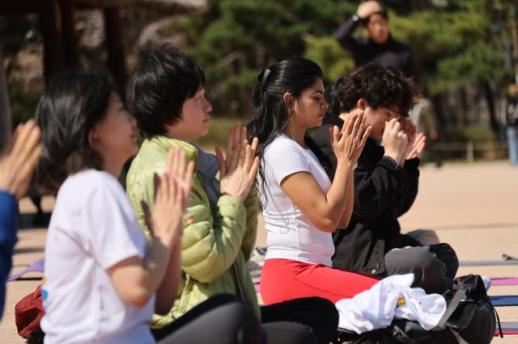 I tried outdoor yoga — it was freezing, but strangely refreshing SEOUL, April 07 (AJP) - The latest global trend to land in a traditional Korean setting — after BTS turned Gwanghwamun into a stage — is yoga. I had imagined something serene: quiet breathing, sun-drenched calm, flowers in bloom, and that cinematic kind of spring healing. So I signed up for an outdoor yoga session at Namsangol Hanok Village in downtown Seoul on Tuesday morning. Instead, I got windburn. A stubborn cold snap had dragged temperatures close to freezing, and a sharp gust cut through the courtyard, slapping faces and seeping straight through the mat. Within minutes, my fingers were stiff, my shoulders tense, and my optimism fading. Turnout reflected the weather. Only about 30 people showed up for “Seoul Yoga Connect 2026,” an annual event hosted by the Indian Embassy’s Swami Vivekananda Cultural Centre (SVCC) ahead of the International Day of Yoga on June 21. Still, we began. I wobbled into a cross-legged pose, palms facing upward on my knees, softly chanting “ah” to mark the start. The idea was calm. The reality was trying not to shiver. We leaned forward to stretch our backs and hamstrings, then stood to sway side to side, loosening stiff bodies under the pale morning sun. Lying flat on my back was the real test — the cold from the ground hit instantly. We moved through poses: bending legs, lifting hips toward the sky, then curling up to hold both legs while raising the chest. The instructor’s voice stayed calm and measured. My internal dialogue did not. The session, which began at 10:30 a.m., followed brief opening remarks and rolled into three consecutive classes led by instructors from SVCC, Viveka Yoga and the Korea Yoga Association. Gradually, something shifted. Breathing steadied. The wind, while still biting, felt less intrusive. Some participants closed their eyes as sunlight filled the courtyard, settling into a rhythm that seemed to ignore the temperature altogether. “Yoga is beneficial not only physically, but also mentally, spiritually and emotionally,” said Ashish Singh, an SVCC instructor. “It is not limited to posture or physical exercise. Yoga is a journey toward self-realization.” He explained that the focus on breathing helps guide participants toward a meditative state — the ultimate goal. For some, that journey has been long underway. “It has been almost 20 years since I started yoga,” said Moon Yeon-kyung, 62, who attends classes at the Indian Cultural Centre. “It is not just exercise. Yoga is special because it trains both the body and the mind.” “It has helped loosen tight muscles and clear my mind,” she added. By the end, I was still cold — but oddly refreshed. The United Nations adopted the International Day of Yoga in 2015 to recognize its benefits for physical and mental well-being. Since then, it has been marked worldwide with mass sessions and cultural programs. In South Korea, this year’s celebrations will begin on Jeju Island on June 7, followed by Busan on June 13 and Chuncheon on June 27. 2026-04-07 17:02:58
 -
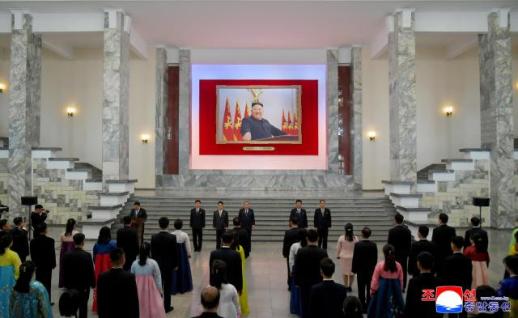 NK holds photo exhibition to mark 114th Anniversary of Kim Il-sung's birth PYONGYANG, April 07 (AJP) - A central photo exhibition commemorating the 114th anniversary of North Korean founder Kim Il-sung's birth (April 15) opened up to the public at the People's Palace of Culture in Pyongyang on April 6, the North's Korean Central News Agency (KCNA) reported on Monday. 2026-04-07 16:27:26
 -
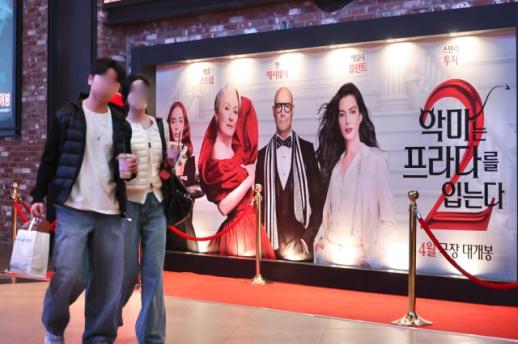 Main cast of 'The Devil Wears Prada' sequel to visit Seoul ahead of release SEOUL, April 6 (AJP) - Hollywood stars Meryl Streep and Anne Hathaway are set to visit Seoul this week, just weeks ahead of the release of a sequel to their 2006 hit "The Devil Wears Prada." According to the film's distributor, the two stars are scheduled to meet fans here at a red carpet event in Yeongdeungpo on Wednesday and also take part in other promotional activities. They are also set to appear on cable channel tvN's show "You Quiz on the Block." The long-awaited sequel, slated for release here on April 29, reunites the original cast in new roles, as they face new challenges and evolving careers in the fashion industry. 2026-04-06 17:52:24
 -
 Girls' Generation members shine in all-white suits SEOUL, April 6 (AJP) - Yoon-a and Hyo-yeon, members of K-pop girl group Girls' Generation, showed off their glamorous looks at a promotional event for a cosmetics brand in central Seoul on Monday. The two girls flaunted their stunning beauty in all-white suits while promoting Sulwhasoo's premium skincare products, which combine traditional herbal ingredients. In particular, Yoon-a, who has branched out into acting with appearances in various films and dramas, also released her single in December last year, demonstrating her versatile talents. 2026-04-06 17:22:53
 -
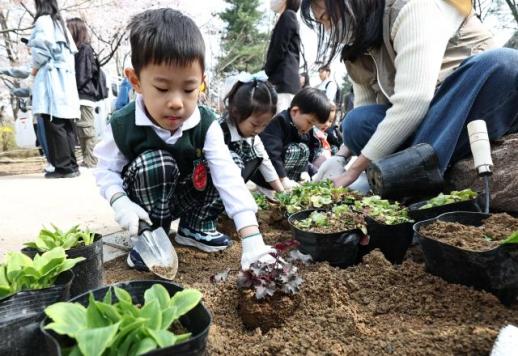 Learning to plant green on Arbor Day SEOUL, April 03 (AJP) -Arbor Day may have faded from public attention, but in pockets of Seoul it still lives on — especially for children discovering the simple joy of planting a tree. In Gangnam, that spirit took root along Yangjaecheon on Friday. To mark the 81st Arbor Day on April 5, Gangnam-gu hosted the “Our Neighborhood Green Donation Challenge – Garden Forest of Participation” at Gaepo-dong Neighborhood Park, drawing some 500 participants — from local residents and donors to children, Saemaul members and volunteer gardeners. Together, they transformed a stretch of parkland into a shared green space. Participants planted 94 trees, including kousa dogwoods and maples, alongside some 1,000 shrubs such as azaleas and euonymus. Flower beds were laid out and benches installed, turning the site into a community-built garden. More than a one-day event, the initiative reflects a shift toward participatory urban greening — where residents do not just use public spaces, but help create and care for them. For many of the children, it was also a rare, hands-on reminder of a holiday that once held a firm place in the national calendar — now quietly kept alive, one sapling at a time. 2026-04-03 17:11:13
 -
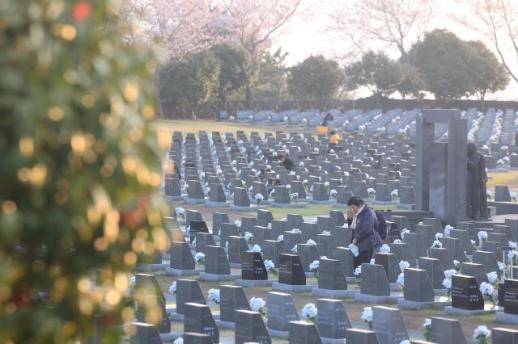 Remembering Jeju April 3 for the 78th time SEOUL, April 03 (AJP) -The Jeju April 3 Incident refers to a period of armed uprising and state suppression on Jeju Island between 1948 and 1954, during which tens of thousands of civilians were killed. The violence began with an uprising on April 3, 1948, rooted in unrest that had been building since March 1, 1947, and continued for years amid a broader ideological conflict in the early Cold War period. Voices of remembrance echoed across the nation on Thursday as South Korea marked the 78th anniversary of the tragedy, paying tribute to victims and renewing calls to uncover the full truth behind one of the country’s darkest chapters. Participants honored the victims through flower offerings, moments of silence and grave cleanings, expressing their condolences with quiet solemnity. 2026-04-03 16:07:44
 -
 IVE's Jang Won-young turns heads in spring outing SEOUL, April 1 (AJP) - Jang Won-young, a member of K-pop sextet IVE, attended a promotional event for fashion brand ROLAROLA in central Seoul on Wednesday. In keeping with the French-inspired casual brand's appeal to young customers, Jang wore a white T-shirt with red embroidery, a cherry-blossom-colored cardigan tied around her waist, and a frilled lace skirt, completing her stylish look with heart-patterned fishnet stockings that awed visitors and other attendees. 2026-04-01 17:19:20
 -
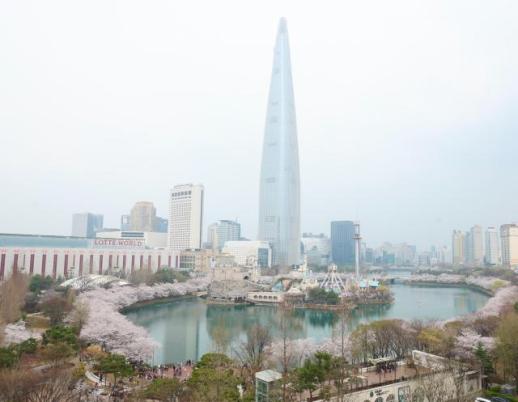 Seoul turns pink earlier than usual SEOUL, April 01 (AJP) -Full bloom suddenly arrived after heavy rain earlier this week. Cherry blossoms burst into full bloom around Seokchon Lake, soaking the lakeside in soft waves of pink and marking an early arrival of spring in the city. Petals clung to rain-darkened paths and shimmered on the lake’s surface, while the skyline — anchored by Lotte World Tower — stood framed by a fleeting canopy of blossoms. The city will formally welcome the season with the 2026 Lake Cherry Blossom Festival, set to run for nine days from April 3 through April 11. The '2026 Lake Cherry Blossom Festival' will be held around Seokchon Lake for nine days from April 3 through April 11. The festival has been extended by five days compared to last year. Landscape lighting has been installed along the entire 2.5km lakeside promenade, allowing visitors to enjoy the cherry blossom tunnel even at night. During the festival period, various exhibitions including installation art and media art will be presented. Programs for families, including Fashion Week, bubble shows, circus performances, and magic shows, will also take place. 2026-04-01 16:04:16