

Journalist

Kim Hee-su
khs@ajuapress.com
-
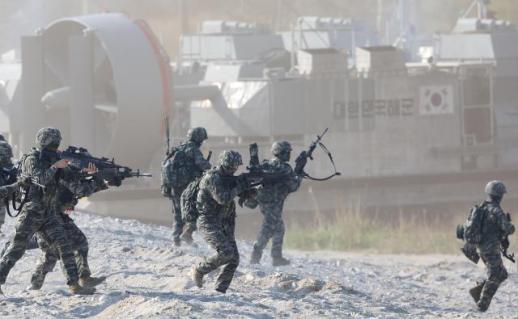 Seoul, Tokyo echo self-defense amid U.S. distraction in Gulf SEOUL, April 29 (AJP) - Self-sufficiency has shifted from a strategic choice to an absolute necessity for U.S. allies in East Asia. As American military resources become increasingly overextended in the Middle East, leaders in South Korea and Japan have begun harmonizing their rhetoric, placing a renewed emphasis on independent self-defense capabilities. During a cabinet meeting on Tuesday, President Lee Jae Myung delivered a lecture on the imperative of national self-reliance. "A nation must be able to defend itself. Why should we rely on others?" Lee bolstered his reasoning by citing South Korea’s current military standing: the world’s fifth-largest defense capability (independent of U.S. assets) and its position as the fourth-largest global arms exporter. The entrenched U.S. engagement in the Middle East after attacks on February 28, 2026 has precipitated this urgency. The financial burden on Washington is mounting; as of early April, the U.S. is estimated to have spent $35 billion on the conflict. Analysts project that total costs could exceed $1 trillion if the war continues to drag on. Amid this distraction, North Korea has ramped up its military provocations. In April alone, Pyongyang conducted four ballistic missile launches from Wonsan on April 8 and from the Sinpo area on April 19, raising the possibility of submarine-launched ballistic missile (SLBM) testing. The North also claimed to have tested short-range ballistic missiles equipped with cluster munitions between April 6 and 8. On paper, South Korea maintains a significant conventional advantage; its annual defense budget exceeds North Korea’s entire GDP. However, as the contemporary wars in Ukraine and Iran have demonstrated, firepower alone does not guarantee victory. Professor Kim Houng-yu of the Korea Defense Industry Association notes that "no country conducts war operations in isolation in modern conflict." He argues that military rankings are often deceptive, pointing to the Russia-Ukraine war as proof that even major powers face grueling uncertainty on the battlefield. "Alliances and coalition operations remain essential for national security," Kim concluded. Despite the rhetoric of self-reliance, several "anchors" keep the U.S.-ROK alliance in place. Under the U.S. National Defense Authorization Act, the number of U.S. troops stationed in South Korea is capped at 28,500, making any abrupt reduction difficult without congressional approval. Some analysts also note that the U.S. 2026 National Defense Strategy calls for maintaining “primary responsibility” for deterring North Korean conventional threats while continuing close coordination with the United States. Strain in traditional trilateral ties Recent months have seen visible friction in bilateral coordination. In January, Seoul requested a reschedule of trilateral air drills with the U.S. and Japan, citing the Lunar New Year and Japan's provocative "Takeshima Day." The U.S. ultimately proceeded with the drills alongside Japan only. Further tension surfaced on February 18–19, when U.S. Forces Korea conducted independent operations over the Yellow Sea. This prompted a standoff with Chinese fighter jets and a subsequent protest from South Korean Defense Minister Ahn Gyu-back regarding a lack of prior consultation. General Xavier Brunson reportedly issued an apology, and the drills were truncated from four days to two. Japan’s recent policy shifts add a layer of complexity. With roughly 55,000 U.S. troops on its soil, Tokyo is revising export rules to allow for the transfer of lethal weapons. This signals a move toward active combat readiness. Professor Hosaka Yuji of Korea University suggests this is a calculated alignment with Washington. "The Takaichi administration is leaning into cooperation with the Trump administration," he noted, highlighting that Japan is seeking a partnership that covers not just Chinese containment, but also the securing of critical resources like rare earths. As the U.S.-Iran conflict shows no sign of abating, South Korea is caught in a delicate balancing act. The trajectory of the alliance will be defined by how well Seoul can reconcile its goal of a self-reliant defense with the harsh realities of geopolitical interdependence. 2026-04-29 18:03:24
 -
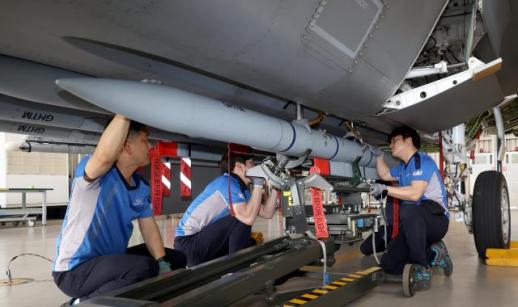 Hanwha Aerospace to develop homegrown meteor-class missile by 2033 SEOUL, April 29 (AJP) - Hanwha Aerospace has launched the development of a homegrown air-to-air missile comparable to the Meteor, as part of efforts to localize advanced aerial weapon systems. The company unveiled its localization roadmap at the “Hanwha Tech Academy 2026” event in central Seoul on Wednesday. The Meteor, developed by European defense firm MBDA, is known for its top speed of Mach 4 and an interception range exceeding 200 kilometers, making it one of the most advanced long-range air-to-air missiles currently in service. Hanwha Aerospace said it aims to complete development of the indigenous missile by 2033 in cooperation with the Agency for Defense Development (ADD), with mass production expected after 2036. The missile is intended for deployment on South Korea’s indigenous fighter jet, the KF-21 Boramae. A key focus of the project is the development of a "Ducted Ramjet Propulsion," a core technology that enables extended range and high maneuverability. The system generates propulsion by burning solid fuel using air intake during flight, significantly improving fuel efficiency. “The Ducted Ramjet Propulsion is what has made the Meteor missile recognized as one of the world’s most advanced long-range air-to-air missiles,” said Cho Bok-ki, a senior researcher at Hanwha Aerospace’s PGM Research Center. “Our goal is to apply this propulsion method while pursuing even greater performance.” The company said it plans to leverage more than two decades of experience in propulsion-related research, including work on propellants, gas generators and combustors under projects led by the ADD since 2005. Hanwha Aerospace also expressed expectations that integrating domestically developed air-launched weapons with Korean fighter jets such as the KF-21 and offering them as package deals could strengthen competitiveness in global markets. “We will continue working with the government and industry partners to localize advanced defense technologies, while boosting self-reliance and expanding defense exports,” a company official said. 2026-04-29 17:05:15
 -
 Hanwha's MASGA mission: one regulatory win but hurdles remain SEOUL, April 28 (AJP) - Hanwha Ocean, the South Korean caretaker of the “MASGA” (Make American Shipbuilding Great Again) initiative, is doubling down on its U.S. push after securing a key shipbuilding certification for its Philadelphia yard but faces a regulatory marathon in the United States. The company is accelerating efforts to develop the Philadelphia Shipyard — acquired at the end of 2024 — into a local production hub, positioning it as the centerpiece of its U.S. expansion strategy and a symbol of Korea–U.S. maritime cooperation. Last month, its U.S. units — Hanwha Philly Shipyard and Hanwha Defense USA — signed a partnership with VARD to collaborate on the conceptual design for the U.S. Navy’s Next-Generation Logistics Ship (NGLS). The NGLS program centers on support vessels designed to provide fuel, supplies and rearming capabilities at sea and ashore, and is widely seen as a potential entry point into the U.S. defense market. At the core of Hanwha’s expansion strategy is its push to obtain Facility Clearance (FCL), a mandatory U.S. security certification required to handle classified defense projects. The regulatory environment, however, remains tightly controlled. U.S. shipbuilding is protected by laws such as the Jones Act and the Byrnes-Tollefson Amendment, which effectively bar foreign shipyards from direct participation in commercial and naval vessel construction. Hanwha’s acquisition of a U.S.-based yard allows it to bypass geographic restrictions, but “Buy American” rules continue to limit participation in major combat programs such as destroyers and aircraft carriers. “Hanwha’s entry into the NGLS program was possible because auxiliary ships require relatively lower security clearance,” an industry official said. “The real challenge lies in combatant vessels.” The FCL system determines eligibility to access classified U.S. government information, with levels ranging from Confidential to Top Secret. Without certification, companies cannot review even basic bidding documents, effectively excluding them from construction, maintenance, repair and overhaul of U.S. Navy combat ships. No South Korean shipbuilder has secured FCL to date, industry sources said. Even if obtained, clearance would mark only the first step. Hanwha would still need to navigate strict export controls under the International Traffic in Arms Regulations and the Export Administration Regulations, which limit the transfer of sensitive defense technologies — even to foreign-owned firms operating in the U.S. That poses a challenge to Hanwha’s ambition to integrate advanced Korean naval design capabilities, including work from the KDDX destroyer project, into the Philadelphia yard. Such transfers would require Technical Assistance Agreements and case-by-case export licenses from the U.S. State Department. “The process is inherently complex, especially given foreign ownership,” said Jang Won-joon, a defense engineering professor at Jeonbuk National University. “It is expected to take time.” The FCL process typically takes between one and five years, depending on security reviews and ownership structure. Hanwha aims to scale the Philadelphia facility into a manufacturing hub capable of producing up to 20 vessels annually, though the timeline will depend on regulatory approvals and existing order backlogs. “Philly Shipyard already has a backlog of previously ordered vessels,” a Hanwha Ocean official said. “Our priority is to expedite deliveries and enhance productivity, while pursuing FCL in line with capacity expansion and future contract opportunities.” Financially, the company appears well-positioned to sustain the push. Hanwha reported 1.07 trillion won ($1.17 billion) in cash and cash equivalents at the end of March, alongside a 71 percent jump in first-quarter operating profit to 441.1 billion won. Still, industry observers caution that without overcoming technology transfer barriers, the shipyard’s expansion may fall short of the high-tech integration envisioned under the MASGA initiative. 2026-04-28 17:26:23
 -
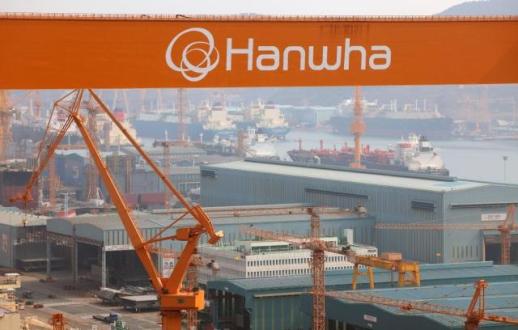 Hanwha Ocean posts 71% surge in Q1 operating profit on high-value ships, FX SEOUL, April 27 (AJP) - South Korean shipbuilder Hanwha Ocean reported better-than-expected earnings for the first quarter, driven by a higher share of high-value vessels and favorable exchange rates. The shipbuilder said in a regulatory filing on Monday that its consolidated operating profit rose 70.6 percent year-on-year to 441.1 billion won ($300 million) in the January–March period. The figure exceeded the market consensus of 375 billion won by 17.6 percent. Revenue came in at 3.21 trillion won, up 2.1 percent from a year earlier, but down 3.4 percent from the previous quarter due to fewer working days. Net profit surged 131.8 percent year-on-year to 500 billion won. As of the end of March, net borrowings stood at 5.07 trillion won, up 212.5 billion won from the end of last year. The strong performance was driven by a higher share of high-priced orders, along with cost cuts and improved productivity. The share of lower-priced LNG carriers ordered in 2022 declined, while more high-priced vessels ordered in 2024–2025 were delivered, helping boost margins. Improved productivity also allowed some vessels to be delivered earlier than planned, bringing forward profits. Since a large portion of payments is made upon delivery, this further supported earnings from high-value ships. Favorable foreign exchange rates also supported earnings. As most shipbuilding contracts are denominated in U.S. dollars, a weaker won increases revenue and profit when converted into local currency. The average exchange rate rose from around 1,330 won per dollar at the time of order to 1,464 won in the first quarter. Analysts estimated that FX effects alone added about 44 billion won in revenue and 15 billion won in operating profit. Hanwha Ocean expects earnings to continue improving as more high-value ship projects are delivered. Demand for LNG carriers and very large crude carriers (VLCCs) is also expected to remain strong. So far this year, the company has secured orders worth $2.45 billion, including four LNG carriers, seven VLCCs and one wind turbine installation vessel (WTIV). In the special ship segment, key projects include Canada’s submarine program (CPSP), a roughly $40 billion bid to replace its aging fleet, and South Korea’s next-generation destroyer project (KDDX), a project to build six advanced Aegis destroyers by 2036. “We aim to contribute to national security by leveraging our shipbuilding and engineering expertise,” the company said. “We will also keep seeking new orders in offshore and energy projects, including FPSOs and FLNGs.” Hanwha Ocean shares closed at 133,500 won on Monday, down 1.04 percent from a day earlier despite strong earnings, after trading between 131,700 won and 137,500 won. 2026-04-27 17:12:45
 -
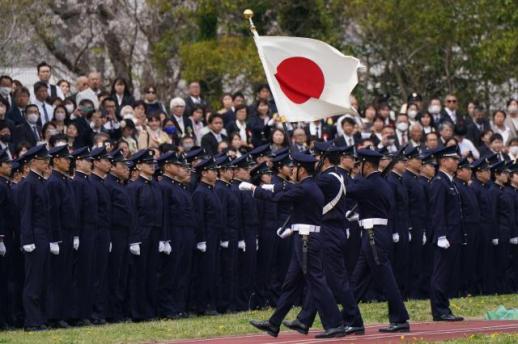 Korea-Japan rivalry may spill over to defense after Tokyo's lift of weapons ban SEOUL, April 27 (AJP) - The historic industrial rivalry between South Korea and Japan—once defined by a relentless "car war"—is migrating toward a high-stakes defense-industrial faceoff. As Tokyo pivots away from decades of postwar pacifist constraints to permit the export of lethal platforms, it enters a market where Seoul currently enjoys a global "golden age." While both nations operate as critical linchpins of the U.S. security architecture in Asia, their defense-industrial bases (DIBs) are products of fundamentally different strategic environments and threat perceptions. Despite hosting significant U.S. troop presences—roughly 28,500 in South Korea and 50,000 in Japan—the two nations have developed asymmetric military doctrines that have, in turn, shaped their industrial strengths. South Korea maintains a high-intensity, "total war" posture against North Korea, supporting a conscription-based force of 450,000 that prioritizes heavy armor and artillery. In contrast, Japan’s Self-Defense Forces operate as an all-volunteer force of 250,000 bound by Article 9 of its Constitution. Japan’s geography as an archipelago has necessitated a focus on "island defense" and "active deterrence," prioritizing maritime interdiction and aerospace superiority over ground-based power projection. This divergence has allowed South Korea to emerge as the world’s "arsenal for democracy" in land systems. Seoul’s competitive advantage lies in its integrated defense ecosystem, offering a "triple threat" of rapid delivery, cost-efficiency, and battlefield-proven reliability. Platforms like the K9 self-propelled howitzer and the K2 Black Panther tank are optimized for the European theater, where the threat of conventional land warfare has returned. Poland’s massive acquisition of K-defense systems underscores Seoul’s ability to scale production at a pace Western competitors often struggle to match. Furthermore, the Cheongung-II missile defense system’s reported 90 percent success rate against Iranian-origin threats in the Middle East has transitioned South Korea from a "budget alternative" to a premier Tier-1 provider of kinetic defense. Japan, meanwhile, is shedding its image as a "hidden supplier" of sub-components to become a visible lead integrator in the sea and air domains. The Soryu- and Taigei-class submarines, incorporating world-leading lithium-ion battery technology for extended undersea endurance, represent a quantum leap in conventional deterrence. Japan's recent breakthrough in the surface vessel market—specifically Canberra’s selection of a Mitsubishi Heavy Industries’ Mogami-class variant for the Royal Australian Navy—marks a watershed moment. This multi-billion-dollar deal signals Tokyo’s emergence as a major competitor in complex maritime procurement, moving beyond its previous role as a "reluctant exporter." South Korean shipbuilders, including HD Hyundai Heavy Industries and Hanwha Ocean, also participated in the 2024 tender but failed to make the final shortlist. Mitsubishi Heavy Industries ultimately secured the contract after competing against Germany’s ThyssenKrupp, highlighting strengths in stealth capabilities, reduced crew requirements and faster construction timelines. However, Japan’s resurgence introduces a new strategic vulnerability for the South Korean defense sector. Professor Kim Houng-yu, a member of the Korea Defense Industry Association, notes that Japanese companies hold world-class capabilities in missile sensors and optical systems, which he describes as “critical and strategic components” in modern weapons development. This technological leverage introduces a significant strategic risk for Seoul. Professor Kim warns that Japan’s growing influence in these niche areas could mirror the 2019 export restrictions on semiconductor materials. “If Japan designates these as strategic items and limits exports, Korean firms that rely on them could face serious challenges,” Kim said. He argues that to avoid a repeat of past industrial dependencies, South Korea must secure its own technological foundation. “To avoid this, South Korea must move toward full defense self-reliance and secure core technologies such as optics.” The emerging rivalry mirrors the 20th-century trajectory of the automotive and semiconductor sectors, where South Korea moved from assembling Japanese designs to dominating the global market. Yet, in the defense sector, the challenge is no longer just "catch-up" growth; it is technological sovereignty. For Seoul, the rise of a rearmed Japan serves as a catalyst for full-spectrum self-reliance. As the Indo-Pacific grows more volatile, the competition between the "K-Defense" mass-production model and Japan’s "High-Tech Shield" will not only determine market share but also the future of the region's security-industrial autonomy. 2026-04-27 16:26:12
 -
 Icebreakers emerge as Korea's answer to Gulf risks SEOUL, April 24 (AJP) - The opening of Arctic shipping routes could solve multiple problems for South Korea, a country entirely dependent on crude imports, by cutting voyage distances by up to 30 percent and bypassing volatile Gulf waters. The question is how. South Korean shipbuilders are moving closer to an answer as they double down on icebreakers — specialized vessels designed to crush sea ice and keep frozen shipping lanes open. HD Hyundai Heavy Industries recently signed a $348.9 million contract with the Swedish Maritime Administration to build a dedicated icebreaker. The deal marks the first time a Korean shipyard has secured an overseas order for a domestically built icebreaker, beating traditional Arctic shipbuilding powers such as Finland and Norway. The order could prove a turning point for Korean shipbuilders, analysts say, as the sector seeks to expand into polar-capable vessels while maintaining its focus on high-value orders. Icebreakers are not expected to replace mainstream profit drivers such as liquefied natural gas (LNG) carriers. Instead, they are emerging as a high-margin “blue ocean” niche that could broaden Korean yards’ premium vessel portfolios. Global interest in polar vessels is rising. The United States, Canada and Finland have launched the Icebreaker Collaboration Effort, or ICE Pact, to jointly build icebreakers, while Washington has passed legislation expanding icebreaker-related funding to around $9 billion over the next decade. The United States and its allies estimate combined demand for 70 to 90 icebreakers over the next 10 years as they race to secure polar access and capabilities. Arctic Ocean routes can cut shipping distances by up to about 30 percent on some Asia-Europe lanes compared with traditional passages through the Suez Canal. As climate change lengthens the summer ice-free season and improves navigability, long-term use of Arctic routes is expected to increase. The region is also emerging as a multi-layered market where logistics, energy development and military activity all drive demand for ice-capable vessels. That combination makes icebreakers a small but lucrative segment. High-end polar icebreakers can cost from several hundred million dollars to well over $1 billion per vessel, compared with roughly $30 million to $80 million for mid-sized bulk carriers and around $250 million for a standard LNG carrier. Technically, Korean shipbuilders face fewer entry barriers than in the past, industry experts say. Icebreakers require reinforced hulls, powerful propulsion systems and extreme low-temperature performance. Korean yards have already accumulated much of that know-how through LNG carriers and icebreaking LNG carriers for Arctic projects. Korean shipyards were the first in the world to build Arctic-class icebreaking LNG carriers, proving their ability to combine heavy icebreaking performance with the safe transport of LNG at around minus 160 degrees Celsius. Vessels built by Hanwha Ocean for Russia’s Yamal LNG project have broken through ice more than 2 meters thick while operating along the Northern Sea Route, generating valuable operational data and experience. The strategic value of icebreakers is also drawing attention in security circles. At the second Arctic Security Forum, held under the theme “Geopolitical Shifts in the Arctic: U.S. and Russian Strategies,” Bae Hack-young, a professor at Korea National Defense University, said Korea is effectively the only country capable of delivering multiple icebreakers on time, given its shipbuilding capacity. He suggested a division of roles in which “Korea provides submarine and icebreaker technology, while Canada offers Arctic access and energy resources” as a model for mutually beneficial cooperation. “Korean shipyards already have strong cost competitiveness and are reliable on delivery schedules, backed by extensive vessel development and testing experience,” said an official at the Korea Polar Research Institute. “Until recently, the industry standard for icebreaker design was largely set by Finland’s Aker Arctic, whose concepts were used almost by default,” he said. “But now, through projects like HD Hyundai Heavy’s new icebreaker and Hanwha Ocean’s icebreaking LNG carriers, Korean yards are gradually building a track record and closing the gap in icebreaker design and performance.” Market research firms expect steady, if not explosive, growth. Coherent Market Insights forecasts the global icebreaker market will expand from $1.54 billion in 2026 to $2.19 billion in 2033, implying a compound annual growth rate of about 5.1 percent. 2026-04-24 17:27:40
 -
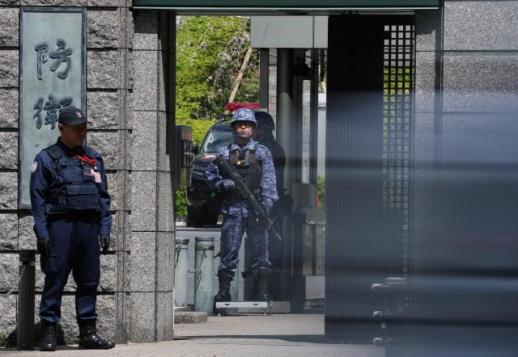 Japan's arms export shift tests Korea's security calculus amid regional buildup SEOUL, April 23 (AJP) - Japan’s decision to allow exports of lethal weapons for the first time since World War II marks a decisive step in Asia’s quiet arms buildup, raising both strategic opportunities and deep-seated concerns for South Korea as regional security dynamics shift. The government of Prime Minister Sanae Takaichi this week revised its “Three Principles on Transfer of Defense Equipment and Technology,” expanding exports beyond non-lethal categories to include fully developed weapons systems. The move builds on Tokyo’s accelerated military expansion, including bringing forward its target to raise defense spending to 2 percent of GDP to fiscal year 2025. Analysts say the policy signals a gradual but unmistakable shift toward a more conventional military posture. “This latest decision on lethal arms exports is a preparatory step toward revising Article 9 of the Constitution and turning the Self-Defense Forces into a de facto national army,” said Hosaka Yuji, a special professor at Korea University. While Japan’s Self-Defense Forces (SDF) have long operated as a functional military, the current debate centers on formalizing that reality — a move critics argue would mark a symbolic departure from postwar pacifism. Recent public opinion suggests growing acceptance. A joint poll by Sankei Shimbun and Fuji News Network found that 59.3 percent of respondents support explicitly recognizing the SDF in the Constitution. From a strategic standpoint, Japan’s expanded role could bolster deterrence across the Indo-Pacific. By supplying maritime patrol aircraft, missiles and naval assets to Southeast Asian and Pacific nations, Tokyo may help counter China’s growing naval presence and secure critical sea lanes. For South Korea, however, the implications are more complex. The country remains heavily dependent on Middle Eastern energy shipments that pass through chokepoints such as the Strait of Hormuz, the Malacca Strait, and the South China Sea — meaning any regional conflict would likely have immediate spillover effects on the Korean Peninsula. “If a war with China were to break out under such conditions, it would be extremely difficult for South Korea to accept being drawn into a conflict that could literally turn the Korean Peninsula into a sea of fire,” Hosaka said. This highlights a central paradox: while Japan’s growing military role may help stabilize sea lanes and strengthen deterrence, it could also shift the front line closer to Korea, increasing the risk of entanglement in a broader conflict. Historical memory adds another layer of sensitivity. For many South Koreans, Japan’s rearmament evokes the legacy of its 1910–45 colonial rule and wartime aggression, reinforcing persistent distrust of a “war-capable Japan.” Prime Minister Takaichi has sought to reassure neighbors, emphasizing that Japan will continue to uphold its identity as a peace-oriented nation even as it adapts to a harsher security environment. Experts note that Japan’s actual posture remains cautious, particularly regarding high-risk overseas deployments. “Japan intends to remain cautious. There are legal constraints, and as long as active combat continues, it is extremely difficult to imagine the SDF being deployed before hostilities have ended,” said Ryo Sahashi, a professor at the University of Tokyo. Domestic opinion in South Korea reflects similar ambivalence. While 56.4 percent of respondents expressed a favorable view of Japan in a late-2025 survey, perceptions diverge sharply in the security domain, with a significant share still viewing Japan as a potential threat. At the same time, the policy shift is reshaping trilateral cooperation among South Korea, the United States and Japan. Experts say deeper coordination in missile defense, anti-submarine warfare and advanced weapons production could enhance interoperability and strengthen deterrence against North Korea and China. Yet the strategic balance remains delicate. How far Japan moves toward becoming a “war-capable” nation — and how closely South Korea aligns with an expanded trilateral security framework — will determine whether this shift ultimately strengthens regional stability or adds a new layer of strategic risk for Seoul. 2026-04-23 17:10:10
 -
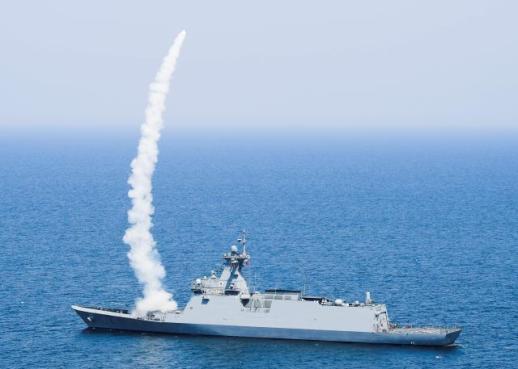 Korea's 'Haegung' naval missile secures first export deal with Malaysia SEOUL, April 23 (AJP) - South Korea’s domestically developed naval missile “Haegung” has been exported for the first time, with a supply contract signed with Malaysia worth about $94 million. LIG D&A said Wednesday it had signed the deal with Malaysia’s defense ministry on the sidelines of the DSA 2026 defense exhibition in Kuala Lumpur, as Malaysia’s navy moves forward with modernization efforts, opening new opportunities in the Southeast Asian market. Haegung is a ship-to-air guided missile designed to intercept incoming threats such as anti-ship missiles and aircraft. Development of the missile began in 2011 under the supervision of the Agency for Defense Development and was completed in 2018. Mass production began in 2019, with deployment on South Korean naval vessels starting in 2021. The export marks a significant milestone for South Korea’s defense industry, expanding its export footprint beyond land-based air defense systems such as the Cheongung-II, which has secured major deals in the Middle East, into the naval missile sector. Unlike Cheongung, which is designed to intercept high-altitude targets, Haegung is optimized to counter low-altitude threats approaching naval vessels. It is equipped with advanced technologies, including a radio frequency radar seeker capable of detecting distant targets and a dual-mode seeker that enables precise tracking by detecting heat signatures. Under the deal, the missiles will be installed on three offshore patrol vessels operated by the Malaysian navy. The vessels are being built by Turkish defense firm STM. Separately, LIG D&A is also seeking to expand into the U.S. market, showcasing its guided rocket system “Bigung” at a maritime defense exhibition in Maryland. The system drew attention from U.S. military officials after achieving a perfect hit rate in a live-fire test conducted near Hawaii in July 2024. A company official said, “We will continue to expand our exports, building on the success of Cheongung-II in the Middle East and the latest Haegung deal in Southeast Asia, while also pursuing opportunities in the U.S. market.” 2026-04-23 09:19:40
 -
 USFK commander warns against 'political expediency' in wartime opcon transfer SEOUL, April 22 (AJP) - Gen. Xavier Brunson, commander of United States Forces Korea (USFK), warned Tuesday that “political expediency should not outpace the conditions” in discussions over the transfer of wartime operational control (OPCON), as Seoul pushes to complete the transition within the current administration. Testifying before the U.S. Senate Armed Services Committee, Brunson stressed that the focus should remain on meeting the necessary requirements rather than adhering to a fixed timeline. His remarks come as the government of Lee Jae Myung pushes to complete the wartime OPCON transfer within its term, with the timeline to be determined based on agreed conditions under the allies’ framework. “We’ve got to stay focused on the conditions because the United States is safer that way and the Republic of Korea is safer that way,” Brunson said. Under this framework, the OPCON transition hinges on three key conditions: South Korea’s military capability to lead combined defense; the alliance’s comprehensive ability to respond to North Korea’s nuclear and missile threats; and a security environment on the Korean Peninsula and in the broader region conducive to a stable transfer. Seoul’s five-year state policy plan, unveiled in August, includes the goal of reclaiming OPCON, with speculation that a target year for the transition could be proposed at the annual Security Consultative Meeting (SCM) in Washington in October. The USFK commander also reaffirmed his position that the focus of U.S. forces in Korea is shifting from troop levels to capabilities. “The Korean Peninsula is key strategic terrain vital to defending the American homeland and advancing American interests in the region,” he said, noting that USFK is undergoing modernization to address rapidly evolving strategic challenges. “That’s why my focus remains strictly on capabilities over numbers,” Brunson added, emphasizing that while forward deployment remains a baseline, understanding the shift from force size to operational capability requires prioritizing the specific capabilities needed on the peninsula. His remarks come amid broader discussions under the administration of Donald Trump on adjusting the global posture of U.S. forces in line with a new National Security Strategy, fueling speculation that some USFK units could be redeployed or restructured as part of efforts to counter China. Brunson also pointed to USFK participation in Indo-Pacific Command exercises, saying it demonstrates the potential to project capabilities from Korea to support deterrence across the region. His comments are seen as signaling a possible expansion of USFK’s role beyond deterring North Korea to contributing to broader efforts to counter China in the Indo-Pacific. On reports that a Terminal High Altitude Area Defense (THAAD) system had been moved to the Middle East amid tensions involving Iran, Brunson denied any such transfer. “We’ve not moved any THAAD systems. So THAAD still remains on the peninsula currently,” he said, marking the first public confirmation by a senior U.S. official. He added that munitions are being sent “forward” and are “sitting right now waiting to move,” though it remains unclear whether he was referring to THAAD-related components or general ammunition. 2026-04-22 11:57:30
 -
 Korea-India summit pivots steel, shipbuilding toward new growth axis amid China pressure SEOUL, April 21 (AJP) - South Korea’s steel and shipbuilding industries, long squeezed by China’s dominance, are turning to India as a new anchor for growth, with Seoul and New Delhi moving to lock in deeper industrial cooperation at the highest level. During the first Korean presidential visit to India in nearly eight years, President Lee Jae Myung and Prime Minister Narendra Modi agreed to elevate bilateral ties into an industry-wide partnership built on joint ventures and strategic coordination. Modi pledged to establish a dedicated “Korea desk” within the Prime Minister’s Office to oversee projects and fast-track execution, while Lee offered a reciprocal mechanism in Seoul to accelerate implementation. Kim Yong-beom, presidential chief of policy, said Modi acknowledged concerns raised by Korean firms over regulatory unpredictability and pledged to meet business leaders directly to address them. The Indian leader identified shipbuilding, artificial intelligence, semiconductors and clean energy as core sectors for cooperation over the next decade, framing the partnership as a combination of “India’s scale with Korea’s speed.” The summit was followed by a Korea-India business forum that drew around 600 corporate leaders, laying groundwork toward a shared goal of expanding bilateral trade to $50 billion by 2030. The shift comes at a critical juncture for Korea’s steel sector, which has faced declining profitability amid intensifying competition from China. Attention is centered on a 10 trillion won ($6.8 billion) joint investment by POSCO Holdings and India’s JSW Steel to build an integrated steel mill in Odisha, with completion targeted for 2031. The project marks POSCO’s renewed push into India after four failed attempts since its initial entry plan in 2004, highlighting both the opportunity and the execution risks in the market. China’s weight in global steel continues to loom large. The country accounted for more than half of global crude steel output in 2025, producing roughly 960 million tons out of 1.8 billion tons worldwide, keeping downward pressure on prices despite a domestic slowdown. The pricing gap is particularly acute in thick steel plates — a key shipbuilding input accounting for 20 to 30 percent of vessel costs — where Chinese products are about 200,000 won per ton cheaper than Korean equivalents. At the same time, external pressures are mounting. The United States has launched a Section 301 probe into structural overcapacity, while existing Section 232 tariffs on steel and autos continue to weigh on exports. Europe has also tightened safeguard measures, cutting duty-free quotas and raising tariffs to shield its domestic industry. Against this backdrop, India is emerging as a rare growth market. Now the world’s second-largest steel producer and consumer, it is seeing demand surge on the back of aggressive infrastructure expansion, with consumption and production both posting double-digit growth. New Delhi is also pushing to scale up shipbuilding under its “Maritime Amrit Kaal Vision 2047,” with plans for new shipyards across multiple states. Tamil Nadu has moved early, courting Korean investment and selecting HD Hyundai as a key partner for a potential new yard. HD Hyundai, through its shipbuilding arm, has already signed a memorandum of understanding with India’s Sagarmala Development Company to explore joint shipyard development, with Thoothukudi emerging as a leading candidate site. The diverging outlook across industries, however, underscores the complexity of the pivot. While steelmakers stand to benefit from rising Indian demand and investment opportunities, shipbuilders face margin pressure from rising plate costs, particularly as anti-dumping measures lift input prices. “Such cost pressures could undermine competitiveness, especially against Chinese shipbuilders that rely on lower-priced domestic steel,” an industry official said, warning of a widening gap between steel producers and shipyards. The Korea-India push, in that sense, is not just a search for growth — but a strategic recalibration as Korean industry navigates between China’s scale, Western trade barriers and the rising promise of India. 2026-04-21 16:57:01