
Journalist

Kim Da Kyung
kkimmmm@ajunews.com
-
 Samsung courts Gen Z with expanded Galaxy creator program SEOUL, January 13 (AJP) - Samsung Electronics has launched “Galaxy Crew 2026,” an expanded creator program designed to generate social-media content based on everyday use of its Galaxy devices. The company said Tuesday it held a launch event on Jan. 9, marking the start of roughly a year of planned activities. The program comprises 70 creators spanning 11 categories, including fitness, fashion, gaming, travel, photography, beauty, entertainment and video production. Participants will produce videos, images and other content showcasing how Galaxy smartphones and related devices fit into daily routines, with a focus on practical tips and usage scenarios. Samsung said the group will emphasize content aimed at audiences in their teens and 20s, highlighting features tied to Galaxy’s artificial-intelligence capabilities. Samsung will support the creators by providing access to the latest Galaxy mobile devices, invitations to product launches, opportunities to attend performances and exhibitions, and collaborations on the company’s social-media channels. Members will also receive training intended to deepen their understanding of Galaxy products and AI features. The Galaxy Crew initiative began as a pilot program, with about 20 participants in 2024 and roughly 60 in 2025. Samsung said it formalized and expanded the program this year to broaden communication with Galaxy users and more clearly convey its brand identity. “Galaxy Crew reflects stories told by fans in their own voice and sensibility,” said Jang So-yeon, a vice president of Samsung Electronics. She said the company plans to continue working with a diverse range of creators to expand the Galaxy brand experience with content that resonates with younger audiences. 2026-01-13 14:30:49
 -
 South Korea's top business leaders join President Lee on China visit SEOUL, January 05 (AJP) - A large delegation of South Korea’s top business leaders, including the heads of the country’s biggest conglomerates, are accompanying President Lee Jae Myung on his state visit to China as attention turns to whether bilateral economic cooperation can enter a new phase amid shifting global supply chains. Business groups said on Monday that an economic delegation organized by the Korea Chamber of Commerce and Industry is travelling to China to coincide with Lee’s trip from Jan. 4 to Jan. 7. The delegation includes about 200 executives, among them Samsung Electronics Chairman Lee Jae-yong, SK Group Chairman Chey Tae-won, Hyundai Motor Group Chairman Chung Eui-sun and LG Group Chairman Koo Kwang-mo. Also joining the delegation are POSCO Group Chairman Chang In-hwa, GS Group Chairman Huh Tae-soo, LS Group Chairman Koo Ja-eun and CJ Group Chairman Sohn Kyung-shik. It will mark the first visit by a South Korean economic delegation to China since 2019. Industry officials said the trip is being viewed as more than a simple resumption of exchanges, describing it as a potential opportunity to pursue a “new phase” of economic cooperation between the two countries. "Discussions are expected to range from advanced industries — such as semiconductors, batteries, electric vehicles and displays — to services and cultural content," an industry source said. In the semiconductor sector, attention is focused on the recent move by the United States to partially ease restrictions on bringing equipment into Chinese plants operated by South Korean firms. Samsung Electronics and SK hynix run major production bases in Xian and Suzhou, and in Wuxi and Dalian, respectively, raising expectations of limited but practical progress in manufacturing cooperation with China. Automakers and battery makers are also seeking to rebuild their presence in the Chinese market. Hyundai Motor and Kia are rolling out China-specific electric vehicles and repositioning local plants as export bases, while LG Energy Solution is maintaining production in China as part of a broader global supply-chain strategy. During the trip, the delegation plans to hold a South Korea–China business forum to discuss stabilizing manufacturing supply chains, tapping new consumer markets, and expanding cooperation in services and content. Companies are also expected to sign memorandums of understanding and hold one-on-one business meetings. 2026-01-05 14:19:10
 -
 SK Group recruits former vice industry minister to head Chinese operations SEOUL, December 31 (AJP) -South Korea's second-largest conglomerate SK Group has appointed Park Sung-taek, former vice minister of Trade, Industry and Energy, to head its Chinese operations. Park, a career bureaucrat with more than 30 years of experience at the, stepped down in June following the launch of the new government under President Lee Jae Myung. Over his career, he held a series of senior posts, including director of the power industry division, chief of staff to the minister, head of the trade policy division, and posts overseeing investment policy, energy industry policy, industrial policy and trade security policy. He led tariff talks since the launch of the Trump administration, giving him firsthand experience navigating trade disputes. The recruitment is seen as SK's strategic choice amid deepening U.S.-China tensions. SK hynix has DRAM and NAND flash production plants in Wuxi and Dalian, making semiconductors the group’s core business in China. The sector sits at the center of U.S.-China technology competition and is highly sensitive to shifts in the global trade environment. * This article, published by Aju Business Daily, was translated by AI and edited by AJP. 2025-12-31 17:21:37
 -
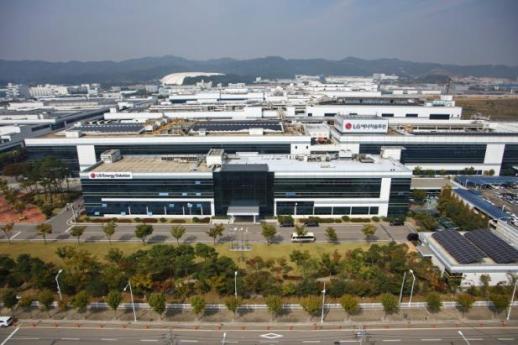 LG Energy Solution hit by $9 bn deal loss this month as FBPS scraps $3 bn contract SEOUL, December 26 (AJP) -LG Energy Solution (LGES) has terminated a 3.9 trillion won ($2.7 billion) battery supply contract with Freudenberg Battery Power Systems (FBPS), marking a second major cancellation in quick succession as the Korean battery maker grapples with a slowdown in the global electric-vehicle market. In a regulatory filing Friday, the South Korean battery maker said it mutually agreed with FBPS to end the contract after the U.S.-based company decided to withdraw from the battery business. The deal, signed in April last year, was originally valued at about $2.8 billion and was scheduled to run through the end of 2031. LG Energy Solution said about $110 million worth of supplies had already been delivered under the contract, and that the final termination amount may change depending on due diligence results and exchange-rate fluctuations. FBPS, a unit of Germany’s Freudenberg Group, operates a battery-pack assembly plant in Midland, Michigan, and had planned to source battery modules from LG Energy Solution for electric buses and commercial trucks in North America. The company has since been reported to be reviewing a broader exit from the battery sector. The latest cancellation follows LG Energy Solution’s disclosure earlier this month that it had terminated a separate 9.6 trillion won battery supply contract with Ford Motor Co., after the U.S. automaker revised its electric-vehicle strategy amid weaker-than-expected demand and shifting policy conditions. Taken together, the two cancellations bring the total value of contracts terminated by LG Energy Solution this month to 13.5 trillion won — equivalent to more than half of the company’s annual revenue of 25.6 trillion won recorded in 2024. Despite the scale of the cancellations, LG Energy Solution said the financial impact would be limited. “We have not made investments in specialized production facilities or incurred research and development expenses tied to these contracts, so there are no additional costs arising from the terminations,” the company said in its filing. It added that the move would allow the company to “streamline relationships with uncertain customers and secure a more stable source of demand.” Regarding the Ford contract, LG Energy Solution said the termination followed formal notice from the automaker, which has been reassessing its EV production plans amid slower demand growth, rising costs and changes in U.S. subsidy policies. Ford has recently canceled or delayed several EV models and shifted its strategy toward hybrids and internal-combustion vehicles. The battery maker said the disclosed termination amounts were calculated by applying battery prices at the time of contract signing to the originally agreed supply volumes, meaning the figures do not represent realized losses. Industry analysts say the back-to-back cancellations highlight the deepening “EV demand chasm,” as automakers recalibrate investment plans following years of aggressive expansion, while battery suppliers face growing pressure to adjust capacity and customer portfolios. LG Energy Solution said it will focus on strengthening its order book with more stable customers and maintaining financial flexibility amid uncertainty in the global electric-vehicle market. 2025-12-26 21:36:32
 -
 Korea's Hanwha is readying to join Golden Fleet project in Philadelphia yard SEOUL, December 25 (AJP) -South Korea's defense and shipyard-strong Hanwha Group has begun preparations at its Philadelphia shipyard to support the production of nuclear-powered submarines and other naval vessels for the United States, as Washington moves forward with an ambitious shipbuilding expansion plan under President Donald Trump’s “Golden Fleet” initiative. Tom Anderson, president of Hanwha Defense USA’s shipbuilding business and a retired U.S. Navy rear admiral, said the Philadelphia yard has a “significant advantage” in supporting joint production of nuclear-powered submarines in cooperation with South Korea, which he described as America’s “strongest ally.” “Work is underway to expand the workforce, invest in facilities and transfer technology,” Anderson told Korean reporters, adding that Hanwha is recruiting experts with experience in the design, construction and operation of Virginia-class submarines. These include specialists in modular production and block assembly, key processes in nuclear submarine manufacturing. Anderson said the timing of any actual submarine production would depend largely on coordination and decisions by the governments of the two countries. Another Hanwha official said the current understanding is that nuclear-powered submarines for the U.S. Navy would be built at the Philadelphia shipyard, while Hanwha Ocean’s Geoje shipyard in South Korea would handle production for Korea’s own nuclear-powered submarine program. Seoul and Washington agreed in October that their leaders shared an understanding on U.S. approval and support for South Korea’s pursuit of nuclear-powered submarines. Alex Wong, Hanwha Group’s global chief strategy officer, said there is growing consensus within the U.S. administration and Congress on the need to expand domestic shipbuilding capacity in cooperation with allies such as South Korea. Wong said President Trump has made strengthening U.S. shipbuilding a policy priority through executive action, and that Hanwha is well positioned to support the effort given its experience building diesel-electric submarines and other naval vessels at its Okpo shipyard. “This is a government-level decision,” Wong said, adding that the United States has a strong interest in reinforcing its industrial base for nuclear-powered submarines, particularly those based on the Virginia-class design. Trump earlier this week, when unveiling the “Golden Fleet” initiative, said that new U.S. Navy frigates would be built in cooperation with Hanwha. Last week, the U.S. Navy also announced plans for a new class of smaller combatants, known as the FF(X) frigates, which are intended to complement larger multi-mission warships and enhance operational flexibility. Navy Secretary John Phelan said the new frigate program would form part of the Golden Fleet initiative. Trump has also said the U.S. Navy plans to build two new “Trump-class” battleships, with the possibility of expanding the fleet to as many as 25 vessels. The president described the planned ships as among the most powerful surface combatants ever built, equipped with advanced weapons systems including hypersonic missiles, lasers, cruise missiles and nuclear capabilities. Hanwha said in August it would invest an additional $5 billion in the Philadelphia shipyard under a bilateral cooperation project dubbed MASGA — short for “Make American Shipbuilding Great Again.” The group had previously invested $100 million to acquire the shipyard at the former Philadelphia Navy Yard in December last year. The investment is part of a broader $150 billion shipbuilding package that South Korea has pledged to the United States as part of bilateral trade arrangements. Discussions are ongoing over how the funds will be structured and deployed, Wong said, adding that both governments are seeking to move quickly while ensuring proper implementation. Shares of Hanwha Ocean surged 10 percent on Tuesday after Trump said the company would help build new U.S. Navy frigates. South Korean defense stocks have rallied sharply this year, with Hanwha Aerospace and Hyundai Rotem gaining more than 170 percent and 270 percent, respectively. Hanwha Ocean has risen more than 220 percent year to date. Hanwha Ocean is one of South Korea’s major shipbuilders, producing commercial vessels such as LNG carriers as well as naval platforms including submarines and surface combatants. * This article, published by Economic Daily, was translated by AI and edited by AJP. 2025-12-25 15:00:52
 -
 South Korean, Japanese firms consider joint venture for next-generation chip materials SEOUL, November 05 (AJP) - Samsung Electro-Mechanics said on Wednesday that it had signed a memorandum of understanding with Japan’s Sumitomo Chemical Group to explore establishing a joint venture for producing glass cores, a key component in next-generation semiconductor packages. The agreement comes as they are seeking to strengthen their foothold in the fast-evolving semiconductor packaging industry, where new materials are increasingly critical to supporting artificial intelligence and high-performance computing. Glass cores are viewed as a breakthrough material for next-generation chips. Unlike conventional organic substrates, they offer superior flatness and lower thermal expansion, allowing for more densely packed circuits and improved performance in large-area semiconductor packages. Under the agreement, Samsung Electro-Mechanics, Sumitomo Chemical, and Dongwoo Fine-Chem — a Korean materials affiliate of Sumitomo — plan to combine their respective expertise and global networks to accelerate the development and commercialization of glass-core technologies. Samsung Electro-Mechanics will hold a majority stake in the proposed venture, with Sumitomo Chemical as a key investor. The companies said they plan to finalize share structures, business timelines, and a corporate name by next year. The joint venture’s headquarters and initial production site will be located at Dongwoo Fine-Chem’s facility in Pyeongtaek, south of Seoul. “Glass cores are a game-changer for the future substrate market,” said Jang Deok-hyun, president of Samsung Electro-Mechanics, in a statement. “This agreement brings together the cutting-edge capabilities of the three companies and lays the groundwork for new growth in advanced semiconductor packaging.” Sumitomo Chemical Chairman Keiichi Iwata said the partnership would “create significant synergy in the advanced semiconductor post-processing sector” and help build a “long-term strategic alliance.” Samsung Electro-Mechanics is currently producing glass package substrate prototypes at its Sejong facility and expects full-scale production through the new venture to begin after 2027. * This article, published by Economic Daily, was translated by AI and edited by AJP. 2025-11-05 10:05:40
 -
 Business groups welcome end of criminal penalties for corporate missteps SEOUL, September 30 (AJP) - The South Korean government's plan to abolish a criminal law clause that has long exposed corporate executives to prosecution for breach of trust drew strong support from business groups on Tuesday, who argued the change would reduce legal uncertainty and encourage investment. The government and ruling party said the clause — which allowed prosecutors to pursue executives for management decisions that resulted in losses, even absent personal gain — would be eliminated as part of a broader economic penalty reform package. The shift places greater emphasis on administrative and financial penalties rather than criminal charges. The Korea Chamber of Commerce and Industry welcomed the move as a “first step” toward more predictable corporate governance, noting that aggravated penalties for breach of trust had created a chilling effect on decision-making. Critics of the breach of trust provision have long said its vague standards turned legitimate but risky business decisions into potential criminal cases, discouraging executives from pursuing bold investments. Democratic Party floor leader Rep. Kim Byung-ki said in a recent task force meeting that the clause had “become a burden on normal business operations,” while President Lee Jae Myung remarked on Sept. 15 that excessive punishment risked deterring investment. Other business lobbies, including the Korea Enterprises Federation and the Korea Employers Federation, issued statements calling the reform timely and potentially a foundation for further regulatory improvements. The Korea International Trade Association said in a statement that it hoped the changes would help achieve the government’s goal of reducing overall economic penalties by 30 percent and ensure industry voices are reflected in subsequent legislation. * This article, published by Economic Daily, was translated by AI and edited by AJP. 2025-09-30 17:43:55