
Journalist

Ko Hye-young
kohy0321@ajunews.com
-
 Reform Party floor leader urges budget support for Jeonnam-Gwangju integration, state-backed legal aid for teachers Cheon Ha-ram, floor leader of the Reform Party, on the 29th proposed central government budget support for the Jeonnam-Gwangju integration and a state-backed system to handle lawsuits involving teachers. Speaking at a luncheon meeting at Cheong Wa Dae that morning hosted by President Lee Jae-myung for lawmakers from non-negotiating parties and independents, Cheon said that during the review of a supplementary budget, 57.3 billion won in “essential” funding for the Jeonnam-Gwangju integration was cut in full. He said the money was needed for steps such as integrating administrative networks and updating building registers. “President Lee Jae-myung arranged the marriage between Jeonnam and Gwangju, but it’s not right to tell them to cover the wedding costs on their own,” Cheon said, arguing that the central government should fund the procedures required for the integration. On a state responsibility system for teacher lawsuits, Cheon said the problem lies in the current setup. He said frontline teachers are expected to handle malicious complaints and then fend for themselves when those disputes escalate into criminal complaints, accusations or civil suits. Calling it a system that leaves teachers to shoulder the burden alone, Cheon urged the government to pursue a policy so that, when incidents occur, teachers do not have to spend time going to police stations and courts.* This article has been translated by AI. 2026-04-29 14:20:46
 -
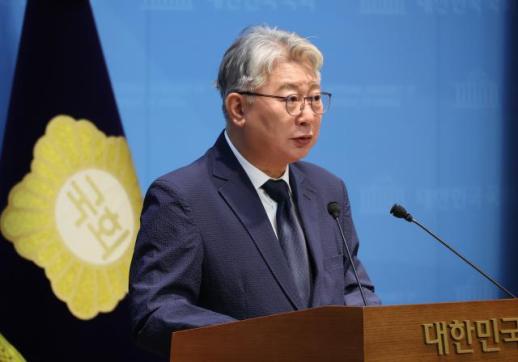 Gyeonggi governor candidate Cho Eung-cheon says Choo Mi-ae has 'no attack points' against him Cho Eung-cheon, the Reform Party’s candidate for Gyeonggi governor, said Tuesday that Democratic Party candidate Choo Mi-ae would be “the easiest” opponent and “not uncomfortable,” adding that she would have “no attack points” against him. Cho made the remarks on YTN Radio’s “Jang Seong-cheol’s News Myeongdang” when asked whether he found Choo a difficult rival. Cho said the key question was whether a candidate had given serious thought to Gyeonggi Province, and said that when he watched the Democratic Party’s primary debate, Choo appeared to turn to talk of prosecutorial reform when she was stuck. He criticized her as having focused on political fights in national politics during her time in the legislature. He also questioned her motives for running, saying it seemed she needed the position rather than having a plan for what to do as governor. He said he suspected she was using the race as a steppingstone to “a bigger place” in four years. Asked about the People Power Party’s primary for the Gyeonggi governor nomination, Cho said he did not know much about it and that party members would decide, but added that “there seems to be no answer” no matter who wins. The People Power Party will hold its primary from April 30 through May 1, and will announce its final nominee on May 2 from among Ham Jin-gyu, a former lawmaker; Supreme Council member Yang Hyang-ja; and former MBC announcer Lee Seong-bae. Asked whether he would consider aligning with the People Power Party nominee, Cho said he had “no intention at all.” Cho also criticized party leader Jang Dong-hyeok, saying he changed sharply after becoming leader and suggesting he had “sold his soul” to the “Yoon Again” forces for a presidential bid and his own political ambitions.* This article has been translated by AI. 2026-04-29 09:30:17
 -
 Democratic Party’s Jeong Won-oh Blasts Oh Se-hoon Over Reversal on Seoul Land-Trade Rule Democratic Party Seoul mayoral candidate Jeong Won-oh on April 28 opened his first public campaign committee meeting and stepped up attacks on People Power Party candidate Oh Se-hoon. Speaking at the meeting in central Seoul, Jeong said Oh “impulsively” lifted Seoul’s land transaction permit system and then reversed course 35 days later, “creating confusion in the market.” He said it “doesn’t add up” for Oh to now shift responsibility to the government. Jeong also accused Oh of repeatedly raising tax issues during elections to stoke anxiety and deepen real estate conflict, saying Oh remains stuck in an “outdated 2022 frame.” On the long-term holding deduction, Jeong reiterated his position, saying he has already said the current rights of owner-occupiers with one home must be protected “without exception.” He accused Oh of “deliberately distorting facts” by talking about abolition and “manufacturing conflict with false claims.” Lawmakers Jeon Hyeon-hui and Park Joo-min, who previously competed in the party’s primary race, attended the meeting. Jeon called Oh an “unqualified” mayoral candidate, accusing him of siding with and defending what she described as “insurrection forces,” and labeled him the “core figure” of “Yoon-again” forces. Park said Oh has done nothing and has no plan on bread-and-butter issues such as housing and on Seoul’s future growth engines, urging the party to win back the city. Rep. Kim Young-bae criticized Oh’s decision the previous day to wear a red jacket, saying it had been known he would wear white until just before a news conference. Kim said the switch showed Oh’s intention to run for party leader because he expects to lose the Seoul mayoral race. Kim also challenged Oh’s record, asking what he had done over the past 10 years and questioning his “basic conscience.” The campaign also set up a separate “Oh Se-hoon 10-year Judgment Headquarters,” raising the intensity of its attacks. Rep. Ko Min-jung, a co-head of the unit, raised suspicions about possible links between political donations and personnel appointments. She asked whether board seats at affiliated agencies under the Oh administration were being treated as bargaining chips for money, and called on Oh to clarify whether appointments were made after solicitations or as a quid pro quo for large donations, noting that people he had said were unrelated were later found to be major donors.* This article has been translated by AI. 2026-04-28 10:51:09
 -
 Seoul Mayor Oh Blames Past Halt in Rainwater Tunnel Plan for 2022 Flood Damage Seoul Mayor Oh Se-hoon said April 24 that delays in the city’s deep underground rainwater tunnel program contributed to flood damage in 2022, blaming a previous mayor for halting most of the plan. “Only one was completed in Sinwol-dong, and the rest of the plan was all stopped,” Oh said after visiting the Gwanghwamun tunnel construction site earlier in the day to check progress. He said a plan set in 2010 was not carried out, leading to the 2022 flood damage. The deep underground rainwater storage and drainage tunnel project is part of a comprehensive storm and flood response plan Oh prepared in 2011 after casualties in a landslide on Umyeonsan in Seoul’s Seocho district. The plan called for building 20 kilometers of deep drainage tunnels at seven flood-prone areas in Seoul, including Gwanghwamun. During the tenure of former Mayor Park Won-soon, six of the seven sites were scrapped, with Sinwol-dong the exception. Oh also acknowledged criticism that the project is costly. “It’s a project that requires significant funding,” he said, adding that if it had proceeded as planned in 2010, “we wouldn’t have had to spend 3 billion won, 5 billion won at a time.” He said views can differ because the project is meant as a precaution, but stressed that steady investment is needed over the next five to six years, with completion targeted for the first half of 2030. Seoul is pursuing six deep tunnel sites in two phases: Phase 1 covering the Gangnam Station, Gwanghwamun and Dorimcheon areas, and Phase 2 covering the Sadang Station, Hangang-ro and Gil-dong areas. Oh also said he plans to register as a preliminary candidate for Seoul mayor on April 27 and begin a full-scale campaign.* This article has been translated by AI. 2026-04-24 16:54:29
 -
 Song Young-gil Says He Would Seek Defense Committee Seat if He Returns to Parliament Song Young-gil, former leader of the Democratic Party, said on Thursday that if he returns to the National Assembly, he would seek a seat on the Defense Committee. Speaking on KBS radio's "Jeongyeok Sisa," Song was asked whether the transfer of wartime operational control should be completed within President Lee Jae-myung's term. "I'll go to the Defense Committee and make sure it's handled properly," he said. On the transfer of wartime operational control, Xavier Brunson, commander of the U.S.-ROK Combined Forces Command and U.S. Forces Korea, said on April 22 (local time) that he submitted a roadmap to the Defense Ministry targeting the first quarter of 2029 for the handover. The Lee administration has said it plans to complete the transfer by June 2030, when Lee's term ends. Song said that if he joins the Assembly's Defense Committee, he would consult with the U.S. Forces Korea commander and U.S. Defense Secretary Hegseth to find an approach. Commenting on a poll showing the People Power Party at 15% support, Song said he felt more worried than pleased about the opposition's collapse. On Wednesday, Embrain Public, Kstat Research, Korea Research and Hankook Research released results of the NBS survey conducted April 20-22 of 1,005 adults ages 18 and older. The poll put support for the Democratic Party at 48% and the People Power Party at 15% (details available on the National Election Survey Deliberation Commission website). Song said the public is questioning whether the People Power Party is a normal political party, adding that it has no future unless it reflects and changes. He also said he met Daegu mayoral hopeful Kim Boo-kyum in Daegu and asserted Kim would win decisively with more than 10% of the vote. Song said the People Power Party should immediately dismantle the leadership of Chairman Jang Dong-hyeok and shift to an emergency leadership committee by recruiting new faces.* This article has been translated by AI. 2026-04-24 09:31:05
 -
 Kakao Pay Securities Says Client Deposits Top 15 Trillion Won, Up 31% YTD Kakao Pay Securities said on April 23 that its client deposit assets topped 15 trillion won as of April 17, up 31.2% from the start of the year. The company cited strong inflows. Net inflows in the first quarter totaled 3.668 trillion won. Growth was led by Korean stocks: related assets rose 94% to 6.5323 trillion won from the point when they first exceeded 10 trillion won. The share of Korean stocks in total deposits increased to 44.2% as of April from 33.6% over the same period. Tax-advantaged accounts also helped lift deposits. Pension savings assets rose 58% from January, and assets in individual savings accounts, or ISAs, launched in November last year, grew about fourfold over the same period. The combined share of pension savings and ISAs in total deposits increased to 7.6% from 5.5%. The user base also expanded. Monthly active users rose to 4.02 million in March from 3.65 million in January. Kakao Pay Securities said it plans to upgrade its portfolio so users can meet a range of investment needs on one platform, including pension savings, ISAs and RIA accounts, which it described as accounts for returning to the domestic market. CEO Shin Ho-cheol said the company aims to reach 20 trillion won in client deposit assets within this year, adding it will continue to strengthen investment experiences and product competitiveness tailored to users’ asset-building stages.* This article has been translated by AI. 2026-04-23 18:16:20
 -
 Democratic Party’s Jung Won-oh vows Seoul will match Tokyo within five years, criticizes Oh Se-hoon Democratic Party Seoul mayoral candidate Jung Won-oh said Wednesday he aims to put Seoul “shoulder to shoulder” with Tokyo within five years, while accusing Seoul Mayor Oh Se-hoon of failing on “space, the industrial ecosystem and management philosophy.” Jung made the remarks at a policy event at the National Assembly Members’ Office Building in Seoul’s Yeouido district, titled “Jung Won-oh’s G2 Seoul vision declaration, a major transformation for global city Seoul.” He said he would make Seoul “Asia’s No. 1 economic and cultural city” that “outpaces Tokyo,” adding, “Seoul’s counterpart is New York.” He said Seoul has been stagnant, claiming it has “stagnated for 14 years” and that since the COVID-19 pandemic, the city’s growth rate under Oh has “dragged down the overall average.” Jung attributed the slowdown to what he called structural failures in Oh’s administration, saying Oh has tried to solve city issues only within Seoul’s boundaries rather than the broader capital region, failed to foster new industries such as artificial intelligence and finance, and lacked a management philosophy, allowing stagnation to persist. As an alternative, Jung proposed a “1-2-3-4 strategy”: developing Seoul into Asia’s top economic and cultural capital by 2030; creating two additional urban centers; building three youth startup clusters; and establishing a pipeline for four special zones. He said the city would add Sinchon-Hongdae and Cheongnyangni-Wangsimni as new centers beyond the existing three — central Seoul, Yeouido-Yeongdeungpo and Gangnam. He also proposed youth startup innovation clusters in Sinchon (content), Cheongnyangni (bio and innovation) and Gwanak (deep-tech startups). On the four-zone pipeline, he said Hongneung, Yangjae and Yongsan would be designated as special zones, while Guro would be pursued through a Seoul city ordinance.* This article has been translated by AI. 2026-04-23 16:52:02
 -
 Joo Ho-young Says He Won’t Run in Daegu Mayor Race After PPP Cutoff Rep. Joo Ho-young, who was cut from the People Power Party’s primary for Daegu mayor in the June 3 local elections, said Wednesday he will not run in the race. Speaking at a news conference at the National Assembly, Joo said, “I have decided not to run in this June 3 local election.” He also voiced disappointment over a court decision the previous day rejecting his appeal of an injunction request to suspend the cutoff’s effect. Joo said the court “cowardly stepped back behind the words that this is an internal party matter and that party autonomy should be respected,” adding it “stopped short at a chance to draw a clear line against the abuses of nominations.” Joo sharply criticized the party’s decision as well. “This cutoff will remain a wrong example for a long time,” he said. He accused the leadership of removing a candidate with strong chances of winning and filling the field with “uncompetitive candidates” favored by party leaders, then telling citizens to accept the outcome. He said major conservative election defeats stemmed from “botched nominations” and ultimately led to the impeachments of presidents from the party. Despite his efforts to break what he called a cycle of conservative failure, he said, he did not succeed in changing what he described as the People Power Party’s flawed nomination structure. In closing, he took aim at party leader Jang Dong-hyeok, quoting a saying that those with “no character but high position, little wisdom but big dreams” rarely avoid disaster. “Please know when to step forward and when to step back,” Joo said. * This article has been translated by AI. 2026-04-23 15:31:23
 -
 Seoul mayoral rivals Oh Se-hoon and Jung Won-oh court social workers in first joint appearance Democratic Party Seoul mayoral candidate Jung Won-oh and People Power Party candidate Oh Se-hoon, the incumbent Seoul mayor, appeared side by side at an official event for the first time since their nominations were confirmed on April 22, seeking support from social workers. They attended the 40th anniversary ceremony of the Seoul Association of Social Workers that afternoon at the Baekbeom Kim Koo Memorial Hall in Seoul’s Hyochang-dong neighborhood. Also present were Seoul Vice Mayor for Political Affairs Kim Byung-min, Democratic Party lawmakers Nam In-soon and Jung Tae-ho, and People Power Party lawmakers Seo Myung-ok and Kim Jae-seop. In congratulatory remarks, Oh said Seoul has made “accompanying the vulnerable” the top priority of city administration and pointed to what he described as policy results. “Seoul is an administrative unit where debt tends to keep rising, but during my term the debt fell significantly,” Oh said. He added that even under tight budgets, the city has worked each year to raise social workers’ pay and bring allowances in line with reality to improve working conditions. Oh said a survey of social welfare workers showed job satisfaction rose to 81.7% from 64.4% three years earlier. “I believe a warmer and healthier special city with a higher quality of life will be completed when social workers can take pride in their work,” he said. Oh also signaled his desire to serve another term, saying he wanted to “take responsibility to the end” so social workers can focus on their jobs in a better environment. Jung, casting himself as the challenger, responded by setting a higher target. “Since Mayor Oh says he did so well that job satisfaction rose into the 80% range, I’ll set my goal at 90%,” Jung said. He also highlighted his personal ties to the field, noting his wife is a social worker and that he studied social welfare. Jung said that while working as Seongdong district mayor, he felt most strongly that welfare is not completed by systems and budgets alone but “at the fingertips of social workers.” “I will do everything I can so that those fingertips can carry strength and warmth,” he said.* This article has been translated by AI. 2026-04-22 17:54:16
 -
 Seoul mayoral candidate Jung Won-oh proposes 700,000 won 'first independence' grant for young adults Jung Won-oh, the Democratic Party’s candidate for Seoul mayor, met with young office workers on April 22 as he stepped up his street-level campaign focused on livelihoods. He said he understood their concerns about living costs, noting that “in reality, real income is declining in some ways.” Jung made the remarks during his third “Seoul In(people)terview” lunchtime session for office workers, held in Jung-gu, central Seoul. A participant identified only by the surname Kim said lunch in busy areas such as Gwanghwamun and Gangnam Station typically costs 12,000 to 15,000 won, calling it a burden. Jung responded that eating two meals at 15,000 won each would total 30,000 won a day, adding up to about 1 million won a month for food. He also cited monthly rent for one-room units near university districts at 600,000 to 700,000 won, and said rent can reach 1 million won, putting combined food and housing costs at about 2 million won. Targeting young adults, Jung pledged a “first independence” grant for those moving out on their own for the first time. The plan would provide 700,000 won in total: 400,000 won for real estate brokerage fees and 300,000 won for living expenses. He also said he would create a mayoral office-level organization and 추진 a “Youth Cheer Start Home” five-part package, including steps to prevent jeonse fraud and strengthen tenant protections. The proposal follows programs Jung promoted in Seongdong-gu, including a “coming-of-age start grant” for 19-year-olds and support for essential purchases for young people who moved into the district and formed one-person households. Jung said that when he was in Seongdong-gu, the district provided a 200,000 won coming-of-age gift at age 20. “It’s small, but it feels good,” he said, adding that it helps young people feel society is paying attention and making an effort for them. Jung has been running the “Seoul In(people)terview” series since April 15. The campaign selects stories from text messages sent to a direct number for the candidate, and Jung visits people in person to hear their concerns and suggest policy responses. He said he plans to develop pledges based on what he hears and present a vision of “Seoul where citizens are the owners.”* This article has been translated by AI. 2026-04-22 15:57:42