
Journalist

Kim Pil-soo
leesj@ajunews.com
-
 South Korea watchdog confirms 4.5-month business suspension for Lotte Card; FSC to decide Lotte Card, which suffered a large-scale customer data leak in a hacking incident last year, has been ordered by South Korea’s Financial Supervisory Service to suspend business for 4.5 months. According to the financial industry on Wednesday, the FSS confirmed the 4.5-month suspension in a sanctions review committee meeting held that day. Lotte Card said about 2.97 million customers — roughly one-third of its total — had information exposed in a hack in September last year. Of those, 280,000 customers had key data leaked, including card numbers, expiration dates and CVC codes, creating a risk of fraudulent card use. Earlier this month, the FSS gave Lotte Card advance notice of a sanctions package that included the 4.5-month suspension, a 5 billion won fine and personnel penalties. The sanctions will be finalized after a vote at a regular meeting of the Financial Services Commission. A Lotte Card official said the hacking case differs from a 2014 data leak involving an employee and called a business suspension for a hacking incident “an unprecedented level of sanction.” The official said follow-up steps remain, including an FSC vote, and the company will explain its objections to what it views as an enhanced penalty, its post-incident response and that no secondary harm occurred.* This article has been translated by AI. 2026-04-30 17:43:43
 -
 Court Halts FIU Sanction, Allowing Bithumb to Keep Operating for Now Bithumb, a South Korean virtual asset exchange, has avoided a financial regulator’s business suspension for now. According to the legal community on Wednesday, the Seoul Administrative Court’s Administrative Division 2, presided over by Chief Judge Gong Hyeon-jin, granted Bithumb’s request to suspend the Financial Intelligence Unit’s (FIU) sanction of a “six-month partial business suspension.” The measure will remain suspended until the court rules on the main case. The FIU had said Bithumb violated obligations under the Act on Reporting and Using Specified Financial Transaction Information — including bans on dealing with unreported virtual asset businesses, customer identification (KYC) requirements and transaction restriction duties — a total of 6.65 million times. Last month, the FIU imposed a six-month partial suspension and a 36.8 billion won fine. The partial suspension restricts new customers from transferring virtual assets to and from external wallets. It is the toughest sanction imposed on a domestic exchange operating a won-based market. The sanction had been set to take effect March 27, but Bithumb sought an injunction, leaving the measure temporarily on hold through Wednesday. With the court’s decision, Bithumb can continue operating under its current business model until the lawsuit is resolved. A Bithumb official said the company “plans to faithfully explain its position in the remaining procedures.”* This article has been translated by AI. 2026-04-30 16:54:16
 -
 K Bank Q1 Net Profit Jumps 107% to 33.2 Billion Won on Strong Corporate Lending K Bank said in a regulatory filing on Wednesday that it posted net profit of 33.2 billion won ($?) in the first quarter, up 106.9% from a year earlier, as asset growth continued on strong corporate lending. Total customers reached 16.07 million at the end of the quarter, up 540,000 from the end of last year. Deposits totaled 28.22 trillion won, up 1.5% from 27.80 trillion won a year earlier. Loans rose 10.7% to 18.75 trillion won from 16.94 trillion won. Despite a tighter stance on household lending, the bank said its strategy to expand corporate loans — mainly to sole proprietors — drove loan growth. Corporate loan balances more than doubled over the past year to 2.75 trillion won from 1.31 trillion won. The bank said net increases in corporate loan balances have expanded for five straight quarters. Net interest income rose 15.4% to 125.2 billion won from 108.5 billion won. The net interest margin widened to 1.57% from 1.41% on loan growth, changes in the rate environment and an improved funding mix. Noninterest income increased about 4% to 14.2 billion won. Credit loss provisions fell 7.6% to 50.1 billion won from 53.9 billion won, and the credit cost ratio improved to 1.09% from 1.31%. The delinquency ratio edged down to 0.61% at the end of the first quarter from 0.66% a year earlier, while the ratio of substandard or below loans eased to 0.58% from 0.61%. The bank’s BIS capital ratio stood at 21.47%. The average share of mid- to low-credit loans in the first quarter was 31.9%, and the share of new mid- to low-credit loans was 33.5%, both above regulatory thresholds of 30% and 32%, respectively. Chief Executive Choi Woo-hyung said the first quarter was a period in which the bank strengthened its growth base by proactively expanding lending to sole proprietors. He said K Bank will further refine its corporate finance portfolio and seek competitiveness in global digital asset markets, including stablecoins, to continue differentiated innovation.* This article has been translated by AI. 2026-04-30 15:56:05
 -
 Credit card spending rises in Q1 despite weak consumer sentiment SEOUL, April 30 (AJP) - Credit card spending rose despite weakening customer sentiment due to the prolonged conflict in the Middle East. According to data compiled by the Credit Finance Association of Korea on Thursday, people went plastic with 322 trillion won (about US$220 billion) worth of purchases, or 7.2 billion transactions, in the first quarter, up 7.2 percent and 5.1 percent, respectively, compared to the same period last year. Personal card spending rose 6.8 percent to 264.4 trillion won while corporate card spending climbed 8.7 percent to 57.8 trillion won. Online shopping remained strong, rising 8.5 percent from a year earlier to 46.7 trillion won, largely driven by food delivery and travel bookings. A rebound in travel demand also boosted card spending, with the number of air passengers rising 12.6 percent in the first three months of this year, while spending by foreign tourists surged 37.1 percent. The association also cited higher oil prices in March, which drove up spending on fuel. 2026-04-30 15:20:33
 -
Korea’s Q1 Card Spending Rises 7.2% to 322.1 Trillion Won Despite concerns about weakening consumer sentiment, card approvals in the first quarter posted solid growth, supported by stronger income conditions tied to robust domestic corporate earnings. Inflation, continued expansion in online spending and a rebound in travel demand also contributed. According to the Credit Finance Association of Korea on Wednesday, total card approvals in the first quarter came to 322.1 trillion won, up 7.2% from a year earlier. The number of approved transactions rose 5.1% to 7.2 billion. The growth rate more than doubled from 3.3% in the first quarter of last year, and the transaction-count increase was up 3.9 percentage points from a year earlier. By card type, both personal and corporate cards increased. Personal card approvals totaled 264.4 trillion won, up 6.8%, while transactions rose 5.3% to 6.82 billion. Corporate card approvals increased 8.7% to 57.8 trillion won, and transactions rose 1.9% to 380 million. Strong growth in online commerce continued. Online shopping transactions in January and February rose 8.5% from a year earlier to 46.698 trillion won. Within online shopping, food delivery and travel and transportation services increased 11.0% and 12.8%, respectively. A recovery in travel and tourism demand also lifted card use. First-quarter air passenger traffic rose 12.6%, and spending by foreign tourists surged 37.1%. The association said higher oil prices in March likely also pushed up card-approved spending on vehicle fuel. The association said uncertainty has increased and consumer sentiment could weaken due to the Middle East war that broke out in late February. Still, it said improved income and asset conditions stemming from strong domestic corporate earnings, including from expanding global semiconductor demand, along with base effects, helped drive the rise in card approvals.* This article has been translated by AI. 2026-04-30 10:33:33
-
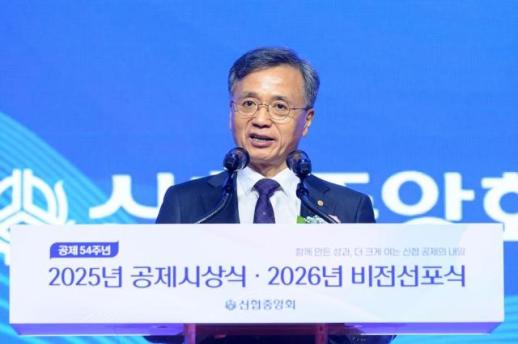 Korea Credit Union Insurance Arm Targets 10 Trillion Won in Assets The Korea Credit Union Federation said it aims to expand its mutual-aid insurance business and build insurance assets to 10 trillion won, while strengthening financial protection for members on the back of stable growth. The federation said it held its “2025 Insurance Awards and 2026 Vision Declaration” on April 29 at its training center in Daejeon, where it reviewed 2025 performance and shared its 2026 direction. For 2026, it outlined priorities including stronger competitiveness in member-focused protection products, expanded support for front-line sales, improved service quality and a stronger cooperation framework between local credit unions and the federation. It said the goal is for the insurance business to contribute more directly to members’ financial stability and to broaden credit unions’ earnings base. “2026 is a critical period when CU Insurance must further strengthen front-line sales capabilities and product competitiveness based on a stable growth foundation,” said Son Seong-eun, the federation’s head of credit and insurance business. “With a goal of 10 trillion won in insurance assets, we will actively support timely delivery of the protection services members need.” As of the end of 2025, CU Insurance reported insurance assets of 6.3 trillion won and a risk-based capital ratio of 325%. “CU Insurance began as cooperative insurance to share unexpected life risks and protect one another,” Chairman Ko said. “We will continue to build a tighter protection safety net so members can live with peace of mind, grounded in the mutual-aid values at the heart of insurance.”* This article has been translated by AI. 2026-04-30 10:13:23
 -
 Bitcoin Slips to Mid-$75,000s as Rate-Cut Hopes Fade and Mideast Risks Weigh Virtual asset prices, led by bitcoin, weakened broadly after a short-term rise, as investors turned cautious amid fading expectations for interest-rate cuts and ongoing geopolitical uncertainty. According to CoinMarketCap, bitcoin was trading at $75,912 as of 8 a.m. on the 30th, down 0.39% from the previous day. Ethereum fell 1.24% to $2,257. Binance Coin (BNB), Solana and XRP also slipped 0.82%, 0.71% and 0.65% to $617, $83 and $1.36, respectively. Market watchers cited profit-taking as prices cooled from an overbought condition following the recent surge. Macro factors also weighed on sentiment. With geopolitical risks such as tensions in the Middle East persisting, expectations for U.S. Federal Reserve rate cuts have weakened, dampening appetite for risk assets. Analysts also said momentum has eased on the demand side, with U.S. buying interest softening and short-term selling pressure increasing. In South Korea, bitcoin was trading at about 113.71 million won ($75,929) on the won-based exchange Bithumb as of 8 a.m., down 0.34% from the previous day. The so-called “kimchi premium” stood at 0.573%, indicating domestic prices were higher than overseas levels.* This article has been translated by AI. 2026-04-30 08:39:15
 -
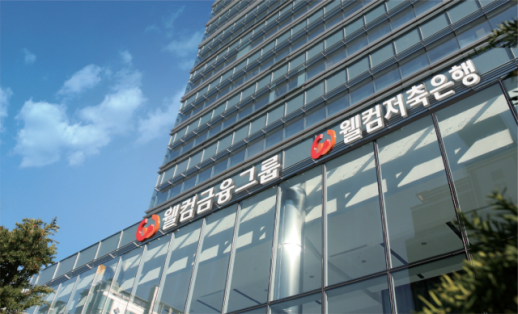 Welcome, KB Savings Banks Probed Over Auto Parts Loan Fraud; Losses Estimated at 100 Billion Won Welcome Savings Bank and KB Savings Bank have been hit by alleged loan fraud involving auto parts sales receivables used as collateral, prompting a financial regulator probe, officials said. According to financial authorities and the finance industry on the 30th, Welcome Savings Bank detected irregularities in the lending process in November last year, voluntarily reported the case to the Financial Supervisory Service and halted the product entirely. KB Savings Bank also disclosed in January that it had incurred losses of about 4.5 billion won. The product in question was a “win-win” financing program designed to provide working capital to repair shops and parts suppliers. It treated repair estimates issued through the Insurance Development Institute’s vehicle repair claim or loss-adjustment system (AOS) as sales receivables and extended loans on that basis. Once repairs were completed, the banks recovered the loans from insurance payouts. Authorities said fraudsters exploited the structure by obtaining false repair estimates through AOS to secure loans. To evade lending limits applied to a single borrower, they also set up multiple special-purpose companies. The finance industry estimates cumulative lending tied to the scheme at 300 billion won, with about 200 billion won recovered. The final damage is estimated at around 100 billion won. Welcome Savings Bank said the FSS investigation was already completed last year and that the actual losses would be less than 90 billion won. The FSS is currently conducting an inspection of KB Savings Bank. It also carried out an industrywide review of auto parts receivables-based lending at savings banks and found no additional cases of fraudulent loans, officials said. Police are continuing to investigate the parts supplier and others suspected of fraud.* This article has been translated by AI. 2026-04-30 08:22:36
 -
 KB Kookmin Card Issues $500 Million Overseas Social ABS, Citing Inclusive Finance Push KB Kookmin Card said Tuesday it successfully issued $500 million (about 7.4 trillion won) in social asset-backed securities in overseas capital markets. The deal was jointly arranged by HSBC Hong Kong and ING. It was split into two tranches with an average maturity of two years: $250 million with a two-year tenor and the equivalent of $250 million in euros with a three-year tenor. The company said it used a cross-currency interest rate swap to hedge exchange-rate and interest-rate risks in advance. The proceeds will be used for inclusive finance programs, including expanding mid-rate loans for customers with low to mid credit and supporting vulnerable groups with limited access to financial services. A KB Kookmin Card official said the issuance, completed on competitive terms despite heightened volatility in global markets, reflected investor confidence. The official said the company will continue to diversify its funding sources and expand inclusive finance initiatives. 2026-04-29 10:18:31
 -
 Kakao Pay Says 10-Year Transfers Totaled 447 Trillion Won, Saving 1.5 Trillion Won in Fees Kakao Pay said Tuesday that since it launched its money transfer service in April 2016, users have sent a cumulative total of about 447 trillion won over the past 10 years. The company said that is equivalent to people nationwide exchanging 120 billion won a day, or 5 billion won an hour, through Kakao Pay. Over the same period, cumulative transfer transactions topped 4.8 billion, it said. Annual transfers rose from about 2.65 million in 2016 to about 843.1 million last year, a 320-fold jump over a decade. This year, as of last month, average daily transfers exceeded 2.3 million, with about 240 billion won moving each day. That works out to roughly 1,600 transfers per minute, the company said. Kakao Pay said the service has expanded beyond a simple way to send money. In 2016, users sent money to an average of five acquaintances each; by 2025, that figure had grown to an average of nine. The company also said the service helped lower barriers to financial services, estimating users saved about 1.5 trillion won in fees over the past decade. A Kakao Pay official said the past 10 years have focused on reducing the hassle of transfers and improving users’ daily lives, adding the company will continue upgrading the service so users can feel that finance is “closer” and keep sharing “feelings and value.” * This article has been translated by AI. 2026-04-29 09:45:17