
Journalist

Kim Pil-soo
leesj@ajunews.com
-
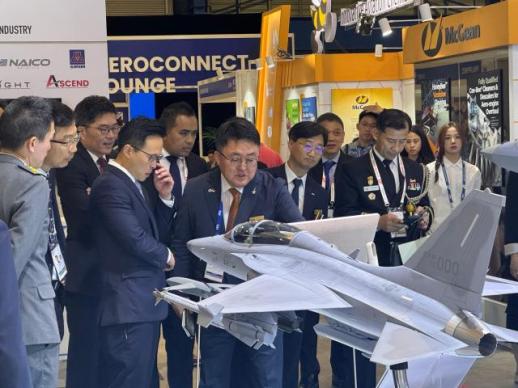 KAI to Showcase KF-21 and FA-50 at Singapore Airshow, Targets Southeast Asia 한국항공우주산업(KAI)이 동남아시아 시장 지배력 강화에 나선다. KAI는 3일부터 오는 8일까지 싱가포르 창이 전시센터에서 열리는 아시아 최대 규모의 항공우주·방산 전시회 '2026 싱가포르 에어쇼'에 참가한다고 밝혔다. KAI said it will take part in the 2026 Singapore Airshow, Asia’s largest aerospace and defense exhibition, running from Feb. 3 to Feb. 8 at the Changi Exhibition Centre in Singapore. The Singapore Airshow is a major venue for tracking defense and aerospace trends in Asia and is considered one of the world’s three biggest air shows, along with Paris and Farnborough. KAI said it will focus marketing on platforms that have entered full-scale production, including the KF-21, FA-50, Surion (KUH) and the Light Armed Helicopter (LAH). The company will also display its in-house projects, including the AAP multipurpose unmanned aircraft and the ALE air-launched unmanned aircraft. It will present future concepts through video on its AI pilot, “KAILOT,” and manned-unmanned teaming systems. During the airshow, KAI plans meetings with senior government and military officials from current operators in Southeast Asia as well as potential export customers. It said it will discuss follow-on business with existing FA-50 users while pursuing initial customers for the KF-21. KAI also said it will seek requirements and business opportunities to build export momentum in Asia for government and mobility helicopters. “The Singapore Airshow is an important bridgehead that is driving the explosive growth of Korea’s defense industry,” Cho Woo Rae, head of KAI’s export marketing division, said. “Based on the globally proven reliability of the FA-50 and the advanced technology of the KF-21, we will raise the standing of Korea’s defense industry and continue delivering tangible export results,” he said.* This article has been translated by AI. 2026-02-03 16:12:00
 -
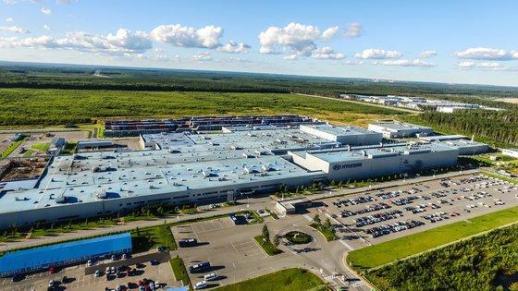 Hyundai Motor Group drops buyback option for Russian plant SEOUL, February 02 (AJP) - Hyundai Motor Group has decided not to exercise an option to repurchase its former manufacturing plant in Russia, effectively confirming its exit from the Russian market. It will only maintain support services for existing customers, according to industry sources on Monday. The group allowed the buyback option for the St. Petersburg facility to expire at the end of last month, choosing not to reacquire the plant. Hyundai Motor Group sold its entire Russian business, including the factory, to local firm Art-Finance in December 2023 for 10,000 rubles (about 140,000 won) after operations were disrupted by parts shortages and logistical challenges following Russia’s invasion of Ukraine. Given its strong market position in Russia at the time, Hyundai included a clause allowing it to repurchase the plant within two years. The expiration of that option now marks a formal decision not to return under current conditions. Instead of pursuing re-entry into a market still facing geopolitical uncertainty, the group plans to focus on after-sales service for vehicles already sold in Russia to protect brand reputation, the sources said. The company still could review a possible return if geopolitical risks, including the conflict in Ukraine, ease. Warranty repairs and customer service for existing Hyundai and Kia vehicles in Russia will continue. Hyundai Motor Group began expanding in Russia in 2007, completed its sixth overseas production base in St. Petersburg in 2010 and started local vehicle production in 2011. Operations were suspended in March 2022 following Western sanctions imposed after Russia’s invasion of Ukraine. Roughly one year and nine months later, the group divested its Russian operations, including the plant, to Art-Finance. * This article, published by Aju Business Daily, was translated by AI and edited by AJP. 2026-02-02 15:47:03
 -
 Hyundai Rotem posts record profit on K2 tank exports to Poland SEOUL, January 30 (AJP) - South Korea's Hyundai Rotem surpassed 1 trillion won in annual operating profit for the first time, driven by strong export contracts including K2 battle tanks for Poland. In a regulatory filing on Friday, the company said revenue rose 33.4 percent from a year earlier to 5.84 trillion won, while operating profit surged 120.3 percent to 1.01 trillion won. Fourth-quarter revenue increased 12.8 percent to 1.6 trillion won, and operating profit climbed 65.4 percent to 267.4 billion won. Hyundai Rotem said growth was supported by higher production in its defense and rail businesses, reflecting strong domestic and overseas demand. The rail division ramped up output for South Korea’s high-speed rail projects, Uzbekistan’s high-speed rail system and Australia’s Queensland train program. The defense unit saw higher sales as the company produced K2 tanks for Poland and mass-produced wheeled command post vehicles for the domestic market. Orders rose across all business divisions, lifting Hyundai Rotem’s order backlog to 29.77 trillion won at the end of last year, up 58.7 percent, or about 11 trillion won, from a year earlier. The rail division recorded a record 6 trillion won in new orders, including 2.2 trillion won for double-deck electric multiple units in Morocco and 424.9 billion won for a rail project in Taichung, Taiwan. The defense unit logged 9.5 trillion won in orders, led by a second K2 tank export contract with Poland worth 8.7 trillion won. Orders at the eco-plant division totaled 516.4 billion won, down 20 percent, though the company said contracts from external customers increased, including an automated guided vehicle project at the Port of Busan. Hyundai Rotem said its financial position remained solid. As of the end of last year, its debt ratio stood at 206 percent, or 58.5 percent excluding advance payments. Borrowings totaled 109.9 billion won, while cash and cash equivalents amounted to 908.4 billion won, which the company said effectively supports a debt-free structure. * This article, published by Aju Business Daily, was translated by AI and edited by AJP. 2026-01-30 14:57:27
 -
 KG Mobility's cumulative sales in Turkey top 50,000 vehicles SEOUL, January 30 (AJP) - South Korean automaker KG Mobility (KGM) said on Friday that cumulative vehicle sales in Turkey, one of its key export markets, exceeded 50,000 units through last year. The company said it maintained strong momentum through improved product competitiveness and aggressive marketing, exporting 11,122 vehicles to Turkey in 2024 and 13,337 in 2025. Turkey was KGM’s largest export market over the 2024–2025 period and accounted for 19 percent of its total exports last year. EV models led the growth, including 6,722 units of the Torres EVX and 1,000 units of the Musso EV, alongside 2,630 units of the internal-combustion Musso, the company said. KGM exported a total of 70,286 vehicles last year, up 12.7 percent from 62,378 a year earlier, marking its strongest export performance since 2014, when shipments reached 72,011 units. By region, Western Europe accounted for 22,496 vehicles, or 32 percent of total exports, followed by Eastern Europe with 19,064 units, or 27.1 percent, and the Middle East with 17,231 units, or 24.5 percent. By country, Turkey ranked first, followed by Hungary with 9,508 vehicles and Germany with 6,213. KGM said Turkey’s strong preference for sport utility vehicles reflects practical considerations such as road conditions, housing environments and family travel patterns. Demand for eco-friendly vehicles, including electric cars, is also rising as consumers seek to reduce fuel costs. To sustain growth in Turkey, the company plans to launch the new Musso and expand offerings tailored to local demand, including adding telematics features to electrified models such as the Torres EVX and Musso EV. * This article, published by Aju Business Daily, was translated by AI and edited by AJP. 2026-01-30 13:33:43
 -
 Saudi Air Force commander visits KAI to discuss aerospace, defense cooperation SEOUL, January 29 (AJP) - Korea Aerospace Industries (KAI) said on Thursday that Turki bin Bandar bin Abdulaziz Al Saud, commander of the Royal Saudi Air Force, and his delegation visited the company’s headquarters on Wednesday to discuss potential cooperation in aerospace and defense. KAI said the visit was part of strategic cooperation between the two countries’ air forces and aimed at exploring collaboration to modernize Saudi Arabia’s air power and strengthen its aerospace capabilities. During the visit, the delegation toured KAI’s aircraft development and production facilities and showed interest in major platforms including the KF-21 fighter, as well as maintenance, repair and overhaul (MRO) capabilities and education and training systems, the company said. KAI said the Saudi delegation gave a positive assessment of the company’s experience in advanced aircraft development, systems integration and long-term support. Al Saud attended a demonstration of the KF-21 and received a briefing on the program’s development status and key performance characteristics in front of a parked aircraft, KAI said. The company also presented its roadmap for the program, including the fighter’s design concept, operational flexibility and upgrade potential, as well as plans for a next-generation air combat system based on the KF-21. KAI described the KF-21 as a modern 4.5-generation fighter featuring stealth shaping, improved survivability and the ability to conduct joint and combined operations, secure air superiority and carry out precision strike missions. The company said planned upgrades include integration of domestically developed precision-guided weapons and manned-unmanned teaming capabilities. The company is reviewing an integrated business model linked to Saudi Arabia’s planned acquisition of a 4.5-generation fighter, including a proposal centered on the KF-21 covering operations, maintenance and training, as well as broader industrial cooperation aligned with Saudi Vision 2030. * This article, published by Aju Business Daily, was translated by AI and edited by AJP. 2026-01-29 13:53:55
 -
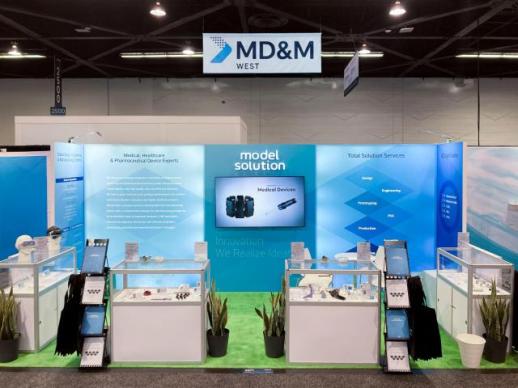 Model Solution to Exhibit at MD&M West 2026 in Anaheim Model Solution said Wednesday it will take part in Medical Design & Manufacturing West 2026 (MD&M West), a medical-device trade show running Feb. 3-5 in Anaheim, California. MD&M West is North America’s largest specialized exhibition covering medical-device design, manufacturing and engineering. Medtech companies and medical-device manufacturers and supply-chain officials from around the world attend to share technology trends and industry developments. Model Solution is an affiliate tasked with advancing “Rising Tech” under the mid- to long-term portfolio plan “STREAM (S.T.R.E.A.M),” which the chairman of Korea & Co. Group, Cho Hyun-bum, planned and designed. The company has participated in MD&M West every year since 2017 to find global medical-device clients, with a focus on the U.S., and to deepen its market understanding. At this year’s show, it plans to highlight its “total hardware solution” capabilities for medical devices, spanning product planning, development, production and mass manufacturing, built on a combination of design and precision manufacturing. It also plans to display medical devices for diagnostics and analysis, gene-therapy-related devices and diabetes management devices, for which it has participated in development and currently supplies key components. “Demand is rising for manufacturing partners that can deliver design and engineering capabilities while also ensuring stable mass production and quality response,” CEO Yoo Hyung-min said. “Model Solution will strengthen its role as a partner that supports global medical-device customers in both development and production, based on an integrated manufacturing solution spanning design, prototypes and mass production.”* This article has been translated by AI. 2026-01-29 09:06:13
 -
 Hanwha Systems’ AI Smart Warship Design Wins Lloyd’s Register Approval in South Korea First Hanwha Systems said Wednesday it became the first company in South Korea to receive an approval in principle for a “smart multipurpose combat ship” concept design from Lloyd’s Register (LR), one of the world’s three major classification societies. Lloyd’s Register is considered one of the top three classification societies, along with the American Bureau of Shipping (ABS) and DNV of Norway. It operates naval shipbuilding rules aligned with NATO standards and is widely trusted by naval customers, the company said. Classification certification is a third-party verification that a vessel is designed and built safely under international regulations and naval construction standards, and is viewed as a key requirement for entering export markets. Hanwha Systems has promoted its “smart battleship” as a next-generation concept for crewed naval vessels. The company said the approval formally recognizes the design’s safety and reliability under international naval standards. The smart multipurpose combat ship, which the company describes as a realization of its smart battleship concept, is a 2,000-ton-class vessel built around artificial intelligence-based software and designed for future maritime combat environments. Hanwha Systems said it integrated more than 40 years of maritime systems expertise and smart maritime solutions into the model, including an AI-based combat system; an intelligent integrated machinery control system that monitors propulsion components and predicts failures; a cockpit-style integrated bridge that can be operated by as few as two crew members; a four-face fixed multifunction radar using active electronically scanned array technology; unmanned systems solutions; and stealth design. The company said the stealth-shaped hull is intended to reduce detection and improve survivability, while cutting required crew to about half compared with conventional crewed ships. It said that could lower labor and long-term operating and maintenance costs and help address manpower shortages faced by navies worldwide. Hanwha Systems said it plans to expand its export-oriented portfolio by developing additional ship models of 2,000 tons or less, applying Lloyd’s Register standards from the design stage to secure safety and design credibility and to meet certification requirements of potential customer navies. Yoo Moon-ki, head of Hanwha Systems’ maritime business division, said the smart multipurpose combat ship is “a next-generation maritime platform that raises both efficiency and sustainability in naval operations through AI and automation.” He added, “With this AIP, we will proactively respond to future needs of global navies and set a new standard for K-maritime defense.”* This article has been translated by AI. 2026-01-29 08:51:19
 -
 Riboncar Says Certified Used-Car Sales Rose 41% in 2025, Led by Hyundai Grandeur Riboncar said Thursday that its sales last year rose 41% from the previous year. As sales expanded for key segments such as sport utility vehicles and mini cars, the company said buyers increasingly weighed overall value and practicality for the vehicle class, not just price, when purchasing used cars. The most-selected company-run certified used car among Riboncar customers was Hyundai Motor Co.’s Grandeur. The Grandeur, a leading large sedan in South Korea, is seen as offering proven quality, a nationwide parts and service network, and stable resale value, the company said. Next were the Kia Carnival, Genesis G80, Kia K5 and Kia Sorento. The shift toward value-focused buying also showed up in sales by vehicle type and fuel, Riboncar said. It cited strong growth for SUVs and multipurpose vehicles for space, mini cars for tax benefits and lower upkeep costs, and electric and hydrogen vehicles for lower fuel expenses. SUV and MPV sales rose 36% from a year earlier and accounted for 29% of total sales. By model, the top sellers were the Kia Carnival, Kia Sorento, Hyundai Santa Fe, Genesis GV70 and Hyundai Palisade. The top five models made up about half of SUV and MPV sales. Mini-car sales rose 34% from the previous year. Riboncar said the segment drew value-focused buyers because of relatively low vehicle prices and lower ongoing costs such as insurance and taxes. Sales of electric and hydrogen vehicles rose 2.7 times from a year earlier. Riboncar said used electric vehicles can see larger price drops than new cars, while offering lower operating costs, making them an option for buyers weighing both cost and practicality. A Riboncar official said more customers are closely comparing value by vehicle class rather than focusing only on price, and that quality control through its direct-run system and transparent information helped build trust and drive sales growth. The official said the company will keep working to reduce customers’ burden and uncertainty in the used-car buying process and improve services that support daily life and lifestyles.* This article has been translated by AI. 2026-01-29 08:39:00
 -
 Air Busan to Add Four Seasonal Charter Routes Ahead of Summer Peak Air Busan is expanding its flight offerings with four seasonal charter routes ahead of the summer peak travel season. The airline said Wednesday it will operate charter flights for the 2026 summer season on two routes from Busan — Shizuoka and Takamatsu — and two from Incheon — Hong Kong and Chiang Mai. Air Busan said the added flights are aimed at giving passengers more choices, expanding service from Busan to smaller Japanese cities and launching new routes from Incheon. Flights from Busan to Shizuoka will begin March 30, and Busan to Takamatsu will begin March 31, each operating three times a week. Incheon-Hong Kong service will start March 29 with daily flights, and Incheon-Chiang Mai will start April 29 with four flights a week. With the charter operations, Air Busan plans to strengthen its network from Gimhae International Airport by operating routes that had previously been available only from the Seoul metropolitan area. From Incheon, the airline will newly operate the Hong Kong and Chiang Mai routes. It said the charter flights will help it respond to demand in the greater Seoul area and diversify its route portfolio. "This summer-season charter operation is a strategic decision based on a comprehensive review of customer demand and route competitiveness," an Air Busan official said. "We will continue to respond flexibly to changes in demand, offer customers a wider range of travel options, and steadily strengthen route competitiveness across both regional markets and the Seoul metropolitan area."* This article has been translated by AI. 2026-01-29 08:30:33
 -
 Autonomous A2Z posts record revenue on growth in self-driving projects Autonomous A2Z said Wednesday it set a record for annual revenue last year. The company reported about 16 billion won in revenue on a preliminary basis, up about 50% from 10.7 billion won a year earlier. It attributed the increase, ahead of full commercialization of autonomous driving services, to winning central and local government research and development projects, field tests and contract work. Autonomous A2Z said it has posted more than 10 billion won in revenue for a second straight year, demonstrating its ability to execute in the autonomous driving market. It noted that Level 4 fully driverless technology has yet to be commercialized globally, and said its accumulated testing and operations experience could translate into faster monetization once sales become possible. Its operating footprint also expanded. As of the end of last year, the company had received permits to operate a cumulative 81 autonomous vehicles and has run services in 14 provinces and major cities nationwide. That covers about 82% of South Korea’s 17 autonomous driving pilot operation zones, the company said, calling it the largest operating record in the country. Its cumulative autonomous driving distance at home and abroad totaled 934,643 kilometers, which it said is equivalent to more than 23 trips around the Earth. Total riders on its autonomous vehicles last year reached 114,681. The company said it drew about 20,000 users each in key test areas including Anyang, Sejong, Seoul and Incheon International Airport. In Hadong, South Gyeongsang province, a rural autonomous bus carried about 10,000 passengers, the company said, positioning it as a practical option for addressing transportation gaps. It also said it has built real-world operating experience through repeated runs and long continuous driving in varied settings, including urban traffic and tourist areas. Overseas, the company said it became the first South Korean firm to obtain a Singapore autonomous driving license and, working with Grab, launched Singapore’s first autonomous shuttle service on public roads. In the United Arab Emirates, it said it formed the first autonomous driving joint venture by a South Korean company with local AI firm Space42. It also signed a memorandum of understanding with Japanese trading company Kanematsu, and said it is the only South Korean autonomous driving company expanding its business base overseas. Chief Executive Han Ji Hyung said, “2025 was a year when, before commercialization, we were able to validate both our technology and our ability to execute through government R&D and domestic and overseas demonstration projects.” He added, “Based on driving data proven through officially recognized evaluations and figures, and on global business experience, we will lead the advancement and commercialization of autonomous driving, which will be central in the era of physical AI.”* This article has been translated by AI. 2026-01-29 08:21:00