
Journalist

Kwon,sung jin
mark1312@ajunews.com
-
 Korean Horse Racing Industry: An Opportunity to Shed the Stigma of Gambling "Adhering to purchase limits is the start of healthy leisure activities." This phrase was prominently displayed throughout Let's Run Park in Gwacheon during a recent visit. The Korea Racing Authority (KRA) has implemented measures to combat gambling addiction, including capping betting amounts at 100,000 won per transaction. Despite these efforts, the stigma surrounding the domestic horse racing industry as a 'gambling industry' remains a persistent challenge. This perception is evident in everyday life. For commuters using the southern Gyeonggi Line, the area around the horse racing park station on weekends is often viewed as inconvenient. The sight of patrons congregating, reeking of alcohol and cigarettes, evokes associations of 'gambling' rather than 'leisure.' The atmosphere at the venue itself significantly shapes the overall image of the industry. The KRA is making strides toward change. It has rebranded the racetrack from 'horse racing park' to 'Let's Run Park' and expanded facilities for families, such as Ponyland and a horse museum. These efforts aim to transform the venue into a 'recreational space.' However, it is debatable whether these initiatives have led to a genuine shift in public perception. On the day of the visit, there appeared to be more patrons focused on betting than on family activities. In fact, a 2024 survey on gambling habits revealed that 36.3% of respondents cited 'thrilling excitement' and 16.3% mentioned 'profit expectations' as their primary reasons for purchasing betting tickets. In contrast, horse racing in other countries presents a different image. The Kentucky Derby in the United States has become a cultural event with high viewership, while the Royal Ascot in the UK is celebrated as a royal tradition. Japan's Japan Cup has evolved into a global sporting event featuring world-class horses. In these contexts, horse racing is consumed as 'sport with a narrative' rather than merely 'gambling.' The recent discussions regarding the relocation of the KRA and Let's Run Park transcend mere logistical concerns. They present an opportunity for a structural redesign of the Korean horse racing industry. The process of changing physical locations could redefine the very nature of the industry. Japan's example is worth noting. Japanese racetracks have become family-friendly entertainment complexes, successfully attracting younger audiences, particularly following the popularity of the mobile game Uma Musume Pretty Derby. The strategy of characterizing popular racehorses and expanding into content and merchandise has also been noteworthy, transforming horse racing from a 'competition' into a 'cultural' phenomenon. The key question is, "Who is the target audience?" Currently, Let's Run Park has not moved beyond its focus on older patrons. Last year, the total number of visitors to Let's Run Park Seoul included 2.25 million horse racing customers and 2.13 million non-racing customers. A KRA survey conducted in 2024 indicated that 90% of horse racing customers were over the age of 50. This underscores the need for new spaces to be designed to naturally attract younger and family-oriented visitors. To achieve this, location is crucial. As promised by the government, accessibility to Seoul must be ensured, and various entertainment elements should be integrated beyond horse racing. Additionally, a long-term strategy to transition horse racing into a recreational sport must be pursued simultaneously. Above all, a shift in the government's role is essential. Without a clear vision and support measures, pushing for relocation could exacerbate existing uncertainties in the field. In fact, there are significant concerns within the KRA regarding the uncertainty of policy direction. The horse racing industry is interconnected with the broader equine industry, transcending the notion of a mere gambling sector. A recent conversation with an equine industry stakeholder highlighted that, "If horse racing is elevated to a healthy sport, it will lead to an increase in the equestrian population, growth in the thoroughbred breeding industry, and heightened demand for professionals such as trainers, jockeys, and veterinarians." It is hoped that the ongoing discussions about the KRA and Let's Run Park relocation will not merely result in a physical move but will serve as a starting point for the Korean horse racing industry to break free from its 'gambling' label and be reborn as a 'cultural and industrial' entity. 2026-05-28 14:34:00
 -
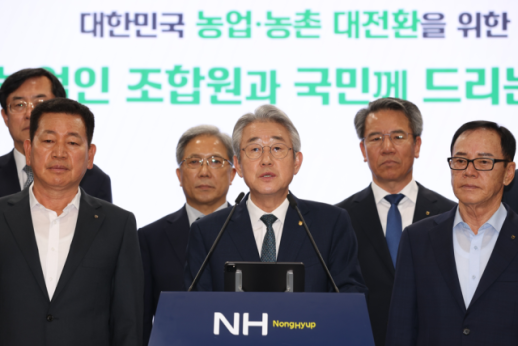 NongHyup Accepts Direct Election for Members, Maintains Stance on Audit Committee The NongHyup (National Agricultural Cooperative Federation) has announced its acceptance of a direct election system for its members as part of ongoing reforms, which also include the establishment of an audit committee. However, the organization maintains that the audit committee will serve to enhance internal auditing functions. Kang Ho-dong, Chairman of NongHyup, made this announcement on May 21 during a statement titled 'A Letter to Agricultural Members and the Public' at the NongHyup headquarters. This followed an emergency meeting of the joint emergency response committee, attended by over 60 members, including the committee chair, committee members, and executives from across NongHyup. Kang stated, "We will actively accept the direct election system with an open mind and a sense of responsibility," adding that NongHyup recognizes the need for a more democratic and accountable electoral system. However, he expressed concerns about potential regional conflicts, politicization of NongHyup, and the adverse effects of money-driven elections that could arise from implementing the direct election system. He emphasized the urgent need for institutional support, such as a public election system, to mitigate excessive election costs, which could reduce funding for member support. Regarding the establishment of the audit committee, Kang voiced apprehension, stating, "There are concerns that overlapping regulations and increased personnel and operational costs could undermine the overall autonomy and stability of management." He asserted that NongHyup would thoroughly enhance its internal auditing functions and seek effective measures that align with public expectations, while also engaging in public discussions involving academia, farmers' organizations, and stakeholders. Kang also indicated that improvements in governance and fairness in executive nominations would be addressed internally. He pledged to implement 13 self-innovation tasks recommended by the NongHyup Reform Committee to create tangible changes that agricultural members and the public can feel. The NongHyup Reform Committee serves as an official forum for discussions on structural reforms and improvements within NongHyup. Kang positioned NongHyup as a partner in the government's push for agricultural policy transformation, stating, "We will introduce a basic income for farmers and fishermen, expand solar income villages, and innovate agricultural product distribution, while also addressing labor shortages in rural areas to bring hope to agriculture and rural communities." He further committed to investing 93 trillion won in productive finance and 15 trillion won in inclusive finance over the next five years to support economic growth and assist low-income households. He also announced plans to expand the number of subsidized smart farms, which cover 75% of project costs, to 2,000 locations to establish a profitable agricultural foundation.* This article has been translated by AI. 2026-05-21 17:57:00
 -
 Korea's Fair Trade Commission Eliminates Cap on Whistleblower Rewards for Reporting Unfair Trade Practices The Fair Trade Commission (FTC) of South Korea has announced the elimination of the cap on rewards for whistleblowers who report unfair trade practices, including collusion. Whistleblowers will now receive up to 10% of the total fines imposed for violations.On May 21, the FTC stated that it will conduct a 20-day public notice period until June 10 for a proposed amendment to the regulations governing rewards for whistleblowers reporting violations of the Fair Trade Act.The amendment aims to encourage insiders to report unfair trade practices, such as collusion, to enhance the detection and correction of legal violations. Ultimately, it seeks to strengthen deterrence against corporate misconduct and establish a fair market economy.The current reward limits range from 100 million won to 3 billion won, which the FTC believes have deterred potential whistleblowers due to insufficient compensation relative to the risks involved in reporting. The amendment reflects the understanding that collusion among companies often occurs secretly, making it difficult to detect or prove violations without insider reports.To address these issues, the FTC plans to simplify the reward calculation method, setting the reward at 10% of the total fines imposed, while also considering the whistleblower's contribution. The FTC believes that larger rewards will incentivize more active reporting of significant legal violations.Additionally, the timing of reward payments will be adjusted. Under the current system, rewards are paid within three months of a legal ruling on the violation, which can lead to issues when the final legal status of the fines is not yet determined.Moving forward, the FTC will pay a basic reward once the fines are initially paid into the national treasury, with the remaining rewards distributed after the final determination of the fines.An FTC official stated, "Through the improvement of the whistleblower reward system, we aim to reinforce our strict response to collusion and other unfair practices, while encouraging active reporting from both insiders and outsiders. We expect this will further strengthen the deterrent effect against legal violations."* This article has been translated by AI. 2026-05-21 14:30:44
 -
 Korea's Fair Trade Commission to Investigate AI Service Market On May 21, the Fair Trade Commission (FTC) announced it will conduct a survey of major domestic and international companies participating in South Korea's artificial intelligence (AI) service market. The aim is to analyze and assess the current trading practices and competitive conditions within the domestic AI service sector.The FTC noted that while the integration of AI services is driving innovation and competition in related products and services, it is also contributing to increased market concentration among a few companies. This concern is echoed by major global competition authorities in the UK, France, and Australia, which are focusing on the AI service market within the entire AI value chain.To proactively address potential competition and consumer issues, the FTC will conduct this survey under Article 87, Section 1 of the Monopoly Regulation and Fair Trade Act, aiming to understand the structure and competitive landscape of the domestic AI service market.In the first phase of the survey, the FTC plans to target 17 key providers of AI service-enabled products, whether they are offering their own or third-party AI services.Key areas of investigation will include: the current status of AI service businesses and related transactions, the competitive landscape within the AI service market, the methods of AI service provision to consumers, and any experiences of anti-competitive or unfair trading practices.The second phase of the survey will focus on consumer perceptions and behaviors regarding AI services and products, set to begin in July.An FTC official stated, "We will closely analyze the results of the survey and maintain ongoing communication with market participants and experts in academia. We plan to publish a policy report on 'Competition in the Downstream AI Market' later this year to foster a fair competitive environment in the AI market."* This article has been translated by AI. 2026-05-21 14:24:37
 -
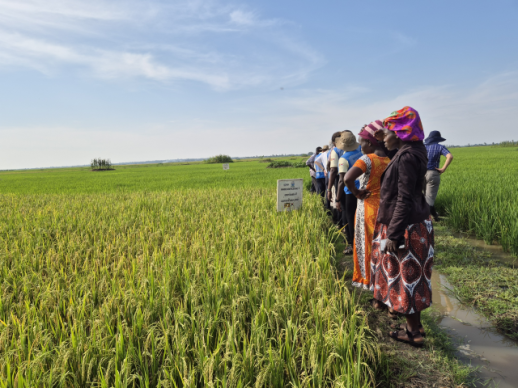 K-Rice Belt Initiative Exceeds Seed Production Goals in Africa, Sierra Leone Joins Efforts The K-Rice Belt initiative, aimed at producing and distributing rice seeds in African countries with weak rice production bases, is progressing well, exceeding its initial production targets. On May 21, the Ministry of Agriculture, Food and Rural Affairs announced that through the K-Rice Belt initiative, a total of 6,365 tons of high-quality, high-yield rice seeds were produced last year across seven African countries. The production figures for the seven countries are as follows: Uganda 3,670 tons, Ghana 739 tons, Guinea 723 tons, Senegal 587 tons, Gambia 431 tons, Kenya 155 tons, and Cameroon 60 tons. The total rice seed production of 6,365 tons surpassed the target of 4,752 tons by 34%. Over the past three years, the cumulative production has reached 12,248 tons, exceeding 10,000 tons. The average yield per hectare is also promising, with an average of 4.6 tons per hectare, more than double the local traditional cultivation yield of 2.2 tons. This represents an improvement of over 15% compared to last year's average of 4 tons. Of the 6,365 tons of rice seeds produced, 1,633 tons from the first crop will be prioritized for distribution to farmers and vulnerable populations in collaboration with local governments. The remaining 4,732 tons from the second crop will also be distributed following consultations with the target countries. Additionally, the government is working on establishing seed production infrastructure as part of the K-Rice Belt initiative. Through the Korea Rural Community Corporation, a total of 520 hectares of rice seed production complexes are being developed in the seven African countries, with essential agricultural infrastructure such as land leveling, irrigation and drainage systems, and reservoirs being constructed according to local conditions. Receiving strong support from local governments and farmers, the government plans to expand the initiative by adding Sierra Leone as a new participating country, increasing the total from seven to eight countries. Jung Yong-ho, the International Agricultural Cooperation Officer at the Ministry of Agriculture, Food and Rural Affairs, stated, "The K-Rice Belt initiative has achieved stable seed production results for three consecutive years, gradually establishing a foundation for the project in each country. We aim to develop it into a representative agricultural official development assistance (ODA) model that contributes to overcoming food crises and enhancing food security in Africa."* This article has been translated by AI. 2026-05-21 12:43:22
 -
 KFTC Holds Briefing on Subcontract Payment Disclosure System and Linkage System The Fair Trade Commission (KFTC) is set to assess the implementation of the subcontract payment disclosure system and linkage system for large business groups.On May 21, the KFTC announced it will hold a briefing at the DMC Tower for representatives from 102 designated business groups regarding the 'Subcontract Payment Disclosure System and Linkage System.'The briefing will cover the expansion of the application of the subcontract payment linkage system and the prohibition of unlawful activities.According to Article 13-3 of the Act on Fair Transactions in Subcontracting, primary contractors within designated business groups are required to disclose information biannually via the electronic disclosure system (DART). This includes payment amounts by payment method and period, as well as details regarding dispute resolution bodies related to subcontract payments.The subcontract payment disclosure system was introduced to transparently reveal the status of subcontract payments in the market, encouraging primary contractors to improve their payment practices voluntarily. This system has been in effect since January 2023 to facilitate smoother negotiations between subcontractors and primary contractors based on disclosed information.During the briefing, the KFTC will provide detailed explanations of the disclosure targets, procedures, and important considerations to assist companies in understanding the system. Additionally, training will be conducted to prevent recurrence of issues identified during disclosure checks, such as false or delayed disclosures, simple omissions, and errors.Furthermore, the KFTC will also provide guidance on the linkage system following the subcontract payment disclosure system. Since the formal implementation of the subcontract payment linkage system in October 2023, the KFTC has been continuously supporting the establishment of a linkage culture in transaction sites. The briefing will outline the overview of the linkage system, implementation procedures, and key amendments to the law.A KFTC official stated, "We will continue to monitor the overall operation of the subcontract payment disclosure system and linkage system to ensure they are faithfully implemented in the field. We plan to promote various support activities, including holding briefings and providing materials."* This article has been translated by AI. 2026-05-21 10:45:43
 -
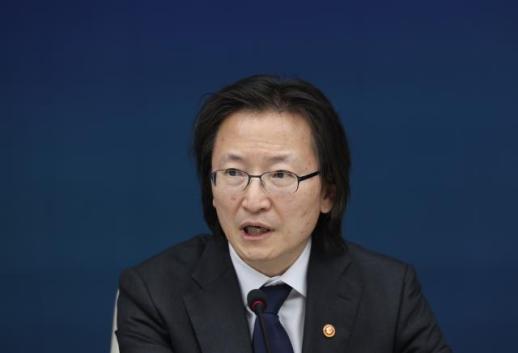 Fair Trade Commission Chair Joo Byeong-gi: Government Efforts Lead to Processed Food Price Reductions Joo Byeong-gi, the Chair of the Fair Trade Commission, stated on May 20 that it is fortunate that efforts by the commission and the Ministry of Agriculture, Food and Rural Affairs have led to price reductions for processed foods such as bread, ramen, and snacks since March.During a meeting of the Special Task Force on Consumer Prices held at the Government Seoul Building, Joo noted that the flour milling industry voluntarily reduced flour prices by up to 8.2% during the commission's investigation and review process.He added, "The Fair Trade Commission has imposed independent price re-determination orders to restore competition prior to collusion and has also established new disciplinary regulations to eradicate repeated collusion."The meeting also included a report on the review results regarding collusion in essential consumer goods, specifically eggs and flour. Joo explained that the Fair Trade Commission decided to impose a fine of approximately 600 million won on the Korea Egg Producers Association for artificially setting the standard price for egg transactions under the pretext of protecting farmers' rights and compelling farmers to comply.He emphasized that such collusion has been a major reason for rapid price increases and slow decreases for consumers.Following the commission's detection of collusion, there are expectations for improvements in the distribution structure. Joo stated, "The Ministry of Agriculture, Food and Rural Affairs plans to enhance management and improve the distribution structure by excluding policy support, revoking association establishment permits, and establishing a verification and announcement system for egg farm prices. This is a significant achievement resulting from collaboration among relevant ministries to detect unfair practices and improve the distribution structure."Joo also announced plans to strengthen monitoring of collusion activities taking advantage of supply chain disruptions caused by the Middle East conflict. He mentioned that the commission is conducting on-site investigations into four manufacturers and sellers of polyvinyl chloride (PVC) and plasticizers suspected of collusion amid recent supply instability. He stated, "We plan to impose strict penalties if any legal violations are detected."* This article has been translated by AI. 2026-05-21 09:49:28
 -
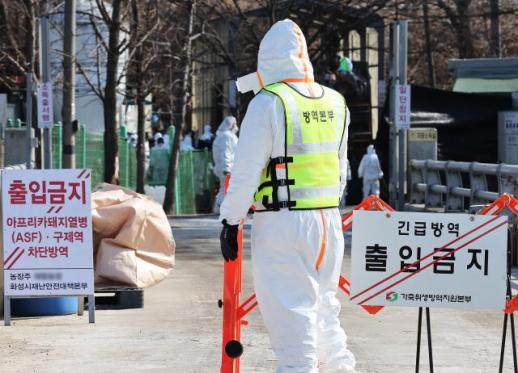 87% of This Year's African Swine Fever Cases Linked to Foreign Sources This year, 87% of the confirmed cases of African swine fever (ASF) in South Korean farms have been traced back to foreign sources. The primary routes of transmission are believed to be through feed ingredients and the compounded feed made from them. The Animal and Plant Quarantine Agency released the findings of its epidemiological investigation into the causes of ASF on May 19. Between January 16 and March 16, 24 cases of ASF were reported across seven provinces nationwide. Notably, the disease spread to regions beyond the previously affected areas of Gyeonggi, Gangwon, and North Gyeongsang, including South Chungcheong, North Jeolla, South Jeolla, and South Gyeongsang. Of the 24 cases, three were of a type previously identified in South Korea, while 21 were linked to strains originating from abroad. Key factors contributing to the outbreak include infection through feed ingredients, illegal distribution of livestock products, and contamination from wild boars. The Central Disaster Management Headquarters noted that ASF genes from foreign strains were detected in feed ingredients and compounded feed supplied to the affected farms, confirming a link between the farms and the contaminated feed. Additionally, ASF genes were found in six unreported products seized during crackdowns on illegal livestock products, raising concerns about the potential for virus entry through border inspection networks. Authorities also believe that contamination from wild boar carcasses may have transmitted the virus to domesticated pigs on farms. The Central Disaster Management Headquarters is enhancing its biosecurity measures. A testing system for ASF has been established, requiring inspections of all pigs being shipped from slaughterhouses nationwide. To prevent ASF entry through illegal livestock products, the agency is expanding X-ray inspections of travelers' luggage. Park Jeong-hoon, head of the Food Policy Office at the Ministry of Agriculture, Food and Rural Affairs, stated, "We are implementing proactive biosecurity measures starting from the entry of foreign workers to slaughterhouses and wild boars to prevent a recurrence of ASF. We urge farms to actively cooperate with biosecurity management, including restricting access for people and vehicles and prohibiting the entry of illegal livestock products into farms."* This article has been translated by AI. 2026-05-19 15:43:35
 -
 Korea's Fair Trade Commission Targets 'False Discounts' by Major Online Retailers South Korea's Fair Trade Commission (FTC) has urged major online shopping platforms to clearly differentiate between regular prices, sale prices, and maximum discounts that apply under specific conditions to eliminate so-called "false discounts."On May 19, the FTC announced its findings after investigating 1,335 products from four major online retailers—Coupang, Naver, Gmarket, and 11st—during the recent Lunar New Year holiday. The investigation revealed instances where retailers inflated prices to exaggerate discount rates or continued to sell products at the same price after limited-time promotions ended.Analysis of 800 gift sets offered during the Lunar New Year sales showed that 12.8% (102 items) had their prices raised during the discount period, misleading consumers about the actual savings. This practice constitutes unfair representation and advertising.Additionally, an examination of 535 items that were part of limited-time discounts in January found that 20.2% (108 items) either maintained the same price or decreased in price after the promotional period ended. The FTC considers these actions a violation of its "Online Dark Pattern Self-Regulation Guidelines."While the retailers set their own prices, the FTC emphasized that platforms also have a responsibility to prevent legal violations.To combat the inflation of discount rates through arbitrary price adjustments, the FTC recommended that retailers provide detailed explanations on product pages. It also suggested including a warning that false or exaggerated representations could lead to legal liability, along with documentation supporting the listed prices.Furthermore, the FTC advised that discount rates should be based on a general sale price applicable to all consumers, while conditions for conditional discounts should be clearly stated nearby. This aims to clarify the minimum and maximum discount rates available to consumers.An FTC official stated, "As major platforms take the lead in improving their systems, retailers must remain vigilant and accurately represent regular prices and discount rates based on objective evidence. Consumers are encouraged to use price comparison sites to check average selling prices and price trends before making purchases."* This article has been translated by AI. 2026-05-19 13:03:00
 -
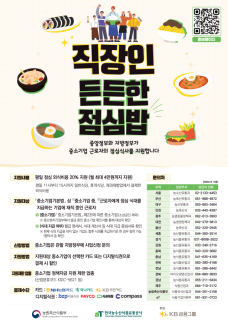 Government to Support Lunch Costs for Small Business Workers The Ministry of Agriculture, Food and Rural Affairs announced on May 19 that it will launch the "Substantial Lunch Program for Workers" starting on the 21st to alleviate the lunch cost burden for employees of small businesses and stimulate sluggish dining consumption.This initiative aims to ease the burden of "lunchflation" on small business employees by providing partial support for lunch expenses through collaboration between the government, local governments, and sponsorship from KB Financial Group. Discounts will be offered via point rewards from card companies or digital meal vouchers.The program will target 50,000 workers employed at small businesses as defined by the Small and Medium Enterprises Basic Act, provided that their companies currently subsidize lunch expenses. However, companies participating in the "1,000 Won Breakfast for Industrial Complex Workers" program will be excluded from this support.Eligible workers can receive a 20% discount on their lunch expenses, up to a maximum of 40,000 won per month, when dining out between 11 a.m. and 3 p.m. on weekdays. Discounts will not apply to meals purchased at company cafeterias, convenience stores, or through delivery apps.Jung Kyung-seok, Director of Food Industry Policy at the Ministry of Agriculture, Food and Rural Affairs, stated, "We hope the Substantial Lunch Program for Workers will reduce the financial burden on small business employees while also boosting sales for local dining establishments. We will strengthen communication with private companies and local governments to continue expanding this initiative."* This article has been translated by AI. 2026-05-19 12:15:24