
Journalist

Kwon,sung jin
mark1312@ajunews.com
-
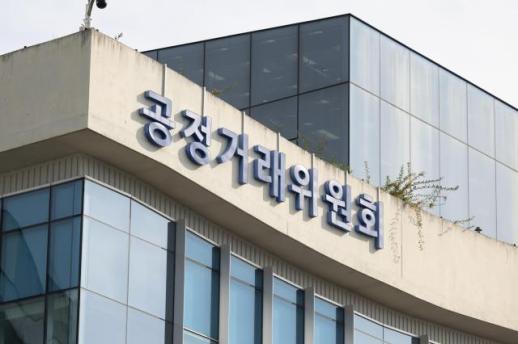 Korea Fair Trade Commission Warns of Refund Delays as Prepaid Installment Firms Drop to 76 South Korea’s Fair Trade Commission said Thursday the number of registered prepaid installment transaction companies fell to 76 in the first quarter, down from 77. The commission said two companies canceled their registrations during the quarter and one newly registered. Four companies reported changes to key information such as executives or addresses. A Plus Life and Baramil Good Life changed their representatives, The Better Life changed its address, and Utopia Future changed its email address, the commission said. The commission urged consumers signing prepaid installment contracts to closely review notices from the consumer damage compensation insurance institution to help prevent losses tied to closures or registration cancellations. It also warned that companies that frequently change their name or address may pose a higher risk of weak operations or business suspension. It said consumers should be especially cautious with companies that have not signed a consumer damage compensation contract, because there is no safeguard to recover payments if the company shuts down or another incident occurs. The commission said some companies have failed to refund payments — excluding penalties — within three business days after consumers cancel prepaid installment contracts for mutual-aid services and savings-type travel products, or have delayed payment. Consumers who suffer losses such as delayed refunds can seek counseling or file for relief through the Korea Consumer Agency, it said.* This article has been translated by AI. 2026-04-30 10:06:45
 -
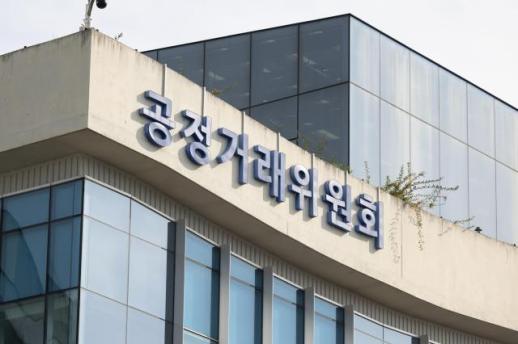 Korea Fair Trade Commission Fines Bodyfriend 40 Million Won for Incomplete Subcontract Documents South Korea’s Fair Trade Commission said on the 29th it will fine Bodyfriend 40 million won for issuing written manufacturing subcontract agreements that omitted required items, including signatures and delivery deadlines. The FTC said Bodyfriend signed 58 manufacturing subcontract contracts with four subcontractors from May 2021 to June 2024 for products including bed-type massage devices. Of the 58 contracts, 41 were issued in writing without the signature or name-and-seal of both parties. In eight cases, the written documents omitted the delivery deadline for the goods. In nine cases, both the signature or name-and-seal and the delivery deadline were missing. The FTC said the conduct violated Article 3 of the law requiring issuance of written documents. It ordered corrective steps to prevent a repeat and imposed the 40 million won penalty. An FTC official said the action is expected to help improve unfair subcontracting practices and protect subcontractors’ rights, adding that the agency will continue monitoring violations and take strict action in line with the law and principles when illegal conduct is found.* This article has been translated by AI. 2026-04-29 12:09:20
 -
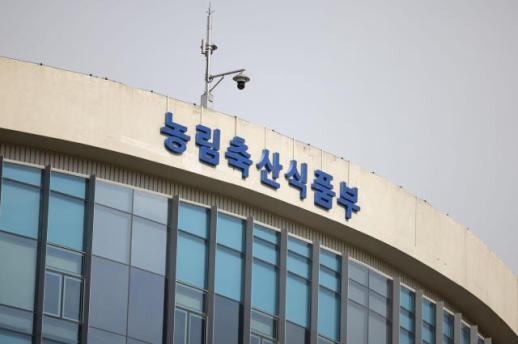 South Korea books 16 in alleged smuggling of banned Chinese apple seedlings South Korea’s Animal and Plant Quarantine Agency said Tuesday it has booked 16 people on suspicion of illegally importing large quantities of banned Chinese apple seedlings and other plant materials, in violation of the Plant Protection Act. The agency said it launched a planned investigation ahead of the spring season, when demand for seedlings typically rises. Investigators said the suspects — including seedling producers, importers, brokers and logistics operators — allegedly split roles and carried out repeated illegal imports. They also allegedly dispersed payments across multiple bank accounts to evade financial tracking. Seized items included about 630,000 Chinese apple seedlings and 138,000 peach seedlings, as well as 1,161 kilograms of peach seeds and 18 kilograms of fruit and vegetable seeds from Southeast Asia and Europe. The agency said the goods, worth tens of billions of won if sold domestically, were imported without quarantine procedures. The 630,000 apple seedlings alone could plant an orchard of about 4.13 million square meters (about 1.25 million pyeong), roughly 1.4 times the area of Yeouido, the agency said. It called the case unusually large for a single seedling-smuggling incident and said domestic distribution could have severely affected the broader fruit industry. The agency noted that fire blight previously entered South Korea through illegally imported fruit seedlings, and that since 2015 the country has paid about 254 billion won in compensation and related costs. The agency said it urgently seized illegally imported seedlings being stored by producers in March, before they could be distributed, and destroyed all of them by incineration. It said the investigation will be expanded to identify additional people involved beyond those already booked. * This article has been translated by AI. 2026-04-29 12:06:17
 -
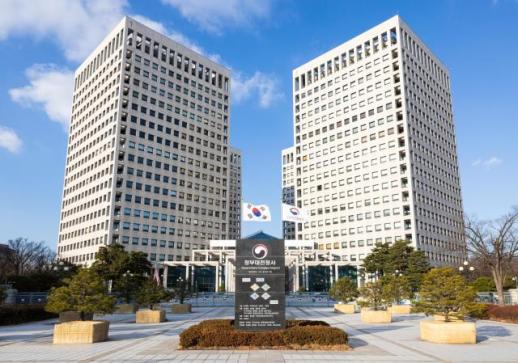 Korea Customs Hosts Asia-Pacific Anti-Drug Enforcement Workshop With WCO The Korea Customs Service said Tuesday it is holding an Asia-Pacific drug enforcement experts workshop with the World Customs Organization through April 30 to strengthen international coordination against drug crime. Experts from customs authorities across the region, including Thailand, Vietnam and Cambodia, are taking part, along with international organizations and European customs attachés based in China, the agency said. Participants will discuss ways to deepen cooperation by sharing joint-operation models and results by country, the latest drug-smuggling trends, and practices for using drug-detection dogs and drug analysis techniques. The program includes a WCO capacity-building seminar and hands-on training on operating an information-sharing platform between countries. Customs officials said they expect the workshop to strengthen enforcement capabilities and improve the effectiveness of joint crackdowns. This year, the agency plans to expand cooperation beyond existing partners by working more closely with Golden Triangle countries such as Cambodia, Laos and Myanmar to tighten border-level interdiction networks. The workshop will also serve as a pre-check for a Korea-Asia-Pacific joint anti-smuggling operation planned for the first half of this year, with the aim of refining cross-border coordination strategies, the agency said. Because drug crime is a major transnational offense that can undermine borders, a Customs Service official said the workshop will be used to raise cooperation among Asia-Pacific customs authorities and translate it into results.* This article has been translated by AI. 2026-04-29 11:57:16
 -
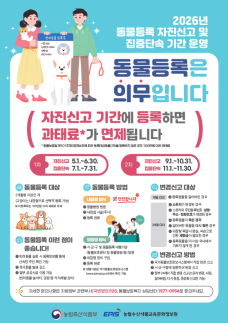 South Korea to Accept Voluntary Pet Dog Registration Reports Through June South Korea’s Ministry of Agriculture, Food and Rural Affairs said Tuesday it will run a first voluntary reporting period for animal registration through June and then carry out intensified enforcement in July. Under the Animal Protection Act, pet dogs aged 2 months or older must be registered with the local government. Owners who fail to register or do not report changes may face administrative fines of up to 1 million won or up to 500,000 won. Fines will be waived for those who register or report changes during the voluntary period. The ministry said it will also step up publicity for animal registration during the voluntary period and conduct a monthlong crackdown in July after it ends. It plans to operate a second voluntary reporting and enforcement period starting in September. “Animal registration is the first step in accepting a pet dog as a member of the family and the best way to prevent pets from going missing,” said Lee Yeon-sook, director of the ministry’s Animal Welfare Policy Division. * This article has been translated by AI. 2026-04-29 11:29:50
 -
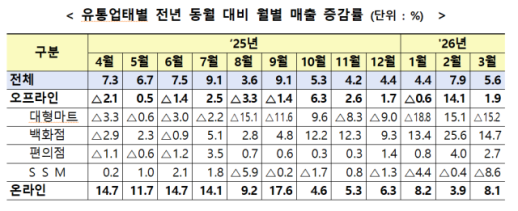 Online Sales Keep Rising; Department Store and Convenience Store Revenue Up for 9th Month Online sales extended steady growth in March, while among offline retailers, department stores and convenience stores stayed in positive territory. Big-box discount stores, however, returned to a decline after a one-month reprieve. According to the Ministry of Trade, Industry and Energy’s report on March 2026 sales trends at major retailers released Tuesday, combined sales at major retailers rose 5.6% from a year earlier. Offline sales increased 1.9% year over year. By format, department stores climbed 14.7% and convenience stores rose 2.7%, while big-box discount stores fell 15.2% and mid-sized retailers declined 8.6%. Department store and convenience store sales have risen for nine straight months since July last year. The ministry attributed department store gains largely to higher foreign tourist traffic and demand tied to spring outings and the new school term, which boosted sales of well-known overseas brands. Convenience stores posted growth in processed and ready-to-eat foods, tobacco and miscellaneous goods. Big-box discount stores weakened as spending continued to shift online, with most categories — including food and daily necessities — underperforming, pushing sales back into negative territory. Mid-sized retailers extended their slide to a fourth consecutive month. On a quarterly basis, big-box discount stores have been sluggish for eight straight quarters since the second quarter of 2024, and mid-sized retailers for three straight quarters since the third quarter of last year. Online sales rose 8.1% from a year earlier, continuing a sustained uptrend since the government began compiling the data. In addition to strong performers such as cosmetics (up 15.8%), food (up 10.6%) and home and household goods (up 9.5%), sales also increased for appliances and electronics (up 11.1%), children and baby products (up 10.7%) and books and stationery (up 4.1%). By sales share, online accounted for 60.6%, followed by department stores at 15.4%, convenience stores at 13.9%, big-box discount stores at 8.1% and mid-sized retailers at 2.0%. Compared with last year’s annual shares, online rose 1.6 percentage points while offline fell 1.6 points. * This article has been translated by AI. 2026-04-29 11:05:48
 -
 Korea Standards Agency Holds Forum on Industrial Measurement Strategy for Advanced Industries South Korea’s Korean Agency for Technology and Standards, under the Ministry of Trade, Industry and Energy, said Tuesday it held a policy forum on industrial measurement to support the advancement of high-tech industries. The agency said it used the forum to discuss strategies with industry officials in sectors including semiconductors, aviation, defense, and nuclear power. Industrial measurement refers to the infrastructure that ensures accuracy and reliability in measurements across industrial processes, enabling better quality control, improved safety, and more credible testing and certification. The agency said its importance is growing in advanced industries such as semiconductors, biotech and defense, where nanometer-level precision is required. It also said cases are increasing in which buyers, when importing aircraft and defense products, demand not only the product but also a “measurement and calibration package” that includes measurement equipment and calibration systems. The agency said such requirements are being viewed as a key factor in export competition between countries. The agency said South Korea’s industries remain heavily dependent on overseas suppliers for advanced measurement equipment and core metrology and measurement technologies, and that measurement management systems across industry have not been sufficiently upgraded. It said this could become a structural constraint on global competitiveness. At the forum, participants presented cases of applying ultra-precision metrology and measurement technologies in industrial settings and outlined the government’s policy direction. Experts from industry, academia and research institutes, including Korea Aerospace Industries (KAI), Hanwha Aerospace and Korea Hydro & Nuclear Power, discussed development strategies to meet rising demands for precision in advanced industries. The government said it plans to foster industrial measurement as a national priority by expanding related research and development and building regional support centers, while continuing to broaden field-focused support. “Industrial measurement is no longer a supporting technology but a core infrastructure that determines the competitiveness of advanced industries,” KATS Administrator Kim Dae-ja said. “We will further strengthen our industries’ global competitiveness by securing precise measurements and reliable data.” * This article has been translated by AI. 2026-04-29 11:04:59
 -
 South Korea FTC to Revise Consumer-Centered Management Designation Rules South Korea’s Fair Trade Commission will revise terminology and procedures in its Consumer-Centered Management (CCM) business designation system, including renaming the certification review body as a designation review body and replacing “certificate” with “designation confirmation.” The FTC said April 29 it will accept public comments through June 8 on a proposed revision to the enforcement decree of the Framework Act on Consumers. The proposal follows amendments to the law promulgated in March. Under the plan, related terms will be aligned with the revised law: “certification review institution” will become “designation review institution,” “certificate” will be replaced by “designation confirmation,” and “certification work” will be changed to “designation review work.” The FTC will also elevate to the enforcement decree an existing notice requiring businesses to pay review fees directly to the Korea Consumer Agency. The designation review institution would be required to submit to the FTC each year a plan for how the fees will be used and a report on actual spending. The proposal also changes how members of the Consumer Policy Committee’s expert panel are selected. The current enforcement decree provides that government members must be senior officials or equivalent, and that private-sector members are appointed by the prime minister. The FTC said the process has been criticized as too rigid, making it difficult to run the panel quickly and flexibly. Under the revision, the requirement for nominating government members would be removed, and private-sector members would be appointed by the FTC chair rather than the prime minister. * This article has been translated by AI. 2026-04-29 10:03:19
 -
 South Korea launches third cohort of nuclear export program for small and midsize firms South Korea’s Ministry of Trade, Industry and Energy said it held a launch ceremony Tuesday at the Changwon Convention Center for the third cohort of its “first-step” export program for small and midsize nuclear power companies. The event was attended by Kang Gam-chan, the ministry’s director general for trade and investment, Kim Myeong-ju, South Gyeongsang Province’s vice governor for economic affairs, and representatives from related organizations including the Nuclear Export Industry Association, Korea Hydro & Nuclear Power, the Korea Trade-Investment Promotion Agency, and the Korea Trade Insurance Corp. The ministry also held a meeting with nuclear companies to discuss ways to boost exports of equipment and components. The ministry said it has supported exports of nuclear equipment through multiple channels. Through the “first-step” program, it selected 37 early-stage exporters and provided end-to-end assistance, from consulting to financing, certification and marketing. The ministry noted that the global nuclear supply-chain market is shifting rapidly as electricity demand rises with growth in the artificial intelligence industry and the expansion of data centers, prompting calls to adjust government support strategies. It said it is reviewing steps to strengthen its export support system and provide tailored assistance based on the characteristics of new markets. “Amid the global expansion of nuclear power, opportunities for our companies to take the lead in new markets are becoming real,” Kang said. “The government will provide broad support so domestic companies can turn this trend into opportunity, including winning orders for new nuclear plants and entering overseas supply chains.”* This article has been translated by AI. 2026-04-29 06:03:16
 -
 Korea Fair Trade Commission Launches Third Youth Advisory Group The Korea Fair Trade Commission said Tuesday it has formed its third “2030 Advisory Group” and held a launch ceremony for the panel, which will advise the agency on fair-trade policy from a youth perspective. The 20-member group will operate in three divisions: consumer issues, competition and business transactions, and public relations and communications. Over the next year, members will propose policies the commission plans to prioritize and suggest ways to communicate policies more effectively to the public. The commission said it expects practical, on-the-ground input across fair-trade policy because the members include startup founders, consumer-policy researchers and environmental activists. KFTC Chairman Joo Byung-ki said in welcoming remarks that the commission has worked across its policy agenda to protect the rights of young people and support their growth. He said the agency will incorporate the panel’s “fresh proposals and approaches” to pursue policies the public can feel in daily life.* This article has been translated by AI. 2026-04-28 16:05:07