
Journalist

Kwon Sung-jin
mark1312@ajunews.com
-
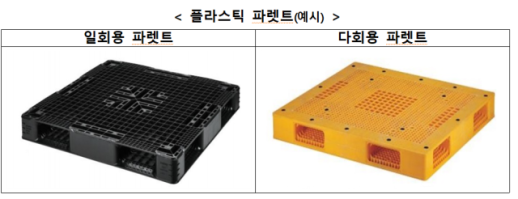 South Korea fines 18 plastic pallet firms 11.7 billion won for bid-rigging Eighteen manufacturers and sellers of plastic pallets that allegedly coordinated bid winners and prices have been fined by South Korea’s antitrust watchdog. The Fair Trade Commission said May 7 it will impose a combined 11.737 billion won ($11.7 billion won) in penalties and issue corrective orders against the 18 companies for avoiding competition and fixing prices. Pallets are platforms used in logistics to bundle and move multiple items as a single load. The companies took part in 165 bids run by 23 businesses and, through phone calls, in-person meetings and mobile messaging, agreed in advance on the expected winner, “cover” bidders and bid prices for each tender, the commission said. The cover bidders submitted bids at the agreed price level, and the designated winner shared part of the collusive profits with other firms. In particular, five of the firms also agreed on which company would supply pallets in transactions with NongHyup Economic Holdings and then split the profits, the commission said. When local NongHyup cooperatives asked to buy pallets, four other firms quoted prices higher than the NongHyup supply price to steer purchases through Economic Holdings. The collusion lasted 6 years and 8 months and involved 369.2 billion won in related sales, the commission said. It said 23 companies, including Lotte Chemical, DL Chemical and Seoul Milk Cooperative, were harmed. An FTC official said the agency will respond strictly to cartels that impose unnecessary costs on businesses and weaken industrial competitiveness. * This article has been translated by AI. 2026-05-07 12:04:39
 -
 Korea Fair Trade Commission to Brief Big Conglomerates on Disclosure Rules South Korea’s antitrust regulator will hold tailored briefings online and in person for disclosure officers at major conglomerates, aiming to prevent repeat violations. The Korea Fair Trade Commission said May 7 it will host the sessions with the Korea Chamber of Commerce and Industry from May 11 to 13 for companies designated as disclosure-target business groups, commonly known as large conglomerates. The commission holds quarterly briefings each year to improve understanding of disclosure requirements and curb recurring violations. Groups that breach the disclosure system can face corrective orders and administrative fines of up to 100 million won. Last month, the commission newly designated 11 groups as large conglomerates: Line, the Korea Teachers’ Credit Union, Woongjin, Shielders, Daemyung Chemical, Toss, Kolmar Korea, Heesung, Orion, QCP Group and Iljin Global. Including the newly designated groups, the total number of large conglomerates in South Korea is 102. At the briefings, the commission will also explain obligations related to status disclosures, disclosures of large internal transactions, and disclosures of key matters for unlisted companies, reflecting cases in which the controlling person of some groups has changed to a natural person. It will provide additional guidance tied to this year’s group designations and set aside time for questions and answers, offering company-specific assistance. The commission said it will continue outreach online. In the first half of the year, it plans to produce explanatory videos on large internal transactions, key matters for unlisted companies and group status disclosures, and release them on its official YouTube channel. In the second half, it plans to hold “on-site disclosure briefings” for conglomerates based outside the capital region. * This article has been translated by AI. 2026-05-07 10:03:21
 -
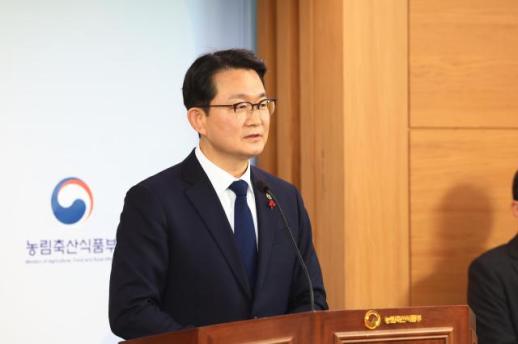 Calls Grow for NH Reform: Direct Election, Permanent Oversight Body Urged As the government moves ahead with a broad overhaul of NongHyup, calls are growing from academics, cooperative members and the public to move faster. Critics say repeated misconduct involving the chair of the National Agricultural Cooperative Federation reflects structural problems and requires changes such as direct elections by members and a permanent oversight body. According to relevant ministries on Tuesday, the National Assembly’s Agriculture, Food, Rural Affairs, Oceans and Fisheries Committee will hold a legislative hearing May 12 on revisions to the Agricultural Cooperatives Act. The hearing is expected to focus on an amendment proposed by Democratic Party lawmaker Yoon Jun-byeong that emerged from a ruling party-government consultation on April 1. The bill calls for introducing direct elections for the federation chair by cooperative members and creating an external audit body. The push follows repeated allegations of lax management and misconduct at the federation. A joint government audit announced in March found widespread problems, including corruption and abuses of power by key executives, preferential loans and contracts, and loose budget spending. The government referred 14 cases for investigation. A recent survey commissioned by the Korea Rural Economic Institute from Gallup Korea found strong support for reform: 94.5% of cooperative members and 95.1% of the general public said they favor changes. Many cited the need to address wrongdoing by executives and employees as the main reason, including 55.1% of members and 73% of the public. Experts have also argued for stronger checks on the federation. In a recent report titled “NongHyup Reform: Creative Destruction and Innovation,” KREI researcher Kim Tae-hoo said existing cooperative committees and audit committees have limits in ensuring independence because the federation chair can exert influence. He said that is why reforms are needed, including requiring the appointment of outside experts as compliance officers, mandating reporting of crimes by executives and employees, and creating a legal basis to suspend officials from duty upon conviction. Some cooperative heads, however, have raised concerns about direct elections and making audit bodies permanent. They argue direct elections could turn NongHyup into a political organization and weaken professionalism. Others say constant oversight runs counter to the cooperative principle of autonomy. Ha Seung-soo, a lawyer with the NongHyup Reform Promotion Group, rejected that argument. “It is true that cooperatives should be guaranteed autonomy, but autonomy at a level that enables corruption cannot be accepted,” he said. He said the current indirect election system, in which only cooperative heads vote, has produced behavior close to “dividing up positions.” He added that breaking what he called an exclusive privilege through direct elections would make the organization healthier. The government said it will accelerate work on a second package of reforms. A government official said the first package aimed to prevent misconduct by the federation and its chair, while the second will focus on remaking NongHyup into an organization for farmers. The official said the government plans to announce the second package next month, drawing in part on Japan’s agricultural cooperative reforms. * This article has been translated by AI. 2026-05-07 06:04:10
 -
 Korea FTC Orders Concert Membership Refund, Cancellation Terms Revised South Korea’s competition watchdog has ordered changes to what it called unfair terms that limited refunds for paid performance memberships, including clauses that blocked annual-fee refunds after a single use of discount or early-ticket benefits. It also moved to fix terms that made it easy to join online but required cancellation only by phone. The Korea Fair Trade Commission said Tuesday it reviewed membership terms used by 19 venues and ticketing platforms, including the Seoul Arts Center and Lotte Concert Hall, and required corrections to unfair provisions. The review was conducted to prevent consumer harm as public interest in culture and the arts has grown. According to the FTC, some operators had maintained clauses stating refunds were not allowed once service began. Lotte Concert Hall specified that refunds were unavailable if a paid member had received benefits, while Gangneung Arts Center said refunds were not allowed after 15 days from sign-up or if there was any booking history. The FTC said using membership benefits alone does not necessarily mean the operator suffers losses equal to the full annual fee. It required terms to allow full refunds within 14 to 30 days of joining, while permitting only a penalty equivalent to the benefits used to be deducted, with the remainder returned. The agency also cited cases of excessive deductions during refunds. The Seoul Arts Center deducted both an amount based on elapsed time and a fee after two weeks, and the National Gugak Center said refunds were not allowed if the value of discounts exceeded the membership fee. The FTC said such clauses infringed on consumers’ legitimate refund rights and required revisions so that only the larger of the amount corresponding to the period of use or the value of benefits provided can be deducted. Unfair limits on how members could cancel or withdraw were also targeted. Lotte Concert Hall and Interpark allowed sign-ups through easy channels such as online registration but required withdrawals to be made only by phone. The FTC said that improperly restricted how customers could express their intent and ordered changes to allow withdrawal through various methods, including online, phone and written requests. The FTC said it also corrected clauses covering exemptions from liability when user fault overlaps, unilateral deletion of member posts without a chance to explain, and unfair refusals of membership or limits on service use. Kwak Go-eun, director of the FTC’s Division for Standard Form Contracts and Special Transactions, said the changes are expected to reduce consumers’ burdens during refunds. She said the FTC will continue to inspect and correct unfair contract terms and trading practices in areas closely tied to daily life.* This article has been translated by AI. 2026-05-06 12:04:09
 -
 South Korea Moves to Stabilize Agricultural Film Supplies Amid Mideast War Risks As the prolonged war in the Middle East raises concerns about shortages of agricultural film, the South Korean government is launching a pilot program with private-sector partners to stabilize supplies. Under the plan, the government will work with petrochemical companies to provide raw materials to manufacturers, which will produce agricultural film and deliver it to local agricultural cooperatives. The Ministry of Agriculture, Food and Rural Affairs said Tuesday it will carry out the pilot with Jinju Horticultural Nonghyup, which operates its own film plant. The Ministry of Trade, Industry and Energy will work with Hanwha Solutions to supply raw materials for agricultural film within this week, and Jinju Horticultural Nonghyup will use them to produce film and supply it to six materials sales outlets run by local Nonghyup cooperatives. Agricultural film is used during the farming season to manage moisture, suppress weeds and block pests. In summer, farmers also use specialized film to reduce sun-scorch damage. The agriculture ministry said supplies needed for spring farming have been secured nationwide, but it sees regional imbalances. To address that, it has been working with Nonghyup to support local cooperatives in areas with low inventories. “This is the first case of producing and supplying film through cooperation with the trade ministry and Nonghyup to ensure stable supplies of agricultural film,” said Kim Jeong-uk, director general for agro-industry innovation policy at the ministry. He said the ministry will continue to monitor supply and demand and “do its best” to ensure stable supplies. * This article has been translated by AI. 2026-05-06 11:06:25
 -
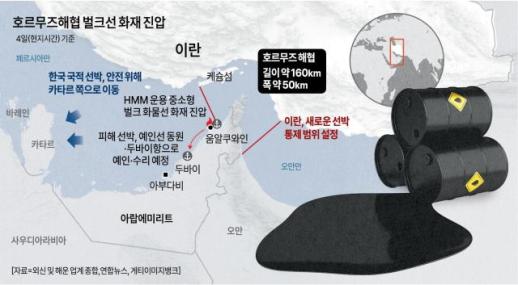 Suspected Iran Attack on Korean Cargo Ship Raises Hormuz Risks, Oil Price Concerns Suspicions that Iran attacked the Korean cargo ship NAMU have sharply raised tensions around the Strait of Hormuz, fueling concerns that South Korea’s crude oil supply strategy could be disrupted if Korean-operated vessels become targets. The renewed Middle East risk is also pushing international oil prices higher, adding another policy variable for Seoul. According to relevant authorities on May 5, a fire broke out in the engine room of the NAMU after an explosion at about 8:40 p.m. the previous day while the ship was anchored in waters north of Sharjah in the United Arab Emirates, inside the Strait of Hormuz. The vessel is Panama-flagged and operated by South Korean shipping company HMM. It had 24 crew members aboard: six South Koreans and 18 foreign nationals. Regional tensions have intensified. Iran has attacked oil export ports and other sites with missiles and drones, and the UAE has warned of retaliation. A ceasefire between the United States and Iran also appeared to be on shaky ground. Iran, strongly opposing the U.S. “Project Freedom,” launched missiles and drones, and U.S. naval vessels have continued intercepting them. As a result, expectations that South Korean tankers could leave the Strait of Hormuz in the near term have largely faded. Seven tankers linked to South Korean refiners — carrying about 14 million barrels — remain stuck in the strait, and rising tensions have further reduced the likelihood they can depart soon. A bigger concern is the possibility of a targeted attack on a Korean shipping operator. If it is confirmed that Iran deliberately targeted a South Korean vessel, disruptions would be difficult to avoid even for crude supplies rerouted via the Red Sea, where the Iran-aligned Houthi rebels remain active, the report said. The situation could also complicate the Industry Ministry’s crude supply planning. Alternative crude secured for this month totals 74.62 million barrels, or 87% of normal import volumes. But if tensions rise simultaneously in the Strait of Hormuz and the Red Sea, bottlenecks could worsen at alternative ports such as Yanbu in Saudi Arabia, making even those volumes harder to bring in. With many tankers already waiting, delays would be hard to avoid, the report said. Higher shipping rates and insurance premiums are another concern. If costs rise as tensions mount, they would likely be passed on to crude prices with a lag. Oil markets reacted immediately. Despite an output increase announced by seven countries in OPEC+, prices kept climbing. At the close, Brent crude futures settled at $114.44 a barrel, up 5.80% from the previous session, while U.S. West Texas Intermediate futures rose 4.39% to $106.42. Still, the impact on spot prices remains unclear. The Dubai crude spot market — a benchmark for South Korea’s Middle East crude imports — has not yet fully reflected the heightened tensions, and the same is true for Singapore’s MOPS oil product prices. With the fifth round of the fuel price-cap system set to take effect May 8, the government’s calculations have become more complicated. A key reason for holding the benchmark steady in the third and fourth rounds was stable international oil prices. But with crude above $100 a barrel and Middle East risks rising, the outlook has become harder to predict, making it difficult to maintain the previous freeze, the report said. Retail prices have continued to rise despite the government’s freeze. As of 2 p.m., Opinet data showed the national average gasoline price at 2,011.42 won per liter and diesel at 2,005.46 won, up 0.38 won and 0.25 won, respectively, from the previous day. * This article has been translated by AI. 2026-05-05 19:03:06
 -
 Korea to Launch Public Zoo Safety Council After Wolf Escape The government will launch a consultative body to strengthen zoo safety management and improve animal welfare standards, following a recent wolf escape at Daejeon O-World that heightened calls for broader checks of zoo operations. The Ministry of Climate, Energy and Environment said it will hold the inaugural meeting of a nationwide council of public zoos on Tuesday at the Korea Public Institution Research Institute in Seoul. The council is intended to reinforce the leading role of public zoos as public concern grows over zoo safety after animal escape incidents. It will diagnose on-the-ground problems such as aging facilities, staffing shortages and weak safety systems, and discuss practical steps for improvement. The ministry also plans to review how public zoos are preparing for a shift to a permit-based system under the Act on the Management of Zoos and Aquariums. The system took effect in December 2023, but zoos already registered were granted a grace period through December 2028, allowing a phased transition. Through the council, the government plans to share difficulties reported by operators during implementation and develop support measures. Participants in the launch meeting will include Lee Chae-eun, director general for nature conservation at the ministry, along with officials from regional environment offices, the National Institute of Ecology, the Korea Association of Zoos and Aquariums, and representatives of public zoos nationwide. The ministry said it will use the council to build a standing cooperation framework among public zoos and jointly review implementation levels in key areas including facilities, staffing, safety management and animal welfare. It also said it will actively support the permit system so it can take root smoothly based on feedback from the field. Lee said the ministry will focus its policy efforts on encouraging the transition to the permit system while refining related standards to raise zoo safety and welfare levels. She added that the ministry will continue working with relevant agencies so public zoos can meet permit requirements in a substantive way. 2026-05-05 12:33:14
 -
 Climate Ministry Approves 12 Circular Economy Sandbox Projects, Including Plastic Pyrolysis The Ministry of Climate, Energy and Environment said Tuesday it approved regulatory exemptions, or sandbox status, for 12 projects tied to circular-economy technologies and services. The ministry said the move is expected to significantly overhaul standards for recognizing recyclable resources, making chemical recycling such as pyrolysis easier to carry out. The ministry said it held a Circular Economy New Technology and Service Review Committee meeting on April 30 at Seoul Square and conducted the reviews there. The circular-economy regulatory sandbox, introduced in January 2024, allows companies to test new technologies and services within limited time, locations and scale; if safety and effectiveness are proven, related regulations can be improved or supplemented. The latest review focused largely on expanding chemical recycling of waste plastics through pyrolysis and reducing packaging waste, as part of a shift away from plastics. In South Korea, waste-plastic recycling currently consists of 58% thermal recycling and 41% material recycling, while chemical recycling through pyrolysis accounts for just 1%, the ministry said. Under the plan, waste-plastic projects will receive exemptions from waste-related regulations during the demonstration period. Based on the results, the ministry said it will revise standards for recognizing circular resources so that chemical recycling such as pyrolysis can be more readily used. It said most waste plastics generated at worksites are now sent to thermal recycling because collection systems are inadequate and treatment costs are an issue. Regulatory exemptions were also granted for a project to test whether solid fuel products can be used as pyrolysis feedstock. Solid fuel products made from combustible waste are currently limited to use in power generation facilities or industrial boilers. During the test period, the fuel will be fed into pyrolysis facilities to verify the volume and composition of pyrolysis oil produced, and the ministry said it will consider revising related rules. The ministry also said it will adjust regulations to test recycling options for pyrolysis residue. Because the residue has lacked a separate classification number, it has been disposed of in landfills. The ministry said it plans to allow various recycling uses, including as a soil conditioner and solid fuel, and to create new waste classification numbers and recycling categories. Other projects granted sandbox status include reducing packaging waste by improving labeling methods for household chemical products and producing leather and cosmetics materials using plant-based residues. Kim Go-eung, director general of the ministry's Resource Circulation Bureau, said the ministry will provide broad support to promote high-quality circular use of plastics and reduce plastic waste. He said the ministry will work with industry to improve the on-site applicability of recycling technologies so the circular economy can spread across society.* This article has been translated by AI. 2026-05-05 12:06:03
 -
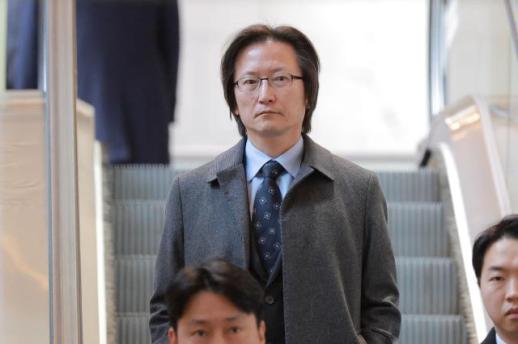 Korea Fair Trade chief to attend ICN annual meeting in Manila to discuss global cooperation South Korea’s Fair Trade Commission said Tuesday that Chairman Joo Byung-ki will attend the 25th annual conference of the International Competition Network, to be held in Manila from May 6-8. Hosted by the Philippine Competition Commission, the meeting is expected to focus on strategic planning and priority-setting; responses to algorithm-driven collusion in the digital environment; merger policy amid changing economic conditions; balancing effectiveness and predictability in enforcement against unilateral conduct; and new approaches to competition advocacy. The ICN, founded in 2001, is a forum of 148 competition authorities, including the U.S. Federal Trade Commission and Justice Department and the European Commission’s Directorate-General for Competition. The FTC is a founding member and serves on the ICN steering group. The agency sent a bureau director last year, but Joo will attend in person this year. On May 6, Joo is scheduled to join a plenary session on strategic planning and priority-setting to build agile, future-oriented competition authorities. The FTC said he plans to exchange views on challenges and responses with the heads of competition agencies from Greece, Hungary, the United Kingdom, Kenya and Poland. The FTC said Joo will present South Korea’s efforts to strengthen the effectiveness of enforcement tools, including reforms to its administrative fine system and easing criminal penalties. He also plans to highlight steps to expand judicial remedies, including introducing a Korean-style evidence-discovery system and widening the scope of injunctions available through consumer class actions and consumer group lawsuits. The FTC said Joo will also pursue bilateral cooperation during the conference, holding high-level talks with counterparts from the Australian Competition and Consumer Commission, Italy’s competition authority and the European Commission’s competition directorate. It said he will sign a memorandum of understanding with Philippine authorities to strengthen cooperation on competition-law enforcement and will meet with South Korean businesspeople in the Philippines to hear their concerns. “This visit will be a meaningful opportunity to seek response directions with the heads of competition authorities worldwide at a time when the competitive landscape is being rapidly reshaped by digital technology such as artificial intelligence,” Joo said. 2026-05-05 12:05:05
 -
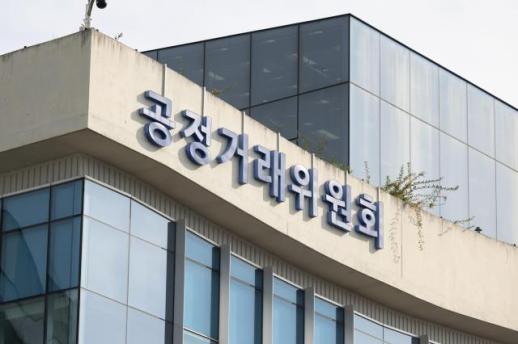 Korea Fair Trade Commission Fines SL 38 Million Won for Late Subcontract Documents A South Korean auto-parts maker has been sanctioned for issuing required subcontract documents late to its subcontractors. The Korea Fair Trade Commission said May 5 it will fine SL 38 million won for delaying written documents when outsourcing mold manufacturing to subcontractors. SL is a first-tier supplier to Hyundai Motor Co., providing automotive lamps and electronic parts. According to the commission, SL outsourced 328 cases of mold production for auto-parts manufacturing from May 2020 to May 2023, but issued subcontract-related documents only after work had begun, with delays ranging from at least eight days to as long as 605 days. The commission also said SL failed to pay 728,894,000 won in late-payment interest and promissory note discount fees across 342 contracts, even though more than 60 days had passed since the delivery date. The unpaid amounts included 509,651,000 won in late interest and 219,243,000 won in note discount fees. For violating its obligation to issue written documents, the commission ordered SL to prevent a recurrence and imposed the 38 million won fine. It issued a warning over the unpaid interest and discount fees, citing SL’s voluntary corrective action. A commission official said it will continue to address unfair trade practices that harm subcontractors’ rights and will impose strict penalties when violations are found to help establish fair subcontracting practices.* This article has been translated by AI. 2026-05-05 12:04:15