
Journalist

Lee Nak-yeon
nakk@ajunews.com
-
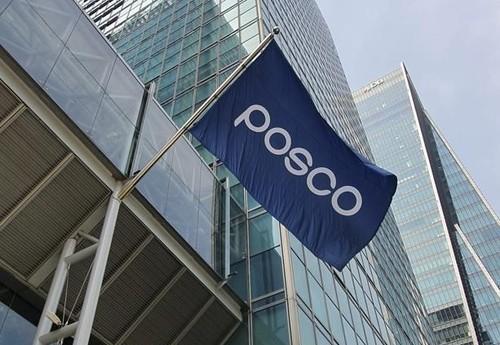 POSCO Faces Major Labor Crisis as First Strike Looms in 58 Years POSCO is facing its first strike threat in 58 years as tensions over the direct hiring of subcontractor employees escalate to the primary contractor level. This situation tests the crisis management skills of Jang In-hwa, chairman of the POSCO Group, in his final year of tenure. According to industry sources on May 11, some employees from subcontractors at POSCO's Pohang and Gwangyang steelworks have refused to report to work, disrupting operations. The affected employees include those from POTL and PSC, who are being considered for direct hiring. POSCO has reportedly deployed direct employees to replace them on an emergency basis. Dissatisfaction among subcontractor unions regarding issues such as recognition of service, wage restructuring, and performance bonuses has led to unrest on the ground. Last month, POSCO announced plans to directly hire 7,000 subcontractor employees through a cooperative council at its Pohang and Gwangyang steelworks, detailing the hiring process, conditions, and treatment. A new job category, 'Operational Synergy (S) Group,' was established, with a promotion system ranging from S1 to S7. Concerns have been raised about potential wage reductions and devaluation of experience. The primary contractor's union has also expressed strong dissatisfaction. The POSCO labor union, affiliated with the Korean Confederation of Trade Unions, filed for mediation with the Central Labor Relations Commission and is preparing for a general strike. This follows a meeting on May 6, where management and labor failed to reach an agreement on direct hiring issues. The union has demanded an apology and compensation from management, which has reportedly not been accepted, escalating the conflict. However, the union has indicated a preference for dialogue over an immediate full-scale strike. A union representative stated, "POSCO's competitiveness lies in its labor-management relations, so we will strive to resolve this through dialogue. If the company presents a proactive solution during the mediation period and we can narrow the gaps, we can continue discussions; otherwise, we will proceed with a phased strike plan." POSCO is committed to negotiating to avoid the worst-case scenario of a strike. A company representative said, "We are coordinating labor-management opinions regarding the direct hiring joint committee and plan to maintain ongoing communication with the union." Since its founding in 1968, POSCO has maintained a reputation as a non-conflict workplace, having never experienced a full-scale strike. Industry observers note that if this conflict escalates into a general strike, it could pose significant challenges for Chairman Jang's leadership. Particularly, Jang has emphasized 'field-centered management' and 'organizational stabilization' since taking office, leading to speculation that the resolution of this labor dispute could impact his chances for reappointment. An industry insider remarked, "In the steel industry, the continuous process nature means that disruptions in even a single area can significantly affect productivity and profitability. As the direct hiring issue extends beyond personnel conflicts to concerns about labor disputes and production disruptions, it could place considerable pressure on Chairman Jang." 2026-05-11 16:17:18
 -
 Lotte Energy Materials Reports $4.4 Million Operating Loss in Q1 Lotte Energy Materials has continued to face losses in the first quarter of 2026, despite efforts to defend its performance through increased demand for high-value copper foil products. The company reported a consolidated revenue of 159.8 billion won (approximately $4.4 million) and an operating loss of 5 billion won (about $4.4 million) on May 11. In terms of business segments, sales of battery foil for energy storage systems (ESS) and circuit boards increased, aided by improved productivity at its Malaysian factory, a lagging effect from rising copper prices, and better inventory valuation. However, sales of battery foil for electric vehicles (EVs) decreased due to logistics delays in Europe, resulting in a slight decline in overall revenue compared to the previous quarter. As of the end of the first quarter of 2026, Lotte Energy Materials maintained a debt ratio of 22.2% and a borrowing ratio of 10.6%. The company anticipates improved performance in the second half of the year due to rising demand for artificial intelligence (AI) data centers and next-generation semiconductor chips. As global tech giants ramp up competition to expand AI data centers, demand for high-performance copper-clad laminates (CCL) is surging. CCL is a key material for printed circuit boards (PCBs), consisting of a layer of copper laminated onto an insulating layer made of fiberglass and special resin. With continued investment from global tech companies in AI data centers and next-generation semiconductor chips, a structural supply shortage for AI circuit boards, particularly Hyper Very Low Profile (HVLP) boards for high-speed and large-capacity data transmission, is expected. In response, Lotte Energy Materials plans to accelerate its roadmap for expanding CCL production, aiming to increase its annual output from the current 3,700 tons to 16,000 tons by 2027, with further expansions under consideration after 2028. Previously, Lotte Energy Materials announced that starting in 2024, its product portfolio would evolve from a focus on EV battery foil to include ESS, high-value circuit boards, and products for power tools and mobile devices, while also launching nickel-plated copper foil and sulfide-based solid electrolyte businesses for next-generation all-solid-state batteries. Kim Yeon-seop, CEO, stated, "This year, we expect to make a quantum leap as a global leading materials company, leveraging our differentiated high-end products and advanced production capabilities, from high-value circuit boards for AI to next-generation all-solid-state battery materials."* This article has been translated by AI. 2026-05-11 09:58:16
 -
 Dongkuk Steel Launches 'Luxteel Playlist' to Engage Younger Generations Dongkuk Steel is launching a brand content project called 'Luxteel Playlist,' which combines music with the industrial landscape, based on its premium color steel brand, Luxteel. According to the steel industry on May 8, Dongkuk Steel will unveil the first content of Luxteel Playlist at 6 PM on its YouTube channel, Luxteel TV. This content features a playlist format that blends the actual sounds of steel production from factories and offices with K-pop music. The project, developed in collaboration with Broadplay, aims to provide consumers with a new brand experience by narrating Dongkuk Steel's story in the steel industry through music, appealing to the MZ generation (Millennials and Generation Z). The inaugural video was filmed at Dongkuk Steel's Busan plant. The approximately 1 hour and 10-minute playlist video showcases the color-coated steel products produced at the Busan plant along with scenes from the production site. Dongkuk Steel plans to release a total of four episodes in the Luxteel Playlist series this year. Future content will be filmed at locations such as the Dosung Center and the Ferum Tower headquarters, with plans for content featuring architectural structures utilizing Luxteel to be considered in 2027. Dongkuk Steel stated, "We wanted to present a bright and lively image of the workplace, rather than the heavy and dangerous steel production environment, through Luxteel Playlist. This video reflects Dongkuk Steel's identity of creating new value by adding diverse colors to steel."* This article has been translated by AI. 2026-05-08 18:24:34
 -
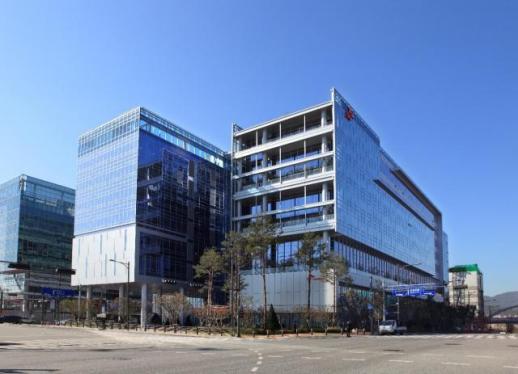 SK Chemicals Reports 464.3% Increase in Q1 Operating Profit SK Chemicals has reported strong performance in its key business sectors during the first quarter of 2026, despite a challenging economic environment. The company announced on May 8 that it achieved a standalone revenue of 385.7 billion won and an operating profit of 21.2 billion won for the first quarter. This marks a 14.2% increase in revenue and a remarkable 464.3% rise in operating profit compared to the previous quarter.SK Chemicals attributed its growth to increased sales in its core businesses, including copolyester and pharmaceuticals, amid ongoing economic uncertainty. Despite a downturn in the global petrochemical market, the company is focusing on high-value specialty products centered around 'green chemistry' and expanding its recycling initiatives to defend its performance. However, when including its subsidiary SK Bioscience, the consolidated results showed revenue of 655.9 billion won and an operating loss of 18.9 billion won.A representative from SK Chemicals stated, "Even in the first quarter, which faced significant external volatility, we were able to maintain a stable operation across sourcing, production, and sales, which helped sustain our revenue growth. We will continue to enhance our competitiveness by reviewing our product portfolio, cost structure, and operational processes to respond more flexibly to market changes and uncertainties such as fluctuations in oil prices and supply chain disruptions."* This article has been translated by AI. 2026-05-08 17:18:21
 -
 Investigation Underway into Fire on HMM Namoo Vessel A fire caused by an explosion on the HMM Namoo vessel, which was docked in the Strait of Hormuz, is now under investigation. According to HMM, a government investigation team boarded the vessel at 3 PM KST on May 8 at Drydocks World Dubai, the largest ship repair yard in the Middle East. The team consists of three investigators from the Central Maritime Safety Tribunal and four fire investigation experts from the National Fire Agency. The investigation will focus on whether the fire was caused by external factors, such as an attack from Iran, or internal issues related to the vessel itself. The crew members aboard the Namoo will participate in the investigation, after which a decision will be made regarding their disembarkation. An HMM official stated, "It seems that the crew will disembark after participating in the vessel investigation," adding that the exact timing and follow-up actions are still undecided. Previously, at around 8:40 PM KST on May 4, the HMM Namoo experienced a fire in the engine room due to an explosion while docked north of Sharjah in the UAE, inside the Strait of Hormuz. The vessel, which is operated by South Korea's largest shipping company HMM, is registered in Panama and has a total of 24 crew members, including six South Korean nationals and 18 foreign crew members. There were no reported injuries from the incident. Currently, five HMM vessels are stranded in the Persian Gulf, including two oil and petroleum product carriers, two bulk carriers, and one container ship. The HMM Namoo is classified as a bulk carrier.* This article has been translated by AI. 2026-05-08 17:16:49
 -
 Kolon Industries Reports 130% Increase in Q1 Operating Profit Kolon Industries announced on May 8 that its consolidated revenue for the first quarter reached 1.2374 trillion won, with an operating profit of 61.9 billion won. Despite ongoing external uncertainties, the company's operating profit surged by 130.1% compared to the same period last year, driven by the success of its ongoing Operational Efficiency (OE) project and increased sales of key products such as aramid, engineering plastics, and petroleum resins. In the industrial materials sector, sales growth in aramid and engineering plastics propelled revenue increases. Additionally, the expansion of high-value product sales contributed to improved operating profits. The chemicals division saw revenue and operating profit rise compared to both the same period last year and the previous quarter, thanks to the resumption of petroleum resin production following scheduled maintenance and increased sales to customers. The fashion division also experienced revenue growth year-on-year due to recovering consumer sentiment and strong sales of new products, resulting in a return to profitability. A Kolon Industries representative stated, "Despite the uncertain external environment, the OE project has yielded results, leading to increased revenue and operating profit across all divisions. We will continue to establish a foundation for sustained growth through operational efficiency and the expansion of high-value product lines." Meanwhile, Kolon Industries is accelerating efforts to streamline low-profit businesses and optimize non-core assets. Industry sources indicate that the company is considering the sale of low-profit divisions, including its semiconductor film business. In response, a company representative stated, "No decisions have been made regarding the sale of specific divisions."* This article has been translated by AI. 2026-05-08 16:33:20
 -
 HMM Approves Relocation of Headquarters from Seoul to Busan HMM held an extraordinary general meeting on May 8, approving a change in its headquarters from Seoul to Busan. The company plans to first relocate the CEO's office to Busan, followed by a gradual organizational transition.The meeting took place at Park One Tower in Yeouido, Seoul, where the board voted to amend the company's articles of incorporation to reflect the new headquarters location in Busan.Choi Won-hyuk, HMM's CEO, stated, "As a leading national shipping company, we are committed to contributing to balanced national development and achieving continuous growth." He acknowledged the current uncertainties in the domestic and international shipping environment, exacerbated by ongoing conflicts in the Middle East, which have led to rising costs and declining performance for HMM.Despite these challenges, Choi emphasized the company's commitment to overcoming the crisis through detailed strategies and enhancing shareholder value while strengthening its global investment capabilities.The meeting, which began at 9 a.m., concluded in under an hour as the proposed amendment was swiftly approved. The change in headquarters is effective immediately.After the meeting, HMM officials indicated that the relocation to Busan would proceed gradually and based on labor-management agreements, ruling out forced relocations without employee consent.Initially, some functions, including the CEO's office, will be moved, with further discussions on the scope and timing of organizational transitions to follow.HMM's labor and management reached a dramatic agreement on the headquarters relocation on April 30. However, concerns remain among employees regarding working conditions, housing, education, and the extent of key organizational moves.Industry insiders predict that further negotiations between labor and management will be necessary during the relocation process. One shipping industry representative noted, "While the amendment is complete, the actual relocation process is just beginning. Balancing employee acceptance and management efficiency will be crucial moving forward." 2026-05-08 11:50:46
 -
HMM Namoo Arrives in Dubai After Fire Incident Investigation Begins The HMM Namoo, which caught fire due to an explosion while anchored in the Strait of Hormuz, has arrived in Dubai, UAE, approximately 12 hours after being towed from the incident site. According to HMM, the vessel reached the vicinity of Dubai port at 5:20 a.m. Korean time, towed by a tugboat from near Umm al-Quwain. The Namoo is now docked at Drydocks World Dubai, the largest repair yard in the Middle East, where it will undergo repairs and an investigation into the cause of the fire. This process is expected to take an additional three hours. An HMM official stated, "Since the ship is without power, docking may take considerable time. External personnel, including investigators, are expected to board the vessel later this morning." The investigation will be conducted by a government team comprising three investigators from the Central Maritime Safety Tribunal and four fire department experts. The focus will be to determine whether the fire was caused by external factors, such as an attack from Iran, or internal issues related to the vessel itself. On May 4, at approximately 8:40 p.m. Korean time, the HMM Namoo experienced a fire in the engine room while anchored north of Sharjah in the UAE. The vessel, registered in Panama and operated by South Korea's largest shipping company HMM, had 24 crew members on board, including six South Koreans and 18 foreign nationals. Fortunately, there were no reported injuries from the incident. Currently, five HMM vessels are stranded in the Persian Gulf, including two oil tankers, two bulk carriers, and one container ship. The HMM Namoo is classified as a bulk carrier.* This article has been translated by AI. 2026-05-08 07:48:21
-
 HD Korea Shipbuilding & Offshore Q1 Operating Profit Jumps 58% to 1.356 Trillion Won HD Korea Shipbuilding & Offshore Engineering, HD Hyundai’s intermediate holding company for its shipbuilding business, said it extended strong results in the first quarter of 2026 on favorable conditions in its shipbuilding and engine businesses. In a regulatory filing on Thursday, the company reported consolidated first-quarter revenue of 8.1409 trillion won and operating profit of 1.3560 trillion won. That was up 20.2% and 57.8%, respectively, from a year earlier. Despite fewer operating days due to seasonal factors, revenue and profitability rose across all business lines as the share of high-margin eco-friendly ships increased, productivity improved and offshore earnings strengthened, the company said. Shipbuilding led the gains. Integrated HD Hyundai Heavy Industries, launched through a merger with HD Hyundai Mipo on Dec. 1 last year, posted revenue of 5.9163 trillion won and operating profit of 905.4 billion won. In the first quarter of last year, HD Hyundai Heavy Industries reported revenue of 3.8225 trillion won and operating profit of 433.7 billion won. HD Hyundai Samho reported revenue of 2.1245 trillion won and operating profit of 395.2 billion won, each up 8% from a year earlier. HD Hyundai Marine Engine said revenue and profit rose on higher engine selling prices, increased deliveries and stronger parts sales. It posted revenue of 133.5 billion won and operating profit of 32.6 billion won, up 60.8% and 216.5%, respectively, from a year earlier. HD Hyundai Energy Solutions reported revenue of 159.9 billion won, up 87.6% on higher module sales at home and abroad and price increases. Operating profit was 29.0 billion won, returning to the black. By segment, the shipbuilding division posted revenue of 6.6963 trillion won and operating profit of 1.1107 trillion won, up 14.6% and 42.1% from a year earlier on higher productivity and an improved product mix. The engine and machinery division reported revenue of 717.0 billion won and operating profit of 218.1 billion won, up 7.5% and 41.3%, respectively, as tighter global environmental rules boosted demand for dual-fuel engines. The offshore plant division posted revenue of 457.8 billion won and operating profit of 86.6 billion won, up 183.8% and 1212.1%, respectively, on higher project progress-based revenue recognition and cost cuts. An HD Korea Shipbuilding & Offshore Engineering official said newbuilding orders have continued, led by large tankers, with orders for gas carriers and container ships also steady. The official said bidding for major LNG projects in the United States is expected to ramp up in the second half, likely expanding demand for LNG carriers, and the company will continue selective orders focused on high value-added ships. The company said it has been winning orders for high value-added vessels since the start of the year. It recently won an order from KSS Line for three very large gas carriers, or VLGCs, worth a combined 504.8 billion won, bringing year-to-date orders to 86 ships totaling $9.35 billion (about 13.76 trillion won).* This article has been translated by AI. 2026-05-07 14:24:32
 -
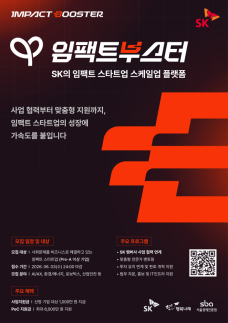 SK Launches Impact Booster Program to Help Social Ventures Scale Up SK said Wednesday it is launching “Impact Booster,” a program designed to help social ventures that have entered a growth stage scale up. Social ventures are startups that pursue profits while offering innovative solutions to social problems. The program targets social ventures that have moved beyond pre-A funding and entered Series A or B rounds, before an IPO. SK plans to select about 10 companies each year for intensive support. Selected companies will be offered opportunities to work with major SK affiliates including SK hynix, SK Innovation and SK Telecom, along with up to 70 million won in business support funding. SK will first provide 10 million won for growth, then offer up to 60 million won more for demonstration projects after companies identify tasks to pursue with SK affiliates. SK said it will link the new program with existing initiatives such as SK Pro Bono and SE Consultant to provide integrated support. For business-to-consumer companies, it will offer product consulting and help expand sales channels. For business-to-business companies, it will support pilot projects to help them build references and attract follow-on investment. SK also plans to strengthen support by working with outside organizations, including the Seoul Business Agency to back demonstration funding and the nonprofit OnYul to provide free legal advice. SK said the program is intended to address structural hurdles faced by social ventures, which it said can be undervalued in the market because of their focus on solving social problems and can struggle to secure opportunities to break through at the growth stage. The company cited its broader efforts to build an ecosystem for businesses focused on social problem-solving, including Impact MBA to develop social entrepreneurs, Impact Unicorn to help promising social ventures grow into unicorns valued at 100 billion won or more, and SOVAC (Social Value Connect) to promote connections and cooperation among companies working on social issues. SK said the push aligns with the group’s management philosophy. SK Group Chairman Chey Tae-won has emphasized the “Double Bottom Line,” arguing that companies should pursue social outcomes alongside financial performance to ensure sustainability. Under that approach, SK said it views social enterprises and social ventures as partners for shared growth, designing support to go beyond funding by providing business cooperation with affiliates and proof-of-concept opportunities aimed at generating sales and raising company value. “While the number of social ventures in Korea has increased, many are relatively undervalued as they carry out missions to solve social problems, and often fail to secure growth opportunities,” said Ji Dong-seop, SV committee chair of the SK Supex Council. “We will be a sponsor that provides integrated support so that no company fails to make a leap because it could not get an opportunity at the growth stage.”* This article has been translated by AI. 2026-05-07 11:07:33