
Journalist

Lee Nak-yeon
nakk@ajunews.com
-
 Solus Advanced Materials Opens New OLED Plant in Iksan, Doubling Capacity Solus Advanced Materials has built a new production base for organic light-emitting diode, or OLED, materials in Iksan, North Jeolla Province, as it moves to strengthen its OLED business. The company said March 19 that it held a completion ceremony a day earlier in Hamyeol, Iksan, with CEO Kim Tae-hyung and other executives and employees, along with North Jeolla Vice Gov. for Economic Affairs Kim Jong-hoon and Iksan Mayor Jeong Heon-yul. The Hamyeol plant is a new production site created by relocating and expanding the company’s existing Iksan facility. It will serve as an integrated hub producing both OLED emissive materials (organic materials) and non-emissive materials (polymer materials). Built on a 19,969-square-meter (6,050-pyeong) site in the Hamyeol Agro-Industrial Complex, the facility includes utility, synthesis and purification buildings, as well as offices. The company completed construction last month and, after receiving required approvals, began full-scale production this month. Solus Advanced Materials said it plans to improve both efficiency and quality competitiveness by consolidating production of emissive and non-emissive materials at one site, aiming to create synergies between R&D and mass production and expand its presence in the global OLED materials market. With expanded capacity, the company expects to accelerate mass production of a wider range of OLED materials. It said “Green PH,” which it expects to be highly profitable, is slated to enter full-scale mass production in the second half of this year. The company also plans to begin mass-production supply next quarter of thin-film encapsulation, or TFE, a non-emissive material. The company said it will also step up development of new materials in line with global industry trends, including materials for artificial intelligence semiconductors and automotive batteries, to secure future growth engines and strengthen competitiveness in new markets. “Hamyeol’s integrated OLED production base is a key manufacturing hub that will take Solus Advanced Materials’ OLED materials competitiveness to the next level,” Kim said. “We will secure market leadership by expanding R&D and production capabilities for high value-added materials and further strengthen our competitiveness in the global OLED materials market.” 2026-03-19 09:30:21
 -
 GS Caltex Launches CCU~S Carbon-Reduction Education Campaign, Unveils Hands-On Kit GS Caltex said on the 19th it is launching the “CCU~S (Kkuus) Campaign,” a carbon-reduction education initiative for future generations, and unveiling an educational creative teaching tool called the “Kkuus Kit (CCUS KIT).” The kit, the centerpiece of the campaign, is designed to make CCUS — carbon dioxide capture, utilization and storage — easier for children to understand by reinterpreting the concept at their level. The GS Caltex kit uses a playful, child-friendly theme, comparing “farts” to carbon in the air. It turns the process of capturing gas and using it as nutrients to grow plants into a game-like activity. The company said the kit is intended to help children naturally grasp the idea of a circular economy, in which carbon is collected and either reused as a useful material or stored safely. GS Caltex said it plans to link online and offline communications to broaden public engagement with the campaign. It will distribute the kit by lottery to applicants through the campaign page on its official blog, Media Hub, so members of the public can try it firsthand. The company also released a video made in collaboration with science creator “Gwedo,” explaining the scientific principles behind CCUS with humor. A GS Caltex official said the company will continue expanding low-carbon new businesses while creating social value through new forms of creative communication. The official added that GS Caltex will aim to become “a respected 100-year company” based on sustainable growth. * This article has been translated by AI. 2026-03-19 08:36:18
 -
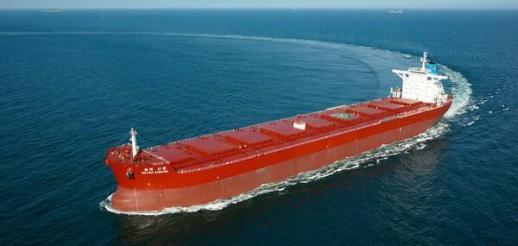 Janggeum Shipping Emerges as Key VLCC Player as War Roils Tanker Market Middle East-driven war fallout is jolting global shipping markets, and South Korea’s Janggeum Shipping is being cited as a quiet winner. The privately held company is little known at home, but industry watchers say it has become a core player in the tanker market, led by very large crude carriers, or VLCCs, and is generating daily earnings in the hundreds of millions of won. Industry sources said March 17 that Janggeum Shipping has recently been securing about $500,000 a day in charter fees for VLCCs, or about 750 million won. That is about 10 times last year’s average, as freight rates that jumped after the war have flowed directly into profits. The gains did not come by chance. Before the war intensified, Janggeum Shipping, through its tanker unit Janggeum Maritime, moved aggressively to secure VLCCs. Ship data firm VesselsValue said Janggeum Maritime has completed about 30 VLCC transactions so far this year. With those deals, the VLCCs it operates have risen to more than 100 ships, about 12% of the estimated global VLCC fleet of 880. Janggeum Maritime is led by Chung Ga-hyun, vice chairman and son of Janggeum Shipping Chairman Chung Tae-soon. Chung Ga-hyun owns 100% of Janggeum Maritime, which the industry views as a key growth pillar for the group. Analysts say a shift toward a tanker-heavy portfolio and early investment have put management to the test, with this shipping cycle offering evidence of results. The article said the war’s impact has also lifted earnings as the Strait of Hormuz was blocked, turning Janggeum’s VLCCs into floating crude storage. With onshore storage reaching its limits, refiners have increasingly chartered tankers as temporary storage, it said. The strategy has drawn attention abroad. Bloomberg recently highlighted Janggeum Shipping’s tanker buildup and profit structure, calling it “one of the smartest beneficiaries” amid turmoil in global energy markets. Bloomberg said Janggeum Shipping amassed large crude tankers before the war and, as a result, has emerged as one of the biggest winners from the disruption. It also said early fleet deployment and aggressive investment have shaken up the global tanker market. Janggeum Maritime’s rapid growth is also being watched for what it could mean for governance. As fleet size and profitability expand, the unit could become central to a future succession structure, the article said. The broader shift in emphasis from containers to bulk and tankers is also expected to accelerate alongside second-generation management. “One industry boom at Janggeum Shipping is not just a simple wartime windfall, but the result of a generational transition and a shift in business structure coming together,” a shipping industry official was quoted as saying. “On top of a strategy that quietly expanded the fleet, the second generation’s execution is emerging as a variable that can reshape the global shipping market.”* This article has been translated by AI. 2026-03-17 18:03:21
 -
 Korea Zinc’s indium draws U.S. attention as quantum computing material Korea Zinc, the only producer of the strategic mineral indium in South Korea, is drawing attention as indium gains prominence as a key material for the fast-growing quantum computing industry. With competition intensifying over next-generation technologies tied to quantum computing, industry officials say Korea Zinc’s stable indium output is positioning it as an important partner in advanced-industry supply chains, including those linked to South Korea and the United States. According to the industry on March 17, quantum computers use quantum mechanics — including superposition and entanglement — to perform complex calculations far faster than conventional computers. As the quantum computing sector enters a growth phase, indium’s strategic value has risen. Academic sources say indium is needed to make connectors for QPU (quantum processing unit) chipsets, which serve as the “brain” of quantum computers. Indium phosphide (InP) is also cited as a key material for producing photonic integrated circuits (PIC). Demand for indium is likely to increase as quantum computers improve and move closer to commercialization. The United States, home to many advanced technology companies, is working at the national level to advance quantum computing. In November 2025, the U.S. Department of Energy said it would provide $625 million to support next-generation research programs at the National Quantum Information Science Research Centers (NQISRC). The U.S. has also supported quantum technology research systematically since enacting the National Quantum Initiative Act in 2018. As the industry develops, securing stable supplies of key materials is increasingly seen as central to competitiveness and economic security. Indium is used not only in quantum computing but also widely in displays, touchscreens, thin-film solar power systems and advanced semiconductors. With indium’s importance growing, Korea Zinc has also come into focus. The company produces 99.999% high-purity indium using what it calls rare-metal concentration and recovery technology based on an integrated zinc, lead and copper process. After Chairman Choi Yun-beom took office, Korea Zinc raised indium output to about 90 to 100 metric tons a year. It produced 97 tons in 2025. Korea Zinc’s role in the U.S. indium supply chain is significant. According to the U.S. Geological Survey, South Korea ranked No. 1 in indium exports to the United States from 2020 to 2023, accounting for 29% of U.S. indium imports over that period. Given that Korea Zinc is the only indium producer in South Korea, the company effectively serves as a key partner supporting U.S. supply chains for advanced industries. “Indium is a critical mineral whose strategic importance is being highlighted not only in displays and semiconductors but also recently in the quantum computing industry,” a Korea Zinc official said. “As the only indium producer in South Korea, Korea Zinc will fulfill its role and responsibility as a backbone industry, based on world-class rare-metal recovery technology.”* This article has been translated by AI. 2026-03-17 17:37:38
 -
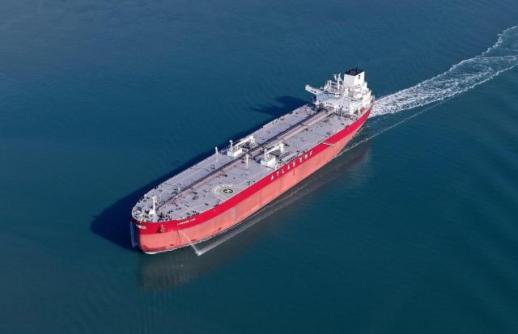 Daehan Shipbuilding Wins $1.3 Billion Won Order for One Suezmax Crude Oil Tanker Daehan Shipbuilding said it is continuing a strong run of new orders since the start of the year. The company said Tuesday it signed a shipbuilding contract on March 16 with an Oceania-based shipping company to build one Suezmax-class crude oil tanker worth about 130 billion won. Including the latest deal, Daehan Shipbuilding said it has won orders for a total of nine vessels so far this year, surpassing 82% of its annual order target. The customer first signed with Daehan Shipbuilding in 2023 and has placed additional orders each year since then, the company said. It described the latest order as an example of turning global geopolitical risks into business opportunities, as rising tensions in the Middle East, including Iran, have pushed ships onto longer detour routes and sharply increased crude transport distances. Daehan Shipbuilding said that trend is driving demand and prices higher for Suezmax tankers, which are suited to long-haul operations, and is supporting new orders for the company, which it said has strong competitiveness in the segment. "The fact that an existing customer returns every year shows the market fully recognizes our shipbuilding capabilities and premium value," a Daehan Shipbuilding official said. The official added that demand for high-efficiency Suezmax vessels is expected to rise amid recent Middle East-driven changes in logistics conditions, making it possible to reach the company’s annual order goal early. 2026-03-17 11:48:16
 -
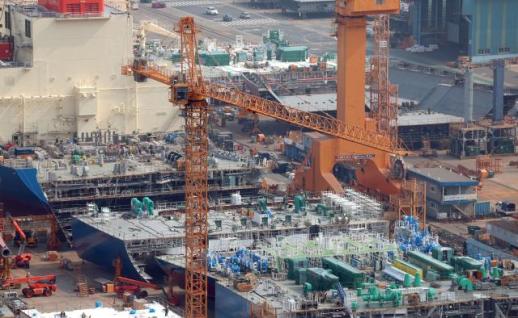 Korean Shipbuilders Warn Ethylene Shortage Could Disrupt Production if It Lasts Past March The war in the Middle East and the closure of the Strait of Hormuz are jolting South Korea’s shipbuilding industry, which has been running at near full capacity on a recent boom in orders. The immediate concern is an unstable supply of ethylene, an essential gas used in ship construction, raising the risk of production disruptions if the shortage persists. Multiple shipbuilding industry officials told Aju Business on the 16th that yards are holding out on inventories for now, but prolonged supply problems could first hit steel-cutting operations. “This month is the deadline,” they said. Officials pointed to the biggest pressure point: most shipyards are in a “full capacity” situation with docks filled by increased orders. With schedules tightly packed, any disruption in raw materials could delay processes and ripple through overall build timelines. At shipyards, ethylene is used to cut steel plates. Because shipbuilding steel is typically thick and difficult to process with standard cutting methods, builders use ethylene to raise flame temperatures from about 1,000 degrees to as high as 1,500 degrees before cutting plates to drawings. Since cutting steel to specification is a basic step in ship construction, ethylene is considered indispensable. The supply instability stems from the Middle East conflict, which has shaken feedstock flows. South Korea relies heavily on imports for ethylene, and more than half of those imports pass through the Strait of Hormuz. The industry also warns that if the situation drags on, it could affect “Masga,” a South Korea-U.S. shipbuilding cooperation project that includes ship construction and maintenance, repair and overhaul work. One industry official said most yards are already operating at full tilt, so a prolonged raw-materials problem could weigh on major project schedules. “How long the supply instability lasts is the key,” the official said. The government is monitoring the situation and has begun responding. The Ministry of Trade, Industry and Energy is checking supply conditions after receiving a request from the Korea Offshore & Shipbuilding Association to urgently secure ethylene volumes needed for shipbuilding cutting work. Baek Jeom-gi, a professor of naval architecture and ocean engineering at Pusan National University, said stockpiles are helping for now, but there is little cushion. With shipbuilding increasingly viewed as a strategic cooperation industry with the United States, he said, raw-material supply issues also require a national-level response. Industry officials also say a prolonged ethylene shortage could spread beyond shipbuilding to other manufacturing. Ethylene is a key basic feedstock used to produce plastics and synthetic resins and is widely used in products ranging from automobiles and construction materials to home appliances, smartphones, food, detergents and cosmetics.* This article has been translated by AI. 2026-03-16 18:03:18
 -
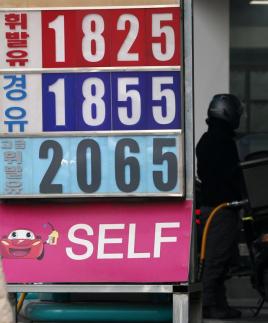 Korean Shipbuilders Warn of Ethylene Cutting Gas Shortage as Middle East Supply Disruptions Spread The fallout from war in the Middle East and disruption linked to the Strait of Hormuz is spreading to South Korea’s shipbuilding industry, which is reporting difficulty securing ethylene, a specialty gas used in ship construction. Some companies are warning of possible production disruptions. The government said it plans to use existing inventories to address immediate needs while preparing longer-term measures. Industry and government officials said March 16 that the Korea Offshore & Shipbuilding Association recently asked the Ministry of Trade, Industry and Energy for support in securing ethylene supplies. A shipbuilding industry official said some companies could run out “as soon as within two weeks.” The official said switching cutting gas to liquefied petroleum gas, or LPG, is an option, “but LPG is also an imported product, so stabilizing ethylene supply is the priority.” Ethylene is made from naphtha and is used in shipyards to process or cut steel plates. About half of the naphtha supplied in South Korea is imported, with the rest produced domestically through crude oil refining. About 70% of South Korea’s crude oil imports come from the Middle East, and 54% of imported naphtha passes through the Strait of Hormuz. The ethylene supply strain is being attributed to a halt in Middle East naphtha feedstock imports following the war between the United States and Israel and Iran. Yeochun NCC, the country’s largest ethylene producer, notified customers on March 4 that it would delay and adjust deliveries and declared force majeure on supply. A ministry official said chemical companies have inventories on hand and that the government coordinated with the Korea Chemical Industry Association to send urgent volumes first. “We have taken steps so there will be no short-term disruption to production, and we will spare no support so there are no problems in the long term,” the official said. 2026-03-16 09:46:12
 -
 South Korea’s Industrial Power Rates Shift to Cheaper Days, Costlier Nights; Heavy Users Skeptical The government has unveiled a revamp of industrial electricity rates, but petrochemical and steel producers — among the biggest power users — say the plan is unlikely to bring meaningful relief. With continuous, 24-hour operations, they say it is difficult to shift consumption by time of day, limiting any direct benefit from lower daytime rates. Industry officials said March 15 that companies in both sectors do not expect the changes to significantly reduce their overall power bills. On March 13, the Ministry of Climate, Energy and Environment and Korea Electric Power Corp. announced a seasonal and time-of-use pricing overhaul. Starting April 16, daytime electricity will be as much as 16.9 won cheaper per kilowatt-hour, while nighttime power will cost 5.1 won more. The government said the goal is to ease strain on the grid by encouraging companies to increase production during lower-demand periods, as power demand rises rapidly with the expansion of artificial intelligence data centers and broader electrification. It projected that about 38,000 businesses — 97% of companies — will see their average rate fall by 1.7 won per kWh. But heavy industries say the policy’s impact will be limited because their processes cannot be easily rescheduled. Petrochemical plants, including naphtha cracking centers, typically run around the clock under high-temperature and high-pressure conditions. Stopping or shifting output to specific hours can affect equipment safety and production efficiency, making adjustments difficult. Steelmakers cited similar constraints, saying key facilities such as electric arc furnaces and rolling lines operate largely as continuous processes, leaving little room to align production with time-based pricing. Companies also worry energy costs could rise further. They point to a recent surge in international oil prices amid instability in the Middle East, which has pushed up raw-material costs even as business conditions remain weak. Yeochun NCC recently declared force majeure to customers after supply disruptions linked to the Middle East situation made it difficult to fulfill some contracts, the report said. Some analysts also warn that higher oil prices could add longer-term pressure for electricity-rate increases, as rising fuel costs lift power generation expenses and become a factor in future pricing adjustments. Industrial electricity rates are already a major burden. Since 2022, industrial power prices have risen about 70% across seven increases, sharply raising costs for power-intensive sectors. “We understand the policy aim of spreading out electricity demand, but for 24-hour continuous-process industries it is practically difficult to adjust production times to electricity rates,” one industry official said. “With limited room to respond by sector, fairness across industries also needs to be discussed.”* This article has been translated by AI. 2026-03-15 17:03:27
 -
 Hyundai Steel, Hyundai E&C to Develop Floating Offshore Wind Platform Model Hyundai Steel is teaming up with Hyundai Engineering & Construction to strengthen competitiveness by expanding its presence in the steel market for offshore wind power. Hyundai Steel said March 15 that it signed a memorandum of understanding with Hyundai E&C on March 13 at its training center in Dangjin to jointly develop a proprietary model for floating offshore wind power. Under the agreement, the companies will jointly pursue development of a proprietary hybrid floating structure combining steel and concrete and aim to obtain approval in principle, or AIP, certification from Norwegian classification society DNV in 2027. Floating offshore wind power generates electricity using structures that float on the sea rather than being fixed to the seabed, allowing installation in deeper waters farther offshore and making it easier to build large-scale wind farms. The hybrid floater the companies plan to develop will apply Hyundai Steel’s high-strength, corrosion-resistant steel along with concrete, a combination they said can improve durability while also enhancing cost efficiency. Hyundai Steel said it has already begun joint research with Hyundai E&C to build competitiveness in the next-generation offshore wind market and has filed joint patent applications related to the proprietary model. A Hyundai Steel official said the company will "successfully develop the proprietary model" and expand its share of the offshore wind market based on its experience supplying steel for offshore wind projects at home and abroad. 2026-03-15 09:09:15
 -
 Korea's HMM joins wave of force majeure as Iran war disrupts Strait of Hormuz SEOUL, March 11 (AJP) -South Korea’s flagship container carrier HMM has joined a wave of force majeure declarations sweeping global shipping as the Iran war disrupts maritime traffic through the Strait of Hormuz, one of the world’s most critical trade and energy chokepoints. The company told shippers Wednesday that maritime security near the strait had deteriorated sharply due to the outbreak of war, hostile acts and attacks on commercial vessels, forcing it to impose restrictions on cargo services to the Middle East and Red Sea region. HMM said it would immediately stop accepting new bookings for cargo loaded at, or bound for, ports in the Arabian Gulf (Persian Gulf), the Red Sea and the Horn of Africa. Even for cargo already booked, shipments that have not yet been loaded will not be transported under current conditions, the company said. For cargo already in transit to or from affected areas, HMM said it would exercise its rights under bill-of-lading terms. Containers may be rerouted or discharged at the nearest safe port depending on operational conditions. The company also announced a transport disruption fee of $1,000 per container to cover additional costs such as cargo handling, storage and route changes. An HMM official said the measures were unavoidable. “Security conditions on the route have deteriorated rapidly due to the Iran war,” the official said, adding that the steps were necessary to protect the safety of ships, crews and cargo. The move comes as the conflict between the United States, Israel and Iran has triggered one of the most severe disruptions to Gulf maritime trade in decades. The Strait of Hormuz, linking the Persian Gulf with global sea lanes, handles roughly one-fifth of the world’s oil shipments and serves as a key artery for container trade between Asia, the Middle East and Europe. Industry data shows vessel traffic through the waterway has dropped sharply since the conflict erupted on Feb. 28 as missile and drone attacks on commercial vessels forced carriers to suspend services or divert ships. Major shipping lines including Maersk, CMA CGM, COSCO and Hapag-Lloyd have halted bookings or invoked force majeure provisions on shipments to several Gulf destinations. Force majeure is a contractual clause that allows companies to suspend or delay obligations when extraordinary events such as war or attacks on infrastructure prevent them from fulfilling contracts. The disruption is spreading beyond container shipping into global energy and petrochemical supply chains. Taiwan’s Formosa Petrochemical Corp. (FPCC) has declared force majeure on shipments of petrochemical products such as ethylene and propylene after delays in feedstock supplies caused by disruptions in the Strait of Hormuz, according to Reuters. Energy producers across the Gulf have taken similar steps. QatarEnergy, Bapco Energies in Bahrain and Kuwait Petroleum Corp. have invoked force majeure or emergency measures as attacks and shipping disruptions affect exports. Analysts say the growing use of the clause highlights how quickly geopolitical shocks in the Middle East can ripple through global supply chains. The maritime crisis is also pushing up operating costs for shipping companies. Prices for very low sulphur fuel oil (VLSFO) have climbed above $650 per metric ton, while marine gasoil has surged past $1,000, reflecting rising war-risk premiums and route diversions. According to shipping data provider Kpler, more than 140 container ships are currently sheltering inside the Persian Gulf, unable to safely transit the strait. The United States has moved to stabilize maritime insurance markets by launching a $20 billion reinsurance backstop to cover war-risk losses for vessels operating in the region after major insurers withdrew coverage. With shipping disruptions now spreading across container trade, energy markets and industrial supply chains, analysts warn the conflict could create prolonged bottlenecks in global logistics if the Strait of Hormuz remains unstable. 2026-03-11 13:19:04