
Journalist

Lee nakyeong
nakk@ajunews.com
-
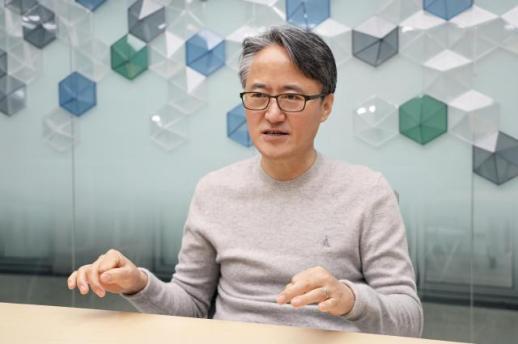 H Energy CEO says AI platform is key to meeting RE100 pressure in South Korea "Apple has declared it will make its entire supply chain carbon-neutral by 2030. If you can’t prove RE100, supply contracts get cut. This won’t be just a big-company issue — it will become a survival requirement for the entire supply chain," Ham Il-han, CEO of H Energy, said in an interview with Aju Business on May 5. Ham pointed to the company’s solution, "SolarShare Baro," a corporate platform that lets businesses buy electricity directly to meet RE100 goals. Using a company’s rooftop, H Energy installs and operates a solar power facility, allowing the business to receive power without upfront investment and at about 28% less than Korea Electric Power Corp. rates, he said. "In South Korea, where dependence on energy imports exceeds 90%, sunlight and wind are the only means of self-reliance," Ham said. He argued that instead of waiting decades for transmission lines needed for large power plants, the fastest approach is producing and using electricity on-site from corporate rooftops — a local production-and-consumption model. Ham also said technology can address structural bottlenecks in South Korea’s renewable energy market. He founded H Energy after leading energy projects for 17 years at LG CNS, aiming to use an artificial intelligence platform to streamline a market he described as fragmented across design, construction and operations. "In the coming era of renewable energy, the ability to integrate distributed resources into data and forecast with AI will become national competitiveness," Ham said. He added that H Energy’s goal is to change how energy capital is owned and distributed so returns circulate within local communities. Founded in 2018, H Energy operates multiple renewable energy platforms using data and AI. In addition to SolarShare Baro, it runs SolarOnCare, an asset management platform for solar power plants; Mohat, a cooperative-based renewable energy investment platform; and SolarShare, a rooftop solar leasing platform, the company said. Ham said the company’s ambitions extend beyond South Korea, with a long-term goal of exporting a "K-energy platform" to global markets, using Japan as a base and expanding to Southeast Asia and beyond. "No matter who installs solar panels or what power plants are built, our role is to build a platform that ensures those resources are operated properly," Ham said. "Changing the ownership and distribution structure of energy capital — that is why H Energy started, and it will not change."* This article has been translated by AI. 2026-05-05 18:05:59
 -
 Hanwha Aerospace Raises KAI Stake Above 5%, Shifts to Management Participation Hanwha Aerospace raises KAI stake above 5%, shifts to management participation Hanwha Aerospace said in a regulatory filing on the 4th that it bought additional shares of Korea Aerospace Industries (KAI), changing its stated holding purpose from a “simple investment” to “management participation.” According to the filing, Hanwha Aerospace acquired an additional 100,000 KAI shares, or 0.1%, lifting its combined stake including affiliates to 5.09%. With the stake now above 5%, the company changed the purpose of its holding to management participation. It said specific plans are under review. Hanwha Aerospace said it plans to invest a total of 500 billion won by the end of this year to buy more KAI shares. Based on the April 30 closing price of 169,000 won, its stake in Korea Aerospace Industries would rise to 6.4% after the planned purchases. Apgujeong District 5 rebuild nears contractor vote, Hyundai E&C vs. DL E&C Competition is intensifying between Hyundai Engineering & Construction and DL E&C as the selection of a builder for Apgujeong District 5, one of Seoul’s most contested redevelopment projects, approaches. Industry officials said on the 4th that the contractor will be decided at a union members’ general meeting on the 30th. The project rebuilds the Hanyang 1st and 2nd apartment complexes near 490 Apgujeong-dong, Gangnam-gu, into eight buildings ranging from five basement levels to up to 60 stories above ground, totaling 1,397 households. Total project costs are estimated at about 1.5 trillion won. Hyundai E&C is seen by some as having an edge due to the “Apgujeong Hyundai” brand symbolism, while DL E&C is countering with financing terms and changes to the project structure. DL E&C proposed construction costs of 11.39 million won per pyeong (3.3 square meters), more than 1 million won lower than the union’s expected cost estimate. The company said it is focusing on structurally limiting the risk of rising construction costs, not just price competition. Five automakers sell 666,248 vehicles in April, down 3.3% on Middle East risks Uncertainty in export markets tied to the war in the Middle East contributed to mixed results for South Korea’s five automakers in April. Hyundai Motor and Renault Korea posted year-on-year declines amid a lack of new models and weaker exports, while Kia, KG Mobility (KGM) and GM Korea reported growth on steady demand for popular models and more diversified export markets. Industry data released on the 4th showed combined global sales by Hyundai Motor, Kia, KGM, GM Korea and Renault Korea totaled 666,248 vehicles in April, down 3.3% from a year earlier. Domestic sales fell 8.8% to 117,314 vehicles, while overseas sales slipped 2.1% to 548,483. Samsung Electronics union rift widens as Donghaeng union quits joint bargaining group A split among labor unions at Samsung Electronics became official after a union based in the company’s Device eXperience (DX) division decided to leave a joint struggle headquarters. Samsung Electronics Labor Union Donghaeng said on the 4th it issued a formal statement notifying the National Samsung Electronics Labor Union and the Samsung Electronics branch of a cross-company union that the “2026 wage negotiation joint bargaining group” would end. Donghaeng cited serious conflict between unions and a breakdown in mutual trust as the decisive reason for withdrawing. In its statement, Donghaeng said, “Even when our union proposed and requested agenda items for the rights and interests of all members, not just members in a specific area, your unions (the cross-company union and the National Samsung Electronics Labor Union) have not responded to date.” It added that the other unions “did not even show an intention to consult,” leaving Donghaeng’s views “not reflected at all” in matters affecting all members. OTT battle for No. 2 intensifies as Coupang Play gains on HBO new releases The user gap between Tving and Coupang Play widened again in April in South Korea’s online video streaming market. Mobile Index data released on the 4th showed monthly active users (MAU) of 7,708,645 for Tving and 9,101,593 for Coupang Play, a difference of about 1.39 million users. Tving fell 3.95% from the previous month, while Coupang Play rose 0.61%. Among major services, Netflix fell 7.02% to 14,799,836 MAU, while Wavve rose 1.27% to 3,897,570. Disney+ saw its MAU rise by nearly 1 million in February due to a compensation program for customers affected by a KT hacking incident, but in April it fell 8.31% from the previous month to 3,462,195. Big five banks’ mortgage balances post biggest rise in eight months Mortgage loan balances at major commercial banks rose by the most in eight months, driven largely by policy-backed lending such as jeonse deposit loans and Didimdol loans, analysts said. Financial industry data released on the 4th showed mortgage balances at KB Kookmin, Shinhan, Hana, Woori and NH NongHyup banks totaled 612.2443 trillion won at the end of April, up 1.9104 trillion won from the end of March. It marked the biggest monthly increase since August last year, when balances rose 3.7012 trillion won. Overall household lending also increased. The five banks’ household loan balances totaled 767.2960 trillion won at the end of April, up 1.5670 trillion won from the end of March. It was the largest increase since October last year, when balances rose 2.5270 trillion won. Choo Kyung-ho and Lee Cheol-woo visit Park Geun-hye, call to protect conservative base Choo Kyung-ho, the People Power Party’s candidate for Daegu mayor, and Lee Cheol-woo, the party’s candidate for North Gyeongsang governor, visited Park Geun-hye on the 4th as they campaign for the June 3 local elections. The move followed a video congratulatory message from Lee Myung-bak at the opening of Choo’s campaign office the previous day, in what appeared to be an effort to rally conservative voters. The two candidates visited Park’s residence in Dalseong County, Daegu, on Monday afternoon. They were accompanied by Rep. Lee In-seon, head of the Daegu party committee; Koo Ja-geun, head of the North Gyeongsang party committee; and lawmaker Yoo Young-ha. After the visit, Choo told reporters, “President Park is a former president of our party and the biggest elder in conservative politics.” He added, “Since she is staying at her residence in Dalseong County, I thought it was only right to visit and pay my respects, ask after her health, and share various thoughts.”* This article has been translated by AI. 2026-05-04 22:03:34
 -
 UAE Says It Is Discussing Currency Swap Line With U.S. After Leaving OPEC The United Arab Emirates said it is discussing opening a currency swap line with the United States, following its exit from the Organization of the Petroleum Exporting Countries, Yonhap News Agency reported Monday. UAE Minister of State for Foreign Trade Thani Al Zeyoudi said the talks are part of discussions with several countries and would place the UAE in what he called an “elite group” that operates under U.S. swap policy. He made the remarks at an event in Abu Dhabi, according to Yonhap. “The United States currently has currency swaps with only five countries,” Al Zeyoudi said. He added that joining that group would mean bilateral transactions, trade and investment have reached a level where a swap line is essential. He did not disclose the size of any potential swap line or a timeline for an agreement. The U.S. central bank, the Federal Reserve, maintains permanent standing swap lines with five major central banks: the European Central Bank and the central banks of Canada, Japan, the United Kingdom and Switzerland. The UAE sees a swap line with the United States as a possible financial backstop against a foreign-exchange crisis after oil exports — a key source of hard-currency earnings — were hit by the closure of the Strait of Hormuz amid war in the Middle East. The move is also being viewed in connection with the UAE’s departure from OPEC on May 1. By leaving, the UAE signaled an independent course away from the Saudi-led order in global oil markets, increasing the need to draw closer to the U.S. government, which has been at odds with OPEC. Saudi Arabia, while a U.S. ally, has sought to reduce reliance on the dollar, including exploring yuan-denominated oil payments, as it tries to avoid ceding dominance in oil markets to the United States. For Washington, a swap line with a major Middle Eastern oil producer could help reinforce the “petrodollar” at a time when its durability is being questioned. If the UAE establishes a swap line with the United States, the relationship could extend beyond finance to closer coordination on security and military policy in response to Iran, a persistent threat, further widening distance between the UAE and Saudi Arabia.* This article has been translated by AI. 2026-05-04 21:45:18
 -
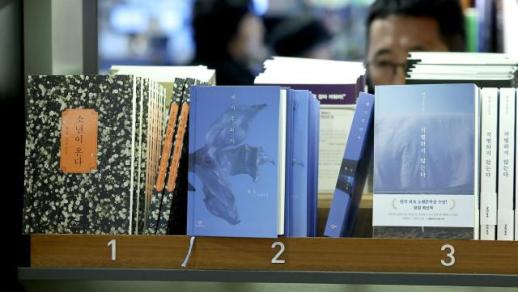 Han Kang’s ‘The Vegetarian’ Voted Top International Booker Winner in Reader Poll The International Booker Prize marked its 10th anniversary by naming Han Kang’s “The Vegetarian” the top winner in a reader vote. Yonhap reported on the 4th that the Booker Prize ran the poll on its official website from February to April, asking readers to choose among 10 winning titles from 2016 to 2025. About 10,000 people took part, and roughly one-third selected “The Vegetarian.” The prize’s international category began in 2005 as the Man Booker International Prize and changed its format and character starting in 2016. Han won in 2016 for “The Vegetarian” with translator Deborah Smith. Since then, Korean works reaching the final shortlist have included Han’s “The White Book” (2018), Bora Chung’s “Cursed Bunny” (2022), Myeongkwan Cheon’s “Whale” (2023) and Hwang Sok-yong’s “철도원 삼대” (2024). As it announced the vote results, the Booker Prize also republished an interview with Han that it posted in July 2023. “The time I was writing it, between 2003 and 2005, was a difficult time for me. I didn’t know if I could finish the novel, or even survive as a writer,” she said, adding, “I’m grateful to the International Booker Prize for letting my work meet a wider readership in another culture.” On controversy over alleged mistranslations after the award, Han said, “I don’t think the translator intentionally damaged the original, nor do I think she created a completely different new work.” Han said she wished she had reviewed the translation process for “The Vegetarian” as closely as she later did for “Human Acts,” and noted that in 2017 Smith made 67 revisions based on various criticisms. “Usually, the questions left after writing a novel lead me to the next work,” Han said. “This summer I’m starting a new novel, and I’m waiting to see what I’ll find at the end.” Han has not published a new book since “We Do Not Part” (2021).* This article has been translated by AI. 2026-05-04 21:33:17
 -
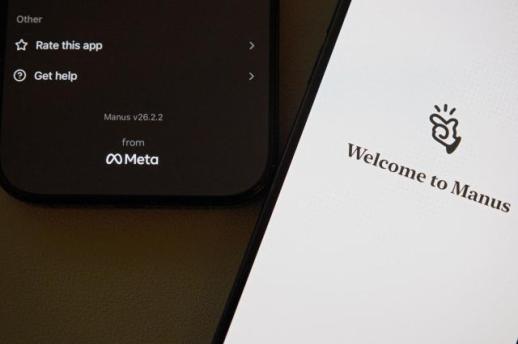 Meta Wins South Korea Corporate Tax Suit, Renewing Debate Over Big Tech Tax Avoidance Global big tech companies are notching a string of courtroom wins against South Korea’s tax authorities, highlighting limits in taxing overseas platforms that earn substantial revenue in the country. Yonhap reported May 4 that the Seoul Administrative Court’s Administrative Division 5 ruled April 23 that Meta’s Ireland entity partly won its lawsuit seeking to cancel a corporate tax assessment imposed by the head of the Yeoksam tax office and others. The amounts assessed, challenged and canceled were not disclosed. Meta’s Ireland entity, part of Meta Group, sells platform advertising space to advertisers worldwide outside North America. In South Korea, a Meta affiliate has operated by buying ad space from the Ireland entity and reselling it to local customers. The dispute began after the Seoul Regional Tax Office issued a corporate tax assessment against Meta’s Ireland entity in 2021. Tax authorities argued the Korean affiliate effectively constituted a domestic permanent establishment for the Ireland entity and was used to sell ad space to Korean advertisers, making the related income taxable in South Korea. Meta countered that the Korean office was simply a place where the Korean affiliate conducted its own business, and that work performed in South Korea amounted only to preliminary and auxiliary activities such as promotion and information gathering. The court sided with Meta, saying the Ireland entity did not have the right to dispose of or use the Korean business site and that it was difficult to conclude the Ireland entity actually carried out business there. “The fact that the service activities provided by the Korean corporation to the Ireland corporation offer economic benefits to the Ireland corporation does not, by itself, provide grounds to evaluate them as part of the plaintiff’s own business activities,” the court said. The court also said it was hard to view the Korean affiliate as performing essential business activities because Meta owns and manages the key intellectual property and servers needed to establish and operate the platform. “The platform’s appeal — the development and operation that draws users — is important, but the Korean corporation was not involved at all in such development and operation,” the court said, adding that promotion and marketing are generally auxiliary rather than essential business activities absent special circumstances. The ruling follows a similar case involving Netflix. In a lawsuit seeking to cancel corporate tax and other assessments, a court ruled that 68.7 billion won of 76.2 billion won should be canceled, effectively handing Netflix a win. Industry officials said the Meta decision underscores how the digital economy can clash with existing tax systems, as global big tech companies use structures that shift costs overseas — such as technology royalties or service fees — to minimize profits booked in South Korea. Domestic platform companies such as Naver, which paid 601.4 billion won, and Kakao, which paid 94.7 billion won, pay corporate taxes in the hundreds of billions of won in line with sales and profits. Critics say the sharply different tax burdens in the same market amount to reverse discrimination.* This article has been translated by AI. 2026-05-04 21:00:15
 -
 Iran Claims U.S. Warship Hit by Missiles in Strait of Hormuz; U.S. Denies Iranian media reported Monday that a U.S. warship trying to transit the Strait of Hormuz was hit and forced to turn back. Yonhap News Agency said Iran’s Fars News Agency reported that a U.S. Navy frigate in the Gulf of Oman was struck by two Iranian missiles and withdrew as it attempted to pass through the strait. Citing a local source in southern Iran, Fars said the frigate tried to transit near waters off Jask in southeastern Iran after violating navigation and vessel-traffic rules. Jask is a port city on the Gulf of Oman, east of the Strait of Hormuz. Fars quoted the source as saying the ship became a target “immediately after” it ignored warnings from Iran’s navy and continued maneuvering. It said the vessel was hit by two missiles and could not continue, turning around to retreat. The U.S. military quickly denied the report. U.S. Central Command, which oversees operations in the Middle East, said on X: “Fact check. A U.S. Navy warship was not hit.” It added that U.S. forces are supporting “Project Freedom” and strengthening a maritime blockade of Iranian ports. The U.S. military said it launched “Project Freedom” earlier Monday to escort civilian ships trapped in Gulf waters through the Strait of Hormuz using aircraft and warships.* This article has been translated by AI. 2026-05-04 20:48:16
 -
 Iran’s IRGC Expands Strait of Hormuz Control Zone After U.S. ‘Project Freedom’ Announcement Iran’s Islamic Revolutionary Guard Corps has sharply expanded the area it says it controls in the Strait of Hormuz, pushing tensions in the Middle East to a peak. According to Yonhap on Monday, the IRGC set a new western control line running straight from the western tip of Iran’s Qeshm Island to Umm Al Quwain in the United Arab Emirates. On the southeastern side, at the strait’s entrance, it drew a control line from Mount Mobarak in southeastern Iran to a point south of Fujairah in the UAE. Previously, the IRGC designated waters near Qeshm and the nearby Larak Island as a safe route, while labeling the waters that curve around Oman’s Musandam Peninsula as a “danger zone” and restricting ship movements there. Under the newly disclosed lines carried by Iranian media, the IRGC’s control zone now extends across both sides of the strait, covering not only Omani waters but also parts of UAE territorial waters. The UAE’s port of Fujairah, outside the strait and previously a potential way to bypass a blockade, is also included in the declared control area. The move came after U.S. President Donald Trump said he would launch “Project Freedom” starting Monday morning to support passage through the Strait of Hormuz. The IRGC responded by declaring broader and tougher control, signaling it could treat any attempt to pass under U.S. naval escort as an “intrusion” into its control zone and use force. Shipping industry officials said that if the restrictions are enforced in earnest, freight rates tied to a “Hormuz premium” could surge again. The term refers to additional price increases as geopolitical risk in the strait is directly reflected in global oil prices. Amid the recent rise in regional tensions, war-risk insurance premiums for ships transiting the strait have jumped to as much as more than 10 times normal levels, rising from about 0.25% of a vessel’s value to as high as 1% to 3%. * This article has been translated by AI. 2026-05-04 19:27:22
 -
 Hanwha Aerospace Raises KAI Stake Above 5%, Shifts to Active Management Role Hanwha Aerospace said in a regulatory filing on the 4th that it bought additional shares of Korea Aerospace Industries, or KAI, and changed its stated purpose for holding the stake from a “simple investment” to “participation in management.” According to the filing, Hanwha Aerospace acquired an additional 100,000 KAI shares, or 0.1%, raising its combined stake including affiliates to 5.09%. With its ownership now above 5%, the company revised its holding purpose to management participation. It said specific plans are under review. Hanwha Aerospace said it plans to invest a total of 500 billion won by the end of this year to buy more KAI shares. Based on KAI’s April 30 closing price of 169,000 won, the purchases would lift Hanwha Aerospace’s stake in KAI to 6.4%. Hanwha Aerospace said the stake increase is aimed at strengthening cooperation in defense and aerospace and improving global export competitiveness. A company official said the firm is expanding its stake after weighing both business synergies and investment value, adding that if a government-led privatization of KAI becomes a public issue, it will review whether to pursue an acquisition, integration or other steps in line with government policy. The two companies have worked together on KF-21 export cooperation, air-to-air missile development and performance upgrades for special operations helicopters. In February, they signed a memorandum of understanding to cooperate on domestic production of advanced aircraft engines, joint development of unmanned aircraft and a joint push into the global commercial space market. Hanwha Aerospace said the companies aim to expand orders under a “one-team” strategy and grow into a leading national defense firm. It also said the partnership could support the creation of an aerospace and defense cluster centered on Changwon and Sacheon in South Gyeongsang Province and help create jobs.* This article has been translated by AI. 2026-05-04 19:09:17
 -
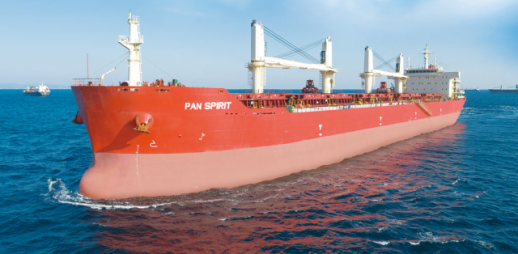 Pan Ocean Q1 Operating Profit Rises 24.4% on Strong LNG, Tanker Business Pan Ocean posted strong first-quarter results on solid performance in its liquefied natural gas (LNG) and tanker businesses. The company said in a regulatory filing on the 4th that its consolidated operating profit for the first quarter totaled 140.9 billion won, up 24.4% from a year earlier on a preliminary basis. Revenue rose 8.3% to 1.5089 trillion won, and net profit increased 31.3% to 94.5 billion won. By segment, the tanker business reported operating profit of 28.1 billion won, up 41.5% from a year earlier, as market conditions strengthened for medium-range (MR) petrochemical product carriers. The LNG business posted operating profit of 47.2 billion won, up 49.7%, after deliveries were completed for all vessels. The bulk segment posted operating profit of 54.7 billion won, down 10.3% from the previous quarter, which the company attributed in part to geopolitical risks stemming from the Middle East. The container segment recorded operating profit of 9.0 billion won, down 42.9% from a year earlier, as freight rates fell amid oversupply. Pan Ocean said profitability improved despite a traditional seasonal slowdown, citing gains from expanding its portfolio, including LNG. The company has been accelerating efforts to diversify beyond its bulk-focused business structure. To that end, it previously announced plans to invest up to about 1.6 trillion won in non-dry bulk businesses centered on LNG. To fund investment in LNG and other areas outside its core bulk segment, it set capital expenditures at about 816.0 billion won in 2025, about 407.9 billion won in 2026 and about 136.0 billion won in 2027. A Pan Ocean official said the company will continue efforts to strengthen its ability to respond to market changes and expand its business portfolio to secure competitiveness and stable profitability. The official added that Pan Ocean will also pursue environmental, social and governance (ESG) management to reinforce its standing as a “sustainable company.”* This article has been translated by AI. 2026-05-04 16:35:54
 -
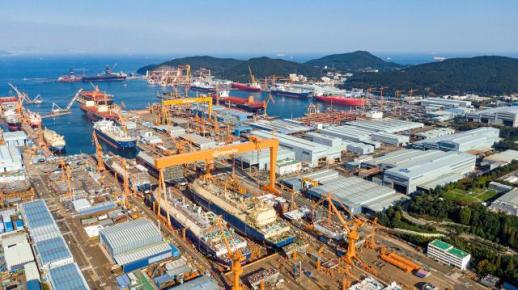 Korean shipbuilders draw 6 orders for very large carriers amid Hormuz disruption SEOUL, May 04 (AJP) -South Korea’s major shipbuilders secured more than 1 trillion won ($677 million) in fresh gas carrier orders as disruptions around the Strait of Hormuz drive longer shipping routes and accelerate demand for alternative-fuel transport vessels amid a reshaping global energy trade. HD Hyundai Heavy Industries said Monday it won a 504.8 billion won ($343 million) order from Korea-based KSS Line to build three very large gas carriers (VLGCs), according to a regulatory filing. The vessels are scheduled for delivery by August 2029. Separately, Hanwha Ocean announced a 507.4 billion won contract with an Africa-based shipowner to construct three very large ammonia carriers (VLACs), with deliveries set through January 2030. The latest deals bring the combined value of the two shipbuilding contracts to more than 1 trillion won. The orders come as instability in the Middle East forces energy exporters and importers to diversify supply routes away from the Persian Gulf, increasing voyage distances and demand for long-haul transport capacity. Hanwha Ocean said the VLAC market has faced short-term uncertainty as exports from the Middle East declined due to the regional conflict. But the company added that overall cargo demand has remained resilient as exports from the United States and other regions expanded. With major import demand concentrated in Asia, the shift in export origins is lengthening shipping routes and boosting the strategic importance of high-capacity gas carriers. Hanwha Ocean said the latest contract raises its ammonia carrier orders this year to 10 vessels, strengthening its foothold in a market increasingly tied to cleaner fuel infrastructure and the transition toward a hydrogen economy. The company has been developing ammonia carrier technologies for years as the global shipping industry accelerates decarbonization efforts. Hanwha Ocean said it secured approvals in principle in 2022 from Bureau Veritas and Lloyd's Register for its ammonia carrier design. Last year, the shipbuilder also began joint development work with Korean Register on a 150,000-cubic-meter very large ammonia carrier. Hanwha Ocean described ammonia carriers as a new high-value vessel category for South Korea’s shipbuilding industry following LNG carriers, where Korean shipbuilders hold more than 80 percent of the global market. The company said it will continue a selective order strategy focused on eco-friendly and high value-added vessels tied to cleaner energy demand. Including the latest agreement, Hanwha Ocean has secured orders this year for 18 vessels worth about $3.2 billion, including 10 very large crude carriers, four LNG carriers, three VLACs and one wind turbine installation vessel. Shares of Hanwha Ocean added 0.5 percent to 132,400 while HD Hyundai Heavy Industries fell 0.6 percent to 681,000 won as of 2:30 p.m. 2026-05-04 14:29:28