
Journalist

Kim Bongcheol
nicebong@ajunews.com
-
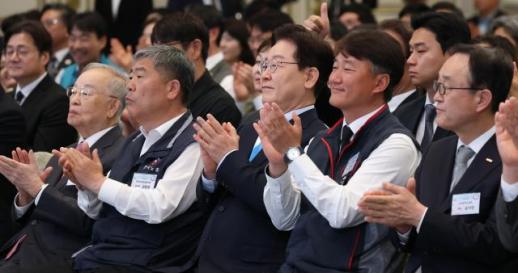 Lee Jae-myung’s approval rating slips to 59.5% after two-week decline, Realmeter says President Lee Jae-myung’s job approval fell for a second straight week, slipping back into the 50% range for the first time in eight weeks, a Realmeter survey showed. Party support also shifted slightly, narrowing the gap between the Democratic Party and the People Power Party. In a poll commissioned by Energy Economic News, Realmeter surveyed 2,006 voters nationwide age 18 and older over four days from the 27th to the 30th. Positive evaluations of Lee’s performance came to 59.5% (46.6% “very good” and 12.9% “good”), down 2.7 percentage points from the previous week. According to Realmeter’s results released on the 4th, negative evaluations stood at 35% (25.8% “very poor” and 9.2% “poor”), up 1.6 points. The gap between positive and negative ratings was 24.5 points, while 5.5% said they did not know. Realmeter said factors may include moves to pursue a special counsel probe over alleged manipulated indictments aimed at canceling Lee’s indictment. In a separate party-preference survey of 1,006 voters conducted over two days from the 29th to the 30th, support for the Democratic Party was 48.6%, falling back into the 40% range for the first time in four weeks. The People Power Party stood at 31.6%, staying in the low 30s for a sixth consecutive week. The gap narrowed to 17 points but remained outside the margin of error for a 13th straight week. Other parties were the Rebuilding Korea Party at 4%, the New Reform Party at 2.6% and the Progressive Party at 2.2%. The share of respondents with no party preference was 8.2%. Realmeter said rising pressure on household finances from high oil prices, a weak exchange rate and inflation combined with political uncertainty, including controversy over security-related remarks by Unification Minister Jeong Dong-young and labor-management disputes. It said defections were most noticeable among voters sensitive to living costs and among centrists, adding that instability outweighed policy achievements in driving negative views. The surveys were conducted by automated response (ARS) using randomly generated mobile phone numbers (100% wireless). The job-approval poll had a 4.6% response rate and a margin of error of plus or minus 2.2 percentage points at the 95% confidence level. The party-preference poll had a 4.6% response rate and a margin of error of plus or minus 3.1 points. More details are available on the website of the National Election Survey Deliberation Commission.* This article has been translated by AI. 2026-05-04 08:54:16
 -
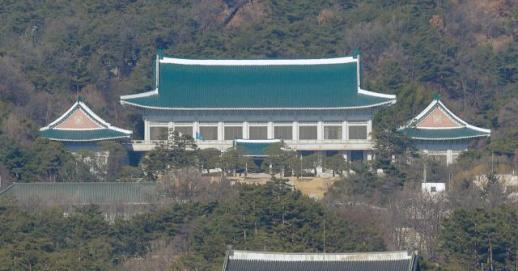
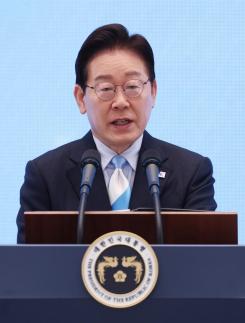 Blue House Watches June 3 Local Elections Closely as First National Test for Lee Government The Blue House is closely watching the outcome of the June 3 local elections while maintaining what it calls a core principle of political neutrality. The results are widely expected to be read as a verdict on the Lee Jae-myung government, with direct implications for its governing momentum. The June 3 vote is the administration’s first nationwide election since it took office in June last year. It also comes exactly one year after Lee’s inauguration, and it will be held alongside National Assembly by-elections in 14 districts. According to political circles on Saturday, three former Blue House aides are running in the 14 by-elections: Kim Nam-jun, a former spokesperson, in Incheon’s Gyeyang-eul; Ha Jung-woo, former senior secretary for AI Future Planning, in Busan’s Buk-gap; and Jeon Eun-su, a former spokesperson, nominated in South Chungcheong’s Asan-eul. In races for metropolitan and basic local government heads, Woo Sang-ho, former senior secretary for political affairs, is running for Gangwon governor, and Kim Byung-wook, former political affairs secretary, is running for Seongnam mayor. If the direction suggested by many polls and analysts holds, the election is expected to end in a one-sided victory for the Democratic Party, allowing Lee to further consolidate control as he enters his second year in office. Such a result could also be interpreted as voters giving the government passing marks for its risk management amid international uncertainty and supply-chain instability linked to the war in the Middle East. After the local elections, Lee is expected to move faster on plans to diversify energy supply chains and diplomatic cooperation, accelerate the energy transition, and push to become a leading country in areas including artificial intelligence and the defense industry. Lee’s job approval rating has recently remained in the mid-60s. A Gallup Korea poll released May 1 found 64% approved of his performance, down 3 percentage points from the previous survey. The poll, conducted April 28-30 among 1,002 adults nationwide, found 26% disapproved, up 1 point from the prior week, while 10% were undecided. Eom Gyeong-yeong, head of the Institute for the Spirit of the Times, said the mid-60s approval rating shows the public is giving the government a passing grade for its response to the Middle East war. He said a landslide win in the local elections would further boost the administration’s ability to govern. The Blue House has sought to project focus on governing, including responding to the Middle East war. Lee spent the weekend without a separate official schedule. He continued communicating on social media, however. Sharing a post by Financial Services Commission Chairman Lee Eok-won on X, formerly Twitter, Lee wrote, “It is acceptable not to repay illegal loans that exceed the legally permitted limit.” The message was interpreted as signaling a tougher response to illegal private lending, noting that loan contracts exceeding the legal limit are invalid and encouraging victims to report abuses. Lee Eok-won wrote on X on April 28 that a revised enforcement decree to the Loan Business Act, aimed at lowering barriers to reporting damage from illegal private lending, had passed a Cabinet meeting. He stressed that loan contracts with annual interest rates above 60% render both principal and interest invalid. The Gallup Korea survey was conducted through interviewer-led telephone polling using randomly generated mobile phone numbers. The margin of error was plus or minus 3.1 percentage points at a 95% confidence level, and the response rate was 13.3%. More details are available on the website of the National Election Survey Deliberation Commission. 2026-05-03 16:36:00
 -
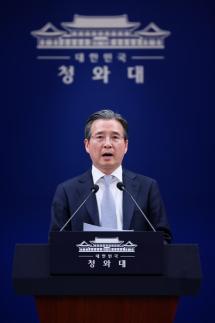 Kim Yong-bum Proposes Three Fixes to Make South Korea’s Financial System More Inclusive Kim Yong-bum, policy chief at the presidential office, on Saturday proposed three steps to overhaul a financial system he said disadvantages vulnerable groups: strengthening banks’ accountability, improving credit evaluation and redefining the role of lenders focused on low-income borrowers. Kim laid out the proposals in a Facebook post titled “How to reconnect a broken market: Designing finance to connect again.” Referring to two earlier posts criticizing the financial system, Kim said he was not calling for “irresponsible debt forgiveness” or for undermining the credit order. He said the goal was to examine how the current system works and “which segments are being abandoned.” On access to finance for mid- to low-credit borrowers, Kim said the priority is changing a structure in which banks view “avoidance” as a rational choice. He was referring to banks turning away borrowers who can repay, based on existing credit-rating standards. “When finance fears that point and only retreats, what fills the gap is illegal private lending and despair,” Kim wrote. “We have to change this game,” he said, arguing that household lending should not remain confined to the “safe greenhouse” of high-credit borrowers and that the composition of lending needs to shift. Kim also called for expanding what he described as an outdated “frame” for credit scoring. “How long will we keep looking only at past delinquency records or card histories?” he wrote, adding that a lack of financial history does not mean a person lacks the ability to repay. He said the role of institutions providing finance to low-income households should be “reorganized from the beginning.” Kim said the government has provided tax exemptions and support, but in practice the structure has led to more deposits at central federations than loans to members. He added that existing institutions operate on the basis of “relationships among people who know each other.” With labor more mobile, income more dispersed and people more spread out, Kim said what is needed is not simply expanded support but adjustments to the model. Kim said all of his proposals point to one goal: reconnecting broken parts of the market and filling gaps that have been left unattended. He said that raises questions about the role of financial authorities, arguing that inclusive finance is not a separate slogan or program but should come from redesigning the system to respond continuously to ongoing risks and reconnect severed segments. “This is the starting point for moving beyond an era of cruel finance to connected finance,” he wrote. * This article has been translated by AI. 2026-05-03 14:33:18
 -
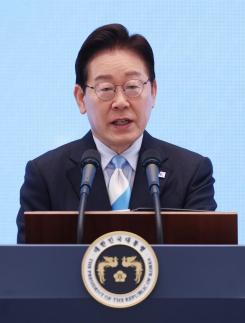 Lee Says Illegal Loans Exceeding Legal Rate Are Void, Borrowers Need Not Repay President Lee Jae-myung said loan contracts that exceed the legal interest-rate cap are invalid, signaling a tougher response to harm caused by illegal private lenders. The message was widely seen as encouraging victims to report abuses. Lee wrote on X, formerly known as Twitter, on Saturday after sharing a post by Financial Services Commission Chairman Lee Eok-won: “Illegal loans that exceed the legal limit do not have to be repaid.” In his post dated April 28, the FSC chairman said a revised enforcement decree to the Loan Business Act had passed a Cabinet meeting and stressed that any loan contract carrying an annual rate above 60% makes both principal and interest void. The revised decree focuses on lowering barriers for victims to file complaints. It spells out reporting forms in greater detail to make them easier to complete. It also allows the Credit Counseling and Recovery Service, which runs the Inclusive Support Center for 서민금융, to ask the Ministry of Science and ICT to suspend use of phone numbers used for illegal debt collection or loan advertising. The government previously revised the enforcement decree in July last year to establish grounds to void ultra-high-interest illegal loan contracts. Under that revision, contracts deemed clearly unfavorable to borrowers because they involved sexual exploitation, human trafficking, or violence and threats, as well as contracts with annual rates above 60%, can be voided in full for both principal and interest. Financial authorities said the latest revision should make it easier for victims to report illegal private lending and enable faster blocking of contact methods used for unlawful collection. The government says it will strengthen its response to illegal financial practices that harm the public, including ultra-high-interest loans and coercive debt collection. 2026-05-03 11:51:15
 -
 Kim Jong Un Tells Youth ‘Steel-Like Fighting Strength’ Is Source of National Pride Kim Jong Un, North Korea’s chairman of the State Affairs Commission, met with young people and urged them to play a larger role in advancing the state and strengthening loyalty to the system. According to Yonhap, the Korean Central News Agency reported May 3 that Kim met the previous day with participants in the 11th congress of the Socialist Patriotic Youth League, a youth organization affiliated with the ruling Workers’ Party, and posed for a commemorative photo. KCNA said Kim was accompanied by Workers’ Party Central Committee secretaries Kim Jae Ryong, Ri Il Hwan and Ju Chang Il, as well as Kim Song Gi, director of the Korean People’s Army General Political Bureau. Kim said “new and vast tasks of struggle” facing the party and the revolution require “more active advance and courageous roles” from young people, urging them to take part more actively in party work. He praised what he called youths’ heightened patriotism and revolutionary zeal, saying, “The noble spirit and steel-like fighting strength of our youth — found in no other country in the world — are a proud symbol of our national power.” The 11th congress, held for the first time in five years, took place in Pyongyang from April 28 to 30. KCNA described the meeting as an important step in making the youth league “an elite organization” and a “loyal vanguard” of the Workers’ Party. The youth league is one of the party’s four major mass organizations, along with the General Federation of Trade Unions, the Socialist Women’s Union and the Union of Agricultural Workers. After concluding the 9th party congress earlier this year, North Korea has been holding congresses of mass organizations, including leadership reshuffles, to reinvigorate them as it pursues goals under a new five-year plan.* This article has been translated by AI. 2026-05-03 08:24:15
 -
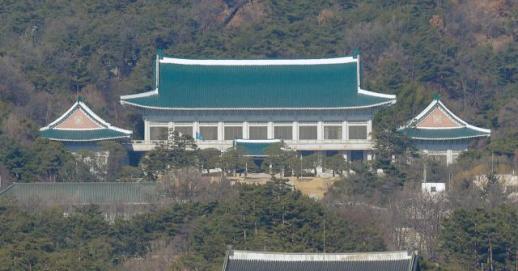 South Korea to Assess Impact of Trump Plan to Raise U.S. Tariffs on EU Cars The presidential office said Friday it is tracking developments after U.S. President Donald Trump announced plans to raise tariffs on passenger cars and trucks from the European Union, and that it will analyze any impact on South Korea and respond accordingly. An official said the government has been continuously monitoring follow-up steps to the U.S.-EU tariff agreement. The official said Seoul is also in frequent, close communication with Washington on follow-up measures tied to the South Korea-U.S. tariff agreement, and will work to keep bilateral trade relations stable. Asked about possible effects on the market competitiveness of South Korean products, the official said it would be inappropriate for the government to assess tariff agreements between other countries. The official said Seoul will respond based on the principles of maintaining a balance of benefits under the existing South Korea-U.S. agreement and ensuring treatment that is not disadvantageous compared with other countries. Earlier Friday, Trump said the EU was not properly implementing trade negotiations and announced he would raise tariffs on passenger cars and trucks to 25% starting next week. Some observers have interpreted the move as retaliation after European countries, including Germany, declined U.S. requests to dispatch warships and otherwise cooperate with U.S. operations in the Iran war. Separately, the presidential office said it is paying close attention to a Pentagon announcement that about 5,000 U.S. troops stationed in Germany would be withdrawn, citing a global review and possible changes in U.S. force posture. It said it is working closely with the United States so U.S. Forces Korea can remain stationed stably and contribute to a strong combined South Korea-U.S. defense posture.* This article has been translated by AI. 2026-05-02 21:24:16
 -
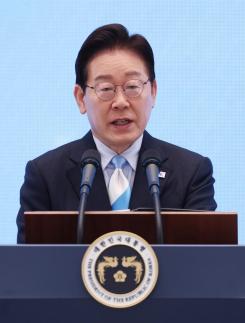 Lee Jae-myung says voice phishing losses down, vows to push toward zero President Lee Jae-myung, citing recent reports that voice phishing losses have fallen, said it was "truly fortunate" that public losses dropped in a short period and praised government workers for their efforts. In a post Thursday on X, formerly Twitter, Lee shared a news report saying voice phishing losses in January-March fell 45% from a year earlier, attributing the decline to results from arrests focused on higher-level figures. "This is thanks to the dedication of frontline public officials, including the police, the National Intelligence Service and the Foreign Ministry," Lee wrote. "You worked hard. Thank you." He added, "We should work a bit more until losses reach zero," and asked the public to encourage civil servants, saying they would do so. In March, Lee told aides in a meeting that voice phishing was one of the "seven major abnormalities" and ordered swift implementation of measures to eradicate the crime.* This article has been translated by AI. 2026-05-01 14:39:16
 -
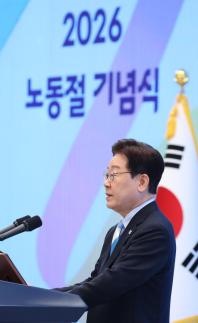 Lee Jae-myung urges end to 'pro-labor vs. pro-business' divide in Labor Day speech President Lee Jae-myung said Thursday that South Korea can move toward a better future only by breaking what he called an outdated binary that “pro-labor is anti-business” and “pro-business is anti-labor.” Speaking at a Labor Day ceremony at the Blue House, Lee said he would “open a path of shared growth where labor and business move forward together.” Lee said growth that leaves no future for workers — who make up most of the public — “cannot be called real growth.” He described workers as the key economic actors, supporting the economy through production at work and driving development as consumers outside the workplace. The following is the full text of President Lee’s Labor Day address. Dear fellow citizens, And workers — the proud name that moves the world, Today, we gather to honor the sweat, dedication and value of labor as we mark Labor Day, which has “reclaimed its name” for the first time in 63 years. With us are senior figures from the labor community and representatives of economic organizations. Workers from many fields — including civil servants and teachers — and those engaged in new forms of work are also here. Because workers across the country quietly fulfilled their responsibilities and kept workplaces running, today’s Republic of Korea was possible. I extend my respect and gratitude to all workers in this land — the drivers of production, the core engine of economic growth and the leading force behind our nation’s development. Most people in Korea work for a living. The forms of work vary, but people provide their labor and sustain their lives in return. Yet labor is not only a means of making a living. Through work, we realize ourselves, change our lives and bring change to the world. Labor supports an individual’s daily life, protects a family’s present and is the source of strength that carries our community into tomorrow. I, too, worked in a factory as a child laborer. I would head to work early in the morning and end the day late at night — sometimes at dawn — with hands stained with grease. It would be a lie to say it was not exhausting. But being able to protect my family with the sweat I shed at work was a great comfort and the strength that made me who I am today. I was a child “worker,” and I am still proud of that name. That is why today, when we use the name “Labor Day” rather than “Workers’ Day,” feels especially meaningful to me. A moment ago, we heard the voices of many workers. Though their jobs, generations and genders differ, their voices carried the same dream — a dream no different from what I felt as a child factory worker. The desire to work safely and have one’s labor respected does not change, no matter the era or circumstances. As a president who once was a child factory worker, I will answer your voices with a deep sense of duty. Dear workers, We stand in the middle of enormous change. Artificial intelligence is reshaping industries and the way we work. The climate crisis is also redefining the standards of national competitiveness. Rapid change may be an opportunity for some, but a major threat to survival for others. Many forecasts say machines and AI will replace much of human labor as technology advances. But we must not demand one-sided sacrifice from workers in the name of productivity alone. Growth without a future for workers — who make up most of the public — cannot be real growth. Workers are the most important economic actors, sustaining our economy through production and driving development as consumers. Even if this wave of change is unavoidable, finding a path of shared growth is the way to a sustainable tomorrow for all of us. In this great transition, the government will take special care so that each working citizen can build a life that is safer, fairer and more dignified. On this Labor Day, I make three promises to the public and to workers. First, we will never compromise on workplace safety. We will build a normal country where workers do not have to risk death to do their jobs. At any worksite in Korea, life and safety must never be placed behind profit and performance. I will make clear that protecting safety is not a cost or an option, but the minimum basic duty that the state and companies must uphold. Second, we will ensure that all workers can enjoy basic labor rights. Rights must not vary because employment types or ways of working differ. Whether regular or nonregular, prime contractor or subcontractor, platform worker or freelancer, anyone who works should be treated fairly. We will pay close attention so that no one falls into blind spots of protection. Third, we will open a path of shared growth where labor and business move forward together. A society that respects labor and a country where it is good to do business are not incompatible. There are no workers without companies, and no companies without workers. Only by breaking the outdated binary of “pro-labor is anti-business” and “pro-business is anti-labor” can we move toward a better future. Respect for labor is not a matter of charity or favor. Growth without labor is only half a growth and cannot be sustainable. Growth with labor is growth with a future. We will build an ecosystem of shared growth where labor and management can respect each other and talk. We will realize “real growth” in which labor and business, fairness and innovation, and growth and distribution reinforce one another in a virtuous cycle. Dear fellow citizens, Today, along with this Labor Day ceremony, various events are being held nationwide, including a street festival at Cheonggye Plaza. These events were prepared over a long period with labor, management, government and civil society working together. I believe that the fact that labor and management are together here today shows the efforts made so far for respect and shared growth. People with different positions cannot always think the same way. But we must not turn away from one another or become hostile because of differences. The first step toward dialogue already began in the preparation process. The fact that everyone has started drawing a blueprint for shared growth together is, in itself, one of the greatest meanings of today’s Labor Day. Today’s dialogue must continue. We will turn what we discussed here into changes in workplaces and into policies that improve people’s lives. We will, together with the public and with workers, build a normal country where people can return safely to their families after the workday ends — a Korea where labor is respected, workers are treated with dignity, and everyone who works hard can shine. Thank you.* This article has been translated by AI. 2026-05-01 10:33:20
 -
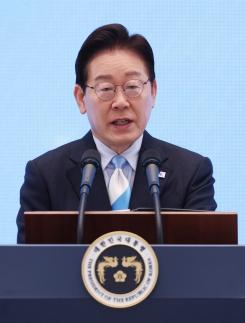 Lee Jae-myung Says Growth Without Labor Is ‘Only Half’ as He Marks Labor Day President Lee Jae-myung said May 1 that “growth with labor is growth with a future,” calling for a sustainable economy built on respect between workers and companies. Speaking at a Labor Day ceremony at the Cheong Wa Dae State Guest House, Lee said respect for labor “is not simply a matter of consideration or charity.” “Growth without labor is only half, and it is not sustainable,” he said, pledging to build “a cooperative ecosystem” in which labor and management respect each other and can hold dialogue. Lee stressed that a society that respects labor and a country that is good for doing business are not mutually exclusive. “There are no workers without companies, and no companies without workers,” he said. He said he would pursue “real growth” in which labor and business, fairness and innovation, and growth and distribution reinforce one another. Lee also pointed to Labor Day events being held nationwide, calling them the result of long preparation by labor, management, government and civil society. He said the joint presence of labor and business at the ceremony itself reflected efforts toward respect and coexistence. On the era of artificial intelligence, Lee said many expect machines and AI to replace most human labor, but warned that workers should not be forced into “one-sided sacrifice” solely for productivity gains. “Growth without a future for workers, who make up the majority of the public, cannot be called real growth,” he said, adding that even amid unavoidable change, finding a path of coexistence is key to a sustainable tomorrow. Lee, who noted he once worked as a factory boy, recalled starting early for work and ending late at night, sometimes at dawn, with oil-stained hands. He said being able to protect his family through the sweat of labor was a comfort and a source of strength that helped shape who he is today. Lee made three pledges. First, he said he would “never compromise” on workplace safety. Second, he promised to ensure all workers can enjoy basic labor rights, including regular and nonregular workers, prime contractors and subcontractors, platform workers and freelancers. Third, he pledged to open a path of coexistence in which labor and business move forward together, again saying a labor-respecting society and a business-friendly country can coexist. The ceremony was the first Labor Day event since “Workers’ Day” was renamed “Labor Day” after 63 years. It was also Lee’s first Labor Day since taking office, and the first time Cheong Wa Dae has hosted the ceremony. The day had been called “Workers’ Day” since a 1963 law established it. The official name changed after a legal revision in October last year. About 120 workers from various occupations and generations attended. For the first time, both major umbrella labor groups — the Federation of Korean Trade Unions and the Korean Confederation of Trade Unions — took part, the report said.* This article has been translated by AI. 2026-05-01 10:24:17
 -
 Attorney Na Seung-cheol tapped as civil affairs chief at prime minister’s office Attorney Na Seung-cheol, 49, a 35th class graduate of the Judicial Research and Training Institute, has been tapped to lead the civil affairs office at the Prime Minister’s Secretariat. Cheong Wa Dae said Friday that Na has been nominated for the post and is awaiting presidential approval. He is expected to begin work May 4. Na previously served as president of the Seoul Bar Association and worked as an advisory attorney to Gyeonggi Province. He also served on the defense team in President Lee Jae-myung’s case involving alleged violations of the Public Official Election Act during Lee’s tenure as Gyeonggi governor. Na also represented first lady Kim in connection with the so-called “Hye-gyeong-gung Kim” allegations. His predecessor, Shin Hyun-sung, submitted his resignation, citing support for the June 3 local elections, and was dismissed on April 10.* This article has been translated by AI. 2026-05-01 07:36:17