
Journalist

Lee da hui
qhsfid70@ajunews.com
-
 Rep. Kim Min-jeon Proposes Law Requiring Substitute Staff for Kindergarten Absences Kim Min-jeon, a lawmaker from the ruling People Power Party, introduced a bill on the 24th to require substitute staff at kindergartens when teachers or other employees are unexpectedly unable to work, aiming to prevent disruptions and keep schools running smoothly. The proposed revision to the Early Childhood Education Act would mandate assigning a substitute teacher when a staff member cannot perform duties due to illness, infectious disease or other unforeseen reasons, creating a gap in operating the curriculum. It also calls for the education minister and provincial education superintendents to establish and implement measures to secure, manage and support the placement of substitute personnel, with the stated goal of improving the quality of early childhood education and protecting teachers’ rights to teach and to health. The proposal follows a recent case in which a first-year teacher died after going to work despite illness because a substitute could not be found, even amid a flu situation. In a survey released on the 23rd by the Korean Teachers and Education Workers Union of 6,689 teachers nationwide across kindergarten, elementary, middle, high and special schools, 64.5% of kindergarten teachers surveyed (3,547 respondents) said they had gone to work while sick with the flu. The findings fueled calls to better protect staff health and build a substitute staffing system. Current law does not explicitly provide for assigning or supporting replacement staff when employees cannot work due to illness or leave, the lawmaker’s office said, and kindergartens have faced serious disruptions. Private kindergartens, in particular, have struggled with costs and staffing shortages, leaving teachers to keep classrooms running while ill, it said. “The tragic loss of a private kindergarten teacher exposed the harsh reality of an education system without a way to replace sick teachers,” Kim said. “This revision should address structural gaps in early childhood education and create a safe personnel management system so teachers do not have to protect classrooms at the expense of their health.”* This article has been translated by AI. 2026-04-24 14:33:17
 -
 PPP Leader Jang Dong-hyeok Rejects Calls to Step Down, Vows to Face Voters’ Verdict Jang Dong-hyeok, leader of the People Power Party, on April 24 rejected calls within his party for him to resign, saying stepping down because circumstances have worsened is not what a responsible politician does. In a Facebook post, Jang said he has focused since taking the party’s top post on winning upcoming local elections. “People are saying a lot about my future,” he wrote, referring to the resignation talk. “That kind of politics is not Jang Dong-hyeok’s politics. I will do my best to finish the local elections and accept an honest evaluation.” Jang also said he would be judged by the results of his trip to the United States, adding that as opposition leader he did everything he could and needed to do. “With time, the results will also become visible,” he said.* This article has been translated by AI. 2026-04-24 14:04:43
 -
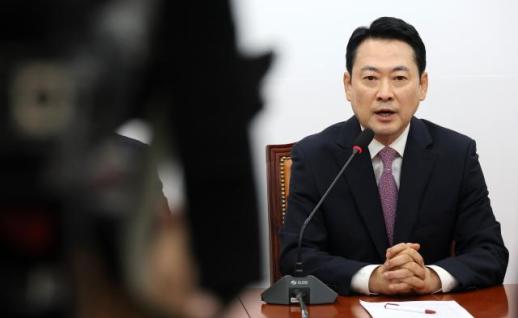 People Power Party leader Jang Dong-hyeok says he will weigh resignation amid 15% support Jang Dong-hyeok, leader of the People Power Party, said April 24 that internal divisions were a key reason the party’s support had fallen to a record low of 15%, rejecting calls for him to step down. Speaking at a news conference at the National Assembly, Jang said talk about his future and resignation had followed the polling, noting there were 40 days left until local elections. Referring to survey results released the previous day, he said one poll showed the party “stuck at 15%,” adding that the result differed somewhat from recent trends in other surveys. He said he would consider the various reasons for the party’s low support. Jang said internal conflict was among the causes, and said he would weigh whether resigning 40 days before the elections would truly fulfill his responsibility as party leader and whether it would help the party win. Jang also said the party would submit a motion urging the dismissal of Unification Minister Jeong Dong-young over allegations involving the leak of sensitive information. He said if President Lee Jae-myung continued to protect Jeong, the U.S.-South Korea alliance “cannot help but face even greater cracks.” He called for Jeong’s immediate dismissal and for the government to “reorganize” what he described as a self-reliant faction within the foreign and security policy line that he said was undermining the alliance. Jang said he met with four lawmakers the previous day with James Heller, the deputy chief of mission at the U.S. Embassy, to confirm Washington’s mood, saying the United States viewed the matter “very seriously.” He said information sharing, which he described as a measure of alliance trust, had been cut off, and argued that Jeong’s remarks had damaged the foundation of trust while Lee was accelerating its collapse. Calling it a “tragic situation” in which the president and a minister had become a security risk, Jang said the U.S. side believed that resuming information sharing would require firm assurances and promises that such an irresponsible leak would not happen again. He added that without restored trust, implementing a joint fact sheet would also be difficult, and said the U.S. side was repeatedly conveying the seriousness of the issue to Seoul, but that the Lee administration did not appear to recognize it. According to the National Barometer Survey released April 23 by Embrain Public, Kstat Research, Korea Research and Hankook Research, the People Power Party’s approval rating stood at 15%. The poll surveyed 1,005 adults age 18 and older by telephone interviews from April 20-22. The margin of error was plus or minus 3.1 percentage points at the 95% confidence level. (For details, refer to the website of the National Election Survey Deliberation Commission.)* This article has been translated by AI. 2026-04-24 14:03:20
 -
 PPP Floor Leader Song Eon-seok Slams Democrats’ Proposed Special Counsel as ‘Prejudged’ Song Eon-seok, floor leader of the People Power Party, criticized the Democratic Party on April 24 for pushing what it calls a special counsel probe into “fabricated indictments” under the Yoon Suk Yeol government, calling it “another prejudged special counsel” following what he described as a prejudged parliamentary investigation. Speaking at a party meeting at the National Assembly on Friday morning, Song said, “It looks like the next step has begun to withdraw President Lee Jae-myung’s indictments.” Song said the biggest issue was what he called a move to give the special counsel authority to withdraw indictments. He claimed it was intended to have the special counsel, not Lee and Justice Minister Jeong Seong-ho, “get blood on their hands” by carrying out the withdrawals. He also accused those who dismantled the prosecution service after warning that combining investigative and charging powers was dangerous of now seeking to give the special counsel not only both powers but also the authority to withdraw indictments. Song said the ruling party was “mobilizing all state power” to eliminate what he called Lee’s five criminal trials, and that it was also willing to nominate candidates with criminal histories. “This Democratic Party nomination is, in effect, the return of criminal old boys,” he said. He said the party again nominated Kim Kyoung-soo, who lost the governorship over the “Druking” online-comment manipulation case, as its candidate for South Gyeongsang governor. He also said Rep. Jeon Jae-soo became the party’s candidate for Busan mayor after the statute of limitations expired in a case involving alleged bribes including a Cartier watch from the Unification Church, which he blamed on what he called a lenient and delayed investigation by a special counsel and a joint probe team. Song said Song Young-gil, whom he described as having avoided punishment due to legal issues over admissibility of evidence in a party convention cash-envelope case, received a strategic nomination in Incheon’s Yeonsu A district. He also said former lawmaker Lee Kwang-jae was to receive a strategic nomination, citing a political funds law violation case in which Lee was convicted on appeal and lost the governorship about six months after taking office for receiving $95,000 from Park Yeon-cha and Jeong Dae-geun. Song said that as these figures return, Kim Yong, whom he described as having been found guilty through the second trial, was also pressing to receive a nomination. “This is not an era of popular sovereignty, but an era of criminals’ sovereignty,” he said. He added, “In the Democratic Party, are criminal records medals and criminal investigations a sin?” and asked whether the party intended to create “a paradise for crime and a hell for law-abiding citizens.” 2026-04-24 09:57:19
 -
 Lee Jae-myung Calls Vietnam Key Partner, Urges Stronger Rare Earths and Urea Supply Chains President Lee Jae-myung: Vietnam is an ideal partner; strengthen rare earths and urea supply chains President Lee Jae-myung, on a state visit to Vietnam, met with business leaders on April 23 (local time) and called for expanded economic cooperation. Speaking at the Korea-Vietnam Business Forum at a hotel in Hanoi, Lee said economic cooperation between South Korea and Vietnam was more important than ever as uncertainty in the global economy grows. He said he was confident the two countries are "ideal partners" in leading global value chains, and that expanding trade and investment could make it possible to reach a new goal of $150 billion in bilateral trade by 2030. Lee also urged stronger manufacturing cooperation and a broader partnership in advanced industries such as semiconductors and electric vehicles. He said it was also important to strengthen supply-chain links in energy-related items essential to high-tech industries, including rare earths and urea solution. Third U.S. aircraft carrier moves closer to Middle East as truce extended With a ceasefire between the United States and Iran extended, a third U.S. aircraft carrier has moved closer to the Middle East. The United States is working to hold a second round of talks on ending the war while also reinforcing forces in case fighting resumes. CNN reported on April 23 (local time), citing photos posted on the Pentagon website, that the aircraft carrier George H.W. Bush has been in the Indian Ocean since April 21. The move would soon give the U.S. Navy access to dozens more military aircraft that could be used if the ceasefire ends or if Iran’s ports are blockaded. The Pentagon did not disclose the carrier’s exact location in the Indian Ocean. Seoul apartment prices rise 0.15% as outer districts lead gains Apartment sale prices in Seoul rose 0.15%, led by continued strength in midpriced areas including Seongbuk, Dongdaemun, Gangbuk and Gangseo districts. According to the Korea Real Estate Board’s weekly apartment price trend report released April 23, Seoul apartment sale prices for the third week of April (as of April 20) rose 0.15% from the previous week, accelerating from a 0.10% increase a week earlier. Outlying districts with large concentrations of midpriced apartments drove the gains. Seongbuk rose 0.27%, centered on Gireum and Hawolgok; Dongdaemun gained 0.25%, led by Dapsimni and Hwigyeong; Gangbuk climbed 0.24% on large complexes in Mia and Beon; Gwangjin rose 0.22% around Guui and Gwangjang; and Nowon increased 0.22% near stations in Wolgye and Junggye. Outside the capital, apartment prices fell. The five major metropolitan cities, flat the previous week, slipped 0.01% in the third week. Sejong fell 0.07%, reversing from a 0.02% rise a week earlier. Large oil bet spotted before Trump announced truce extension A large trade betting on falling oil prices was detected shortly before U.S. President Donald Trump abruptly announced an extension of the ceasefire with Iran. Reuters reported April 22 (local time) that traders sold 4,260 Brent crude futures contracts about 15 minutes before Trump announced the extension on April 21. At the time, the trade was worth about $430 million (about 630 billion won) and amounted to a major directional bet on lower prices. Reuters noted the trade occurred during the typically thinly traded period after settlement, given that the Brent market settles at 18:30 GMT. Because similar trades have repeatedly appeared just ahead of major policy announcements, some have raised the possibility of leaked inside information. The U.S. Commodity Futures Trading Commission has opened an investigation into a series of unusual oil futures trades, including transactions on March 23 and April 7. Korea gasoline prices among OECD’s lowest at 1,894 won per liter As geopolitical risks from the Middle East push up global oil prices and gasoline costs worldwide, South Korea’s gasoline prices have remained low compared with other advanced economies, according to industry data. The assessment cited government price-stabilization measures and refiners’ competitiveness and supply capacity. Industry officials said April 23 that Korea National Oil Corp.’s Opinet data for the first week of April showed South Korea had the second-lowest gasoline price among 23 OECD countries, at 1,894 won per liter, behind Japan. Only three countries, including third-ranked Canada, were below 2,000 won per liter. Prices were far higher in major European countries, including the Netherlands (4,045 won), Denmark (3,868 won), Germany (3,698 won) and France (3,482 won). The industry pointed to large-scale refining facilities and investment in advanced processing as key factors. The combined refining capacity of South Korea’s four major refiners totals 3.36 million barrels per day, ranked fifth in the world. The companies also operate multiple plants considered among the world’s top facilities on a single-site basis, enabling cost reductions through economies of scale. Government price-stabilization policies also played a role. The data said that after the Middle East war, refiners cooperated with market stabilization by holding back supply-price increases and minimizing margins alongside the introduction of a maximum price system. Company-run gas stations also joined price cuts, helping ease the burden on consumers.* This article has been translated by AI. 2026-04-23 21:51:25
 -
 Lee Calls Vietnam Key Partner, Urges Stronger Rare Earths and Urea Supply Chains President Lee Jae-myung, on a state visit to Vietnam, met with business leaders on April 23 (local time) and called for expanded economic cooperation. Speaking at the Korea-Vietnam Business Forum at a hotel in Hanoi, Lee said that with global economic uncertainty rising, cooperation between South Korea and Vietnam — which he called “the best partners” — is more important than ever. From South Korea, attendees included Samsung Electronics Chairman Lee Jae-yong, LG Group Chairman Koo Kwang-mo, SK Group Chairman Chey Tae-won and Doosan Enerbility Chairman Park Ji-won, among other executives. Vietnamese participants included Le Ngoc Son, chairman of the oil and gas corporation; Dang Hoang An, chairman of the power corporation; Dang Ngoc Hoa, chairman of Vietnam Airlines; and Phung Quang Hiep, chairman of the chemical corporation, who discussed potential cooperation with South Korea. Lee said he was confident the two countries are “the best partners” in leading global value chains, adding that expanding trade and investment could make it possible to meet a new goal of $150 billion in bilateral trade by 2030. He urged stronger manufacturing cooperation and a broader partnership in advanced industries such as semiconductors and electric vehicles. He also stressed the need to strengthen supply-chain links in energy-related items essential to high-tech industries, including rare earths and urea solution. Lee said building high-efficiency power distribution networks — including LNG power plants and nuclear power plants — is needed to support Vietnam’s stable industrial environment. He added that the business leaders gathered at the forum should serve as a cornerstone for opening a new chapter of cooperation. In welcoming remarks, Vietnamese Prime Minister Le Minh Hung called for stronger practical ties between companies to achieve shared growth, and asked South Korea to expand higher-quality investment in Vietnam. He also urged more investment and stronger technology transfer in high value-added fields such as advanced technology, semiconductors, artificial intelligence and clean energy. Business leaders also pledged to step up cooperation. Asked about accompanying Lee on his India-Vietnam trip, Samsung Electronics Chairman Lee Jae-yong replied briefly, “Businesspeople should speak with results.” LG Group Chairman Koo Kwang-mo said he hoped cooperation with India and Vietnam would advance in quality as well as scale. Doosan Enerbility Chairman Park Ji-won said, “We are trying to build a nuclear power plant in Vietnam. At today’s forum, I will explain Doosan Enerbility’s performance well.”* This article has been translated by AI. 2026-04-23 21:36:22
 -
 Third U.S. Aircraft Carrier Moves Closer to Middle East as Ceasefire With Iran Is Extended The U.S. military’s third aircraft carrier has moved closer to the Middle East as a ceasefire between the United States and Iran has been extended. Washington is pushing to hold a second round of talks on ending the war while reinforcing forces in case fighting resumes. CNN, citing photos posted on the Pentagon’s website, reported Thursday local time that the aircraft carrier George H.W. Bush has been in the Indian Ocean since April 21. With the Bush arriving, the U.S. Navy will soon have dozens more military aircraft available for use if the ceasefire ends or if Iran’s ports are blockaded. The Pentagon did not disclose the carrier’s exact location in the Indian Ocean. Some Pentagon website photos of the Bush include captions saying it was in the Indian Ocean on April 17. The carrier departed March 31 from Naval Station Norfolk in Virginia and was reported to have passed near South Africa’s Cape of Good Hope on April 17. Two U.S. carriers are already operating in the region: the Abraham Lincoln in the Indian Ocean and the Gerald R. Ford in the Red Sea. CNN said the U.S. military has 11 aircraft carriers but is currently operating only four because of maintenance and training. With the Bush joining, three of the four active carriers would be committed to the war with Iran.* This article has been translated by AI. 2026-04-23 21:03:18
 -
 People Power Party leader Jang Dong-hyeok meets acting U.S. ambassador in Seoul Jang Dong-hyeok, leader of South Korea’s People Power Party, met with James Heller, the acting U.S. ambassador in Seoul, to discuss the results of Jang’s recent trip to the United States and ways to strengthen the South Korea-U.S. alliance, political sources said. According to the sources, Jang held the meeting Thursday afternoon at the U.S. Embassy in Seoul. He also raised controversy over remarks by Unification Minister Jeong Dong-young about North Korean nuclear facilities, the sources said. Lawmakers Kim Dae-sik and Cho Jung-hoon, who traveled to the United States with Jang, attended the meeting as well. Separately, Kim posted on Facebook on Thursday to push back against criticism of Jang’s U.S. trip. Listing meetings Jang held with U.S. think tanks, members of the U.S. Senate and House, and key Republican Party figures, Kim wrote, “The delegation also took seriously the parts that did not meet the public’s expectations and has repeatedly apologized.” Referring to a photo of Jang and Supreme Council member Kim Min-su that drew criticism, he added that he hoped it would not “overshadow the nonstop meetings carried out for the national interest.”* This article has been translated by AI. 2026-04-23 20:48:19
 -
 Court Limits Parts of Samsung Biologics Strike; Union Says Walkout Still Set for Next Month A South Korean court has partially blocked a planned full-scale strike by the Samsung Biologics union, limiting walkouts only in certain final-stage processes tied to preventing drug spoilage. The union said it still plans to begin a strike next month. According to the legal community on April 23, the Incheon District Court’s Civil Division 21, led by Presiding Judge Yoo Aram, partially granted Samsung Biologics’ request for an injunction against the Samsung Biologics Sangsaeng branch of the Samsung Group Super-Enterprise Labor Union. In its decision, the court said the union must not instruct workers to halt, or distribute guidelines to halt, parts of “work to prevent deterioration or decay of thawed cell lines” during the labor action. It also said the union must not obstruct employees from performing that work “by using force or by threatening harm.” The court specified the restricted tasks as concentration and buffer exchange, filling of bulk drug substance, and buffer production and supply. The panel described them as “final-stage work that adjusts already-produced material into a form suitable for maintenance and storage,” and said failure to carry them out on time would make it highly likely products would have to be discarded. The Samsung Biologics union said it will proceed with its planned strike starting May 1, because walkouts in early production processes such as cell culture were effectively allowed. Samsung Biologics said it “immediately filed an appeal” over the parts not granted. However, because an injunction generally remains in effect even after an appeal is filed, the strike is still widely expected to go ahead as planned. Labor and management have held 13 rounds of talks through last month since their first meeting in December, but have not reached an agreement. The union is seeking an average 14% wage increase, a 30 million won incentive per person, a bonus distribution equal to 20% of operating profit, and an allocation of company shares over three years. It has also proposed requiring the union’s prior consent when the company exercises key management and personnel authority. Management has maintained a wage increase rate of 6.2%, among other terms. If no deal is reached, Samsung Biologics would face its first strike since the company was founded in 2011. Industry observers say a strike could lead to major losses from production disruptions. If production schedules are affected starting next month, they say penalties for contract violations with global clients and damage to trust would be difficult to avoid.* This article has been translated by AI. 2026-04-23 20:24:20
 -
 Iran Reports First Strait of Hormuz Transit Fee Deposit to Central Bank Local media reported on April 23 (local time) that a transit fee for passage through the Strait of Hormuz has been deposited with Iran’s central bank for the first time. Yonhap News Agency and local outlets cited Hamid Reza Haji Babaei, a deputy speaker of Iran’s parliament, as making the statement. No details were released on the amount or the timing of the deposit. Iran’s military sealed off the strait by force on Feb. 28, shortly after attacks by the United States and Israel, in what it described as a response. Since then, it has allowed only limited passage for some vessels not linked to what it called enemy states — the United States and Israel. Iran has not officially announced the fee, but reports have said it was provisionally set at $1 per barrel for oil tankers. Estimates have put the charge for very large crude carriers at $2 million (about 3 billion won). Iran’s parliament on April 21 passed a bill affirming Iran’s control over the Strait of Hormuz and authorizing the collection of transit fees. Under the bill, ships seeking to pass must submit documents to Iranian authorities for approval, and fees must be paid in Iranian rials.* This article has been translated by AI. 2026-04-23 19:51:17