
Journalist

Baek So-hee
shinebaek@ajunews.com
-
 Top Five Banks Increase Self-Rescue Efforts by 3.5 Times Amid Praise from President Lee President Lee praises financial commission's inclusive finance achievements President Lee Jae-myung publicly commended the financial commission's achievements in inclusive finance as "remarkable" during a cabinet meeting. This praise follows a shift in how banks manage delinquent loans, moving away from selling them to external collection agencies and instead focusing on internal debt restructuring and loan forgiveness to support borrowers' recovery. According to documents obtained by Aju Economy, self-managed debt restructuring by the five major banks (KB Kookmin, Shinhan, Hana, Woori, and NH Nonghyup) increased from 989 cases in the first quarter of 2025 to 3,456 cases in the fourth quarter of the same year, a rise of approximately 3.5 times. In contrast, the sale of delinquent loans plummeted from 35,000 cases in 2025 to just 11 cases in the first quarter of 2026. The financial commission views this as a transition from a focus on maximizing recoveries to one centered on recovery and coexistence. Historically, the financial sector has typically sold long-term delinquent loans to external collection agencies. While this allowed financial institutions to remove bad debts from their books, it often left borrowers facing prolonged collection pressures. Blue House condemns attack on Namwoo ship, identifies perpetrators "Our government firmly believes that attacks on private vessels like the Namwoo cannot be justified or tolerated," said a Blue House official. The government is taking a cautious approach regarding the identity of the attackers. National Security Office Director Wi Seong-rak made these remarks during a press briefing, stating, "We strongly condemn this attack." He added that while it is clear that attacks on commercial vessels warrant condemnation, the government is not currently identifying the perpetrators and is in the process of gathering information. On May 4, an explosion and fire occurred on the South Korean cargo ship HMM Namwoo, which was anchored in the Strait of Hormuz. Wi noted that two unidentified flying objects struck the ship's stern at one-minute intervals, causing flames and smoke. He explained that given the damage pattern and the height of the damage above sea level, the likelihood of a mine or torpedo attack appears low. Growing financial support for vulnerable borrowers raises concerns As inclusive finance expands within the banking sector, the scale of support for vulnerable borrowers is increasing. However, this growth also raises concerns about the financial burden on institutions. While there is consensus on the need to support vulnerable groups, there are fears that the performance metrics for inclusive finance may become a new standard for supervision and evaluation. On May 11, President Lee Jae-myung asked Financial Services Commission Chairman Lee Ok-keun during a cabinet meeting if there were ways to evaluate the implementation of inclusive finance and provide benefits or penalties, suggesting that the current system relies heavily on the goodwill of financial institutions. This comment hints at the possibility of incorporating the performance of inclusive finance for low-to-middle credit borrowers into the evaluation and management guidelines for financial institutions, which has been interpreted as a signal that it could go beyond mere recommendations and influence future supervisory and evaluation frameworks. Banks are already investing significant resources to expand support for vulnerable borrowers. The scale of long-term delinquent loan forgiveness and policy-driven financial support is also on the rise. This year, the total amount of long-term uncollected special bonds scheduled for forgiveness is estimated at 335.1 billion won, with Shinhan Bank accounting for the largest share at 269.4 billion won, followed by KB Kookmin Bank (33.5 billion won) and Woori Bank (32.2 billion won). Kakao shareholders frustrated over union bonus demands amid stock decline The Kakao union, which recently reported record earnings, is set to demand performance bonuses and may take collective action. This comes amid rising tensions following the Samsung Electronics union's call for a 10% performance bonus based on operating profit. However, unlike Samsung Electronics, which has seen its stock price reach all-time highs, Kakao's stock has been struggling, raising concerns that the company is prioritizing compensation demands over enhancing corporate value. On May 11, the KOSPI index surpassed 7,800, approaching the 8,000 mark, while Kakao's stock price has been moving between a high of 50,600 won and a low of 45,250 won. Despite reporting record earnings in the first quarter, Kakao's stock price fell on the same day. The ongoing decline in Kakao's stock price is attributed to uncertainties regarding its future growth potential. Although the company achieved record earnings in the first quarter, this improvement was largely due to restructuring effects rather than growth in its core business. The exclusion of Kakao Games and Kakao Healthcare from consolidated results has also contributed to the improved profit structure. Despite the performance improvement, concerns about slowing growth, uncertainties surrounding its artificial intelligence strategy, and underperformance in its content business continue to dampen market expectations.* This article has been translated by AI. 2026-05-12 05:20:45
 -
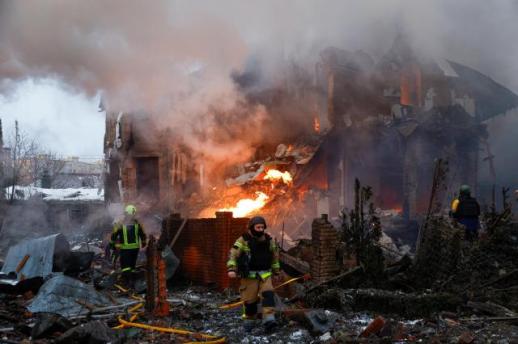 Russia and Ukraine Accuse Each Other of Ceasefire Violations, Peace Talks Stalled Russia and Ukraine are engaged in a heated exchange of accusations over ceasefire violations during a truce brokered by U.S. President Donald Trump. According to Yonhap News Agency, the Russian Defense Ministry reported on May 11 that since the ceasefire began at midnight on May 9, there have been a total of 23,802 recorded violations by Ukrainian forces within the designated "special military operation" zone. In just one day, the Ukrainian military allegedly fired 767 rounds using multiple rocket launch systems, artillery, and mortars in 12 separate incidents targeting Russian positions. Additionally, the Russian Defense Ministry claimed there were 6,905 drone strikes conducted by Ukrainian forces. The ministry also reported that 18 drones targeted civilian areas in the Belgorod region, which borders Ukraine, resulting in injuries to two residents. In response to these attacks, the Russian military stated it struck multiple rocket launch positions, artillery, and mortar sites, as well as command posts and drone launchers. Conversely, Ukraine accused Russia of continuing its assaults with kamikaze drones at the front lines. In a speech the previous evening, Ukrainian President Volodymyr Zelensky stated, "The Russian military has not adhered to any ceasefire at the front and has made no effort to do so." Zelensky noted that while there had been no large-scale drone or missile attacks targeting rear urban areas in the past day, Russian forces launched over 150 attacks at the front lines. He specifically mentioned that nearly 10,000 of these involved kamikaze drone strikes, along with more than 100 artillery shellings. "All Ukrainian units will respond in kind to Russia," Zelensky declared. Both sides had agreed to a three-day ceasefire from May 9 to May 11 to coincide with Russia's Victory Day celebrations marking the end of World War II. U.S.-mediated peace negotiations between the two nations have effectively stalled due to the ongoing situation in the Middle East. On May 8, U.S. Secretary of State Marco Rubio stated that while he is prepared to play a mediating role regarding the Russia-Ukraine war, he does not want to waste time if no progress is being made.* This article has been translated by AI. 2026-05-12 05:13:01
 -
 Coupang Files Lawsuit Against Fair Trade Commission Over Designation of Founder Kim Beom-seok Coupang has filed a lawsuit against the Fair Trade Commission (FTC) seeking to overturn its decision to designate founder Kim Beom-seok as the company's individual representative. According to Yonhap News on May 11, Coupang submitted the lawsuit to the Seoul High Court on May 8, contesting the FTC's designation. The company also filed for a suspension of the enforcement of this designation on May 9. On April 29, the FTC changed the designation of Coupang's representative from the corporation to the individual, Kim Beom-seok. This marks the first time since Coupang was classified as a corporate group with total assets exceeding 5 trillion won in 2021 that the FTC has altered its designation. The FTC determined that Kim's brother, Kim Yoo-seok, is effectively involved in Coupang's management, which led to the conclusion that the criteria for designating an individual representative instead of a corporation had been met. Under the Fair Trade Act, if an individual is designated as the representative, the corporate group must disclose additional information about stock ownership and transaction history of relatives, and the scope of regulations on profit-sharing is also expanded. Previously, Coupang responded to the FTC's announcement by stating, "Neither Kim nor his relatives hold shares in Korean affiliates, so there is no concern for profit-sharing issues," and indicated plans to pursue administrative litigation.* This article has been translated by AI. 2026-05-12 05:11:21
 -
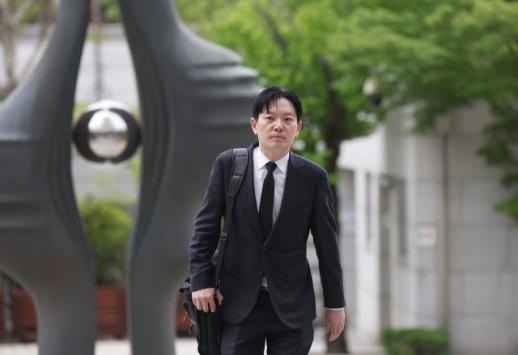 Prosecutor Park Sang-yong Appears Before Disciplinary Committee Over Salmon Party Allegations Prosecutor Park Sang-yong of the Incheon District Prosecutors' Office appeared before the Supreme Prosecutors' Office's disciplinary committee to address allegations of testimony coercion related to the 'salmon party' incident. He stated, "I provided a thorough explanation regarding the inaccuracies." The disciplinary committee convened on the afternoon of May 11 to deliberate on potential disciplinary actions against Park. The allegations under review include: the importation of alcohol into the investigation room, a recorded phone conversation disclosed by attorney Seo Min-seok, repeated summons, incomplete documentation, and consumption of outside food. According to Yonhap News, Park requested the opportunity to explain himself and waited for about three hours in the Supreme Prosecutors' Office's reception area before being allowed to present his case around 5 p.m. After concluding his explanation at approximately 6:17 p.m., he remarked, "I provided a thorough explanation regarding the inaccuracies. I feel grateful to the committee members for giving me this opportunity, and I believe I should repay this kindness by living faithfully, regardless of the conclusion they reach." Earlier, Park had expressed to reporters, "I have not been informed at all about the nature or number of the allegations against me. I wish to have the opportunity to explain myself to the external committee members as if I were knocking on the door of a public complaint office." He added, "Even regarding the salmon party, the correctional officers nearby were unaware of it, and if such an event did not occur, how could it be considered true? It is unprecedented in the history of the prosecution to impose disciplinary action based on the results of a lie detector test, which lacks evidentiary value, and it does not align with legal principles or reality." Park also stated, "If a disciplinary decision is ultimately made and I cannot accept it, I plan to file a lawsuit for cancellation." Park is under scrutiny for allegedly attempting to extract testimony from suspects, including former Gyeonggi Province Peace Vice Governor Lee Hwa-young and former Ssangbangwool Chairman Kim Seong-tae, by providing them with salmon and alcohol during the investigation into the Ssangbangwool North Korea remittance case on May 17, 2023. The Seoul High Prosecutors' Office's Human Rights Violation Task Force, which has been investigating the allegations, concluded that a drinking event did occur and reported this to the Supreme Prosecutors' Office. During a National Assembly investigation, Kim denied drinking alcohol, while a former Ssangbangwool director, identified as Park, claimed he purchased alcohol for personal consumption and drank it in his car. However, it has been reported that evidence, including corporate credit card records showing the purchase of soju at a nearby convenience store and the lie detector test results indicating truthful responses from Lee, were used as grounds for the allegations. The disciplinary committee's decision regarding Park's potential punishment will be advisory, and the Prosecutor General is not obligated to follow it. Nonetheless, the Prosecutor General has typically respected the committee's recommendations in determining disciplinary measures. Disciplinary actions against prosecutors can range from reprimands to suspension, dismissal, or removal from office, with the execution of penalties, excluding the mildest reprimand, requiring the Minister of Justice's recommendation and the President's approval. If a judge or prosecutor is dismissed as a disciplinary measure, they cannot practice law for three years.* This article has been translated by AI. 2026-05-12 05:08:56
 -
 Search Continues for Missing 11-Year-Old in Juwangsan National Park Search authorities are continuing their nighttime efforts to locate an 11-year-old boy, A, who went missing in Juwangsan National Park in Cheongsong County, North Gyeongsang Province. On May 11, officials from the North Gyeongsang Provincial Police Agency, the North Gyeongsang Fire Department, and the Korea National Park Service reported that they would deploy equipment and personnel for nighttime searches. Considering the weather conditions, the search will involve 80 personnel, including 40 police officers, 28 firefighters, and 12 national park staff, along with five drones equipped with thermal imaging cameras. The search teams plan to focus their efforts along the hiking trail from Giam Bridge, where A was last seen by his parents, to the summit, which stands at an elevation of 720.6 meters. The distance between Giam Bridge and the summit is approximately 2.3 kilometers. A police official stated, "The five drones will be operated until the rain begins, and the timing for concluding the search will be determined based on the situation on the ground." Earlier that day, authorities had already deployed a helicopter, two drones, and around 90 personnel in their search for A. Police reviewed closed-circuit television footage within the national park and found no indications that A's disappearance was related to any criminal activity. A, who lives in Daegu, had visited a temple in Juwangsan National Park with his parents the previous day. Around noon, he told them he would "just go up the mountain for a bit" and then disappeared. When A did not return, his parents reported him missing to emergency services at 5:53 PM that same day. A is described as approximately 145 centimeters tall and slender, wearing a Samsung Lions uniform and cap at the time of his disappearance. He did not have a mobile phone with him. In a phone call with Yonhap News Agency, A's father shared, "There is a short path from the temple to the mountain, and we were together until that point. That was the last time I saw him."* This article has been translated by AI. 2026-05-12 05:06:21
 -
 NHN to Buy Back 430,000 Shares and Burn Them to Enhance Shareholder Returns NHN announced it will buy back 430,000 shares and subsequently burn them, aiming to strengthen its commitment to shareholder returns. The company stated on May 11 that it will acquire 431,525 shares from May 12 to August 11. The total value of the buyback is approximately 16.7 billion won, and NHN plans to burn all acquired shares. KB Securities will manage the buyback. By burning the shares instead of holding them, NHN aims to reduce the number of shares in circulation and increase the value per share. According to Article 343, Paragraph 1 of the Commercial Act, the company explained that the board of directors has resolved to burn the treasury shares. This will decrease the total number of issued shares without reducing the capital. This initiative is part of NHN's three-year shareholder return policy announced last August. The company has committed to allocating 15% of its annual EBITDA to shareholder returns, which will be used for cash dividends and share buybacks. Notably, NHN plans to increase cash dividends each year, ensuring they exceed the previous year's per-share dividend. In line with amendments to the Commercial Act, starting in 2026, NHN intends to burn at least 50% of newly acquired shares within the same year to maximize benefits for shareholders.* This article has been translated by AI. 2026-05-12 05:04:33
 -
 Weather Forecast: Rain and Strong Winds Expected Nationwide with Highs of 23°C On Tuesday, May 12, the weather will be generally cloudy across the country, with rain expected in various regions. The capital area and Gangwon Province are forecasted to clear up by nightfall. According to the Korea Meteorological Administration (KMA) on May 11, rain that begins in the central region and North and South Gyeongsang provinces will expand to South Jeolla Province and Jeju Island starting early in the morning, and to South Gyeongsang Province by mid-morning. Most areas will see the rain taper off by the afternoon, although South Gyeongsang Province and Jeju Island may experience rain until the evening. Expected rainfall totals from May 11 to 12 are as follows: 5 to 10 mm in Seoul, Incheon, and northern Gyeonggi Province; 5 to 20 mm in southern Gyeonggi Province; 10 to 50 mm in Daejeon, Sejong, and Chungcheong provinces; 10 to 60 mm in Gwangju, South Jeolla, and North Jeolla provinces; 5 to 40 mm in Busan, Ulsan, Daegu, North Gyeongsang, and South Gyeongsang provinces; and 5 to 40 mm in Jeju Island. During the rain, residents should be cautious of strong winds, thunder, and lightning. Hail is also possible, particularly in the inland areas of Chungcheong, Jeolla, Gyeongsang provinces, and Jeju Island, so precautions for facilities and crops are advised. Morning low temperatures are expected to range from 12 to 16 degrees Celsius, while daytime highs will be between 19 and 23 degrees Celsius. Air quality is forecasted to be 'good' across all regions. Waves in the coastal waters are expected to reach 0.5 to 1.0 meters in the East and West Seas, and 0.5 to 1.5 meters in the South Sea. In the offshore waters (about 200 km from the coastline), wave heights are predicted to be 0.5 to 1.5 meters in the East Sea and 0.5 to 2.0 meters in the West and South Seas. The KMA advises that rain will come and go, with significant variations in rainfall amounts even within the same region, and urges residents to refer to real-time weather radar images and the latest weather information.* This article has been translated by AI. 2026-05-12 04:41:54
 -
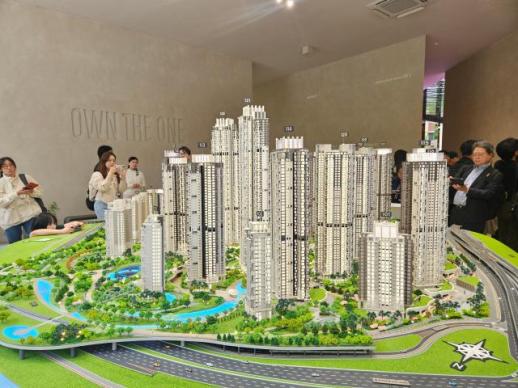 Robots to Handle Parking and Shuttle Services in Apgujeong 3 District Residents can use a demand-responsive transport (DRT) autonomous shuttle through a dedicated app to reach nearby subway stations without walking. After work, they can be dropped off at a hotel-style private drop-off zone, where a valet robot will park their car, while Hyundai's mobility robot, MobED, transports heavy luggage to their doorstep. On May 11, the promotional center for Apgujeong 3 District showcased Hyundai Construction's vision for future living technologies. The DRT autonomous shuttle can be summoned like a personal taxi through the Apgujeong Hyundai Apartments app. It can adjust its route based on passenger requests, providing flexible service. The shuttle will operate within the complex and connect to key external locations such as Cheongdam Elementary and Middle Schools, Apgujeong Rodeo Station, Dosan Park, and Apgujeong Station. The SPOT safety service robot patrols the parking lot and various areas of the complex, detecting anomalies and preventing potential dangers. MobED assists with transporting food, luggage, and even recycling tasks. These advanced robotics technologies from Hyundai will be implemented in the Apgujeong 3 District. The community facility, named 'Club Apgujeong,' spans approximately 45,000 pyeong, four times the size of Gwanghwamun Square. 'The Circle One' is a circular corridor that connects all buildings and community areas, measuring 17 meters wide, 3.5 meters high, and 1.2 kilometers long. Although it is located underground, it will feature air purification and heating and cooling systems to ensure year-round indoor living. Residents can enjoy walking, running, and relaxing regardless of the weather. Inside The Circle One, high-end community facilities will include a spa, swimming pool, sauna, golf practice area, bowling alley, and fitness center. Additionally, private areas such as personal workrooms, private meeting rooms, concierge rooms, and personal healing saunas will be available. This aims to address the limitations of overcrowded community facilities for residents. Furthermore, a health care system will be provided in collaboration with Cha Hospital and The Classic 500. The eight residential buildings along the Han River will feature distinct architectural designs, a result of collaboration with renowned architects RAMSA and Morphosis. The central area will consist of two towers reaching a height of 65 stories, flanked by buildings with fewer than 49 stories. Notably, the top floors of the 65-story towers will include two 'triplex super penthouses' with private gardens. The landscaped area within the complex will cover approximately 35,700 pyeong, featuring 13,000 trees and two themed courtyards. Sculptures by world-class artists will be placed throughout the complex, creating a gallery-like atmosphere. Each of the 30 buildings will have private gardens. The interior design will utilize a 'canvas unit' layout, allowing for flexible configurations except for the outer walls and columns. This design considers the needs of families with more than four members and potential rental income. Hyundai Construction has proposed a construction cost of 10.63 million won per pyeong, which is 570,000 won lower than the bidding standard of 11.2 million won. They also confirmed that the cost for product upgrades will be fully reflected, ensuring no future increases in construction costs. Additionally, they announced that relocation costs will be financed at 100% loan-to-value (LTV) and that member contribution payments can be deferred for up to four years after moving in. Park Seong-ha, head of the Apgujeong Reconstruction Project Team, stated, “By the time residents move in, most future technologies will be commercialized. Currently, valet parking robots are in operation at the Pangyo KT Center, and unmanned transportation systems are already being implemented in areas like Jongno and Anyang.”* This article has been translated by AI. 2026-05-11 15:20:49
 -
 Transportation Ministry Investigates Allegations of Bid Rigging in Rest Area Operations The Ministry of Land, Infrastructure and Transport announced on May 11 that it has referred officials from the Korea Expressway Corporation (KEC) and the CEO of H&DE to law enforcement for investigation regarding the alleged leak of bid information related to the operation rights of rest areas. The ministry revealed on May 7 that its audit, which began in January, uncovered irregularities in profit distribution and favoritism in the bidding process for rest area operations, which contradict the nonprofit purpose of the organization, the Dosheng Association, comprised of KEC retirees. According to the ministry, there are suspicions that bid information was leaked prior to the bidding for the Seonsan (Changwon) rest area, for which H&DE was selected as the project implementer in August of last year. KEC issued the bid announcement for the Seonsan (Changwon) rest area on May 15 of last year. It was confirmed that H&DE reported the status of its research project, bid announcement, and proposal schedule to the board of the Dosheng Association two months earlier, in March. There are also indications of possible price information leaks and collusion among KEC officials and bidding participants. The winning bid price for the Seonsan (Changwon) rest area was determined by averaging the prices submitted by bidders, and H&DE's bid price closely matched the average bid price of other participants. In response, the ministry has referred five individuals to the police for investigation into major bidding irregularities, including four KEC officials involved in the bidding process for the Seonsan (Changwon) rest area and the CEO of H&DE, on charges of bid obstruction and breach of trust, including allegations of favoritism. A ministry official stated, "We plan to actively cooperate with the investigation by providing audit materials and other relevant information."* This article has been translated by AI. 2026-05-11 11:11:12
 -
 Preference for Reconstruction Over Remodeling Persists Despite Expanded Authority for Special Cities In South Korea's special cities, including Suwon, Goyang, and Yongin, a new law allowing local governments to directly handle apartment remodeling plans has passed the National Assembly. However, there is a growing preference for reconstruction over remodeling in the field, raising concerns about the limited effectiveness of this policy. On May 7, the National Assembly approved the Special Act on Support for Special Cities, which expands the authority of cities with populations over one million. The law adds the establishment and modification of basic plans for apartment remodeling to the responsibilities of special city mayors, eliminating the need for approval from provincial governors. The basic plan for apartment remodeling allows for an increase of up to 15% in the number of units and aims to manage the concentrated demand for relocation that may arise from remodeling projects. It serves as a comprehensive framework for implementing project phases, incorporating resident feedback, and distributing demand. Currently, mayors of cities with populations over 500,000, excluding Seoul, metropolitan cities, and special self-governing cities, must obtain approval from provincial governors when establishing or modifying basic plans for apartment remodeling, as stipulated in Article 72, Section 4 of the Housing Act. For instance, Suwon City must submit its basic plan, approved by the Urban Planning Committee, to Gyeonggi Province for final approval after consultations with relevant departments. With the removal of this approval process, there are expectations that local governments will be able to implement support measures more quickly and in line with regional conditions. In fact, local governments have been proposing directions to promote remodeling. Suwon City has indicated that there is a lack of substantial support measures even after the enactment of the ordinance and has suggested establishing a remodeling support center. Similarly, Yongin City has proposed guidelines for applying government policies related to longevity and modular construction methods in its basic plan. However, the atmosphere on the ground shows a significant gap between expectations and reality. In first-generation new towns such as Bundang, Ilsan, Pyeongchon, Sanbon, and Jungdong, many projects aimed at remodeling are facing delays and internal conflicts, leading to a shift toward reconstruction. This trend is weakening the market dynamics in key areas of Gyeonggi Province, which were once considered the backbone of the remodeling market. Ilsan New Town exemplifies this shift. The Muncheon Village 16th district, which gained initial approval for its remodeling project, has become embroiled in internal disputes, with calls for the dissolution of the association and a halt to the project. On the same day, the Gangseon Village 14th district, which also received approval for its association establishment, decided to dissolve its remodeling association during a general meeting last year, effectively abandoning the project. As uncertainties regarding profitability and speed increase during the project process, residents are increasingly leaning toward reconstruction. Recent easing of reconstruction regulations and expanded floor area incentives have improved the viability of these projects, while remodeling is limited to a maximum increase of 15% in the number of units, restricting the number of units available for sale. While the expansion of authority for special cities is seen as a meaningful step in establishing a regulatory framework, the actual implementation of projects remains a separate issue. A resident from a remodeling project in Goyang City stated, "Even if the procedures are expedited, what matters is how much more we can earn. Nowadays, with the easing of reconstruction regulations, the profitability appears more favorable, and discussions about reevaluating the project direction are ongoing among residents." Nonetheless, some areas continue to pursue remodeling as an alternative. The eligibility period for remodeling is 15 years after completion, compared to 30 years for reconstruction, and it is relatively free from restrictions such as limitations on the transfer of membership rights. In Suwon's Yeongtong District, remodeling projects are actively underway, particularly for apartments over 25 years old. Following the Shinseong, Shin-an, Ssangyong, and Jinhung (Private Complex 5) projects, the Maetan Dong South Apartments received project approval at the end of last year with a floor area ratio of 307%. Additionally, in Yongin's Suji District, a total of six complexes, including Suji Ttireche Apartments, have received project approval.* This article has been translated by AI. 2026-05-11 03:29:07