
Journalist

Yoo Na-hyun · Han Jun-gu
shooting@ajupress.com
-
 Following the tracks, following the taste (Gangneung) -1 SEOUL, April 13 (AJP) - The journey begins before the sea comes into view.Steel rails draw a quiet line from Seoul to the East Coast, and along that line, time seems to fold. Since the opening of the KTX Gangneung Line in 2017 ahead of the 2018 PyeongChang Winter Olympics, the city has moved closer (two hours) —not just in distance, but in rhythm. What once required a night’s stay now fits within a single day. The train does not merely carry passengers; it reshapes intention. A city once reserved for weekends becomes an impulse, a pause, a breath between obligations. Gangneung is no longer a destination you prepare for. It is a place you slip into. At Anmok Beach, the sea does not rush you. Cafés line the shore like open windows, each framing the same horizon differently. Coffee here is not hurried—it lingers, like the salt in the air. People walk, stop, sit, and stay. Time stretches between sips. What was once a simple coastline has become a choreography of movement and pause. You arrive, you wander, you settle. The act of drinking coffee turns into a way of inhabiting the city.The sea is still the destination. But now, so is everything around it. Around Gyeongpo Lake, the rhythm shifts with the seasons. During spring, cherry blossoms draw crowds along the water, while programs such as the traditional boating experience near Ojukheon add another layer to the landscape. Here, the city extends beyond the shoreline, blending water, season and movement into a broader flow. Wolhwa Street traces the path of a former railway, now softened into a pedestrian corridor. Here, the city breathes differently. Shops, light, and footsteps replace the rumble of steel. The line that once carried people through the city now invites them to linger within it. The coastline no longer holds the entire story. Movement extends inward, weaving the sea into the streets, the journey into the city’s core. Yet beneath these new rhythms, older stories remain. 2026-04-13 17:29:01
 -
 Seoul's two landmark statues get spring wash SEOUL, April 13 (AJP) - Seoul's two landmark statues in Gwanghwamun are being bathed this week as part of regular maintenance and preservation efforts. As spring arrives, dust and other stains that have accumulated on the statues of King Sejong the Great and Admiral Yi Sun-shin over the long winter months will be washed off on Monday and Tuesday. Any damaged areas will also be touched up and recoated to prevent rust and preserve the statues' original condition. 2026-04-13 16:53:58
 -
 Hundreds of booths showcase latest tech convergence at expo in southern Seoul SEOUL, April 10 (AJP) - An expo featuring the latest technologies and trends in electronics and automotive manufacturing is being held at COEX in southern Seoul, with about 250 domestic and foreign companies participating. The three-day expo with more than 400 booths which kicked off Wednesday are showcasing a wide range of equipment and solutions in the fields of automotive electronics and smart factory systems, allowing visitors to explore automated production lines and advanced manufacturing technologies. The tech expo has evolved into a convergence exhibition with the inclusion of automotive electronics manufacturing since its 2017 inaugural event, further broadening its scope in 2022 to cover eco-friendly vehicle technologies and lightweight solutions. 2026-04-10 15:25:26
 -
 Flower-themed festival underway as spring in full bloom GANGNEUNG, April 10 (AJP) - A cherry-blossom-themed festival is underway along Gyeongpo Lake in Gangneung, Gangwon Province, welcoming visitors hoping to enjoy a spring outing at the peak of seasonal flowers. The weeklong festival, which kicked off last weekend and runs until Saturday, offers various programs including a singing contest, music performances, sporting events, and other activities in the surrounding areas. A roughly 4-kilometer-long trail lined with cherry blossoms along the scenic lake dazzles visitors with beautiful scenery by day and night, decorated with illuminated tunnels and other light displays. 2026-04-10 15:00:59
 -
 BTS franchise in incessant motion: on screen and stage, and off stage SEOUL, April 07 (AJP) -BTS franchise is in incessant motion since its March 21 comeback. As the world tour opens in Goyang on Thursday, the group has been releasing weekly viral music videos, amplifying global fan excitement. Off-stage activations have been just as intense, turning Seoul into a citywide extension of the BTS universe. The “BTS THE CITY ARIRANG SEOUL” project has kicked off across the capital, drawing strong response to its fan-participation programs. The project celebrates the release of BTS’ fifth full-length album ARIRANG and its accompanying world tour, offering immersive, citywide experiences built around the group’s music and message. At Dongdaemun Design Plaza (DDP), the “ARMY Madang” program is being held at Exhibition Hall 1. The program runs eight sessions per day, with about 400 participants per session. While free of charge, participation is limited to those who make advance reservations via Weverse. According to organizers, all sessions, held from 1 p.m. to 9 p.m., have sold out, underscoring surging demand. On-site activities include T-shirt and light stick customization, love song writing and photo card production, alongside a HYBE experience zone and other linked programs. “ARMY Madang” runs from April 6 to April 12. Across the city, the project extends into themed installations, pop-up stores and interactive zones, effectively mapping BTS onto Seoul’s urban landscape. Key landmarks have been reimagined as fan destinations, blending music, design and digital engagement. Nighttime light shows, projection mapping and curated playlists further transform public spaces into shared fan arenas. Retail and hospitality sectors are also participating, with limited-edition merchandise, themed menus and hotel packages tailored to visiting fans. The initiative is driving a measurable uptick in foot traffic in major districts, signaling the group’s continued pull as both a cultural and economic force. Taken together, the project illustrates how BTS’ comeback is not confined to charts or stages, but unfolds as a coordinated, multi-platform experience — one that fuses fandom, commerce and city branding into a single, continuously evolving narrative. 2026-04-09 10:42:02
 -
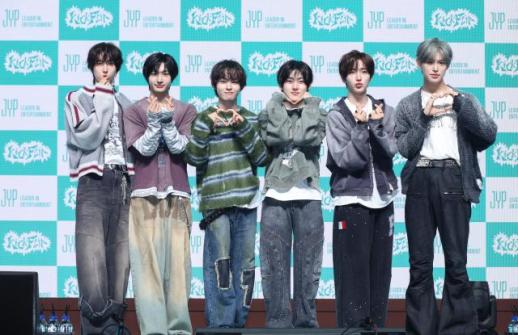 JYP rookie boy band KickFlip drops fourth mini album SEOUL, April 06 (AJP) -South Korean rookie boy group KickFlip, under JYP Entertainment, dropped its fourth mini album My First Kick on Monday, kicking off its second year since debut in January 2025. The group consists of seven members, but member Amaru did not participate in this comeback due to health reasons. The six members — Gyehoon, Donghwa, Juwang, Minje, Keiju and Donghyeon — showcased the new tracks with high-energy performances. The title track, “Eye-Poppin’,” is a hyper-punk dance number that signals a bolder turn in the group’s sound, pairing punchy beats with a cheeky, no-holds-barred love confession. Since debuting with Flip it, Kick it!, KickFlip has steadily built momentum with releases including Kick Out, Flip Now! and My First Flip. The group notched its first terrestrial music show win, picked up multiple rookie awards and expanded its global reach with festival appearances such as Lollapalooza. "I want us to remain in people’s view, even if it means getting on their nerves," leader Kyehoon told reporters. "We don’t want to be tied to one style," member Donghwa said. "We want to keep trying new things and show different sides of ourselves." Centering on themes of love, uncertainty and new beginnings, the album captures the transition of the performers into their 20s. It extends a narrative established in earlier releases, which explored youth through family, school and personal freedom, now moving into romantic relationships. All members took part in writing the songs and producing the album, something that KickFlip has done since their debut early last year and which makes them distinctive among the newer acts. The album further develops the coming-of-age theme through songs such as "Twenty," which reflects the transition into adulthood, and "Scroll," which captures the uncertainty of one-sided love in a digital context. Musically, the group continues to build on a rock-based foundation while incorporating a broader mix of genres, reflecting an approach that balances continuity with experimentation. Earlier this year, KickFlip wrapped its first fan-con tour, 2026 KickFlip FAN-CON “From KickFlip, To WeFlip”, spanning 12 shows across five cities — a run that underscored its growing stage presence. My First Kick will be available on major streaming platforms at 6 p.m. Monday. The group will follow with a comeback show on Mnet M2 at 7 p.m. and a fan showcase at 8 p.m. 2026-04-06 15:51:05
 -
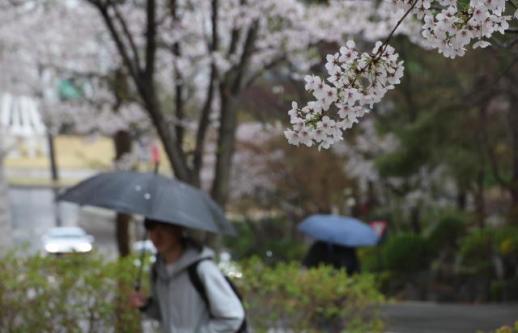 Full bloom interrupted by a jealous spring rain SEOUL, April 06 (AJP) -It has been only a week since cherry blossoms reached full bloom across Seoul, and already a jealous rain has cut the season cruelly short, scattering pink petals like confetti across the campus of Kyung Hee University in Dongdaemun District. Rain is expected to fall across most of South Korea on Monday before skies gradually clear in the afternoon. The precipitation, driven by rain clouds moving in from the Yellow Sea, began in the Seoul metropolitan area, South Chungcheong, North Jeolla and Jeju, and is forecast to spread nationwide through the morning before tapering off in most regions by the afternoon. Seoul is expected to receive about 5 millimeters of rain, while parts of Chungcheong and the southern regions could see 5 to 30 millimeters. In some areas, the rain may be mixed with yellow dust. Fine dust concentrations are also expected to worsen through the day, reaching “bad” levels at different times by region — from late morning through daytime in the Seoul metropolitan area, from daytime into evening in Chungcheong, and at night in southern parts of the country. 2026-04-06 13:29:16
 -
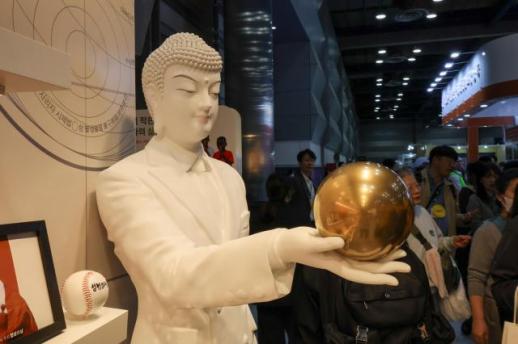 Who says religion can't be cool? Buddhism expo SEOUL, April 02 (AJP) - Crowds poured into COEX in Seoul’s Gangnam District on Thursday as the Seoul International Buddhism Expo opened, with visitors lining up from the morning to enter one of the city’s most unconventional cultural events. Hosted by the Jogye Order of Korean Buddhism, the annual expo — running through April 5 — has been held since 2013 to showcase traditional Buddhist culture and its evolving industries. Inside, long lines quickly formed at booths that had gone viral on social media, with some areas restricting entry by the afternoon as visitor numbers surged. Young attendees moved from stall to stall, browsing Buddhist-themed goods, art and meditation programs, often treating the space less as a place of worship than as an immersive cultural experience. The shift reflects the rise of so-called “hip Buddhism,” a trend that blends spirituality with lifestyle and design. Organizers said about 200,000 people visited last year’s expo, with 77.6 percent from the MZ generation and more than half — 52.1 percent — identifying as having no religious affiliation. This year’s event, themed “The Play You Love: Form Is Emptiness, Emptiness Is Form,” features some 430 booths. Programs range from the Buddhist Cultural Industry Exhibition and Buddha Art Fair to Relax Week sessions and an International Meditation Competition, all centered on healing, mindfulness and contemporary interpretations of Buddhist practice. Amid the hum of conversation and camera shutters, the expo unfolded less like a traditional religious gathering and more like a festival of experience — where belief, curiosity and culture quietly intersect. 2026-04-02 17:45:18
 -
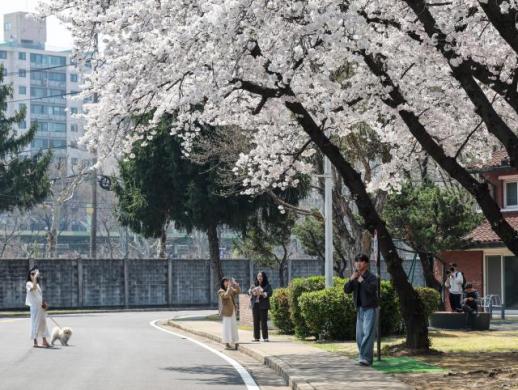 Spring in full bloom across Seoul SEOUL, April 02 (AJP) -Spring has burst into full bloom in Seoul, with magnolia, fosythia, and cherry blossoms painting the city in soft shades of white, yellow, and pink. Citizens enjoyed the mild weather at the former officers’ housing complex in Yongsan Park in Seoul’s Yongsan District on Wednesday, strolling along tree-lined paths and pausing beneath clusters of blossoms that have reached their peak. The site, once part of a U.S. military residential area, was returned to the South Korean government in 1986. It was later redeveloped by the former Korea National Housing Corporation and opened to the public in July 2020. Today, it serves as a transitional space where visitors can glimpse the evolving vision of Yongsan Park ahead of the full return of the Yongsan Garrison. Morning temperatures ranged from 2 to 9 degrees Celsius, while daytime highs climbed to between 14 and 21 degrees, hovering around or slightly above seasonal norms. The wide temperature gap — reaching up to 15 degrees in inland areas — added a crisp edge to otherwise gentle spring air. Still, the warmth of the afternoon drew crowds outdoors. Visitors walked, sat on benches, and lingered under blooming trees, taking in a brief but vivid moment of seasonal change as spring settled across the capital. 2026-04-02 17:10:37
 -
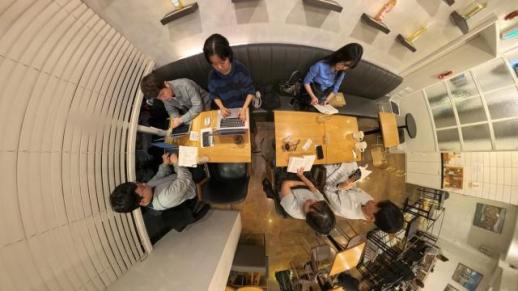 From "I'll do it later" to "doing now": why "admin night" catches on in Korea SEOUL, April 01 (AJP) - “No talking for the next two hours.” At a café in Seoul’s Gwanak District, participants briefly declare their goals using nicknames — then fall into silence. Laptops open, keyboards click, and each person dives into their own task. Among Gen Z, “admin night” is emerging as a new evening ritual — an alcohol-free alternative to after-work drinks, focused on getting things done. The appeal lies in being together without interaction. Participants say the subtle feeling of being watched helps them stay focused, and why? The purpose is simple from “I’ll do it later” to doing it now. A lighter form of connection, with fewer emotional demands — a quiet shift in how young people work, gather and unwind. 2026-04-02 10:27:14