
Journalist

JINYOUNG PARK
sunlight@ajunews.com
-
 Korean Business Leaders Meet Japanese Prime Minister Ahead of Summit Ahead of the Korea-Japan summit scheduled for May 19 in Andong, South Korea, major domestic companies met with Japanese Prime Minister Sanae Takaichi in Tokyo to discuss strengthening economic cooperation between the two countries. Attention is focused on whether concrete business outcomes will emerge in advanced industries such as supply chains, artificial intelligence (AI), and energy during their meetings with Japanese business leaders.According to industry sources on May 18, the Korean delegation, led by Gu Ja-yeol, chairman of the Korea-Japan Economic Association and LS Group, departed for Japan earlier that day and held a series of meetings with Japanese government officials and key political figures. The delegation met with Prime Minister Takaichi around 3 p.m. and reportedly requested enhanced economic cooperation in key sectors, including global supply chain collaboration, AI data centers, and energy.Takaichi welcomed the delegation's visit, stating, "I greatly appreciate the Korea-Japan Economic Association's representatives. I have been invited to visit Andong, the hometown of President Lee Jae-myung, on May 19, and I believe that business leaders have played a crucial role in fostering friendly relations between our two countries." She added, "I pay my respects to the business leaders who have maintained communication and cooperation, whether our relationship was good or faced challenges."Earlier, the delegation also met with Ryota Takeda, chairman of the Japan-Korea Parliamentary Federation, who recently emphasized the need for technological cooperation between the two countries. Discussions likely focused on collaboration in advanced industries such as semiconductors. On May 19, the delegation is scheduled to meet with Foreign Minister Yawata Iwao and Minister of Economy, Trade and Industry Nishimura Toshio.The visiting delegation includes Gu Ja-yeol, Shin Dong-bin, chairman of Lotte Group, Gu Ja-eun, chairman of LS Group, Gu Ja-kyun, chairman of LS Electric, Kim Dong-wook, vice president of Hyundai Motor, Lee Hyung-hee, vice chairman of SK, and Lee Jae-eun, president of Samsung C&T.The Korea-Japan Economic Association, in collaboration with the Japan-Korea Economic Association, will hold the 58th Korea-Japan Economic Conference in Tokyo on May 19-20 under the theme "Next Step Together." The event is expected to focus on the restructuring of global supply chains and the intensifying competition in the AI industry. As the U.S.-China conflict continues and protectionist trends spread, the need for cooperation between Korean and Japanese companies in strategic industries such as semiconductor materials, components, equipment, batteries, automotive, and energy infrastructure is growing.There are also expectations for specific collaboration opportunities between companies from both countries. LS Group plans to expand its engagement with Japanese firms in the power equipment and wire sectors, while Hyundai Motor aims to enhance its collaboration in future mobility. Doosan is also looking to expand its connections in the semiconductor materials sector.* This article has been translated by AI. 2026-05-18 22:19:17
 -
 Court Partially Grants Samsung Electronics' Request to Ban Union Strike The Seoul court has partially accepted Samsung Electronics' request for an injunction to prohibit an illegal general strike by the labor union. This decision comes just three days before the union's planned strike. The court's ruling is expected to hinder the strike by requiring staffing levels to remain at normal levels.In response, the largest union, the Samsung Electronics branch of the Korean Federation of Trade Unions (KCTU), stated that it respects the court's decision and plans to proceed with its scheduled strike activities on May 21.On May 18, the Suwon District Court's Civil Division 31, led by Judge Shin Woo-jung, partially granted Samsung's injunction request against two unions, including the KCTU and the Samsung Electronics Union, filed on April 16.The court ruled that the unions must maintain staffing levels, operating hours, and scale of operations during the strike at the same levels as normal weekdays or weekends. It also ordered that Samsung's security and maintenance operations must continue without disruption during the strike.Additionally, the court prohibited the KCTU and its chairman, Choi Seung-ho, from occupying any facilities or installing locks that would impede workers' access.This ruling largely aligns with Samsung's demands and is expected to legally restrict the union's ability to strike.To ensure compliance, the court stated that for each day of violation, the unions would be required to pay 100 million won, while Choi Seung-ho and acting chairman Woo Ha-gyeong would each owe 10 million won to Samsung.In a statement, the KCTU's legal representative, Law Firm Majung, acknowledged the necessity of security measures and expressed respect for the court's decision, affirming plans to proceed with the strike on May 21.However, they noted that the dispute was primarily over the specifics of staffing levels. Law Firm Majung explained that while Samsung claimed a requirement of 7,000 workers on weekdays, the union argued for fewer workers on weekends or holidays, a position the court supported, indicating that the actual number should be less than 7,000.The union contends that staffing levels on weekends or holidays will be lower than 7,000, asserting that this will not impede their strike activities.The union also requested that Samsung provide specific staffing needs for each department to enable union members to organize effectively.In response, Samsung Electronics criticized the KCTU for misrepresenting the court's ruling, stating that the court clearly defined "normal" as referring to both normal weekdays and weekends.Samsung emphasized that the ruling means staffing levels must match those of normal weekdays during the strike period, and similarly for weekends and holidays, to maintain security and safety operations.The company added that it would provide separate guidance to employees in departments requiring normal attendance during the strike period. 2026-05-18 15:31:14
 -
 Samsung Electronics Non-Semiconductor Union Stages Surprise Protest Samsung Electronics' non-semiconductor division union staged a surprise protest outside the Central Labor Relations Commission on May 18, opposing the wage negotiations that are heavily focused on the semiconductor (DS) sector. They also made a novel demand for the distribution of performance bonuses to partner companies.According to industry sources, the Donghaeng Union of Samsung Electronics and the Suwon branch of the National Samsung Electronics Union held a separate demonstration in front of the commission during the wage negotiation post-adjustment meeting. They distributed materials outlining the 'six key demands of DX division workers' and called for the inclusion of additional agenda items for DX division members.The demands include: securing a system for performance bonuses amounting to 15% of operating profit, ensuring common resources for the entire company, and enhancing transparency in the criteria for executive bonuses.Notably, the demand for distributing performance bonuses to partner companies drew attention. The unions stated, "We must secure 15% of operating profit for performance bonuses, with some allocated as common resources for the entire company and some for performance bonuses for partner companies to realize shared value." This marks the first time Samsung Electronics' union has officially mentioned the need for bonus distribution to partner firms during the ongoing bonus conflict.Internally, there are interpretations that this movement is a response to recent criticisms of the inter-company union's total strike phase being labeled as 'selfishness of regular unions.'The Donghaeng Union and the Suwon branch are currently protesting that the wage negotiation structure is primarily focused on the DS sector. They argued, "The inter-company union leading the representative negotiations is solely fixated on the DS sector's performance bonus discussions, continuously excluding key issues for the DX division. The performance bonus resources should reflect the overall value of Samsung Electronics without sector discrimination."However, there is a prevailing view that the likelihood of these demands being adopted as actual post-adjustment agenda items is low. Nonetheless, the public expression of discontent among DX division members is intensifying the internal 'union conflict' at Samsung Electronics.Previously, the Donghaeng Union, primarily composed of DX members, notified the inter-company union and the National Samsung Electronics Union on May 4 of their withdrawal from the joint negotiation team, which had been formed for wage negotiations last November. This marks a visible fracture between the unions after about six months of collaboration. The Donghaeng Union, with over 2,300 members, reportedly has about 70% of its members working in the DX division, which includes TV, home appliances, and mobile sectors.In their official statement at that time, the union criticized, "Despite our proposals and requests for the rights of all members, both unions have not responded. There have been ongoing attacks and derogatory remarks against our union, including malicious labeling as a 'yellow union.'"* This article has been translated by AI. 2026-05-18 13:14:01
 -
 LS Electric Secures $70 Million Power Equipment Contract for Major U.S. Data Center LS Electric announced on May 18 that it has signed a supply contract worth approximately $70 million (about 105 billion won) for power distribution equipment to be used in a large data center operated by a major tech company in the United States.With this contract, LS Electric will provide essential high-end power equipment, including vacuum circuit breakers (VCB), to the core power network of the data center. The company has garnered strong trust from global tech giants, which is seen as a significant achievement.In the highly competitive U.S. power distribution market, LS Electric has established itself as a major player, recognized for its exceptional technology, quality, and commitment to timely delivery.Recently, the U.S. market has seen a surge in investments in large-scale data centers and power infrastructure, dispelling concerns about an 'AI bubble' and supporting the expansion of practical artificial intelligence (AI) services.Riding this market trend, LS Electric expects to secure additional large contracts based on its overwhelming technological capabilities.The company recently signed a $220 million (about 319 billion won) supply contract for power distribution solutions with Bloom Energy. This agreement will allow LS Electric to participate in the construction of power infrastructure for a major hyperscale data center being developed in New Mexico.Last month, LS Electric also entered into a $114.97 million (about 170.3 billion won) sales and supply contract with Amazon Web Services (AWS) to provide switchgear and distribution transformers for a hyperscale data center being built by AWS.LS Electric plans to actively target the booming North American power infrastructure market by enhancing its localized power solutions and expanding its market share through aggressive sales efforts.An LS Electric official stated, "This contract reflects our strong trust as a major player in the North American market, combining both technological prowess and brand power. Based on our recent large contract successes, we aim to solidify our position as a global leader in the rapidly growing North American power infrastructure market."* This article has been translated by AI. 2026-05-18 13:04:23
 -
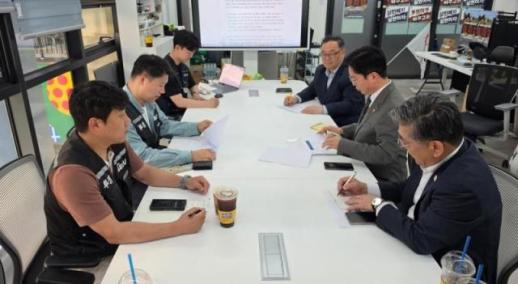 Samsung Electronics Union Signals Willingness to Resume Talks After Meeting Labor Minister Ahead of a total strike by the Samsung Electronics labor union, Labor Minister Kim Young-hoon visited the Pyeongtaek campus to persuade the union, which indicated a possibility of resuming negotiations. On May 15, the Supercorporate Labor Union Samsung Electronics Branch (Supercorporate Union) announced in a post titled "Update on Meeting with the Labor Minister" that "Minister Kim Young-hoon and officials from the Ministry of Employment and Labor visited the Supercorporate Union office." They explained the progress of negotiations, Samsung Electronics' business structure, and key issues at this time, and had an open discussion about the overall status of negotiations with Minister Kim. The union added, "The minister expressed deep understanding of our position and stated he would clearly convey our intentions to the management." The Supercorporate Union outlined conditions for resuming negotiations, stating, "We request the replacement of the management's chief negotiator and a substantial change in the management's position as prerequisites for resuming talks. If negotiations resume, we will engage in a responsible and sincere manner." Earlier that same day, the leadership of Samsung Electronics' semiconductor (DS) division also visited the Pyeongtaek campus for a separate meeting with the union. The executives, including Vice Chairman Jeon Young-hyun, spoke with Chairman Choi for about 40 minutes starting at 2:20 PM, but it is reported that there was no significant change in their position. With both labor and management maintaining a hardline stance, the involvement of the labor minister appears to be a last-minute intervention to prevent the total strike. The union has announced plans for an 18-day total strike from May 21 to June 7, demanding transparency and institutionalization of performance bonuses. If the strike occurs, it is projected to result in damages amounting to 100 trillion won.* This article has been translated by AI. 2026-05-16 00:30:13
 -
 Samsung Electronics DS Division Leadership Engages with Labor Union Samsung Electronics' semiconductor (DS) division leadership visited the labor union office at the Pyeongtaek campus on May 15 to engage in active dialogue with union representatives.According to Samsung Electronics, Vice Chairman Jeon Young-hyun and other executives from the DS division met with the joint action headquarters of the Samsung Electronics labor union at the union office located at the Pyeongtaek campus.The meeting included four executives from Samsung Electronics: Vice Chairman Jeon Young-hyun, President Kim Yong-kwan, President Han Jin-man, and President Park Yong-in. The union was represented by Chairperson Choi Seung-ho, Vice Chairperson Lee Song-yi, Director Kim Jae-won, and Director Jeong Seung-won.Vice Chairman Jeon expressed a commitment to open dialogue with the union and conveyed a desire to resume negotiations.Earlier, the Samsung leadership issued an official statement proposing 'unconditional dialogue' with the union, emphasizing, "We urge the union to engage in discussions promptly, considering the concerns of the public and the national economy."They also conveyed an apology to the public, stating, "The labor-management issues at Samsung Electronics have caused significant burden and concern for the public and the government. As our achievements grow, the expectations of society for Samsung become stricter and larger, and we have not adequately addressed this." They added, "The Samsung leadership feels a heavy sense of responsibility for how the situation has unfolded. We sincerely apologize." * This article has been translated by AI. 2026-05-15 23:18:00
 -
 Hanmico Semiconductor to Enter U.S. Semiconductor Supply Chain Hanmico Semiconductor is poised for significant growth in the second quarter of this year, driven by the ongoing demand for global artificial intelligence (AI) semiconductors. The company anticipates a substantial increase in annual revenue as it prepares to establish its U.S. subsidiary, Hanmi USA, by the end of the year.Hanmico Chairman Kwak Dong-shin stated on May 15, "With the mass production of High Bandwidth Memory (HBM4) ramping up, we are seeing a surge in orders for TC bonders in the second quarter. This trend is expected to accelerate in the second half of the year." He emphasized that Hanmico's TC bonders, which hold the top global market share, will benefit significantly from the expansion of the AI semiconductor market.The establishment of Hanmi USA in San Jose, California, will enable Hanmico to actively respond to local market demands. The company plans to use the San Jose office as a central hub for rapid technical support, aligning with the operational timelines of new semiconductor factories being established by global firms in the U.S. This strategy includes deploying skilled engineers locally to provide proactive technical assistance.The formation of Hanmi USA also marks a significant realization of Hanmico's founding vision of serving as a bridge between Korea and the United States, 50 years after its inception. The company was founded by the late Kwak No-kwon, who built his expertise during 14 years at Motorola in the U.S. before establishing Hanmico in Korea, a country that was then a barren landscape for the semiconductor equipment industry. Now, Hanmico plans to make a substantial entry into the U.S. market through Hanmi USA.As the production of HBM4 expands, Hanmico's growth trajectory is expected to steepen. Analysts are noting that competition among global memory companies to increase HBM production will intensify in the second half of the year, potentially leading to increased orders for TC bonders. Hanmico is currently supplying equipment to global memory companies, including SK Hynix, and anticipates diversifying its revenue portfolio with new products such as next-generation hybrid bonders and 2.5D packaging equipment.Recent investments in large-scale semiconductor manufacturing facilities in the U.S. have been notable. In the fourth quarter of last year, Intel began operations at a new advanced process-based foundry and packaging plant in Chandler, Arizona. By 2027, Micron aims to have a cutting-edge DRAM and HBM manufacturing hub operational in Boise, Idaho, and is constructing the largest memory production facility in the U.S., known as a "megafab," in Syracuse, New York, set to begin operations in 2028. Additionally, SK Hynix plans to start advanced HBM supply in Lafayette, Indiana, by 2027.In this context, Hanmico's direct participation in the U.S. government-led AI semiconductor supply chain is expected to yield significant benefits in the future.Moreover, the establishment of Hanmi USA is significant for building direct collaboration with global hyperscaler companies, which are end-users. Recently, companies like Microsoft, Google, Amazon (AWS), and Meta have been developing their own AI semiconductors, increasingly reviewing and specifying the high-performance memory and essential equipment used in manufacturing processes. Consequently, demand for packaging equipment aimed at hyperscalers is anticipated to rise.Currently, Hanmico holds the top global market share in TC bonders, which are essential for HBM manufacturing, and plans to launch a prototype of its second-generation hybrid bonder equipment within the year to solidify its leadership in the next-generation HBM market.In addition to HBM TC bonders, Hanmico aims to drive revenue growth with a variety of equipment. The company is set to supply its 2.5D packaging equipment, including the "2.5D TC Bonder 40" and "2.5D TC Bonder 120," to foundry and OSAT companies this year. The "BOC COB Bonder," which was launched earlier this year as the world's first, has begun supplying global memory companies and is expected to contribute to revenue growth alongside the expanding demand for AI and data centers.Chairman Kwak stated, "Through our U.S. subsidiary, we plan to actively support our clients' needs closely. We anticipate significant equipment orders alongside the operation of new factories in the U.S., which is emerging as a global semiconductor production hub, and expect continuous revenue growth in the future."* This article has been translated by AI. 2026-05-15 22:37:27
 -
 KOBA 2026: The Era of High-Quality Video Production The KOBA 2026 exhibition, South Korea's largest broadcasting and video equipment showcase, is no longer just a platform for broadcasters and film production companies. With the rapid growth of short-form content on platforms like YouTube, TikTok, and Instagram Reels, everyday consumers and individual creators have emerged as key players in the professional video production market.Held from May 12 to 15 at COEX in Samseong-dong, Seoul, KOBA 2026 featured numerous booths from global camera manufacturers, including Canon, Sony, and Nikon. This year's exhibition prominently showcased the evolution of video cameras. While previous events focused on photography capabilities, this year's event highlighted video-centric cameras and AI-based video solutions.The audience has also changed. The proportion of general consumers and individual creators producing vlogs and short-form content has significantly increased, alongside traditional broadcasting professionals and cinematographers. Long lines formed at booths where attendees could try out filming equipment, and areas demonstrating vertical video shooting and live streaming attracted many young visitors.Notably, Canon Korea launched a new video-focused mirrorless camera during the exhibition. On May 14, Canon held a press conference at Studio 159 in COEX, unveiling the video-specialized full-frame mirrorless camera, the EOS R6 V, along with the power zoom lens RF20-50mm F4 L IS USM PZ.This new product reflects the rapid shift in the camera market from photography to video. As platforms like YouTube and TikTok grow, the demand for high-quality video production among everyday consumers has surged, prompting camera manufacturers to accelerate the democratization of professional video equipment.Nikon and Sony also emphasized their professional video equipment and cinema cameras in line with the expanding video market. Nikon Imaging Korea operated a joint booth themed "Nikon in KOBA 2026 with RED," featuring the American digital cinema camera company that Nikon acquired. Attendees could experience the latest cinema cameras and mirrorless products firsthand. The "Z CINEMA," showcased for the first time since RED became a subsidiary, particularly attracted independent filmmakers.A Nikon Imaging Korea representative noted, "Visitor numbers increased by 1.5 times compared to last year, especially among younger audiences, indicating a clear rise in demand for video cameras." They added, "With prices around 2 million won, there is growing interest in video cameras among college students and young people." Sony Korea emphasized AI-based video production and a network-centric live production ecosystem. They showcased features like AI auto framing and automatic tracking technology, which adapt camera angles based on the speaker's movements, proving useful in sports, education, and corporate content production.The exhibition confirmed that high-quality video production is no longer confined to a select group of professionals. The camera market is rapidly shifting towards video, as the performance of smartphone cameras has leveled up, leading to a decline in demand for simple photography while the demand for high-quality video production continues to rise due to the popularity of short-form content and reels. The advancement of AI technology is also expected to accelerate the expansion of the video equipment market. With the rapid commercialization of AI-based autofocus, subject tracking, automatic framing, and virtual production technologies, individual creators can now produce professional-level content more easily.An industry insider stated, "The video equipment market, once centered on broadcasters and film production companies, is now rapidly expanding to include everyday consumers and individual creators. The democratization of high-performance video equipment will accelerate further with the growth of AI technology and video platforms."* This article has been translated by AI. 2026-05-15 22:18:00
 -
 Samsung Electronics Executives Meet with Union Leaders to Address Bonus Dispute Samsung Electronics' semiconductor division executives have traveled to the Pyeongtaek campus to meet directly with union representatives in an effort to resolve a dispute over performance bonuses.According to industry sources on May 15, Vice Chairman Jeon Young-hyun and other executives from the semiconductor (DS) division are set to meet with Choi Seung-ho, chairman of the Samsung Electronics branch of the Korean Metal Workers' Union.In an official statement, the executives expressed their belief that the union is part of a shared family and community, stating, "We will approach the dialogue with an open attitude, without conditions." They also urged the union to engage in discussions promptly, considering the public's concerns and the national economy.This marks the first time the executives have taken such direct action to meet with union leaders. With a general strike announced by the union just six days away, this move is seen as a strong commitment to avert a strike that could result in losses amounting to tens of trillions of won.Samsung Electronics emphasized its dedication to resolving internal issues amicably while focusing on enhancing its technological competitiveness.The executives stated, "We are in an era of infinite competition where the global business environment is changing rapidly, and we cannot afford to waste time on internal matters." They pledged to collaborate and share wisdom while considering the current economic situation and South Korea's long-term future.They concluded by promising to be a steadfast pillar for the national economy through sound management, continuous technological innovation, and bold future investments.* This article has been translated by AI. 2026-05-15 15:13:03
 -
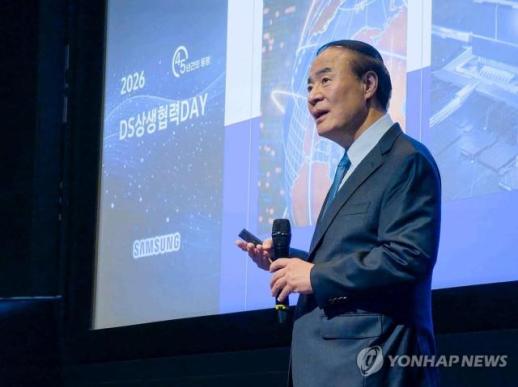 Samsung Executives Call for Unconditional Dialogue Amid Strike Threat Samsung Electronics executives, including Vice Chairman Jeon Young-hyun and President Roh Tae-moon, have reiterated their call for 'unconditional dialogue' with the union amid indications that the union may proceed with a general strike. In an official statement titled 'We Apologize to the Public,' the executives acknowledged, "We have caused significant burden and concern to the public and the government due to labor-management issues at Samsung Electronics," adding, "As our achievements grow, the expectations from society for Samsung have become stricter and greater, which we have failed to adequately address." The executives expressed a deep sense of responsibility for the current situation, stating, "We feel a heavy responsibility for how things have come to this point. We sincerely apologize." They urged the union to resume dialogue, emphasizing, "We consider the union as part of our family and a community of shared destiny, and we will approach discussions with an open mind. We again request the union to engage in dialogue promptly, keeping in mind the concerns of the public and the national economy." Additionally, Samsung highlighted its commitment to resolving internal issues amicably and strengthening its core competitiveness. The executives noted, "We are in an era of infinite competition where the global business environment is rapidly changing, and we cannot afford to waste time on internal problems. It is time for labor and management to unite and secure business competitiveness through continuous technological innovation and bold investments for the future." They further stressed the importance of maintaining operations in the semiconductor industry, stating, "Unlike other industries, semiconductors require continuous 24-hour operations, and strikes should not occur. Failing to meet our commitments to customers would result in a complete loss of trust." The executives pledged to collaborate on addressing the current economic situation and the long-term future of South Korea, promising, "We will become a steadfast pillar of the national economy through sound management, continuous technological innovation, and bold future investments." The statement was signed by all members of the executive team, including Vice Chairman Jeon Young-hyun, President Roh Tae-moon, and other executives such as Kim Soo-mok, Kim Yong-kwan, Kim Woo-jun, Kim Won-kyung, Nam Seok-woo, Mauro Porcini, Park Seung-hee, Park Yong-in, Park Hong-geun, Baek Soo-hyun, Song Jae-hyuk, Yong Seok-woo, Yoon Jang-hyun, Lee Won-jin, Choi Won-jun, and Han Jin-man. 2026-05-15 14:10:41