
Journalist

JINYOUNG PARK
sunlight@ajunews.com
-
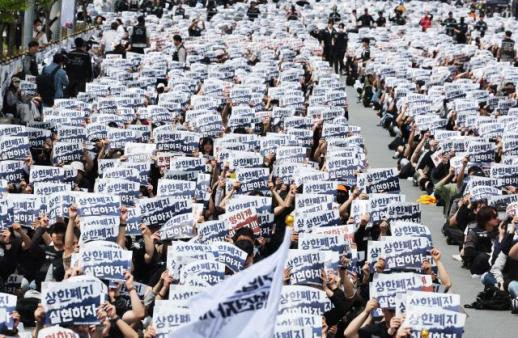 Samsung Electronics Union Members Seek Injunction to Halt Major Union Negotiations Internal conflicts among union members at Samsung Electronics are escalating. Disagreements between the semiconductor division (DS, Device Solutions) and the finished products division (DX, Device Experience) have led to plans for legal disputes, particularly among DX union members.According to industry sources on May 15, there are increasing calls within Samsung's internal community to file an injunction against the Super Union Labor Union Samsung Electronics Branch (Super Union), which is currently negotiating with management, to request a wage agreement and prohibit strikes.To support this initiative, members are currently raising funds for legal fees. They plan to select a law firm soon and finalize specific demands. With less than a week until a potential general strike, the process is expected to move quickly.This movement appears to be primarily driven by DX union members, who feel sidelined in recent labor negotiations. They are questioning the representation of the Super Union, which is centered around DS members. Reports indicate that hundreds of DX union members are participating, and a significant amount of funds has already been raised.In response to DS union members adding 'strike' to their internal messenger profiles, DX members are advocating for the inclusion of 'Oppose DS Strike' in their profiles.This push stems from dissatisfaction with the Super Union's focus solely on performance bonuses for the DS division, while ignoring the demands of the DX division.The Super Union has stated that it will not include common resources for the entire company in this matter. It is reported that about 80% of the Super Union's approximately 73,000 members belong to the DS division. Super Union Chairman Choi Seung-ho has emphasized that negotiations with management are concentrated on performance bonuses for the DS division, without addressing the treatment of employees in the struggling DX division.Choi commented on the DX neglect issue, saying, "First, we need to secure more resources for performance bonuses this year. Next year, we can distribute more rewards to the DX division as well."Meanwhile, a ruling on an injunction filed by Samsung Electronics to prohibit illegal strike actions is expected soon. The company has requested this injunction to ensure the normal maintenance of semiconductor safety facilities, prevent wafer degradation, and avoid occupation of key facilities. The Suwon District Court is expected to reach a conclusion by May 20, one day before the planned strike.Even if the court accepts the company's request, it will only prohibit illegal actions, not the strike itself. However, this could expose the union to legal risks, as the scope for lawful strikes may narrow, and violations of the court's decision could lead to increased liabilities for damages or obstruction of work, potentially dampening the momentum for the strike.* This article has been translated by AI. 2026-05-15 11:16:21
 -
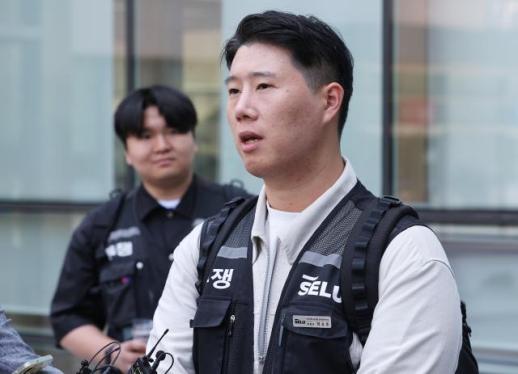 Samsung Union Plans to Continue Strike Until June 7, Rejects Dialogue Despite repeated calls from Samsung Electronics management and the government to resume dialogue, the union has refused to negotiate and plans to proceed with a general strike as previously announced.On May 15, the largest union at Samsung Electronics, the Korean Metal Workers' Union Samsung Electronics branch, stated in response to a letter from the company urging a resumption of talks, "We are willing to negotiate after June 7," emphasizing their commitment to exercising their constitutionally guaranteed rights and indicating their intent to continue the strike.June 7 is the date the union has set for the end of the strike, suggesting that they are preparing to carry out their planned actions. With the union rejecting the call for dialogue, the anticipated general strike set to begin on May 21 for 18 days is expected to become a reality.On the same day, Samsung management sent a letter titled "Response to the Korean Metal Workers' Union Samsung Electronics Branch 26-11" stating, "In the mediation by the Central Labor Relations Commission in March, the company proposed a transparent plan for the existing performance bonus (OPI) system, allowing for a choice between 10% of operating profit and 20% EVA." They also mentioned that regarding the demands for institutionalization and the removal of caps, they proposed maintaining the existing OPI system while establishing a new special compensation system without caps for more flexible institutionalization.The company reiterated its commitment to meet without conditions to facilitate negotiations, stating, "To respond to the wishes of employees, shareholders, and the public for a resolution, we once again propose to meet and discuss openly."In response, the Korean Metal Workers' Union stated, "We do not consider the letter sent to us as a genuine communication," adding, "Negotiations can happen at any time, and we can do it in June."Previously, on May 14, the union emphasized its key demands for "transparency in performance bonuses, removal of caps, and institutionalization," and conveyed to management that they would engage in talks only if a clear willingness to negotiate was demonstrated. They requested a direct response from the CEO by 10 a.m. that day.* This article has been translated by AI. 2026-05-15 10:57:26
 -
 SK Magic's New Water Purifier Ad Featuring Byun Woo-seok Surpasses 10 Million Views SK Magic announced on May 15 that its new water purifier campaign video, released in April, has surpassed a combined total of 12.8 million views on YouTube and Instagram within a month. The MEGA ICE segment garnered approximately 3.8 million views, while the Two Water segment reached around 9 million views.This response aligns with current summer consumer trends. As highball and home café cultures become deeply ingrained this summer, 'large ice' has emerged as a new consumer keyword. What was once exclusive to whiskey bars and premium cafés is now being recognized as a key element of the home beverage experience.SK Magic's new product, the MEGA ICE water purifier, directly targets this trend. It offers the largest ice size in the industry at 25 grams and features a post-freezing ice dispensing system that provides freshly made ice sequentially. The design allows consumers to enjoy café-quality beverages at home, including highballs, iced coffee, and carbonated drinks.In addition to its ice-making capabilities, the product emphasizes hygiene. It can produce up to 5.7 kg of ice per day in mega mode and is equipped with a large ice room with a capacity of 1.1 kg. This design ensures a stable supply of ice during the peak summer season when cold beverage consumption surges.Furthermore, an 'all stainless steel direct water line' is applied to all pathways, enhancing hygiene management throughout the water flow. The system includes a 'five-layer safety care' setup, featuring triple UV care for the ice room, UV care for the dispensing area and faucet, electrolyzed water care for the direct water line, and circulation care for the pathways.Jang Kyung-hoon, a professor of future content research at Halla University, commented, "It is rare for an advertisement's copy to simultaneously convey product functionality, model image, and seasonal sensibility. The structure where consumers first perceive the copy sensibly and then connect it to the product will work very favorably for brand recognition this summer season."Byun Woo-seok also shared his thoughts, stating, "I was impressed by the MEGA ICE when I saw it for the first time during filming; the ice really does not melt easily. I hope everyone enjoys a cool summer with the MEGA ICE water purifier."* This article has been translated by AI. 2026-05-15 09:31:50
 -
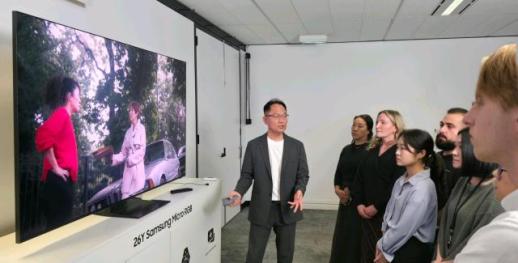 Samsung Unveils Next-Generation Displays at 2026 Australia Tech Seminar Samsung Electronics is accelerating its efforts to capture the premium TV market in Australia, a region known for its strong sports viewing culture and high console gaming usage. The company is focusing on a premium strategy that emphasizes AI-based picture quality technology and gaming features.From May 14 to 15, Samsung hosted the '2026 Australia Tech Seminar' in Sydney, where it showcased new AI TV technologies and its next-generation display lineup.The seminar is an annual event held since 2012, aimed at introducing Samsung's latest audio and visual technologies to global experts.Key local tech media, industry representatives, and consumer outlets attended the event organized by Samsung's Australian branch.During the seminar, Samsung introduced its 2026 screen products, including Micro RGB and OLED TVs, as well as Odyssey gaming monitors, highlighting key technologies.The company presented advanced display technologies and AI-driven viewing experiences tailored to Australian content consumption trends and living environments, emphasizing its home entertainment strategy.Notably, the new TV models feature enhanced AI capabilities designed to provide a more evolved viewing experience.The new TVs include the 'Vision AI Companion,' which analyzes the viewer's environment and content to deliver an optimized experience.Samsung also demonstrated the 'AI Football Mode,' which enhances the sports viewing experience by using AI to analyze soccer match scenes in real-time, delivering vivid colors and smooth motion while enhancing crowd sounds and commentary for greater immersion.Additionally, Samsung showcased its advanced display technology with the 'Micro RGB' TV, which utilizes the 'Micro RGB AI Engine' to finely adjust colors and contrast, achieving improved color representation and optical control compared to traditional TVs, ensuring stable picture quality across various viewing environments.The TV also features 'Micro RGB Color Booster Pro' and 'Micro RGB HDR Pro,' which provide clear and consistent colors regardless of brightness conditions.The event also highlighted the picture quality performance of the 2026 Samsung OLED (S95H), which is the first Samsung OLED to incorporate burn-in prevention technology, minimizing image retention during extended viewing.Samsung introduced several new gaming monitor products, including the 'Odyssey 3D,' which provides realistic 3D effects without glasses by analyzing user gaze in real-time using Eye Tracking and View Mapping technologies; the 'Odyssey G8 (G80HS),' the first gaming monitor to offer 6K ultra-high resolution and a 65Hz refresh rate; and the 'Odyssey OLED G8 (G80SH),' which supports fast response times and excellent black color representation with deep contrast ratios, delivering an unparalleled gaming environment.Lee Hun, Vice President of Samsung Electronics' Visual Display Business, stated, "Samsung is innovating picture quality and overall user experience based on AI technology, actively expanding the 'AI TV era.' We will continue to evolve user-centered viewing environments through differentiated AI screen experiences."* This article has been translated by AI. 2026-05-15 09:11:12
 -
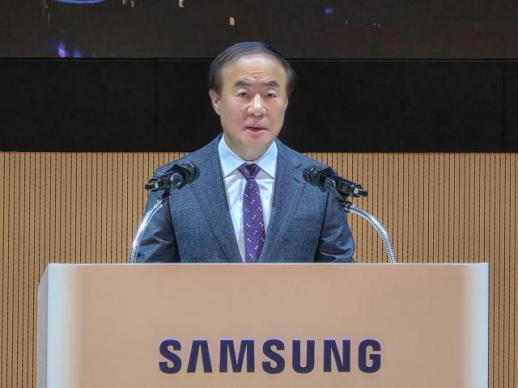 Samsung's Executive Calls for Steady Management Ahead of Union Strike Jeon Young-hyun, Vice Chairman of Samsung Electronics and head of the Device Solutions (DS) division, recently urged executives to maintain steady management in light of the union's announcement of a general strike. He emphasized the need to remain vigilant and enhance core technological competitiveness despite achieving record results in the first quarter.According to industry sources, during a management briefing for executives on May 8, Jeon stated, "We should not rest on our laurels and must view the current boom as the last golden opportunity to restore our fundamental competitiveness."The recovery in the company's performance is attributed to external factors such as the semiconductor supercycle. The DS division reported an operating profit of 53.7 trillion won in the first quarter, accounting for 94% of the company's total operating profit of 57.2 trillion won. This figure represents an increase of more than eight times compared to the same period last year, driven by rising prices and sales of high-bandwidth memory (HBM) and general DRAM and NAND products.While analysts predict that Samsung Electronics will surpass 300 trillion won in operating profit this year, Jeon has interpreted this outlook as a call for rigorous reforms to maintain a "semiconductor super gap."He also remarked, "The company is facing various challenges and is under scrutiny, but management activities must continue, and each business unit must perform well in their operations."As concerns grow over the union's planned general strike, Jeon's comments suggest a commitment to ensuring that semiconductor production lines operate without disruption while minimizing uncertainties both domestically and internationally.If the general strike proceeds, the economic impact could reach tens of trillions of won. Global investment bank JP Morgan recently reported that the strike could reduce Samsung's annual operating profit by over 40 trillion won. Union estimates also indicate that production disruptions could result in damages ranging from 20 trillion to 30 trillion won. 2026-05-15 08:30:38
 -
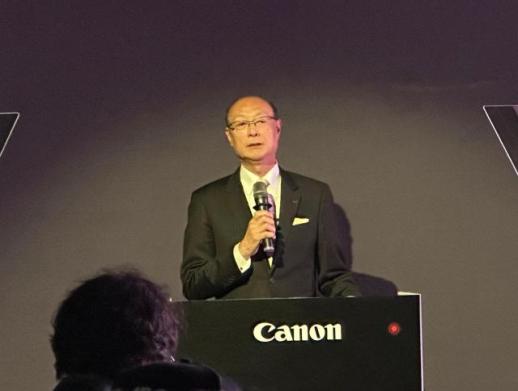 Canon Korea Launches Video-Focused Camera 'EOS R6 V' Canon Korea is accelerating its efforts to target the video creator market. As the one-person video creator market expands, the company is launching a full-frame mirrorless camera and a dedicated power zoom lens tailored for video content.On May 14, Canon Korea held a press conference at Studio 159 in COEX, Seoul, to unveil the video-focused full-frame mirrorless camera 'EOS R6 V' and the power zoom lens 'RF20-50mm F4 L IS USM PZ.' Attendees included Park Jung-woo, CEO of Canon Korea, and Tokuura Ko, Vice President of Canon Imaging Group.The new products reflect the rapid shift in the camera market from photography to video. With the rise of short-form content on platforms like YouTube, TikTok, and Instagram Reels, there is an increasing demand for high-quality video production among everyday consumers.During his visit to Korea, Tokuura Ko noted, "Twelve years ago, when I visited Korea, the presence of mirrorless cameras was limited. Now, with the evolution of smartphone cameras, everyone can enjoy photography and videography. This new product maximizes mobility and usability for video shooting, allowing anyone to capture professional-grade footage."The EOS R6 V is the first model in the EOS R V series to feature a full-frame sensor. Unlike previous mirrorless cameras focused on photography, this model is specifically designed for video production.The camera's design caters to video creators, featuring a box-shaped flat body that minimizes interference when attaching accessories. It supports vertical shooting with a tripod hole and a vertical user interface (UI) to enhance convenience for short-form content creation. Additionally, it includes a front recording button, 12 customizable buttons, and tally lamps to improve usability in real-world video production environments.Notably, the EOS R6 V has improved heat control, addressing a common challenge in video shooting. It is equipped with an internal cooling fan, allowing for continuous recording of up to 120 minutes at 4K 120P and 7K open gate resolutions. This enhancement considers the growing demand for long-duration filming and live streaming among video creators.Performance has also been significantly upgraded. The camera features a 32.5-megapixel full-frame CMOS sensor and DIGIC X engine, enabling internal recording of up to 7K 60P RAW video and supporting 7K oversampling for 4K video capture. It can shoot 4K 120P and 2K 180P without any crop loss.Canon emphasizes the 'Open Gate' feature as a key competitive advantage of this product. This function utilizes the entire 3:2 aspect ratio of the sensor, allowing for flexible cropping and reframing to suit various screen ratios. This capability enables creators to produce content for multiple platforms from a single recording.The autofocus (AF) system has also been enhanced for video shooting. The EOS R6 V features Dual Pixel CMOS AF II, which automatically recognizes people, animals, cars, airplanes, and trains, and includes a 'Review AF' function that prioritizes close-up subjects during product reviews. It also supports focus acceleration control for smooth focus transitions during video shooting.The RF20-50mm F4 L IS USM PZ, launched alongside the camera, is Canon's first power zoom lens for full-frame RF cameras. Weighing approximately 420 grams, it features a lightweight design and inner zoom structure to minimize changes in weight distribution during gimbal and handheld shooting.Notably, it allows for smooth zooming without additional equipment. The zoom speed can be finely adjusted in 15 steps, enabling solo creators to achieve cinematic effects. When paired with the EOS R6 V, it supports electronic zoom control via the body zoom lever.In his welcoming remarks, CEO Park Jung-woo stated, "Canon Korea is strengthening its integrated imaging ecosystem that encompasses photography and video, hardware and software, in response to the changing creative environment. This new product is designed to meet the rapidly evolving video content market, expanding the creative possibilities for creators."* This article has been translated by AI. 2026-05-15 02:34:11
 -
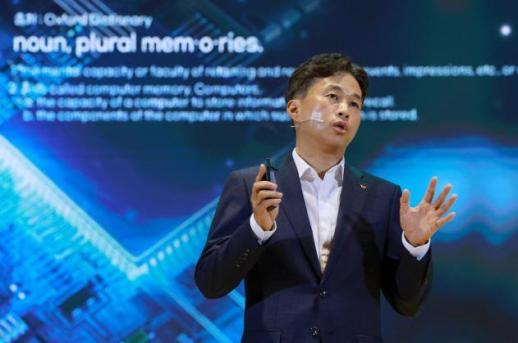 SK Hynix CEO Kwon No-jung Tops Semiconductor Non-Owner Stockholders Kwon No-jung, CEO of SK Hynix, has become the top non-owner stockholder in South Korea's semiconductor industry. This marks the first time that a SK Hynix executive has surpassed Samsung Electronics executives, who have traditionally dominated the semiconductor stock wealth rankings. The recent surge in SK Hynix's stock price, driven by enhanced competitiveness in high-bandwidth memory (HBM), has significantly increased the value of executives' stock holdings.According to a report released on May 14 by the corporate analysis firm Korea CXO Research Institute, Kwon's stock valuation stood at 28.28051 billion won as of May 13.This amount exceeds the 27.9 billion won valuation of Noh Tae-moon, CEO of Samsung Electronics, by approximately 3 billion won.This is the first instance of an SK Hynix executive leading the stock valuation rankings among non-owner executives in the semiconductor sector.Kwon holds 14,312 shares of SK Hynix, based on the closing price of 1,976,000 won on May 13. His stock valuation has increased from about 2.9 billion won last October to over 25.3 billion won in just six months, reflecting a staggering growth rate of 861%.During the same period, SK Hynix's stock price rose from 510,000 won to 1,976,000 won, marking an increase of approximately 287%. Samsung Electronics also saw its stock price rise from 98,800 won to 284,000 won, but the increase was relatively modest.The report highlighted a notable increase in asset values among semiconductor executives. A total of 1,207 executives at Samsung Electronics and SK Hynix hold stocks, with 258 non-owner executives having stock valuations exceeding 1 billion won, accounting for 21.4% of the total. This represents more than an eightfold increase from just 31 executives last October. Compared to the previous month's report, which identified 173 executives, an additional 85 have joined the '1 billion club' in just over a month.By company, 170 Samsung Electronics executives and 88 SK Hynix executives hold stock assets valued at over 1 billion won. While Samsung has a higher absolute number, SK Hynix has demonstrated a faster rate of asset growth.Notably, the asset growth of Choi Seon-yong, another SK Hynix executive, has been remarkable. His stock valuation has surged from about 800 million won last October to 13.5 billion won this month, reflecting an increase of 1,524%. His shareholding has grown from 1,629 shares to 6,834 shares, compounded by the rise in stock price.In contrast, Noh Tae-moon's stock value has increased from approximately 5 billion won last October to the current 27.9 billion won, an increase of over 22.9 billion won, with a growth rate of 459%. However, SK Hynix executives have shown a faster rate of asset growth.Oh Il-seon, head of Korea CXO Research Institute, stated, "Ten years ago, there were no executives at SK Hynix with stock values exceeding 1 billion won. This change in rankings symbolizes how rapidly SK Hynix is growing in the stock market."* This article has been translated by AI. 2026-05-15 02:25:31
 -
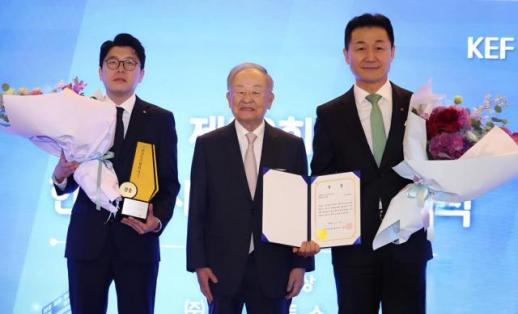 LX Pantos Wins Grand Prize at Korean Labor-Management Cooperation Awards LX Pantos has been awarded the Grand Prize in the large enterprise category at the Korean Labor-Management Cooperation Awards for its achievements in fostering a cooperative labor-management culture.The company announced on May 14 that it received the prestigious award during the 38th Korean Labor-Management Cooperation Awards ceremony held at the Four Seasons Hotel in Jongno, Seoul.Key figures in attendance included Minister of Employment and Labor Kim Young-hoon, Chairman of the Economic, Social and Labor Council Kim Ji-hyung, Chairman of the Korea Employers Federation Son Kyung-sik, and Chairman of the Korean Confederation of Trade Unions Kim Dong-myung. LX Pantos was represented by CEO Lee Yong-ho, worker representative Park Cha-jun, and Chief Human Resources Officer Kim Sung-wook.The Korean Labor-Management Cooperation Awards, organized by the Korea Employers Federation, recognize companies that contribute to the national economy by establishing a desirable labor-management culture through mutual cooperation. The evaluation criteria include trust-building between labor and management, fostering a culture of coexistence, and organizational stability.LX Pantos was particularly praised for maintaining stable labor-management relations without disputes or strikes for nearly 50 years since its founding in 1977. Despite significant external changes in the logistics industry, such as shifts in the global supply chain and fluctuations in cargo volume, the company has sustained a cooperative organizational culture.The company has also received positive recognition for operating various communication channels, including labor-management councils, junior boards, and industrial safety and health committees, which systematically gather employee feedback. This proactive approach to building a labor-management culture focused on prevention rather than merely resolving conflicts after they arise was highlighted.As the importance of managing labor-management conflict risks grows in the current business environment, LX Pantos has worked to strengthen internal communication through regular town hall meetings and management forums. The company is also focused on fostering bonds among employees through family invitation events and expanding organizational culture programs.In terms of ESG (Environmental, Social, and Governance) management, LX Pantos continues its efforts to build a sustainable organizational culture. The company is implementing maternal protection policies, expanding employment for people with disabilities, and engaging in social contribution activities, demonstrating its commitment to corporate social responsibility.In a rapidly changing business environment marked by global economic slowdowns and supply chain uncertainties, stable labor-management relations are increasingly recognized as a key factor in corporate competitiveness. This is especially true for comprehensive logistics companies with a high proportion of global clients, where organizational stability and operational efficiency directly impact business competitiveness.Lee Yong-ho, CEO of LX Pantos, stated, "We are deeply honored to have our employees' efforts in building a cooperative labor-management culture recognized through this award. We will continue to develop a healthy organizational culture based on mutual trust and communication, and achieve sustainable growth."* This article has been translated by AI. 2026-05-14 15:53:01
 -
 Korea-Japan Economic Cooperation Meeting to Focus on Supply Chains and AI As global supply chains are being reshaped and competition in the artificial intelligence (AI) sector intensifies, Korea and Japan are accelerating their economic cooperation. Business leaders from both countries will discuss ways to establish a 'future-oriented partnership' focusing on key industries such as semiconductors, mobility, energy, and finance.The Korea-Japan Economic Association announced on May 14 that it will co-host the 58th Korea-Japan Business Meeting in Tokyo at the The Okura Tokyo from May 19 to 20. This year's theme is 'Next Step Together,' marking the first event since the new presidents of the two economic associations took office, and is expected to outline a new direction for Korea-Japan economic cooperation.The meeting is particularly noteworthy as it coincides with a scheduled Korea-Japan summit on May 19, suggesting that the business sector will also contribute to strengthening private-sector cooperation amid improving political and diplomatic relations.Leading the Korean delegation will be Koo Ja-yeol, Chairman of the Korea-Japan Economic Association and LS Group. Other prominent attendees include Shin Dong-bin, Chairman of Lotte Group; Park Jung-won, Chairman of Doosan Group; Koo Ja-eun, Chairman of LS Group; Koo Ja-kyun, Chairman of LS Electric; Kim Dong-wook, Vice President of Hyundai Motor; Lee Hyung-hee, Vice Chairman of SK; and Lee Jae-eon, President of Samsung C&T.Representatives from the finance sector and platform companies will also participate. Notable attendees include Shinhan Bank CEO Jin Seon-kyu, OK Financial Group Chairman Choi Yoon, and Kwon Dae-yeol, Head of ESG at Kakao, who will discuss digital transformation and financial cooperation.On the Japanese side, key figures will include Koji Akiyoshi, Chairman of the Japan-Korea Economic Association and Asahi Group, along with other prominent business leaders such as Masakazu Tokura, Honorary Chairman of the Japan Business Federation (Keidanren); Masayuki Hiodo, Chairman of Sumitomo Corporation; Keiichi Iwata, Chairman of Sumitomo Chemical; Akitoshi Takemura, General Manager of Toyota Motor; and Koji Nagai, Chairman of Nomura Holdings.The meeting is expected to highlight the necessity of industrial collaboration between Korea and Japan in response to growing global economic uncertainties. As the U.S.-China conflict continues and supply chain fragmentation deepens, there is an increasing need for cooperation between companies in sectors such as semiconductor materials, components, equipment, batteries, future vehicles, and decarbonized energy.With the intensification of competition in the AI industry, discussions are also anticipated regarding collaboration in data centers, power infrastructure, semiconductors, and advanced manufacturing. The potential for cooperation between manufacturing companies like LS, Doosan, and Hyundai Motor and Japanese material and component firms will be closely watched.On May 18, Koo Ja-yeol and the Korean delegation plan to meet with Prime Minister Sanae Takaichi to explain the significance of the Korea-Japan Business Meeting ahead of the summit and request the Japanese government's cooperation for economic collaboration between the two countries. 2026-05-14 14:23:53
 -
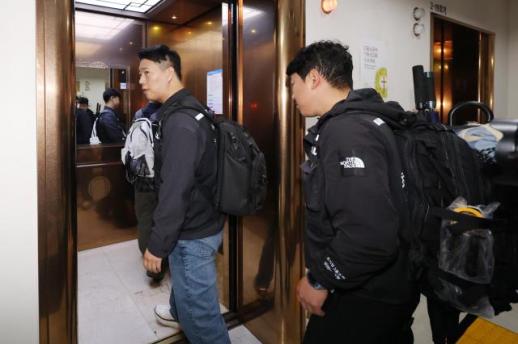 Samsung Electronics union heads toward strike after govt-mediation talks collapse SEOUL, May 13 (AJP) -Samsung Electronics and its largest labor union failed to bridge differences over bonuses in a final round of government-mediated wage negotiations, raising the likelihood of a monthlong strike that could ripple through the global semiconductor supply chain starting next week. The breakdown came after 17 hours of overnight talks at the National Labor Relations Commission in Sejong, where labor and management sought to reach a 2026 wage agreement but ultimately ended negotiations without a deal. Choi Seung-ho, head of the Samsung Electronics branch of the National Samsung Electronics Union, declared the post-mediation process “finally deadlocked” early Wednesday. “We asked for a mediation proposal because the gap between labor and management could not be narrowed, but after nearly 12 hours of waiting, the proposal turned out to be a step backward,” Choi told reporters after the talks collapsed around 3 a.m. The core dispute centered on whether to institutionalize and expand Samsung’s bonus system. The union is demanding the removal of bonus caps and the establishment of a transparent, formalized compensation structure tied to company performance. It has proposed allocating 15 percent of Samsung Electronics’ estimated annual operating profit of 270 trillion won ($194 billion) into bonus funding. Under the union’s proposal, average bonuses for employees in the Device Solutions (DS) memory division could reach roughly 600 million won per worker, while even loss-making nonmemory operations such as foundry and System LSI units could receive payouts exceeding 300 million won. Choi criticized the mediation proposal for effectively preserving the current excess profit incentive (OPI) framework, including its 50 percent bonus ceiling. “The proposal maintained the existing OPI system rather than introducing transparency,” he said. “The 50 percent bonus cap also remained intact.” Management has reportedly proposed broader compensation for struggling nonmemory divisions on the condition that losses improve, but the union rejected what it described as temporary and externally linked standards. Choi also objected to a proposal tying DS division bonuses to whether payouts exceeded those at SK hynix. “It is not desirable to connect our company’s performance to external factors,” he said, adding that the union could not accept a one-off measure lacking institutional guarantees. The union said it no longer intends to participate in further post-mediation proceedings, though Choi said labor would still consider listening if management presented a “proper proposal.” Samsung management and the union had already failed to reach an agreement during earlier mediation sessions held in February and March. The two sides resumed negotiations through a special post-mediation procedure starting Monday. The National Labor Relations Commission said it proposed “various alternatives” based on both sides’ positions but concluded that differences remained too wide after the union requested termination of the mediation process. The commission added that additional mediation could still be arranged if both parties later agreed to resume talks. With negotiations now broken off, the possibility of a full-scale strike planned for May 21 has intensified. The union, which claims around 73,000 members, said about 41,000 workers had already indicated their intention to join a strike, and Choi claimed participation could exceed 50,000 under the company’s current proposal. He stressed the union intended to proceed legally. “There is no point in waiting any longer,” Choi said. “We have no intention of engaging in illegal labor action. We will carry out lawful industrial action.” The union also said it would now focus on responding to Samsung’s court request for an injunction against what the company described as illegal labor activities. The market has been closing watching the government-mediated talks in fear of the repercussions on the chip-led exports and stock rally. Some forecasts estimate losses could exceed 40 trillion won if production disruptions spread across key semiconductor lines, while observers also warn of customer defections and long-term supply chain damage. The American Chamber of Commerce in Korea recently warned that disruptions at Samsung could destabilize global memory chip supply and increase price volatility. Concerns have also spread to suppliers and subcontractors. Samsung’s sustainability report lists roughly 1,700 partner firms across first- through third-tier supply chains, raising fears that prolonged production disruptions could trigger broader employment instability among smaller manufacturers. The government could still interfere through an emergency arbitration powers as a last resort. Under South Korea’s labor law, the labor minister may order emergency arbitration when industrial action is deemed likely to seriously damage the national economy or threaten public welfare. Such a move would ban strikes for 30 days while compulsory mediation and arbitration proceed. The measure has been invoked only four times in modern South Korean history, including during strikes at Hyundai Motor Company in 1993 and pilot walkouts at Asiana Airlines and Korean Air in 2005. A commission official, however, said emergency arbitration was “not a matter currently under our review.” 2026-05-13 07:56:39