
Journalist

Chang Seon-a
sunrise@ajunews.com
-
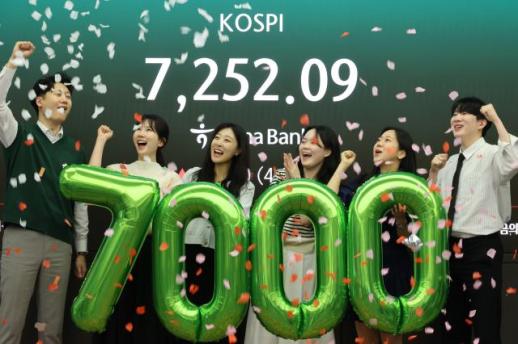 KOSPI Tops 7,000 as Middle East Tensions Ease; Won Gains Early South Korea’s won strengthened early Tuesday as local stocks rallied, with the KOSPI breaking above 7,000 amid expectations of easing geopolitical risks in the Middle East. In Seoul’s foreign exchange market, the won was trading at 1,461.4 per U.S. dollar as of 9:23 a.m., according to the market. The exchange rate opened at 1,465.8 won, up 3.0 won from the previous session, then moved lower. Clashes have continued in the Strait of Hormuz, but the U.S. confirmed that a cease-fire agreement with Iran remains in place, feeding hopes that tensions may ease. Overnight, U.S. stocks rose as Middle East risk concerns eased and expectations for artificial intelligence-driven demand lifted semiconductor shares. In New York on May 5 (local time), the S&P 500 and the Nasdaq both set record highs. The S&P 500 gained 0.81% to 7,259.22, and the Nasdaq rose 1.03% to 25,326.13. The KOSPI moved above 7,000 immediately after the open. With foreign funds flowing into local shares, led by semiconductors, the market is expected to support the won’s strength. Min Kyeong-won, an economist at Woori Bank, said the exchange rate is expected to fall during the session, tracking Monday’s closing level, as risk appetite improves on reduced fears of a renewed full-scale U.S.-Iran conflict. He added that the stock-market rally is a factor that can tilt supply and demand toward net selling, led by offshore selling.* This article has been translated by AI. 2026-05-06 09:36:05
 -
 Won-Dollar Exchange Rate Capped in the 1,480s as Fed, Inflation and Oil Prices Drive Volatility The won-dollar exchange rate, which swung in the 1,500-won range in early April, has recently struggled to break above the 1,480s. Analysts said expectations of easing Middle East tensions have increased downward pressure, but U.S. monetary policy and high oil prices remain upside risks. In Seoul’s foreign exchange market, the won closed at 1,483.3 per dollar in daytime trading on April 30, according to market data released Saturday. The rate stayed capped in the 1,480s even as international oil prices jumped on renewed Middle East tensions and expectations for U.S. rate cuts weakened. After moving above and below 1,500 in early April, the exchange rate traded in the 1,470-1,480 range last week. The upper end has been held down as markets priced in hopes that U.S.-Iran tensions could shift toward negotiations rather than escalation. Market participants also expect a gradual decline in the exchange rate after South Korea’s first-quarter gross domestic product growth far exceeded forecasts. They said easing geopolitical risks and improving domestic conditions have tilted factors toward a stronger won. Still, analysts cautioned that volatility could pick up because upside risks remain. The Federal Reserve kept its benchmark rate unchanged at 3.50%-3.75% at the Federal Open Market Committee meeting on April 29 local time and maintained a hawkish stance by emphasizing inflation risks. If the dollar strengthens again, the won could face renewed downward pressure. With Fed Chair Jerome Powell’s term set to end on the 15th, markets are also watching whether the policy stance shifts at the June FOMC meeting, which would be chaired for the first time by incoming Chair Kevin Warsh. Park Sang-hyun, an analyst at iM Securities, said stalled U.S.-Iran talks helped drive oil prices sharply higher, with WTI at $106.88 and Brent at $118.03, the highest in four years. If high oil prices persist, he said, the June meeting could reinforce a more hawkish tone. South Korea’s April consumer price index and U.S. employment data due this week are also expected to influence the exchange rate. In March, South Korea’s CPI rose 2.2% from a year earlier. Petroleum product prices climbed 9.9%, adding 0.39 percentage points to overall inflation. Markets expect April inflation to approach 3%, and a continued rise in oil prices could widen inflation and weigh on the won. If U.S. nonfarm payrolls for April, due May 8, remain strong, concerns about tighter U.S. policy could resurface and add to dollar strength, analysts said. Persistently high oil prices could also pressure global financial markets. Analysts warned that the stock rally fueled by an artificial intelligence investment boom could be affected, and market volatility could increase if the U.S. 10-year Treasury yield rises above 4.5%. Park said the AI investment boom has partly offset the oil shock, but that support could fade if oil prices keep rising. “The market’s focus is on AI expectations now, but it can shift at any time to oil and interest-rate factors,” he said. * This article has been translated by AI. 2026-05-03 15:39:22
 -
 South Korea Weighs Service Industry Framework Law as U.S., Japan Move Faster As South Korea’s Framework Act on the Development of the Service Industry has remained stalled in the National Assembly for years, major economies overseas have accelerated efforts to foster service industries and quickly strengthen competitiveness. Analysts say passage of the bill could give South Korea a chance to shift its service-sector policy. In the United States, cloud computing, artificial intelligence and platform-based services have expanded rapidly on the back of private-sector-led research and development. Among the “Magnificent Seven” companies driving U.S. stock markets, Microsoft, Alphabet, Amazon and Meta are software-based knowledge service firms. Nvidia and Apple also have strong service-sector characteristics because their business models center on design and platforms, the report said, underscoring a broader shift in which services, not manufacturing, are leading global technology innovation. Japan, meanwhile, adopted “service industry productivity innovation” as a national strategy in 2013 and has steadily pursued policies to modernize services and raise productivity. As part of that effort, it overhauled regulations to bring home-sharing businesses such as Airbnb into the formal system. Singapore institutionalized new industries to expand markets, including integrating the ride-hailing service Grab into the existing taxi framework. Service industries account for a large share of output in advanced economies. The World Bank said services make up 77.6% of U.S. gross domestic product. Japan stands at 69.8% and Germany at 64.0%, while the average across the Organization for Economic Cooperation and Development is above 70%. South Korea’s service-sector share is 57.5%, lower than in major advanced economies, reflecting a growth strategy long centered on manufacturing such as autos and shipbuilding. South Korea ranks 26th out of 38 OECD countries in service-industry labor productivity, the report said, citing lagging labor productivity and a lower share of R&D investment that has reinforced a low value-added structure. If enacted, the framework law is expected to enable a policy system that includes long-term planning for the service sector, along with fiscal and tax support and regulatory improvements. The report said policymakers also expect gains from linking services with emerging industries, including an “AI transformation” (AX), expanded data use and more advanced digital services, potentially improving productivity and boosting exports of high value-added services. The Korea Enterprises Federation said rising labor costs and heavier fixed-cost burdens have weakened service companies’ capacity to invest. “If a framework for policy support is established through enactment of the basic law, it is expected to increase companies’ investment capacity and lead to a virtuous cycle of expanded employment and service innovation,” it said. The group added that with many competitive areas such as digital and content, a policy coordination system could support both qualitative and quantitative export growth. The report also cited expected benefits in strengthening competitiveness across key service fields including health care, education, content and logistics. If industry convergence and data-driven service expansion accelerate, it said, South Korea could move away from a manufacturing-centered growth structure toward a service-led model. Still, it said results will depend less on passage itself than on implementation, warning that the impact could be limited without effective long-term plans, sufficient fiscal support and faster regulatory reform. Kim Jeong-sik, an emeritus professor of economics at Yonsei University, said the service industry spans very different areas such as information and communications and tourism, making one-size-fits-all policies less effective. “A more detailed support strategy that reflects the characteristics of each industry is needed,” he said.* This article has been translated by AI. 2026-05-03 15:31:33
 -
 South Korea Steps Up Crackdown After 600 Billion Won in Illegal FX Deals Uncovered South Korea is strengthening interagency enforcement as authorities continue to uncover large-scale overseas outflows of funds through illegal foreign exchange transactions. The Ministry of Finance and Economy said Saturday that it held an all-government meeting of its Illegal Foreign Exchange Transaction Response Team on April 30 to review enforcement results and major cases. The team said it found that a small overseas remittance operator abused virtual accounts to illegally send about 400 billion won overseas, including proceeds from online gambling sites. The case was referred to prosecutors on suspicion of operating an unregistered foreign exchange business, among other allegations. Authorities also confirmed that a money broker received about 200 billion won in used-car and auto-parts export payments in virtual assets without filing required reports, then paid won to domestic firms after deducting fees. That case was also sent to prosecutors, and additional probes of the related companies are underway. In another case under investigation, exporters allegedly underreported scrap metal export prices and brought the difference into South Korea through a money-transfer scheme using accounts held under borrowed names. The government cited interagency coordination in the investigations. The Financial Supervisory Service shared suspected illegal remittance activity found during an inspection with the Korea Customs Service, which investigated and referred the case to prosecutors. The National Tax Service is examining whether the companies evaded taxes, and the National Intelligence Service is supporting collection of information on overseas-linked crimes. The finance ministry and the Bank of Korea said they are reinforcing the response system by expanding foreign exchange information sharing and improving related rules. The government said it will continue to tighten enforcement through coordinated action as illegal foreign exchange transactions grow more complex and sophisticated. The response team was launched in January and is operating a joint framework. At a meeting held last month, it said it would respond strictly, including immediate complaints over the spread of false information and illegal foreign exchange transactions.* This article has been translated by AI. 2026-05-03 12:05:54
 -
 World Bank Names Min Jin-a as Director for Market and Counterparty Risk The World Bank Group has appointed Min Jin-a, head of credit risk for the state-owned enterprise and reinsurance division at the Multilateral Investment Guarantee Agency, as director for market and counterparty risk, South Korea’s Ministry of Economy and Finance said Sunday. The ministry said Min is scheduled to take up the post on June 1. With the appointment, the number of South Koreans in senior World Bank posts will expand to one vice president and one director. Min is a risk management specialist with about 20 years of experience. After working at private financial institutions including Goldman Sachs, she joined MIGA in 2017 as a senior credit risk officer. Since 2021, she has led credit risk for MIGA’s state-owned enterprise and reinsurance division. Director-level posts in the World Bank Group are key senior positions overseeing organizational operations. The ministry said South Koreans have held such posts only three times, and there has been no Korean director-level official at the World Bank since 2025. In July last year, Kim Sang-bu was appointed the World Bank’s first Korean vice president. The government has promoted policies to expand the hiring and advancement of South Koreans at international financial institutions, including operating junior professional officer and midcareer expert programs and holding recruitment briefings. A ministry official said the government will continue to strengthen cooperation with international financial institutions and create more hiring opportunities to support Korean talent seeking overseas careers.* This article has been translated by AI. 2026-05-03 12:03:14
 -
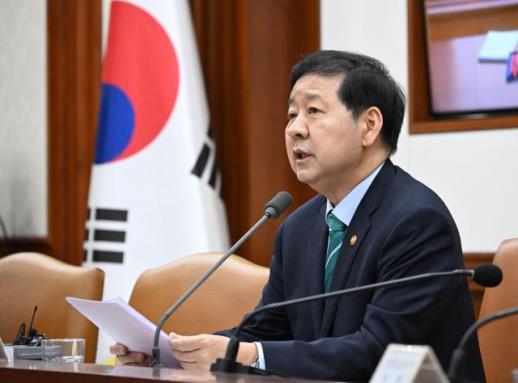 South Korea’s Treasury Bond Issuance Tops 200 Trillion Won for First Time; Foreign Share Hits Record South Korea’s issuance of Treasury bonds topped 200 trillion won for the first time last year, setting a record high. The Ministry of Economy and Finance said Tuesday it published a government bond white paper, Government Bonds 2025, summarizing last year’s Treasury bond market trends and key statistics. According to the report, Treasury bond issuance totaled 226.2 trillion won last year, up 68.5 trillion won from 157.7 trillion won a year earlier. It was the first time annual issuance exceeded 200 trillion won. Foreign investment in government bonds was tallied at 58.7 trillion won, the largest on record. The foreign share of government bond holdings rose to a record 25.7%, and foreign holdings of Treasury bonds reached an all-time high of 297.4 trillion won. In a foreword, Deputy Prime Minister and Minister of Economy and Finance Koo Yun-cheol said the government “successfully issued 226.2 trillion won in Treasury bonds last year, surpassing 200 trillion won in annual issuance for the first time,” adding that the issuance served as “a solid backstop” for efforts to support the economy, including a supplementary budget and rapid fiscal execution. Koo said the government worked to attract foreign funds ahead of inclusion in the World Government Bond Index, citing overseas investor briefings and institutional changes to improve convenience for foreign investors. The government said it will focus in 2026 on upgrading market infrastructure to ensure foreign investment tied to WGBI inclusion proceeds smoothly. It also said it will set up a dedicated team to analyze market trends and respond to risks, strengthening risk management to support stable bond issuance and oversight of the government bond market.* This article has been translated by AI. 2026-04-29 17:14:06
 -
 Finance Ministry Holds 4th Strategic Economy Advisory Panel Meeting on AI Shift The Ministry of Finance and Economy said it held the fourth meeting of the Strategic Economy Advisory Panel’s steering committee on the 28th at the Government Complex Seoul, chaired by Park Young-sun, head of the panel. Launched on the 13th, the panel has been identifying field-focused policy tasks tied to strategic industries. Over about two weeks, it convened both the steering committee and subcommittees to continue work on selecting key assignments. At the meeting, members discussed priority projects to respond to what the ministry called a major shift driven by artificial intelligence. Advisers said that amid changes in the external environment and a technology paradigm shift, the government should expand cross-ministry coordination and broaden private-sector participation to strengthen the competitiveness of domestic industries. Earlier, the panel added a new “AI agent commerce” subcommittee to its existing six, citing the growing importance of commerce applications using AI agents. Min Kyung-seol, head of the Office for Innovative Growth, asked advisers to “propose specific tasks so that strategic industries can grow into industries that will drive growth for the next 50 years.” The ministry said it will consult with relevant ministries on projects proposed by the panel and continue holding meetings to identify policy tasks.* This article has been translated by AI. 2026-04-29 16:22:39
 -
 Budget Office Seeks Strategic Fiscal Investment to Boost Key Industries South Korea’s Planning and Budget Office said it will prepare fiscal investment measures to strengthen the competitiveness of key industries. The office made the announcement at a meeting held on the 29th at the Seoul Regional Procurement Service to discuss “strategic fiscal investment measures to strengthen industrial competitiveness.” The meeting was convened as global technology competition intensifies around advanced industries such as semiconductors and artificial intelligence, and as supply-chain instability grows amid the war in the Middle East. The government said it plans to reflect views from industry as it specifies future budget planning and fiscal support priorities. Participants agreed that, with global competition escalating, the government needs to make proactive and active fiscal investments to help companies maintain competitiveness. Hong Seong-uk, head of the Industrial Data Analysis Office at the Korea Institute for Industrial Economics and Trade, said growth has continued on the back of strong exports in semiconductors and defense. But he warned that risks remain, citing stronger protectionism, external uncertainty including the Middle East war, and expanded investment in advanced industries centered on the G2. He said it is “a time when a cooperative response between the government and companies is needed.” Industry representatives also called for tailored responses by sector. Kim Kyung-hee, a vice president at Samsung Heavy Industries, said shipbuilding faces both crisis factors from China’s catch-up and opportunities such as South Korea-U.S. cooperation in shipbuilding. She emphasized that active government support is needed to secure future technology competitiveness, including in eco-friendly ships. Cho Yong-beom, director general of the Budget Office at the Planning and Budget Office, said the world is at a turning point where countries are being asked to play a more active role as investors. He said the office will use feedback from the field to address corporate difficulties in advance and prepare fiscal investment measures to strengthen key industries’ competitiveness. The Planning and Budget Office said it will consult with relevant ministries, based on the meeting’s results, to draw up specific fiscal support measures.* This article has been translated by AI. 2026-04-29 16:19:12
 -
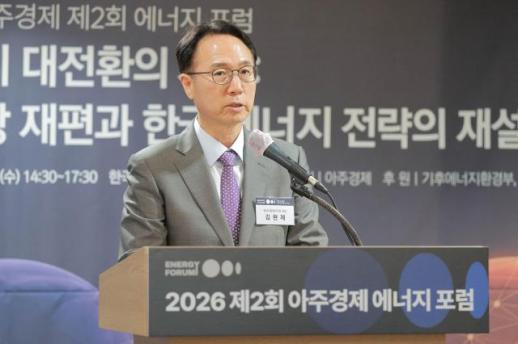 Energy Think Tank Chief Says Secure Energy Supply Is Key to National Competitiveness Kim Hyeon-je, president of the Korea Energy Economics Institute, said a stable energy supply is no longer just an issue for individual industries but a core task that affects national competitiveness and the broader economy. Speaking in opening remarks at the “2026 Aju Business Second Energy Forum” held April 29 at the Korea Press Center in Jung-gu, Seoul, Kim said the world is “creating a new energy order” as geopolitical conflict, supply-chain restructuring and the push toward carbon neutrality converge. “Electricity, in particular, is the most basic infrastructure that powers industry and daily life,” he said, adding that as advanced industries expand and electrification accelerates, the ability to provide stable power supply is directly tied to a country’s growth capacity. Kim said efforts should move in parallel to diversify energy sources, strengthen supply-chain resilience and expand infrastructure such as power grids and storage systems. He also called for using a range of clean energy sources, including renewables and nuclear power. “Energy transition and energy security are not opposing goals, but tasks of our time that must be achieved together,” he said, expressing hope the forum would help sharpen the direction of Korea’s energy strategy and seek practical, sustainable solutions.* This article has been translated by AI. 2026-04-29 15:13:02
 -
 Foreigners Net Buy 10 Trillion Won in South Korean Treasuries After WGBI Entry Foreign investors have net purchased more than 10 trillion won in South Korean Treasury bonds in the month since the country’s inclusion in the World Government Bond Index, officials said. The government is watching May — when the index weight rises — as a potential turning point for inflows and market supply-demand conditions. The Ministry of Economy and Finance said it held the fifth meeting of its “WGBI standing inspection and investor outreach task force” on Tuesday at the Government Complex Seoul. It said foreigners’ net purchases of Treasury bonds totaled 10 trillion won on a trade-date basis from March 30 through April 27. On a settlement basis, net purchases were 7.9 trillion won from April 1 through April 27. The ministry said WGBI inclusion has helped draw more long-term investors such as pension funds and has broadened demand for medium- and long-term maturities. Hwang Sun-kwan, director general of the Treasury Bureau, said, “Over April, global investors and our market infrastructure learned to work together and built valuable experience.” Analysts cautioned that recent rate moves cannot be attributed solely to the WGBI effect. Treasury yields were relatively stable in April compared with major countries, but experts said easing Middle East tensions and a slowdown in the rise of international oil prices had a larger impact on the decline in yields. Ahn Ye-ha, a researcher at Kiwoom Securities, said April’s yield decline could be read as a combination of steadier oil prices and foreign inflows, but added that “it may be difficult for that mix to hold going forward.” She said supply-demand conditions could weaken somewhat from April after May, given a higher share of long-term issuance and limited demand from insurers. She added that oil prices also “carry the possibility of greater volatility or a renewed rise rather than further declines,” which could increasingly limit how far yields fall. The government said it sees May as the first full test of the WGBI inclusion effect, as it has set May’s Treasury bond auction issuance at 19 trillion won, a level that could coincide with both inflows and shifting supply-demand conditions. Hwang said, “As the WGBI inclusion weight rises in May, inflows are expected to begin from this week, so thorough preparation is needed.” The ministry said it will continue to monitor foreign inflows through the task force and expand investor relations efforts to strengthen communication with the market.* This article has been translated by AI. 2026-04-29 15:04:04